
SDS Plus vs SDS Max Rotary Hammer: Which Should You Buy?
This post contains affiliate links. As an Amazon Associate, we earn from qualifying purchases.
SDS Plus and SDS Max are two sizes of the same rotary hammer system, defined by their shank diameters: SDS Plus uses a 10mm shank for lighter-duty masonry work, while SDS Max uses an 18mm shank for heavy-duty drilling and demolition. Choose SDS Plus for drilling holes typically from 3/8″ to 3/4″ in brick or block. Choose SDS Max for drilling holes up to 1-1/8-inch, sustained concrete work, or demolition.
The 8mm difference in shank diameter isn’t just about fitting a bigger bit. It dictates the entire tool’s construction, the motor power, the piston size, and the impact energy it can deliver, a core difference in the sds plus vs sds max rotary hammer. A bigger shank transfers more force from the hammer’s internal mechanism to the tip of the bit, which is the only thing that matters when you’re fighting reinforced concrete.
What follows is a breakdown of the specs that matter in the sds plus vs sds max rotary hammer, the real-world jobs each system handles, and the practical pitfalls, like adapters and overheating, that most comparisons skip. By the end, you’ll know exactly which tool fits the projects on your list.
Key Takeaways
- The 10mm vs 18mm shank is the physical lock. SDS Max bits simply will not fit into an SDS Plus chuck, and vice versa.
- SDS Plus tools typically run 500W to 1000W and handle holes from 3/8″ to 3/4″, making them the default for anchors and light masonry.
- SDS Max tools can reach 1500W and drill up to 1-1/8″, but they are heavier, more expensive, and often overkill for DIY tasks.
- Avoid adapters that let an SDS Max tool use SDS Plus bits, manufacturers discourage them because the higher power can snap the smaller shank.
- Let a rotary hammer cool down after prolonged continuous use to prevent the chuck spring from overheating and failing.
The Core Specs: Shank, Power, and Hole Size
The difference starts with a tape measure. An SDS Plus shank is 10mm in diameter. An SDS Max shank is 18mm. That’s not a suggestion; it’s a physical standard. The grooves machined into those shanks are different, so the chucks are different. You cannot force one into the other.
This size difference supports everything else. A larger shank requires a heavier, more robust internal hammer mechanism to drive it. That’s why the power ratings diverge.
SDS Plus rotary hammers typically have a power range of 500W to 1000W. SDS Max rotary hammers can reach up to 1500W. The larger shank and higher power allow SDS Max tools to use longer drill bits, resulting in greater drilling depth.
Power translates directly into what you can drill. According to manufacturer specs, SDS Plus drilling capacity is typically 3/8” to 3/4”. SDS Max drilling capacity can go up to 1-1/8”.
Here’s where a source disagreement matters. Sources disagree on the maximum capacity for SDS Plus: some manufacturer pages list it as mostly 3/8” to 3/4”, while one professional blog states it can handle holes up to 1-1/8 inches.
| Specification | SDS Plus | SDS Max |
|---|---|---|
| Shank Diameter | 10mm | 18mm |
| Typical Power Range | 500W – 1000W | Up to 1500W |
| Typical Hole Capacity | 3/8″ to 3/4″ | Up to 1-1/8″ |
| Primary User | DIYer / Pro (light masonry) | Professional Contractor |
The table makes the division in the sds plus vs sds max rotary hammer clear, but your arm and your wallet will feel it. An SDS Max tool is significantly heavier. Using a heavy SDS Max tool for small anchor holes is a fast path to fatigue and regret.
SDS Plus: The Anchor and DIY Workhorse
When is an SDS Plus the right call? When you hear the word “anchor.” Setting dozens of concrete anchors, installing a mailbox post, running conduit through a block wall, this is its home turf. It bridges the gap between a standard hammer drill and the industrial world.
A standard hammer drill works well for drilling 1/4-inch to 1/2-inch anchor holes in concrete blocks or light concrete. For larger holes (3/4″+) or frequent concrete work, you need a rotary hammer. The Bosch Bulldog SDS-plus pneumatic mechanism drills masonry at 2-3x the speed of a hammer drill. That speed isn’t about saving minutes. It’s about reducing the vibration and strain that wear out your wrists and the tool.
A pioneering model in this category was the Bosch UBH 2-14 SE, the world’s first 2kg rotary hammer with the SDS-plus system, released in 1981. Modern cordless versions bring the same capability without the cord. For most homeowners and many tradespeople, a capable SDS hammer drill is the only concrete tool they’ll ever need to own.
Common mistake: Using a worn-out masonry bit. Using a worn-out masonry bit reduces efficiency, produces excess heat, and can risk overheating the tool’s chuck. Swap bits early.
SDS Max: For Drilling Big Holes and Breaking Things
SDS Max exists for tasks where SDS Plus would stall or take all day. Think core drilling for plumbing, creating large anchor holes for structural bolts, or sustained chiseling. It’s better for heavy-duty work like demolishing concrete or drilling large holes.
The lineage here is about demolition. Bosch’s first demolition hammer with the SDS-Max holding system was the GSH 5CE, developed in 1990. This tool wasn’t just a bigger drill; it was a dedicated breaker. Later models like the 11kg GSH 11E (2000) and the powerful GSH 27VC (2010) cemented SDS Max as the system for serious breaking work.
If you’re looking at a demolition hammer vs rotary hammer, know that many larger SDS Max tools are demolition hammers with a drill mode. Their primary function is to break, not to drill neat holes.
- Drilling holes over 1-inch in diameter in reinforced concrete.
- Chiseling away a full slab of patio concrete.
- Installing deck footings in hard, rocky soil.
- Professional concrete forming and construction tasks.
Where this goes sideways: Renting an SDS Max to drill ten 1/2-inch anchor holes. The tool’s weight and power are immense overkill. You’ll fight it for precision, spend more on rental, and your shoulders will ache for two days. For that job, rent an SDS Plus.
Can You Use Adapters? (Spoiler: Don’t)
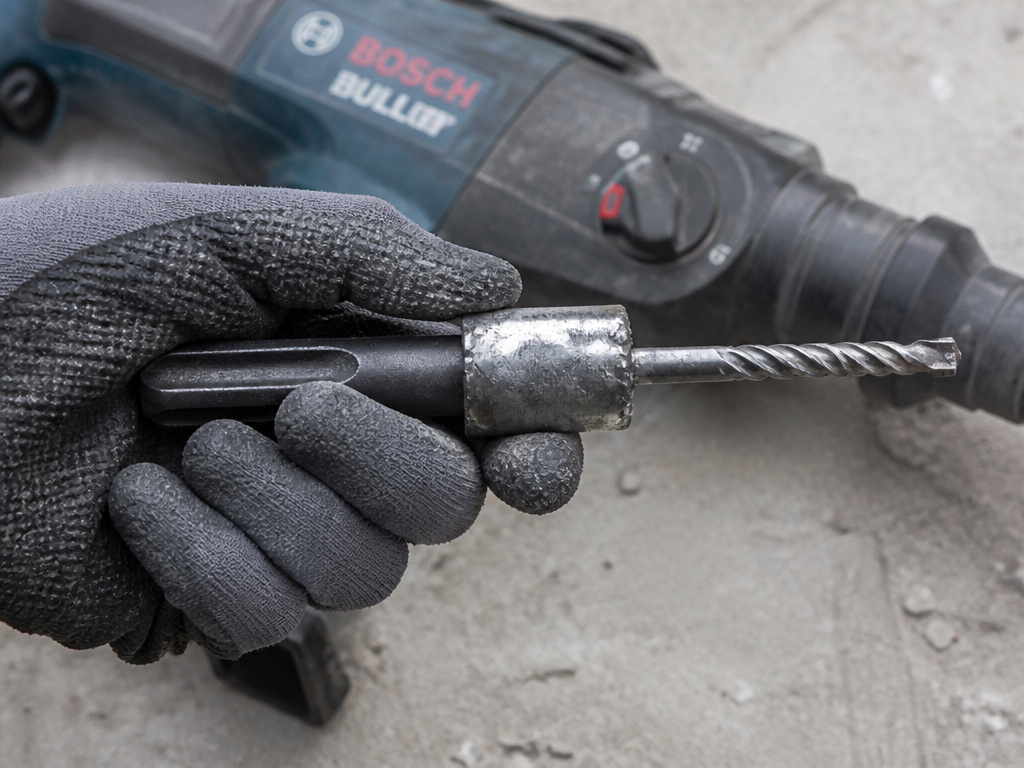
The question pops up constantly: “Will SDS Max fit in SDS Plus?” Or more practically, can you use an adapter to run cheaper, smaller SDS Plus bits in your big SDS Max tool? The technical answer is maybe. The real answer is no.
Using an adapter to fit an SDS Plus bit into an SDS Max chuck is generally discouraged by manufacturers. The risk is that the SDS Max tool’s power can easily snap the smaller SDS Plus bit. When that shank breaks inside the chuck, you’re looking at a dangerous fragment hazard and a potentially damaged internal piston.
The reverse, trying to put an SDS Max bit into an SDS Plus tool, is physically impossible. The shank is too large. This incompatibility is a feature, not a bug. It stops you from overloading a smaller tool with a task that will burn out its motor.
If you own an SDS Max and need to drill a small-diameter hole, buy an SDS Max bit in that diameter. It’s the only safe way to ensure the bit’s shank is robust enough to handle the hammering force.
Real-World Limitations and Tool Longevity
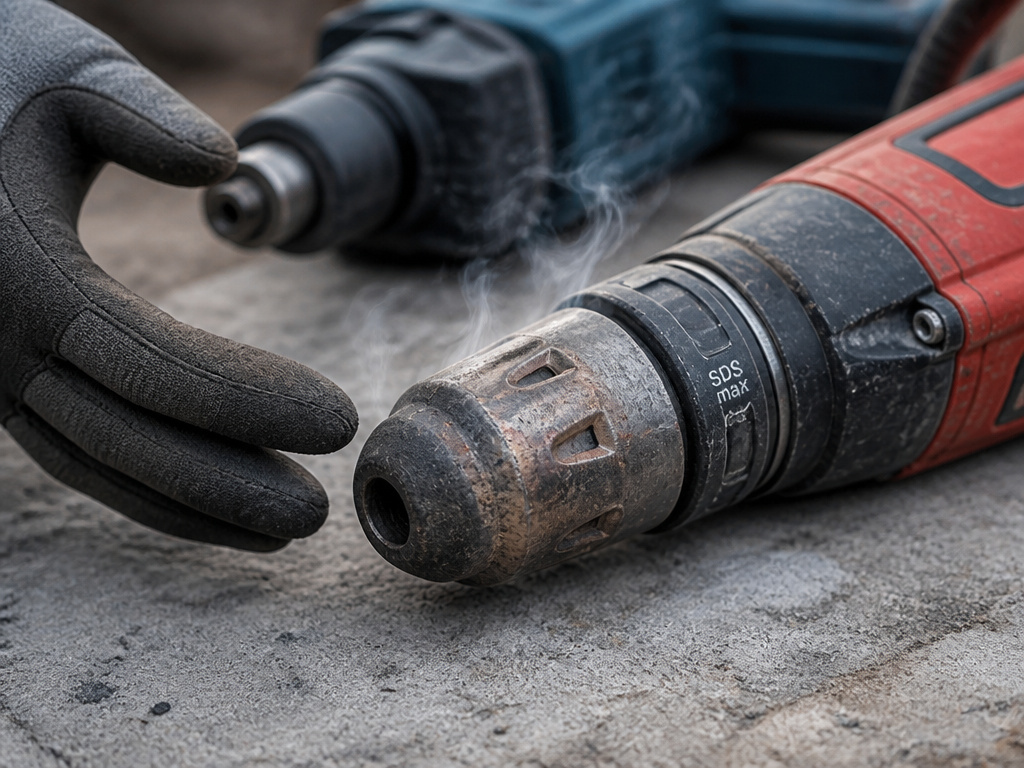
A rotary hammer is a brute, but a precise one. It’s also susceptible to heat. The manufacturer Hangbo Power Tools notes that prolonged use in a short period can cause the head to overheat, leading to wear of the chuck spring and parts falling off. Their recommendation is straightforward: allow the machine to rest for about five minutes after using it for ten to fifteen minutes.
That’s a sensory reality. After a long run, the chuck will be hot to the touch. If the chuck becomes very hot to the touch, you have likely pushed it too far. Let it cool.
Other common reasons a rotary hammer may power on but not work include worn internal gears, a damaged power cord, or a worn-out chuck. The fix is almost always a professional repair. These are complex, high-force tools. Opening one up without training can cause further damage or injury.
Corded vs cordless rotary hammers
Power delivery is a key difference. Corded models provide consistent, uninterrupted power, which is critical for prolonged heavy-duty tasks like demolition or drilling large holes where overheating can be a risk. Cordless models offer superior portability and convenience for jobs without easy access to an outlet, making them ideal for overhead work or remote sites. Your choice hinges on the job’s duration and location. For all-day chiseling or drilling large diameters, a corded tool’s steady power is often necessary. For shorter tasks or where mobility is paramount, a cordless model provides the needed flexibility.
Brand and model examples
Historical milestones from leading manufacturers illustrate the evolution of these systems. Bosch released the world’s first 2kg rotary hammer with the SDS-plus system in 1981, followed by the first cordless rotary hammer in 1984. Their development of SDS-Max tools began with a demolition hammer in 1990, leading to progressively more powerful models. While specific current models from brands like DeWalt or Milwaukee aren’t detailed here, this lineage shows that major brands have long specialized in both SDS Plus for general masonry and SDS Max for heavy demolition and large-hole drilling, each catering to distinct power and capacity needs.
Frequently Asked Questions
Are SDS Max and SDS Plus the same?
No. They are two different, incompatible sizes of the same Slotted Drive System (SDS). SDS Plus has a 10mm shank for light-to-medium duty. SDS Max has an 18mm shank for heavy-duty drilling and demolition.
What does SDS stand for?
SDS stands for “Slotted Drive System” or “Special Direct System.” It refers to the grooved design of the shank that allows the bit to slide back and forth within the chuck, creating the hammering action essential for masonry drilling.
Can I use an SDS bit in a regular drill?
No. You cannot use an SDS bit in a regular drill. Regular drills lack the special chuck required to hold the SDS shank and facilitate its back-and-forth hammering motion. The bit simply will not lock in.
Is an SDS Max better than an SDS Plus?
It’s not “better,” it’s different. An SDS Max is more powerful and capable of larger, heavier work. For most DIY tasks like drilling anchor holes, an SDS Plus is the more appropriate, cost-effective, and easier-to-handle tool. Choosing the best rotary hammers for concrete starts with matching the tool size to your most common hole diameter.
Can you drill wood with an SDS drill?
You can, but you shouldn’t. SDS drills are designed to hammer. That hammering action will splinter and damage wood. For wood, always use a standard drill or impact driver with standard drill bits.
The Bottom Line
Your choice comes down to hole diameter and frequency. If your project list has “drill 1/2-inch anchor holes” on it, get an SDS Plus. If it says “break up concrete slab,” you need an SDS Max or a dedicated demolition hammer.
For the vast majority of homeowners and even many contractors, the SDS Plus is the correct, single concrete tool. Its capacity covers the most common tasks, and modern cordless models offer fantastic power without the cord. Stepping up to SDS Max is a significant investment in weight, cost, and bit expense, only make that jump when your work demands it weekly.
Finally, respect the tool’s limits. Let it cool, use sharp bits, and don’t force an adapter. A rotary hammer is a long-term investment. Treat it like one, and it will power through your toughest projects for years.
