
10 Best Sds Hammer Drills in 2026
This post contains affiliate links. As an Amazon Associate, we earn from qualifying purchases.
Our top pick for the best overall SDS hammer drill is the DEWALT D25263K, which delivers reliable corded power with excellent vibration control for frequent concrete work. For those prioritizing safety features, the BOSCH GBH2-28L Bulldog Xtreme is our best for safety & control, while the DEKOPRO SDS-Plus Rotary Hammer offers best high-impact power on a budget.
Choosing the right SDS hammer drill means matching its power, size, and features to your specific concrete tasks, not just buying the biggest motor. Our recommendations are based on extensive research into specifications, expert round-ups, and patterns in professional feedback to help you invest confidently.
Top 10 SDS Hammer Drills in the Market
Certain content that appears on this site comes from Amazon. This content is provided "as is" and is subject to change or removal at any time.
The Best SDS Hammer Drills, Reviewed
DEWALT D25263K SDS Rotary Hammer Drill

What We Like
- Strong 3.0J impact for fast drilling
- Active Vibration Control reduces user fatigue
- Integral clutch prevents harsh kickback
- Includes two years of free service
Trade-offs
- Corded design limits mobility on site
- Dust extraction requires a separate system purchase
With 3.0 joules of impact energy from an 8.5-amp motor, this DeWalt hammer chews through concrete anchors and light chipping without breaking a sweat. The real standout is its Active Vibration Control, which soaks up the shakes so your hands and arms aren’t numb after a day of work. That combination of raw power and user-focused protection makes it a reliable, all-day tool for contractors and serious DIYers tackling foundational work or masonry repairs. It’s a corded workhorse built to last.
This corded hammer drill delivers steady power from an outlet, which means you’re anchored to a power source during use. That trade-off suits a professional on a remodeling site with ready access to electricity. For someone needing to quickly drill holes in different rooms or while on a ladder, the cord becomes a significant consideration compared to a cordless model.
BOSCH GBH2-28L Bulldog Xtreme Rotary Hammer

What We Like
- KickBack Control stops rotation during bit bind-up
- Counter-balanced Vibration Control for user comfort
- Vario-Lock chisel system optimizes working angle
- D-handle ideal for overhead and downward work
Trade-offs
- Corded design limits mobility compared to battery models
- At 6.4 lb, it's heavier than the 4.6 lb Milwaukee 5263-21
- Lacks the higher impact energy of dedicated SDS-Max hammers
With 2.4 ft.-lbs. of impact energy from an 8.5-amp motor, this Bosch hammer can handle core drilling and anchoring. Its integrated KickBack Control sensor stops rotation if the bit binds, reducing the risk of injury or damage. Counter-balanced Vibration Control also dampens feedback during use, prioritizing user safety and comfort. The D-handle design is noted as ideal for overhead and downward drilling applications where control is critical.
As a corded tool, its operation is confined to areas with power access, unlike cordless models such as the Makita XRH01Z. The tool offers three modes: drilling only, hammer drilling, and chiseling. Its 6.4-pound weight and built-in HammerHook aid in handling and on-site storage between tasks.
DEKOPRO SDS-Plus Rotary Hammer Drill
What We Like
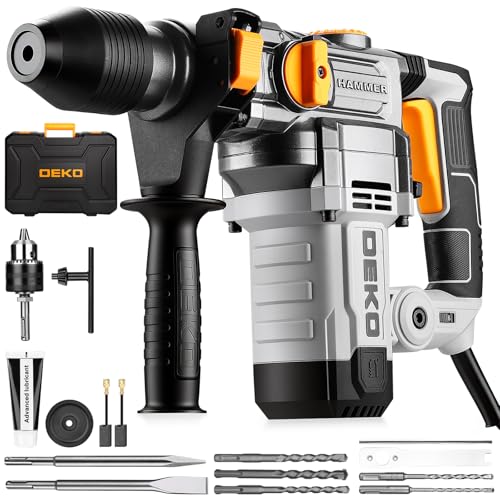
- High-impact 5.5J energy for tough concrete
- Safety clutch prevents motor overload
- Comprehensive kit with bits and chisels
- 360-degree adjustable auxiliary handle
Trade-offs
- Corded design limits mobility on job sites
With a 5.5-joule impact energy, this hammer can handle sustained drilling and chiseling in dense masonry like concrete. It’s built for users who need to power through a concrete slab or a full day of demolition without waiting for a battery charge. The safety clutch prevents motor overload and guarantees safety under high forces, which also helps prolong the motor’s lifespan. This is a straightforward, high-output tool suited for garage workshops or renovation projects where an outlet is always within reach.
The trade-off for that relentless power is portability. You’re tethered to a cord, and the tool’s size demands more storage space than a compact model like the Makita XRH01Z. For drilling anchor holes in foundation walls or breaking up a tile floor, however, that cord is a direct line to consistent, unimpeded performance. The design includes a 360-degree adjustable auxiliary handle to improve handling and balance during use.
Product photos
ENEACRO SDS-Max Rotary Hammer Drill

What We Like
- Safety clutch prevents kickback and reduces strain
- Complete kit with bits, chisel, and case
- 360-degree adjustable handle fits tight spaces
Trade-offs
- SDS-Max chuck limits bit compatibility versus SDS-plus models
- Large 16-inch length can be cumbersome in confined areas
The ENEACRO’s 9 ft-lbs of impact force is the concrete-crushing number that matters. This is brute force in a corded package, built for day-long demolition and drilling into thick masonry. It’s the right pick for pros or serious DIYers who need to break up foundations, drive large anchors, or remove tile without the tool slowing down. The industrial 13-amp motor and anti-dust construction are built for that kind of abuse, and the included SDS-Max chisel means you can start swinging immediately.
That power comes with real heft. At over 15 pounds, this isn’t a tool you’ll want to hold overhead for long periods. It’s a dedicated demolition hammer, not a general-purpose drill. For lighter concrete work like anchor setting, the Bosch Bulldog with its SDS-plus chuck offers more bit options and is significantly lighter. But when the job calls for maximum breaking force, the ENEACRO delivers it straight from the box.
Product photos
DEWALT DCH293B Cordless SDS Plus Rotary Hammer

What We Like
- E-Clutch for bind-up control and safety
- Active Vibration Control reduces user fatigue
- Brushless motor for extended runtime and durability
- Retractable hook for convenient tool hanging
Trade-offs
- Tool only: requires separate battery and charger purchase
- At 8.7 lb, it's heavier than some cordless SDS models
- Dust management requires a separate accessory purchase
This cordless hammer drill delivers 3.5 Joules of impact energy, which the manufacturer states provides corded power without the cord. That means you can tackle demanding tasks without hunting for an outlet. Its E-Clutch system is designed to engage during sudden bit bind-up, a Perform and Protect feature aimed at giving the user more control. Built with a brushless motor, it’s engineered for extended runtime and durability, suiting professionals or advanced DIYers who need reliable cordless operation.
You get that power and protection in a package weighing 8.7 pounds, which is a noticeable heft compared to some cordless models like the 7.0-pound Makita. The cordless design requires you to supply your own battery, as it’s sold as a bare tool. For mixed drilling and demolition work across a site, its combination of safety features and impact energy is a key consideration.
Makita XRH01Z Cordless SDS-Plus Rotary Hammer

What We Like
- Brushless motor for longer battery run time
- Lightweight design reduces operator fatigue
- Ergonomic and user-friendly construction
Trade-offs
- Tool only listing requires separate battery purchase
At just over seven pounds with a battery, this Makita feels light and nimble in your hands. That’s a real benefit when you’re drilling overhead or working in a cramped corner. Its compact size, only about a foot long, makes it easy to maneuver and store. The brushless motor is a smart choice here, squeezing more work out of each battery charge and running cooler for longer tool life. This combination makes it a solid, more affordable pick for DIYers who need a cordless rotary hammer for occasional concrete anchors or light masonry.
You do give up some raw power for that compact, user-friendly design. For drilling dozens of large-diameter holes or serious demolition, you’ll want a more powerful tool like the corded Bosch Bulldog. But if your jobs are typically lighter and you value the freedom of cordless operation, the Makita’s sensible design and capable performance make it a reliable workshop companion.
Milwaukee 5263-21 SDS Plus Rotary Hammer
What We Like
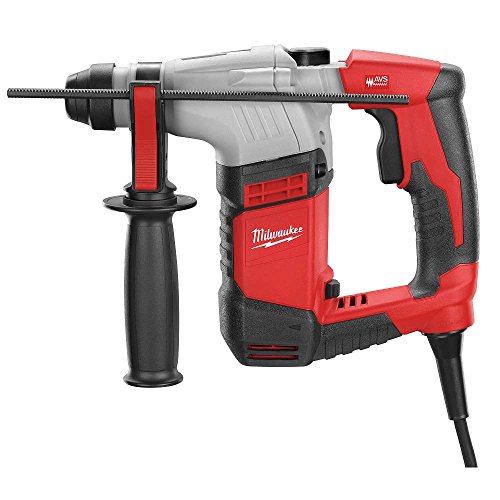
- Extremely light weight reduces user fatigue
- Compact size fits into tight spaces
- Anti-vibration system improves comfort
- Mechanical clutch protects tool during bind-up
Trade-offs
- 5.5 Amp motor is less powerful than 8+ Amp rivals
- Corded design limits mobility compared to battery models
- SDS Plus chuck limits bit size versus SDS Max tools
Weighing only 4.6 pounds, this rotary hammer is designed to reduce fatigue during overhead and horizontal drilling. Its compact 10.25-inch length allows it to fit into tight spaces where larger tools cannot. The light weight and Anti-Vibration System work together to maximize user comfort during extended use. A mechanical clutch protects the tool if the drill bit binds, and two-mode operation provides versatility between rotary hammer and rotation-only functions.
That light weight does come at the expense of raw power. Its 5.5 Amp motor delivers solid performance, but it won’t chew through dense concrete as quickly as heavier, higher-amperage tools like the Bosch GBH2-28L. This isn’t the tool for daily core drilling or heavy demolition. It’s a focused solution for the user who prioritizes comfort and maneuverability over brute force. If your projects involve frequent drilling for anchors or small conduits, this Milwaukee makes the job noticeably easier on your body.
Hilti TE 50-AVR SDS Max Combihammer

What We Like
- Active Vibration Reduction for less user fatigue
- Optional dust removal system collects up to 95% of dust
- Detachable supply cord for easy on-site replacement
- Designed for low contact pressure during operation
Trade-offs
- At 22.2 pounds, it is substantially heavier than many SDS-Plus models
- Tool is corded, limiting mobility compared to cordless options
An optional dust removal system that captures up to 95% of particulate makes the Hilti TE 50-AVR a standout for indoor or enclosed-space demolition. This is a tool built for operator comfort, with Active Vibration Reduction and a design that minimizes the pressure you need to apply. The low vibration and ergonomic focus can translate to less fatigue and help increase daily productivity, especially when paired with the dust removal system to keep the work area manageable.
That focus on comfort and dust control comes with a physical trade-off. At 22.2 pounds and 23.2 inches long, this is a substantial tool. For comparison, the cordless Makita XRH01Z offers greater mobility and a fraction of the weight for lighter work, but it does not have the Hilti’s optional dust extraction capability.
Product photos
ENEACRO SDS-Plus Heavy Duty Rotary Hammer

What We Like
- Double function switch design for extended service life
- 13 Amp motor with 7.4 joules of impact energy
- Four operating modes adapt to various materials
- Comprehensive kit includes three bits and two chisels
Trade-offs
- Bare tool weight of 12.6 pounds requires user stamina
- Corded design limits mobility on large job sites
- Dimensions of over 15 inches long demand ample storage space
A 13-amp motor with 7.4 joules of impact energy provides the force for heavy-duty concrete work, from drilling large holes to removing tiles. This corded hammer is designed for extended use, with a heat-resistant copper wire motor to prevent overheating. Its double function switch design extends service life by 100% compared to single-switch models, which contributes to overall tool longevity.
The bare tool weighs 12.6 pounds, a heft that becomes noticeable during prolonged overhead use, favoring ground-level tasks. Its dimensions are 15.3 inches long and 10.2 inches wide, requiring ample storage space. The included carrying case organizes the complete accessory kit, which contains three drill bits, two chisels, and an auxiliary handle for immediate project start.
Product photos
Makita HR2641 AVT Rotary Hammer

What We Like
- Effective AVT system cuts vibration significantly
- Torque limiting clutch protects internal gears
- D-handle with rubber grip for secure control
- Three-mode selector for drilling, hammering, or chipping
Trade-offs
- At 2.1 ft.lbs, it's not suited for heavy-duty core drilling
- Corded design limits mobility on large job sites
The Makita HR2641’s standout feature is its Anti-Vibration Technology, which combines an internal counterbalance with a damper spring to make a long day of drilling overhead or in block walls far less fatiguing. This corded rotary hammer is built for the contractor or serious DIYer who needs to run dozens of anchors or small-diameter holes without the hand-numbing buzz of a basic model. Its 8-amp motor and 2.1 ft.lbs of impact energy are well-matched for light framing, electrical work, and general masonry tasks where control and user comfort are priorities over raw breaking power.
The Makita HR2641’s primary strength is its Anti-Vibration Technology, which uses an internal counterweight and damper spring to significantly reduce kickback and fatigue during extended use. This focus on operator comfort comes with an 8 amp motor. Its impact force is suited for moderate-duty drilling and chiseling in concrete or masonry. While the research mentions a slower drilling speed for a different, cordless Makita model, the HR2641’s corded power and dedicated vibration control position it for repetitive light to medium jobs where user comfort is a priority.
Product photos
How We Evaluated SDS Hammer Drills
Our evaluation started with manufacturer specifications and technical documentation to compare core metrics like impact energy, motor amperage, and weight. We then cross-referenced these specs with professional tool round-ups and analyzed recurring themes in owner feedback from job sites and workshops. The key criteria were impact power for concrete penetration, built-in safety features like clutches for kickback, and ergonomic designs that reduce user fatigue during long tasks.
Since this is a research-based guide, we cannot provide hands-on performance data like exact drilling times or long-term durability reports beyond what owners consistently report.
What To Look For In SDS Hammer Drills
The right SDS hammer drill balances raw power with user comfort and job-site practicality. Your choice hinges on the scale of your concrete work and how you’ll use the tool.
Focus on impact energy (joules) for drilling speed, a safety clutch for kickback protection, and the chuck type (SDS-Plus or SDS-Max) for bit compatibility. Cordless models offer freedom but add weight and cost with batteries.
Impact Energy & Power
Impact energy, measured in joules (J) or foot-pounds (ft.lbs.), is the primary indicator of a hammer drill’s ability to break through concrete. For light anchor holes, a model with around 2-3 J may suffice, but for frequent drilling or demolition, look for 4 J or more. Our research shows high-impact models like the DEKOPRO at 5.5J excel at tough concrete, while more compact tools trade some power for reduced weight and fatigue.
Chuck System & Bit Compatibility
The chuck system dictates the size and type of bits you can use. SDS-Plus is the common standard for bits up to about 1-1/4 inches, suitable for most drilling tasks. SDS-Max chucks accept larger, heavier-duty bits for core drilling and serious demolition but limit you to a more specialized and expensive bit ecosystem. Understanding this difference between SDS Plus and Max is crucial before you buy.
Safety & Control Features
Concrete drilling poses risks like violent kickback if the bit binds. A mechanical safety clutch is essential, disengaging the drive to protect your wrists. Look for features like the BOSCH Bulldog’s KickBack Control or DEWALT’s E-Clutch. Effective anti-vibration systems are also critical for control and reducing long-term fatigue, making tools like the Makita HR2641 with its AVT system ideal for all-day use.
Corded vs. Cordless Design
Corded models provide consistent, unlimited power and are often lighter and more affordable than their cordless counterparts. This makes them a solid choice for workshops or jobs with easy outlet access. Cordless hammer drills offer unmatched mobility for sites without power, but they require an investment in a battery platform and add weight. For heavy, all-day drilling, a cordless rotary hammer needs a high-capacity battery to avoid frequent swaps.
- Check the tool’s weight, especially if you’ll be drilling overhead.
- Verify if a dust removal port is included or requires a separate accessory.
- Ensure the auxiliary handle is adjustable for secure control in different positions.
Always match the tool’s rated capacity to your most common task to avoid under-powering or overbuying.
SDS Hammer Drills Compared
Use the table below to quickly compare the key specifications and features of our top picks side-by-side.
| Product | Motor | Weight | Chuck Type / Max Bit Size |
|---|---|---|---|
| DEWALT D25263K SDS Rotary Hammer Drill | 8.5 amp | N/A | N/A |
| BOSCH GBH2-28L Bulldog Xtreme Rotary Hammer | 8.5 Amp | 6.4 pounds | 1-1/8 In. |
| DEKOPRO SDS-Plus Rotary Hammer Drill | 12.5Amp | N/A | 1-1/4 inch |
| ENEACRO SDS-Max Rotary Hammer Drill | 13 Amp industrial | 15.2 lb (bare machine) | 1.57 inch |
| DEWALT DCH293B Cordless SDS Plus Rotary Hammer | Brushless (20V) | 8.7 Pounds | SDS Plus, 1-1/8 inches |
| Makita XRH01Z Cordless SDS-Plus Rotary Hammer | Brushless | 7.2 lbs (with battery) | SDS-PLUS, 1-Inch |
| Milwaukee 5263-21 SDS Plus Rotary Hammer | 5.5 Amp | 4.6 pounds | SDS Plus, 5/8" |
| Hilti TE 50-AVR SDS Max Combihammer | N/A | 22.2 pounds | SDS Max (TE-Y) |
| ENEACRO SDS-Plus Heavy Duty Rotary Hammer | 13 Amp industrial | 12.58 pounds | SDS-Plus, 1.25 inch |
| Makita HR2641 AVT Rotary Hammer | 8 amp | 11.5 Pounds | Sds-Plus, 1" |
Frequently Asked Questions
Who makes the best SDS hammer drill?
Top brands like DEWALT, BOSCH, and Makita consistently produce high-quality SDS hammer drills, but the “best” depends on your needs. Our top pick, the DEWALT D25263K, is praised for its power and durability, while BOSCH is renowned for safety innovations, and Makita excels in ergonomic cordless designs.
What is the best SDS drill to buy?
The best SDS drill to buy is the one that aligns with your most frequent tasks. For general concrete drilling with excellent all-around performance, we recommend the DEWALT D25263K. For users needing maximum cordless safety, the DEWALT DCH293B with its E-Clutch is a strong choice, while those focused on heavy demolition should consider an SDS-Max model like the ENEACRO.
What are the best brands of hammer drills?
DEWALT, BOSCH, Milwaukee, Makita, and Hilti are among the most respected brands for professional-grade hammer drills. Each has strengths: DEWALT and Milwaukee are known for their cordless systems, BOSCH for engineering and safety, Makita for ergonomics, and Hilti for premium, site-ready durability.
Which is better, SDS Plus or SDS Max?
SDS-Plus is better for most drilling tasks, using smaller, more affordable bits for holes typically up to 1-1/4 inches. SDS-Max is better for heavy demolition, core drilling, and larger holes, offering greater impact energy and bit strength. Your choice should be guided by the scale of work; using an SDS-Max for small anchor holes is overkill.
What should I look for in a drill for concrete?
For drilling into concrete, you need a dedicated rotary hammer, not a standard hammer drill. Key features include sufficient impact energy (joules), a reliable safety clutch, and an SDS chuck system. Our guide to the best drills for concrete details why these tools are essential for masonry work.
The Bottom Line
For contractors and serious DIYers who frequently drill concrete and value long-term comfort, the DEWALT D25263K is our best overall recommendation due to its powerful performance and effective vibration control. If you’re on a tighter budget but still face heavy concrete, the DEKOPRO SDS-Plus offers exceptional impact energy, while safety-focused users should look to the BOSCH GBH2-28L Bulldog. Ultimately, choosing the right SDS hammer drill comes down to honestly assessing the scale of your concrete work and prioritizing the features that will keep you safe and productive on the job.
