
10 Best Random Orbital Sanders For Woodworking in 2026
This post contains affiliate links. As an Amazon Associate, we earn from qualifying purchases.
Our best overall random orbital sander for woodworking is the Bosch ROS20VSC for its effective swirl-free finish and versatile speed control. The Festool ETS EC 125/3 is best for dust extraction, while the DeWalt DWE6423 offers great value. Choosing the right sander makes the difference between a tedious chore and an efficient step toward a flawless finish.
The wrong tool can leave swirl marks, fill your shop with dust, or cause fatigue. We researched specifications, manufacturer data, and patterns in expert and owner feedback to identify the top models for different woodworking needs. This guide presents the key differences to help you select with confidence.
Top 10 Random Orbital Sanders For Woodworking in the Market
Certain content that appears on this site comes from Amazon. This content is provided "as is" and is subject to change or removal at any time.
The Best Random Orbital Sanders For Woodworking, Reviewed
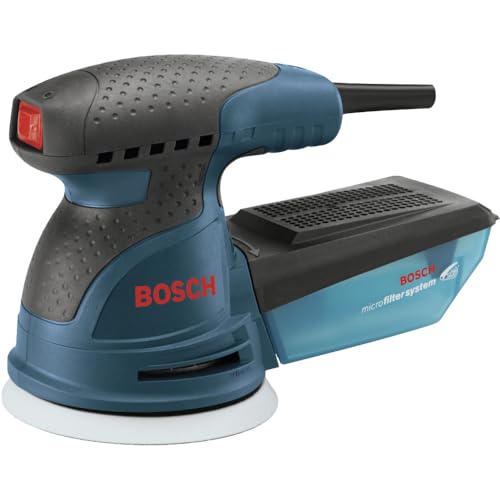
Bosch ROS20VSC Random Orbital Sander
What We Like
- Pad dampening system minimizes swirl marks
- Twist-off dust canister shows level and detaches easily
- Variable speed control for different materials and tasks
- Microfilter system provides excellent fine dust collection
Trade-offs
- Dust canister is compact and may fill quickly on large projects
- Corded design limits mobility compared to battery-powered options
With a variable speed range from 7,500 to 12,000 OPM, the Bosch ROS20VSC allows easy adjustment for different sanding tasks, from rough to fine work. Its pad dampening system is designed to help minimize swirl marks on flat and contoured surfaces, which is key for achieving a smooth finish. The 2.5 amp motor provides the power for this speed control.
At 3.5 pounds, this Bosch sander is heavier than the 2.2-pound Mirka DEROS II. Being corded means it requires an outlet but avoids battery charging. Its dust collection system features a microfilter for particles as small as 1/2-micron, which helps keep the work area visible and may reduce airborne dust.
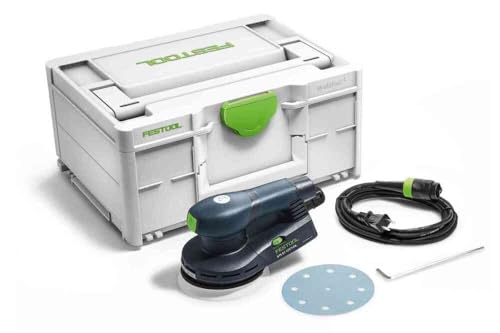
Festool ETS EC 125/3 Random Orbital Sander
What We Like
- Brushless motor for constant power and longevity
- Excellent dust extraction with integrated system
- Ergonomic grip reduces user fatigue
- Produces scratch-free surfaces at lower grits
Trade-offs
- Weighs 8.0 pounds, heavier than most 5-inch sanders
- Does not include a dust-collection container
Expert tests found the Festool ETS EC 125/3 could produce a scratch-free surface after sanding to only 180 grit, where most other models needed more work. This efficient performance is tied to its integrated dust extraction, designed for the Festool system, which pulls dust away to keep the surface clear. For woodworkers aiming for a flawless finish with fewer steps, this sander reduces sanding time and keeps the workspace cleaner. The brushless motor and low-vibration design, noted in comparisons, contribute to less user fatigue during extended use.
You pay for that performance in weight and footprint. At eight pounds, it’s substantially heftier than a model like the DeWalt DWE6423, and its body is larger to house the advanced motor and extraction tech. This isn’t the sander you grab for quick touch-ups. It’s a dedicated bench tool for serious finishing. If your projects demand the highest quality surface preparation and you already use or plan to invest in a Festool dust extractor, this sander is a logical and highly effective choice. If not, you’re paying for capability you can’t fully utilize.
Festool Rotex RO 150 Multi-Mode Sander

What We Like
- FastFix system allows tool-less pad changes.
- Ergonomic grip positions reduce user fatigue.
- Sands up to the edge with integrated dust control.
Trade-offs
- At 11.5 pounds, it's heavy for extended overhead work.
- Larger footprint than palm-sized sanders like the Mirka DEROS.
The ability to switch between aggressive rotary sanding and fine, scratch-free orbital motion in one tool is its defining feature. This makes the RO 150 ideal for woodworkers who need to tackle heavy material removal like leveling a tabletop and then finish the same project without switching tools. Owner feedback and expert round-ups note it produces remarkably clean surfaces, often needing fewer grit steps than competitors to eliminate scratches, which saves time on multi-stage projects.
That versatility comes with a trade-off in size and heft. At over 11 pounds, it’s substantially heavier than most standard orbital sanders, such as the DeWalt DWE6423. This bulk can be tiring on vertical surfaces or detailed work. For a shop-based craftsman who values a single tool that can handle the entire sanding spectrum from rough to ready-for-finish, however, the RO 150’s dual-action performance is a compelling premium choice.
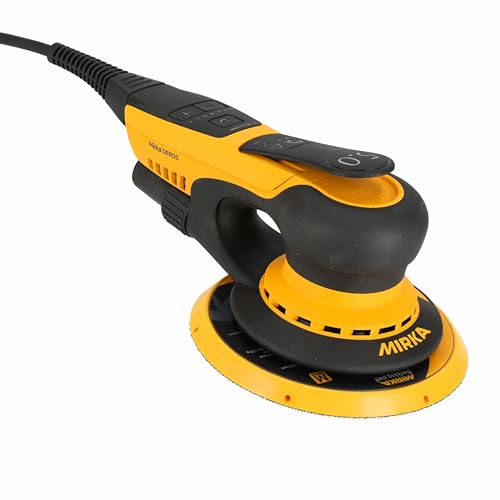
Mirka DEROS II 550X Random Orbital Sander
What We Like
- Lightweight design reduces fatigue
- Low vibration for comfortable handling
- Integrated dust extraction keeps area clean
- Brushless motor provides consistent power
Trade-offs
- Tool only: battery and charger sold separately
- Bluetooth features require a compatible app
Weighing 2.2 pounds, the Mirka DEROS II 550X is one of the lightest sanders available, a difference that supports longer sanding sessions with less user fatigue. Its low vibration operation and ergonomic build are designed for comfortable handling and improved control across various applications. The brushless motor is engineered to deliver consistent power during woodworking, automotive, and surface preparation tasks.
This sander is sold as a bare tool, so a compatible battery and charger must be purchased separately. Among comparable tools, its compact size and light weight offer a distinct handling profile for extended use. The integrated dust extraction system is designed to collect particles during operation, which can help maintain a cleaner workspace.
Product photos
DeWalt DWE6423 Random Orbital Sander

What We Like
- Separate counterweight design reduces vibration.
- Variable speed control from 8,000 to 12,000 OPM.
- Improved dust-sealed switch for longer life.
- Shorter height allows closer access to workpieces.
Trade-offs
- At 3.4 lb, it's not the lightest in its class.
- Corded design limits mobility compared to battery models.
A 3-amp motor provides an orbital speed range from 8,000 to 12,000 OPM for handling different sanding tasks. Its separate counterweight reduces vibration, and the rubber overmold improves grip, which can help during long sessions. Based on research, it is frequently cited as a top choice in the budget category for a wide range of users. The improved dust collection includes a one-handed locking dust bag and a port designed for DeWalt’s own dust collectors.
You do trade some modern finesse for that durability. It’s a bit heftier than newer designs like the featherweight Mirka DEROS II, and the dust collection is optimized for DeWalt’s own vacs. For a dedicated shop hooked into a dust extractor, it’s a smooth fit. But if you prioritize absolute minimal weight or need to connect to any vacuum hose without a second thought, that’s where you’ll feel the compromise. It’s a tool built for work, not for show.
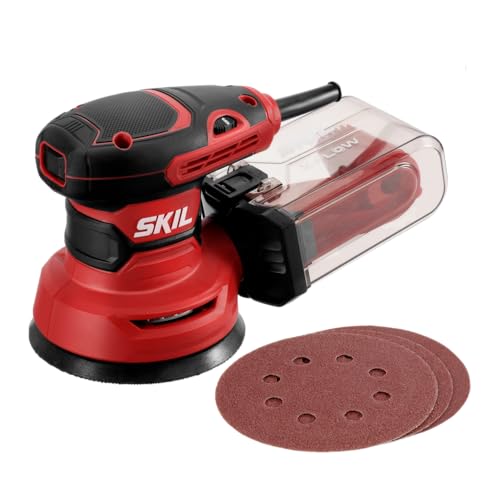
Skil SR211601 Random Orbital Sander
What We Like
- Cyclonic dust box is easy to empty
- Low vibration design reduces hand fatigue
- Compact size reaches tight spaces
- Variable speed control for material versatility
Trade-offs
- At 3.4 lb, it's heavier than the 2.2 lb Mirka DEROS II
A 2.8 amp motor and 13,000 orbits per minute deliver a smooth performance for a variety of sanding applications, giving the hobbyist enough power for common tasks. Its X-flow dust collector uses cyclone force to collect dust in an easy-to-empty transparent container. This design keeps the workspace cleaner and reduces airborne particles during use.
The ergonomic design and soft rubber grip aim to keep your hand comfortable, while counterweight balance reduces hand fatigue from vibration, letting you work longer. A compact size and ergonomic design help the sander get into tight spaces and maximize user control. Variable speed control provides the right amount of power and control across different materials.
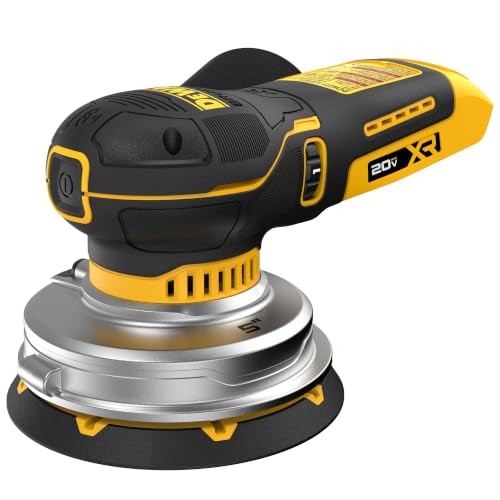
DeWalt DCW211B Cordless Random Orbital Sander
What We Like
- Exceptionally low vibration for reduced fatigue
- Sands up to 50 sq-ft. on a single charge
- Wireless vacuum activation for minimal cleanup
Trade-offs
- Weighs 3.8 lb, heavier than some cordless competitors like the Craftsman
- Dust extractor for optimal collection is sold separately
Sanding up to 50 square feet on a single charge means you can tackle a full project session without hunting for an outlet. That freedom, combined with industry-leading material removal and remarkably low vibration, makes this sander the clear choice for the woodworker who values cordless convenience without sacrificing performance. It’s built for the long haul in a home shop, where moving around a piece or working outdoors is common.
This is a bare tool requiring DeWalt’s 20V MAX batteries, so you must already own them or buy them separately. For users invested in that cordless system, it enables a fully mobile workflow. If you prefer a corded setup to avoid battery costs, DeWalt’s DWE6423 model is a corded alternative.
Product photos
Craftsman CMCW220B Cordless Orbital Sander

What We Like
- Extremely lightweight at just 2.5 pounds.
- Compact, low-profile design for control and vibration reduction.
- Integrated dust collection with bag and vacuum hose port.
- Part of a versatile 20V cordless tool system.
Trade-offs
- Bare tool only; requires separate V20 battery and charger.
- Single-speed operation at 12,000 OPM.
Weighing just 2.5 pounds and measuring under seven inches long, this sander is built for overhead work and long sessions without arm fatigue. Its compact form fits easily into tight corners and offers excellent control for finish sanding. For a woodworker already invested in the Craftsman V20 platform, this tool slides right into the lineup, providing genuine cordless convenience for quick touch-ups and small projects where dragging out a cord is a hassle.
The trade-off for its featherweight design is a lack of variable speed control, which can be a limitation when working with delicate veneers or needing to adjust for different materials. Compared to the corded variable-speed Bosch ROS20VSC, the Craftsman is about maneuverability and cord-free operation, not fine-tuned power. It’s a specialist for portability, making it a complement to, rather than a replacement for, a primary workshop sander.
Product photos
Makita BO5041 Random Orbital Sander

What We Like
- Ergonomic rubberized palm grip and handle
- Variable speed control dial for application matching
- Large two-finger trigger with lock-on button
- Adjustable handle for corners and confined spaces
Trade-offs
- Weighs 3.1 pounds, heavier than cordless models like the Craftsman.
- Requires longer sanding time or finer grits to eliminate scratches.
A 3.1-pound weight and a rubberized palm grip make this sander feel like an extension of your hand during long sessions. The adjustable front handle lets you tackle corners without awkward wrist angles, and the variable speed dial gives you the control to go from aggressive stock removal to fine finish work. This is the tool you want when comfort and precise handling are your top priorities, especially for detailed woodworking where fatigue can ruin a steady hand.
The trade-off for that ergonomic focus is in ultimate finish quality at lower grits. While it sands smoothly, research suggests it doesn’t completely eliminate scratches at 180 grit as effectively as a model like the Festool ETS EC 125/3. You’ll likely need to spend more time with each grit or step up to 220 to achieve a flawless surface. For most tasks, its comfort and control are outstanding, but if your benchmark is perfection straight off a coarser paper, there are more specialized finishers.
Product photos
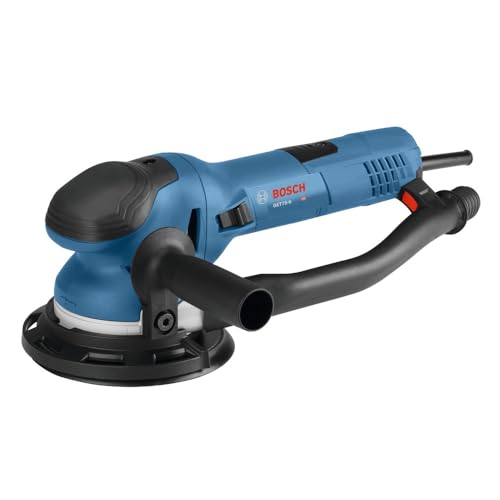
Bosch GET75-6N Orbital Sander
What We Like
- Turbo mode for aggressive material removal
- Powerful 7.5-amp variable-speed motor
- Multi-hole pad accepts wide abrasive variety
- Includes vacuum hose adapters for dust collection
Trade-offs
- Requires a separate vacuum for dust collection
- At 5.7 lb, it's heavier than many 5-inch sanders
A 7.5-amp motor and a dedicated turbo mode that triples stock removal put this sander in a different class for heavy work. It’s built for the woodworker who needs to move from flattening a tabletop to final finishing without switching to a belt sander. The variable speed gives you the control to handle both tasks, making it a versatile, powerful anchor for a busy shop. That raw power does come with some heft and vibration, which is the trade-off for its aggressive capability.
The Bosch GET75-6N orbital sander offers a turbo mode that delivers three times the stock removal of its standard mode, providing a direct-drive alternative to a belt sander for aggressive material removal. This 6-inch sander uses a multi-hole pad system for a wide variety of abrasive discs. Its passive dust collection requires a separate vacuum and specific Bosch hoses or an included adapter.
Product photos
How We Evaluated Random Orbital Sanders
This guide is based on a review of product specifications, manufacturer information, and common themes found in expert reviews and user comments. Key factors considered include dust collection performance, vibration reduction for user comfort, and motor power for material removal.
Features such as variable speed control and ergonomic design were also prioritized for their impact on practical use. As a research-based guide, it cannot confirm long-term durability or the subjective feel of each tool’s balance and grip. The aim is to compile information to show each sander’s noted strengths for particular applications.
What To Look For In Random Orbital Sanders
Selecting a sander involves balancing power, control, and convenience for your specific projects. A great sander reduces fatigue, manages dust, and prepares surfaces for a perfect finish.
Look for effective dust collection, low vibration, and a motor suited to your work. Corded models offer constant power, while a cordless model provides mobility. Consider pad size, speed settings, and how it connects to your shop vacuum.
Dust Collection
Effective dust collection is critical for shop cleanliness, your health, and visibility while working. Systems range from simple cloth bags to integrated ports for shop vacuums. Research indicates sanders perform much better with a vacuum attached, drastically reducing airborne particles. The best random orbital sanders feature well-sealed systems and standard hose connections. Models without onboard containers rely entirely on a vacuum. For finishing work, excellent dust extraction is non-negotiable.
Power & Vibration
Motor power dictates how quickly a sander can remove material. Orbital stroke size, measured in inches, also influences aggressiveness. More powerful motors can handle heavier workloads but often add weight. Vibration control is equally important; excessive vibration causes hand fatigue during long sessions. Look for designs with counterweights or dampening systems. Our research into random orbital sanders shows that low-vibration models significantly improve comfort, making them better for detailed furniture finishing.
Ergonomics & Control
A sander should be easy to control. Weight, grip shape, and balance affect comfort and handling, particularly on vertical or overhead surfaces. Lighter random orbital palm sanders can reduce arm fatigue. Variable speed controls let users adjust the pace for different tasks, such as paint removal or final polishing. The power switch location and the presence of a lock-on feature are also points to consider for prolonged use.
Corded models offer constant power, while a cordless random orbital sander provides mobility. – Ensure the dust port matches your shop vacuum hose size or that an adapter is included. – Feel the grip texture if possible; a rubberized overlay improves control.
Let your most common project type guide your choice: aggressive stock removal demands power and a large stroke, while fine finishing prioritizes a smooth, vibration-free orbit.
Random Orbital Sanders For Woodworking Compared
The following table compares key specifications across our top picks to help you see the differences at a glance.
| Product | Weight | Orbit Speed (OPM) | Dust Collection |
|---|---|---|---|
| Bosch ROS20VSC Random Orbital Sander | 3.5 pounds | 7,500-12,000 OPM | vacuum dust collector |
| Festool ETS EC 125/3 Random Orbital Sander | 8.0 pounds | N/A | Integrated Festool system |
| Festool Rotex RO 150 Multi-Mode Sander | 11.5 pounds | N/A | N/A |
| Mirka DEROS II 550X Random Orbital Sander | 2.2 pounds | N/A | integrated dust extraction system |
| DeWalt DWE6423 Random Orbital Sander | 3.4 Pounds | 8,000 – 12,000 OPM | Dust port fits DeWalt DWV010/DWV012 |
| Skil SR211601 Random Orbital Sander | 3.4 pounds | 13,000 orbits per minute | Cyclonic dust box |
| DeWalt DCW211B Cordless Random Orbital Sander | 3.8 Pounds | 8,000 – 12,000 OPM | Up to 95% with vacuum |
| Craftsman CMCW220B Cordless Orbital Sander | 2.5 pounds | 12,000 OPM | onboard dust bag |
| Makita BO5041 Random Orbital Sander | 3.1 Pounds | 4,000-12,000 OPM | N/A |
| Bosch GET75-6N Orbital Sander | 5.7 pounds | 3300 to 7300 OPM | Passive dust collection system |
Frequently Asked Questions
What is the best random orbital sander for woodworking?
The best model depends on your priorities. For most woodworkers seeking a versatile, corded tool, the Bosch ROS20VSC is an excellent overall choice due to its pad dampening system for a swirl-free finish and good dust collection. If dust extraction is paramount, the Festool ETS EC 125/3 is superior.
Which is the best random orbital sander?
“Best” is subjective to the task. Our top overall pick is the Bosch ROS20VSC for its balance of finish quality, dust management, and value. For professionals focused on comfort during long sessions, the lightweight Mirka DEROS II 550X is a standout, though it requires a separate battery.
Is there a difference between an orbital sander and a random orbital sander?
Yes. A standard orbital sander moves in a consistent circular pattern, which can leave noticeable swirl marks on wood. A random orbital sander combines that circular spin with an offset orbit, creating a random scratch pattern that is much easier to sand out, resulting in a smoother final surface ready for finish.
Are Harbor Freight orbital sanders any good?
This guide did not include Harbor Freight models. In general, budget sanders can be suitable for light or occasional DIY projects, but they may have less effective dust collection, more vibration, and lower durability than the brands reviewed here. For regular use, a tool from a more established brand is often a better choice.
Do I need variable speed on a random orbital sander?
Variable speed is useful but not always essential. It allows you to slow the sander for better control on edges, curved surfaces, or when working with softer woods and finishes. For general stock removal and sanding with progressively finer grits, many professionals run their sander at full speed.
The Bottom Line
For the woodworker who wants one reliable, corded sander for a variety of tasks, the Bosch ROS20VSC is our best overall recommendation. Its microfilter system and variable speed control deliver a clean, swirl-free finish efficiently. If you’re on a budget, the DeWalt DWE6423 offers tremendous value, while those needing cordless freedom should look to the DeWalt DCW211B. Prioritize a sander with effective dust collection and low vibration; these two factors have the greatest impact on your shop environment and your ability to work comfortably toward a perfect finish.
