
10 Best Random Orbital Sanders in 2026
This post contains affiliate links. As an Amazon Associate, we earn from qualifying purchases.
Our best overall pick is the DEWALT DWE6423 for its durable design and versatile performance across projects from furniture to deck work. The Bosch ROS20VSC excels for low vibration, while the SKIL SR211601 offers the best value for budget-conscious buyers. Choosing the right random orbital sander saves hours of sanding time and reduces arm fatigue.
A great one removes material quickly, minimizes swirl marks, and keeps your workspace clean. We researched specifications, expert round-ups, and patterns in owner feedback to identify the models that truly deliver. This guide highlights ten standout tools for different needs and budgets.
Top 10 Random Orbital Sanders in the Market
Certain content that appears on this site comes from Amazon. This content is provided "as is" and is subject to change or removal at any time.
The Best Random Orbital Sanders, Reviewed
DEWALT DWE6423 Random Orbit Sander

What We Like
- Separate counterweight design reduces vibration.
- Improved dust-sealed switch for longer life.
- Rubber overmold improves grip in critical areas.
Trade-offs
- Corded design limits mobility compared to cordless models.
- Requires adapter for most shop vacuums.
A 3-amp motor drives this sander from 8,000 to 12,000 orbits per minute, providing enough speed for both initial material removal and final smoothing. Its separate counterweight design reduces vibration for less user fatigue, and the rubber overmold improves grip on critical areas. The shorter height allows you to work closer to your project, while the improved dust collection and one-handed bag help keep the area clean. One expert round-up recommends it as a top budget-friendly sander for most users.
You do trade some mobility for that consistent power, as it’s a corded tool. The dust collection is effective, but the port is designed for DEWALT’s own vacs, so you’ll need their universal connector for most shop vacuums. When you stack it up against a compact option like the Mirka DEROS, the DEWALT is a bit heavier, but you gain that proven durability and power. For most woodworkers who need a sander that just works, day in and day out, this one hits the sweet spot.
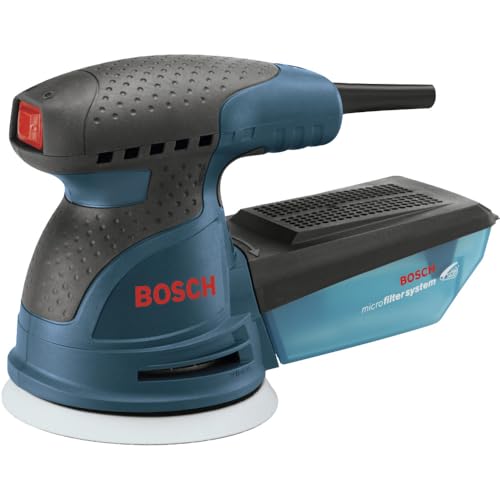
Bosch ROS20VSC Random Orbit Sander
What We Like
- Excellent pad dampening system minimizes swirl marks
- Hard plastic dust canister with clear level indicator
- Includes vacuum adapter for shop vac connection
- Quiet operation reported in expert testing
Trade-offs
- Corded design limits portability compared to battery models
- At 3.5 lb, it's not the lightest in its class
The Bosch ROS20VSC is the quietest sander in its category at 84 dB, a major benefit for comfort during long projects. Its pad dampening system helps minimize swirl marks on flat and contoured surfaces for a smooth finish. Reviewers report it is also the smoothest in operation, which significantly reduces user fatigue over extended use.
You trade some portability for that smooth, quiet performance, as it’s a corded tool. The dust collection is a strong point, however, with a twist-off hard canister and a fine 1/2-micron filter that outperforms flimsy bags and adapts directly to a shop vac. While the Makita BO5030K might be a more common find on some shelves, the Bosch’s combination of refined vibration control and superior dust management is hard to beat for dedicated workshop use.
Festool ETS EC150/5 Random Orbital Sander

What We Like
- Remarkably light at just 2.5 pounds for minimal arm fatigue.
- Maintains constant speed under load for consistent finish.
- Vibration Control System technology smooths out operation.
Trade-offs
- Slightly heavier than the lightest competitor (Mirka DEROS II).
- 5 mm stroke prioritizes finish over aggressive stock removal.
Weighing only 2.5 pounds, this sander dramatically reduces user fatigue during long sanding sessions, making it a standout for detailed finish work or large surface areas. Its compact design and integrated vibration control further enhance comfort, while the EC motor ensures it doesn’t bog down when you lean into it. This is the tool for professionals or serious hobbyists who value endurance and precision over raw speed, and who are willing to invest in a premium ergonomic experience.
Festool designed this sander for smooth, controlled operation, prioritizing user comfort during long sessions over the fastest material removal. Its 5 mm sanding stroke is efficient but is oriented more toward fine finishing work. While the tool offers a refined experience compared to models like the corded DEWALT DWE6423, its larger 6-inch platform and specialized features come with a higher initial price.
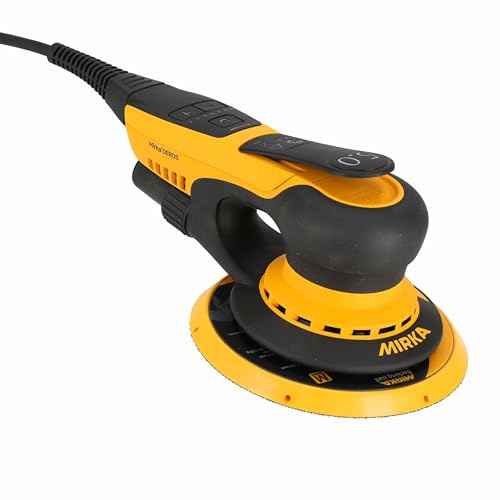
Mirka DEROS II 550X Random Orbital Sander
What We Like
- Extremely lightweight at 2.2 pounds
- Brushless motor for consistent power
- Integrated dust extraction system
- Bluetooth for app-based settings
Trade-offs
- Tool only: battery and charger sold separately
- Compact size may be less stable on large surfaces for some users
- Advanced features add complexity over basic sanders
At 2.2 pounds, the Mirka DEROS II 550X is significantly lighter than most 5-inch sanders, which directly reduces arm fatigue during extended use. Its brushless motor is designed for consistent power, and the low vibration operation aids in control. An integrated dust extraction system helps keep the workspace cleaner and maintains visibility of the sanding surface.
This is a feature-focused tool that includes Bluetooth connectivity for accessing settings and information through a compatible app. The tool is sold without a battery, so that must be purchased separately for operation.
Product photos
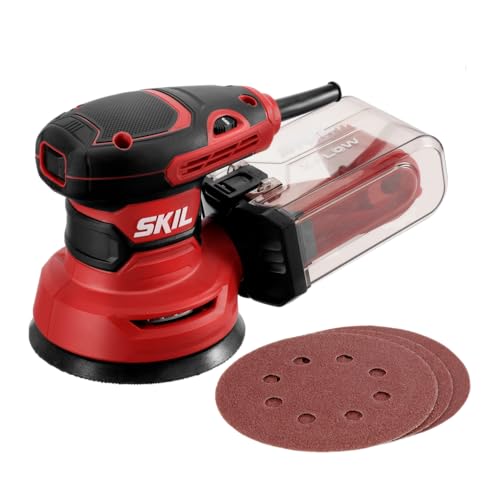
SKIL SR211601 Random Orbital Sander
What We Like
- Compact size for sanding in tight spaces.
- Low-vibration, ergonomic design reduces hand fatigue.
- Easy-to-empty transparent dust container.
- Dust-sealed on/off switch for simple operation.
Trade-offs
- The 3.4 lb weight is heavier than some compact models like the 2.2 lb Mirka.
With a 2.8 amp motor spinning at 13,000 orbits per minute, the Skil SR211601 delivers solid, controlled power for general woodworking tasks. It’s a straightforward tool that focuses on the essentials for a DIYer or a pro on a tight budget. The standout feature is the cyclonic dust box, which genuinely simplifies cleanup compared to basic bag systems. If your projects involve frequent material changes, the variable speed dial gives you the flexibility to adjust for different surfaces without bogging down.
A 2.8 amp motor drives this sander at 13,000 orbits per minute, which is enough power for most common sanding tasks on wood and other materials. Its compact size, at 7.9 inches long, helps it reach into corners and tight spaces that bulkier tools cannot. An ergonomic design with a soft rubber grip, combined with a counterweight to reduce vibration, aims to keep your hand comfortable during longer sessions.
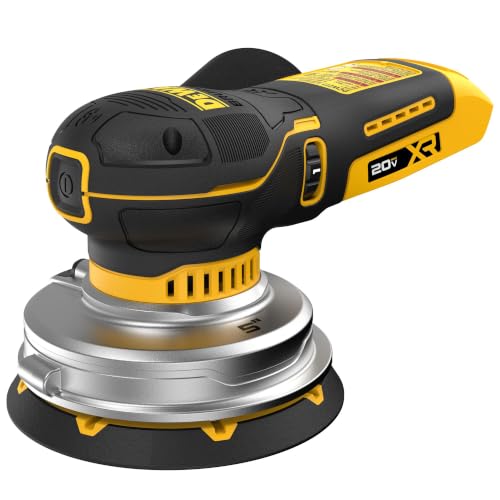
DEWALT DCW211B Cordless Random Orbit Sander
What We Like
- Lowest profile design for tight spaces
- Up to 40% less vibration reduces fatigue
- Variable speed control with five settings
- Sands up to 50 sq-ft. on a single charge
Trade-offs
- Requires separate purchase of a compatible vacuum for dust collection.
- Battery and charger are not included with the tool.
Sand up to 50 square feet on one charge, which covers most medium-sized projects without needing an outlet. This cordless freedom pairs with a low-vibration design that reduces fatigue during long sessions. Five speed settings, from 8,000 to 12,000 opm, let you adjust for delicate finishes or faster material removal.
The trade-off is that you’re committing to a battery platform. If you don’t already own DEWALT 20V tools, you’ll need to factor in the cost of batteries and a charger. For a permanent workshop setup where a cord is never an inconvenience, a dedicated corded model like the DEWALT DWE6423 might be a simpler, lighter solution. But for sheer mobility and the ability to work anywhere, this cordless sander delivers legitimate shop-grade performance without the tether.
Product photos
Makita BO5030K Random Orbit Sander

What We Like
- Rubberized grip improves comfort and control
- Smooth operation at a quiet 86 dB
- Includes a protective hard plastic case
- Pad control system for steady start-up
Trade-offs
- No variable speed control for delicate work
- Dust bag is difficult to clean effectively
- Small dust port requires an adapter for a vacuum
Coming in second out of six in a comparative test, the Makita BO5030K is a high-performing sander. Its 3.0 AMP motor and large 1/8-inch orbit deliver smooth, fast material removal, while a pad control system prevents the disc from jumping on startup. At 86 dB, reviewers note it runs quieter than most, which makes for a more pleasant experience during long sanding sessions.
This model lacks variable speed, which can make it less suited for fine finishes on delicate materials. Its dust collection is merely okay with the included bag, and you’ll need an adapter to connect to a shop vacuum. For a reliable, smooth-running sander that comes ready to store and transport, it delivers core performance without complication. If you need that speed control, Makita’s own BO5041 model is the logical step up.
Makita BO5041 Random Orbit Sander

What We Like
- Variable speed dial matches sanding to the task
- Ergonomic rubberized palm grip and handle
- Large two-finger trigger with lock-on button
Trade-offs
- Dust collection bag is soft and difficult to clean
- Small dust port requires an adapter for a vacuum
A 3.1-pound tool with a fully rubberized grip and adjustable handle gives you a commanding yet comfortable feel during long sanding sessions. This Makita is built for the user who values hand comfort and precise control above all else. Its variable speed dial lets you dial down for delicate veneers or crank it up for aggressive stock removal, while the large trigger and lock-on button reduce hand fatigue. For consistent, demanding work where your grip matters, this sander’s ergonomic design is a clear advantage.
The Makita BO5041 is a comfortable workhorse with a 3.0 AMP motor for smooth, fast sanding and a variable speed dial from 4,000 to 12,000 OPM, letting you match the pace to the material. Its rubberized grip and adjustable front handle give you control even in corners. However, the dust collection uses a soft bag that reviewers report can be hard to clean, and its small port requires an adapter for a vacuum.
Product photos
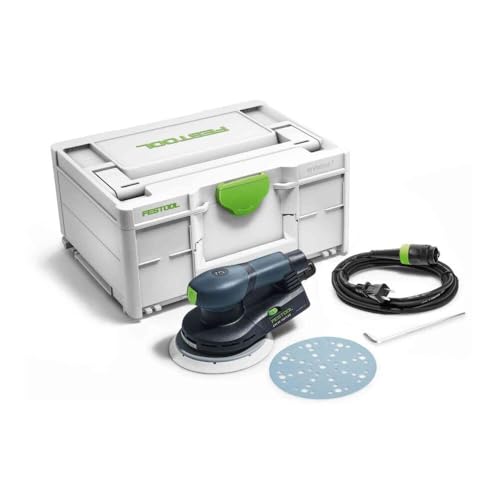
Festool ETS EC150/3 Random Orbital Sander
What We Like
- 3 mm stroke creates extremely high surface quality.
- Weighs only 2.5 lbs for reduced fatigue.
- Maintains constant speed under load for consistency.
- Vibration Control System for smoother operation.
Trade-offs
- Length of 15.6 inches is significantly larger than most palm sanders.
- Large size can hinder access in tight corners.
A 3 mm sanding stroke is the key here. That short, tight orbit is specifically engineered to produce a finish-ready surface with minimal swirl marks, which is why this sander stands out for cabinetmakers and fine woodworkers. The Vibration Control System and a remarkably light 2.5-pound body mean you can work for hours without the numb hands that plague other sanders. It’s a tool built for pros who measure their time in projects completed, not just wood removed.
Festool’s ETS EC150/3 is 15.6 inches long, which gives it a larger profile than many other sanders. This size can make it less maneuverable in very tight spaces compared to a compact model like the Bosch ROS20VSC, which is only 9.0 inches long. For tasks where ultimate surface quality is the primary goal, the larger platform can be an advantage, but it requires more room to operate effectively.
Product photos
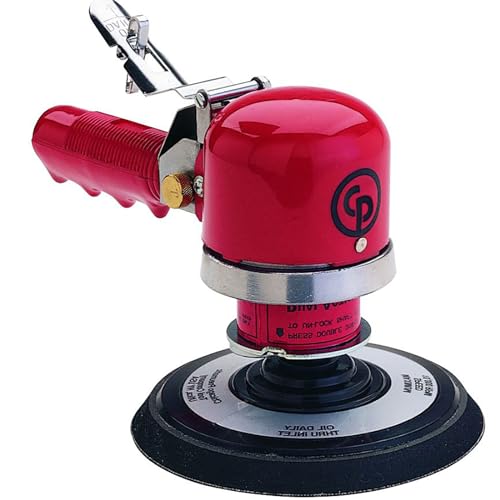
Chicago Pneumatic CP870 Air Sander
What We Like
- High 10,000 RPM speed for fast material removal
- Dual-action rotary or random orbital operation
- Safety lever and lock-off throttle for control
- Insulated composite grip reduces fatigue
Trade-offs
- Requires a dedicated air compressor to operate
- Non-vacuum pad creates significant airborne dust
Operating on shop air, the Chicago Pneumatic CP870 uses a 10,000 RPM free speed for aggressive filler smoothing and rust removal. Its dual-action rotary or random orbital operation provides versatility for tasks like body shop blending and feather edging. An insulated composite grip and 4.25 lb. weight aid control during extended sanding sessions, while a safety lever helps prevent accidental startups.
This sander depends entirely on a capable air compressor, which limits its portability compared to corded or cordless models. Its 4.2-pound weight is balanced for control but feels heftier than options like the Bosch ROS20VSC. The lack of a vacuum connection also means you’ll be working in a cloud of dust unless you rig an external solution. Built for speed and durability, this is a specialist’s tool meant for professional environments where air lines are standard.
Product photos
How We Evaluated Random Orbital Sanders
Our research focused on manufacturer specifications, expert tool round-ups, and consistent patterns in owner feedback. We prioritized criteria that directly impact sanding results and user comfort: vibration control for reduced hand fatigue, dust collection effectiveness for a cleaner shop, and overall ergonomics for comfortable handling during long sessions.
We also considered motor power and pad stroke for their roles in material removal speed and final surface quality. A research-based evaluation like this cannot replicate years of professional wear and tear, but it reliably identifies tools with the features and reported performance that matter most to woodworkers.
What To Look For In Random Orbital Sanders
A random orbital sander’s job is to remove material efficiently while leaving a smooth, swirl-free surface ready for finish. Key factors include its vibration dampening, dust collection setup, and the balance between power and control.
Look for a sander with effective vibration dampening to reduce fatigue during long jobs. It’s also helpful to have a dust port compatible with your shop vacuum. Finally, match the pad stroke length to your work; a longer stroke removes material faster, while a shorter one is better for finishing.
Vibration and Ergonomics
Vibration is the primary cause of hand and arm fatigue during extended sanding. Models with separate counterweights or advanced dampening systems, like those from Bosch and Festool, consistently receive high marks from users for smoother operation. Ergonomics also play a major role; a well-balanced tool with a comfortable rubberized grip allows for better control and less strain, especially when sanding vertical surfaces or overhead.
Dust Collection
Effective dust collection keeps your workspace clean, protects your lungs, and can improve sanding performance by keeping the abrasive paper from clogging. Look for a sander with a dust port that accepts a standard shop vacuum hose, either directly or with a simple adapter. While integrated bags or canisters are convenient for quick tasks, connecting to a vacuum is more effective for extended work. The best sanders for finishing furniture prioritize excellent dust extraction to achieve a clean, contaminant-free surface.
Power and Stroke
A sander’s power, measured in amps for corded models, influences its ability to maintain speed under pressure and avoid bogging down. The orbital stroke length, typically between 3mm and 5mm, determines its character: shorter strokes (3mm) excel at fine finishing with minimal swirl marks, while longer strokes (5mm) are more aggressive for faster stock removal. Your project focus should guide this choice. For a deeper dive into plug-in options, see our guide on corded random orbital sanders.
- Check the amperage rating on corded models; higher numbers generally indicate more sustained power.
- Match the stroke length to your most common task: 5mm for general construction, 3mm for fine furniture.
- Consider variable speed control if you work with delicate veneers or painted surfaces.
- Remember that cordless models offer ultimate mobility but require investment in a battery system.
A good rule of thumb: choose a sander whose power and stroke align with your most frequent project type to avoid frustration.
Random Orbital Sanders Compared
The following table compares key specifications across our top picks to help you see the differences at a glance.
| Product | Pad Size | Speed Range | Weight |
|---|---|---|---|
| DEWALT DWE6423 Random Orbit Sander | 5-Inch | 8,000 – 12,000 OPM | 3.4 pounds |
| Bosch ROS20VSC Random Orbit Sander | 5 inches | 7,500-12,000 OPM | 3.5 Pounds |
| Festool ETS EC150/5 Random Orbital Sander | 6-inch | Stepless, constant under load | 2.5 lbs (1.2 kg) |
| Mirka DEROS II 550X Random Orbital Sander | 5 Inch | N/A | 2.2 pounds |
| SKIL SR211601 Random Orbital Sander | 5” | 13,000 orbits per minute | 3.4 pounds |
| DEWALT DCW211B Cordless Random Orbit Sander | 5 inches | 8,000 – 12,000 opm | 3.8 pounds |
| Makita BO5030K Random Orbit Sander | 5" | 12,000 OPM | 2.9 pounds |
| Makita BO5041 Random Orbit Sander | 5" | 4,000-12,000 OPM | 3.1 Pounds |
| Festool ETS EC150/3 Random Orbital Sander | 6-Inch | Stepless variable | 2.5 lbs (1.2 kg) |
| Chicago Pneumatic CP870 Air Sander | 6-inch | 10,000 RPM | 4.2 pounds |
Frequently Asked Questions
What is the best random orbital sander for a beginner?
For a beginner, we recommend the SKIL SR211601 for its balance of affordability, capable performance, and user-friendly features like an easy-to-empty dust container. It’s a forgiving tool that handles general DIY projects well without a steep learning curve, allowing you to develop good random orbital sander technique without a major investment.
Is a corded or cordless random orbital sander better?
The choice depends on your workspace and workflow. Corded sanders provide unlimited run time and consistent power, ideal for shop-based work. Cordless models offer complete freedom from outlets and cords, perfect for job site mobility or finishing work away from a bench. Our separate resource on best cordless random orbital sanders can help if portability is your top priority.
What size sandpaper does a random orbital sander use?
The vast majority of standard random orbital sanders use 5-inch diameter hook-and-loop sandpaper discs. This size offers an ideal balance between surface coverage and maneuverability. Always check your specific model’s manual, but you can generally stock up on 5-inch discs with confidence.
How important is dust collection on a sander?
Extremely important. Good dust collection protects your health, keeps your workspace clean, and prevents sandpaper from loading up with debris, which maintains cutting efficiency and extends disc life. For any serious sanding session, connecting the sander to a shop vacuum or dust extractor is highly recommended.
Can a random orbital sander remove a lot of material?
Yes, especially models with a longer orbital stroke (5mm) and higher power ratings. While they won’t strip material as fast as a belt sander, modern random orbital sanders are quite capable for flattening, leveling seams, and removing old finish. For the fastest removal, use a coarse-grit abrasive and let the tool’s weight do the work without pressing down.
The Bottom Line
The DEWALT DWE6423 is our best overall pick for its proven durability and versatile performance, making it an excellent choice for both dedicated DIYers and professionals tackling a wide range of sanding tasks. If your budget is tight, the SKIL SR211601 delivers remarkable value, while those seeking the smoothest operation for long sessions should look at the Bosch ROS20VSC or the lightweight Festool and Mirka models. Ultimately, matching the sander’s power, stroke, and dust collection to your specific projects is the most important step toward a better finish with less effort.
