
10 Best Saws For Cutting Molding in 2026
This post contains affiliate links. As an Amazon Associate, we earn from qualifying purchases.
For clean, precise molding cuts, the DEWALT DWS779 12-Inch Sliding Compound Miter Saw is our best overall pick, thanks to its tall fences for large moldings and powerful motor. For space-tight workshops, the Makita LS1019L offers a compact, precise design, while the DEWALT DCS785B excels at dust collection for indoor jobs.
Choosing the right saw makes the difference between a smooth installation and a frustrating project. Molding work demands accuracy, adequate cutting capacity, and a tool that fits your workspace. This guide identifies the top ten models for different needs based on specifications, manufacturer data, and patterns in owner feedback.
Top 10 Saws For Cutting Molding in the Market
Certain content that appears on this site comes from Amazon. This content is provided "as is" and is subject to change or removal at any time.
The Best Saws For Cutting Molding, Reviewed
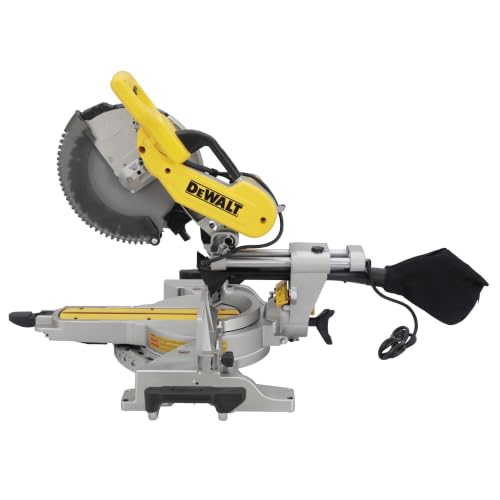
DEWALT DWS779 12-Inch Sliding Compound Miter Saw
What We Like
- Tall sliding fences support large crown and base molding
- Powerful 15-amp motor for demanding cuts
- Adjustable stainless miter detent plate for accurate stops
- Super-efficient dust collection system keeps workspace cleaner
Trade-offs
- Weighs 67.7 lb, requiring a sturdy, permanent work surface
- Large 21 x 17 x 17 inch footprint needs significant shop space
A capacity for crown molding up to 7-1/2 inches nested means trim carpenters can handle common, bulky profiles without extra steps. The tall sliding fences give solid support for vertical cuts on base molding and slide clear for bevel work. With a motor that delivers 3,800 rpm, this saw manages daily shop tasks on trim and dimensional lumber without straining.
The trade-off for that capacity and power is a substantial, heavy saw that isn’t meant to be hauled to a job site every day. Its sliding mechanism, while increasing crosscut reach, introduces more moving parts than a basic chop saw, which some seasoned craftsmen note can affect long-term accuracy if not maintained. For purely onsite trim work where portability is paramount, a cordless option like the DEWALT DCS785B might be a more practical choice, sacrificing some cutting breadth for outright mobility.
Makita LS1019L 10-Inch Sliding Compound Miter Saw

What We Like
- Compact footprint fits flush against a wall
- Linear ball bearings for dead-on accurate cuts
- 12-inch saw capacity in a 10-inch saw class
Trade-offs
- 57.9 lb weight still needs a stand for frequent moves
- Maximum vertical cut is 5-1/4 inches
A 6-5/8 inch nested crown molding capacity gives you the useful work of a bulkier 12-inch saw from a tool that’s only 12.9 inches deep. That compact design, paired with a linear ball bearing slide system, is why this model suits trim carpenters and serious DIYers who need precision in tight spaces like a finished room or a crowded truck bed. Its single-glide rail system and reduced weight make it genuinely easier to position and use than many sliding miter saws.
The trade-off is in outright size capacity; for cutting very tall baseboards or thick stock, the 5-1/4 inch vertical limit is a real ceiling. It’s a specialist for precision joinery, not heavy framing. If your primary need is maximum crosscut capacity on wider boards, you’ll want to look at a full-size slider like the DEWALT DWS779. But for the core task of cutting molding accurately where space is limited, the Makita’s engineered compromise is exceptionally smart.
DEWALT DCS785B 12-Inch Cordless Sliding Miter Saw

What We Like
- Captures up to 97% of dust for a cleaner workspace
- Cordless design with wide 20V battery compatibility
- Large 14-inch horizontal cut capacity for wide moldings
- Integrated wireless vacuum control for dust management
Trade-offs
- Tool-only listing requires separate battery and charger purchase
- At 51.7 pounds, it's less portable than compact 10-inch models
Its dust collection captures up to 97% of dust, which helps maintain a clean work environment. This efficiency is paired with integrated wireless tool control to operate a vacuum from the saw’s trigger. For indoor cutting tasks like trim work, research on other DeWalt cordless miter saws notes that such dust management makes them stand out.
You pay for cordless convenience and dust control with heft and upfront cost. At 51.7 pounds for the tool only, it is lighter than many corded sliding miter saws, but its 65.9-pound shipping weight reflects substantial packaging. The listing is for the tool only, so the price of capable 20V MAX or FLEXVOLT batteries must be added separately.
Product photos
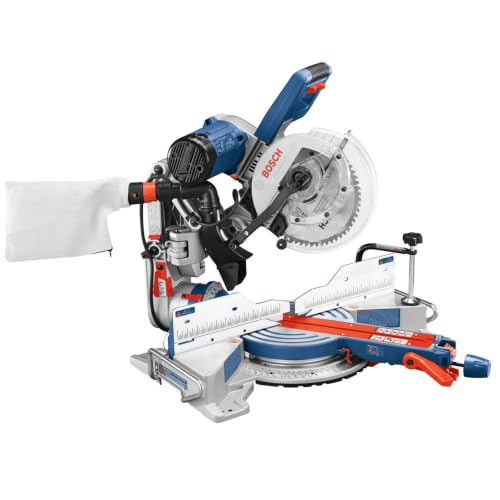
BOSCH CM10GD 10-Inch Dual-Bevel Glide Miter Saw
What We Like
- Axial-Glide System for durable precision cuts.
- Articulated arms reduce footprint by up to 10 inches.
- Front bevel lock and selector for easy adjustments.
- Tall sliding fences for increased molding capacity.
Trade-offs
- Limited to 10-inch blade versus 12-inch models.
- Weighs 64 pounds, making it less mobile.
The articulated hinge arms reduce the front-to-back footprint by up to 10 inches, which is the key fact for anyone working in a tight corner or against a wall. This saw lets you tackle wide crown and baseboard molding without needing to pull your bench away from the wall, a genuine space-saver in a crowded shop. It’s built for the detail-oriented woodworker who needs the capacity of a sliding saw but can’t sacrifice the precious real estate behind it. The powerful 15-amp motor and wide bevel range handle complex compound cuts with authority.
Articulated hinge arms reduce the front-to-back footprint by up to 10 inches compared to traditional slide saws, so it fits into tighter workshop spaces where rear clearance is limited. At 64 pounds, it’s a substantial, stationary tool built for a shop or permanent stand. The powerful 15 Amp motor spins the blade at 4,800 RPM, providing the speed needed for clean cuts in demanding materials.
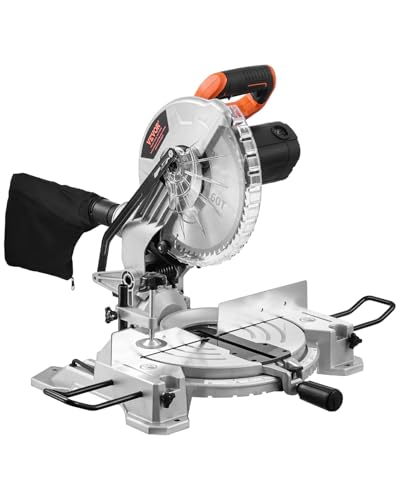
VEVOR 10-Inch Compound Miter Saw
What We Like
- Lightweight aluminum base for easy transport
- LED guide system for clear cutting lines
- Dual-button activation for safety
- Powerful 15 Amp motor for demanding cuts
Trade-offs
- Single-bevel design limits complex crown cuts
- Non-sliding head reduces crosscut capacity
- Weight is not the lightest in the guide
Weighing 24.2 pounds, this saw is easy to carry from a truck to a job site or around a workshop, thanks to its lightweight cast aluminum base. The 15-amp motor provides enough power for cutting hardwood and thick boards, as stated in its specifications. An LED guide system projects clear cutting lines to help with accuracy, while a reliable locking system secures the chosen angle for miter and bevel cuts.
This easy handling does come with some limitations in capability. The single-bevel design only tilts to the left, which complicates cutting certain crown molding setups where a right tilt is needed. Its fixed head also means you’re limited on width compared to a sliding model like the DEWALT DWS779. For intricate trim work requiring compound angles in both directions, you’ll be constantly flipping the workpiece. This saw excels at straightforward cuts on lighter materials where its portability is the primary advantage.
Product photos
Makita LS1219L 12-Inch Sliding Compound Miter Saw

What We Like
- Large capacity for wide crown molding and baseboard
- Flush-to-wall sliding rail design saves space
- Dual dust collection ports for cleaner work
- Convenient in-front bevel lock mechanism
Trade-offs
- At 81.6 lb, it's a two-person lift for setup.
- The 36-inch width demands significant bench space.
- Heavier and larger than the 67.7 lb Dewalt DWS779.
A 15-inch crosscut capacity and the ability to handle 8-inch crown molding vertically nested mean this saw tackles the widest trim boards and large casings with authority. For the finish carpenter or serious DIYer installing substantial custom moldings, that extra reach is the primary reason to choose this tool. Its unique sliding system keeps the body compact, allowing you to set it tight against a wall in a permanent shop installation, which is where a saw of this class belongs.
That capability comes with real heft. The Makita LS1219L is a substantial, stationary tool, not one you’ll want to haul to a job site every day. For most trim work, a lighter 10-inch sliding saw like the Makita LS1019L offers plenty of capacity. But when your project list includes wide baseboards, deep crown, or cutting large picture frame stock, this is the saw that pulls the duty without forcing a compromise on your cut line.
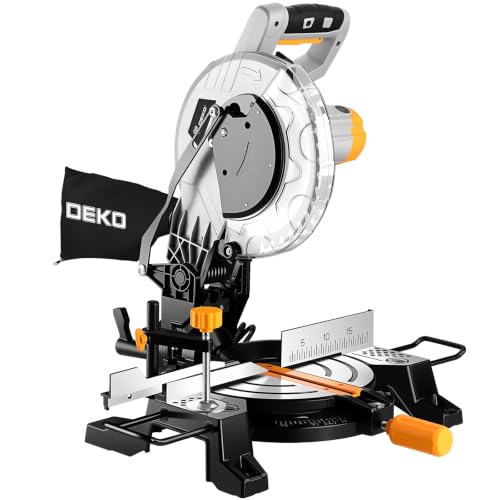
DEKOPRO 10-Inch Compound Miter Saw
What We Like
- Exceptionally fast 5,000 RPM motor speed
- Lightweight and compact for easy transport
- Transparent blade guard improves cut line visibility
- Integrated clamp secures workpiece for stability
Trade-offs
- Single-bevel design limits complex compound cuts
- Non-sliding mechanism reduces crosscut capacity
A 5,000 RPM blade speed means this saw slices through trim and molding with remarkable speed and a clean finish, minimizing sanding. Its 20.5-pound weight and locking head make it a genuinely portable option for moving between rooms or job sites. For the DIYer tackling a room of crown or baseboard, the single-bevel design and straightforward miter adjustments provide all the essential angles without complexity. It’s built for the user who values quick, precise cuts on standard stock over elaborate capability.
This compound miter saw does not have sliding rails, so its crosscut capacity is limited to the width of its 10-inch blade. For cutting wider stock, the workpiece would need to be flipped. In contrast, products like the DEWALT DWS779 and Makita LS1019L are explicitly listed as sliding compound miter saws, a feature that typically increases crosscut capacity for wider materials in a single pass.
Product photos
BOSCH GCM18V-10SDN Cordless Slide Miter Saw Kit
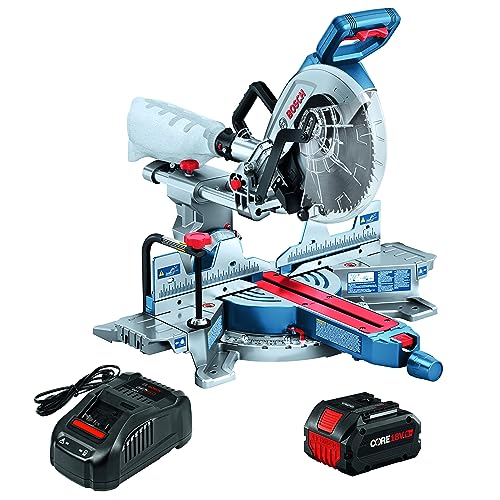
What We Like
- Large crosscut capacity for trim and molding
- Cordless freedom with pro-grade brushless motor
- Tall fence supports taller stock accurately
Trade-offs
- Tool only: requires a separate CORE18V battery and charger purchase
- Cut depth is 3.5 inches, limiting some thick stock cuts
- Overall footprint is larger than compact, non-sliding models
This saw’s tool-only weight of 40.2 pounds makes it easier to move between job sites than many heavier corded models. Its 11-1/2 inch crosscut capacity handles wide crown molding and baseboards, while the dual-bevel design simplifies complex compound cuts to either side of the workpiece. The cordless design offers freedom from outlets, though the battery and charger are sold separately.
The trade-off is that you’re buying into a system. The saw arrives without a battery or charger, so you need to factor in that additional cost and ensure you’re already invested in the Bosch 18V platform. Compared to a corded workhorse like the DEWALT DWS779, you’re sacrificing some raw power and unlimited runtime for ultimate portability. This saw is about cutting the cord, not cutting corners, making it perfect for finish carpenters who value a clean, fast setup over a stationary power station.
Product photos
Delta Cruzer 10-Inch Sliding Miter Saw

What We Like
- Fully assembled and ready to use
- Heavy-duty aluminum frame for durability
- Front-mount bevel locking for secure adjustments
- Strong startup torque for reliable cutting
Trade-offs
- At 60 pounds, it's heavy for frequent job-site transport.
- Large 29.5-inch length demands ample bench space.
Arriving fully assembled means you can pull it from the box, set it on a stand, and start making precise cuts on your crown molding. That immediate readiness is a huge advantage for a contractor who needs to jump into a job or a dedicated DIYer who wants to avoid setup frustration. The heavy-duty aluminum frame and high-strength bearings are built to handle the repetitive, accurate cuts trim work demands, promising a tool that will stay accurate over years in the shop.
That solid, out-of-the-box performance does require accommodating a substantial 60-pound footprint. It’s a shop saw first, not one you’ll want to heave in and out of a truck bed daily. For a more portable 10-inch sliding option with a similar crosscut capacity, the Makita LS1019L is notably more compact, though it doesn’t share the Cruzer’s pre-assembled convenience. The Delta’s design prioritizes durable, stable precision right from the start.
WOODSTARTER 8-Inch Cordless Miter Saw
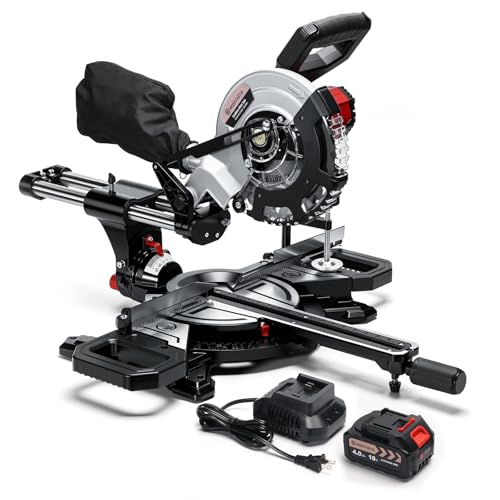
What We Like
- Cordless and lightweight for easy portability
- Sliding rail system for wider 12-inch crosscuts
- Dual-hand start trigger for enhanced safety
Trade-offs
- 8-inch blade limits its depth compared to 10- or 12-inch saws
- Single bevel design, unlike dual-bevel models like the DEWALT DWS779
Weighing just 26 pounds with a built-in battery, this saw is built to be picked up and carried. That cordless portability makes it a natural for finish work in different rooms or on a crowded job site where running an extension cord is a hassle. The sliding rail gives it a 12-inch crosscut capacity, which handles most crown molding and baseboard in a single pass. For a DIYer tackling trim in a living room or a contractor needing a quick, clean saw for punch-list items, its lightweight design and included clamps get the job moving fast.
You get that ultra-light build by using an 8-inch blade. Its 2.5-inch depth of cut is sufficient for standard moldings but can struggle with thicker stacked crown or large casing. It’s a single-bevel saw, so for a complex crown installation requiring compound angles on both sides, you’d be flipping the workpiece instead of just the saw head like on a dual-bevel model. Compared to the heavier, corded DEWALT DWS779, you’re trading raw power and maximum capacity for ultimate maneuverability and cord-free convenience.
Product photos
How We Evaluated Saws For Cutting Molding
Our research focused on specifications and design features critical for trim and molding work. We analyzed manufacturer documentation, expert round-ups, and consistent patterns in owner reviews to understand how each saw performs in real-world use, particularly for tasks like cutting crown molding with a miter saw.
Key criteria included cutting capacity for wide crown and tall baseboard, the saw’s footprint and weight for workshop or job-site use, and features that enhance precision like adjustable detent plates and linear bearing systems. We also prioritized dust collection effectiveness for cleaner indoor work and the flexibility of cordless versus corded power. A research-led evaluation cannot replicate years of hands-on wear, so we emphasize design durability and owner-reported reliability over time. For a broader look at features, you can explore our general guide on buying a miter saw.
What To Look For In Saws For Cutting Molding
Selecting the right tool depends on the type of molding, your workspace, and how often you’ll use it. Balancing capacity, precision, and practicality is key for professional results.
Look for a saw with enough crosscut and vertical capacity for your widest molding, a footprint that fits your shop, and features like dual bevels for complex crown cuts. Good dust collection is essential for indoor work.
Cutting Capacity
Capacity is defined by the blade size and whether the saw head slides. A 12-inch sliding saw, like our best overall pick, can handle wide crown molding laid flat and tall baseboard cut vertically. A 10-inch non-sliding model is limited to narrower stock. For complex crown molding installed “nested” against the fence, tall sliding fences are a major advantage. Check the maximum horizontal and vertical cut dimensions against your typical materials.
Saw Type & Features
A sliding compound miter saw provides the most versatility, allowing for bevel and miter cuts on wide boards. For basic baseboard and casing, a standard compound miter saw may suffice. Dual-bevel capability lets you tilt the blade left and right without flipping the workpiece, a huge time-saver for crown. Look for precise miter detents and easy-to-read scales to ensure repeatable accuracy on every cut.
Workspace & Portability
Consider where the saw will live. Sliding saws with rear-protruding rails need significant depth behind the saw, while space-saving “wall-flush” designs like the Bosch Axial-Glide can be placed tighter to a wall. Weight varies dramatically, from ultra-light cordless models around 20 pounds to heavy-duty 12-inch saws over 80 pounds meant for a permanent stand. If you need to move the saw often, a lighter weight and compact footprint are critical.
- Measure your available bench space for both the saw’s footprint and the needed clearance behind it.
- For indoor remodeling, prioritize saws with effective dust collection ports.
- If you already own a cordless tool system, a compatible cordless saw adds great convenience.
- For complex crown molding projects, ensure the saw has dual-bevel capability.
The best saw fits your largest molding, your available space, and your need for either shop precision or jobsite portability.
Saws For Cutting Molding Compared
The following table compares the key specifications and features of our top picks to help you see the differences at a glance.
| Product | Bevel Type | Max Crosscut Capacity | Weight |
|---|---|---|---|
| DEWALT DWS779 12-Inch Sliding Compound Miter Saw | Double bevel | 2 x 14 dimensional lumber | 67.7 Pounds |
| Makita LS1019L 10-Inch Sliding Compound Miter Saw | Dual-Bevel | N/A | 57.9 lb |
| DEWALT DCS785B 12-Inch Cordless Sliding Miter Saw | Double bevel | 14 inches | 51.7 pounds |
| BOSCH CM10GD 10-Inch Dual-Bevel Glide Miter Saw | Dual-Bevel | 12 inches | 64.0 pounds |
| VEVOR 10-Inch Compound Miter Saw | Single Bevel | N/A | 24.2 pounds |
| Makita LS1219L 12-Inch Sliding Compound Miter Saw | Dual-Bevel | 15 inches at 90° | 81.6 pounds |
| DEKOPRO 10-Inch Compound Miter Saw | Single Bevel | N/A | 20.5 lbs |
| BOSCH GCM18V-10SDN Cordless Slide Miter Saw Kit | Dual-bevel design | 11-1/2 in. width | 40.1 pounds |
| Delta Cruzer 10-Inch Sliding Miter Saw | Dual Bevel | 16 inches | 60.0 pounds |
| WOODSTARTER 8-Inch Cordless Miter Saw | Single bevel | 12 inches | 2.9 pounds |
Frequently Asked Questions
What type of saw is best for cutting molding?
A sliding compound miter saw is the best choice for most molding work. It combines the ability to make angled miter cuts with a sliding head that increases crosscut capacity, allowing you to handle wide crown molding and tall baseboards efficiently and precisely.
What’s the best way to cut molding?
The best method is to use a sharp, fine-tooth blade in a miter saw for clean cuts. For inside corners, use a coped joint for a tighter fit than a simple miter. Always make test cuts on scrap material to verify your saw’s angle settings before cutting your finished pieces.
What kind of saw do you need to cut baseboards?
You need a miter saw to cut the precise angles required for baseboard corners. A standard 10-inch compound miter saw is sufficient for most baseboard profiles. For taller or wider modern baseboards, a sliding compound miter saw provides the necessary vertical and horizontal cutting capacity.
What type of saw blades are best for cutting trim?
Fine-tooth blades with 60 to 80 teeth are best for cutting trim and molding. These blades produce a smoother, splinter-free cut on finished wood compared to general-purpose blades with fewer teeth. Using the correct blade is as important as choosing the right saw for clean results.
Is a corded or cordless miter saw better for trim work?
Corded saws offer consistent, unlimited power and are often more affordable, making them ideal for shop-based work. Cordless saws provide excellent portability and eliminate trip hazards, which is valuable for remodeling jobs inside finished homes, but they require an investment in batteries.
The Bottom Line
For serious DIYers and professionals tackling a variety of molding projects, the DEWALT DWS779 12-Inch Sliding Compound Miter Saw delivers the power, capacity, and accuracy needed for demanding shop use. If you work in tight spaces, choose the compact Makita LS1019L; for the cleanest indoor jobs, the DEWALT DCS785B‘s dust collection is unmatched.
Your most important decision is matching the saw’s cutting capacity and footprint to your specific molding sizes and workshop. A saw that’s too small or too large for your space will hinder your work, so prioritize the tool that fits both your projects and your shop.
