
10 Best Sanders For Wood Furniture in 2026
This post contains affiliate links. As an Amazon Associate, we earn from qualifying purchases.
For a powerful, corded sander that excels at finish work and dust extraction, we recommend the Festool RTS 400 REQ-Plus Finish Orbital Sander as the best overall. The DEWALT DWE6421K is our best value workhorse, and the Festool DTS 400 REQ-Plus is the top choice for low vibration on detailed work.
The right sander transforms furniture refinishing from a chore into a controlled process. It must remove material efficiently without damaging veneers or leaving swirl marks, all while keeping dust contained and your hands comfortable. Our research into specifications, expert round-ups, and patterns in owner feedback helped us select these ten models to suit different needs and budgets.
Top 10 Sanders For Wood Furniture in the Market
Certain content that appears on this site comes from Amazon. This content is provided "as is" and is subject to change or removal at any time.
The Best Sanders For Wood Furniture, Reviewed
Festool RTS 400 REQ-Plus Finish Orbital Sander

What We Like
- 250-watt motor provides ample power for finish work.
- Interlocking dust port ensures excellent extraction.
- Rubberized grip improves control during long sessions.
Trade-offs
- At 8.2 pounds, it's heavier than most palm sanders.
- Its 15.6-inch length demands more storage space.
- Designed for dust extraction, requiring a vacuum for best results.
With a 250-watt motor that’s 25% more powerful than its predecessor, this sander is built for demanding finishing work. The improved ergonomics include rubberized, textured grip surfaces for better control. Its interlocking dust port connects to Festool’s CT Connector for improved retention, capturing dust as it’s made.
You pay for that capability in size and heft. At 8.2 pounds, it feels substantial in hand, offering stability that benefits final sanding passes but can lead to fatigue on overhead surfaces. Compared to a compact option like the DEWALT DWE6421K, the Festool is a dedicated bench tool for serious finishing, not a lightweight for quick touch-ups. Its design assumes you’ll pair it with a dust collector to unlock its full, clean-working potential.
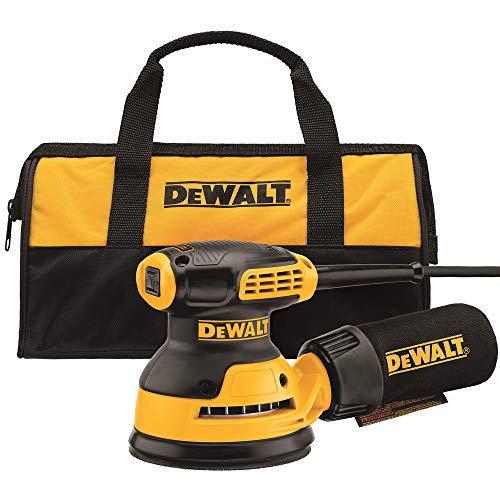
DEWALT DWE6421K 5-Inch Orbital Sander Kit
What We Like
- Powerful 3-amp motor for fast material removal
- Separate counterweight design reduces user vibration
- Improved dust-sealed switch for longer life
- One-handed locking dust bag for easier cleanup
Trade-offs
- Corded design limits mobility compared to battery models
- Dust bag is the primary collection method without a shop vacuum
- Lacks variable speed control found on some competitors
A 3.0 amp motor spins the pad at 12,000 OPM, providing the power to remove paint and stain quickly on flat surfaces. Its shorter height allows the user to get closer to the work piece, and rubber over-mold in critical areas aids comfort. One owner reports using it as a workhorse for over 5+ years. The improved dust collection includes a one-handed locking dust bag.
This corded sander operates at a single speed of 12,000 OPM. A variable-speed model like the Makita BO5041 would offer more control for tasks like delicate veneer work. The dust port is designed to fit directly to DeWalt’s DWV010 or DWV012 dust collectors, and a universal connector is available for other vacuum systems.
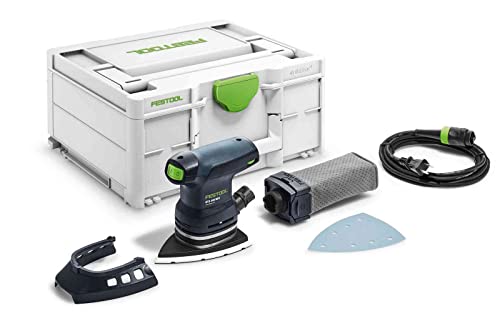
Festool DTS 400 REQ-Plus Delta Sander
What We Like
- 250 watts for fast material removal
- Ergonomic shape and SoftGrip for overhead work
- Tool-free abrasive and pad changes
Trade-offs
- Corded design reduces portability compared to battery models
With its 250-watt motor and MMC electronics, the Festool DTS 400 maintains speed under load for fast material removal without creating swirl marks, a clear advantage for detailed furniture work. Its delta-shaped pad sands directly into corners and tight joints that round pads cannot reach. The ergonomic shape and low weight allow for comfortable use in any orientation, including on vertical surfaces or overhead work.
That specialized delta shape and powerful motor result in a larger tool footprint. Compared to compact palm sanders like the 3.5-pound Bosch model, its size makes it less ideal for prolonged use on broad, flat surfaces. This sander truly excels in its niche, transforming the sanding of intricate mouldings and cramped joints into a faster and less fatiguing process.
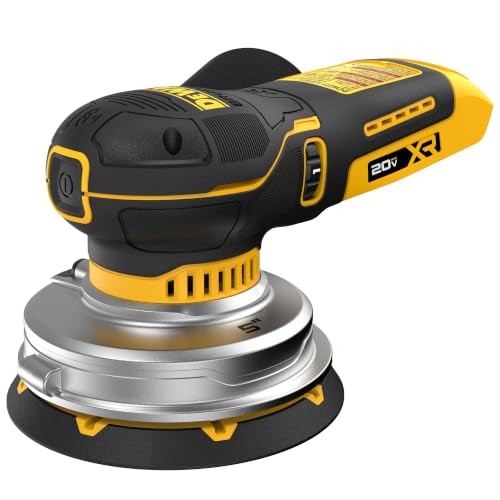
DEWALT DCW211B 20V MAX Cordless Orbital Sander
What We Like
- Lowest vibration for reduced user fatigue
- Up to 50 square feet of sanding per charge
- Compact profile for working in tight spaces
- Variable speed control with five settings
Trade-offs
- Tool only: battery and charger not included
- Dust extractor and vacuum must be purchased separately
You can sand up to 50 square feet on a single charge, so you can tackle most furniture projects without scrambling for an outlet. This cordless design is ideal for anyone who values mobility and hates being tethered to a wall. Owners report it works powerfully for stripping paint and stain, which makes it a solid choice for those who need to get through material quickly. Its design reduces vibration by up to 40%, translating directly to less hand fatigue during long sessions. You can then focus on the finish instead of the ache.
The trade-off for that cordless freedom is that you’re buying a bare tool. You’ll need to invest in DEWALT’s 20V MAX battery ecosystem separately if you don’t already own it. While it’s a powerful performer, its 3.8-pound weight is noticeable when compared to lighter corded options like the BOSCH ROS20VSC. This sander prioritizes runtime and power over being the absolute lightest in your hand, a compromise that makes sense for its intended role as a primary, high-productivity sander.
Product photos
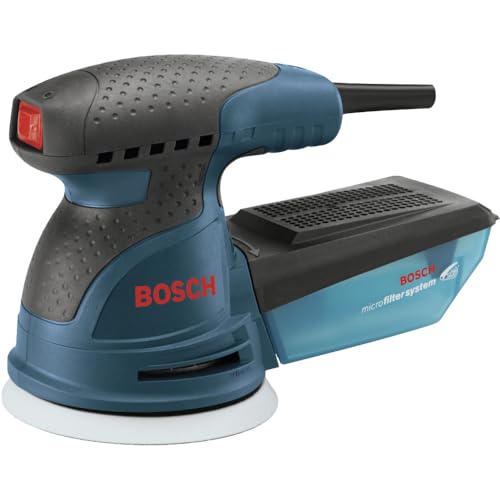
BOSCH ROS20VSC Variable Speed Palm Sander
What We Like
- Pad dampening system minimizes swirl marks.
- Microfilter system captures very fine dust.
- Variable speed control for different tasks.
- Compact and relatively lightweight design.
Trade-offs
- Corded design limits mobility versus cordless options.
A pad dampening system designed to minimize swirl marks makes this sander a standout for the final stages of furniture work. It’s built for the woodworker who needs a flawless, scratch-free surface before applying a finish. The variable speed control and 12,000 OPM top end provide the flexibility to tackle both delicate veneer and more aggressive stock removal. Combine that with a dust collection system that filters particles as small as half a micron, and you have a tool focused on delivering a clean, polished result.
Bosch designed this sander with a pad dampening system to minimize swirl marks, which prioritizes a smooth finish over compact size. Its dimensions and 3.5-pound weight place it between models like the cordless DEWALT DCW211B and the larger DEWALT DWE6421K. As a corded tool, it offers unlimited runtime but limits mobility compared to cordless options.
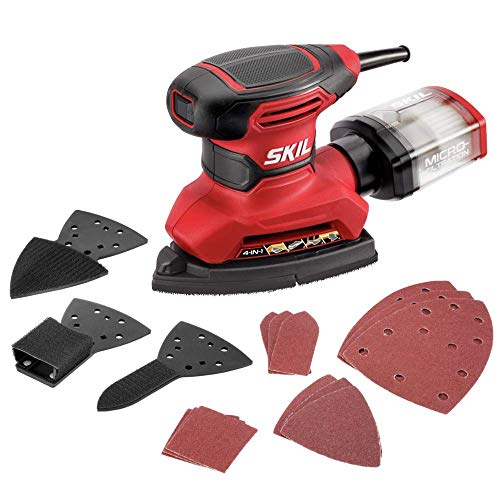
SKIL SR232301 Multi-Function Detail Sander
What We Like
- Four-in-one versatility with tool-free attachment swaps
- Low-vibration, ergonomic grip reduces hand fatigue
- Hook-and-loop system for quick sanding sheet changes
- Dust-sealed switch for reliable on/off control
Trade-offs
- Small attachments limit speed on large, flat surfaces
The ability to swap between three detail attachments without a tool makes this sander a focused problem-solver for furniture work. That 2.6-pound weight and soft rubber grip let you work into corners and along contours for extended sessions without your hand going numb. It’s built for the woodworker who needs to tackle a rounded table edge, a tight drawer groove, and a flat chair rail in one afternoon, all with a single tool. The micro-filter dust box helps contain the mess, though you can always hook it up to a shop vacuum for a cleaner finish.
The SKIL SR232301 is built for detail work, not bulk material removal. Its 1.2-amp motor and smaller sanding pads are designed for controlled finishing, a different role than the higher-amp DEWALT DWE6421K orbital sander built for larger surfaces. The tool’s value comes from its four attachments, which let you switch between sanding large surfaces, corners, edges, and contours without needing any tools.
Product photos
Makita BO4556K 1/4 Sheet Finishing Sander

What We Like
- Large lever for quick paper installation
- Lightweight, contoured grip reduces fatigue
- Efficient dust port connects to shop vacuum
- 14,000 OPM provides a fast, smooth finish
Trade-offs
- Uses quarter-sheet paper, not standard 5-inch discs
At 2.5 pounds, the Makita BO4556K is a notably light sander, which helps reduce fatigue during extended sanding sessions. Its rubberized palm grip and 14,000 OPM motor are designed for operator comfort and a smooth finish. The large clamping lever allows for quick paper installation, minimizing interruptions in your work.
The quarter-sheet format requires trimming full sheets of sandpaper, unlike the more common 5-inch disc system used on tools like the Makita BO5041. Its design includes a through-the-pad dust collection port for connection to a Makita vacuum. This sander provides a specific sanding format with a focus on efficient dust management.
Makita BO5041 5-Inch Random Orbit Sander

What We Like
- Variable speed control dial for precise application matching.
- Ergonomic rubberized grip enhances comfort during extended use.
- Lock-on button on the trigger aids continuous operation.
- Adjustable front handle improves access to corners.
Trade-offs
- Corded design limits mobility compared to battery-powered models.
- At 10.8 inches long, it is slightly larger than some compact palm sanders.
With a 3.0 AMP motor, the Makita BO5041 is designed for smoother and faster sanding. Variable speed control from 4,000 to 12,000 OPM lets users match the sanding action to different materials and tasks. An ergonomic rubberized palm grip and an adjustable front handle are included for improved operator comfort and control during extended use.
Being corded means you are always working within reach of an outlet, which can be a constraint in a large shop or outdoor space. Its size and weight are well-balanced for control, but if you need to get into extremely tight corners, a dedicated detail sander like the SKIL SR232301 might be more appropriate. For general furniture building and refinishing, however, the Makita’s ergonomic design and solid power make it a reliable workhorse that prioritizes how the tool feels in your hand throughout the job.
Product photos
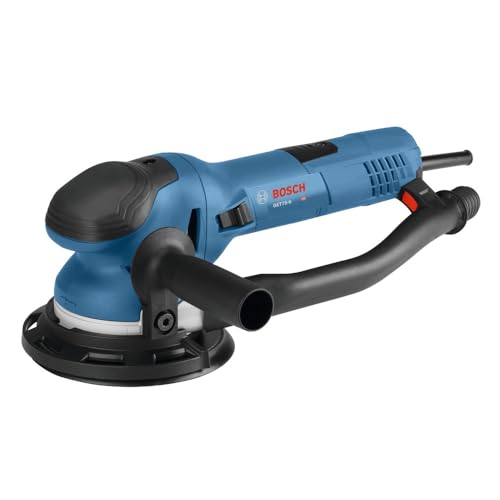
BOSCH GET75-6N Electric Orbital Sander
What We Like
- Turbo mode for aggressive material removal
- Multi-hole pad accepts wide abrasive variety
- Variable speed motor for power and control
- Includes vacuum hose adapter for dust collection
Trade-offs
- Requires separate vacuum for dust collection
Its dual-mode design offers a standard orbital setting for finishing and a turbo mode for aggressive stock removal, acting as an alternative to a belt sander. The powerful 7.5-amp motor drives this, with a no-load orbit speed ranging from 3300 to 7300 OPM for flexibility across different tasks. This makes the tool suitable for jobs like wood floors or furniture finishing where both material removal and a smooth final surface are needed.
While the turbo mode is designed for rapid stock removal, the standard random orbit setting is intended for finishing work. For final polishing or delicate surfaces, you would use the standard mode. The tool’s 6-inch disc and multi-hole pad system support a wide variety of abrasives to handle these different stages.
Product photos
BLACK+DECKER BDEMS600 Detail Sander

What We Like
- Compact design for tight corners and detailed work
- 16,000 OPM motor provides fast material removal
- Ergonomic comfort grip reduces user fatigue
- Dust collector keeps work surface cleaner
Trade-offs
- Corded design limits mobility compared to battery models
- Lacks variable speed control for different materials
A 1.2 Amp motor spinning at 16,000 orbits per minute delivers plenty of power for stripping old finishes and smoothing contours on furniture. This sander is built for the finicky jobs where bulkier tools simply won’t fit. Its compact body and three-position grip let you apply steady pressure in cramped spaces, while the included detail finger attachment reaches into grooves and carvings that would stall a standard pad. It’s the right tool for anyone who needs precision more than raw speed, especially when working on intricate chair legs, table aprons, or detailed moldings.
The trade-off for that compact size and focused power is that this is a dedicated detail tool. For sanding large, flat table tops, you would be better served by a full-size orbital sander like the DEWALT DWE6421K, which offers a larger sanding pad and higher amperage for faster work on big surfaces. The BLACK+DECKER’s corded design means you’ll always need an outlet nearby, but it also guarantees you won’t run out of juice halfway through a refinishing project. Think of it as a specialist for the final touches and tricky spots, not your primary workhorse for entire furniture pieces.
Product photos
How We Evaluated Sanders For Wood Furniture
Our evaluation is based on researching product specifications, manufacturer documentation, expert furniture refinishing round-ups, and consistent patterns in owner feedback. We did not physically test these tools.
For furniture work, we prioritized sanders that balance power with control to avoid damaging thin veneers, models with effective dust collection to keep the workspace clean, and ergonomic designs that reduce fatigue during long sessions. Vibration reduction was also a key factor, as it directly impacts user comfort and control over delicate surfaces.
This research-led approach identifies tools with the right features for the job, but it cannot replicate the subjective feel of a tool in your hand or its performance on your specific project.
What To Look For In Sanders For Wood Furniture
Choosing a sander for furniture means matching the tool’s shape and capabilities to your project’s surfaces. A round orbital sander is fast for tabletops, while a rectangular or delta sander is essential for corners.
Look for a sander that balances power with control, connects to a vacuum for dust, and fits comfortably in your hand. The right shape, round, rectangular, or triangular, determines where you can sand effectively.
Power & Control
Furniture sanding requires a delicate touch. A motor with variable speed control lets you match aggression to the task, slowing down for final finishing or delicate veneer. Random orbital action is standard for avoiding swirl marks, but pad dampening systems, like on the BOSCH ROS20VSC, further minimize scratches for ultra-smooth results. For initial paint stripping, a dedicated turbo mode, as on the BOSCH GET75-6N, provides fast stock removal.
Form Factor & Dust Collection
The sander’s shape dictates its reach. A standard 5-inch round pad is efficient for large, flat surfaces but cannot get into square corners. For intricate furniture with mouldings or tight joints, a rectangular sander like our best overall Festool or a triangular delta sander is necessary. Effective dust collection is non-negotiable for indoor work; a tool with a sealed dust port that locks onto a shop vacuum hose keeps your air and workspace clean, protecting your finish and your lungs.
Ergonomics & Vibration
Refinishing a dresser is a multi-hour job. Weight, grip design, and vibration matter. A rubberized grip and a contoured body, like on the Makita BO5041, improve control and reduce hand strain. Separate counterweights, as in the DEWALT DWE6421K, are engineered to lower transmitted vibration. For overhead work or detailed sanding, a compact, lightweight tool like the BLACK+DECKER BDEMS600 or the Festool DTS 400 is far less fatiguing.
- Check the power cord length if using a corded model; a short cord limits mobility.
- Confirm battery compatibility if choosing a cordless tool like the DEWALT DCW211B.
- Ensure available sandpaper sheets or discs match your sander’s pad size and attachment system.
- Look for a tool-free pad change system to speed up workflow.
- Consider whether the dust port fits your shop vacuum hose or if an adapter is needed.
For general furniture work, a variable-speed random orbital sander with a vacuum port is the most versatile starting point.
Sanders For Wood Furniture Compared
The table below compares key features across our picks to help you see the differences at a glance.
| Product | Weight | Dust Port/Collection | Orbit Speed (OPM) |
|---|---|---|---|
| Festool RTS 400 REQ-Plus Finish Orbital Sander | 8.2 pounds | Interlocking CT Connector | N/A |
| DEWALT DWE6421K 5-Inch Orbital Sander Kit | 4.0 pounds | Fits DEWALT DWV010/DWV012 collectors | 12,000 OPM |
| Festool DTS 400 REQ-Plus Delta Sander | 17.1 pounds | N/A | N/A |
| DEWALT DCW211B 20V MAX Cordless Orbital Sander | 3.8 pounds | Up to 95% with vacuum | 8,000 – 12,000 OPM |
| BOSCH ROS20VSC Variable Speed Palm Sander | 3.5 pounds | Particles as small as 1/2-micron | 7,500-12,000 OPM |
| SKIL SR232301 Multi-Function Detail Sander | 2.6 pounds | Micro-filter box & 1-1/4" port | 13,500 OPM |
| Makita BO4556K 1/4 Sheet Finishing Sander | 2.5 pounds | Through-the-pad system | 14,000 OPM |
| Makita BO5041 5-Inch Random Orbit Sander | 3.1 pounds | N/A | 4,000-12,000 OPM |
| BOSCH GET75-6N Electric Orbital Sander | 5.7 pounds | Passive dust collection system | 3300 to 7300 OPM |
| BLACK+DECKER BDEMS600 Detail Sander | N/A | Integrated canister | 16,000 OPM |
Frequently Asked Questions
What type of sander is best for wood furniture?
For most furniture, a random orbital sander is the best type. Its spinning and orbiting motion prevents swirl marks on flat surfaces. For corners and detailed mouldings, a rectangular finish sander or a triangular delta sander is essential. Our guide to sanders for furniture explores these types in more detail.
What type of sander is best for sanding furniture?
The best sander depends on the furniture’s shape. Use a 5-inch random orbital sander for large, flat areas like table tops. For refinishing pieces with intricate details, a detail sander with interchangeable pads, like the SKIL SR232301, or a dedicated delta sander is the right choice. The process of sanding furniture often requires both tools.
Which is the best sander for wood?
The “best” sander for wood varies by task. For aggressive removal of old finish, a powerful orbital sander like the DEWALT DWE6421K is excellent. For achieving a glass-smooth final surface on fine wood, a sander with a pad dampening system like the BOSCH ROS20VSC is superior. Your goal, stripping or finishing, determines the best tool.
What’s better, orbital or palm sander?
“Orbital” and “palm” often refer to the same tool: a random orbital palm sander. The more relevant comparison is between a round orbital sander and a sheet-finishing or detail sander. A round orbital is better for speed on flat areas, while a finishing sander, which uses a quarter-sheet of paper, is often lighter and better for edges. For refinishing furniture, many woodworkers use both.
How important is dust collection for furniture sanding?
Extremely important. Fine dust ruins finishes, clogs sandpaper, and is a health hazard. A sander with a good dust port that connects to a shop vacuum is a major upgrade over a basic dust bag. Integrated systems, like on the Festool models, offer the best extraction, keeping your workpiece visible and your shop cleaner.
The Bottom Line
The Festool RTS 400 REQ-Plus is our best overall pick for its powerful finish-sanding performance and excellent integrated dust extraction, ideal for serious woodworkers who value a clean workspace and professional results.
For those on a budget, the DEWALT DWE6421K offers tremendous value as a powerful workhorse, while anyone tackling detailed mouldings should look at the low-vibration Festool DTS 400 REQ-Multi or the versatile SKIL SR232301.
Ultimately, matching the sander’s shape to your furniture’s surfaces, flat, corner, or contoured, is the single most important factor for an efficient and satisfying refinishing project.
