
10 Best Sanders For Furniture in 2026
This post contains affiliate links. As an Amazon Associate, we earn from qualifying purchases.
The best sander for furniture refinishing is the Bosch ROS20VSC Palm Sander. Its micro-filter dust collection and variable speed make it a powerful, all-around choice for serious projects. For a premium finish, the Festool ETS EC150/5 excels on large surfaces, while the SHALL 5-Inch Sander offers a great budget kit with included sandpaper. Choosing the wrong tool can lead to visible swirl marks, arm fatigue, or difficulty reaching corners. We researched specifications, manufacturer data, and patterns in owner feedback to find the right ten tools for specific furniture tasks.
Top 10 Sanders For Furniture in the Market
Certain content that appears on this site comes from Amazon. This content is provided "as is" and is subject to change or removal at any time.
The Best Sanders For Furniture, Reviewed
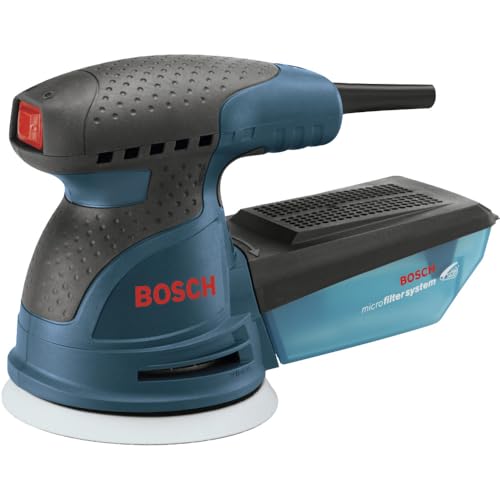
Bosch ROS20VSC Palm Sander
What We Like
- Pad dampening system minimizes swirl marks
- Micro-filter dust collection traps fine particles
- Variable speed for different sanding tasks
- Compact and complete kit with carrying bag
Trade-offs
- Owner feedback reports noticeable hand vibration
- Some users note a high-pitched internal sound
A 2.5 AMP motor with variable speed control from 7,500 to 12,000 no-load orbits per minute allows for adjustment based on the sanding task. This is paired with a pad dampening system designed to help minimize swirl marks on surfaces. Its dust collection uses a micro filter system for particles as small as a 1/2-micron in diameter, and the canister shows the dust level for easy maintenance.
One research mention reports a significant amount of vibration in the hands and a high-pitched grinding sound from the tool during operation. The sander includes a vacuum dust collector, a detachable canister, and a hook-and-loop system with over 35,000 hooks for disc adhesion. Its kit comes with a sanding pad, disc, dampening ring, dust canister, vacuum adapter, and a carrying bag.
Festool ETS EC150/5 Random Orbital Sander

What We Like
- Stepless speed control maintains RPM under load.
- Lightweight, compact design reduces arm fatigue.
- Vibration Control System for smoother operation.
- 5 mm stroke efficiently removes material.
Trade-offs
- Higher initial investment than many competitors.
- Larger than many palm sanders at 15.6 inches long.
A 5 mm orbital stroke provides a uniquely effective balance, removing material efficiently while still leaving a finish-ready surface. This sander is built for the craftsman who demands control and consistency from a tool, not just raw speed. Its stepless electronic speed control holds a set RPM even when you bear down, so the cut rate stays predictable from edge to center. Combine that with a remarkably low 2.5-pound weight and active vibration dampening, and you have a tool designed for all-day use on fine cabinets and tables without sacrificing your arms to fatigue.
The trade-off for that refined performance is a larger physical size than a typical palm sander. This can make it less nimble in very tight corners. For comparison, the Mirka DEROS II is a direct competitor in the premium finish category, offering a similar featherweight build in a slightly more compact package. The Festool’s strength is its specific sanding action. It’s a dedicated finisher that excels at the final stages where control over the scratch pattern is everything, making it a specialist’s choice over a more general-purpose orbital sander.
SHALL 5-Inch Random Orbital Sander

What We Like
- Comes with a full set of 30 sandpaper sheets
- Lightweight, ergonomic design reduces hand fatigue
- Six variable speeds suit different sanding tasks
- Velcro closure simplifies sandpaper changes
Trade-offs
- Corded design limits mobility compared to battery models
- Dust bag system is less effective than a shop vacuum hookup
A 3.2-amp motor provides power for tasks like removing varnish, while its six adjustable speeds between 6,000 and 13,000 RPM allow control for different sanding operations on wood or metal. The package includes 30 sandpaper sheets across six grits, covering a project from coarse material removal to finer smoothing. Its ergonomic, non-slip handle and construction are designed to reduce hand fatigue from vibrations.
The removable dust bag and integrated ventilation system capture debris and cool the motor, though its effectiveness is not compared to other models. The sander uses a hook-and-loop pad with a velvet closure for changing paper. Weighing about 1.3 kg, its light design is intended for portable use.
Product photos
DeWalt 20V MAX Orbital Sander

What We Like
- Brushless motor for efficient runtime
- Variable speed control matches application
- Low profile gets close to surfaces
- Comfortable, one-handed dust bag lock
Trade-offs
- Tool only: requires separate battery and charger
- Dust collector sold separately
The low-profile height is the key feature here, letting you sand right up to edges and into corners on furniture pieces without the housing getting in the way. Combined with a comfortable grip and easy paper changes, this DeWalt is built for the long haul, a sentiment echoed by owners who report using theirs for years across countless projects. It’s a straightforward, cordless workhorse for anyone who needs to blend large flat areas and tight spots without switching tools.
You are buying into a system, though. The listing is for the tool only, so factor in the cost of a compatible DeWalt 20V battery and charger if you don’t already own them. While it’s efficient and well-sealed against dust, some user feedback mentions a discernible vibration during use. For a noticeably smoother, albeit corded and premium-priced, experience in a similar form factor, the Mirka DEROS II is a compelling alternative often mentioned by pros.
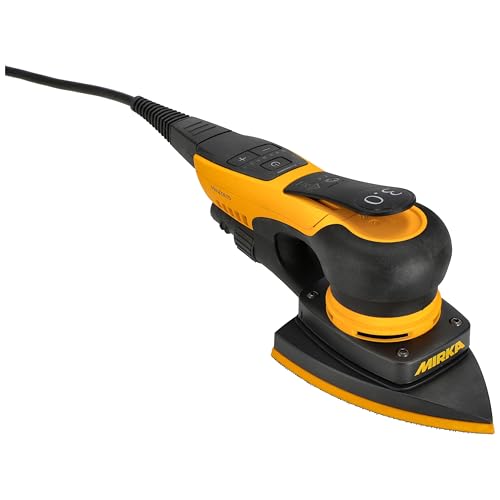
Mirka DEOS Delta II Orbital Sander
What We Like
- Delta shape excels in corners and profiles
- Ultra-compact 3.9-inch height for tight access
- Low vibration and noise for fatigue-free use
- Bluetooth connectivity for vibration monitoring
Trade-offs
- Triangular pad limits surface area for large flat panels
- Specialized shape is less versatile than a standard orbital
A triangular pad and a profile under four inches high are built for one thing: getting into places other sanders can’t. This tool is for the woodworker who needs to finesse intricate moldings, flush up cabinet corners, or sand vertical surfaces without leaving telltale roundover marks. The brushless motor is designed for consistent speed, and the ergonomic design with low vibration means you can work a detailed piece for hours without your hands going numb. If your projects involve more complex joinery and tight spaces than open plains, this sander’s precision is its purpose.
The trade-off for that pinpoint access is a pad geometry not meant for sanding tabletops. The DEOS Delta II is a specialist. It complements a full-size sander rather than replaces it, excelling in the final, fussy stages where furniture reveals its quality. Bluetooth connectivity integrates with the myMirka app for vibration exposure monitoring and additional settings.
Product photos
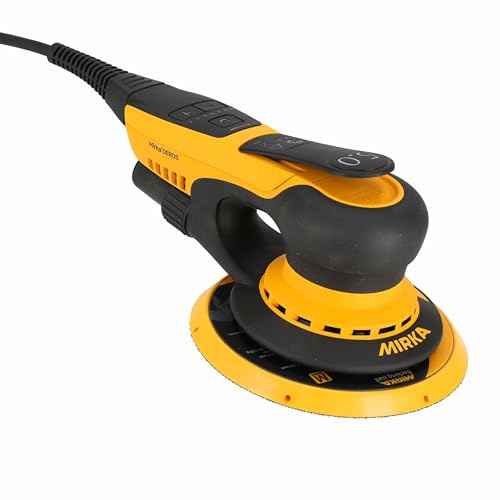
Mirka DEROS II 550X Orbital Sander
What We Like
- Extremely lightweight at 2.2 pounds.
- Brushless motor for consistent power.
- Integrated dust extraction system.
- Bluetooth connectivity for settings control.
Trade-offs
- Tool only: battery and charger sold separately.
- Bluetooth features require a compatible app.
Weighing only 2.2 pounds, the Mirka DEROS II 550X is exceptionally light, which supports longer sanding sessions with less user fatigue. Its low vibration operation and ergonomic build are designed for comfortable handling and improved control across various applications. An integrated dust extraction system helps maintain a cleaner workspace by collecting particles during operation. Smooth performance comes from a brushless motor, while variable speed control and Bluetooth connectivity provide access to adjustable settings and additional tool information.
This listing is for the tool only, so a compatible Mirka battery and charger must be purchased separately. Compared to a cordless system like the DeWalt 20V MAX orbital sander, this requires an additional investment if you are not already using Mirka’s platform. The tool’s lightweight design and features for user comfort are intended for longer sessions and a range of sanding tasks like woodworking, automotive, and surface preparation.
Product photos
Black+Decker Detail Sander

What We Like
- Compact design for tight corners and detailed work.
- Ergonomic comfort grip reduces user fatigue.
- Dust-sealed switch improves internal durability.
- Includes detail finger attachment for hard-to-reach spots.
Trade-offs
- Corded design limits mobility compared to battery-powered models.
A 1.2-amp motor spinning at 16,000 orbits per minute gives this sander the focused power to strip finishes and smooth contours without bogging down. That, combined with its genuinely compact footprint, makes it a natural fit for anyone tackling intricate furniture repairs, sanding delicate moldings, or refreshing the hard angles on cabinet doors. The three-position grip and included dust canister are thoughtful touches that keep the work tidy and your hand from cramping during longer sessions.
A corded design provides unlimited runtime and continuous power for extended jobs, though the cord itself can be a hassle when moving around a large workpiece or working far from an outlet. Compared to the Bosch ROS20VSC palm sander, this tool has a more compact footprint for navigating cramped corners. Its 16,000 orbits per minute and detail finger attachment deliver fast material removal in hard-to-reach spots.
Festool RTS 400 REQ-Plus Sander

What We Like
- 25% more powerful motor with MMC electronics
- Excellent dust extraction captures dust as it's made
- Improved ergonomics with rubberized grip
Trade-offs
- At 8.2 lb, it's noticeably heavier than palm sanders
- Corded design limits mobility compared to battery models
The 250-watt motor delivers a significant power increase, giving you the authority to tackle hardened finishes and level wood grain without bogging down. For the furniture maker who needs a sander that can handle the final, critical passes on a tabletop or cabinet door, this tool provides the smooth, consistent finish that high-end work demands. Its interlocking dust port and effective extraction keep your workspace and your lungs clear, which is non-negotiable for long sessions in the shop.
That power and dust system come with some heft, at over eight pounds, it demands more from your arm over a full day compared to a lighter option like the Bosch ROS20VSC. The trade-off is clear: you get a sander built for endurance and performance, not for delicate, overhead work. It’s a dedicated bench tool for the craftsman who values a flawless finish above all else, accepting its weight as the price for that unflinching power.
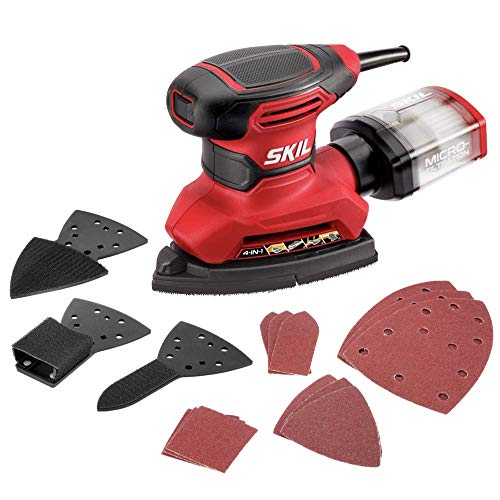
Skil Multi-Function Detail Sander
What We Like
- Four-in-one versatility with three included attachments
- Hook-and-loop system for quick sandpaper changes
- Low-vibration design with counterweight balance
- Dust-sealed switch for reliable on/off operation
Trade-offs
- Corded design limits mobility compared to battery models
- Fixed orbit speed lacks variable speed control
Skil’s multi-function sander operates at 13,500 orbits per minute, a speed that can handle a variety of sanding applications according to its description. The tool’s four-in-one design includes three attachments for large surfaces, corners, and contours, which are changed without tools. An ergonomic design with a soft rubber grip and counterweight balance aims to minimize vibration and the resulting hand fatigue during use.
This is a corded sander with a fixed speed of 13,500 OPM. Among tools listed for comparison, the Mirka DEOS Delta II has different dimensions, measuring 6.0 by 4.0 by 3.9 inches. The Skil model includes a micro-filtration system and a dust port for vacuum attachment to manage dust.
Product photos
Skil 5-Inch Random Orbital Sander
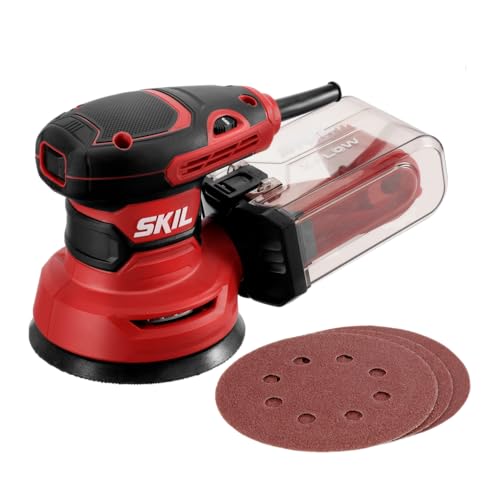
What We Like
- Effective cyclonic dust box with transparent container.
- Ergonomic design with soft grip reduces vibration fatigue.
- Compact 7.9-inch length fits into tight spaces.
- Variable speed control for different materials.
Trade-offs
- Corded design limits mobility compared to battery-powered models.
- Weighs 3.4 pounds, which is heavier than several cordless orbital sanders.
A 2.8 amp motor spinning at 13,000 orbits per minute provides plenty of power for stripping old finishes and smoothing surfaces, but the real standout is its dust management. The cyclonic dust box is a clever design that actually works, keeping your workspace and lungs clearer than a standard bag. This makes it a smart pick for anyone refurbishing furniture indoors who wants a capable, corded sander without constantly stopping to clean a filter. The variable speed and soft grip let you dial in the aggression for delicate veneers or stubborn paint.
Weighing 3.4 pounds, the Skil sander has more mass than some cordless models, and its power cord requires an outlet. The ergonomic grip and counterweight balance are designed to dampen vibration, which can help during longer sessions. For projects away from a workshop, a tool like the 2.5-pound DeWalt 20V MAX cordless sander offers a different balance of portability and power.
Product photos
How We Evaluated Sanders For Furniture
Our research focused on manufacturer specifications, expert round-ups, and consistent patterns in owner feedback. We prioritized criteria that matter most for furniture work. This includes dust collection quality to keep your workspace clean, vibration control for comfort during long sessions, and the tool’s shape and size for accessing different areas like flat panels or detailed corners.
A key limitation of a research-led evaluation is that we cannot assess long-term durability or the precise feel of a tool in your hand. We rely on documented specs and what a significant number of users report over time. For example, we noted models praised for their effective dust collection systems, which are essential for any indoor refinishing project.
What To Look For In Sanders For Furniture
Your project’s scale and the furniture’s details dictate the best tool. A large tabletop demands a different sander than an ornate chair leg.
Look for a sander that balances power with control. Prioritize effective dust collection for a clean shop, low vibration for comfort, and a pad shape that matches your work, round for flat surfaces, delta for corners.
Dust Collection
Furniture sanding creates fine, pervasive dust. A sander with a good dust bag or, better yet, a shop vacuum port is non-negotiable for indoor work. Systems like micro-filters or cyclonic boxes trap more particles, protecting your lungs and keeping your finish clean. Several of the best sanders we reviewed feature these advanced systems.
Vibration and Comfort
Extended sanding sessions can cause hand numbness and fatigue. Look for tools with brushless motors, pad dampening systems, or specific vibration-control technology. Weight also plays a role; a lighter tool like the 2.2-pound Mirka DEROS reduces arm strain, but some users find heavier models more stable on large surfaces.
Pad Size and Shape
The sander’s footprint determines its application. A standard 5-inch or 6-inch round pad is ideal for quickly refinishing large, flat surfaces like tabletops. For corners, edges, and intricate profiles, a triangular delta pad or a compact detail sander is essential. Understanding the different sander types helps match the tool to the task.
Match your sander’s shape to your furniture’s geometry.
- Use a 5-inch random orbital sander for dresser tops and cabinet faces.
- Choose a delta or detail sander for chair spindles, crown molding, and tight corners.
- Consider a versatile multi-tool if you work on various surfaces and profiles.
Sanders For Furniture Compared
The table below highlights key specifications to help you compare our picks at a glance.
| Product | Weight | Speed Range | Motor Power/Type |
|---|---|---|---|
| Bosch ROS20VSC Palm Sander | 3.5 pounds | 7,500-12,000 OPM | 2.5 AMP |
| Festool ETS EC150/5 Random Orbital Sander | 2.5 lbs | Stepless variable | N/A |
| SHALL 5-Inch Random Orbital Sander | 1.3 kg | 6,000 – 13,000 RPM | 3.2 AMP |
| DeWalt 20V MAX Orbital Sander | 2.5 pounds | 8,000 to 12,000 OPM | Brushless |
| Mirka DEOS Delta II Orbital Sander | 2.1 pounds | N/A | Brushless |
| Mirka DEROS II 550X Orbital Sander | 2.2 pounds | N/A | Brushless |
| Black+Decker Detail Sander | N/A | 16,000 OPM | 1.2 Amp |
| Festool RTS 400 REQ-Plus Sander | 8.2 pounds | N/A | 250 watts |
| Skil Multi-Function Detail Sander | 2.6 pounds | 13,500 orbits per minute | N/A |
| Skil 5-Inch Random Orbital Sander | 3.4 pounds | 13,000 OPM | 2.8 amp |
Frequently Asked Questions
What type of sander is best for sanding furniture?
For most furniture projects, a random orbital sander is the best starting point. Its combination of rotary and orbital motion helps prevent visible swirl marks on your final finish. It’s effective for both material removal and final smoothing on flat and gently curved surfaces.
Which brand of sander is considered the best?
There is no single “best” brand, as top manufacturers excel in different areas. Festool is renowned for its premium finish quality and dust extraction, while Bosch and DeWalt are praised for durable, prosumer-grade tools. The best brand for you depends on your specific needs, budget, and existing battery ecosystem.
What is the best way to sand furniture?
Start with a coarser grit to remove old finish or level the wood, then progressively move to finer grits for a smooth surface. Always sand with the grain when using a hand sander or block, and use a random orbital sander for final prep. Proper sandpaper grit selection is crucial for each stage.
What is a good small sander for furniture refinishing?
For small or detailed work, a compact detail or delta sander is ideal. The Mirka DEOS Delta II excels in corners, while the Black+Decker Detail Sander offers an affordable, ergonomic option for tight spaces. These detail sanders are purpose-built for intricate furniture work.
Should I get a corded or cordless sander for furniture?
Corded sanders offer consistent, unlimited power, which is advantageous for long sessions on large pieces. Cordless models provide superior mobility and are excellent for quick touch-ups or working in areas without easy outlet access. Your choice depends on your typical project size and workspace setup.
The Bottom Line
The Bosch ROS20VSC Palm Sander is our best overall pick for its powerful performance and excellent dust collection, making it a top choice for the serious DIYer tackling various furniture projects. For those on a strict budget, start with the SHALL 5-Inch Sander kit, and for unparalleled detail work, invest in the specialized Mirka DEOS Delta II.
Regardless of your choice, prioritize a sander with effective dust management. Keeping your workspace clean is not just about convenience; it’s essential for your health and for achieving a flawless, professional-looking finish on your furniture.
