
10 Best Miter Saws For Home Use in 2026
This post contains affiliate links. As an Amazon Associate, we earn from qualifying purchases.
For home use, the best miter saw balances power, accuracy, and convenience. Our best overall pick is the Ryobi ONE+ 18V Cordless Sliding Compound Miter Saw for its cordless freedom and excellent crosscut capacity. For a lightweight corded option, we like the Metabo HPT 10-Inch model, and those with tight workshop space should consider the Makita LS0816F.
Choosing the wrong saw can leave you frustrated with inaccurate cuts or a tool too bulky for your space. For DIY trim, deck building, or general carpentry, you need a saw that matches your project scale and workspace.
This guide is based on research into specifications, manufacturer data, and patterns in expert and owner feedback. We’ve ranked ten top models to help you find the right tool for your home workshop.
Top 10 Miter Saws For Home Use in the Market
Certain content that appears on this site comes from Amazon. This content is provided "as is" and is subject to change or removal at any time.
The Best Miter Saws For Home Use, Reviewed
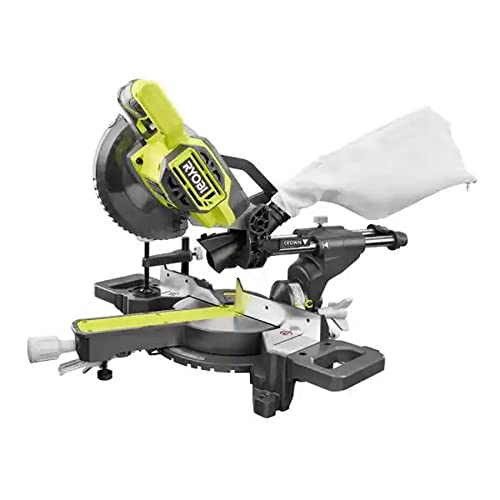
Ryobi ONE+ 18V Cordless Sliding Compound Miter Saw
What We Like
- Up to 800 cuts per battery charge
- Best-in-class 2×10 cross-cut capacity
- Works with vast ONE+ 18V tool ecosystem
- Battery and charger included
Trade-offs
- 7-1/4 inch blade limits depth versus 10-inch saws
- 30.2 lb weight requires a sturdy portable surface
With a best-in-class capacity to crosscut a 2×10, this cordless saw handles most common framing and trim jobs around the house without being tethered to an outlet. For those already invested in Ryobi’s ONE+ platform, it delivers cordless freedom and is noted for good dust collection suited for indoor work. It’s the saw you grab for quick deck boards or casing without the cord-management headache.
The trade-off for that portability is raw cutting power. Like other cordless models, it can stall on thicker stock like a 4×4 post. For continuous, heavy-duty cutting on a fixed workstation, a corded model like the Metabo HPT would be a more relentless choice. But if your projects are defined by convenience and mobility, this Ryobi slides into place as a supremely capable first-string saw.
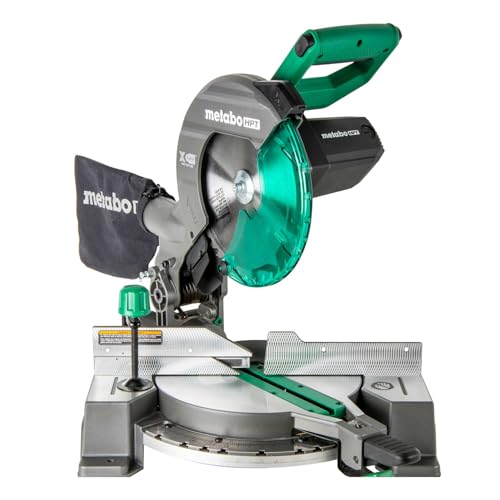
Metabo HPT 10-Inch Compound Miter Saw
What We Like
- Exceptionally portable at just 24.2 pounds
- 15-Amp motor provides ample power for most cuts
- Large table and vice clamp improve workpiece stability
- Covered by a 5-year manufacturer warranty
Trade-offs
- Single-bevel design limits compound cutting flexibility
- Does not have the sliding rail capacity of larger saws
At just 24 pounds, this saw is easy to carry from a garage to a jobsite or up a flight of stairs. Its 15-Amp motor spins the 10-inch blade up to 5,000 RPM for the power needed in general woodworking. For someone who moves their tool often but prefers not to manage batteries, this corded design offers a practical balance of portability and consistent power from an outlet.
This single-bevel design requires flipping the workpiece for compound cuts needing an angle on the opposite side. It also doesn’t have the extended crosscut capacity of a sliding saw. For that extra versatility, a model like the 30.9-pound sliding Makita LS0816F is an option, but it adds nearly seven pounds. For standard chops and miters, the Metabo HPT handles the work without being a burden to move.
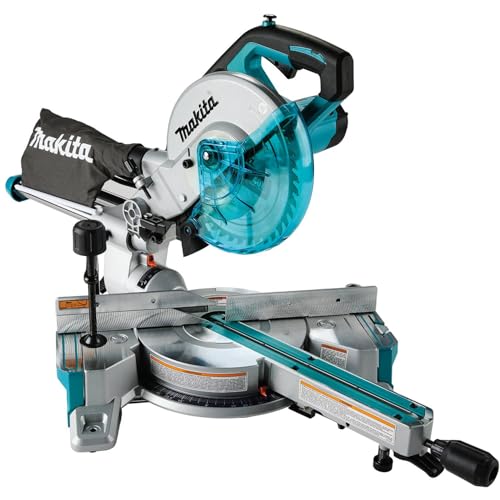
Makita LS0816F Slide Compound Miter Saw
What We Like
- Linear ball bearing system for dead-on accuracy
- Built-in LED illuminates the line of cut
- Soft start feature for smooth start-ups
Trade-offs
- 8-1/2 inch blade limits material thickness vs. 10 or 12 inch saws
- Cuts only 8-1/2 inches at a 45-degree angle
This combination means you can tuck it into a crowded workshop corner or lift it onto a bench without straining your back. The 8-1/2 inch blade and sliding mechanism deliver a respectable 12-inch crosscut capacity, enough for most common boards and trim. It’s a saw built for the user who needs precision in confined spaces, offering a linear ball bearing slide and a helpful LED light to keep cuts accurate where a larger saw simply wouldn’t fit.
That smaller blade is the trade-off. You’ll be making two passes on wider crown molding or dimensional lumber that a 10-inch model like the Metabo HPT could handle in one. For a dedicated shop saw tackling large baseboards or decking, the capacity limitations will show. But as a portable, accurate cutter for trim, framing, and general DIY in tight quarters, this Makita’s design is thoughtfully executed.
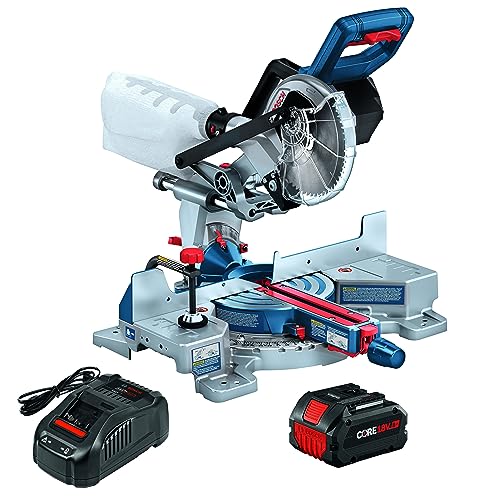
Bosch PROFACTOR 18V Cordless Slide Miter Saw
What We Like
- Compact, wall-friendly sliding bar design
- Lightweight with a built-in carry handle
- Powerful brushless motor optimized for tough cuts
Trade-offs
- Tool only: battery and charger sold separately
- Single-bevel design limits compound cutting flexibility
- 7-1/4 inch blade limits depth compared to 10-inch saws
A 26-pound weight and sliding bars that don’t need rear clearance make this saw a truly mobile solution. It delivers pro-level capacity, like cutting 3-3/4 inch nested crown, from a cordless platform designed to tuck right against a wall. For the serious DIYer or tradesperson already invested in Bosch’s 18V system, this saw offers the blend of portability and cutting width that corded models traditionally hold. The Biturbo brushless motor and high-power battery compatibility mean it’s built for a full day of trim or decking, not just a few quick cuts.
This cordless miter saw trades the deep capacity of a larger, corded model for a compact and highly portable 26-pound form. Its 7-1/4 inch blade and single-bevel design limit compound cuts on thick stock compared to a 12-inch dual-bevel saw. The forward-sliding articulating arms allow it to tuck right against a wall, a key advantage for users with limited workspace.
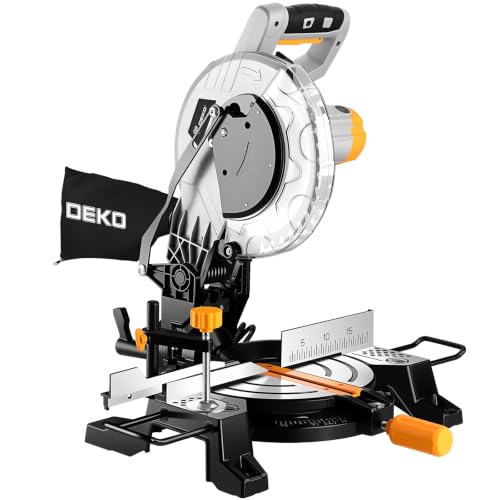
DEKOPRO 10-Inch Compound Miter Saw
What We Like
- Lightweight and portable at 20.5 lbs
- Transparent blade guard for clear cut line view
- Clamp and large table for stable workpiece support
- Head locks down for compact storage
Trade-offs
- Single-bevel design limits compound cutting angles
- No sliding mechanism to extend crosscut capacity
At 20.5 pounds, this saw is built for easy portability, so you can move it from the garage to a jobsite without a second thought. Its 13-amp motor and 10-inch blade deliver enough power for common trim and framing tasks, while the single-bevel design and miter stops cover most fundamental angle cuts. This makes it a solid, straightforward choice for the homeowner tackling occasional projects who values simplicity and ease of handling over advanced features.
The lightweight, single-bevel design means it lacks the sliding rail mechanism and dual-bevel function of tools like the Makita LS0816F or the WEN MM1215. A large work table and clamp system are included to support and hold the workpiece for stability. A transparent blade guard provides a view of the cut line during operation.
Product photos
Makita 18V LXT Cordless Dual-Bevel Miter Saw

What We Like
- Weighs only 14.6 pounds for superior portability
- Dual-bevel design increases cutting flexibility
- Brushless motor runs cooler for longer tool life
Trade-offs
- Tool only: battery and charger are a separate purchase
- Non-sliding design restricts cut width on wider boards
Weighing only 14.6 pounds, this cordless miter saw is designed for easy portability. That compact size makes it suitable for carrying up a ladder or storing in a tight closet. Its dual-bevel capability and laser guide aid in precision work. The brushless motor and automatic speed change technology aim to deliver the power of a corded saw from the 18V LXT platform, though the battery is sold separately.
That compact size comes with a 6-1/2 inch blade. For a user who primarily needs to cut wider stock, a heavier model with a larger blade may be more suitable. However, if your projects demand a saw you can easily carry, this Makita provides cordless power in a notably lightweight form.
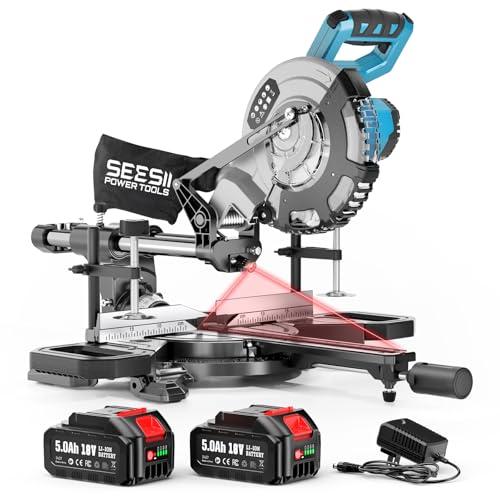
SEESII 8-Inch Cordless Sliding Compound Miter Saw
What We Like
- Cordless design with two high-capacity batteries
- Sliding rail system for wide 4×12-inch cuts
- Laser guide and LED light for accurate cuts
- Dual-hand start switch for safety
Trade-offs
- 8-inch blade limits depth compared to 10- or 12-inch saws
- Single-bevel design cannot tilt both left and right
The ability to cut a 4×12-inch board cordlessly is a genuine workshop liberator. This SEESII saw delivers that high capacity with a sliding rail system and dual 5000mAh batteries, making it a natural fit for someone tackling decking, trim work, or cabinetry where dragging a cord is a hassle. The laser and LED light are thoughtful additions for precision, while the 25-pound machine weight keeps it manageable for moving around a project site. It’s built for the DIYer or carpenter who needs to handle wider stock without being tethered to an outlet.
Cordless operation means you can move this saw anywhere without hunting for an outlet, a major advantage on a busy job site or in a crowded garage. Its 8-inch blade and sliding rail system handle boards up to 4×12 inches, so it can cut through wide trim and common 2x lumber. While the single-bevel design and blade size limit some cuts compared to larger 10-inch models, the cordless freedom and substantial cutting capacity make it a versatile choice for renovation tasks and workshop projects.
Product photos
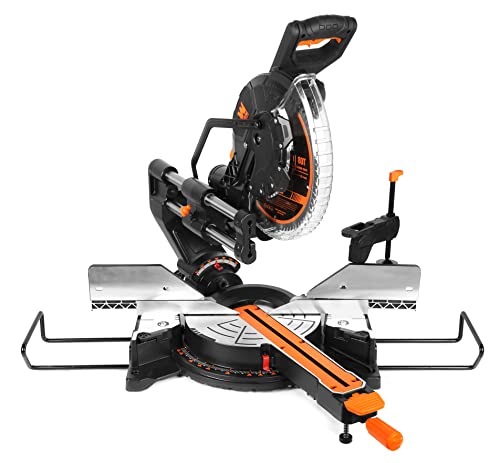
WEN 12-Inch Dual Bevel Sliding Compound Miter Saw
What We Like
- Dual-rail slide for compact, flush-to-wall use
- LED cutline guide for accurate alignment
- Dual-bevel design for complex angled cuts
- Includes 80-tooth blade and table extensions
Trade-offs
- At 53.5 lb, it's a substantial bench-top tool
- Dust collection relies on the provided bag and port
The ability to crosscut boards up to 13.25 inches wide provides significant capacity for a home shop. This saw suits an ambitious DIYer tackling decks, trim, or furniture who needs that large capacity without compromising on features. Its dual-bevel function and sliding action handle crown molding or compound angles without flipping the workpiece, and the included 80-tooth carbide-tipped blade is ready for clean cuts.
A trade-off for this capacity is substantial weight; at 53.5 pounds, frequent transport to a job site is unlikely, demanding a solid, permanent workstation. Compared to a more portable option like the 14.6-pound Makita 18V LXT cordless model, the WEN is a corded tool meant for stationary use. Its dual-rail slide system minimizes the footprint, but you still commit significant bench space. For garage-based projects where outlet access is easy, it delivers professional-grade cuts at a home-use price point.
Product photos
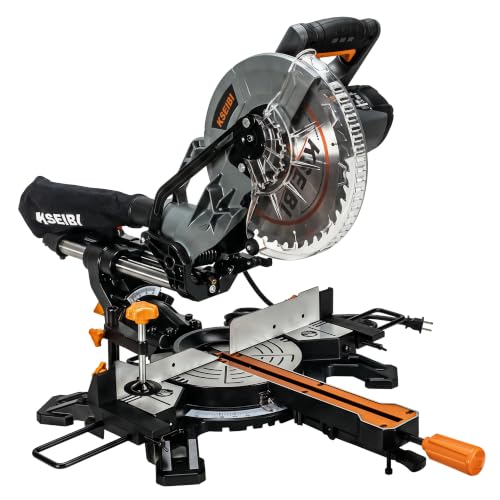
KSEIBI 10-Inch Sliding Compound Miter Saw
What We Like
- Sliding dual-rail design for wider crosscuts
- Powerful 15-amp motor for consistent cutting
- Includes dust bag, clamp, and tall fence
- Cast aluminum base provides stable footing
Trade-offs
- Single-bevel design limits compound cuts from one side
- No laser or shadow cutline system mentioned
A sliding dual-rail design is the key feature here, letting you crosscut wider boards than a fixed chop saw can handle. That makes this KSEIBI a serious step up for a budget-conscious DIYer tackling framing, decking, or trim work. The 15-amp corded motor delivers the steady power needed to push through lumber without hesitation, and the package includes practical extras like a quick clamp and dust bag. It’s built for the user who needs sliding capacity but wants to keep the investment sensible.
Its single-bevel design prioritizes core cutting power over convenience for complex angles. When cutting crown molding that requires a bevel from both sides, you must flip the workpiece rather than tilting the saw head the opposite way. This corded saw draws consistent 15-amp power from an outlet, unlike cordless models that rely on battery systems.
Product photos
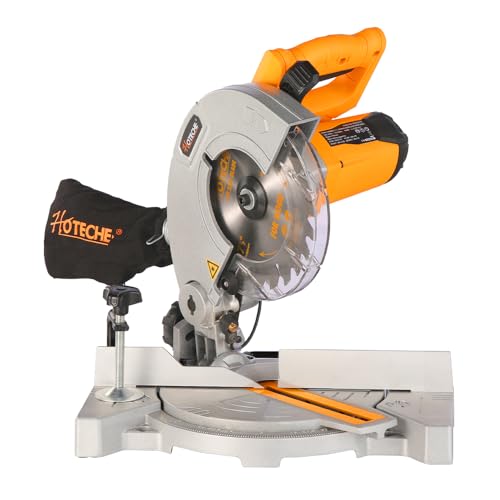
Hoteche 7-1/4-Inch Laser Miter Saw
What We Like
- Built-in laser guide for precise alignment
- Includes extension bars for wider workpieces
- Kit with dust bag and maintenance brushes
- Lightweight aluminum base with rubber feet
Trade-offs
- Single bevel limits complex angled cuts
- 7-1/4-inch blade limits depth versus 10- or 12-inch saws
A 7.5-amp motor spinning at 5000 RPM gives you enough guts to slice through hardwoods and trim without fuss. This makes it a solid choice for the weekend warrior tackling baseboards or picture frames. Its built-in laser and preset miter stops take the guesswork out of common angles. The included extension bars and dust bag mean reviewers report it arrives ready for a project. This straightforward, accessory-packed tool is aimed at the DIYer who values precision for trim and light framing work.
A 7-1/4-inch blade and sliding arm give this saw a 120mm maximum crosscut capacity at 90 degrees, which is suitable for standard 2×4 lumber and typical trim work. Its single-bevel design means you must manually flip the workpiece to create matching angled cuts on opposite sides. This combination makes it a focused tool for common DIY and carpentry tasks rather than processing very wide stock.
Product photos
How We Evaluated Miter Saws For Home Use
This guide is based on product specifications, manufacturer documentation, and aggregated user feedback from verified owners. All evaluations and comparisons are derived from these documented sources.
For home use, we prioritized cutting capacity relative to common lumber sizes, weight and footprint for workshop portability, and the versatility offered by features like sliding rails or dual-bevel tilt. We also considered value, balancing a saw’s capabilities against its typical price range.
A key limit of a research-led review is that we cannot verify long-term durability or the precise feel of a cut. We rely on reported experiences for insights into reliability and ease of use, which can vary between users.
What To Look For In Miter Saws For Home Use
Selecting a miter saw involves matching its core specifications to the projects you plan to tackle most often. Understanding types, capacity, and power will guide you to the right tool.
The key is balancing cutting capacity with your space and power needs. Consider blade size for material thickness, sliding rails for width, and cordless convenience versus corded power for stationary use.
Cutting Capacity and Saw Type
Capacity is defined by the blade diameter and whether the saw has a sliding mechanism. A basic 10-inch compound saw can crosscut a 2×6, while a 10-inch slider can handle a 2×12 or a 4×4. For most home projects, a 10-inch sliding miter saw offers a great blend of capacity and manageable size. Consider a 12-inch saw only for frequent work with very wide boards or tall crown molding.
Dual-bevel capability allows the saw head to tilt both left and right without flipping the workpiece, a major time-saver for complex trim. For simpler crosscuts and basic angles, a single-bevel saw is sufficient and more affordable. Our guide for new users explains these types in detail.
Power Source and Portability
Corded miter saws offer unlimited runtime and consistent power from a standard 15-amp household circuit, making them ideal for a stationary workshop setup. Cordless models provide excellent portability for decks or job sites, but their runtime depends on battery capacity. Modern corded models are reliable and powerful, while advanced cordless miter saws now offer hundreds of cuts per charge.
Weight is a crucial factor for portability. Lightweight saws under 30 pounds are easy to move from a shelf to a workbench, while heavier 12-inch sliders are best left on a dedicated stand. Consider your storage space and whether you’ll need to carry the saw upstairs or to a backyard.
Accuracy and Usability Features
Look for features that enhance precision and ease of use. A laser guide or LED shadow line helps align cuts accurately, especially for beginners learning how to use a miter saw. Positive miter detents at common angles like 22.5 and 45 degrees ensure quick, repeatable settings.
Ergonomics matter, too. Well-placed controls for bevel and miter locks should be easy to reach without straining. A good dust collection port, when connected to a shop vacuum, keeps your workspace much cleaner.
- Check the saw’s footprint to ensure it fits on your workbench with room for the sliding mechanism.
- Verify the maximum crosscut width at 90 and 45 degrees against your common material sizes.
- If going cordless, confirm compatibility with any existing battery ecosystem you own.
For most homeowners, a 10-inch sliding compound miter saw provides the best balance of capacity, price, and versatility.
Miter Saws For Home Use Compared
The following table compares key specifications across all ten miter saws we evaluated to help you see the differences at a glance.
| Product | Blade Size | Motor/Power | Weight |
|---|---|---|---|
| Ryobi ONE+ 18V Cordless Sliding Compound Miter Saw | 7-1/4 in. | 18V Cordless | 30.2 Pounds |
| Metabo HPT 10-Inch Compound Miter Saw | 10-Inch | 15-Amp | 24.2 pounds |
| Makita LS0816F Slide Compound Miter Saw | 8-1/2 inches | 10.5 AMP | 30.9 Pounds |
| Bosch PROFACTOR 18V Cordless Slide Miter Saw | 7-1/4 inches | Biturbo Brushless | 26.0 pounds |
| DEKOPRO 10-Inch Compound Miter Saw | 10-inch | 13-Amp | 20.5 lbs |
| Makita 18V LXT Cordless Dual-Bevel Miter Saw | 6-1/2 inches | 18V LXT | 14.6 pounds |
| SEESII 8-Inch Cordless Sliding Compound Miter Saw | 8-inch | N/A | 25 lbs |
| WEN 12-Inch Dual Bevel Sliding Compound Miter Saw | 12-Inch | 15-amp | 53.5 pounds |
| KSEIBI 10-Inch Sliding Compound Miter Saw | 255mm | 15-amp 120V corded | N/A |
| Hoteche 7-1/4-Inch Laser Miter Saw | 7-1/4-Inch | 7.5A | N/A |
Frequently Asked Questions
What is the best mitre saw for homeowners?
For most homeowners, a 10-inch sliding compound miter saw is the most versatile choice. It can handle common dimensional lumber like 2x10s and 4x4s, which covers framing, decking, and basic trim work. Models like our Best Overall, the Ryobi ONE+, add cordless convenience for projects away from an outlet.
What is the best mitre saw for home DIY?
The best saw for DIY depends on your primary projects. For all-around use, a sliding saw like the Ryobi or the budget-friendly KSEIBI 10-Inch Slider offers great capacity. For detailed trim work in a small shop, a precise compact model like the Makita LS0816F is an excellent option.
What is the best brand of mitre saw?
Several brands excel for home use. Ryobi offers great value and a vast cordless ecosystem for DIYers. Makita is renowned for precision and durability in both corded and cordless models. Bosch is known for innovative designs like wall-friendly sliding arms. The “best” brand often comes down to which one fits your specific needs for features, battery compatibility, and budget.
Which is better, compound or sliding miter saw?
A sliding miter saw is almost always better for home use if your budget allows. The sliding mechanism dramatically increases the width of material you can cut in a single pass, allowing you to handle wider boards and posts. A standard compound saw is more limited in width capacity but can be a good budget choice for basic crosscuts.
How do I choose between a 10-inch and 12-inch miter saw?
Choose a 10-inch saw for its lighter weight, lower cost, and sufficient capacity for most home projects, including cutting a 4×4 post. A 12-inch saw, like the WEN model in our list, is necessary only if you regularly cut very wide boards (over 12 inches) or need to cut tall crown molding nested vertically. For most, the 10-inch is the more practical and portable choice.
The Bottom Line
For the homeowner seeking a versatile, capable saw, the Ryobi ONE+ 18V Cordless Sliding Compound Miter Saw is our best overall recommendation. Its cordless design, strong cutting capacity, and inclusion of a battery make it ready for a wide range of projects right out of the box.
If you’re on a tight budget, the DEKOPRO 10-Inch Compound Miter Saw handles basic cuts, while the KSEIBI 10-Inch Sliding Compound Miter Saw adds sliding capacity without a big price jump. For those with a dedicated workshop tackling large trim, the WEN 12-Inch Dual Bevel Slider offers premium features at a value price.
Ultimately, matching the saw’s cutting capacity, both in blade diameter and sliding width, to the materials you use most is the single most important step to a satisfying purchase.
