
10 Best Corded Jig Saws in 2026
This post contains affiliate links. As an Amazon Associate, we earn from qualifying purchases.
Our best overall corded jig saw is the Bosch JS470E Top-Handle for its powerful 7-amp motor, tool-less blade changes, and four orbital settings that handle a wide range of materials. For unmatched accuracy, the Bosch JS572EBK barrel-grip model is our pick for precision, while the Skil JS314901 offers the best value for budget DIYers. Choosing the right saw means balancing power, control, and features for your specific projects. We researched specifications, expert insights, and patterns in owner feedback to identify the top performers across different needs and budgets.
Top 10 Corded Jig Saws in the Market
Certain content that appears on this site comes from Amazon. This content is provided "as is" and is subject to change or removal at any time.
The Best Corded Jig Saws, Reviewed
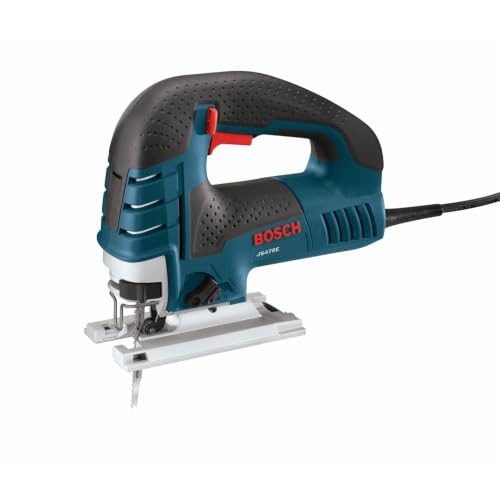
Bosch JS470E Top-Handle Jig Saw
What We Like
- Tool-less blade change with ejection lever
- Four orbital settings for smooth to aggressive cuts
- Low vibration design enhances cutting accuracy
- Ambidextrous lock-on button for steady operation
Trade-offs
- At 10 pounds, it is heavier than many competitors.
- Top-handle design may not suit all cutting grips.
- Includes only one T-shank blade to start.
A 7.0-amp motor and 3100 strokes per minute give this Bosch enough guts to power through tough materials without bogging down, which is why it stands out as a pro-grade option. The four orbital settings let you dial in the cut from a fine finish on veneer to an aggressive tear through framing lumber. Combined with a tool-less blade system that keeps your fingers off hot metal, it’s built for the DIYer or tradesperson who needs reliable, adaptable performance for a mix of jobs day after day.
The Bosch JS470E is recognized for delivering pro-grade performance, positioning it as a highly recommended mid-range jigsaw in expert assessments. This corded, 7.0-amp tool provides a 3100 SPM top speed on par with other models, balancing power and a comprehensive feature set. Its design includes an ergonomic top handle with soft-grip areas and an ambidextrous lock-on button for steady, comfortable control during long projects.
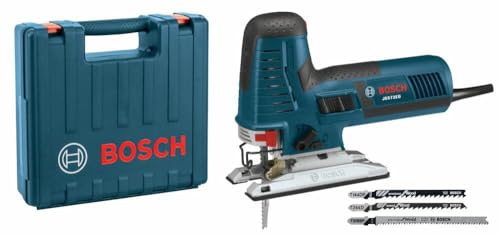
Bosch JS572EBK Barrel-Grip Jig Saw
What We Like
- Precision Control II system minimizes blade deflection
- Smallest barrel-grip circumference for maximum control
- LED light with on/off switch for cut line visibility
- Dust blower keeps the cutting line clear
Trade-offs
- Barrel-grip design has a steeper learning curve than top-handle models
- At 4.9 lb, it's heavier than some top-handle competitors like the Makita 4329K
The Bosch JS572EBK’s Precision Control II double-roller system directly tackles the biggest frustration with jig saws: blade deflection. That engineering focus, combined with the smallest barrel-grip in its class, delivers a tool built for accuracy you can feel. This saw is for the woodworker or installer who needs to follow a line with confidence, whether cutting intricate curves in cabinet work or making precise notches in trim. The enhanced control comes from letting you guide the tool closer to the workpiece, which is why it stands out for detailed tasks.
Its barrel-grip design offers the smallest circumference in its class, which provides maximum control for guiding the saw precisely along a cut line. This 4.9-pound tool uses a different handling technique than common top-handle jigsaws, and its weight can be felt during extended overhead work. For rough cuts or demolition, a top-handle model may feel more familiar, but the Bosch JS572EBK is dedicated to users who prioritize cut fidelity.
Makita 4329K Top Handle Jig Saw

What We Like
- Sliding dust cover for vertical cuts
- Rubberized grip for comfort and control
- Counterweight system reduces vibration
Trade-offs
- No orbital action specified
Hook it to a vacuum, and you’ll see the line you’re cutting instead of a cloud of chips. At just over four pounds with a rubberized grip, it’s a comfortable saw to guide through longer projects, and the counterweight helps keep things smooth. This is the saw for the detail-oriented woodworker or remodeler who spends hours at the bench and wants to keep their workspace and lungs clear.
You trade some raw cutting aggression for that cleaner operation, as the specs don’t list an orbital setting for more aggressive material removal. For demanding jobs where speed is the priority, a barrel-grip model like the Bosch JS572EBK might be a better fit. But if you value a clear line of sight and minimal cleanup, the Makita’s dust management system is a well-executed practical feature that pays off every time you use it.
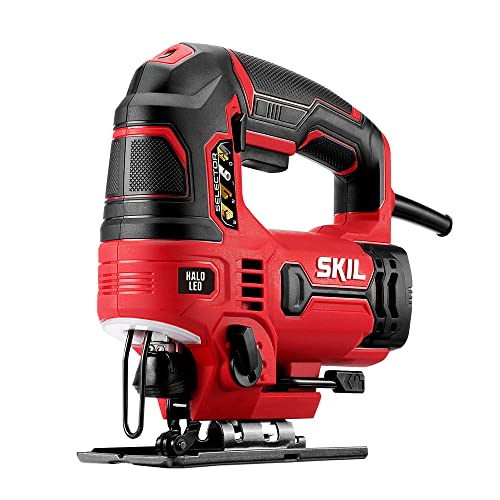
Skil JS314901 Corded Jig Saw
What We Like
- Tool-free blade and bevel adjustments
- Bright halo light illuminates cut line
- Dust blower keeps line visible
- Full feature set for a budget price
Trade-offs
- 6-amp motor lacks power for heavy-duty professional use
A 6-amp motor and a complete set of user-friendly features make this Skil jigsaw a standout for DIYers. The tool-free blade clamp and bevel adjustment mean you spend less time fiddling and more time cutting. The halo light and dust blower are thoughtful additions that actually help you see and follow your line, which is half the battle with a jigsaw. For weekend projects and home repairs, it packs more than enough performance and convenience to get the job done reliably.
This jigsaw is designed primarily for DIY and home use, a category where its 6-amp motor provides better cutting performance than many lower-powered models. While it’s not the least expensive option, the value comes from a full suite of features that support a wide range of household projects. Experts note it is not intended for all-day shop work, positioning it as a capable tool for the occasional user rather than a professional.
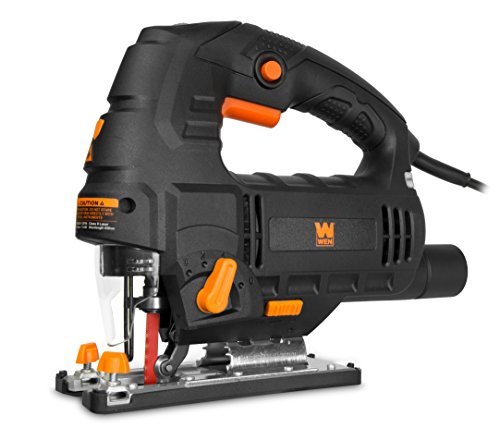
Wen 33606 Orbital Jig Saw
What We Like
- Integrated laser and LED light for cut-line visibility
- Four orbital settings for material-specific cutting
- Variable speed up to 3,300 strokes per minute
- Lock-on trigger for extended use comfort
Trade-offs
- 5.4 lb weight is heavier than the 4.2 lb Makita 4329K
The onboard laser and LED light work in tandem to project and illuminate your cut line, a significant advantage for anyone needing precision on marked workpieces. This saw pairs that guidance with a capable 6.6-amp motor and four orbital settings, letting you adjust the blade’s aggression for materials from fine plywood to thick lumber. It’s a thoughtful package for the detail-oriented DIYer who values a clear visual guide over raw, unassisted speed.
The Wen 33606 includes a laser and an LED light, which together keep both the workpiece and the cutting line illuminated for improved visibility in dim conditions. Its 4-position orbital selection knob changes the blade’s movement from a straight up-and-down stroke to a circular one, providing flexibility for different materials. A 6.6-amp variable speed motor generates up to 3,300 strokes per minute, allowing users to adjust cutting pace for the task at hand.
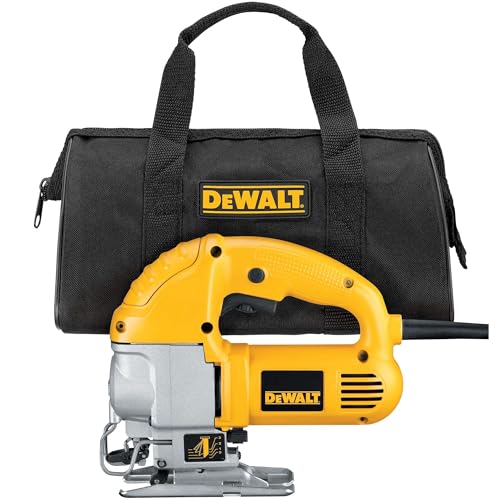
DeWalt DW317K Top-Handle Jig Saw
What We Like
- Keyless lever-action blade clamp
- All-metal gear case for durability
- Four-position orbital action control
- Variable speed for material matching
Trade-offs
- Heavier than many competitors at 7.4 lb
The all-metal gear case is the headline here, built to shrug off the dust and knocks of a jobsite day in and day out. This makes the DW317K a logical choice for tradespeople and serious DIYers who need a saw that won’t quit. Its 5.5-amp motor provides the muscle for hardwoods and metals. Variable speed up to 3,100 strokes per minute offers finesse, while the four orbital settings let you dial in the cut for speed or a cleaner finish.
Weighing 7.4 pounds, the DeWalt DW317K is one of the heavier saws in its class, which can lead to fatigue during overhead work or extended use. This heft comes from its all-metal gear case, a feature designed for superior durability on a professional job site. For users who need a lighter tool, other models like the Makita 4329K or Bosch JS572EBK have lower listed weights.
Product photos
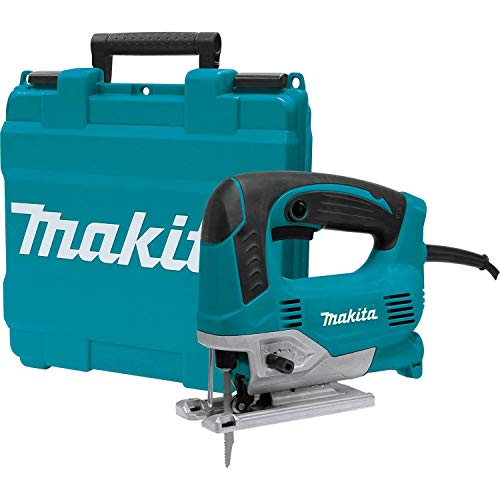
Makita JV0600K Top Handle Jig Saw
What We Like
- Counterbalance system dramatically cuts vibration
- Variable speed dial for precise speed matching
- Tool-less blade changes save time
- Dust port enables cleaner workspaces
Trade-offs
- 6.5-amp motor is less powerful than Bosch's 7-amp models
Makita’s counterbalance system reduces vibration, which can mean less fatigue during extended use. A 6.5-amp motor and variable speed control from 500 to 3,100 strokes per minute allow speed adjustment for different applications. Three orbital settings plus a straight cutting mode provide options for faster or more accurate cuts in various materials.
The motor’s 6.5-amp rating is lower than the 7.0 amps found on the Bosch JS470E. Tool-less blade changes allow for fast installation and removal. A through-the-body dust port enables connection to a vacuum for dust management.
Product photos
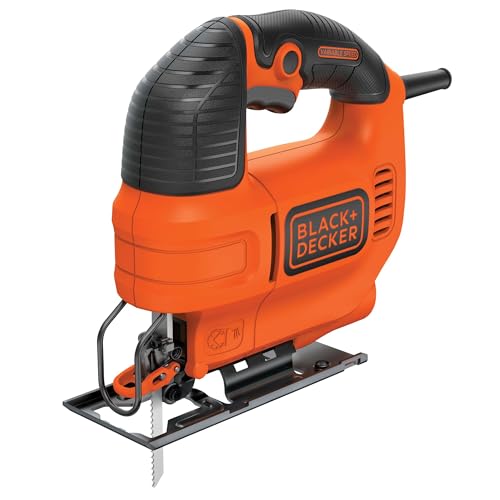
Black+Decker BDEJS300C Jig Saw
What We Like
- Compact and lightweight design for easy handling.
- Built-in dust blower maintains a clear cutting line.
- Quick-clamp system allows for tool-free blade changes.
- Adjustable shoe provides added stability during cuts.
Trade-offs
- The 4.5 Amp motor offers less raw power than many 6-7 Amp rivals.
- A 3/4-inch stroke length is shorter than some competitors, potentially slowing cuts in thicker stock.
At 4.4 pounds, the Black+Decker BDEJS300C is designed for easy maneuverability, which helps reduce arm fatigue during extended use. Its compact size and a design aimed at reduced vibration are intended to aid control. The 4.5 Amp motor generates up to 3,000 strokes per minute for cutting wood and metal, while the quick-clamp allows for tool-free blade changes and the adjustable shoe provides added stability.
The trade-off for a lighter, 4.5 Amp tool can be raw power compared to models with larger motors, such as the 7.0 Amp Bosch JS470E. For a hobbyist or homeowner, the Black+Decker’s features like a base plate that tilts for beveled cuts up to 45 degrees and a wire guard for a clear line of sight may be priorities. Its straightforward design focuses on versatility for common materials rather than high-amperage performance.
Product photos
Hammerhead HAJS048 Jig Saw

What We Like
- Brake function for precise stopping.
- Four-stage orbital control for cut versatility.
- Dust port for cleaner work area.
- Tool-free blade changes are quick.
Trade-offs
- 4.8-amp motor is less powerful than many competitors.
- Blade set includes only two wood-cutting blades.
A brake function stops the blade immediately after a cut, which allows for cleaner and more controlled cut-offs on projects like shelving or trim. This 4.8-amp jig saw delivers up to 3,000 strokes per minute, and its four-stage orbital dial adjusts the blade’s aggressiveness for different materials. Variable speed control further helps match the cutting pace to the blade and application, making it a solid fit for DIYers who value precision and a clean finish.
You trade some power for that control and its affordable feature set. The motor is notably less potent than options like the 7.0-amp Bosch JS470E, so it may bog down more in thick, dense hardwoods. For frequent, heavy-duty material cutting, a more powerful saw would be a better long-term investment. But for general-purpose home workshop use where precision is key, the Hammerhead’s brake and orbital functions deliver useful versatility.
Product photos
Workpro 6.5-Amp Corded Jig Saw

What We Like
- Tool-less blade change for quick swaps.
- Built-in LED light and dust blower for visibility.
- Includes scale ruler and exhaust pipe in the kit.
- Lock-on button reduces fatigue during long cuts.
Trade-offs
- Maximum 10mm iron plate capacity limits heavy metal work.
- Less powerful motor than the 7.0 Amp Bosch JS470E.
With seven blades, a scale ruler, and a dust pipe all in the box, this jigsaw delivers a ready-to-work kit right out of the gate. The 6.5 Amp motor and four orbital settings provide enough versatility for common DIY materials like wood and plastic, while the tool-less blade change and lock-on button streamline the workflow. It’s a solid fit for a beginner or weekend warrior who wants one purchase to cover the basics without hunting down accessories.
Its 6.5-amp motor and 3000 SPM top speed allow it to cut through boards up to 100mm thick, which covers typical DIY tasks like building shelves. While sufficient for common materials, the 5.4-pound weight can feel substantial during extended overhead use or detailed scrollwork. The tool includes a full kit of seven blades, a scale ruler, and a dust exhaust pipe, making it a convenient ready-to-use option for beginners.
Product photos
How We Evaluated Corded Jig Saws
Our evaluation was research-based, focusing on manufacturer specifications, expert round-up reviews, and consistent patterns in owner feedback across major retailers. We prioritized three key areas: cutting performance (motor power, stroke length, orbital settings), ergonomics and control (vibration reduction, grip style, weight), and user-focused features like tool-less blade changes, dust management, and cut-line visibility aids. For a deep dive into all the factors that matter, our detailed corded jigsaw buying guide covers everything you need to know.
This method allows us to compare features and reported performance systematically, but it cannot replicate the feel of a tool in your hand over hundreds of cuts. A research-led guide identifies the most capable tools on paper and highlights which models are consistently praised or critiqued by owners for specific tasks, whether you’re looking at all jigsaw types or focusing on corded jigsaws. Ultimately, your comfort with the grip style and the saw’s balance is a personal decision best made by handling the tool yourself.
What To Look For In Corded Jig Saws
A corded jig saw is a go-to tool for curved cuts, plunge cuts, and intricate scrollwork in wood, plastic, and thin metal. The right choice depends on your project frequency, material types, and personal comfort.
Look for a motor of at least 6 amps for general DIY, with 7 amps or more for frequent or professional use. A tool-less blade change system is a major time-saver. Consider grip style (top-handle or barrel) and vibration control for comfort during long sessions.
Motor Power & Stroke
Motor amperage, typically ranging from 4.5 to 7 amps in this category, directly influences cutting power and speed. A 6-amp motor is sufficient for most DIY tasks in wood and plywood, while a 7-amp motor, like in our best overall Bosch, handles thicker stock and more demanding materials with less strain.
Stroke length, the distance the blade travels up and down, affects cut speed; a longer stroke (often 1 inch) cuts faster than a shorter one (3/4 inch). For a discussion on how power needs differ, our guide on corded vs cordless tools explores the trade-offs.
Control & Ergonomics
Vibration is the enemy of accuracy and comfort. Look for saws with counterbalance systems, like the Makita JV0600K, or specialized low-vibration designs. The grip style is crucial: top-handle saws offer a familiar, over-the-tool feel good for general use, while barrel-grip models, like our precision pick, provide direct control favored by woodworkers for detailed work. Weight matters, too; a lighter saw (under 5 lbs) is easier to maneuver for overhead or detailed cuts, but often sacrifices some power or features.
Key Features
Orbital action adjusts the blade’s path from a straight up-and-down motion to a slight forward swing, making cuts in wood faster and more aggressive. Multiple settings let you match the action to the material. A variable speed trigger allows you to start cuts slowly for accuracy and ramp up for efficiency.
For visibility, an integrated LED light and a dust blower are invaluable for keeping your cut line clear. Your work will only be as good as the jigsaw blades you use, so factor in blade compatibility (almost universally T-shank now) and the ease of the change system.
.### Practical Checks Before You Buy
- Decide if a top-handle or barrel-grip feels more natural for your intended cuts.
- Ensure the saw has a bevel-adjustable baseplate for angled cuts.
- Check for a dust port if you plan to connect to a shop vacuum.
- Look for a lock-on button if you anticipate making long, continuous cuts.
- Verify what blades are included; you’ll likely need to purchase a set for different materials.
A versatile saw for mixed projects needs variable speed, multiple orbital settings, and a motor of at least 6 amps.
Corded Jig Saws Compared
To see how these top models stack up side-by-side on key specifications, refer to the comparison table below.
| Product | Motor (Amp) | Max Speed (SPM) | Weight (lbs) |
|---|---|---|---|
| Bosch JS470E Top-Handle Jig Saw | 7.0 Amp | 3100 SPM | 10.0 Pounds |
| Bosch JS572EBK Barrel-Grip Jig Saw | 7.2 Amp | 3000 SPM | 4.9 Pounds |
| Makita 4329K Top Handle Jig Saw | N/A | 3100 SPM | 4.2 pounds |
| Skil JS314901 Corded Jig Saw | 6 Amp | N/A | 4.9 Pounds |
| Wen 33606 Orbital Jig Saw | 6.6-amp | 3300 SPM | 5.4 pounds |
| DeWalt DW317K Top-Handle Jig Saw | 5.5 amp | 3100 SPM | 7.4 pounds |
| Makita JV0600K Top Handle Jig Saw | 6.5 AMP | 3100 SPM | 0.2 Pounds |
| Black+Decker BDEJS300C Jig Saw | 4.5 Amp | 3000 spm | 4.4 Pounds |
| Hammerhead HAJS048 Jig Saw | 4.8 Amp | N/A | N/A |
| Workpro 6.5-Amp Corded Jig Saw | 6.5 Amp | 3000 SPM | 5.4 pounds |
Frequently Asked Questions
Who makes the best corded jig saw?
Several brands excel, but Bosch is consistently highlighted for its refined cutting action, low vibration, and durable construction in both top-handle and barrel-grip designs. Other top contenders include Makita for its vibration control and dust management, and DeWalt for all-metal durability. The “best” depends entirely on whether you prioritize raw power, precision, value, or specific features.
What is the best corded jigsaw for a beginner?
For a beginner, we recommend a user-friendly, full-featured saw at a budget price. The Skil JS314901 is an excellent choice. It includes tool-free blade and bevel adjustments, a helpful halo light, and a dust blower. This gives you all the essential features to learn on without a large investment. Its 6-amp motor has enough power for common DIY projects.
What’s the difference between a top-handle and barrel-grip jigsaw?
A top-handle jigsaw has a D-shaped handle over the body of the tool, offering a familiar, comfortable grip for general-purpose cutting. A barrel-grip jigsaw has a rounded body you wrap your hand around, providing more direct control over the blade’s path, which many woodworkers prefer for detailed, accurate cuts. It often has a steeper learning curve.
Do I need orbital settings on my jigsaw?
Yes, for most users. Orbital settings change the blade’s motion from a straight reciprocation to a slight forward swing on the upstroke. This makes cutting through wood faster and more aggressive, reduces blade wear, and helps clear chips. Multiple settings allow you to dial in the action for softwoods, hardwoods, or plastics.
Can a corded jigsaw cut metal?
Yes, but with limitations. You need a jigsaw with variable speed control to slow the blade down, the appropriate metal-cutting blade (often a finer-tooth blade), and a steady hand. Check the saw’s rated capacity for metal, which is often much less than for wood (e.g., 10mm for iron). For frequent metal cutting, a saw specifically designed for it or a bandsaw may be more suitable.
The Bottom Line
For a versatile, powerful corded jig saw that can handle frequent use across a mix of materials, the Bosch JS470E Top-Handle Jig Saw is our clear best overall choice. If your budget is tight or you’re a weekend DIYer, the Skil JS314901 provides remarkable value and ease of use.
For woodworkers who live and die by cut-line accuracy, the barrel-grip control of the Bosch JS572EBK is worth the investment. No matter which model you choose, prioritize a tool with a comfortable grip and effective vibration control, your hands will thank you after the first long project.
