
10 Best Sanders For Stripping Paint in 2026
This post contains affiliate links. As an Amazon Associate, we earn from qualifying purchases.
The Bosch GET75-6N Electric Orbital Sander is our best overall pick for stripping paint, thanks to its turbo mode for aggressive removal and variable speed for a smooth finish. The Wagner PaintEater excels at controlled paint removal, while the WEN belt sander is our top budget choice for large surfaces.
Stripping paint demands a tool that can tackle thick layers without damaging the underlying material, requiring both power and control. We compiled this list by researching specifications, expert round-ups, and owner feedback patterns to help you find the right sander for your specific project.
Top 10 Sanders For Stripping Paint in the Market
Certain content that appears on this site comes from Amazon. This content is provided "as is" and is subject to change or removal at any time.
The Best Sanders For Stripping Paint, Reviewed
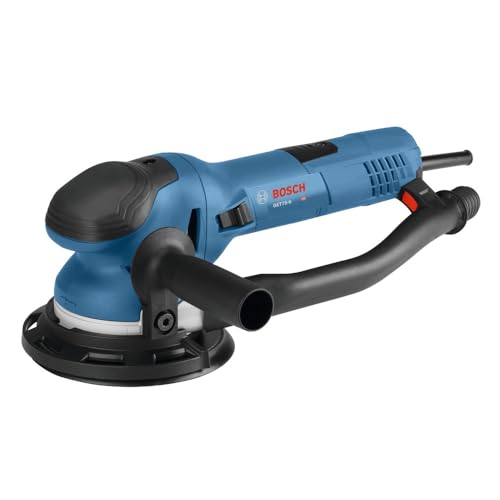
Bosch GET75-6N Electric Orbital Sander
What We Like
- Turbo mode delivers aggressive stock removal
- Variable speed for finishing and heavy work
- Multi-hole pad accepts wide abrasive variety
- Includes vacuum hose adapter for dust control
Trade-offs
- Requires a separate shop vacuum for dust collection
- At 5.7 pounds, it's heavier than many palm-grip sanders
The 7.5-amp motor and dual-mode design make this sander a serious contender for paint stripping. You get standard random orbit action for a smooth final surface, plus a turbo setting that triples the material removal rate. That lets you tackle thick, stubborn layers of paint almost like a belt sander, then switch modes to clean up the scratches. It’s built for the user who needs one tool to handle the entire job from heavy stripping to fine finishing, all with the consistent power of a corded motor.
The trade-off is in the setup. This is a shop tool, not a quick-grab option. You’ll need to connect a vacuum to its passive dust port to manage the enormous amount of fine debris generated, which adds a cord and hose to your workspace. For focused, high-speed stripping in tight areas, a dedicated tool like the Wagner PaintEater might be simpler, but the Bosch gives you far more versatility for the long haul after the paint is gone.
DEWALT 20V MAX Cordless Belt Sander

What We Like
- Brushless motor for long runtime and power.
- Tool-free quick-release belt change system.
- Variable speed trigger with 25 settings for control.
- Overmolded auxiliary handle for two-handed grip.
Trade-offs
- Tool only: requires separate 20V MAX battery and charger.
- Dust collection requires separate DEWALT Airlock accessory.
This cordless belt sander is designed to handle large sanding jobs without a power cord, offering the freedom to move around a workspace. Its brushless motor can complete traditionally corded applications with up to 22% more power, making it suitable for professionals or dedicated DIYers. A variable speed trigger and two-handed grip design provide control for different materials and help during extended use.
The freedom comes at the cost of a complete system. You’re buying the tool body alone, so factor in the price of a DEWALT 20V battery and charger, which adds to the initial investment. For paint stripping on smaller, more intricate areas, a dedicated detail sander like the HYCHIKA model would be more maneuverable. But for efficiently clearing big, open surfaces like doors, decks, or furniture panels, this cordless belt sander is a compelling and professional-grade solution.
Wagner PaintEater Electric Paint Remover

What We Like
- Palm-grip design for control and comfort.
- Flex-Disc system conforms to contoured surfaces.
- Open-web disc minimizes paint and dust loading.
- Operates effectively at any disc angle.
Trade-offs
- Fixed 2,600 RPM speed lacks variable speed control.
- Designed for paint prep, not heavy stock removal.
With a dedicated 4-1/2 inch disc spinning at 2,600 RPM, the Wagner PaintEater is engineered specifically for one task: stripping paint. Its palm-grip design and 3.4-pound weight give you the control to work the disc flat to feather edges or on its edge to dig into corners without gouging the surface underneath. This tool is built for the meticulous DIYer or painter who needs to prep old trim, doors, or furniture for a fresh coat, focusing on removal and smoothing rather than aggressive shaping.
This sander’s 3.2 Amp motor provides enough power for its intended paint removal work but can’t match the raw material-eating force of a tool like the Bosch GET75-6N orbital sander. Think of it as a surgical instrument for paint, not a demolition tool for wood. It excels at its niche, but for larger surface leveling or projects requiring multiple grits and sanding patterns, a more conventional sander will be the better fit.
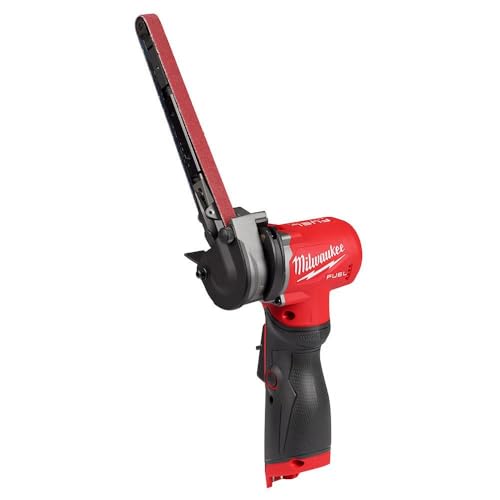
Milwaukee 12V Fuel Belt Sander
What We Like
- Forward and reverse rotation for versatile work.
- Toolless belt change and alignment adjustment.
- 360-degree rotating arm for difficult angles.
- Two speed settings with variable trigger control.
Trade-offs
- Tool-only listing requires separate battery purchase.
The two-speed settings and variable trigger deliver precise control for targeted work, making this sander a specialist for detailed stripping and cleanup. Its 360-degree rotating arm and forward/reverse operation let you tackle corners and contours from any angle, while the toolless belt changes keep you moving. This is the tool you grab for cleaning up weld spots, smoothing a repaired section, or stripping paint from intricate trim where a larger sander would be clumsy.
The narrow half-inch belt is inefficient for broad, flat surfaces. For stripping an entire door panel, you’d spend all day, a job better suited to a larger belt sander like the DEWALT 20V MAX with its standard 3-inch belt. The Milwaukee excels in its niche, offering cordless freedom and finesse for precision tasks, but it’s not a primary tool for major paint removal projects.
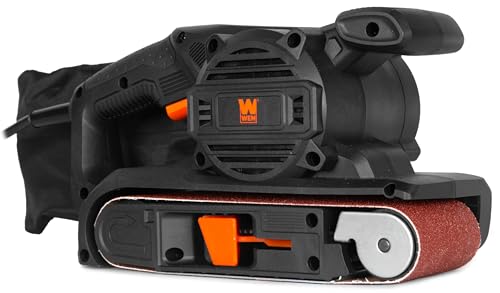
WEN Variable Speed Belt Sander
What We Like
- Variable speed up to 1200 fpm for aggressive stripping
- Lock-on switch prevents hand fatigue during long sessions
- Quick-release lever for fast belt changes
- Lightweight at 6.4 pounds for easier handling
Trade-offs
- Corded operation limits range of motion
- Dust bag is basic compared to shop-vac hose hookup
A 7.5-amp motor driving a 3×21-inch belt at up to 1200 feet per minute gives you serious, controlled power for stripping large, flat surfaces. The lock-on switch means you can work for extended periods without cramping your hand, and the 6.4-pound frame helps manage the tool’s heft. This is a straightforward, plug-in workhorse for the DIYer or occasional pro who needs to remove paint efficiently without fuss. It delivers core belt sander performance where it counts.
You are tethered to an outlet, which can be a hassle on a sprawling deck or a distant fence line. For those jobs, a cordless model like the DEWALT offers more freedom, though you pay a premium for that convenience. The included dust bag does a decent job, but for a truly clean workspace, you’ll want to connect it to a shop vac. For the price, you’re getting a capable stripper that focuses its budget on the motor and the belt where it matters.
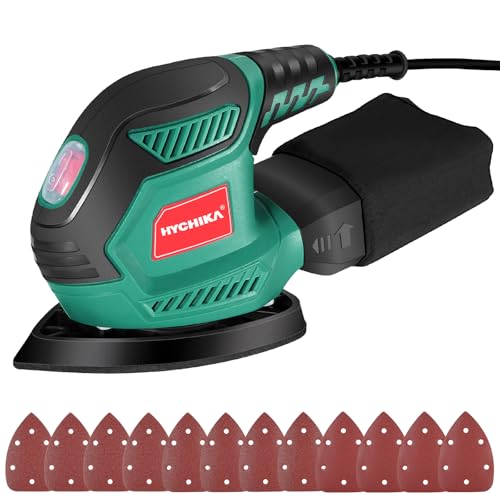
HYCHIKA BETTER TOOLS FOR BETTER LIFE MS200W Sander
What We Like
- Compact 4.8-inch width fits tight spaces.
- Includes 12 sandpaper sheets for immediate use.
- Six-hole dust collection system reduces cleanup.
- Ergonomic rubber head design for control.
Trade-offs
- Corded design limits mobility versus cordless options.
- Manufacturer advises against use on drywall or cement.
Running up to 14,000 orbits per minute in a body weighing just 2.2 pounds, this sander is made for detailed, controlled work. Its 4.8-inch length and soft rubber head design let it get into tight spaces to finish edges and corners. The included twelve sheets of hook-and-loop sandpaper in three grits mean you can start a job like stripping paint from furniture details right away. An efficient six-hole dust collection system with a bag helps keep the work area relatively dust-free, which is useful for indoor projects.
The motor draws 1.6 amps, a specification common for compact detail sanders. According to the manufacturer, it is ideal for polishing metal and plastic in small corners and for stripping paint or removing rust from metalwork. They advise against using it on drywall or cement plaster. For large, flat surface area sanding, a different tool category like the larger Bosch GET75-6N orbital sander would be more typical.
Product photos
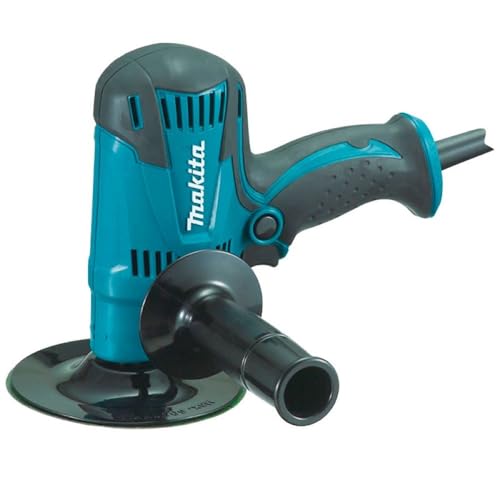
Makita GV5010 Disc Sander
What We Like
- High 5,000 RPM speed for aggressive material removal.
- Lightweight and compact for easy overhead or vertical use.
- Rubberized grip and housing enhance control during heavy work.
- Trigger lock-on reduces hand fatigue on large projects.
Trade-offs
- Lacks variable speed control for delicate surfaces.
- Small 5-inch disc covers less area per pass than a 6-inch or 7-inch model.
- Purely a disc sander, cannot accept belts or other attachments.
A 3.9 AMP motor spinning at 5,000 RPM delivers the focused, aggressive power you need to strip paint down to bare wood or metal quickly. This makes the Makita GV5010 a purpose-built tool for the heavy, messy work of paint removal, not for fine finishing. Its compact size and light 2.4-pound weight let you maneuver it into corners and work overhead without tiring your arm. The rubberized grip and motor housing give you a confident hold even when the sander bucks on an uneven surface. It’s the right choice when your primary goal is brute-force stripping efficiency in a manageable package.
The tool operates at a fixed 5,000 RPM, which is a single speed. Spiral bevel gears are included for smoother rotations and a more efficient transfer of energy. A trigger lock-on button is provided for operator convenience during extended use.
Product photos
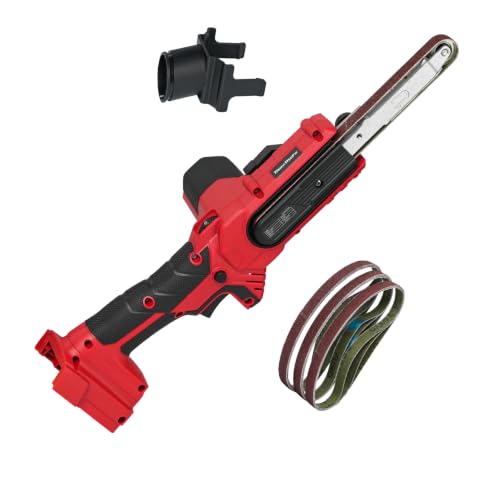
MORCLIN Cordless Bandfile Sander
What We Like
- Extremely lightweight at 1.9 lbs for one-handed use
- Tool-free belt changes with three included grits
- Compact size for accessing tight spaces
- Built-in low voltage battery protection
Trade-offs
- Tool only: requires a separate Milwaukee 18V battery and charger
- Narrow 1/2-inch belt covers less area per pass
Weighing just 1.9 pounds, this sander is built for detail work where bulkier tools can’t reach. Its compact, one-handed design and narrow belt profile let you strip paint from intricate trim, window sashes, or furniture spindles without the fatigue of a larger sander. The six speed settings give you control to avoid gouging softer wood, and the 2100 FPM belt speed is plenty for aggressive paint removal in confined areas. It’s a logical choice for the Milwaukee M18 battery platform user who needs a finishing tool for detailed restoration or spot repairs.
Its half-inch belt focuses on precision rather than covering large areas quickly. While a full-size belt sander like the DEWALT model is designed for broader surfaces, this tool excels at the finesse work that comes after bulk material removal. Smoothing welds or cleaning up corners a bigger sander would miss is where this bandfile gets into the cracks.
Product photos
KUPERIA 8.5A Drywall Sander

What We Like
- Strong 8.5 Amp motor for efficient material removal
- Integrated vacuum captures up to 99% of dust
- Lightweight design at 8.5 pounds reduces fatigue
- Telescoping handle and LED light aid overhead work
Trade-offs
- Drum sander design is less maneuverable in tight corners
- Requires proper technique to maintain dust seal against the wall
An 8.5 Amp motor and a dust collection system rated up to 99% efficient make this sander a logical choice for anyone facing a large-scale stripping job on flat surfaces like walls and ceilings. The included telescoping rod and light weight for its class let you tackle overhead work with less strain. This is fundamentally a drywall finishing tool, however. Its power and dust control are perfectly matched for someone stripping paint or texture from big, open plaster or drywall surfaces where containing the mess is a top priority.
The trade-off for that dedicated dust control and reach is bulk. The drum-style sander head isn’t made for detailed work or contours. For stripping paint off intricate trim or furniture, a more compact tool like the Wagner PaintEater would be far more agile. But if your project is defined by broad, flat planes and a serious dust problem, the KUPERIA’s design addresses those specific headaches directly.
Product photos
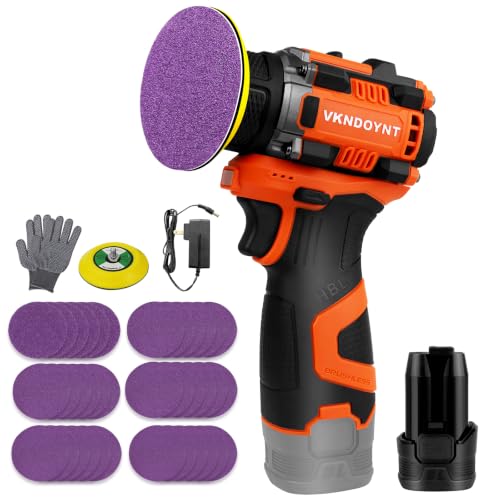
Vkndoynt Brushless Cordless Sander
What We Like
- Brushless motor for more torque and longer life
- Lightweight, compact design reduces user fatigue
- Includes 36 sandpapers for every stage of work
- Two speed modes for aggressive removal or fine finishing
Trade-offs
- 30-minute runtime may require breaks on big projects
- 3-hour charge time is a significant pause
Its cordless freedom and feather-light 1.8-pound build let you maneuver into corners and overhead without wrestling a cord or your own arm. The brushless motor delivers consistent power for stripping paint in tight spaces. The dual speed settings are genuinely useful, so you can crank it to 3000 RPM to chew through layers, then dial back to 500 for a final smooth pass. This is the tool you grab for furniture refinishing, window sashes, or any detailed paint removal where a bulky sander would be a liability.
The trade-off for that compact size is stamina. The 30-minute runtime is fine for most detail sessions, but you’ll need to plan around the three-hour recharge if you’re stripping an entire door frame. For large, flat surfaces, you’ll finish the job faster with a corded workhorse like the Bosch GET75-6N orbital sander. The Vkndoynt excels as a specialist, not a substitute for a primary sander on a big renovation.
Product photos
How We Evaluated Sanders For Stripping Paint
Our research focused on manufacturer specifications, expert tool round-ups, and consistent patterns in owner feedback. We prioritized power and aggressiveness, as stripping requires removing material quickly, alongside features like variable speed and dust control for final surface quality and user safety. We also weighed tool versatility for different surface types and the practical considerations of corded versus cordless operation.
A research-based evaluation like this cannot replicate the feel of a tool in hand over a long project, but it effectively highlights the models best suited to the demands of paint stripping.
What To Look For In Sanders For Stripping Paint
Choosing the right sander transforms a tedious chore into an efficient project. The key is matching the tool’s aggression and design to your specific surface and scope of work.
For stripping paint, prioritize a sander with high power and low-grit abrasives for fast material removal. Variable speed adds control for finishing, while effective dust collection is essential for cleanup and health.
Power and Aggressiveness
Stripping paint, especially multiple layers, requires a sander that can remove material quickly without bogging down. Look for high amperage in corded models or brushless motors in cordless tools, which translate to sustained power under load. Orbital sanders with a turbo mode, like our best overall pick, offer a significant boost in stock removal. Belt sanders and high-RPM disc sanders are inherently aggressive choices for large, flat areas, making them some of the best sanders for paint removal.
Tool Type and Application
The sander’s form dictates its best use. A random orbital sander is a versatile workshop staple, capable of both stripping and finishing. A dedicated belt sander is unmatched for speed on floors or furniture panels.
For detailed work on furniture or trim, a compact detail or delta sander is necessary to reach corners. If your project involves large drywall or plaster surfaces, a drywall sander with integrated dust collection is the specialized tool for the job. This highlights the importance of matching the tool to the task, such as when looking for sanders to remove paint from wood or other materials.
Dust Control and Ergonomics
Paint dust is a health hazard and a mess. A sander with a dust port that connects to a shop vacuum is a major advantage, capturing particles at the source. For extended work, features like a lock-on switch reduce hand fatigue, and a lightweight design improves control. Always pair your tool with appropriate personal protection, but choosing a model designed for dust management makes the process cleaner and safer, a principle that applies when using paint stripping discs or standard sandpaper.
Grit and Abrasive Selection
The sandpaper is as important as the tool. Start with a coarse grit to strip paint down to bare wood or metal. You’ll then need to progress through finer grits to smooth the surface for repainting or staining. Using the right sandpaper grit for paint removal prevents gouging the substrate and saves time. Always ensure your chosen abrasive is compatible with your sander’s pad system.
- Check the sander’s pad design (hook-and-loop, adhesive, specialized clamp) to buy the correct abrasive sheets or discs.
- For belt sanders, note the belt length and width required.
- Consider stocking a range of grits so you can move from stripping to smoothing without interruption.
- Remember that clogged paper slows work; open-coat or mesh abrasives resist loading with paint.
Start with the coarsest grit that gets the job done without damaging the material beneath, then work up through finer grits for a smooth finish.
Sanders For Stripping Paint Compared
The following table compares the key specifications of our top picks to help you see their differences at a glance.
| Product | Motor Power | Weight | Sanding Surface/Size | Speed Control/Type |
|---|---|---|---|---|
| Bosch GET75-6N Electric Orbital Sander | 7.5 amp | 5.7 pounds | 6 Inch Disc | 290 to 640 RPM |
| DEWALT 20V MAX Cordless Belt Sander | Brushless | 1.0 Pounds | 3 in. x 18 in. belt | 25-speed variable dial |
| Wagner PaintEater Electric Paint Remover | 3.2 Amp | 3.4 Pounds | 4-1/2 inches | 2,600 RPM |
| Milwaukee 12V Fuel Belt Sander | N/A | 0.0 pounds | Half Inch X 18 Inch | 3600 & 1800 SFM |
| WEN Variable Speed Belt Sander | 7.5-amp | 6.4 pounds | 3-by-21-inch | 620 to 1200 feet per minute |
| HYCHIKA BETTER TOOLS FOR BETTER LIFE MS200W Sander | 1.6 amp | 2.2 pounds | 140 x 90mm | 14,000 OPM |
| Makita GV5010 Disc Sander | 3.9 AMP | 2.4 Pounds | 5 inches | 5,000 RPM |
| MORCLIN Cordless Bandfile Sander | N/A | 1.9 lbs | 1/2" x 18" | 6 variable speeds |
| KUPERIA 8.5A Drywall Sander | 8.5 Amp | 8.5 pounds | N/A | 800-1800 RPM |
| Vkndoynt Brushless Cordless Sander | Brushless | 1.8 Pounds | N/A | 0-500/0-3000 RPM |
Frequently Asked Questions
What type of sander is best for stripping paint?
For most DIYers, a random orbital sander with variable speed offers the best balance of aggressive paint removal and a finish-ready surface. For large, flat areas like floors, a belt sander is faster, while a detail sander is essential for intricate furniture or trim work.
What type of sander is best for removing paint from walls?
For painted drywall or plaster, a drywall sander with a long handle and integrated vacuum is ideal. Its drum design and dust containment system efficiently remove paint or texture while minimizing the incredible mess, unlike a heat gun, which can create fumes.
What do professionals use to strip paint off wood?
Professionals often use a combination of tools depending on the project. A powerful random orbital sander is a common choice for its versatility. For rapid removal on flat surfaces, a belt sander is standard. In refinishing shops, you’ll also find specialized tools for stripping paint off wood that prioritize control and dust extraction.
Can I use an orbital sander to strip paint?
Yes, an orbital sander is an excellent tool for stripping paint, especially a model with a turbo or high-power mode. It’s more controlled than a belt sander and can handle contoured surfaces better. Be sure to use coarse-grit sandpaper and work systematically to avoid creating swirl marks in the bare wood.
What is the fastest way to strip paint with a sander?
The fastest method is to use the most aggressive tool suitable for your surface, like a belt sander for large flats, paired with the lowest grit sandpaper that won’t damage the substrate. Keep the sander moving to avoid gouging, and clean or change the abrasive frequently as it loads with paint to maintain peak cutting speed.
The Bottom Line
The Bosch GET75-6N Electric Orbital Sander earns our best overall recommendation. Its powerful turbo mode and variable speed control make it a superb single-tool solution for the workshop DIYer or pro who needs to both strip and finish. For those on a strict budget tackling large projects, the WEN Variable Speed Belt Sander delivers aggressive stripping at an affordable price. The Wagner PaintEater is the specialized choice for controlled paint removal on detailed work.
Ultimately, the most important factor is matching the sander’s aggression and form factor to your specific surface. Investing in the right tool and the correct coarse-grit abrasives turns a daunting task into a manageable project.
