
10 Best Saws For Cutting Plywood in 2026
This post contains affiliate links. As an Amazon Associate, we earn from qualifying purchases.
For reliable, portable cuts on sheet goods, the Festool TS 55 FEQ Track Saw is our best overall pick for its virtually splinter-free results and integrated safety riving knife. For a stationary workshop, the SawStop PCS175 Cabinet Saw offers unparalleled safety, while the DEWALT DWE575SB provides excellent value for a lightweight corded option.
Choosing the right saw makes all the difference between a frustrating, ragged cut and a clean, professional one. The challenge is finding a tool that matches your need for portability, power, and precision without overcomplicating the job. We built this guide by researching key specifications, studying manufacturer data, analyzing expert tool round-ups, and identifying common patterns in owner feedback across these ten tools.
Top 10 Saws For Cutting Plywood in the Market
Certain content that appears on this site comes from Amazon. This content is provided "as is" and is subject to change or removal at any time.
The Best Saws For Cutting Plywood, Reviewed
Festool TS 55 FEQ Track Saw

What We Like
- Virtually splinter-free cuts on both sides
- Riving knife for safer operation
- System includes a 55-inch guide rail
Trade-offs
- Requires the guide rail system for its full potential
The included 55-inch guide rail is the key to this saw’s dominance for plywood. It provides a long, straight reference for clean, accurate cuts across a full sheet, and the attachable splinter guard delivers that coveted clean edge on both faces of the plywood. For anyone needing repeatable, professional-quality panel cuts without the massive footprint of a cabinet saw, this system is the benchmark. It suits the craftsman who values precision and clean results in a portable format, directly off a pair of sawhorses.
You trade some portability and simplicity for that precision. For breaking down the occasional sheet, a lighter circular saw might suffice. Compared to the DEWALT DWE7491RS table saw, it exchanges high-volume ripping capacity for unmatched portability and chip-free crosscuts.
DEWALT DWE7491RS Table Saw

What We Like
- Rack & pinion telescoping fence for accurate adjustments
- Foldable rolling stand for easy transport and setup
- Large 32-1/2 inch rip capacity for wide sheets
- Onboard storage for key components and accessories
Trade-offs
- Requires shop vacuum connection for optimal dust control.
A 32-1/2 inch rip capacity means you can handle full sheets of plywood for ripping down shelves or trim without complicated setups. This DeWalt is built for the contractor who needs a capable saw that can move from the truck to the job site and be ready to work. The integrated rolling stand folds up with the saw, and the rack-and-pinion fence ensures your cuts stay straight and repeatable, which is critical for efficient cabinetry and framing.
You trade a massive, stationary work surface for that mobility. For breaking down full sheets in a shop, a cabinet saw like the SawStop PCS175 offers a larger, more solid table. But if your workshop is the jobsite, the DWE7491RS packs serious cutting power and support into a package that sets up fast. The 15-amp motor and deep cut capacity handle hardwoods, so it’s more than just a plywood cutter.
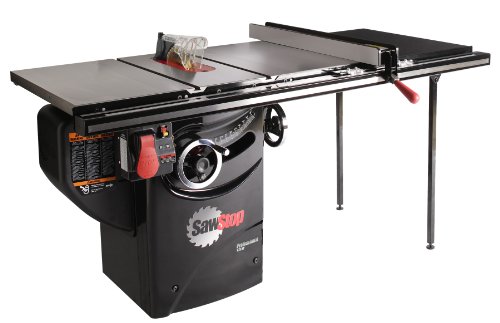
SawStop PCS175 Cabinet Saw
What We Like
- Patented skin-sensing safety system
- Heavy-gauge steel fence for zero deflection
- Precision trunnion and arbor assembly
Trade-offs
- Essential dust collection blade guard sold separately.
- Significantly larger footprint than portable jobsite saws.
The SawStop’s patented safety system stops the blade on skin contact in less than 5 milliseconds, turning a potential catastrophe into a minor scratch. This makes it the definitive choice for any workshop where peace of mind is paramount, especially for professionals or dedicated hobbyists who value long-term safety over all else. Its 36-inch T-Glide fence locks down with heavy-gauge steel for reliably square cuts, and the gas-piston elevation ensures smooth, precise adjustments.
For cutting down full sheets of plywood, its large table and fence excel. However, a dedicated track saw is far more practical for breaking down material on-site before bringing pieces to the saw for final precision work.
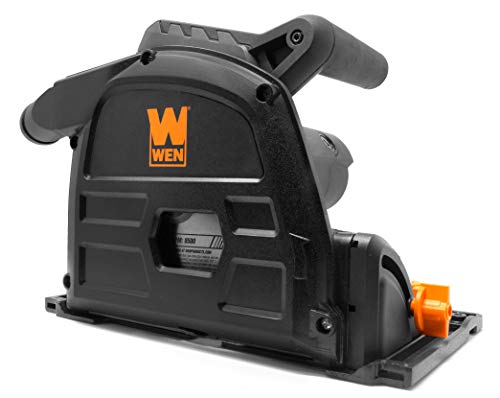
WEN CT1065 Track Saw
What We Like
- Capable of internal plunge cuts
- Rips boards up to 2-1/3 inches thick
- Compatible with separate track and clamps
Trade-offs
- Tool-only configuration lacks a track
- Maximum bevel cut depth is 1-5/8 inches
This makes it a smart pick for the workshop-focused DIYer or contractor who values precise, portable sheet cutting. The ability to start a cut in the middle of a panel is a specific advantage over a standard circular saw.
The saw is compatible with the WEN CT9502 100-inch track, but that track must be purchased separately. It can create 45-degree bevel cuts in boards up to 1-5/8 inches thick.
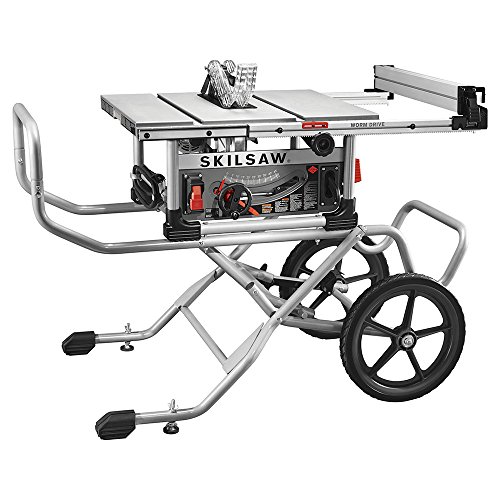
SKILSAW SPT99-11 Worm Drive Table Saw
What We Like
- Legendary worm drive gearing for power and torque.
- Rolling stand provides excellent jobsite portability.
- Outfeed and left support aids solo operation.
Trade-offs
- At 94.3 pounds, it's the heaviest portable table saw here.
- Large 52.6-inch footprint requires significant storage space.
- Dust collection is a single port, not a full system.
With a 30-1/2 inch rip capacity, the SKILSAW SPT99-11 can handle wide panels and dimensional lumber, supporting larger cuts for one person. Its legendary worm drive gearing provides the torque for dense materials like hardwoods. A precision rack and pinion fence system allows for quick, smooth adjustments to ensure accurate cuts.
That mobility comes with a trade-off in bulk and weight. At 94.3 pounds, it demands respect when loading into a truck. The rugged rolling stand with 16 inch wheels and easy-load handles is designed for transport. For stationary sheet cutting, a plunge-cut track saw is much lighter, but this SKILSAW integrates a stand and supports for rolling between tasks.
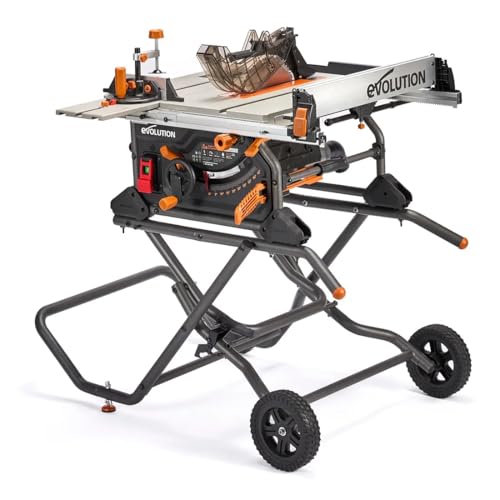
Evolution R10TBLX Jobsite Table Saw
What We Like
- Cuts wood, steel, aluminum, and composites
- Precision rack and pinion fence system
- Includes cross-cut sled for cleaner edges
- Electronic blade brake and riving knife for safety
Trade-offs
- Jobsite design lacks the mass of a stationary saw
The ability to cut plywood, mild steel, and aluminum with its included TCT blade makes this a uniquely versatile tool on a job site. For a contractor or serious DIYer who frequently switches between framing, metal studs, and composite panels, the R10TBLX consolidates tasks. The zero-clearance throat plate and included cross-cut sled directly address plywood tear-out, delivering clean edges straight from the box. Its geared bevel adjustment and dado capability further support precise, advanced joinery work.
You trade some capacity for that multi-material flexibility. Compared to a dedicated cabinet saw like the SawStop PCS175, it lacks the mass, expansive table, and ultimate precision for high-volume, fine woodworking. However, the quick-fold stand and all-terrain wheels make it a practical, moving workshop for mixed-material projects.
Product photos
DEWALT DWE575SB Circular Saw

What We Like
- Lightweight design reduces user fatigue
- Powerful 15-amp motor handles tough cuts
- Wide 57-degree bevel range for complex angles
- Electric brake enhances job site safety
Trade-offs
- Corded design limits mobility on large sites
- Lacks the integrated guide system of a track saw
At just 8.8 pounds, this saw is easy to maneuver overhead or through long sheets of plywood, which makes it a standout for all-day cutting sessions. The 15-amp motor provides reliable power for clean, consistent cuts, while the electric brake adds a layer of safety by stopping the blade quickly. It’s a smart choice for DIYers and contractors who prioritize a comfortable, corded tool for general construction and sheet goods.
The trade-off for its lightness and simplicity is the lack of an integrated cutting guide. For dead-straight, splinter-free plywood cuts, you’ll need to pair it with a straightedge. A plunge-cut saw is built for that precision right out of the box, while this model excels as a versatile, hardworking circular saw instead of a dedicated panel-cutting specialist.
Product photos
Makita XSR01PT Cordless Circular Saw

What We Like
- X2 LXT batteries deliver corded-like power
- Brushless motor for longer life and run time
- Automatic Speed Change for optimal cutting performance
- High-capacity cuts per charge on 5.0Ah batteries
Trade-offs
- Rear-handle design is long at 23.6 inches
- Requires investment in Makita's 18V LXT battery platform
Makita’s X2 LXT technology uses two 18V batteries to deliver a brushless motor speed of 5,100 RPM, a design that provides cordless operation without a direct power outlet. The Automatic Speed Change technology adjusts cutting speed and torque during a cut for what the manufacturer describes as optimum performance. This setup is claimed to deliver up to 558 crosscuts per charge in 2×4 SPF lumber with the included 5.0Ah batteries.
The tool’s listed weight of 23.1 pounds and length of 23.6 inches make it heavier and longer than some other saws, such as the 8.8-pound DEWALT DWE575SB. This size and weight affect its portability and how it is maneuvered on a job site. The rear-handle configuration is a common design for certain cutting applications.
Product photos
Festool TS 60 KEB Track Saw

What We Like
- KickbackStop system reduces risk during cutting.
- Powerful EC-TEC motor for fast work progress.
- Thin kerf blades require less effort.
- Compatible with FSK cross-cutting guide rails.
Trade-offs
- Guide rail is sold separately.
Festool’s TS 60 KEB includes a KickbackStop system to help reduce the risk of kickback during a cut, a direct safety feature for plunge-cutting into large workpieces. Its EC-TEC motor works with thin kerf blades for faster progress with less effort, which can help when processing many sheets. The saw offers a greater cutting depth than the TS 55 F model while maintaining the same size and weight.
The trade-off is that this is a system tool, not a standalone unit. You must purchase the guide rail separately to unlock its full potential for straight, splinter-free cuts. This adds to the initial setup and contrasts with a more self-contained option like the DEWALT DWE7491RS table saw, which provides a full cutting station in one box. The TS 60 KEB’s weight and size also mean it’s less of a quick-grab tool and more of a dedicated setup for planned cuts on the bench or floor.
Product photos
Makita XSH06PT Cordless Circular Saw

What We Like
- Dual-battery system for cordless power and long runtime
- Automatic speed change adjusts during cut
- Brushless motor runs cooler for longer life
Trade-offs
- Weighs 21.2 pounds for handheld use.
- Requires two 18V LXT batteries to operate.
The Makita XSH06PT uses two 18V batteries to create a 36V system, which means it has the muscle for sustained plywood ripping without hunting for an outlet. That automatic speed control adjusts torque as you cut, so it won’t bog down in a knotty sheet. This setup is for the builder who needs cordless freedom but refuses to compromise on cutting power for framing or sheet goods. It’s a serious tool for a jobsite that moves faster than an extension cord can follow.
You pay for that cordless power with weight and bulk. And while the dual batteries promise hundreds of cuts, you’ll need to verify what’s in the kit. For pure, finesse plywood work on a bench, a dedicated plunge-cut saw is a more precise, lighter instrument. This Makita is about raw, untethered capability.
Product photos
How We Evaluated Saws For Cutting Plywood
This guide compares tools using official manufacturer specifications, professional trade publications, and many owner reviews. Key criteria include the ability to produce a clean cut with minimal tear-out. We also consider a tool’s capacity and precision for handling full sheet goods, plus its overall practicality for the intended user on a jobsite or in a shop.
Our research-based approach means we can’t comment on nuances like vibration or ergonomic feel during extended use, but we can confidently report on the documented capabilities and what experienced users consistently say about them.
What To Look For In Saws For Cutting Plywood
Breaking down panels in a garage or making finish cuts in a cabinet shop requires consideration of several factors. Key among them are cut quality, the method for managing large sheets, and the tool’s design for a specific workflow.
Look for a blade or system that minimizes splintering, a tool with the capacity and support for full sheets, and a design that matches your need for portability or stationary power.
Cut Quality and Splinter Control
Plywood’s layered veneers are prone to chipping and tear-out on the top and bottom of a cut. The best saws address this directly. Track saws excel here, with a rubber strip on the guide rail that seals against the workpiece and a splinter guard on the blade side to protect the cut line.
For table saws, a high-quality blade with many fine teeth is essential for a clean edge. Some owners report that simple techniques can improve results. As discussed in the guide on how to cut plywood, applying painter’s tape over the cut line or positioning the good face of the plywood correctly can help.
Sheet Handling and Support
A full 4×8 sheet of plywood is heavy and awkward. Your saw’s design dictates how you manage it. For a table saw, a large rip capacity and a stable, extendable fence are critical; you may also need an outfeed table or a helper.
A track saw flips this equation: you place the panel on a stable surface or foam boards and bring the compact saw to it, which is far safer and easier for one person. Circular saws also use this method but require you to create or buy a separate straight-edge guide.
The choice between a table saw vs track saw often comes down to whether you prefer moving the material or moving the tool.
Tool Type and Workflow
Consider where and how you’ll use the saw. For a dedicated shop, a cabinet saw offers unmatched power and precision but demands permanent space. Jobsite table saws add portability with folding stands. Track saws are the champions of portable, precision panel breakdown, perfect for installers. A standard circular saw is the most versatile and budget-friendly option, especially with a good blade. Your decision should balance cut quality with your need for mobility, and a guide on choosing a plywood saw can help clarify these trade-offs.
- Check if the tool requires a separate guide rail or fence for accurate cuts.
- Consider the dust collection system, especially for indoor work.
- Evaluate the power source: corded for limitless runtime or cordless for ultimate mobility.
Ultimately, the best saw is the one you’ll use confidently and safely for your most common projects.
Saws For Cutting Plywood Compared
To see how these saws stack up on key specifications, refer to the comparison table below.
| Product | Motor / Power | Weight | Blade Size |
|---|---|---|---|
| Festool TS 55 FEQ Track Saw | N/A | 22.8 pounds | N/A |
| DEWALT DWE7491RS Table Saw | 15 Amp, 4800 RPM | 110 pounds | 10-inch |
| SawStop PCS175 Cabinet Saw | 1.75-HP | 471.4 Pounds | 10-inch |
| WEN CT1065 Track Saw | 10-Amp | N/A | 6.5-inch |
| SKILSAW SPT99-11 Worm Drive Table Saw | N/A | 94.3 pounds | 10-inch |
| Evolution R10TBLX Jobsite Table Saw | 15A | N/A | 10-inch |
| DEWALT DWE575SB Circular Saw | 15 amp | 8.8 pounds | 7-1/4 inch |
| Makita XSR01PT Cordless Circular Saw | 36V (18V X2) cordless | 23.1 pounds | 7-1/4 inches |
| Festool TS 60 KEB Track Saw | EC-TEC motor | 17.4 pounds | N/A |
| Makita XSH06PT Cordless Circular Saw | Brushless electronically controlled | 21.2 pounds | 7-1/4 inches |
Frequently Asked Questions
What saw is best to cut plywood?
For most users needing clean, portable cuts, a track saw like our best overall Festool TS 55 is ideal. For stationary shop work where safety is paramount, a SawStop cabinet saw is exceptional. Budget-conscious DIYers often find a quality circular saw paired with a straight-edge guide to be a versatile and effective solution.
What is the best tool for cutting plywood?
The best tool depends on your primary task. A track saw excels at breaking down full sheets with minimal tear-out. A table saw is superior for repeated, precise rip cuts and dados. A circular saw is the most adaptable general-purpose tool. Selecting the right blades for plywood is equally important for achieving a clean cut with any of these tools.
What is the best way to cut a 4×8 sheet of plywood?
The safest and most controlled method for one person is to support the full sheet on rigid foam insulation or sawhorses. You then cut it with a track saw or a circular saw guided by a clamped straight edge. This avoids the dangerous maneuver of balancing a large panel on a table saw. Proper circular saw technique is key if you’re not using a track system.
How can I cut plywood without it chipping?
Use a sharp blade designed for finish cuts, like a high-tooth-count plywood blade or a specialty plywood blade for a table saw. Orient the plywood so the blade cuts into the “good” face, and consider applying masking tape along the cut line to help hold the veneer fibers in place as you cut.
Should I use a jigsaw to cut plywood?
A jigsaw is best for cutting curves or intricate shapes in plywood, not for long, straight cuts. For straight lines, a circular saw, track saw, or table saw will be faster and yield a cleaner edge. If you do use a jigsaw, choose a fine-tooth blade designed for clean cuts in wood.
The Bottom Line
The Festool TS 55 FEQ Track Saw earns our best overall recommendation for woodworkers and installers who need to break down plywood sheets cleanly and accurately on-site. Its integrated guide system delivers cabinet-shop quality cuts anywhere. If your budget is tighter or you primarily work in a fixed shop, look to the DEWALT DWE575SB for a capable corded saw or the SawStop PCS175 for its industry-leading safety system in a stationary cabinet. No matter which category you choose, pairing your saw with the correct, sharp blade is the single most important factor for achieving a smooth, splinter-free edge on plywood.
