
10 Best Wood Saws in 2026
This post contains affiliate links. As an Amazon Associate, we earn from qualifying purchases.
For a single saw that handles rough cuts with speed and comfort, we chose the IRWIN Coarse Cut ProTouch Hand Saw as the best overall. For fine joinery, the KAKURI Japanese Pull Saw excels, while the Corona Clipper RS16150B is the top folding saw for pruning.
The right saw saves effort and yields cleaner results, but the choice between a push-stroke Western saw and a pull-stroke Japanese design depends on your technique and project needs. This guide is based on a review of manufacturer specifications, expert round-ups, and patterns in owner feedback to help you find a saw that fits your specific tasks.
Top 10 Wood Saws in the Market
Certain content that appears on this site comes from Amazon. This content is provided "as is" and is subject to change or removal at any time.
The Best Wood Saws, Reviewed
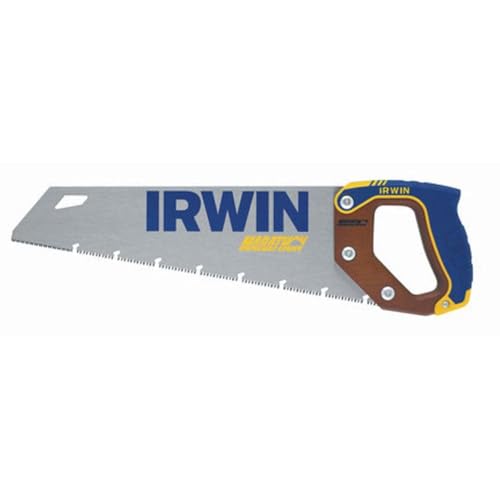
IRWIN Coarse Cut ProTouch Hand Saw
What We Like
- Tri-Ground teeth for fast, efficient cuts
- Pro-Touch handle ensures comfort and durability
- Deep gullets remove chips quickly to prevent binding
- Thick-body blade provides rigidity and control
Trade-offs
- Coarse cut leaves a rougher surface than fine-tooth models
- Western push-stroke design requires more clearance than pull saws
Built for speed with M2 Tri-Ground teeth, the IRWIN Coarse Cut ProTouch is a compact, well-balanced all-around saw. The research mentions that its Easy Start front teeth make it insanely simple to build an initial groove, allowing a fluid transition to full strokes. Its Pro-Touch handle combines wood and molded rubber for a solid, comfortable grip that reduces fatigue over several cuts. Deep gullets in the blade remove chips quickly, so it is less likely to bind mid-cut.
This saw is designed for fast, efficient cuts where a polished finish is not the priority. The tapered-pitch nose provides improved clearance and stability during use. For tasks requiring a very fine cut, other products like the BAHCO Ergo Superior Handsaw are described with ‘Fine Cut’ toothing. Japanese pull saws like the KAKURI or RUITOOL are also designed for different cutting actions.
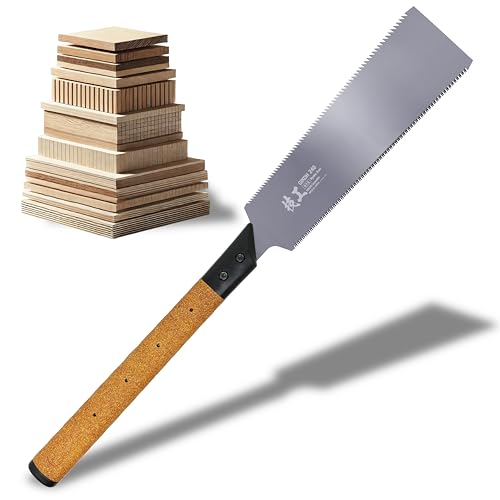
KAKURI Japanese Pull Saw
What We Like
- Replaceable blade for extended tool life
- Non-slip cork handle provides secure grip
- Double-edged blade handles rip and crosscuts
- Impulse-hardened steel for sharp, durable edge
Trade-offs
- Blade is thin at 0.024 inches, requiring careful handling
- Pull-stroke technique differs from Western push saws
The 0.024-inch blade thickness and impulse-hardened steel are the keys here. That thin kerf and extreme sharpness mean you can make incredibly precise, clean cuts with minimal effort, which is exactly what fine joinery and detailed trim work demand. This saw is built for the woodworker who values finesse over raw power, where a clean line straight off the saw saves hours of sanding or planing later. Its replaceable blade is a smart design, letting you maintain that factory-sharp performance long after a conventional saw would be retired.
Cutting on the pull stroke provides superior control and efficiency, allowing for precise, clean cuts in wood. The thin 0.024-inch blade produces a narrow kerf, which minimizes waste and reduces the effort needed for each stroke. This design excels in fine woodworking where accuracy is critical, though the 9.5-inch blade length is shorter than many Western-style handsaws.
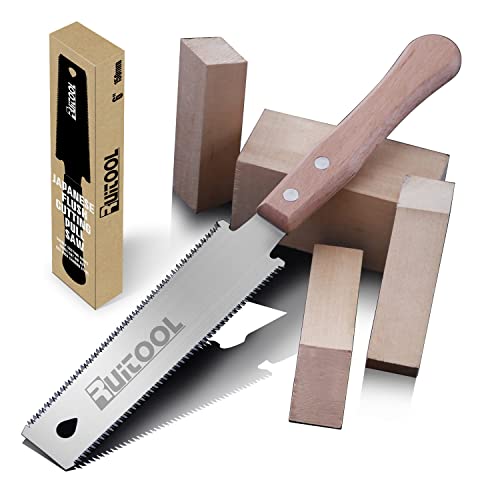
RUITOOL Japanese Double Edge Pull Saw
What We Like
- Compact 6-inch blade enables precise flush cuts.
- Double-edged blade handles both hardwood and softwood.
- Hardened teeth cut fast and remove chips smoothly.
- Extremely lightweight at just 0.2 pounds.
Trade-offs
- Short 6-inch blade limits cutting depth on larger stock.
- Lightweight design may feel insubstantial for heavy-duty tasks.
A 6-inch blade is the key here. It’s not about raw cutting capacity; it’s about control. This length lets you get right into tight corners and make clean finish cuts where a larger saw would be clumsy. The double-edge design is smart, packing a fine-tooth side for hardwoods and a coarser side for softwoods into one compact tool. That makes it a perfect fit for detailed woodworking, model building, or any job where precision trumps speed. The pull-cut action and hardened teeth leave a surprisingly smooth surface, often eliminating the need for extra sanding.
The trade-off is reach. You won’t be cross-cutting a 2×4 with this saw. For that kind of work, you’d want a longer tool like the STANLEY Sharptooth Hand Saw. The RUITOOL is purpose-built for finesse, not brute force. Its feather-light weight is fantastic for reducing hand fatigue during intricate work, but it also means you won’t get the heft needed to power through thick material quickly. It’s a specialist, excelling in situations where every cut needs to be clean and accurate right off the saw.
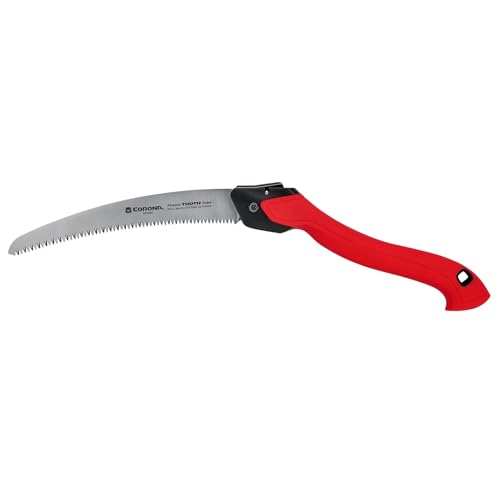
Corona Clipper RS16150B Wood Saw
What We Like
- Aggressive curved blade for fast, smooth cuts.
- Secure folding design for safe transport.
- Comfortable grip performs in wet or gloved conditions.
- Durable high-carbon steel construction for long-term use.
Trade-offs
- 10-inch blade limits cut capacity on thicker limbs.
- Shorter than fixed-handle saws, reducing reach and leverage.
The 10-inch curved blade is the key here, keeping more teeth engaged per stroke to zip through green wood and dry hardwood with less effort. That makes it a perfect match for the gardener or outdoor enthusiast who needs a saw that folds up neatly to toss in a backpack or tool belt. The lock-back mechanism ensures it stays put when you’re working. The contoured handle also provides a solid, non-slip grip even when things get muddy, so you can prune or clear trail without your hand tiring out.
Folding to a compact 12.5 inches, the Corona RS16150B is built for safe, easy transport in a backpack or tool belt. Its 10-inch curved blade is designed for faster, smoother cuts through branches and limbs with less effort than a straight blade. This saw is a specialist for pruning and outdoor tasks, not a general-purpose tool for large-scale lumber work.
Product photos
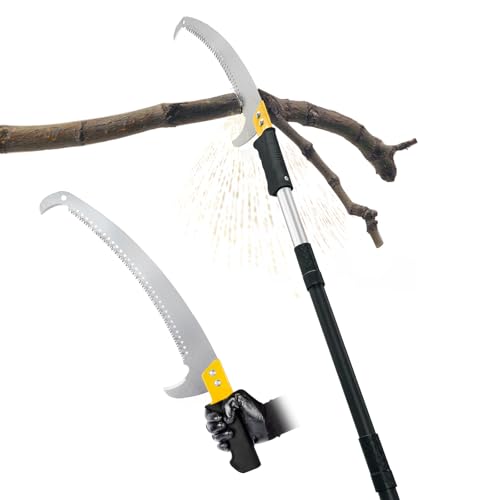
BlumeTrec Adjustable Pole Saw
What We Like
- Extends to 14.5 ft for ground-level pruning
- Lightweight Mn steel blade for clean cuts
- Modular design for three adjustable lengths
- Anti-slip grip and reinforced screw for safety
Trade-offs
- Manual operation requires significant user effort
- At 5.2 lb fully extended, handling fatigue is a factor
With an extension up to 14.5 feet, this manual pole saw eliminates the need for a ladder when pruning tall trees like oaks, pines, or firs. Its adjustable design offers three specific lengths, allowing you to switch from close shrub trimming to high-reaching branch cutting with the same tool. A sharp manganese steel blade is built for fast, clean cuts, and an extra screw secures the saw head to the pole to prevent loosening during use.
Operation is entirely manual, so cutting power depends on user effort, unlike electric or battery-powered alternatives. Assembly involves connecting modular pole sections, a process described as simple and accomplished in a few steps. When compared to a compact, single-piece tool like the Corona Clipper folding saw, this model trades immediate portability for its extended reach, making it suited for planned yard work rather than spontaneous trail use.
Product photos
BAHCO Prizecut Toolbox Handsaw

What We Like
- Hard point teeth for longer blade life
- Universal toothing for rip and cross cuts
- Includes reusable blade protector for storage
Trade-offs
- 15-inch blade limits cut width on large stock
- Universal toothing is not specialized for fine finishes
Weighing only half a pound, this saw is one of the lightest in its class, making it easy to carry in a kit without adding noticeable heft. Its universal toothing is strong and hard wearing, suitable for both rip and cross cutting in all types of wood, so it can handle most general cutting tasks. For a contractor needing a reliable backup or a homeowner wanting a capable saw that doesn’t hog space, this Bahco delivers simple, durable utility with a one-component solid handle and rust protection lacquer.
The trade-off for its light weight and compact form is reach, as a 15-inch blade limits the width of material it can cut through in a single stroke. Compared to the longer Bahco Ergo Superior handsaw, this model has a shorter blade length and uses universal toothing instead of a fine-cut pattern. For processing large volumes of wide lumber, you would want a longer saw, but for jobsite trim work or quick cuts, its pragmatic design includes a reusable plastic patented tooth protector.
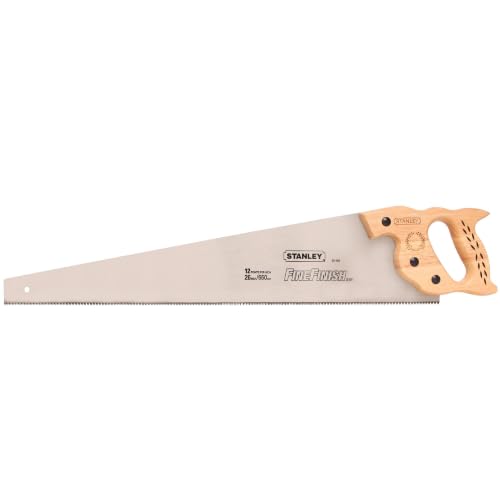
STANLEY Sharptooth Hand Saw
What We Like
- Induction-hardened teeth for long-lasting sharpness.
- Sharptooth tech cuts up to 50% faster than conventional saws.
- Comfortable hardwood handle provides secure grip and control.
- Versatile for laminate, plastic pipe, and all wood types.
Trade-offs
- Overall length is 30 inches.
- Weighs 1.5 pounds.
STANLEY’s Sharptooth technology uses three cutting surfaces to deliver up to 50% faster cutting than their conventional hand saws, which can reduce effort on larger projects. Its 26-inch blade provides long stroke length, and the comfortable hardwood handle is designed for a secure feel and improved control. The induction-hardened teeth are made to stay sharp and help reduce slowdowns through repeated use on materials like laminate, plastic pipe, and wood.
The saw’s 30-inch overall length and 1.5-pound weight mean it requires more storage space and handling room than compact options like the 8.6-inch KAKURI pull saw. Its design is built for versatile performance across a range of cutting tasks, as stated, rather than specialized applications. The durable construction is intended for dependable performance through repeated use.
BAHCO Ergo Superior Handsaw

What We Like
- Thick blade reduces side vibrations for easier cutting.
- Ergonomic handle provides even power distribution.
- Bevel ground teeth ensure straight, precise cuts.
- Includes reusable plastic tooth protector.
Trade-offs
- At 26.2 inches long, it requires ample storage space.
- Lacks the portability of a folding saw like the MOSSY OAK.
- Thick blade may be less agile for intricate joinery.
A substantially thicker blade and a two-component ergonomic handle make this saw feel solid and controlled in the hand, minimizing the wrist fatigue that comes from fighting side vibrations. That combination of stability and ergonomics makes it a standout for anyone who needs to make clean, straight cuts in dimensional lumber over a long session. The fine-cut, bevel-ground teeth are designed for precision, and the reusable tooth protector is a thoughtful touch for keeping that edge sharp in a toolbox.
Its 26-inch overall length provides stability, but this makes it less convenient to stash in a packed tool belt compared to a compact toolbox saw. It’s a dedicated, full-size tool. For general carpentry and crosscutting, this Bahco’s ergonomic design is its defining feature. A saw like the STANLEY Sharptooth offers a similar blade length but with a different balance and feel.
Product photos
MOSSY OAK Folding Hand Saw

What We Like
- Auto-locking blade for safe carry and use
- Teflon-coated bimetal blade resists rust and friction
- Lightweight, non-slip handle with attachment hole
- Includes heavy-duty carry pouch for portability
Trade-offs
- 7-inch blade limits maximum cut depth on thick branches
- Shorter folded length than the 12.5-inch Corona Clipper RS16150B
A 7-inch bimetal blade with 7 TPI triple-ground teeth cuts aggressively, making short work of branches and small logs. This speed, combined with a Teflon coating that reduces friction, makes it a natural choice for campers and hunters who need to process firewood or clear trails quickly. The automatic lock and fully concealed teeth when folded mean you can stow it in a pack without worrying about snags or accidental cuts. Its compact, sub-one-pound form factor is built for mobility, not the workshop.
Compactness comes with a trade-off in reach. While perfect for most camp chores, the blade length won’t tackle the diameter of larger limbs that a full-size saw like the IRWIN Coarse Cut ProTouch could handle in a few strokes. Compared to the Corona Clipper RS16150B, another folder, you’re gaining a lighter, faster-cutting tool but sacrificing several inches of blade and folded length. For its intended outdoor use, however, the Mossy Oak’s design prioritizes fast cuts and safe, easy transport above all else.
Product photos
JORGENSEN Pro Fine Cut Hand Saw

What We Like
- Triple-ground teeth for fast cutting on push and pull strokes.
- Ergonomic non-slip handle with 45° and 90° angle guides.
- Induction-hardened teeth for long-lasting sharpness.
- Deep tooth grooves for quick chip removal.
Trade-offs
- The 15-inch blade is shorter than some full-size Western saws like the 26-inch STANLEY.
- At 8 TPI, it's a coarser cut than fine-finish saws like the BAHCO Ergo with XT toothing.
- Not a folding or compact design for storage like the MOSSY OAK or Corona saws.
An 8 TPI, triple-ground blade cuts fast on both the push and the pull, making quick work of dimensional lumber and plywood. The induction-hardened teeth resist dulling, a key feature for pros who can’t stop to sharpen. That speed, combined with the ergonomic soft-grip handle and built-in angle guides, makes this a solid choice for carpenters and serious DIYers who need a reliable, all-purpose saw for framing, rough cuts, and general construction.
With 8 teeth per inch and triple-ground teeth, this saw cuts quickly on both push and pull strokes, making it efficient for general woodworking tasks. Its blade is made from 0.85mm thick high-carbon steel with induction-hardened teeth, which contributes to long-lasting sharpness. The ergonomic handle features a non-slip ABS+TPE soft grip and includes 45° and 90° auxiliary angles on both sides to help establish accurate cutting positions.
Product photos
How We Evaluated Wood Saws
This guide analyzes manufacturer specifications like tooth design, blade length, and handle materials. It cross-references expert recommendations and aggregated user reviews to find consistent performance patterns. The comparison focuses on cutting speed, cut quality and precision, and ergonomics and durability. These factors most directly affect user satisfaction and a saw’s suitability for tasks like framing, joinery, or pruning.
A limitation of this method is that we cannot personally verify blade feel or long-term wear, so we focused on widely reported owner experiences and documented design features.
What To Look For In Wood Saws
Choosing a wood saw means matching the tool’s design to your most common tasks. A saw perfect for rough carpentry will frustrate a fine woodworker, and a compact camping saw won’t handle a large pruning job.
Focus on blade length for your material size, tooth design for cut speed versus finish, and handle ergonomics for comfort. The stroke direction. Western push or Japanese pull, also defines the tool’s feel and required clearance.
Blade Length & Tooth Design
Blade length determines your maximum cutting depth; a 6-inch blade is ideal for flush cuts in tight spaces, while a 26-inch saw is needed for long lumber. Tooth design is equally critical. Teeth Per Inch (TPI) indicates cut fineness: a low TPI (like 8 on the JORGENSEN Pro Fine Cut) cuts fast but leaves a rough surface, while a high TPI provides a smoother finish.
Specialized tooth grinds, like the IRWIN’s Tri-Ground teeth or impulse-hardened teeth on Japanese pull saws, enhance speed and durability. The gullet depth between teeth affects chip removal, preventing binding in wet or resinous wood.
Stroke Direction & Handle Design
The fundamental choice is between Western push saws and Japanese pull saws. Western saws, like our best overall IRWIN, cut on the push stroke, requiring a rigid, thicker blade and more clearance behind the workpiece. Japanese pull saws, such as the KAKURI, cut on the pull stroke, allowing for an extremely thin blade that produces a finer kerf and requires less physical effort, but the blade is more fragile.
Handle design directly impacts control and fatigue. Look for ergonomic shapes with non-slip grips, like the Pro-Touch handle or cork wraps, which provide comfort during extended use. Angle guides on some handles, like the JORGENSEN’s, can aid in making consistent cuts.
Intended Use & Portability
Your primary projects dictate the best saw type. For stationary workshop precision, a dedicated woodworking saw is key. For breaking down lumber and framing, a fast-cutting handsaw like the STANLEY Sharptooth is ideal.
Gardeners need a specialized tool; a folding pruning saw like the Corona offers safety and portability, while a pole saw like the BlumeTrec addresses high branches. For ultimate portability in a toolkit or backpack, consider compact or folding designs, but accept their limitations in cut capacity.
If your work involves curves, our guide on the best jigsaws covers powered options for intricate shapes.
- Check the blade’s storage solution: a sheath or folding mechanism protects teeth and users.
- Consider replaceable blades on some models, which extend the tool’s life.
- Assess the grip for use with or without gloves, especially for outdoor tasks.
Match the saw’s specialty to your most frequent task to avoid underperformance or damage.
Wood Saws Compared
The table below compares key specifications like blade length, tooth design, and primary use to help you differentiate our picks at a glance.
| Product | Blade Length | Handle Material/Type | Weight |
|---|---|---|---|
| IRWIN Coarse Cut ProTouch Hand Saw | 15 inches | Pro-Touch (rubber/wood) | 1.0 pounds |
| KAKURI Japanese Pull Saw | 9.5 inches | Cork-infused resin | 0.5 pounds |
| RUITOOL Japanese Double Edge Pull Saw | 6 inches | N/A | 0.2 pounds |
| Corona Clipper RS16150B Wood Saw | 10 inches | Ergonomic non-slip grip | 0.8 pounds |
| BlumeTrec Adjustable Pole Saw | N/A | N/A | 5.2 pounds |
| BAHCO Prizecut Toolbox Handsaw | 15 Inch | One-component solid | 0.5 Pounds |
| STANLEY Sharptooth Hand Saw | 26 inches | Hardwood | 1.5 pounds |
| BAHCO Ergo Superior Handsaw | 22 inches | Two-component ergo | 0.4 pounds |
| MOSSY OAK Folding Hand Saw | 7 inches | N/A | 0.6 pounds |
| JORGENSEN Pro Fine Cut Hand Saw | 15 inches | ABS+TPE soft grip | N/A |
Frequently Asked Questions
What is the best saw for home use?
For general home DIY, a versatile, fast-cutting handsaw like the IRWIN Coarse Cut ProTouch Hand Saw is an excellent choice. It handles a wide range of materials from lumber to plastic pipe efficiently. If your home projects lean more toward fine woodworking or detailed trim, a precision pull saw like the KAKURI would be a better fit for cleaner cuts.
What type of saw is best for woodworking?
Fine woodworking that demands clean, precise joinery is best served by a Japanese-style pull saw, such as our award-winning KAKURI Japanese Pull Saw. Its thin, double-edged blade and pull-stroke action minimize tear-out and allow for extremely accurate cuts in hardwoods and softwoods alike.
What type of saw is best for cutting 2×4 lumber?
Cutting dimensional lumber like 2x4s quickly is a job for a coarse-toothed Western handsaw. Models like the STANLEY Sharptooth Hand Saw or the IRWIN Coarse Cut ProTouch are designed for this, with induction-hardened teeth and deep gullets to power through the wood without binding.
What is the best saw saw?
The phrasing “best saw saw” is unclear, but if you need the best all-around manual saw for common tasks, we recommend the IRWIN Coarse Cut ProTouch Hand Saw. It balances speed, comfort, and durability, making it a reliable single saw for many users. For specialized needs, refer to our other award winners.
Should I choose a push saw or a pull saw?
Choose based on your cutting style and project needs. Push saws (Western) offer thicker blades good for aggressive, fast cuts but require more physical effort and clearance. Pull saws (Japanese) provide finer, more controlled cuts with less effort using a thinner blade, making them ideal for precision work but less suited for rough demolition.
The Bottom Line
The IRWIN Coarse Cut ProTouch Hand Saw is our best overall pick for its excellent blend of cutting speed, comfortable handle, and versatility, ideal for the DIYer or carpenter tackling a mix of rough cuts. If your budget is tight or your needs are specific, look to our award winners: the BAHCO Prizecut for a compact toolbox staple or the MOSSY OAK Folding Hand Saw for a portable camping tool. Ultimately, the most important factor is matching the saw’s blade length, tooth design, and stroke direction to the tasks you actually perform.
