
10 Best Saws For Woodworking in 2026
This post contains affiliate links. As an Amazon Associate, we earn from qualifying purchases.
Our pick for the best overall woodworking saw is the DEWALT 12-inch Double Bevel Miter Saw for its adjustment-free accuracy and power for heavy-duty cuts. For unmatched safety, the SAWSTOP Cabinet Saw leads, while the BOSCH Glide Miter Saw wins for compact design. The right saw transforms your project from frustrating to flawless, but with so many types and specialties, the choice can be overwhelming.
We built this guide by researching specifications, manufacturer data, and patterns in expert and owner feedback to help you find the saw that fits your shop, budget, and most common tasks.
Top 10 Saws For Woodworking in the Market
Certain content that appears on this site comes from Amazon. This content is provided "as is" and is subject to change or removal at any time.
The Best Saws For Woodworking, Reviewed
DEWALT 12-inch Double Bevel Miter Saw

What We Like
- XPS LED shadow line for precise alignment
- Powerful motor for heavy-duty applications
- Integrated cutline system for adjustment-free accuracy
- Super-efficient dust collection system
Trade-offs
- At 54.7 pounds, it's heavy for frequent transport
- Its large size demands a dedicated workspace
- Overkill for users who only need occasional angled cuts
With a 12-inch blade and a 3,800 rpm motor, this saw has the capacity and power for demanding trim and framing work. Our tester recommends it for experienced woodworkers, professionals, and seasoned DIYers with ambitious project goals who need accurate cuts and efficiency. The XPS LED shadow line and integrated cutline system provide adjustment-free cut line indication for better accuracy and visibility in finish carpentry.
The trade-off is its substantial 54.7-pound weight and large footprint, which make it a permanent fixture in a serious workshop rather than a jobsite traveler. If you need similar precision in a more compact, transportable package for remodels, the Bosch 10-Inch Dual-Bevel Glide Miter Saw is a strong contender. This DeWalt is built for power and accuracy where you can leave it set up.
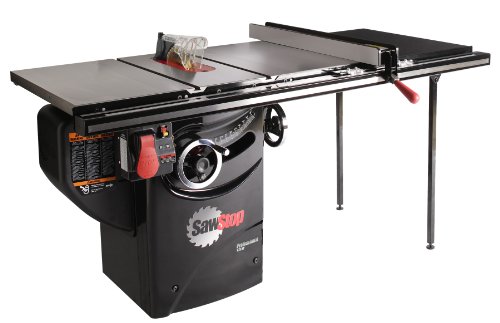
SAWSTOP 10-Inch Professional Cabinet Saw
What We Like
- Patented system stops blade on skin contact.
- Heavy-gauge steel fence ensures reliable square cuts.
- Gas piston elevation for smooth blade adjustment.
- Advanced shrouding provides effective below-table dust collection.
Trade-offs
- Weighs 471.4 pounds, requiring a permanent workshop installation.
- Essential dust collection blade guard is sold separately.
Its blade stops in less than 5 milliseconds on contact with skin, turning a life-altering injury into a minor scratch. This patented safety system defines the saw for any setting where protection is the primary concern. Built for precision, the trunnion and arbor provide strength and stability, while the table flatness has a maximum gap of 0.010 inches diagonally for reliable accuracy.
At 471.4 pounds, this is a permanent cabinet saw requiring a dedicated, sturdy floor space. It does not offer the portability of a jobsite model. For comparison, the DEWALT DWE7491RS table saw weighs 110 pounds and includes a folding stand for mobility.
Product photos
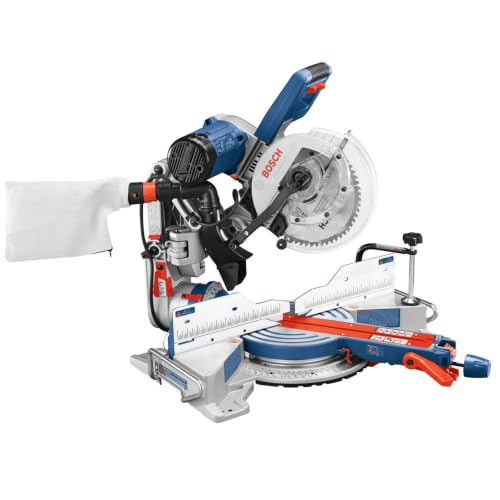
BOSCH 10-Inch Dual-Bevel Glide Miter Saw
What We Like
- Articulated arms reduce front footprint by 10 inches
- Axial-Glide System for durable, precise sliding
- Wide 47-degree bevel capacity with common detents
- Tall sliding fences for increased molding capacity
Trade-offs
- At 64 pounds, it is heavier than many 10-inch miter saws
- Weighs 64 pounds, requiring a sturdy stand or cart for movement
The articulated hinge arms shrink the front-to-back footprint by a full 10 inches compared to traditional slide saws, which is the key to its compact design. This makes it a prime candidate for workshops where floor space is at a premium or for contractors who need a full-capacity saw on a crowded job site. The 15-amp motor and 12-inch horizontal cut capacity handle the vast majority of trim and framing tasks, while the upfront bevel controls and tall fences streamline setup for crown molding. It’s built for the woodworker who needs professional cutting specs without surrendering an entire bench to a saw.
With a 64-pound weight, the Bosch CM10GD requires a dedicated stand or work area rather than frequent carrying. Its articulated hinge arms reduce the front-to-back footprint by up to 10 inches compared to slide saws, so it fits better in a crowded workshop. This design trades easy portability for a compact, stable cutting station.
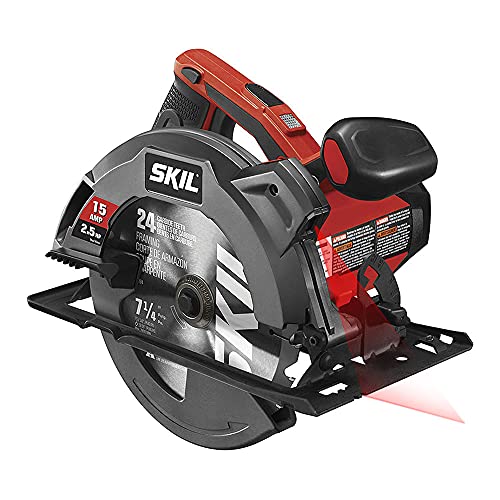
SKIL 15 Amp 7-1/4 Inch Circular Saw
What We Like
- Integrated dust blower keeps cut line visible.
- Spindle lock simplifies blade changes.
- 51° bevel capacity with a positive stop at 45°.
Trade-offs
- Blade and depth adjustments are basic, lacking fine-tuning.
- Corded design limits portability away from power outlets.
- Primarily suited for rougher work where finish isn't critical.
It’s the ideal first circular saw for a DIYer or a reliable backup for a pro who doesn’t need cordless freedom. The laser guide and dust blower are thoughtful aids that help you stay on your line, and the spindle lock makes swapping blades straightforward. You get a lot of capable tool for your money, letting you build skills without immediately needing an upgrade.
The trade-off for that affordability is in the adjustments; the blade mechanisms for bevel angle and cutting depth are useful but basic, lacking the finesse found on more expensive saws. It’s a tool built for getting the job done. According to research, this saw shines in outdoor work where cleanliness isn’t a concern, but it does need to be plugged in. For tasks far from power outlets, a cordless tool would be required.
DEWALT 10-Inch Jobsite Table Saw

What We Like
- Rack-and-pinion fence system for fast, accurate adjustments
- Integrated rolling stand for easy transport and setup
- Large 32-1/2-inch rip capacity handles wide shelving
- Onboard storage for all guards, wrenches, and push stick
Trade-offs
- At 110 pounds, it's substantial to lift without the stand wheels
- Worksite-oriented design lacks the mass of a cabinet saw for vibration damping
With a 32-1/2-inch rip capacity, this DEWALT table saw can handle sheet goods and wide shelving without requiring a stationary saw. Its rack-and-pinion fence system makes adjustments fast and accurate, which is critical for consistent joinery or batch work. Onboard storage keeps the blade guard, fence, miter gauge, and push stick organized and ready, so the saw is set up quickly at a jobsite.
Its jobsite design involves a natural compromise. The rolling stand works well, but the 110-pound saw lacks the heavy mass or vibration-dampening cast iron table of a dedicated shop saw like the SAWSTOP cabinet saw. You’ll notice this during all-day ripping of hardwoods. For projects that move from the garage to the driveway, or for breaking down plywood on location, this DEWALT’s mix of capacity, accuracy, and fold-up convenience is hard to beat.
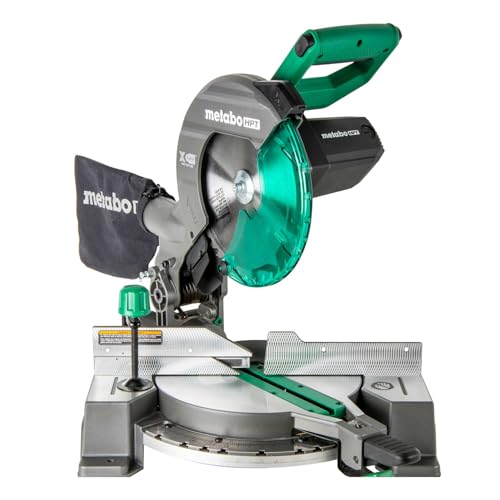
Metabo HPT 10-Inch Compound Miter Saw
What We Like
- Exceptionally portable at just 24.2 pounds
- Powerful 15-Amp motor for a lightweight saw
- Large table provides solid material support
- Includes a 5-year manufacturer warranty
Trade-offs
- Single-bevel design limits compound cutting flexibility
- Cannot bevel to the right, only to the left
Weighing 24.2 pounds, this saw is built for movement. Its compact design makes it a natural fit for anyone who needs to carry their miter saw to multiple job sites. The 15-Amp motor delivers a no-load speed up to 5,000 RPM for precise cuts, so you aren’t sacrificing power for portability.
This lightness comes with a single-bevel design. You have to flip your workpiece to make a matching compound cut on the opposite side, which adds steps for crown molding or complex trim jobs. For those tasks, a dual-bevel model like the Bosch CM10GD is listed, but this saw handles straightforward crosscuts and single-angle bevels effectively.
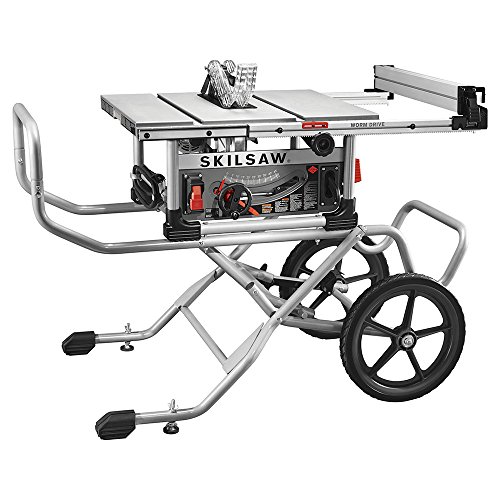
SKILSAW 10 Inch Worm Drive Table Saw
What We Like
- Legendary worm drive gearing for deep cuts
- Large rip capacity handles wide stock
- Precision rack and pinion fence for accuracy
- Integrated rolling stand provides excellent mobility
Trade-offs
- The 52.6-inch length demands significant workshop floor space.
- Dust collection is a single port, not a fully enclosed system.
Its 3-5/8 inch depth of cut allows you to slice through thick material in one pass. Legendary worm drive gearing provides this capability, which is uncommon among portable saws. The included rugged rolling stand with 16-inch wheels and easy-load handles delivers mobility for a tool weighing 94.3 pounds.
That deep-cutting power and mobility result in a substantial footprint and weight, so it’s less ideal for quick setups in a cramped garage. If you need a more compact, lighter option that still offers great rip capacity for sheet goods, consider the DEWALT 10-Inch Jobsite Table Saw. The SKILSAW positions itself as the brute-force solution when maximum cut depth is the main need.
Product photos
Makita 5007Mg Magnesium Circular Saw

What We Like
- Lightweight magnesium construction for easy handling
- Powerful 15-amp motor for demanding cuts
- Dual LED lights illuminate the cut line
- Large bevel capacity with positive stops at common angles
Trade-offs
- At 10.6 lb, it's heavier than some 7-1/4-inch models like the SKIL 5280-01
- Corded design requires access to a power outlet
- One-year warranty is shorter than many pro-grade tools
The Makita 5007Mg uses magnesium components, resulting in a saw that weighs 10.6 pounds and is described as well balanced and jobsite tough. Its 15.0 AMP motor delivers 5,800 RPM for what the manufacturer calls proven performance and durability. Two built-in L.E.D. lights are included to illuminate the line of cut for increased accuracy.
You trade some of the ultra-lightweight feel of a basic plastic saw for the rigidity and toughness of magnesium, which is why it can handle a bevel cut up to 56 degrees. For breaking down sheet goods with ultimate precision, a dedicated track saw like the Festool TS 55 is the better specialist. But for the carpenter who needs one reliable, well-balanced saw for everything from decking to rafters, the 5007Mg hits a very practical sweet spot.
Product photos
Festool TS 55 Track Saw

What We Like
- Virtually splinter-free cuts on both sides
- Attachable splinter guard for clean edges
- Constant cutting edge position when beveling
- Riving knife for safer, simpler positioning
Trade-offs
- Requires the track system for its precision benefits
- The system's full potential relies on Festool accessories
The attachable splinter guard delivers virtually splinter-free results on both sides of a cut, which is critical when working with expensive veneered plywood or finished stock. This saw suits the woodworker who prioritizes finish-ready edges straight from the cut, especially in a shop without a massive stationary table saw. Its riving knife adds a layer of safety against kickback, and the cutting edge stays locked in position even when you bevel, so your layout marks remain accurate.
Weighing 22.8 pounds, this track saw demands more heft than a compact circular saw, trading some portability for its integrated system precision. The included 55-inch guide rail is essential for its operation, and its top-class sawing system relies on a variety of accessories to unlock full capabilities. For breaking down sheet goods with virtually splinter-free results on both sides, it stands apart, though its system-oriented design may be more than needed for quick, rough cuts.
Product photos
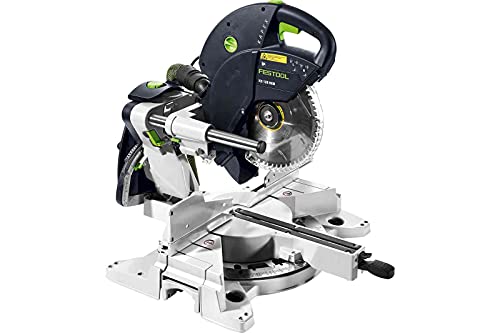
Festool KAPEX KS 120 Miter Saw
What We Like
- Rail-forward design for a compact, precise footprint
- Micro-adjustable bevel angle with large, clear scale
- Effective 91% dust extraction with pivoting hose
- Dual lasers for clear cutline visibility from either side
Trade-offs
- At 57.3 lb, it's heavier than the 54.7 lb DEWALT DWS780
- The footprint is wider than the Bosch glide saw's design
Dust extraction rated up to 91% means this saw will keep your workspace and lungs far cleaner than most miter saws. The dual lasers clearly define the kerf, so you can align cuts from either side without guesswork. It’s built for the woodworker who values a clean shop and precise setup, with features like the micro-adjustable bevel knob and rail-forward design that sacrifices no capacity for its smaller bench footprint. This tool is for the detail-oriented craftsman who spends all day at the station.
You pay for that precision and clean operation with some heft, at 57.3 pounds, it’s a solid bench-mounted tool, not one you’ll want to haul to a jobsite daily. Compared to the more portable Metabo HPT C10FCG2, the KAPEX is a workshop anchor. Its comprehensive warranty and service guarantee back up its premium positioning, but the repair process takes time. This is an investment in daily accuracy and shop air quality, not quick portability.
Product photos
How We Evaluated Woodworking Saws
This selection is based on a review of product specifications, manufacturer documentation, and expert round-ups. We focused on the criteria that matter most for workshop productivity and safety. These include cutting precision, power and capacity for common materials, durability of the core mechanism, and thoughtful features that improve the user experience, like dust management or safety systems.
Our research also includes a guide to the best wood saws that covers essential hand tools. A limitation of this research-led approach is that we cannot account for the nuanced feel of a tool in hand or its long-term reliability over years of daily use.
What To Look For In Woodworking Saws
Choosing a saw means matching its core function to your most frequent tasks. A saw that excels at crosscuts will struggle with ripping lumber, and a portable jobsite tool often trades some stability for its mobility.
For clean, repeatable crosscuts and angles, a miter saw is ideal. For breaking down sheet goods or ripping lumber, a circular or table saw is fundamental. Consider your workspace size, the materials you cut most, and whether portability or a permanent station is a priority.
Saw Type & Primary Function
The first decision is what kind of cuts you make most. A circular saw vs miter saw comparison highlights their different roles: circular saws are versatile for straight cuts and breaking down large panels, while miter saws are dedicated to precise, repeatable angled crosscuts. Table saws are the primary tool for rip cuts (with the grain) and can handle dados with the right blades. For curved or intricate cuts, a jigsaw is the go-to, a topic explored in our guide comparing jigsaws and circular saws.
Power & Cutting Capacity
Motor power, measured in amps for corded tools, determines how smoothly a saw handles dense hardwoods or thick stock. Capacity is just as critical: a miter saw’s crosscut width, a table saw’s rip capacity, and a circular saw’s depth of cut define your project limits. For example, a worm-drive circular saw offers deeper cutting power for framing, while a compact sliding miter saw might trade some maximum cut width for a smaller shop footprint.
Precision & Control Features
Accuracy hinges on the saw’s adjustment systems and guides. Look for a table saw with a solid, easy-to-square fence system. A miter saw should have positive detents at common angles and a clear cutline indicator, like a laser or shadow line.
Features like a riving knife on a table saw or track saw prevent kickback. Effective dust collection, whether a bag or a port for a shop vacuum, keeps your line of sight and workspace clean. For those just starting, the best saws for beginners often emphasize user-friendly controls and safety.
- Check the fence on a table saw for smooth, lock-down operation across its full range.
- For miter saws, verify the bevel and miter detents are crisp and the saw holds angle under load.
- Assess the base and guards for stability and whether they interfere with your common workpiece sizes.
- Consider if the tool offers onboard storage for blades, wrenches, and necessary safety accessories.
- Evaluate the dust port compatibility with your existing shop vacuum or dust collector hose.
A saw that feels cumbersome or difficult to adjust will slow you down and compromise safety.
Saws For Woodworking Compared
For a quick overview of how these top picks stack up on key specifications, see the comparison table below.
| Product | Motor Power | Weight | Blade Size |
|---|---|---|---|
| DEWALT 12-inch Double Bevel Miter Saw | 1100 watt 15 amp | 54.7 pounds | 12-inch diameter |
| SAWSTOP 10-Inch Professional Cabinet Saw | 1.75 HP | 471.4 Pounds | 10 inches |
| BOSCH 10-Inch Dual-Bevel Glide Miter Saw | 15 Amp | 64.0 Pounds | 10 In. |
| SKIL 15 Amp 7-1/4 Inch Circular Saw | 15 Amp | 8.7 Pounds | 7-1/4 inches |
| DEWALT 10-Inch Jobsite Table Saw | 15 Amp, 4800 RPM | 110.0 pounds | 10 Inch |
| Metabo HPT 10-Inch Compound Miter Saw | 15 Amp | 24.2 pounds | 10-Inch |
| SKILSAW 10 Inch Worm Drive Table Saw | N/A | 94.3 pounds | 10 Inch |
| Makita 5007Mg Magnesium Circular Saw | 15.0 AMP, 5,800 RPM | 10.6 pounds | 7-1/4-Inch |
| Festool TS 55 Track Saw | N/A | 22.8 pounds | N/A |
| Festool KAPEX KS 120 Miter Saw | N/A | 57.3 pounds | N/A |
Frequently Asked Questions
What saw is best for woodworking?
There’s no single “best” saw, as it depends on your primary tasks. For most workshops, a quality table saw for rip cuts and a miter saw for crosscuts form a versatile core. Our best overall, the DEWALT Miter Saw, is a top choice for precise angled cuts, but you’ll need other tools like a table saw or circular saw for ripping lumber or breaking down sheet goods.
What is the best saw for cutting wood at home?
For general home DIY and common home projects, a good circular saw offers the most versatility in a single tool. Our budget pick, the SKIL Circular Saw, provides ample power for framing, shelving, and basic cuts. For more precision on trim or furniture projects, a compact miter saw is a worthwhile upgrade.
What saws do carpenters use?
Professional carpenters typically use a suite of saws for efficiency and precision. A portable table saw like the DEWALT Jobsite model is standard for on-site rip cuts. A sliding compound miter saw handles trim and molding, while a durable circular saw, such as the Makita Magnesium model, is used for framing and general cutting. Many also use track saws for precise, portable panel cuts.
What brand makes the best saws?
Brand preference is often tied to tool ecosystem, durability needs, and budget. Brands like DEWALT, Makita, and Bosch are renowned for professional-grade durability and innovation. Festool is a leader in precision and dust extraction for finish work. For those on a budget, SKIL and Metabo HPT offer reliable performance. Our research on best power saws examines these trade-offs in detail.
Should my first saw be corded or cordless?
For a first saw, especially a primary workhorse like a circular or miter saw, a corded model is often the better choice. It provides consistent, unlimited power without the cost and maintenance of batteries, which is ideal for learning and longer project sessions. As you expand your toolkit into a cordless system, you can then add specialized cordless tools.
The Bottom Line
The DEWALT 12-inch Double Bevel Miter Saw is our top recommendation for woodworkers with a dedicated shop space who need relentless accuracy and power for trim, framing, and furniture projects. If your budget is tight, start with the capable SKIL Circular Saw, and if injury prevention is your non-negotiable priority, the SAWSTOP Cabinet Saw is in a class by itself.
Ultimately, the most important factor is honestly assessing the types of cuts you make most often. Buying a saw designed for that specific function is always better than hoping a general-purpose tool will do everything well.
