
10 Best Air Compressors For Auto Body Work in 2026
This post contains affiliate links. As an Amazon Associate, we earn from qualifying purchases.
For a dedicated shop space, the Campbell Hausfeld 60-Gallon Two-Stage Air Compressor is our best overall choice, delivering the high pressure and consistent airflow needed for sanding and painting. Our list also highlights top performers for ultra-quiet operation and portable shop use. Auto body work demands a compressor that can run high-CFM tools like sanders and HVLP paint guns without pressure drops that ruin a finish.
We built this guide by researching specifications, manufacturer data, and patterns in professional feedback to help you invest in the right system for your shop’s scale.
Top 10 Air Compressors For Auto Body Work in the Market
Certain content that appears on this site comes from Amazon. This content is provided "as is" and is subject to change or removal at any time.
The Best Air Compressors For Auto Body Work, Reviewed
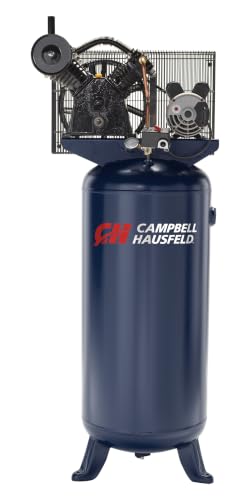
Campbell Hausfeld 60-Gallon Two-Stage Air Compressor
What We Like
- Two-stage cast-iron pump for durability and long life
- 175 PSI maximum pressure supports demanding air tools
- Vertical 60-gallon tank saves substantial floor space
- 7.6 SCFM at 90 PSI handles continuous sanding and grinding
Trade-offs
- Requires a dedicated 230V electrical circuit for operation
- At 255 pounds, it is a permanent, non-portable installation
- 23×23 inch footprint still requires significant dedicated floor area
A 7.6 SCFM air delivery at 90 PSI can run a pneumatic DA sander or die grinder without constant stalling. That capability is why this compressor sits at the heart of so many professional shops. Its two-stage, oil-lubricated cast-iron pump is built for the long haul. It turns marathon sessions, like block sanding a full quarter panel, from a battle against recovery time into a steady workflow. The 60-gallon vertical tank stores plenty of air while keeping its footprint manageable in a crowded garage.
The trade-off is commitment. You’re installing a 255-pound stationary tool that needs a proper 230-volt outlet, so it’s not a plug-and-play solution. For a shop already wired for heavy equipment, it’s a foundational piece. If your space and electrical panel can’t support it, or your work is more intermittent, a more compact unit like the DEWALT 30-Gallon Portable might be the smarter play. You would just need to take breaks to let the tank refill during big jobs.
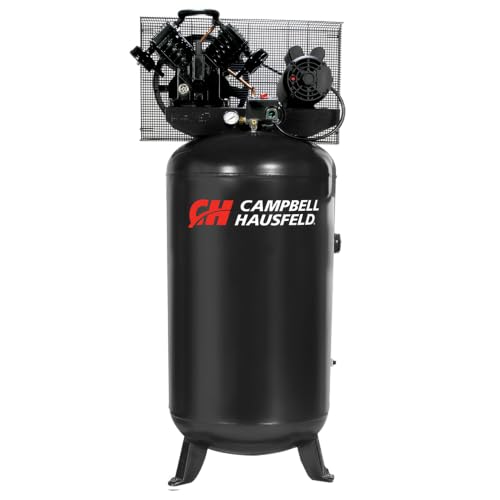
Campbell Hausfeld 80-Gallon Two-Stage Air Compressor
What We Like
- High-volume 16.0 CFM output runs demanding tools.
- Large 80-gallon tank sustains longer work periods.
- Durable cast-iron pump built for extended service life.
- 950 RPM pump speed for quieter operation.
Trade-offs
- Substantial 460 lb weight requires permanent shop placement.
- Large 84-inch height needs significant vertical clearance.
- Requires a dedicated 208-230V single-phase electrical circuit.
Delivering 16.0 CFM at 90 PSI means this compressor can handle the sustained, high-air-demand tasks that define professional auto body work. The 80-gallon tank and two-stage pump are built to keep a paint gun or large sander running without the motor cycling constantly. It’s for the serious shop where continuous sanding, priming, and painting are daily routines, and where floor space is more available than electrical phases. The 5 HP single-phase motor simplifies installation in many professional settings without needing a complex motor starter.
You must accommodate its substantial footprint and heft. At 460 pounds and over seven feet tall, this isn’t a unit you move; you build your shop around it. For operations where space is tight or three-phase power is available, the LRSD 7.5HP Rotary Screw model offers a different high-output approach. But for a single-phase shop needing relentless air volume for restoration work, this Campbell Hausfeld’s specifications are squarely aimed at that demanding role.
Ingersoll Rand 2340N5-V Two-Stage Air Compressor

What We Like
- Cast iron construction for extreme durability
- Large 80-gallon tank sustains demanding tools
- Simplified maintenance with one-piece connecting rod
Trade-offs
- Massive 435-pound weight requires permanent installation
- Substantial 68.5-inch height needs ample vertical clearance
That cast iron construction and 100% continuous duty cycle are what commercial shops rely on for all-day sanding and painting. It delivers a solid 14.3 CFM at 90 PSI and 175 PSI of pressure from its 80-gallon tank, which is enough to confidently run a DA sander without constant motor cycling. This is the right pick if your priority is a set-it-and-forget-it workhorse that will outlast vehicles.
You’ll need a dedicated, level shop space for this unit, as it stands nearly six feet tall and weighs 435 pounds. Compared to other large compressors, it has a substantial footprint, though the Campbell Hausfeld 80-gallon model is both wider and taller. The trade-off is a reputation for durable, commercial-grade performance capable of continuous daily operation.
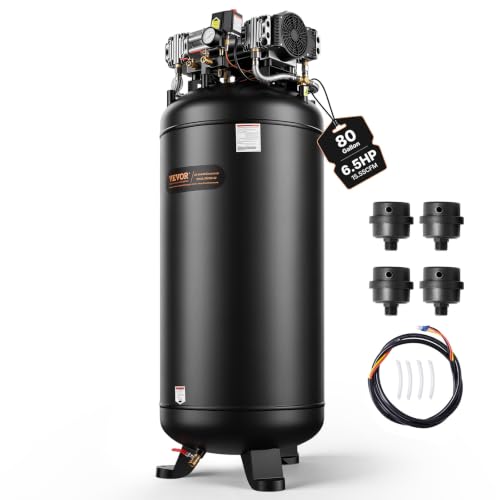
VEVOR 80-Gallon Oil-Free Air Compressor
What We Like
- High 15.5 SCFM output runs demanding tools
- Massive 80-gallon tank minimizes cycling
- Oil-free design eliminates maintenance and contamination
Trade-offs
- Requires dedicated 220V single-phase electrical circuit
- Weighs 264.6 pounds for permanent installation only
A 15.5 SCFM air delivery from an 80-gallon tank means you can run a spray gun or dual sanders continuously without waiting for the pump to catch up. This makes the VEVOR a fit for a busy shop where consistent, high-volume air is non-negotiable. Its oil-free pump is the key advantage here, removing the risk of oil contaminating your finish and cutting out a regular maintenance chore entirely. For a shop focused on auto body work that values a clean, low-maintenance air supply, this compressor delivers the core performance you need.
The trade-off for that oil-free convenience is potential long-term durability compared to a heavy-duty two-stage unit like the Campbell Hausfeld 80-Gallon. Oil-lubricated pumps generally run cooler and last longer under constant industrial use. If your work is intermittent or your electrical panel can’t support it, a smaller, portable compressor would be a more practical choice despite the lower air volume.
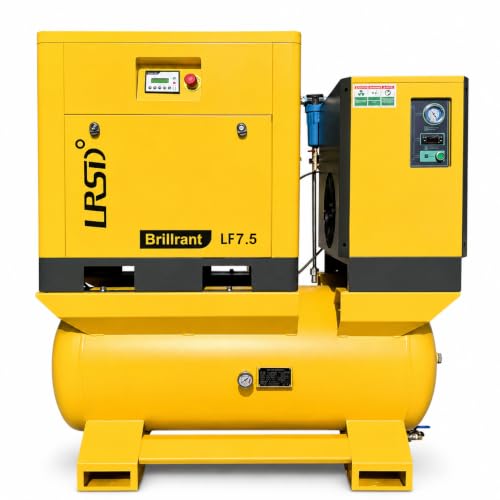
LRSD 7.5HP Rotary Screw Air Compressor
What We Like
- High 29 CFM output for continuous tool use
- IP55 motor resists dust and water in harsh shops
- Service factor of 1.15 allows for brief overload
Trade-offs
- Requires a 230V three-phase electrical supply
- Substantial size and weight from the 80-gallon tank
- No single-phase option limits home shop compatibility
A 29 CFM air supply means you can run a high-demand sandblaster or multiple spray guns without the compressor cycling on and off, which is critical for professional auto body workflows. Its 4-in-1 design with a built-in dryer and filters delivers air ready for painting, simplifying installation. The industrial-grade IP55 motor resists dust and splashing water, allowing it to work reliably in harsh shop environments, and it’s built for all-day production.
The primary trade-off is the three-phase power requirement, which rules out most residential installations. For a shop with the right electrical service, this all-in-one unit eliminates the need for a separate air dryer and complex plumbing. Its motor has a service factor of 1.15, so it can sustain short-term overloads of up to 15% beyond its rated capacity without failure.
Product photos
DEWALT 60-Gallon Stationary Air Compressor

What We Like
- High-pressure 175 PSI output for demanding tools
- Substantial 14.6 CFM at 90 PSI air delivery
- Durable 60-gallon ASME-rated tank construction
- Motor operates on both 208V and 230V supplies
Trade-offs
- Stationary design lacks portability for mobile work
With a 175 PSI maximum, this compressor can reliably run demanding tools like sanders and paint guns without the motor constantly cycling on and off. The large 60-gallon tank provides a substantial air reserve, which is ideal for a single user tackling extended tasks like priming a vehicle. Its 14.6 CFM delivery at 90 PSI supports sustained use for these high-consumption applications.
Its single-stage pump design represents the main compromise. While simpler, it works harder and runs hotter to reach its max pressure compared to a two-stage unit like the Campbell Hausfeld 60-Gallon model. That makes the DEWALT a workhorse for consistent high-pressure needs. For non-stop, all-day operation in a multi-bay shop, however, a two-stage compressor would be the more durable long-term choice. It’s a powerful stationary anchor for serious intermittent work.
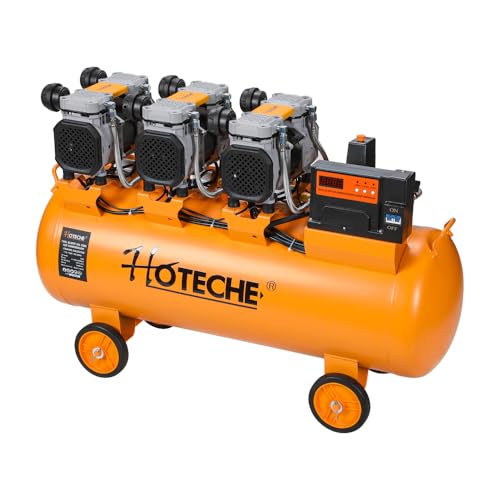
Hoteche 26-Gallon Silent Oil-Free Compressor
What We Like
- Ultra-quiet, oil-free pump for indoor workshops
- High 15 CFM flow runs demanding tools continuously
- Large 26-gallon tank reduces motor cycling
- Triple-motor design ensures fast pressure recovery
Trade-offs
- At 175 lb, it is not easily portable for mobile work
- 115 PSI maximum pressure limits some high-PSI tool applications
With an air delivery rate of 15 CFM, this compressor can power demanding tools like spray guns and impact wrenches without frequent pauses. Its ultra-quiet, oil-free design is engineered for environments like indoor workshops and garages where lower noise levels are a priority. The 26-gallon tank provides extended run times, and the oil-free pump requires zero maintenance.
Weighing 175 pounds, this is a stationary unit not meant for frequent moving around a shop. Its maximum pressure of 115 PSI may fall short for some specialized high-PSI applications that other models, like the Campbell Hausfeld 60-Gallon two-stage with 175 PSI, can handle.
Product photos
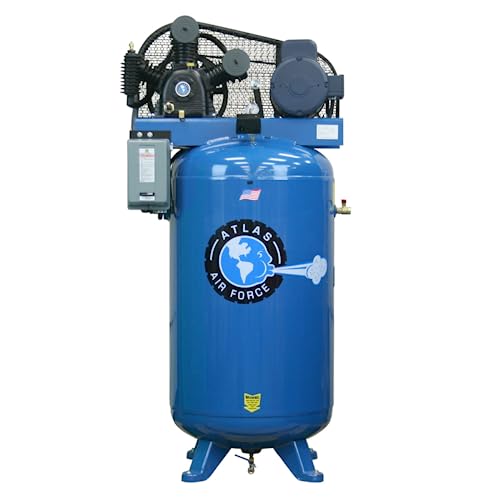
Atlas Automotive Equipment AF7 Air Compressor
What We Like
- Made in USA 80-gallon vertical tank
- Two-stage pump for consistent high pressure
- Extremely quiet operation for shop use
- Magnetic starter for motor protection
Trade-offs
- Weighs 430 pounds, requiring permanent placement
- 77-inch length demands significant floor space
- Requires dedicated 220V single-phase power
An 80-gallon tank paired with a two-stage pump delivers the continuous, high-pressure air needed to run demanding tools like sanders and paint guns without constant motor cycling. That makes this Atlas compressor a foundation for a serious auto body shop. The low-RPM motor and extremely quiet operation are major perks for a long day’s work, and the magnetic starter adds a layer of industrial-grade reliability. It’s built for the professional or dedicated enthusiast who values domestic manufacturing and needs air they can depend on, shift after shift.
This capacity and quiet power require a substantial installation space. At 430 pounds and over six feet long, this isn’t a unit you’ll move around. It requires a committed spot with a proper 220V circuit. For tighter spaces, the vertical 60-gallon Campbell Hausfeld offers a similar two-stage design in a taller, narrower profile, though with less air reserve.
Product photos
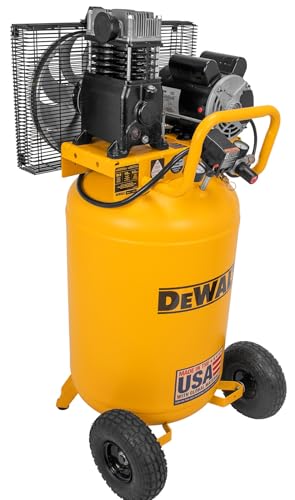
DEWALT 30-Gallon Portable Air Compressor
What We Like
- Industry-leading 175 psi max working pressure.
- High-flow regulator provides 65% more usable air.
- Heavy-duty pneumatic wheels for shop portability.
- 2.5X longer run time than a key competitor.
Trade-offs
- 6.2 SCFM may struggle with continuous use of large sanders.
- 30-gallon tank refills more often than 60+ gallon models.
A 175 psi max working pressure gives you the headroom to run demanding tools like die grinders without dropping below their required pressure. Combined with a high-flow regulator that delivers 65% more usable air to the tool, this 30-gallon Dewalt is built for the technician who needs serious, portable air. It suits a busy one- or two-bay shop where the compressor must be wheeled out of the way but can’t sacrifice performance. The 2.5X longer run time compared to a popular 30-gallon unit means less waiting for the tank to refill during extended tasks.
Its flow rate is 6.2 SCFM at 90 PSI, a measure of how much air it can deliver. This output suits intermittent-use tools well, but continuous-operation tools with higher demands may require a larger stationary compressor. Among comparable portable units, it operates 23% quieter than the noted Porter Cable model, a useful reduction in shop noise.
Product photos
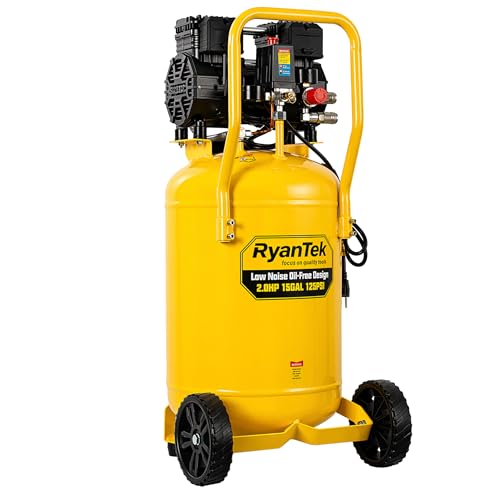
RyanTek 15-Gallon Quiet Air Compressor
What We Like
- Ultra-quiet 66 dBa operation for indoor use
- Oil-free pump delivers clean air for spray painting
- Vertical, wheeled design for easy mobility
- Dual air outlets and upward-facing gauge for convenience
Trade-offs
- 4.5 CFM is insufficient for high-demand tools like sanders
- 15-gallon tank requires frequent motor cycling for continuous tasks
A 66 dBa noise level means you can run this compressor in an attached garage without disturbing the household, a rare find in this category. Its oil-free, twin-cylinder pump delivers clean air ideal for detail spray painting and inflation, while the 15-gallon vertical tank and integrated wheels make it a genuinely portable workshop asset. This compressor suits the auto enthusiast who needs a clean, quiet air source for intermittent tasks like nail guns, tire inflation, or touch-up work, but whose projects don’t demand constant, high-volume airflow.
Quiet operation and a compact footprint come with a limitation on air delivery. At 4.5 CFM, it will struggle to keep up with a die grinder or large DA sander, requiring frequent pauses for the tank to refill. You’ll quickly outgrow this unit for heavy bodywork involving extensive sanding or grinding. If your shop needs continuous, high-volume air but space is limited, the VEVOR 80-Gallon Oil-Free Compressor delivers 15.5 SCFM at 90 PSI, though it requires a 220V outlet and permanent installation.
Product photos
How We Evaluated Air Compressors For Auto Body Work
Our evaluation is based on research into product specifications, manufacturer documentation, expert round-ups from industry sources, and consistent patterns in owner feedback from professional settings. We prioritized criteria that directly impact shop productivity: continuous air delivery (CFM), maximum pressure (PSI), tank capacity, and the durability of the pump mechanism.
Electrical requirements and physical footprint were also key, as they dictate a compressor’s compatibility with a given shop space. A research-led approach like this provides a strong comparative analysis, but it cannot replicate the long-term wear data that comes from years of daily use in a demanding environment.
What To Look For In Air Compressors For Auto Body Work
Choosing the right compressor means matching its output to your most demanding tools while planning for your shop’s electrical and spatial constraints. The wrong choice leads to frustrating pressure drops and costly rework.
Focus on CFM first, then tank size. Match the compressor’s CFM rating to your highest-demand tool, add a buffer for multiple users, and ensure your electrical service can support the motor. A large tank supports longer tool runs but won’t compensate for an underpowered pump.
Continuous Airflow (CFM)
Cubic Feet per Minute (CFM) is the most critical spec. It measures the volume of air the pump can deliver, determining if you can run tools like sanders or paint guns continuously. For auto body work, a single HVLP paint gun often needs 12-15 CFM at 90 PSI.
If you plan to run a sander simultaneously, you’ll need a compressor capable of 20 CFM or more. Our research into air compressors for pneumatic tools confirms that undersizing CFM is the most common mistake, leading to frequent motor cycling and pressure drops that affect paint finish and tool power.
High-volume models in our guide, like the 80-gallon units, deliver 15-16 CFM to meet these demands.
Tank Capacity & Pressure
Tank size, measured in gallons, determines how much compressed air is stored, extending the time between pump cycles. A larger tank, like the 60 or 80-gallon models featured, allows for longer sanding or grinding sessions before the motor kicks on to refill. Maximum pressure (PSI) is also vital; many automotive tools, including some sanders and impact wrenches, perform best at higher pressures around 175 PSI.
It’s wise to explore options like 60 gallon air compressors for a balance of capacity and footprint, or 80 gallon air compressors for maximum air reserve in a professional setting.
Power, Placement & Duty Cycle
Your shop’s electrical infrastructure is a non-negotiable factor. Most compressors suitable for auto body work require a dedicated 230V circuit, and some high-performance models need three-phase power. Consider the physical footprint and weight, these are permanent installations.
The duty cycle indicates how long a compressor can run within a given period; a 100% duty cycle (typical of rotary screw models) is essential for all-day operation. For a broader understanding of options, our guide to the best air compressors covers various types. Also, consider whether an electric or gas-powered compressor is right for your location, though electric is standard for indoor shops.
- Check voltage requirements against your shop’s electrical panel before purchasing.
- Measure vertical clearance for tall, vertical-tank models.
- Plan for moisture control with proper air line filtration, especially for painting.
- Consider noise levels if your shop is in a noise-sensitive area.
- Verify the pump type: oil-lubricated for durability, oil-free for clean air with less maintenance.
For professional results, buy a compressor rated for at least 50% more CFM than your busiest tool’s requirement.
Air Compressors For Auto Body Work Compared
The table below compares key specifications for all ten compressors to help you quickly evaluate their core capabilities.
| Product | Tank Capacity | Max Pressure | Air Delivery @ 90 PSI | Motor Power |
|---|---|---|---|---|
| Campbell Hausfeld 60-Gallon Two-Stage Air Compressor | 60-gallon vertical | 175 PSI | 7.6 SCFM | 3.7 HP |
| Campbell Hausfeld 80-Gallon Two-Stage Air Compressor | 80-Gallon Vertical | 140 PSI | 16.0 CFM | 5 HP |
| Ingersoll Rand 2340N5-V Two-Stage Air Compressor | 80-gallon ASME | 175 PSI | 14.3 CFM | 5 HP |
| VEVOR 80-Gallon Oil-Free Air Compressor | 80 gallons | 145PSI | 15.5 SCFM | 6.5 HP |
| LRSD 7.5HP Rotary Screw Air Compressor | 80 Gallon | 125psi | 29 CFM | 7.5HP |
| DEWALT 60-Gallon Stationary Air Compressor | 60 Gallon ASME | 175 PSI | 14.6 CFM | 5 HP |
| Hoteche 26-Gallon Silent Oil-Free Compressor | 26 gallons | 115 PSI | 15 CFM | 5.4HP |
| Atlas Automotive Equipment AF7 Air Compressor | 80 gallon vertical | 175 PSI | N/A | 5HP |
| DEWALT 30-Gallon Portable Air Compressor | 30 gallons | 175 psi | 6.2 SCFM | N/A |
| RyanTek 15-Gallon Quiet Air Compressor | 15 gallons | 125 PSI | 4.5 CFM | 2HP |
Frequently Asked Questions
What is the best air compressor for an auto body shop?
The best compressor depends on your shop’s size and demand. For a dedicated one or two bay shop, a two-stage piston compressor like the Campbell Hausfeld 60-Gallon is an excellent starting point. Larger shops with continuous painting and sanding should look at high-volume or rotary screw systems, which offer greater CFM and a 100% duty cycle.
What’s the best air compressor for automotive?
For general automotive repair that includes impact wrenches and tire inflation, a portable 30-gallon compressor may suffice. For automotive body work, which adds sanding, grinding, and painting, you need a stationary compressor with higher CFM. Our Best Portable Shop Compressor, the DEWALT 30-Gallon, is a strong wheeled option, but for paint work, you’ll likely need a larger, stationary unit.
How many CFM do you need to paint a car?
A single modern HVLP (High-Volume, Low-Pressure) paint gun typically requires 12 to 15 CFM at 90 PSI to properly atomize paint. You must also account for any other tools running simultaneously, like a sander for prep work. We have a dedicated resource on air compressors for painting cars that covers this in more detail.
What is the most reliable brand of air compressor?
Reliability in a shop context is tied to durable construction, like cast-iron pumps, and a design meant for continuous use. Brands like Ingersoll Rand, Quincy, and Campbell Hausfeld have long-standing reputations in professional settings for building durable, serviceable piston compressors. For the ultimate in continuous-duty reliability, rotary screw compressors from industrial brands are the standard.
Should I get an oil-lubricated or oil-free compressor for painting?
Oil-lubricated compressors are generally more durable and better suited for continuous shop use, but they require diligent filtration to prevent oil from contaminating your paint lines. Oil-free compressors, like our Best Oil-Free Shop Compressor pick, eliminate this risk and reduce maintenance, but their pumps can have a shorter lifespan under heavy, continuous load. Proper filtration is critical with either type.
The Bottom Line
For the serious home enthusiast or professional setting up a dedicated shop bay, the Campbell Hausfeld 60-Gallon Two-Stage Air Compressor provides the ideal balance of high pressure, substantial air volume, and a manageable footprint. Budget-conscious shoppers or those in noise-sensitive environments should look to the RyanTek 15-Gallon for quiet, clean air, while mobile techs will appreciate the wheeled portability of the DEWALT 30-Gallon.
Ultimately, the single most important factor is matching the compressor’s CFM output to your most demanding air tool, and then adding a healthy margin for growth. Investing in adequate airflow from the start prevents the frustration of pressure drops and ensures your tools and finishes are consistently professional.
