
10 Best Tile Saw Blades For Porcelain in 2026
This post contains affiliate links. As an Amazon Associate, we earn from qualifying purchases.
The best overall tile saw blade for porcelain is the Bosch DBC0701 Continuous Rim Diamond Blade for its exceptional ability to deliver smooth, chip-free finishes on hard materials. The DeWalt DW4764 is the Best For 10-Inch Wet Cutting, and the Pearl Abrasive P4 is the best turbo mesh design for fast, clean cuts.
Porcelain is notoriously hard and brittle, making the wrong blade a surefire way to ruin expensive tile with chipped edges. We researched specifications, expert recommendations, and patterns in owner feedback to bring you this focused selection of blades that match different saws and project needs.
Top 10 Tile Saw Blades For Porcelain in the Market
Certain content that appears on this site comes from Amazon. This content is provided "as is" and is subject to change or removal at any time.
The Best Tile Saw Blades For Porcelain, Reviewed
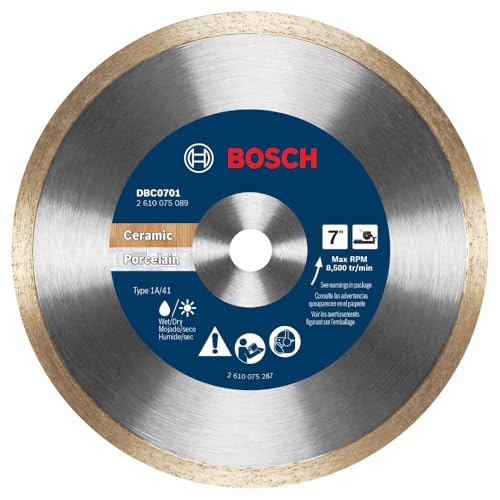
Bosch DBC0701 Continuous Rim Diamond Blade
What We Like
- Continuous rim design for exceptionally smooth cuts
- Optimized diamond formula for chip-free porcelain
- Universal 5/8-inch arbor fits most tile saws
- 2-1/2-inch cutting depth handles many tile sizes
Trade-offs
- 7-inch diameter limits cutting depth versus 10-inch blades
- Continuous rim design is slower cutting than turbo blades
The Bosch DBC0701 delivers exceptionally smooth, chip-free cuts in porcelain, which is the single most critical factor for a clean installation. Its continuous rim design and optimized diamond formula are meticulously engineered for that precise, clean finish on hard, delicate materials. This makes it the ideal choice for detail-oriented tasks like backsplashes or countertop shaping, where a flawless edge is non-negotiable. It’s a versatile, professional-grade blade that performs reliably across ceramic, slate, and marble as well.
A continuous rim design with fine diamond grit delivers exceptionally smooth, chip-free cuts, which is essential for delicate materials like marble or a ceramic tile backsplash. This blade works slower than a turbo-rim design, such as the Pearl Abrasive P4, prioritizing finish quality over speed. Its 7-inch diameter achieves a 2-1/2 inch cutting depth, limiting it compared to a 10-inch blade like the DeWalt DW4764 for very thick materials.
Product photos
DeWalt DW4764 Premium Porcelain Tile Blade

What We Like
- High-density diamond matrix for chip-free cuts
- Tensioned core resists heat distortion and wobble
- Cuts porcelain, ceramic, granite, and slate
- Sustains performance over extended cutting sessions
Trade-offs
- Wet-use only, requires a tile saw with water feed
- 10-inch size limits it to saws with that capacity
DeWalt’s 10-inch wet-cutting diamond blade uses an aggressive diamond matrix to ensure clean, chip-free cuts on porcelain tile, which protects the visible edges of the material. Its tensioned steel core resists distortion from heat and vibration during extended use, allowing the blade to maintain performance over long cutting sessions. Research mentions it also works very well on granite, slate, and other hard stone materials.
The trade-off is its dedicated wet-use design and size. You need a 10-inch tile saw with a proper water system, so it’s not an option for quick dry cuts with an angle grinder. For smaller projects or a more versatile wet/dry option, the 4-1/2-inch DeWalt DW4765 from this guide might be a better fit. But if your saw is 10 inches and you’re feeding it porcelain, this blade’s durability under fire makes it a premium, long-term investment.
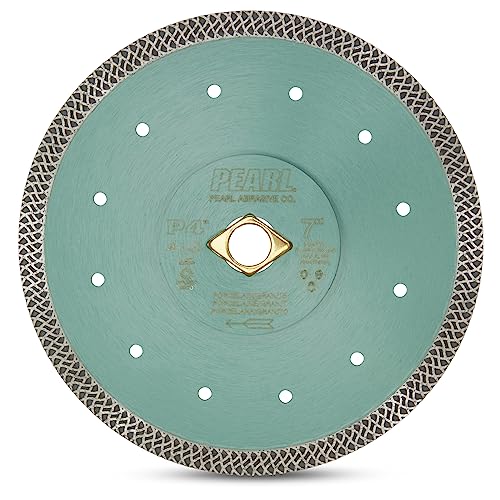
Pearl Abrasive P4 Thin Mesh Turbo Blade
What We Like
- Extra thin kerf for fast, clean cuts with minimal chipping
- Mesh turbo rim runs cool to extend blade life
- Laminated hub adds stability for straighter cuts
- Premium diamond bond handles hard, brittle porcelain well
Trade-offs
- 7-inch size limits depth of cut on thicker slabs
- Specific arbor sizing requires compatible saws
An extra thin kerf and mesh turbo rim design mean this blade cuts dense porcelain quickly while staying remarkably cool, which is the key to its long life and clean edges. That makes it a standout for finish-sensitive tile work where chipping would ruin a project. It’s built for the pro or serious DIYer who needs a blade that can handle a lot of hard material without overheating and glazing over, delivering consistent performance through long cuts.
The trade-off for that clean, cool-cutting performance is its 7-inch diameter, which simply won’t handle the depth of cut that a larger blade like the DeWalt DW4764 can. For most wall and floor tile, it’s more than capable, but if you’re regularly slicing through thick porcelain slabs, you’ll hit its limit. For standard tile installation, however, its design efficiently balances cutting speed with finish quality.
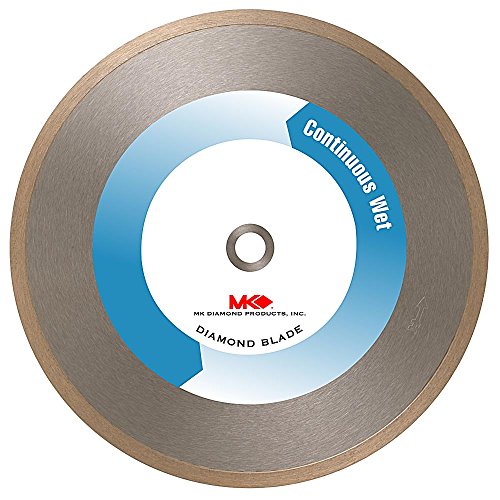
MK Diamond MK-415 Continuous Rim Blade
What We Like
- Thicker core for stability on high-production jobs
- Designed specifically for porcelain and vitreous tile
- Super hi-rim diamond edge for longer blade life
Trade-offs
- Wet cutting only, requires a water source
- Standard 7-inch size limits depth of cut on thick materials
The MK-415’s thicker core and super hi-rim diamond edge are built for one thing: staying straight and fast through mountains of porcelain. This is a blade for the installer facing a large-format tile job who needs a blade that won’t deflect or wear out before the last cut is made. It’s designed to handle the repetitive, demanding work of a production environment, making clean cuts in hard vitreous materials without faltering.
Designed with a thicker core for high production jobs, the MK-415’s construction prioritizes rigidity for straight and fast cuts over its lifespan. This focus on durability means it’s built for volume work like a large kitchen floor rather than a single small project. Compared to a thin-rim blade from the same brand, this design choice typically trades some cutting speed for greater longevity and consistency in demanding applications.
DeWalt DW4765 Wet/Dry Porcelain Blade

What We Like
- Optimized diamond matrix for chip-free cuts on porcelain
- Tensioned steel core resists distortion from heat
- High diamond concentration for a faster cut rate
Trade-offs
- 4-1/2-inch diameter limits depth of cut on thick materials
- Compact size means more passes needed on large tiles
A 4-1/2-inch diameter makes this DeWalt blade a natural fit for compact tile saws and angle grinders, perfect for portability and smaller jobsites. The tensioned steel core is the key here, fighting off the wobble and vibration that can ruin a precise cut on brittle porcelain. It’s a solid pick for a DIYer or pro needing a reliable, multi-purpose wet/dry blade that handles porcelain, ceramic, and even hard stone without chipping.
Its compact size does limit reach. You won’t be slicing through thick format tiles in one pass like you could with a full-size 10-inch blade, such as the DeWalt DW4764. For bathroom backsplashes, repairs, or mosaic work, however, this blade’s aggressive diamond matrix and stable cut are exactly what you need. It’s a workhorse for the most common small-scale porcelain tasks.
Product photos
Makita E-02668 General Purpose Diamond Blade

What We Like
- Continuous rim delivers precise, smooth finish
- Balanced steel core reduces vibration and noise
- Optimum bond matrix for faster, longer-lasting cut
- General purpose design handles multiple materials
Trade-offs
- 4.5-inch diameter limits depth of cut on thick tile
- Smaller size is less efficient for large-volume tiling projects
Its 4-1/2-inch continuous rim design is the key here, giving you a smooth, chip-free cut on porcelain without the aggression of a segmented blade. This makes it a fantastic fit for the DIYer or occasional pro tackling a bathroom remodel or kitchen backsplash who needs one blade to handle porcelain, ceramic, and even some stone. The expertly balanced steel core is a quiet benefit, literally, as it minimizes that nerve-wracking chatter for more control in your hands.
Its 4-1/2 inch diameter makes it a compact and portable option, fitting easily into most angle grinder tool bags. While the general-purpose design handles materials from ceramic to stone, its smaller size means more passes are needed for long cuts or large tiles compared to larger-diameter blades. For projects that mix tile, granite, and porcelain, this blade’s continuous rim provides a smooth finish, offering solid value across several common materials.
Product photos
QEP Gold Series Continuous Rim Blade

What We Like
- 7 mm diamond rim maximizes durability for long life
- Continuous rim design minimizes chipping on porcelain
- 5/8" arbor fits most common wet tile saws
- Engineered for clean, accurate cuts on hard materials
Trade-offs
- Wet-use only limits versatility for quick dry cuts
A 7 mm diamond-coated rim provides the durability for cutting hard porcelain and natural stone, which helps maintain cleaner cuts over time. This continuous rim design minimizes chipping on materials like marble and slate when used with a wet saw. The blade’s 5/8″ arbor fits most standard wet tile saws, making it a compatible choice for common workshop setups.
The trade-off is specialization. It’s a dedicated wet-cutting blade, so you can’t pop it on an angle grinder for a quick notch. Compared to a thinner blade like the MK Diamond MK-225 Hot Dog, its 7 mm rim removes more material, which is great for longevity but not for the absolute finest, most delicate cuts. For the core task of cutting porcelain on a wet saw, however, its design focuses on getting the job done reliably over the long haul.
Product photos
MK Diamond MK-225 Hot Dog Thin-Rim Blade

What We Like
- Thin rim design minimizes chipping
- Stiffening slots ensure straight cuts in dense materials
- Lightweight at just half a pound
- Excellent for porcelain and hard vitreous tile
Trade-offs
- Blade thickness is 0.1 inches
- Weighs 0.5 pounds
This blade’s thin rim is its defining feature, designed specifically to reduce chipping on brittle materials like porcelain. That makes it a precise tool for installers who need clean cuts on expensive tile without visible edge damage. The inclusion of stiffening and cooling slots is a smart engineering choice, as it combats the blade deflection that can ruin a straight line when pushing through dense porcelain. If your primary concern is a flawless finish on hard vitreous tile, this blade’s design directly addresses that need.
You trade some potential longevity for that precision cut, as a thinner diamond edge can wear down quicker than a standard continuous rim blade when used extensively. For a balance of chip resistance and durability on a wider variety of stone, you might compare it directly to the MK Diamond MK-415 Continuous Rim Blade, which uses a different rim construction. The Hot Dog excels in its niche, delivering clean results where a chipped tile means starting over.
GRAFF Super Thin Diamond Blade

What We Like
- Super thin 1.2mm cutting width for minimal material waste
- Designed for both dry and wet cutting applications
- Self-sharpening design extends usable blade life
- Extra heat dissipation holes for cooler operation
Trade-offs
- 4 ½ inch diameter limits depth of cut compared to 7-inch blades
- Requires specific sharpening procedure on abrasive stone
With a cutting width of just 1.2mm, this diamond blade is built for precision, creating a very thin kerf that removes less material. That design leads to cleaner edges and reduced chipping on materials like porcelain and ceramic. Its compatibility with both dry and wet cutting allows for flexibility on the job site where water might not be available.
The thin profile comes with a 4 ½ inch diameter. You won’t be slicing through thick slabs or making deep plunge cuts like you could with the DeWalt DW4764 or other larger-diameter blades. It’s a tool for finesse, not bulk work. This GRAFF blade excels in the grinder’s natural habitat, detailed, on-site fabrication.
QEP 6-7003Q Continuous Rim Premium Blade

What We Like
- Continuous rim design for clean cuts.
- Explicitly rated for porcelain and marble.
- Wet cutting specification reduces dust and heat.
- 5/8-inch arbor fits most common tile saws.
Trade-offs
- Wet-only use limits on-site versatility.
- A 7-inch diameter limits depth of cut versus 10-inch blades.
Designed specifically for wet cutting of ceramic, porcelain, and marble tile, this 7-inch blade provides a clear material match for those applications. Its continuous rim is engineered for clean cuts, which helps preserve the finish on delicate tiles. With a standard 5/8-inch arbor, it fits directly into most common tile saws without requiring extra parts.
Because it is intended for wet cutting, this blade requires a saw with a water feed system and cannot be used for dry applications. The QEP Gold Series blade is listed for cutting a broader range of materials including granite and slate, while this model’s specifications list ceramic, porcelain, and marble.
Product photos
How We Evaluated Tile Saw Blades For Porcelain
Our evaluation focused on manufacturer documentation for specifications like diamond matrix formulation, rim design, and arbor compatibility. We studied expert round-ups from industry sources and tile tool specialists to identify blades consistently praised for handling dense, vitreous porcelain. A core part of our research involved analyzing patterns in owner feedback, looking for repeated comments on cut quality, blade life, and performance on specific materials like large-format porcelain.
The selection prioritized a blade’s ability to prevent chipping, its compatibility with common wet saws or grinders, and its durability under the heat and friction of cutting hard tile. This guide compiles product specifications and reported features.
What To Look For In Tile Saw Blades For Porcelain
Choosing the right blade is critical because porcelain’s dense, glass-like structure chips easily under stress. The ideal blade balances cutting speed with a clean finish and matches your specific saw.
Look for a continuous or fine-turbo rim design to minimize chipping. Ensure the blade diameter and arbor size fit your saw. Also verify whether it’s rated for wet cutting, dry cutting, or both to match your workflow.
Rim Design And Cutting Action
The blade’s rim design dictates how it interacts with the tile. A continuous rim, like on our best overall Bosch blade, acts like a fine-grit file for the smoothest, most chip-free finish, but cuts slower. Turbo or mesh-turbo rims, like on the Pearl Abrasive P4, have small gullets that help clear debris and run cooler, offering a faster cut that still maintains a clean edge on porcelain. Segmented blades with deep gullets are for masonry and are too aggressive for tile, significantly increasing the risk of chipping.
Blade Specifications And Compatibility
You must match the blade to your tool. The diameter (like 7-inch or 10-inch) determines your maximum cutting depth for thicker tiles or slabs. The arbor hole (commonly 5/8-inch) must fit your saw’s spindle; some blades include reducer rings for compatibility. Always check the manufacturer’s specifications for wet-use-only or dry/wet capability; using a wet blade dry will rapidly overheat and destroy it. For more on matching blades to your tool, see our guide on choosing a tile saw.
Diamond Bond And Blade Life
The quality and concentration of the diamond grit within the blade’s metal bond determine its lifespan and cutting speed on hard materials. A blade formulated specifically for porcelain will use a harder bond to hold the diamonds longer against the abrasive tile. Owners of high-quality blades, like the MK Diamond MK-415, report sustained performance over many linear feet of cutting.
Dressing the blade periodically with a sharpening stone can help maintain its cutting efficiency. For a deep dive into blade types and construction, our overview of tile blades is a useful resource.
- Confirm your saw’s maximum blade diameter and arbor size before purchasing.
- For the cleanest finish on visible edges, prioritize a continuous rim or fine turbo mesh design.
- Always use water with a wet-rated blade to cool the cut and extend blade life.
- Store blades in a protective case to prevent damage to the delicate diamond rim.
- Consider a thinner-kerf blade, like the MK Diamond MK-225, for intricate cuts where material waste matters.
A blade specifically labeled for porcelain or vitreous tile will outperform a general-purpose diamond blade on this hard material.
Tile Saw Blades For Porcelain Compared
The following table summarizes the key specifications and best uses for each of our picks to help you compare them at a glance.
| Product | Blade Diameter | Arbor Size | Rim Design |
|---|---|---|---|
| Bosch DBC0701 Continuous Rim Diamond Blade | 7 inches | 5/8 inches | Continuous rim |
| DeWalt DW4764 Premium Porcelain Tile Blade | 10 inches | N/A | N/A |
| Pearl Abrasive P4 Thin Mesh Turbo Blade | 7 inches | 5/8"-DKO-7/8" | Mesh pattern turbo |
| MK Diamond MK-415 Continuous Rim Blade | 7 inches | 5/8 inch | Continuous rim |
| DeWalt DW4765 Wet/Dry Porcelain Blade | 4-1/2-Inch | N/A | N/A |
| Makita E-02668 General Purpose Diamond Blade | 4-1/2 inches | N/A | Continuous rim |
| QEP Gold Series Continuous Rim Blade | 8" | 5/8" (16 mm) | Continuous rim |
| MK Diamond MK-225 Hot Dog Thin-Rim Blade | 7.0 inches | N/A | Thin rim |
| GRAFF Super Thin Diamond Blade | 4 ½ Inch (115 mm) | 7/8 Inch with 5/8 Inch adapter | N/A |
| QEP 6-7003Q Continuous Rim Premium Blade | 7 inches | 5/8 inches | Continuous rim |
Frequently Asked Questions
What is the best saw blade for cutting porcelain tile?
The best blade is one designed specifically for porcelain, with a continuous or fine turbo rim to prevent chipping. Our top pick, the Bosch DBC0701, excels due to its optimized diamond formula for smooth cuts. The “best” blade for you ultimately depends on your saw’s size and whether you prioritize a flawless finish or high-speed production.
What is the best way to cut porcelain tile without chipping?
Using a wet saw with a sharp, porcelain-specific diamond blade is the most reliable method. The water cools the blade and tile, reducing heat that can cause micro-fractures. Ensure the tile is fully supported and feed it into the blade slowly and steadily without forcing it. For more detailed techniques, our article on cutting tile without chipping provides further guidance.
Can I use a regular diamond blade to cut porcelain?
While a general-purpose diamond blade might cut porcelain, it increases the risk of chipping and will wear out much faster. Blades engineered for porcelain use a harder metal bond and diamond grit optimized for the material’s density. For consistent, clean results and longer blade life, investing in a dedicated porcelain blade is strongly recommended.
Do I need a special blade to cut porcelain with an angle grinder?
Yes, you should use a diamond blade rated for cutting tile with a grinder, such as the GRAFF Super Thin Diamond Blade from our list. These are often thinner and rated for dry or wet use. Always use appropriate safety gear, as angle grinders can generate significant dust and debris when cutting tile.
What’s the difference between a wet blade and a dry blade for tile?
Wet blades require a constant water feed to cool the diamond edge and lubricate the cut; using them dry causes overheating and rapid failure. Dry or wet/dry blades are formulated to withstand higher temperatures. For most tile saw work, a wet blade like the QEP 6-7003Q provides the coolest, cleanest cut. Our guide on wet tile saw blades explores this in more detail.
The Bottom Line
For most installers and dedicated DIYers, the Bosch DBC0701 Continuous Rim Diamond Blade is the best overall choice, delivering exceptionally smooth, chip-free cuts on porcelain and natural stone with broad saw compatibility. If you’re on a tighter budget for occasional projects, the Makita E-02668 offers reliable general-purpose value, while professionals with a 10-inch wet saw should look to the DeWalt DW4764 for sustained performance.
Ultimately, the single most important factor is using a blade explicitly designed for porcelain’s hard, brittle nature, this is non-negotiable for a professional-looking installation.
