
10 Best Saws For Beginners in 2026
This post contains affiliate links. As an Amazon Associate, we earn from qualifying purchases.
Our best overall saw for beginners is the Skil 5280-01 Circular Saw, a powerful corded tool that delivers reliable performance without a steep price. We also highlight picks like the BLACK+DECKER BDEJS300C as the Best Budget Jigsaw and the Metabo HPT C10FCG2 as the Best Lightweight Miter Saw.
Starting a power tool collection can be overwhelming when you’re unsure which saw tackles which job. You need a tool that’s safe, manageable, and capable of handling your first real projects. Our research, focused on specifications, expert insights, and patterns in owner feedback, identifies the 10 models that best balance these needs for a new user.
Top 10 Saws For Beginners in the Market
Certain content that appears on this site comes from Amazon. This content is provided "as is" and is subject to change or removal at any time.
The Best Saws For Beginners, Reviewed
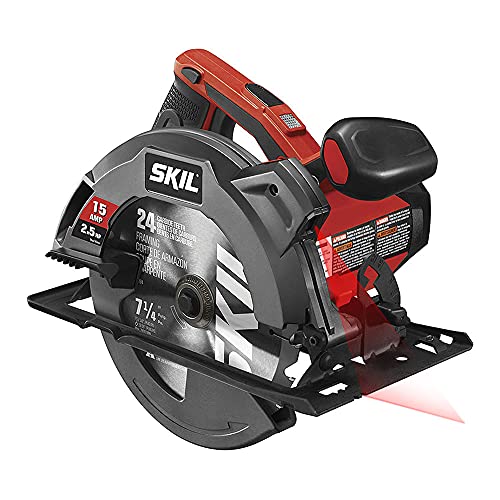
Skil 5280-01 Circular Saw
What We Like
- Powerful 15-amp motor for fast, tough cuts
- Safety lock and power-on indicator prevent accidental starts
- Affordable price with a full feature set for beginners
Trade-offs
- Corded design limits portability away from outlets
- Bevel and depth adjustments are basic, lacking fine-tuning
- At 8.7 lb, it's heavier than compact cordless models like the Makita XSH04ZB
It’s a corded workhorse that balances useful features with straightforward operation, making it the default recommendation for someone who wants a saw that will handle years of weekend projects without fuss.
The trade-off for that power and value is in the details. The bevel and depth adjustments get the job done but lack the smooth, precise feel of more expensive saws. You also need an outlet, so it’s less convenient for remote work than a cordless option like the Ryobi P505. For most beginners working in a garage or driveway, however, the Skil 5280-01 delivers proven performance where it counts, letting you focus on your cuts instead of the tool.
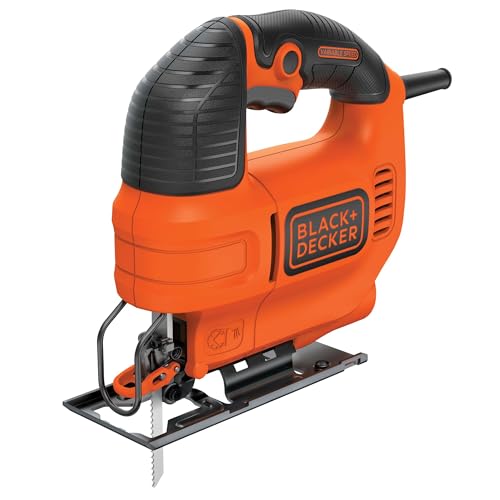
BLACK+DECKER BDEJS300C Jig Saw
What We Like
- Compact and lightweight for easy maneuverability.
- Tool-free blade changes with quick-clamp system.
- Built-in dust blower keeps cutting line clear.
- Adjustable shoe provides added stability during cuts.
Trade-offs
- Corded design limits mobility compared to cordless saws.
- 3/4-inch stroke length is shorter than some models.
- At 4.4 lb, it's heavier than Makita's one-handed recip saw.
With a 4.5-amp motor generating up to 3,000 strokes per minute, this jig saw provides enough power for cutting wood, metal, and other materials. Its compact and lightweight design at 4.4 pounds aids in easy maneuverability, while the wire guard supplies a clear line of sight for cutting precision. The base plate tilts for beveled cuts up to 45 degrees, adding versatility for angled work.
As a corded tool, it requires proximity to an outlet. For cordless operation, a tool like the DEWALT DCS334B is an option, though it needs a separate battery. This BLACK+DECKER model includes a quick-clamp for tool-free blade changes and a built-in dust blower to keep debris away from the cut line.
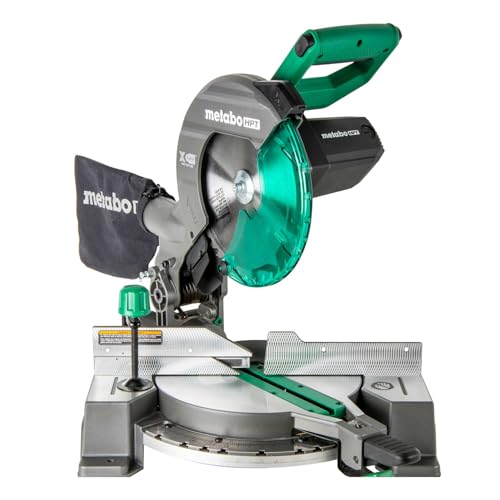
Metabo HPT C10FCG2 Miter Saw
What We Like
- Lightweight 24.2-pound design for easy transport
- Powerful 15-Amp motor delivers 5,000 RPM
- Large table and vice clamp for secure workholding
- Five-year warranty from Metabo HPT
Trade-offs
- Single-bevel design only tilts to the left
- Corded design requires access to an outlet
Weighing only 24 pounds, this saw is easy to maneuver and transport to any job site. That makes it a practical choice for a beginner who needs to work in a garage one day and a driveway the next. Its 15-Amp motor delivers high power for effortless cuts, generating a no-load speed up to 5,000 RPM. The improved miter scale and controls allow for accurate adjustments. A large table and vice clamping system provide better material support and secure the workpiece for precision and safety.
The trade-off for that portability and straightforward design is in its cutting flexibility. As a single-bevel saw, it has an adjustable bevel range of 0-45° to the left only, which can be a limitation for complex crown molding setups where a dual-bevel saw would save time and flipping. For a beginner tackling basic trim, decks, and furniture, the 0-52° miter range left and right offers plenty of versatility. But if your projects demand frequent compound cuts from both sides, you might outgrow it faster than a more versatile model.
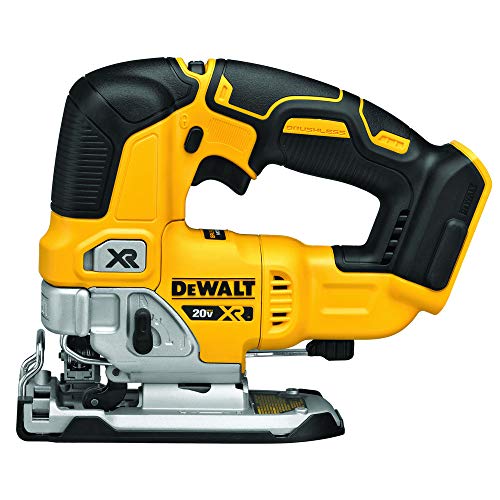
DEWALT DCS334B Cordless Jig Saw
What We Like
- Brushless motor for efficient, longer runtime
- Compact size and easy grip for maximum control
- Keyless blade change and shoe bevel for quick adjustments
- Integrated dust blower and LED light for visibility
Trade-offs
- Battery and charger are sold separately
- Cordless design limits runtime compared to corded jigsaws
Its brushless motor delivers efficient performance for longer runtime, a clear step up from the older DCS331 model. Weighing 4.2 pounds and with a compact frame, the tool fits easily in hand for maximum control during intricate work. A keyless blade clamp and four-position orbital action provide quick setup and control over cut quality and speed.
The bare-tool packaging means a 20V MAX battery and charger must be purchased separately. Compared to a corded jigsaw like the DEKOPRO model, this cordless design trades unlimited runtime for complete jobsite portability. The variable speed trigger and dial offer precise control, while an integrated dust blower helps keep sawdust from obscuring your cutting path.
Makita XRJ08Z Reciprocating Saw

What We Like
- Extremely light weight for easy one-handed operation.
- Brushless motor provides up to 55% faster cutting.
- Low vibration design reduces user fatigue.
- Compact loop handle guard improves rigidity and control.
Trade-offs
- Tool only: requires separate purchase of Makita 18V battery and charger.
- Shorter 7/8-inch stroke length may limit speed in very thick material.
Weighing just one pound, the Makita XRJ08Z is a saw you can comfortably use overhead or in tight spots all day. That featherlight feel, combined with a brushless motor hitting 3,100 strokes per minute, makes it perfect for a beginner tackling pruning, PVC, or light demolition where a full-size saw would be cumbersome. Its one-handed grip and loop guard transmit force directly to the blade, giving you surprising control for a tool this small. This is the recip saw to grab for precision work, not for tearing down a deck.
Makita’s XRJ08Z delivers up to 55% faster cutting compared to unspecified tools, paired with a 7/8-inch stroke, which helps it power through materials quickly. Its compact, one-handed design is positioned to firmly transmit force, making it easier to control in tight spaces where a two-handed saw wouldn’t fit. This tool is part of the 18V LXT platform, but the battery and charger are sold separately.
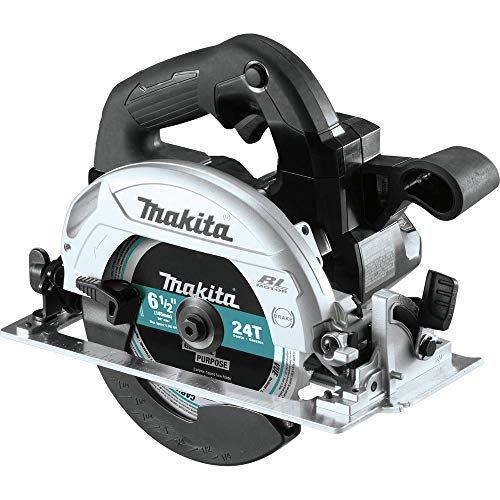
Makita XSH04ZB Circular Saw
What We Like
- Compact, blade-right design is only 10-5/8 inches long
- Brushless motor runs cooler and extends tool life
- Includes dust extraction attachment for cleaner work
Trade-offs
- Tool-only package requires separate battery and charger purchase
- 6-1/2 inch blade limits depth versus common 7-1/4 inch models
Weighing just 6.4 pounds with a battery, the Makita XSH04ZB is built for comfort, not fatigue. Its compact, 10-5/8-inch frame and blade-right design give you an unobstructed view of the cut and excellent balance for one-handed control. This is the saw you reach for when you need to make a dozen quick crosscuts or carry your tools up a ladder, as it won’t wear out your arm before the job is done.
The trade-off is in the cut. Its 6-1/2-inch blade maxes out at a 2-1/4-inch depth, which is fine for a 2×4 but means you’ll need two passes to cut through a 2×6 at a bevel. For a beginner building a deck or cutting thick lumber, the corded Skil 5280-01 with its 7-1/4-inch blade offers greater cutting capacity right out of the box. The Makita shines as a portable partner for lighter duty, but remember, you’re buying into a battery system; factor in the cost of a battery and charger to get it running.
Product photos
Ryobi P505 Cordless Circular Saw

What We Like
- Clear guard provides excellent cut line visibility
- Left-side handle improves control and view
- Rubber overmold grips for secure handling
- Adjustable foot allows versatile angled cuts
Trade-offs
- Tool only: requires separate battery and charger purchase
- Weighs over a pound more than the compact Makita XSH04ZB
A transparent lower guard and a left-side auxiliary handle give you an unobstructed view of your cut line, which is a major confidence booster for a beginner. At 5.3 pounds, it’s light enough to maneuver without being intimidating, and the rubber GripZone overmold helps you keep a firm hold. This saw is for the new DIYer who values control and clarity above all else, letting you focus on guiding the tool accurately instead of guessing where the blade is.
The trade-off is that it’s a bare tool, so you’ll need to factor in the cost of a Ryobi 18V battery and charger if you don’t already own one. Its 5-1/2 inch blade is also smaller than the standard 7-1/4 inch on corded saws like the Skil 5280-01, so it won’t plow through thick dimensional lumber in a single pass. For basic sheet goods, trim, and light framing where seeing your mark is paramount, this Ryobi’s design delivers. If you need deeper cutting capacity for heavy projects, a larger corded model is the better starting point.
Product photos
Frocopo Japanese Pull Saw

What We Like
- Extremely lightweight at under 3 ounces.
- Double-sided blade for both rough and fine cuts.
- Flexible blade for flush cutting tasks.
- Includes a lifetime warranty from the brand.
Trade-offs
- 6-inch blade limits cut depth on thicker stock.
- Manual pull-saw requires more user effort than power tools.
Weighing just 2.82 ounces, this saw practically disappears in your hand. It makes a fantastic first hand tool for a beginner who might be intimidated by heavier, louder options. The double-sided blade is its real genius. The 11-tooth-per-inch side chews through a garden branch or a piece of dimensional lumber quickly. You can flip it over to the 17-tooth side for a much cleaner cut on a piece of trim or craft wood. It’s a low-fatigue tool, perfect for learning proper sawing technique on small DIY projects without your arm giving out.
A 6-inch blade makes this saw ideal for detailed cuts and light trimming, but it lacks the reach for thicker stock. Compared to larger saws like the Skil 5280-01 circular saw, its capacity is best suited for workshop projects and garden pruning rather than framing lumber. This tool serves as a precision instrument for fine work, not for heavy construction tasks.
Product photos
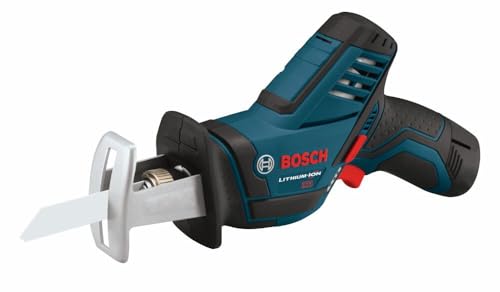
Bosch PS60-102 Pocket Reciprocating Saw
What We Like
- Compact and lightweight for one-handed use
- Internal protection from overheating and overloading
- LED light for dark workspaces
- Rubber wrap and bumper design for durability
Trade-offs
- 12V system limits power for heavy-duty demolition
Weighing only 2.3 pounds, the Bosch PS60-102 is a reciprocating saw designed for one-handed and overhead use, making it easy to control in awkward positions. Its compact size and vibration-dampening bumper allow for steady work in tight spaces like inside cabinets or between studs. The tool includes an LED light and battery fuel gauge for convenience in dark or cramped areas.
The 12V Max system and 0-3,600 strokes-per-minute speed deliver power suited for controlled cuts in materials like copper and conduit. A fast motor brake enhances safety and accuracy during these precise tasks. This focus on manageable power and built-in protection systems reduces intimidation for users whose work involves plumbing or electrical projects rather than large-scale demolition.
Product photos
DEKOPRO Corded Jig Saw

What We Like
- Four orbital settings for material control
- Tool-less blade changes speed up work
- Dust port adapter keeps cut line visible
- Parallel guide enables straight, repeatable cuts
Trade-offs
- Corded design limits mobility versus battery models
- Vacuum hose for dust extraction is not included
- At 4.9 lb, it is heavier than the BLACK+DECKER BDEJS300C
A tool-less blade clamp and four orbital settings allow the user to match the cutting action to the material, from fast cuts in softwoods to slower, controlled work in hardwoods. The DEKOPRO jigsaw includes a metal base plate that adjusts to four bevel angles and a variable speed trigger for control during the cut. These features are presented for DIY or beginner woodworking projects.
This is a corded tool, requiring an outlet and potentially an extension cord for jobs away from a power source. At 4.9 pounds, it provides a stable feel during operation, though it is heavier than some models like the 4.4-pound BLACK+DECKER jig saw. The adjustments for bevel and orbital action offer versatility for a range of cutting tasks.
Product photos
How We Evaluated Saws For Beginners
This guide is based on an analysis of manufacturer specifications and expert reviews, along with common themes in user feedback. The key selection criteria include safety features for user confidence, ease of control and adjustment for skill-building, and sufficient power for common beginner tasks like cutting lumber and plywood.
We also considered value, ensuring each pick delivers strong performance for its price point. The limitation of this method is that we cannot verify ergonomic feel or long-term durability through personal use, so we rely heavily on documented user experiences.
What To Look For In Saws For Beginners
Choosing your first saw is about matching the tool to both your project plans and your comfort level. Prioritize safety, control, and a design that helps you learn good habits from the start.
A good beginner saw has clear safety features like blade guards and lock-off switches. It should feel balanced in your hands, with adjustments you can understand. Power needs to be adequate for cutting wood, but manageable to prevent kickback.
Project Type Dictates The Tool
Your first saw should solve your most immediate project needs. A circular saw for beginners is the most versatile first power saw, excellent for breaking down sheet goods and making long, straight cuts in lumber. For detailed curved cuts or cutting openings in the middle of a board, a jigsaw is the right choice.
If your projects involve lots of precise angled cuts for trim or framing, a miter saw for beginners is more efficient. Our guide on the difference between a miter saw and table saw can help clarify their distinct roles.
Prioritize Safety And Control
Look for built-in safety features that prevent accidents. A blade guard that retracts automatically is essential. A safety lock or trigger lock helps avoid accidental starts. For control, consider weight and grip design; a saw that’s too heavy or poorly balanced will be hard to guide accurately. Features like an electric brake that stops the blade quickly or a low-vibration design also reduce fatigue and increase precision, which is crucial when you’re still developing your technique.
Understand The Power Source
The choice between corded and cordless involves a trade-off between unlimited runtime and total portability. Corded models like our top pick offer consistent, full power without worrying about battery life, ideal for workshop use or projects near an outlet. Cordless saws provide excellent mobility for jobsites or outdoor work but require an investment in a battery platform. For a first saw, a corded tool often represents the best value and eliminates the variable of battery charge.
- Check for a clear line of sight to the blade and your cut mark.
- Ensure depth and bevel adjustments are straightforward and lock securely.
- Look for a dust blower or port to keep your cutting line visible.
The best beginner saw feels like an extension of your intent, not a fight against the tool.
Saws For Beginners Compared
The table below compares key features of our top picks to help you see the differences in power, weight, and design at a glance.
| Product | Weight | Bevel Capacity | Blade Size / Stroke Length |
|---|---|---|---|
| Skil 5280-01 Circular Saw | 8.7 pounds | 51° | 7-1/4 inch |
| BLACK+DECKER BDEJS300C Jig Saw | 4.4 pounds | Up to 45 degrees | 3/4 inch |
| Metabo HPT C10FCG2 Miter Saw | 24.2 pounds | 0-45° left | 10-Inch |
| DEWALT DCS334B Cordless Jig Saw | 4.2 pounds | 0° to 45° | N/A |
| Makita XRJ08Z Reciprocating Saw | 1.0 pounds | N/A | 7/8 inches |
| Makita XSH04ZB Circular Saw | 4.0 Pounds | 0° to 50° | 6-1/2” |
| Ryobi P505 Cordless Circular Saw | 5.3 pounds | Up to 50 degrees | 5 1/2 inches |
| Frocopo Japanese Pull Saw | 2.82 ounces | N/A | 6 inches |
| Bosch PS60-102 Pocket Reciprocating Saw | 2.3 pounds | N/A | N/A |
| DEKOPRO Corded Jig Saw | 4.9 pounds | ±45° | N/A |
Frequently Asked Questions
What type of saw is best for a beginner?
A circular saw is often the best first power saw for a beginner due to its versatility. It can make both crosscuts and rip cuts in sheet goods and lumber, handling a wide range of common DIY projects. Models designed with beginners in mind, like our top pick, include safety locks and clear visibility features.
What should my first saw be?
Your first saw should be the one that aligns with your most frequent project type. For general carpentry and breaking down materials, start with a circular saw. If your initial projects involve detailed curves or cutouts, a jigsaw is a better first choice. Prioritize models with clear safety features and user-friendly adjustments.
What kind of saw is best for DIY projects?
For most DIY projects, a circular saw or a jigsaw covers the majority of needs. A circular saw excels at straight cuts on lumber and plywood, while a jigsaw is indispensable for curves and intricate shapes. Our research on saws for home projects explores this in more detail for common tasks.
Which is better for beginners, a miter saw or a circular saw?
For a true beginner, a circular saw is usually the better first purchase. It’s more versatile for a variety of cuts and takes up less space. A miter saw is a specialized tool for making fast, repeatable angled cuts, which is fantastic for trim work, but it’s often a second tool you add after a circular saw.
How do I make accurate cuts with a beginner saw?
Accuracy starts with proper setup. Always measure and mark your cut line clearly. Use a straightedge or guide clamped to your workpiece when using a circular saw for long cuts. Taking the time to learn how to make straight cuts with a circular saw will build a foundation for all your future projects.
The Bottom Line
The Skil 5280-01 Circular Saw is the best overall saw for beginners who need a powerful, reliable tool for workshop-based projects like building shelves or decks. Its corded design delivers consistent power, and its safety features provide essential confidence for a first-time user.
If you’re on a tight budget, the BLACK+DECKER BDEJS300C Jig Saw offers tremendous value for basic curved cuts. For those needing precise angles for trim, the lightweight Metabo HPT C10FCG2 Miter Saw is an excellent dedicated tool. Ultimately, the most important factor is choosing a saw that feels controllable for your skill level and directly serves the projects you plan to tackle first.
