
10 Best Saws To Cut Metal in 2026
This post contains affiliate links. As an Amazon Associate, we earn from qualifying purchases.
Our best overall saw for metal is the Evolution S14MCS 14″ Mitering Chop Saw for its cold-cutting action that leaves weld-ready, burr-free edges. For a heavy-duty abrasive saw, the Makita LW1401 is a top choice, while the Makita XSC04Z excels as the best cordless option for depth.
Cutting metal demands a tool matched to your material type, workspace, and finish needs. A saw that excels in a spacious shop may be impractical on a crowded job site. We built this list by analyzing specifications, manufacturer data, and patterns in owner feedback to help you find a saw that fits your real-world conditions.
Top 10 Saws To Cut Metal in the Market
Certain content that appears on this site comes from Amazon. This content is provided "as is" and is subject to change or removal at any time.
The Best Saws To Cut Metal, Reviewed
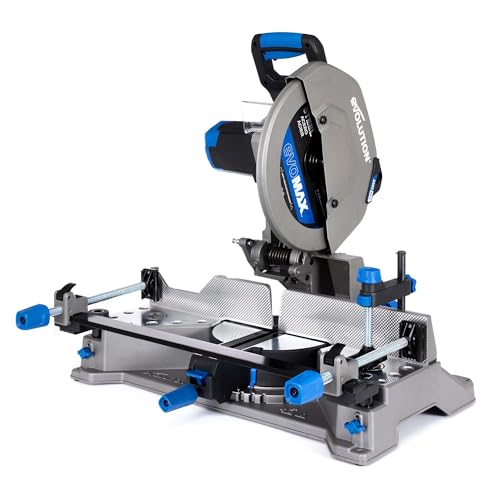
Evolution S14MCS 14" Mitering Chop Saw
What We Like
- Cold cutting leaves burr-free, weld-ready edges
- EVOMAX blade delivers exceptionally long life
- Precision mitering with detents and stainless gauge
- Soft start prevents breaker trips
Trade-offs
- At 72.4 lb, it's a substantial, stationary shop tool
- Requires firm, consistent feed rate to avoid sparking
- Large footprint (27.8" W) demands dedicated space
The ability to make clean, cold cuts four times faster than an abrasive saw fundamentally changes metal fabrication. This Evolution chop saw delivers weld-ready edges without the heat distortion, dust, or sparks that plague other methods, making it a core shop tool for serious metalworkers. Its intelligent motor and premium Japanese blade are engineered for the long haul, reliably delivering over 3500 cuts in mild steel. For anyone regularly processing angle iron, tube, or channel, this is the saw that replaces grinding with precision.
You pay for that performance with significant weight and size, so this isn’t a saw you’ll move around the jobsite easily. It demands a sturdy, permanent bench. For repetitive production mitering, nothing here touches it. But if your work involves intricate cuts or portability is key, a tool like the **Milwaukee M18 Fuel Deep Cut Band Saw** will be far more versatile, even if it sacrifices the chop saw’s speed and pristine finish on straight cuts.
Makita LW1401 14" Cut-Off Saw

What We Like
- 15 AMP motor delivers strong cutting power
- Tool-less vice for quick material clamping
- Fence adjusts for accurate angle cuts
- Two-stage lock-off button for safety
Trade-offs
- At 37 pounds, it is not a tool you carry far.
- Abrasive cutting generates sparks, requiring a dedicated workspace.
The 15 AMP motor spinning at 3800 RPM is built for demanding cuts, making this saw a natural fit for shop-based fabrication and repetitive steel work. Its tool-less vice and adjustable fence streamline setting up angle cuts on stock, which means less fiddling and more cutting. If your projects involve slicing through rebar, angle iron, or pipe on a regular basis, this saw’s design prioritizes the power and durability you need.
Weighing 37 pounds, its size and heft place it among heavier-duty stationary saws like the DeWalt D28715. The included spark guard is designed to divert debris during operation. A two-stage lock-off button is intended to prevent accidental starts.
Makita XSC04Z Cordless Metal Cutting Saw

What We Like
- Transparent chip collector for visibility and debris capture
- Automatic speed change optimizes cutting performance
- Brushless motor runs efficiently for longer life
- Compact 8.6-inch length for tight spaces
Trade-offs
- Tool only: requires separate purchase of battery and charger
- 2-1/4" depth is less than larger corded cut-off saws
With a 2-1/4 inch cutting capacity, the Makita XSC04Z can slice through strut channel, pipe, and square tubing in a single pass. That depth, combined with its cordless design, makes it the right choice for installers and metalworkers who need to make precise cuts far from an outlet. The automatic speed change technology adjusts torque on the fly, which helps you maintain a clean, controlled cut through varying materials without bogging down. This is a saw built for mobility and convenience on a jobsite, not for high-volume production in a fixed shop.
You trade some raw cutting capacity for that portability. Compared to a corded beast like the Evolution S14MCS chop saw, this Makita won’t handle large structural angles or wide flat bar as easily. It’s also a bare tool, so you’ll need to factor in the cost of Makita’s 18V LXT batteries if you aren’t already invested in that system. For the tradesperson who values a clutter-free, extension-cord-free work area, however, this tool delivers legitimate metal-cutting power in a highly portable package.
JET 5" x 6" Metal Cutting Band Saw

What We Like
- Automatic shut-off enhances safety
- Ball bearing blade guides for precise cuts
- Heavy-duty stand with shelf for rigidity
- Large wheels and handle for easy mobility
Trade-offs
- 115-pound weight limits portability despite wheels
- 5×6-inch capacity restricts larger stock
With a 5×6-inch cutting capacity and a 115-pound weight anchored by a 14-gauge steel stand, this saw provides a solid, dedicated station for consistent work on smaller bar and tube stock. Its three-speed motor and heat-treated steel worm gear with a bronze drive gear deliver the controlled power needed for clean metal cuts, while the automatic shut-off adds a layer of safety for unattended operation. This setup suits a workshop where floor space is limited but a rigid metal-cutting tool is required.
The trade-off for that stability is clear: at 115 pounds, you’re not tossing this in a truck for a job site. It’s a shop fixture. For cutting large structural pieces, you’d need the larger capacity of something like the **JET 5″ x 6″ Metal Cutting Band Saw**. But if your projects involve frequent, precise cuts on smaller metal sections, this compact band saw delivers a professional-grade cut. Its footprint fits a crowded garage, and it’s a set-and-forget machine that won’t walk across the floor.
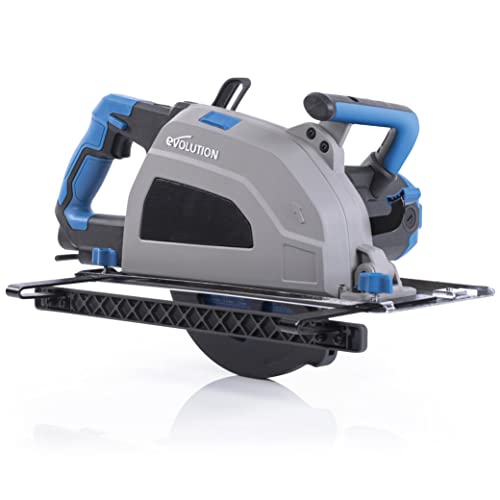
Evolution S210CCS Metal Cutting Circular Saw
What We Like
- Cuts steel clean and cool with no heat or burrs
- Integrated chip collector holds 60% more debris
- LED cutline light and edge guide for precision
- Ergonomic ambidextrous handles for user comfort
Trade-offs
- 8-1/4" blade limits maximum cut capacity compared to 14" models
- Corded design restricts mobility versus cordless options
Its ability to cut through 1/2″ thick steel plate without generating heat, sparks, or burrs is the standout feature. This makes the Evolution S210CCS a prime candidate for anyone doing fabrication or welding where a clean, instantly workable edge is critical. The integrated chip collection system and LED guide line up perfectly for repetitive tasks on sheet metal, roofing, or framing, letting you work fast and keep the area clean.
This saw delivers clean, instantly workable cuts in mild steel without generating heat, sparks, or burrs. That means less time spent grinding or deburring after a cut, which is ideal for fabrication, welding, and repeat cutting tasks on materials like sheet metal and plate. It has a 3-inch maximum cutting depth, so it can handle steel plate up to 1/2 inch thick as stated. For larger structural sections, you would need a tool with a different cutting action and greater capacity, such as a chop saw or band saw.
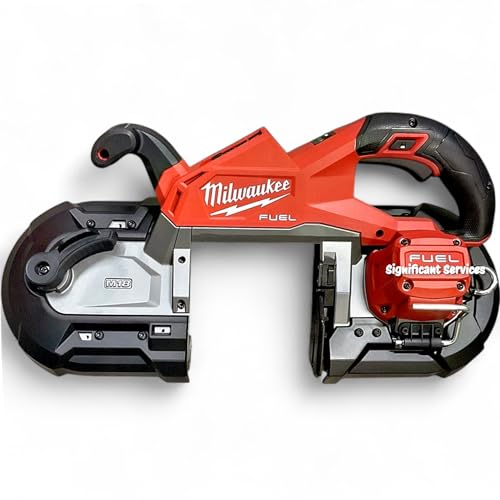
Milwaukee M18 Fuel Deep Cut Band Saw
What We Like
- Large 5×5 inch cut capacity for thick stock
- Cordless design with high-capacity battery runtime
- Integrated rafter hook for convenient hanging
- Automatic blade brake protects sensitive materials
Trade-offs
- 13.2 lb weight is substantial for prolonged overhead use
- Tool-only model requires separate battery and charger purchase
With a 5-inch by 5-inch cut capacity, this cordless band saw can handle large structural steel and pipe in one pass, making it a core tool for heavy-duty field work. Its brushless motor provides a blade speed of 550 surface feet per minute. Under ideal conditions, it can make up to 78 cuts in standard strut on a single charge, which supports a full shift of work. The integrated rafter hook offers a secure spot to hang it when working at height.
That capability comes with some heft at over 13 pounds, so your forearm will feel it after a long day of cutting conduit overhead. Compared to a dedicated shop saw like the JET 5″ x 6″ model, this is a portable strong performer, not a stationary precision tool. It trades the bench-mounted stability and hands-free operation of a horizontal band saw for the freedom to bring the tool directly to the workpiece. For the right user, that’s a trade worth making every time.
Product photos
DeWalt D28715 14" Chop Saw

What We Like
- Keyless blade change boosts productivity
- Quick-lock vise for fast material clamping
- Ergonomic D-handle reduces user fatigue
- Heavy-duty lock-down pin secures head for transport
Trade-offs
- At 39 pounds, it's a two-hand lift for transport
- Lacks the cold-cutting, burr-free finish of some rivals
Its keyless Quik-change blade system defines this chop saw, allowing wheel swaps without a wrench to reduce downtime between cuts. The quick-lock vise speeds up clamping different material sizes, and the 15 amp motor has high overload capacity for demanding jobs. An extra-wide solid steel base adds stability for longer stock and can be bolted down or have jigs welded directly to it.
The saw’s design prioritizes speed and durability for repetitive cutting tasks. A heavy-duty compression spring provides smoother movement than torsion springs, and a lock-down pin secures the head for transport. The adjustable QUICK-FENCE allows fast 45-degree angle cuts, also without requiring a wrench.
Product photos
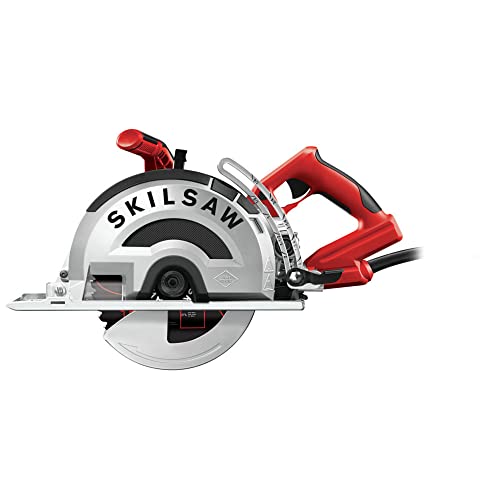
SKILSAW SPT78MMC-01 Worm Drive Metal Saw
What We Like
- Worm drive gearing for metal cutting
- Large chip tray holds 33% more debris
- Blade window for clear cutting line
- Convenience lever for plunge cut starts
Trade-offs
- At 15.3 lb, it's heavier than cordless metal saws like the Makita XSC04Z.
- Requires a corded outlet, limiting mobility on a jobsite.
The standout feature here is a chip tray designed to hold a third more debris than other saws. That means you can make more cuts on a jobsite before you have to stop and empty it, a major boost for productivity on long runs of conduit or sheet metal. This worm-drive saw is built for the tradesperson who needs the torque and durability for all-day metal fabrication, where a clogged guard is a constant annoyance.
You pay for that capacity with a tool that demands a bit more muscle. At over fifteen pounds, it’s a solid handful, and you’re tethered to a power cord. For heavy, stationary cuts on angle iron or strut, its power is perfect. But if you’re climbing a ladder to trim a flashing, the cordless and lighter Evolution S210CCS might be the smarter grab.
Product photos
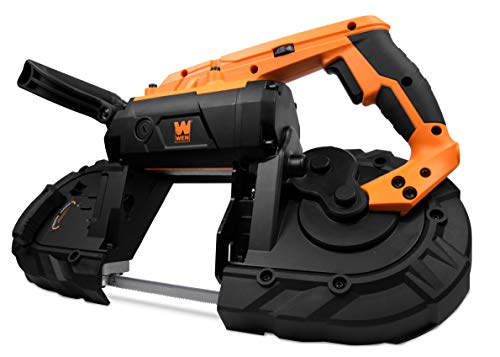
WEN 94396 Portable Band Saw
What We Like
- Large 5×5 inch cutting capacity for stock
- Variable speed from 60 to 420 FPM for control
- Lightweight 14.5-pound portable design
- Includes external blade tensioning lever
Trade-offs
- Corded design limits mobility compared to battery tools
- 14.5 pounds requires steady handling for overhead cuts
A 5-inch by 5-inch cutting capacity lets you tackle a wide range of pipe, tubing, and solid bar stock in a single pass, which is substantial for a handheld unit. The variable speed control, from 60 to 420 feet per minute, gives you the dial to match the blade to the material, whether it’s thin-wall conduit or thicker steel. At 14.5 pounds, it’s genuinely portable for jobsite use, and the 10-amp motor has the guts for sustained cuts. This is a logical pick for the metalworker who needs a capable, general-purpose portable bandsaw without a premium price tag.
The trade-off for that portability and capacity is that it’s a corded tool, so you’re always hunting for an outlet or wrestling with an extension cord. It’s also a dedicated handheld cutter; for repetitive, precision miter cuts on long stock, a dedicated chop saw like the Evolution S14MCS would be a more efficient station. But for cutting conduit in a ceiling, trimming unistrut on a rack, or breaking down stock in a crowded shop, the WEN’s blend of muscle and maneuverability is hard to beat on a budget.
Product photos
JET 7×12 Horizontal/Vertical Band Saw

What We Like
- Cast-iron construction ensures rigid, accurate cuts.
- Oil-bath gear drive and ball-bearing guides for durability.
- Integrated hydraulic downfeed and coolant system.
- Converts to vertical operation with a 9" x 12" table.
Trade-offs
- Weighs 286 pounds, requiring a permanent shop footprint.
- Fixed shop tool, not portable for job-site use.
A 7-inch round and 12-inch rectangular cutting capacity handles the large stock that stymies smaller saws, making it a fixture for serious home and small machine shops. The sealed oil-bath gear drive and cast-iron frame are built for precision and longevity, while the built-in flood coolant and hydraulic feed let you walk away during long cuts. This is a saw for someone with the space and need to process substantial metal volumes reliably.
For large-capacity cutting, it stands apart from portable options like the **Milwaukee M18 Fuel Deep Cut Band Saw**, which sacrifices capacity for mobility. Compared to its smaller sibling, the **JET 5″ x 6″ Metal Cutting Band Saw**, this machine doubles your cutting width. That extra capacity demands more than double the floor space and a much heavier investment in both money and permanent real estate.
Product photos
How We Evaluated Saws To Cut Metal
This guide was developed by reviewing product specifications, manufacturer information, expert recommendations, and common feedback from professional and DIY users. The key selection criteria include the cutting method (cold versus abrasive), capacity and portability, and important safety and control features.
The cutting method dictates finish quality and workspace requirements, while capacity and weight determine if a saw is a mobile job-site tool or a permanent shop fixture. Features like blade brakes, tool-less clamps, and chip management affect daily usability and safety. A research-based approach has limits; we cannot verify long-term durability claims or measure real-world cut accuracy under all conditions.
What To Look For In Saws To Cut Metal
Choosing the right tool means balancing cutting quality, workspace, and the metal you work with most. Stationary shop saws offer precision and capacity, while portable models trade some power for mobility. Your primary material, sheet metal, structural steel, or conduit, will point you toward the ideal saw type.
Key factors are the cutting method (cold cut vs. Abrasive), the tool’s weight and footprint, and its maximum cut capacity. Match the saw’s strengths to your most common tasks and available workspace.
Cutting Method & Finish
The blade technology determines your cut’s quality and your work environment. Cold-cut saws, like the Evolution models, use carbide-tipped blades that shear metal cleanly with minimal heat, leaving a burr-free edge ideal for welding. Abrasive chop saws use a grinding wheel, cutting quickly but generating significant sparks and a rougher, often discolored edge that may need grinding.
Band saws use a toothed blade for a controlled, spark-reduced cut, excellent for precision work on various stock. For clean sheet metal work, a specialized metal-cutting circular saw is often the right tool.
Capacity, Portability & Workspace
Consider where and on what you’ll cut. Capacity refers to the maximum thickness or cross-section a saw can handle, like a 5×5-inch cut for a portable band saw or a 7×12-inch capacity for a large shop saw. Portability is defined by weight and power source; a 13-pound cordless saw is a job-site companion, while a 286-pound bandsaw is a permanent shop installation. The workspace must accommodate the tool’s footprint and the cutting method’s byproducts, abrasive saws need a spark-safe area, and all saws require space for material handling.
Control, Safety & Usability
Look for features that make repetitive cutting safer and less fatiguing. A quick-lock or tool-less vise, like on the DeWalt D28715, secures material rapidly. An integrated chip collector or large tray, such as the one on the SKILSAW worm drive saw, contains debris. Safety elements include a two-stage trigger lock, blade brakes, and spark deflectors. For stationary saws, a rigid stand or built-in mobility kit is crucial. When cutting aluminum, blade speed control is a vital feature to prevent the material from gumming up the teeth.
- Check for an ergonomic handle design to reduce strain during long cuts.
- Ensure the blade guard and safety mechanisms are strong and easy to use.
- Verify that replacement blades for your chosen model are readily available.
Always securely clamp your workpiece, wear appropriate PPE, and operate the saw on a stable surface.
Saws To Cut Metal Compared
| Product | Motor | Weight | Blade Size |
|---|---|---|---|
| Evolution S14MCS 14" Mitering Chop Saw | 15A EVOMAX, 1100 RPM | 72.4 pounds | 14 inches |
| Makita LW1401 14" Cut-Off Saw | 15 AMP, 3800 RPM | 37.0 pounds | 14" |
| Makita XSC04Z Cordless Metal Cutting Saw | BL Brushless | N/A | 5-7/8" |
| JET 5" x 6" Metal Cutting Band Saw | 1/2 HP, 3-speed | 115.0 pounds | N/A |
| Evolution S210CCS Metal Cutting Circular Saw | High torque motor | 1.0 Pounds | 8-1/4" |
| Milwaukee M18 Fuel Deep Cut Band Saw | POWERSTATE Brushless | 13.2 pounds | N/A |
| DeWalt D28715 14" Chop Saw | 15 amp / 5.5 HP max | 39.0 pounds | 14-Inch |
| SKILSAW SPT78MMC-01 Worm Drive Metal Saw | 15 Amp | 15.3 Pounds | 8 inch |
| WEN 94396 Portable Band Saw | 10-amp | 14.5 pounds | 10/14 TPI |
| JET 7×12 Horizontal/Vertical Band Saw | N/A | 286.0 Pounds | 3/4" x .032" x 93" |
Frequently Asked Questions
What is the best saw to cut through metal?
The best saw depends on your specific needs. For overall versatility, clean cuts, and shop-based work, a cold-cutting miter saw like the Evolution S14MCS is an excellent choice. For heavy-duty abrasive cutting on a budget, a chop saw like the Makita LW1401 is reliable. For cordless portability on a job site, a deep-cut band saw or a compact metal-cutting saw offers great freedom.
What type of saw is best for cutting metal?
The four main types are chop saws (fast, abrasive cuts), cold-cut saws (clean, precise cuts), band saws (versatile for shape and thick stock), and metal-cutting circular saws (ideal for sheet metal). Your choice hinges on material thickness, desired finish, and whether you need a stationary or portable tool. Our research on the best saws for cutting steel delves deeper into matching saw types to common ferrous metals.
What type of hand saw is best for cutting metal?
For powered hand saws, a portable band saw (like the Milwaukee M18 or WEN 94396) offers the best control and capacity for cutting pipe and structural stock. For manual cutting, a hacksaw is the traditional choice, though it is slow and labor-intensive. A reciprocating saw with a proper metal-cutting blade can also be highly effective for demolition or rough cuts in installed materials.
Can you use a wood saw to cut metal?
No, you should not use a standard wood-cutting saw to cut metal. The blades are not designed for the hardness of metal, which will damage the teeth and pose a serious safety risk due to kickback or breaking. Always use a saw and blade specifically designed for cutting steel or other metals.
What is a cold cut saw?
A cold cut saw uses a specially designed carbide-tipped blade that rotates at a lower speed to shear through metal without generating significant heat. This process leaves a clean, burr-free edge that often requires no further finishing, making it ideal for fabrication and welding. It contrasts with abrasive chop saws, which grind through metal with a high-speed wheel, creating sparks, heat, and a rougher edge.
The Bottom Line
For professional fabricators and dedicated shops, the Evolution S14MCS 14″ Mitering Chop Saw is the best overall, delivering fast, accurate, and cold miter cuts in structural metal. If you’re on a budget or need a portable option, consider the WEN 94396 band saw or the cordless Makita XSC04Z for their capable performance in more mobile scenarios. Ultimately, matching the saw’s cutting method and physical footprint to your most common task and available workspace is the single most important decision you’ll make.
