
6 Best Metal Cutting Circular Saws in 2026
This post contains affiliate links. As an Amazon Associate, we earn from qualifying purchases.
Our best overall metal cutting circular saw is the Evolution S210CCS Metal Cutting Circular Saw for its ability to cut cleanly through thick steel plate without heat or sparks. For cordless power, the DeWalt DCS383B excels, while the Skilsaw Outlaw offers the highest-capacity chip tray.
You need a saw that can handle the specific metals and thicknesses you work with. Choosing the wrong tool can lead to dangerous sparks, rough edges, and a frustrating workflow. We researched specifications, manufacturer data, and patterns in owner feedback to compare six top models.
This guide will help you find the saw that matches your material, workspace, and mobility needs.
Top 6 Metal Cutting Circular Saws in the Market
Certain content that appears on this site comes from Amazon. This content is provided "as is" and is subject to change or removal at any time.
The Best Metal Cutting Circular Saws, Reviewed
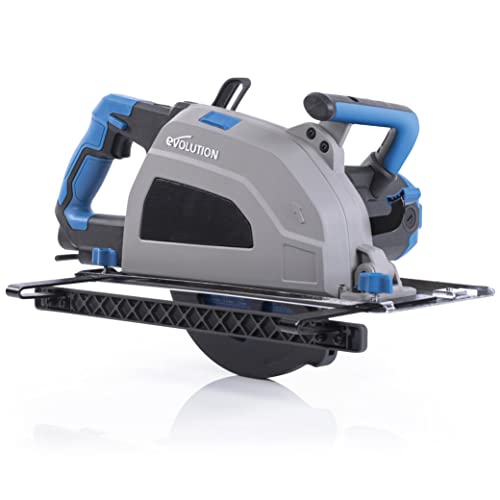
Evolution S210CCS Metal Cutting Circular Saw
What We Like
- Cuts steel clean and cool with no heat burr or sparks.
- Powerful motor handles 1/2-inch steel plates effortlessly.
- High-capacity chip collector reduces cleanup time.
- LED cutline light and edge guide for precision.
Trade-offs
- At 23.2 inches long, it's a large, workshop-bound tool.
- Corded design limits mobility compared to cordless options.
An 8-1/4-inch blade paired with a high-torque motor lets you slice through half-inch steel plate without generating heat or dangerous sparks, which is a revelation for fabrication shops. This saw is built for the professional who needs clean, burr-free cuts all day long, supported by thoughtful features like an LED guide light and a chip collector that actually holds debris. It’s the complete package for demanding metalwork.
The trade-off is its size and corded nature; this isn’t a tool you’ll toss in a truck for a quick site job. For that kind of portability, the cordless DeWalt DCS373B is a more logical companion. But for a fixed workshop or a job site with reliable power where precision and endurance on thick materials are paramount, the Evolution S210CCS delivers industrial-grade performance that justifies its footprint.
DeWalt DCS383B Metal Cutting Circular Saw

What We Like
- Brushless motor delivers high power for tough cuts
- Integrated chip collector keeps the work area clean
- Tool Connect+ enables asset management via app
- Cuts hundreds of steel studs per charge
Trade-offs
- Tool only: requires separate DeWalt 20V battery and charger
- At 13.3 lb, it's substantial for overhead work
- Deeper 2-5/8 in. cut limits portability versus mini saws
This cordless saw’s 1,400 mwo brushless motor powers through steel siding and aluminum without producing sparks or scorched edges, changing the way you approach metal cutting. That performance means pros and DIYers get cordless freedom for tasks like cutting corrugated decking or steel studs. A built-in chip collector helps maintain a clean work area, while the electronic brake stops the blade in less than a second for added control.
You trade some heft for that cordless power; its 13.3-pound weight demands respect on a ladder. It also arrives as a bare tool, so you must factor in the cost of a compatible 20V MAX battery and charger. But if your projects take you away from an outlet, this DeWalt delivers pro-level metal cutting without the cord.
Product photos
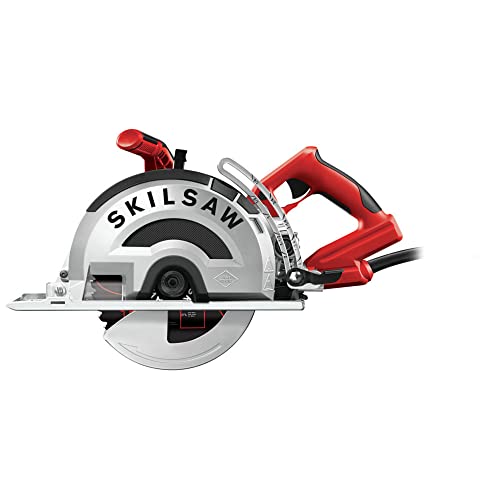
Skilsaw Outlaw Worm Drive Metal Cutting Saw
What We Like
- Worm drive gearing for demanding metal cuts
- Chip tray holds 33% more than other saws
- Blade window for clear cut line visibility
- Convenience lever for easy plunge cut starts
Trade-offs
- Heavy at 15.3 lb for overhead work
- Large footprint at 21 inches long
- Corded design limits remote job site use
Its metal chip tray holds 33-percent more chips than other saws, which can reduce interruptions to empty debris during extended cutting sessions. This is a worm drive geared saw made for metal, a design traditionally associated with high-torque applications. A blade window provides clear sight of the blade to aid in consistent cutting, while a convenience lever raises the lower guard to start a plunge cut.
That capability comes with a trade-off in size and heft. At over 15 pounds and 21 inches long, it’s a substantial tool that demands two hands and some muscle, making it less nimble for quick, intricate cuts. If your metal work is more about mobility and lighter gauge materials, the cordless DeWalt DCS383B offers a much more compact and portable solution, though you’ll be swapping batteries instead of dealing with a cord.
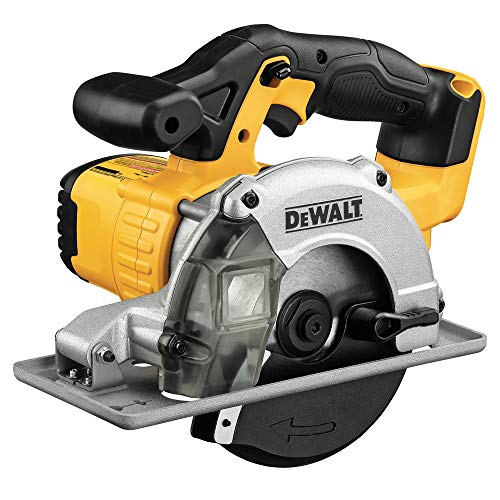
DeWalt DCS373B Metal Cutting Circular Saw
What We Like
- Compact size for tight spaces
- Bright LED light with 20-second delay
- Sight-line window for clear cut view
- Rubber overmolded grip for control
Trade-offs
- Tool only: requires separate battery and charger
- 5-1/2-inch blade limits maximum cut depth
This cordless saw packs a 5-1/2-inch carbide blade and a 3700 rpm motor into a tool that weighs under seven pounds, so you can easily control it with one hand. Its compact size, at just over six inches long, makes it suitable for work in tight spaces or on a ladder where a larger, corded saw would be cumbersome. The high-strength steel shoe and rubber overmolded grip are designed to provide durability and balance during use.
The trade-off is that its smaller blade can’t match the depth of cut you’d get from a 7-1/4-inch model like the DeWalt DCS383B. You’re sacrificing some raw capacity for ultimate portability. For on-site fabrication or HVAC work where you’re constantly moving, this tool’s size and cordless freedom are huge advantages, but for shop-based work cutting thick stock, you might want the heftier option.
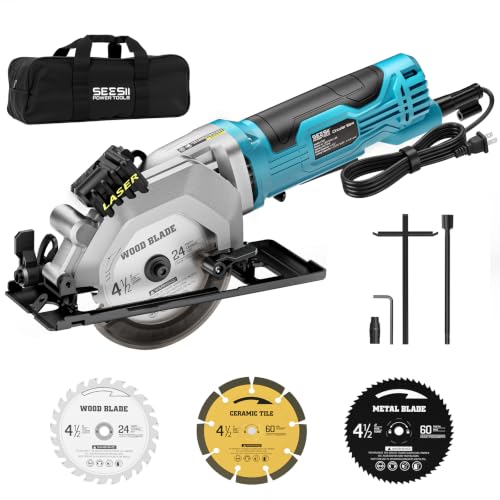
Seesii Mini Circular Saw
What We Like
- Laser guide and dust port for precision and cleaner cuts
- Double-switch safety system and lightweight one-handed design
- Adjustable depth and bevel for versatile cutting angles
Trade-offs
- Maximum cutting depth is only 1-11/16", limiting material thickness
- Corded design requires an outlet, reducing portability
That multi-material versatility in a 4.7-pound package makes it a compelling choice for DIYers and homeowners. They need a single, manageable tool for light-duty jobs around the house, from trimming PVC pipe to cutting laminate flooring. The laser guide and dust extraction help keep those small cuts accurate and tidy.
The trade-off for its compact size is capacity, with a maximum cutting depth of 1-11/16″ at 90 degrees. This sets it apart from dedicated metal saws like the Evolution S210CCS, which is built for deeper cuts in heavier stock. Its adjustable bevel up to 45 degrees and lightweight design facilitate angled cuts and one-handed operation for detailed work in sheet goods and light materials.
Product photos
DOVAMAN 4-1/2" Compact Circular Saw

What We Like
- Built-in laser guide and edge guide for straight cuts
- Lightweight, compact design with an extra auxiliary handle
Trade-offs
- Maximum cutting depth is only 1-11/16 inches
- Corded design requires access to a power outlet
That versatility, paired with a laser guide and a 3.9-pound frame, makes it a natural fit for DIYers and hobbyists who tackle mixed-material projects in a home shop. It’s the tool you grab for trim, conduit, PVC, or backsplash tile because it can handle a bit of everything without demanding a dedicated saw for each material.
The trade-off for that all-in-one convenience is capacity, with a maximum cross-cut depth of 1-11/16 inches. This limits it to lighter gauge metals and thinner stock. For cutting structural steel or thick plate, a heavier-duty machine like the Evolution S210CCS would be required.
Product photos
How We Evaluated Metal Cutting Circular Saws
Our evaluation focused on manufacturer specifications, documented features, and consistent patterns in professional and DIY owner feedback. We did not perform hands-on physical testing, so our findings are based on aggregated user experiences and technical data. Key criteria included cutting capacity for different metal thicknesses, effective debris management systems, and the trade-offs between corded power and cordless mobility.
For example, we prioritized saws that owners report handle thick steel plate cleanly versus those better suited for sheet metal. A limitation of this research-led approach is that we cannot verify the precise feel, balance, or long-term durability claims firsthand.
We rely on the consensus from numerous user reports to gauge real-world performance and reliability.
What To Look For In Metal Cutting Circular Saws
Choosing a metal cutting circular saw requires matching its capabilities to your specific projects. Power, portability, and precision features all play a critical role. For a comprehensive look at all your options, explore our guide to other metal cutting saws.
Prioritize cutting capacity (depth and material type) first, then decide between corded workshop power or cordless jobsite mobility. Effective chip collection and integrated guides are key for clean, accurate work.
Cutting Capacity and Power
The saw’s ability to handle your materials is paramount. Check the maximum cutting depth, which can range from under two inches for compact models to over two and a half inches for full-size saws. More importantly, verify the types of metal it’s designed for; some are optimized for mild steel plate, while others handle aluminum or steel studs.
Corded saws typically offer consistent, high power for demanding shop work on thick stock. Cordless models provide crucial mobility but require a compatible battery system. Their runtime and power are tied to the battery’s voltage and amp-hour rating.
Portability and Jobsite Suitability
Your work environment dictates the ideal saw format. A large, powerful corded saw like the Evolution S210CCS is suited for a workshop but is not intended for carrying across a construction site. For jobsite mobility, a cordless model is essential. Consider the tool’s weight and balance, especially for overhead work. A compact cordless saw, like the DeWalt DCS373B, offers easy handling in tight spaces but has a more limited cutting depth. Always factor in whether a saw is sold as a ‘tool only,’ requiring a separate battery and charger.
Features for Precision and Cleanup
Metal cutting generates sharp, hot chips, making debris management a safety and convenience priority. Look for integrated chip collectors or trays; a high-capacity tray, like on the Skilsaw Outlaw, means less frequent stops to empty it. For accuracy, features like an LED cutline light, a sight-line window, or an edge guide are invaluable for making straight cuts in metal. A clear blade window helps you follow your line without guesswork. If you’re working with roofing materials, using the correct blades for metal roofing is also critical for a clean finish.
- Check the chip collection system’s capacity and ease of emptying.
- Look for an integrated LED light to illuminate the cut path.
- Ensure the blade guard and spark deflection meet safety standards.
- Verify the availability and cost of replacement blades for your intended material.
The best saw minimizes cleanup time and maximizes control, letting you focus on a precise cut.
Metal Cutting Circular Saws Compared
The following table compares the key specifications of our top picks to help you see the differences at a glance.
| Product | Blade Size | Motor Type | Weight |
|---|---|---|---|
| Evolution S210CCS Metal Cutting Circular Saw | 8-1/4 in. | High torque motor | 1.0 Pounds |
| DeWalt DCS383B Metal Cutting Circular Saw | 7-1/4 inches | 20V Max Brushless | 13.3 pounds |
| Skilsaw Outlaw Worm Drive Metal Cutting Saw | 8 inches | 15 Amp | 15.3 Pounds |
| DeWalt DCS373B Metal Cutting Circular Saw | 5-1/2 inches | 3700 rpm | 6.8 Pounds |
| Seesii Mini Circular Saw | 4-1/2" | 4.8A corded, 4000 RPM | 4.7 pounds |
| DOVAMAN 4-1/2" Compact Circular Saw | 4-1/2" | 5.8 Amp | 3.9 Pounds |
Frequently Asked Questions
What is the best circular saw for cutting through metal?
The best saw depends on your needs. For powerful, clean cuts on thick steel in a workshop, the corded Evolution S210CCS is an excellent choice. For jobsite mobility without sacrificing power, the cordless DeWalt DCS383B is a top contender among metal cutting saws.
What is the best metal cutting saw for a DIYer?
DIYers often benefit from a versatile, budget-friendly kit. The Seesii Mini Circular Saw or DOVAMAN 4-1/2″ Compact Circular Saw are good options for light-gauge metals, plastic, and wood on smaller projects, though they have limited cutting depth compared to professional tools.
What type of saw is best for cutting metal?
Several saw types excel at cutting metal. Beyond circular saws, metal chop saws are ideal for fast, straight cuts on bar stock and pipe, while band saws offer smooth, controlled cuts. The best type depends on the material shape and the precision required.
What blade to use to cut metal with a circular saw?
You must use a carbide-tipped blade specifically designed for cutting metal. These blades have a unique tooth geometry to cut cold, reducing sparks and heat. Using a standard wood-cutting blade is dangerous and will ruin the blade. For more on selection, see our guide to circular saw blades.
Can I use a regular circular saw to cut metal?
No, you should not. Regular circular saws are not designed for metal and can be dangerously damaged. Metal cutting circular saws are built with different motors, guards, and safety features to handle the forces and hot chips produced. Always use the proper tool and learn safe techniques for cutting metal.
The Bottom Line
For professional fabricators and serious DIYers needing clean, high-volume cuts on thick steel plate in a shop, the Evolution S210CCS Metal Cutting Circular Saw is the best overall choice. Its power and clean-cutting performance are standout features. If your work demands cordless mobility, prioritize the DeWalt DCS383B for its power, or the DCS373B for its compact size in tight spaces.
Budget-conscious DIYers working with thinner materials should consider the versatile Seesii or DOVAMAN kits. Ultimately, matching the saw’s cutting capacity and power source to your most common metalworking task is the single most important decision.
