
10 Best Electric Drywall Sanders in 2026
This post contains affiliate links. As an Amazon Associate, we earn from qualifying purchases.
Our best overall electric drywall sander is the Festool PLANEX Drywall Sander Set, a complete system that delivers a superior finish with unmatched dust extraction. For a great value in a cordless kit, choose the WEN Cordless Drywall Sander, while the DEKOPRO Electric Drywall Sander offers high power for large-scale projects. These tools transform a messy, tedious chore into a faster, cleaner process.
Sanding drywall by hand is exhausting and fills the air with fine, irritating dust. A dedicated electric sander tackles walls and ceilings efficiently, with the best models capturing nearly all debris at the source. The right choice depends on your project scale, need for cordless freedom, and commitment to dust control.
This guide is based on research into specifications, manufacturer data, expert evaluations, and patterns in owner feedback. We compared ten leading models to help you find the right balance of power, portability, and dust management for your work.
Top 10 Electric Drywall Sanders in the Market
Certain content that appears on this site comes from Amazon. This content is provided "as is" and is subject to change or removal at any time.
The Best Electric Drywall Sanders, Reviewed
Festool PLANEX Drywall Sander Set
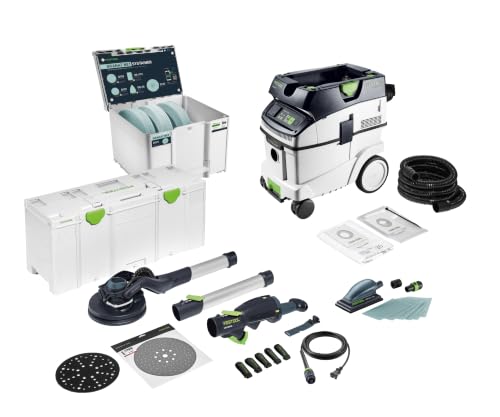
What We Like
- Complete system includes dust extractor and abrasives
- Automatic filter cleaning maintains consistent suction
- Random orbit head excels at finish sanding
- Powerful extraction drastically reduces airborne dust
Trade-offs
- At 55 pounds, it's a heavy, stationary system to move
- Requires dedicated floor space for the full setup
- Hand block is needed for corners the main head can't reach
This complete drywall sanding system includes its own industrial dust extractor, moving it beyond a simple tool into a dedicated workstation. The PLANEX captures dust at the source, which research mentions praise for its efficient extraction. That integrated system, combined with a random orbit head engineered for consistent material removal and high-quality surface results, establishes it as a top performer for demanding drywall work. Features like automatic filter cleaning help maintain consistent suction during extended sanding, reducing workflow interruptions.
The trade-off for that unparalleled performance and cleanliness is a substantial physical footprint and weight. At 55 pounds for the combined unit, this isn’t a tool you casually carry from room to room; it’s a system you roll in and set up. For someone tackling a whole-house renovation or a dedicated drywall business, that’s a worthwhile compromise. For smaller, confined spaces or quick patch jobs, a more compact and maneuverable option like the DEWALT 20V MAX cordless sander might be a better fit, even if it means managing dust collection separately.
WEN Cordless Drywall Sander

What We Like
- Brushless motor provides maximum torque
- Hook-and-loop base pad maximizes dust collection
- Battery is compatible with entire WEN 20V Max series
Trade-offs
- Sanding discs are only compatible with DW series paper
- At 63 inches extended, it may be cumbersome in tight spaces
The WEN 20409 delivers a fully-featured cordless sanding kit straight out of the box. This is a serious advantage for anyone building their tool collection, as the 5.0 amp-hour battery and brushless motor let you tackle a full day of finishing work without hunting for an outlet. The included hose and assortment of discs get you started immediately. This package suits the budget-conscious DIYer or contractor who wants cordless freedom without piecing together a system from separate components.
This sander’s value is tied to its proprietary DW-series sandpaper, which requires purchasing specific discs rather than using any off-the-shelf option. The kit includes a 5.0Ah battery and charger, making it a complete cordless system right away. That bundled power source is a clear advantage for someone new to the WEN 20V Max platform, as it avoids the immediate need for separate battery purchases.
DEWALT 20V MAX Cordless Drywall Sander

What We Like
- Wireless on/off control with compatible extractor
- Cordless design for locations without power
- Telescoping shaft reaches ceilings and tight spots
- Quick, tool-free dust extractor connection
Trade-offs
- Tool only: requires separate 20V MAX battery and charger
- At 47.9 inches long, storage can be awkward
- Requires a DEWALT dust extractor for full wireless feature use
Its wireless on/off capability, when paired with a compatible dust extractor, is a key feature. This allows the sander to be controlled from the extractor’s handle, which can simplify dust management during a job. The tool-only design means it fits into an existing DEWALT 20V battery system.
You are paying for that integration, and it only sings if you own the other pieces. Without a DEWALT battery and their specific extractor, you lose the core convenience. It’s also not the most compact option for tight storage. Compared to something like the WEN cordless model, which includes a battery, this is a system tool for a committed user, not a one-off purchase for a single project.
DEKOPRO Electric Drywall Sander
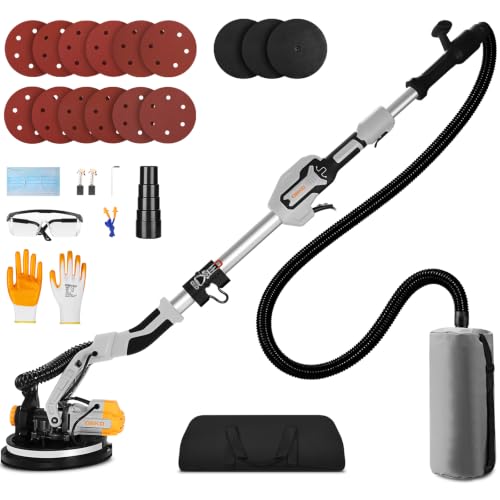
What We Like
- Strong 7.5 Amp motor for demanding surface prep.
- Extendable pole and 14-foot cord provide wide reach.
- Built-in vacuum dust collection with 6-hole disc design.
- Includes 12 sandpapers, detachable edge, and LED light.
Trade-offs
- Corded design limits mobility compared to battery models.
- At 8.8 lbs, it's heavier than some pole sanders like the Mirka LEROS.
A 7.5 Amp motor delivers the steady, unbounded power needed for large drywall and popcorn ceiling jobs. This sander suits a serious DIYer or a contractor who spends hours on prep work and has easy access to outlets. The seven speed settings let you dial in the aggression, while the telescoping pole and long cord mean you can cover a ceiling without constantly moving a ladder or hunting for a new plug. It’s built for endurance over a big area, not quick touch-ups.
A 7.5 amp motor provides strong power for sanding drywall, plaster, and removing paint, so the tool maintains consistent speed under load. Its 14-foot power cord allows for a wider working range with fewer outlet changes. The built-in vacuum system, with a six-hole sanding disc, helps reduce airborne dust when the sander is kept flush against the surface.
Product photos
WEN 6377 Dual-Head Drywall Sander
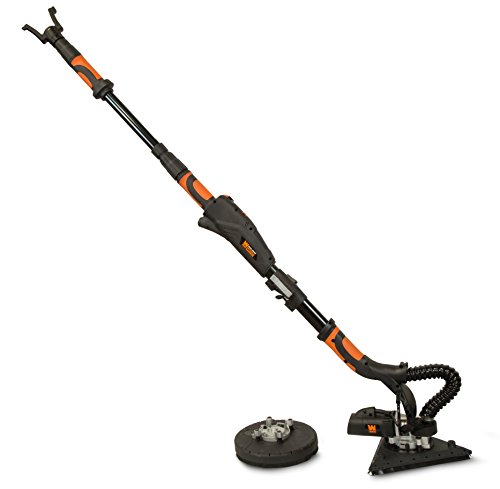
What We Like
- Dual-head design for flats and corners
- Variable speed for different tasks
- 15-foot hose extends dust collection range
- Tool-free head swapping
Trade-offs
- At 47.2 inches long, it requires significant storage space
- Corded design limits mobility versus battery models
- No battery or charger included
With a 5-amp motor mounted directly on the head, this sander provides the torque to power through joint compound without bogging down. Its dual-head setup includes a 9-inch round pad for broad surfaces and a triangular head for corners, and you can switch between them without tools. This combination, paired with a variable speed dial from 600 to 1500 RPM, allows users to tackle entire rooms while minimizing tool changes.
The tool’s corded, 47.2-inch-long design provides power but demands a dedicated storage spot. For users who prioritize freedom of movement on shorter tasks, a cordless option like the DEWALT DCE800B exists, though that requires managing batteries. The WEN includes a 15-foot dust hose for its removal system, which is designed to minimize clean-up when paired with a shop vacuum.
Festool PLANEX Easy Drywall Sander

What We Like
- Low weight and perfect balance reduce fatigue.
- Integrated dust extraction captures virtually all debris.
- Flexible head adapts to surfaces for a smooth finish.
- Brushless motor delivers power without a heavy cable.
Trade-offs
- At 66.9 inches long, it requires significant storage space.
- Tool only: requires a compatible Festool dust extractor.
A direct-drive brushless motor eliminates the flexible drive cable, so you get consistent power transfer right to the sanding head without the extra weight and maintenance hassle. This sander is for the professional or serious renovator who does enough drywall to justify a premium tool. Its random orbit head and superb dust collection mean you can move from aggressive texture removal to a ready-to-paint finish without switching tools, all while keeping the workspace clean. The intuitive controls and balanced feel let you work overhead or on walls for hours with markedly less strain.
The trade-off is its size and system-based design. At over five and a half feet long, it’s not a tool you tuck away in a small toolbox. You also need a Festool dust extractor to realize its full potential. For someone who needs a completely self-contained, more compact solution, the cordless DEWALT 20V MAX is a compelling alternative. With it, however, you sacrifice the flawless dust extraction and effortless balance that makes the Festool so easy to use all day.
Mirka LEROS Random Orbital Sander
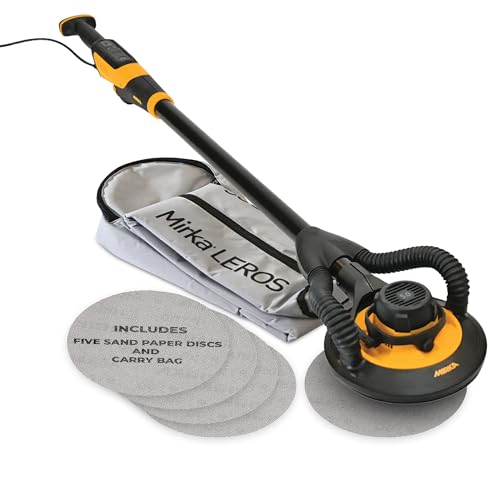
What We Like
- Brushless motor provides consistent power
- 180° rotating head for corners and edges
- Effective dual-port dust collection system
Trade-offs
- Requires a dust extractor to function effectively
- Corded design limits mobility versus cordless options
Weighing just 7.7 pounds, the Mirka LEROS is built for overhead work without wearing out your arms. That featherweight feel, combined with its 350W brushless motor, makes it a natural choice for long days of finish sanding on walls and ceilings. The 9-inch head rotates a full 180 degrees, so you can finesse tight corners and edges without switching tools. It’s a sander designed for the professional or serious DIYer who values precision and reduced fatigue over raw speed.
You will need to pair it with a shop vacuum, as the dust collection isn’t optional. While its compact design is a strength for control, it means you’re working at arm’s length rather than with an extended pole. For sanding vast, flat ceilings, a dedicated long-reach model like the Festool PLANEX Easy would be more efficient. But for detailed work and all-day comfort, the LEROS is hard to beat.
Product photos
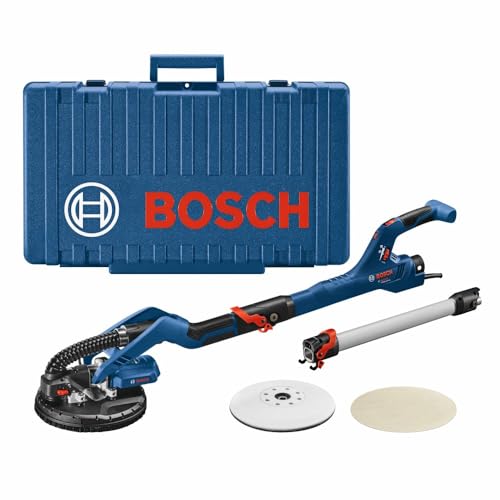
BOSCH GTR55-85 Drywall Sander Kit
What We Like
- Ultra-flexible head minimizes surface damage
- Ceiling-suction mode reduces weight overhead
- Easy-to-reach controls on the T-handle
Trade-offs
- At 66.9 inches long, it needs storage space
- Requires a separate vacuum for dust collection
The Bosch GTR55-85’s ultra-flexible 9-inch head is its standout feature, letting the pad conform to wall and ceiling surfaces to avoid gouges. This makes it a solid pick for professionals and serious DIYers who need to sand large areas efficiently without leaving behind a trail of damage. The dedicated ceiling-suction mode and adaptable T-handle grip directly tackle the fatigue of overhead work.
Constant speed under load provides smooth operation for consistent sanding passes across large surfaces. The Bosch GTR55-85 is a dedicated tool for drywall, though its performance on joint repairs and nail holes can be a mixed bag. A separate vacuum is required, unlike integrated systems like the heavier Festool PLANEX.
Product photos
Makita 18V LXT Cordless Drywall Sander

What We Like
- Collapsible extension for tight spaces and high walls
- Brushless motor at the head for efficient sanding
- Flexible head swivel for maneuverability on walls
- Round brush design for high-efficiency dust extraction
Trade-offs
- Tool only: requires separate Makita 18V battery and charger
Its adjustable extension pipe collapses for sanding in confined spaces and extends up to 16-1/2 inches for reaching high walls and ceilings, making it maneuverable in tight spots and suitable for overhead work. A direct-drive brushless motor positioned at the sanding head aims for increased sanding efficiency with reduced maintenance. The cordless, battery-exclusive design offers portability for punch-list work and repairs where managing a cord would be inconvenient.
This listing is for the tool only, so a Makita 18V LXT battery and charger must be purchased separately. Its round brush design is noted for high-efficiency dust extraction with minimal leakage, though it functions as a dust port rather than a self-contained vacuum system. The tool provides variable speed control from 1,000 to 1,800 RPM for manual adjustment to the application.
Product photos
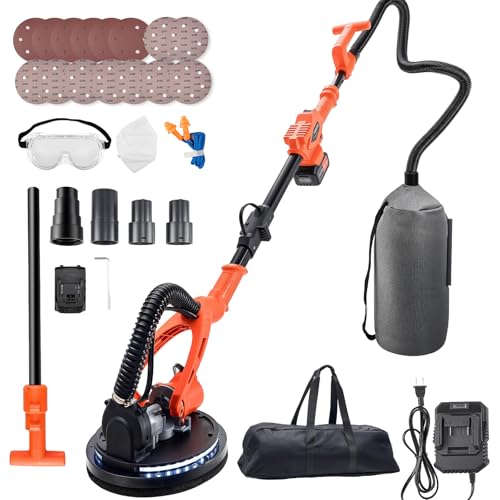
VEVOR Cordless Drywall Sander
What We Like
- Two batteries provide extended cordless runtime
- Built-in vacuum system for efficient dust collection
- 360° LED light improves visibility in corners
- Foldable, telescopic pole for storage and height adjustment
Trade-offs
- 17.1 lb weight is substantial for overhead ceiling work
- 40-minute total runtime may require pauses for charging on large projects
With two batteries providing up to 40 minutes of total runtime, you can sand a large area without stopping to recharge. This cordless setup lets you work on walls and ceilings without being tethered to an outlet. Its built-in vacuum and a pole that adjusts from 4.6 to 6 feet mean you also don’t need a separate dust extractor.
The cordless design adds weight, however, and the tool comes in at 17.1 pounds. That is heavier than some other corded sanders, such as the 7.7-pound Mirka LEROS, which could make extended overhead work more demanding.
Product photos
How We Evaluated Electric Drywall Sanders
Our research focused on manufacturer specifications, professional tool round-ups, and consistent patterns in owner feedback. We did not physically test these tools, so our assessment relies on documented performance, reported ergonomics, and system compatibility.
We prioritized three key areas. First, dust collection effectiveness is paramount; a sander must integrate with a vacuum to protect your lungs and simplify cleanup. Second, power and control matter, from motor torque for material removal to variable speed for fine finishing. Third, we considered practical design, including weight, balance for overhead use, and whether the system is corded or cordless.
This guide compiles product information to provide a useful starting point for your drywall sander research.
What To Look For In Electric Drywall Sanders
Choosing the right sander means matching its strengths to your specific drywall tasks. A tool perfect for sanding an entire new build may be overkill for a small repair, and vice versa. Focus on how you’ll use it most.
Look for effective dust collection, sufficient power (5+ amps for corded models), and a design that minimizes fatigue. Cordless models offer freedom but require battery investment, while integrated systems provide the best dust control.
Dust Collection & Extraction
This is the most critical feature. Drywall dust is fine, pervasive, and unhealthy to breathe. The best dustless drywall sanders connect directly to a shop vacuum or dedicated dust extractor via a hose, capturing debris at the pad. Look for a sealed system and a multi-hole sanding pad design to maximize suction. Some advanced models, like the Festool PLANEX, feature automatic filter cleaning to maintain consistent power.
Power Source & Runtime
Your choice between corded and cordless defines your mobility. Corded models like the DEKOPRO deliver consistent, unlimited power, ideal for large areas near outlets. Cordless sanders, such as the WEN or DEWALT, offer complete freedom but are limited by battery life. For whole-room work, a kit with two batteries, like the VEVOR, provides essential extended runtime. Remember, a cordless tool often requires a separate, compatible battery and charger.
Ergonomics & Design
Sanding ceilings and high walls is physically demanding. A lightweight tool with good balance, like the Festool PLANEX Easy or Mirka LEROS, reduces arm and shoulder fatigue. Consider the pole length and whether it telescopes for adjustment. A flexible sanding head helps maintain flush contact on uneven surfaces, while a dual-head design, like on the WEN 6377, handles flats and corners without swapping tools.
- Check the tool’s weight, especially if you’ll use it overhead.
- Ensure the grip is comfortable and controls are easily accessible.
- Consider storage length; some poles extend beyond 60 inches.
- Verify compatibility with your existing vacuum or battery platform.
Always pair your sander with a HEPA-filtered vacuum designed for drywall dust to truly protect your workspace.
Electric Drywall Sanders Compared
For a quick view of how these top models compare across key specifications, see the table below.
| Product | Weight | Variable Speed Range | Power Source / Motor |
|---|---|---|---|
| Festool PLANEX Drywall Sander Set | 55.0 pounds | N/A | N/A |
| WEN Cordless Drywall Sander | N/A | 600 to 1200 RPM | 20V Max 5.0 Ah |
| DEWALT 20V MAX Cordless Drywall Sander | 8.6 pounds | 700 to 1,200 RPM | Brushless Motor |
| DEKOPRO Electric Drywall Sander | 4.0 Pounds | 600-1,800 RPM | 7.5 Amp |
| WEN 6377 Dual-Head Drywall Sander | N/A | 600 to 1500 RPM | 5-Amp |
| Festool PLANEX Easy Drywall Sander | 17.5 Pounds | N/A | Brushless |
| Mirka LEROS Random Orbital Sander | 7.7 pounds | N/A | 350W brushless |
| BOSCH GTR55-85 Drywall Sander Kit | 9.0 Pounds | N/A | N/A |
| Makita 18V LXT Cordless Drywall Sander | N/A | 1,000-1,800 RPM | Brushless |
| VEVOR Cordless Drywall Sander | 17.1 Pounds | 0-1600 RPM | 450W |
Frequently Asked Questions
Who makes the best electric drywall sander?
Several manufacturers excel, but the “best” depends on your needs. For professionals seeking the ultimate in dust-free finishing, Festool is often the top choice. For value-focused DIYers, brands like WEN and DEKOPRO offer powerful, feature-rich options. Our research indicates the best tool is the one that matches your project scale, budget, and existing tool ecosystem.
What is the best electric sander for walls?
The best electric sander for walls balances power with easy maneuverability. A model with a telescoping pole, like the Makita 18V LXT, is excellent for reaching high walls without a ladder. For large, flat wall surfaces, a sander with a large-diameter head (8-9 inches) and variable speed, such as the DEKOPRO, will cover area quickly and allow for fine finish work.
Are electric drywall sanders worth it?
Absolutely, for anyone sanding more than a small patch. They dramatically speed up the work and, when paired with a vacuum, eliminate the overwhelming dust cloud and cleanup of manual sanding. This makes them worth the investment for DIY renovators and essential for professionals concerned with controlling dust and achieving a smooth finish efficiently.
What kind of sander is best for sanding drywall?
A dedicated drywall sander is best. These are large, random orbital or rotary sanders designed specifically for sheetrock, with dust ports for vacuum hookup. Standard random orbital electric sanders can work on small areas but lack the reach, dust collection, and large sanding surface needed for walls and ceilings. The specialized design of a drywall sander is far more effective.
How do I control dust when sanding drywall?
The most effective method is to use a sander that connects directly to a vacuum. Ensure the connection is tight and use a vacuum with a HEPA filter to capture the finest particles. For the best results, look for a system designed as a pair, like the Festool PLANEX with its extractor, or ensure your shop vac is rated for fine dust. This approach is far superior to trying to contain dust after it’s airborne.
The Bottom Line
For professional drywall finishers and serious renovators who demand a flawless, dust-free finish, the Festool PLANEX Drywall Sander Set is the best overall investment. Its complete system and superior extraction protect your health and your workspace.
If you are on a tighter budget, start with the WEN Cordless Drywall Sander for its value as a ready-to-use kit. For those already using a specific brand’s battery platform, consider the matching cordless sander, like the DEWALT 20V MAX, for compatibility.
No matter which model you choose, prioritizing effective dust collection is non-negotiable. It’s the single most important factor for making drywall work faster, cleaner, and safer.
