
10 Best Professional Car Polishers And Buffers in 2026
This post contains affiliate links. As an Amazon Associate, we earn from qualifying purchases.
Our best overall professional car polisher is the Makita 9237C Variable Speed Polisher for its constant speed control under load, which delivers consistent results across different paint conditions. The FLEX 24V Cordless Kit is our top professional cordless pick for its complete, high-power package, while the BATOCA P2 1000W is the best high-torque rotary for demanding correction.
Choosing the right polisher requires matching the tool’s action, power, and ergonomics to your specific detailing tasks and workspace. We built this guide by researching specifications, manufacturer data, and patterns in professional user feedback to help you find the machine that fits your workflow.
Top 10 Professional Car Polishers and Buffers in the Market
Certain content that appears on this site comes from Amazon. This content is provided "as is" and is subject to change or removal at any time.
The Best Professional Car Polishers and Buffers, Reviewed
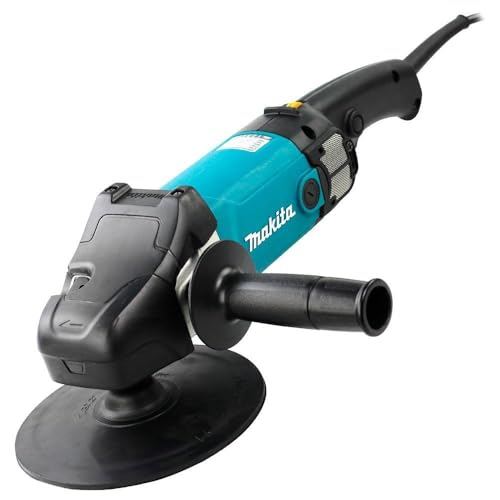
Makita 9237C Variable Speed Polisher
What We Like
- Variable speed control matches power to the task
- Constant speed under load for consistent results
- Soft start minimizes polish fling-off
- Rubberized housing protects delicate surfaces
Trade-offs
- At 20 inches long, it's less maneuverable in tight spaces
- Heavier than the cordless Milwaukee M18 polisher
Variable speed control from a dial and trigger allows the user to match the rotation to the task, which is essential for switching between different polishing compounds and waxes. Constant speed control maintains the set RPM even when pressure is applied, a feature that helps produce uniform results across a surface. A rubberized gear housing and loop handle are included to help protect delicate surfaces from accidental damage during use.
The trade-off for that solid, gear-driven performance is a tool that demands respect. At over seven pounds and twenty inches long, it requires a firm grip and some elbow room to wield effectively. For confined areas or overhead work, a more compact forced-rotation tool like the RUPES LHR15 might be easier to handle. But for flat-out correction power and durability on big jobs, the Makita’s design is hard to beat.
FLEX 24V Cordless Forced Orbital Polisher Kit

What We Like
- Includes two high-capacity 5.0Ah batteries and fast charger.
- Constant speed technology maintains RPMs under load.
- Lightweight body with ergonomic grip reduces fatigue.
- Cross-compatible with all FLEX 24V system tools.
Trade-offs
- Limited to included battery runtime
The inclusion of two 5.0Ah batteries and a 160W fast charger makes this a complete, ready-to-work system right out of the box. For a professional who needs to move freely around a vehicle or shop without hunting for outlets, that 24V cordless design is the key. It’s built for the detailer or body shop tech who values cord-free operation and demands a polisher that won’t bog down, thanks to its constant speed technology. This is a tool for someone who already has or plans to invest in the FLEX 24V ecosystem.
You’re trading the absolute runtime of a corded model for unmatched mobility. While the tool itself is a manageable 6.3 pounds, remember you’re hefting the battery weight as well. Compared to a dedicated corded workhorse like the FLEX FC3321-Z, your work session is ultimately governed by battery life and swap cycles, not the length of your extension cord. For marathon paint correction sessions, that’s the fundamental trade-off you accept for cutting the cord.
Product photos
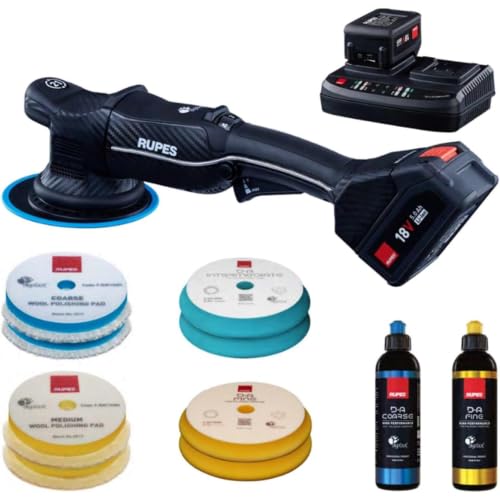
RUPES BigFoot HLR21 Cordless Polishing Kit
What We Like
- Brushless motor for smooth, durable performance
- 40-minute full-power runtime per battery charge
- Fast intelligent dual-battery charging system
Trade-offs
- Runtime may require battery swaps on large vehicles
- Full kit weighs 16 pounds
A cordless polisher delivering up to 40 minutes of full-power runtime means you can tackle a full midsize car’s correction without hunting for an outlet. This makes the RUPES HLR21 a serious contender for mobile detailers or shops where extension cords are a tripping hazard. Its compact, ergonomic design isn’t just for comfort; it translates directly to better control on curved panels and tight spaces like A-pillars and mirror caps, where bulkier tools simply can’t maneuver.
The trade-off for that cordless freedom and precision is heft, the full kit weighs in at 16 pounds, which is noticeably more than a bare tool like the Milwaukee M18 polisher. That weight is the price for the integrated system, including the battery platform. For a pro detailing a series of vehicles back-to-back, the intelligent charger that prioritizes a ready battery is a genuine workflow advantage, keeping you buffing instead of waiting.
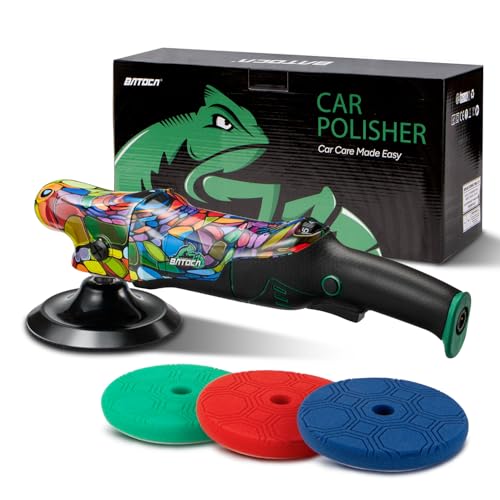
BATOCA P2 1000W Rotary Polisher
What We Like
- High-torque motor avoids bogging down during correction
- Long detachable cord eliminates need for extensions
- Anti-vibration handles reduce fatigue for long sessions
- Unique, durable clear-coat finish resists wear
Trade-offs
- Rotary-only operation requires significant user skill
A 1000W direct-drive motor delivers consistent torque that won’t bog down, even during aggressive compounding on hard paints. This makes the BATOCA P2 a serious choice for professionals tackling severe oxidation, deep scratches, or multi-stage corrections on cars, boats, and RVs. The six-speed dial and soft-start feature provide the precise control needed for such intensive work, while the extensive 16-foot cord lets you walk around large vehicles without breaking your rhythm.
Built around a 1000W direct-drive motor, the BATOCA P2 delivers consistent torque for deep paint correction without bogging down. Its six-speed dial provides precise control from 1000 to 3800 RPM, while a soft-start function eliminates sudden jerks for safer operation. Enhanced ventilation keeps the motor cool during extended sessions, supporting its role as a long-term investment for a detailing business.
FLEX FC3321-Z Corded Brushless Polisher

What We Like
- Brushless motor for high power and zero maintenance
- Constant speed technology under load
- Vibration suppression and ergonomic grip reduce fatigue
- Improved gear head design lowers high-frequency noise
Trade-offs
- Corded operation limits mobility compared to cordless kits
- Requires registration for the one-year warranty
Constant speed technology maintains RPMs under pressure, which means the tool resists slowing down when you apply force to a surface. A brushless motor aims for greater efficiency and eliminates maintenance, while vibration suppression is included to reduce user fatigue. An 11-speed control dial and variable speed trigger provide multiple options for adjusting operation.
As a corded 120V tool, it requires access to an electrical outlet during use, unlike cordless models such as the FLEX 24V Cordless Forced Orbital Polisher Kit. It delivers up to 4,350 RPM and 8,700 OPM, and its lightweight body with an ergonomic grip is designed for control. The product includes a one-year limited warranty upon registration.
Product photos
WORKPRO 6" Dual Action Polisher Kit

What We Like
- Six-speed control from 1400 to 5000 RPM
- Ergonomic grip hood and auxiliary handle
- Comprehensive kit with multiple backing pads
Trade-offs
- At 7.4 lb, it's heavier than the 6.0 lb Milwaukee M18
- Corded design limits mobility versus cordless options
With a 1080W motor and speed adjustable from 1400 to 5000 RPM, this polisher can handle jobs from polishing to waxing. The included wool pad and six foam pods allow for switching between different stages of a detailing project. An auxiliary handle and a switch-locking mechanism are designed to provide a comfortable grip and help reduce hand fatigue.
Weighing 7.4 pounds, it is heavier than some other polishers like the 3.9-pound GEVEELIFE model. The motor uses replaceable carbon brushes for maintenance, unlike corded brushless designs such as the FLEX FC3321-Z. Its corded design requires access to a power outlet during use.
Product photos
Milwaukee M18 Fuel Random Orbital Polisher

What We Like
- Premium electronic motor maintains speed under load
- Lock-on switch reduces fatigue for extended jobs
- Variable trigger offers precise user control
- Compatible with all M18 batteries
Trade-offs
- Tool only: requires separate M18 battery and charger purchase
An 8-speed dial giving you 2,650 to 5,100 RPM, combined with a variable-speed trigger, means you can dial in the perfect aggression for a compounding cut or a final jeweling finish without switching tools. The electronic motor feedback holds that chosen speed steady even when the pad meets resistance, so your technique stays consistent across the panel. This is the polisher for anyone already invested in the Milwaukee M18 ecosystem, it leverages your existing batteries and chargers to cut the cord without sacrificing pro-grade control.
You are purchasing the bare tool, so an M18 battery and charger must be bought separately. Its weight of 6 pounds is balanced for overhead work, though the 18.5-inch length can limit access in confined areas compared to more compact polishers. Owners of other Milwaukee M18 tools can add polishing capability without investing in a new battery platform.
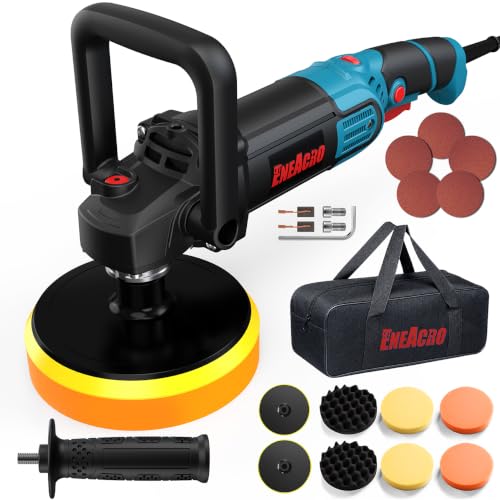
ENEACRO 1700W Rotary Car Buffer
What We Like
- High-wattage motor for demanding correction
- Complete kit with diverse pads and accessories
- Two interchangeable handles for control and comfort
- Safety lock button reduces hand fatigue
Trade-offs
- Rotary action requires significant skill to avoid paint damage
- Corded design limits mobility compared to cordless models
A 1700-watt pure copper motor delivers serious power for tackling heavy oxidation, deep scratches, and faded gelcoat on boats. That raw rotational force, paired with a 7-speed dial, gives a seasoned detailer the torque and control needed for aggressive compounding and polishing. This unit is built for pros or serious enthusiasts who know how to manage a rotary polisher’s direct drive to efficiently correct severe paint defects without burning through the clear coat.
The lightweight design and included D-handle make it manageable for long sessions, but its rotary-only operation is a stark contrast to the safer, user-friendly orbit of a tool like the RUPES LHR15 Mark V. You’re trading forgiveness for pure cutting power. It’s a focused, high-performance tool best reserved for the final stages of restoration, not for someone’s first attempt at waxing their daily driver.
GEVEELIFE 15mm Dual Action Polisher

What We Like
- 780W motor for stable power on large surfaces
- 15mm orbit improves cutting efficiency
- Six-speed adjustment for varied paint correction tasks
Trade-offs
- Corded design limits mobility around large vehicles
A 15mm orbital throw paired with a 780-watt motor delivers the consistent power and correction speed needed to tackle the expansive, often neglected panels on trucks and SUVs without bogging down. This polisher is built for the weekend detailer facing oxidation or light scratches on a big rig. The six variable speeds let you dial in the aggression, moving from gentle wax application to more assertive defect removal, all while the dual-action design helps keep the paint safe from holograms.
A 15mm orbital throw provides greater power and torque on any surface, which translates to efficient paint correction on large panels. The trade-off for its capable motor and larger orbit is that it’s a corded tool, so you’re managing a power cord around those long bed sides and tall roofs. For its class, the GEVEELIFE packs specifications that punch above its weight, making it a pragmatic choice for someone who needs serious correction ability on a larger vehicle without a professional shop’s budget.
Product photos
RUPES LHR15 Mark V Orbital Polisher
What We Like
- Compact, redesigned body for detailed maneuverability.
- Advanced composite gears significantly reduce vibration.
- Optimized airflow maintains consistent motor performance.
- Anti-spinning ring protects pads and internal components.
Trade-offs
- Tool-only configuration requires separate battery purchase.
- The 7.8 lb weight is manageable but not the lightest in the category.
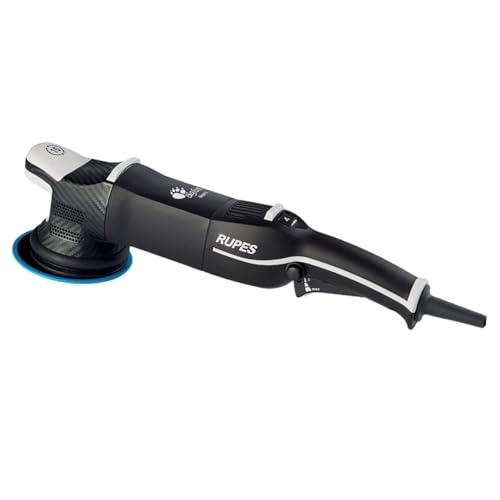
Its compact design and advanced POLYSYNTHEC composite gears make the RUPES LHR15 Mark V a tool built for control and comfort over long sessions. This polisher is engineered for the professional detailer or serious enthusiast who needs to work intricate contours and tight spaces without sacrificing smooth operation. The reduced vibration directly translates to less user fatigue and more consistent results on complex panels, a critical advantage when finish quality is paramount.
This corded polisher is sold as a tool only, requiring a separate battery and charger purchase for operation. That design choice focuses the investment purely on the polishing mechanism itself, which uses advanced composite gears to reduce vibration and noise for smoother handling. Its compact construction measures 21.8 inches in height and weighs 7.8 pounds, enhancing maneuverability across detailed surfaces. When compared to a ready-to-run kit like the FLEX 24V Cordless Forced Orbital Polisher, which includes batteries, the RUPES offers a different purchasing approach for users who may already own a power system.
Product photos
How We Evaluated Professional Car Polishers and Buffers
Our evaluation started with the manufacturer specifications for motor power, orbit size, and speed ranges, cross-referenced with expert round-ups that compare real-world performance. We prioritized professional-grade power that avoids bogging down during paint correction, vibration control for all-day comfort, and the choice between corded reliability and cordless mobility.
Our research into professional car polishers and top-rated rotary polishers focused on tools built for shop or mobile use.
What To Look For In Professional Car Polishers and Buffers
Your choice hinges on the type of work you do most often and the environment you work in. A body shop technician’s needs differ from a mobile detailer’s.
Key factors are the tool’s action (rotary vs. Dual-action), power delivery, and ergonomics. Cordless mobility is a premium feature, while corded models offer unlimited runtime. Vibration control and handle design directly impact fatigue during long correction sessions.
Polisher Action
The fundamental choice is between a rotary polisher and a dual-action (DA) polisher. A rotary spins on a single axis, generating significant heat and cutting power ideal for heavy paint correction and oxidation removal on large, flat panels. It requires considerable skill to avoid burning through clear coat.
A DA polisher combines rotation with an orbiting motion, making it much safer for beginners and suitable for applying waxes and light polishing. Understanding the difference between dual-action and rotary polishers is the first step in selecting the right tool for your skill level and typical jobs.
Power and Speed Control
For professional work, consistent power under load is non-negotiable. Look for brushless motors or high-torque designs that maintain their set speed when pressure is applied to the pad. Variable speed control is essential, allowing you to dial in the correct RPM for cutting compounds versus finishing polishes. Our research on professional dual-action polishers highlights models with constant-speed technology, which prevents the tool from bogging down and ensures uniform results across an entire panel.
Ergonomics and Vibration
A polisher that causes excessive hand fatigue or vibration will shorten your productive day. Weight distribution, handle design, and anti-vibration systems are critical. Look for models with rubberized housings, well-placed auxiliary handles, and advanced composite gears that dampen high-frequency vibration. The proper buffer technique also relies on a tool you can control comfortably for extended periods.
- Check the tool’s length; a model over 20 inches may be cumbersome in tight spaces.
- Consider the total system weight, including battery if cordless, for overhead work.
- Look for a lock-on switch or variable trigger to reduce grip fatigue.
Match the tool’s action to your primary task: rotary for heavy correction, DA for safer, all-purpose work.
Professional Car Polishers and Buffers Compared
Use the table below to quickly compare the key specifications and features of our top picks side-by-side.
| Product | Weight | Speed Control | Orbit Type / Throw |
|---|---|---|---|
| Makita 9237C Variable Speed Polisher | 7.5 pounds | Variable dial and trigger | N/A |
| FLEX 24V Cordless Forced Orbital Polisher Kit | 6.3 pounds | 11-speed dial with variable trigger | Forced Random Orbital |
| RUPES BigFoot HLR21 Cordless Polishing Kit | 16.0 Pounds | N/A | Random Orbital |
| BATOCA P2 1000W Rotary Polisher | N/A | 6-speed, 1000-3800 RPM | Rotary |
| FLEX FC3321-Z Corded Brushless Polisher | N/A | 11-speed dial + variable trigger | Random Orbital |
| WORKPRO 6" Dual Action Polisher Kit | 7.4 pounds | 6 Variable Speed Control | 15mm dual-action |
| Milwaukee M18 Fuel Random Orbital Polisher | 6.0 Pounds | 8-speed dial + variable trigger | 15mm Random Orbital |
| ENEACRO 1700W Rotary Car Buffer | 5.5 lbs | 7-speed dial (1300-3500 RPM) | Rotary |
| GEVEELIFE 15mm Dual Action Polisher | 3.9 pounds | 6 variable speeds | 15mm Dual Action |
| RUPES LHR15 Mark V Orbital Polisher | 7.8 Pounds | N/A | Random Orbital |
Frequently Asked Questions
What is the best car polisher for professional use?
The best professional polisher depends on your specific needs. For a versatile, powerful corded rotary, the Makita 9237C is an excellent choice due to its constant speed control. For complete cordless mobility, the FLEX 24V Kit is a top-tier option. Professionals doing heavy correction often prefer high-torque rotary models like the BATOCA P2.
What is the difference between a car buffer and a polisher?
The terms are often used interchangeably, but technically a buffer is used to apply and spread waxes or glazes with a soft pad, while a polisher uses abrasives to correct paint. Most modern tools are designed to do both. The key distinction is the tool’s action: a rotary buffer/polisher spins, while a dual-action polisher orbits and rotates for a safer, swirl-free finish.
What do professional detailers use to wax cars?
Professionals often use the same dual-action polisher they use for correction, but with a soft finishing pad and the wax product of their choice. This allows for even, controlled application. Some prefer a dedicated, lower-powered orbital buffer for waxing to avoid any risk of marring the freshly corrected paint.
Which car polisher is best?
There is no single “best” polisher; the right tool depends on your budget, workspace, and tasks. Our overall pick is the Makita 9237C for its professional-grade power and control. For someone invested in a cordless tool system, the Milwaukee M18 Fuel offers excellent integration. Beginners or those on a budget should consider a capable DA polisher like the WORKPRO 6″.
What should I look for in a polisher for a large vehicle like an SUV?
For large vehicles, prioritize a polisher with a stable, powerful motor (700W or more) to handle the expansive surface area without slowing down. A larger orbit size, such as 15mm, can improve cutting efficiency on flat panels. A long power cord or a high-capacity cordless system is also crucial to maneuver around the vehicle without constant interruptions.
The Bottom Line
For professionals seeking a reliable, powerful corded rotary polisher, the Makita 9237C is our best overall choice, balancing variable speed control with consistent performance under load. If your budget is tight, the WORKPRO 6″ DA Polisher Kit delivers capable performance, while shop-based users who prioritize raw power should look at the FLEX FC3321-Z corded brushless model. Ultimately, choosing between the aggressive cut of a rotary and the forgiving safety of a dual-action polisher is the most critical decision, as it defines the tool’s role in your detailing process.
