
10 Best Rotary Polishers in 2026
This post contains affiliate links. As an Amazon Associate, we earn from qualifying purchases.
Our best overall rotary polisher is the DEWALT DWP849X for its 12-amp motor and precise variable speed control. For mobile professionals, the DEWALT 20V MAX XR Cordless Rotary Polisher offers cordless freedom, while the RUPES LH19E excels in compact, lightweight handling for intricate panels.
Choosing a rotary polisher means balancing raw cutting power against the risk of paint damage if used incorrectly. You need the right motor, ergonomics, and controls for your specific project, whether it’s a full car correction or delicate detail work. Our list is based on a review of specifications, professional round-ups, and patterns in owner feedback to help you find a tool that matches your skill level and tasks.
Top 10 Rotary Polishers in the Market
Certain content that appears on this site comes from Amazon. This content is provided "as is" and is subject to change or removal at any time.
The Best Rotary Polishers, Reviewed
DEWALT DWP849X Variable Speed Rotary Polisher

What We Like
- 12-amp motor provides strong, consistent power
- Variable speed dial for precise RPM control
- Soft start and no volt release switch for safety
- Replaceable wool shield protects the tool's internals
Trade-offs
- At 6.7 lb, it's heavier than the cordless DEWALT DCM849B (4.8 lb)
- Corded operation limits mobility compared to battery models
- Larger footprint than compact kits like the RUPES LH19E
A 12-amp motor provides substantial power for demanding tasks, and its variable speed is managed by both a trigger and a large dial. This dual control system allows adjustments based on hand pressure and a preset range. The tool’s durability comes from ball-bearing construction and precision-cut steel gears, which are designed for long-term use in professional settings.
Weighing 6.7 pounds, the tool is heavier than some alternatives like the 4.8-pound DEWALT DCM849B cordless model. Its pure rotary action and power require practiced technique to operate safely. The rubber overmolded gearcase is included to provide a more comfortable grip during extended use.
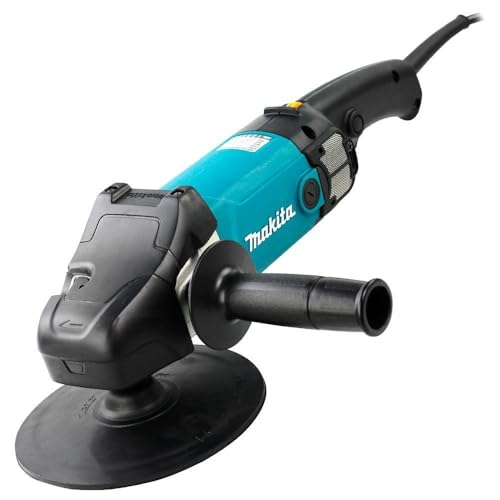
Makita 9237C 7-Inch Polisher
What We Like
- Variable speed dial and trigger for precise application matching.
- Constant speed control maintains RPM under load for consistent results.
- Soft start minimizes polish fling-off for cleaner operation.
- Rubberized housing and handle protect delicate surfaces from damage.
Trade-offs
- Corded design restricts mobility compared to cordless models.
Constant speed control under load means this polisher won’t bog down when you’re working on a tough section of clear coat or heavy oxidation, delivering the reliable, predictable power that professionals demand. It’s built for the detailer or marine enthusiast who spends all day on a job site, where the rubberized handle and soft start translate directly to less fatigue and fewer mistakes on expensive finishes. The wire mesh intakes are a smart touch for anyone using wool pads, keeping the motor clean during long sessions.
Weighing 7.5 pounds, the Makita 9237C requires more arm stamina than lighter polishers like the 4.8-pound DeWalt cordless model. Its corded design also limits movement range compared to battery-powered tools. Automotive detailers and marine enthusiasts, however, rely on this polisher for high-quality work, and its constant speed control maintains RPM under load for consistent results.
RUPES LH19E Rotary Polisher Kit

What We Like
- Compact and lightweight housing for easy maneuverability.
- Anti-vibration loop and side handles improve comfort.
- Long 9-meter power cord reduces need for extensions.
- Progressive trigger allows precise speed adjustment.
Trade-offs
- Rotary action requires significant skill to avoid paint damage.
Weighing 5 pounds and built within a 4-inch frame, the RUPES LH19E offers a compact design that provides superior maneuverability for tight spaces like A-pillars and mirrors. Its high torque motor delivers capability for polishing operations across automotive, marine, and refinishing work. An anti-vibration loop handle and optional side handle absorb vibration to improve operator comfort during extended use.
The trade-off is that this is a pure rotary tool, which demands a skilled hand to manage heat and avoid swirl marks or burn-throughs. It’s not a beginner’s machine. For someone learning paint correction, a dual-action polisher is a safer start. However, if you’ve mastered the rotary and need a nimble, powerful tool for intricate work, the LH19E stands alone. Compared to the heavier, full-size DEWALT DWP849X, the RUPES excels in finesse and operator comfort over raw, large-panel cutting speed.
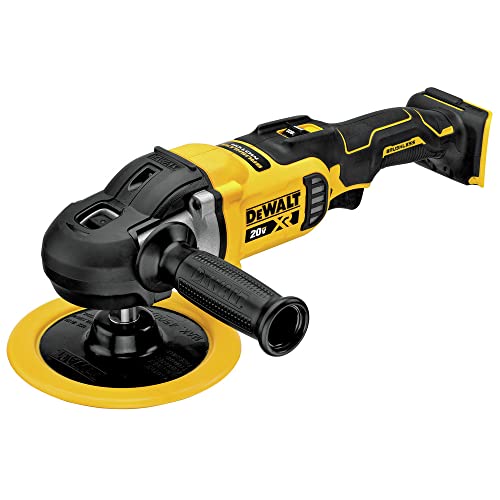
DEWALT 20V MAX XR Cordless Rotary Polisher
What We Like
- Brushless motor for efficient runtime
- Variable speed on trigger and dial
- Rubber overmold reduces surface imperfections
- Lightweight for a cordless rotary polisher
Trade-offs
- Tool only: battery and charger sold separately
- Max speed of 2200 RPM is lower than many corded models
Weighing under five pounds without a battery, this cordless rotary polisher is easy to maneuver around large surfaces without managing a power cord. Its brushless motor is designed for efficient runtime, and speed can be adjusted both with a dial and the trigger for control during different polishing steps. The tool can be operated using a front grip or a side handle, providing flexibility for user preference.
The cordless freedom comes with a 2200 RPM top speed. This is perfectly capable for most jobs, but it can’t match the raw power of a corded workhorse like the DEWALT DWP849X for heavy paint correction. You’re also buying into a system, as you’ll need to factor in the cost of batteries. For a shop-based detailer who needs every bit of the DWP849X’s 3500 RPM, the corded route still makes more sense.
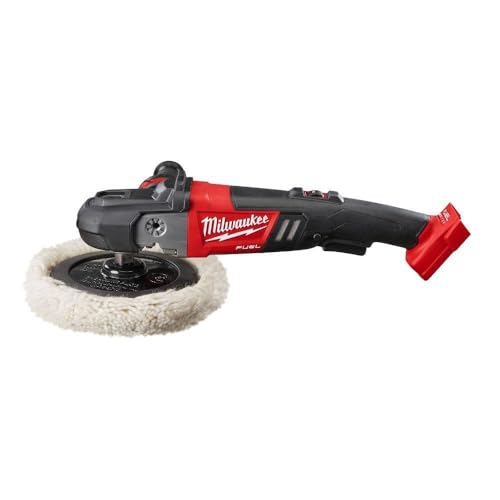
Milwaukee M18 Fuel Cordless Rotary Polisher
What We Like
- Cordless design offers full workspace freedom
- Delivers corded-level performance for demanding tasks
Trade-offs
- Tool-only: requires separate M18 battery and charger purchase
Harnessing a brushless motor and Milwaukee’s M18 Fuel platform, this polisher delivers the corded performance needed for serious paint correction without the tether. That makes it a standout for detailers or enthusiasts with multiple cars who already own M18 tools and prioritize cordless convenience. The research indicates it has the power and runtime to tackle demanding applications, provided you pair it with a high-output RedLithium battery.
The trade-off is that you’re committing to a system. If you don’t already own Milwaukee batteries, the initial cost of entry is higher. Its 7.5-pound heft also means it demands more arm stamina over long sessions compared to a lighter tool like the RUPES LH19E kit. For a dedicated pro shop or a serious hobbyist deep in the M18 ecosystem, however, its cordless power is a legitimate advantage.
AOBEN 1200W Rotary Buffer Polisher Kit

What We Like
- Powerful 1200W motor for demanding correction
- Includes both 6-inch and 7-inch backing plates
- Comes with four polishing pads and sandpaper
- Detachable side handle for ergonomic operation
Trade-offs
- No weight specification provided for fatigue assessment
- Rotary action requires more skill than a dual-action polisher
A 1200W motor and a kit that includes two backing plates and four pads means you can tackle a full paint correction job right out of the box. This makes the AOBEN a solid pick for the detailer who needs capable rotary power without hunting down accessories separately. The variable speed dial up to 3500 RPM gives you the control needed for everything from applying wax to cutting through severe oxidation, all backed by a motor built with heat-resistant wiring for longer sessions.
The AOBEN 1200W Rotary Buffer Polisher Kit includes a 1200W motor that can reach up to 3500 RPM, delivering the core power needed for demanding tasks like compounding or heavy oxidation removal. It comes as a complete kit with two backing plates and four polishing pads, which means you have the essential accessories to start working right away. This setup is designed for users who already understand how to manage a rotary polisher’s speed and pad selection to achieve their desired finish.
Product photos
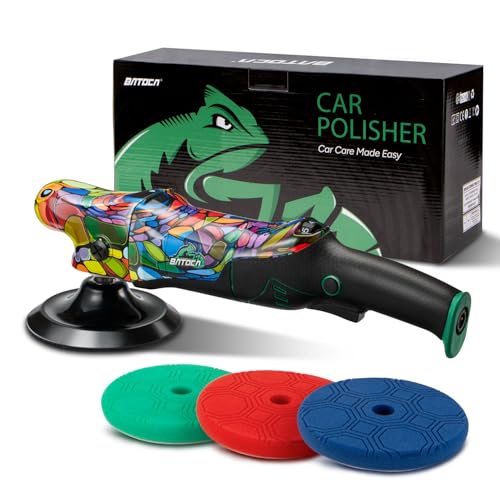
BATOCA P2 High-Torque Rotary Polisher
What We Like
- Exceptionally long 16.4 ft detachable cord
- High-torque 1000W motor resists bogging down
- Anti-vibration handles reduce hand fatigue
- Soft-start feature prevents sudden jerking
Trade-offs
- Lacks cordless convenience for remote jobs
- Rotary action requires more skill than a dual-action
A 16.4-foot detachable cord is the standout feature here, letting you circle an entire SUV or truck without once reaching for an extension cord. That makes the BATOCA P2 a natural fit for detailers working in a fixed bay or on large projects like boats and RVs, where mobility is key but outlets are scarce. Its 1000W motor maintains torque through heavy compounding, and the anti-vibration handles are a smart concession for the long sessions this tool is built for.
This substantial power and long reach come from a tool designed for the bench, not the field. It’s firmly in the corded camp, so it won’t follow you to a remote parking lot like the DEWALT 20V MAX XR Cordless Rotary Polisher. Within its domain, however, the BATOCA’s combination of reach, consistent power, and a warranty that skips repairs for direct replacement makes it a serious workhorse for the dedicated shop.
Product photos
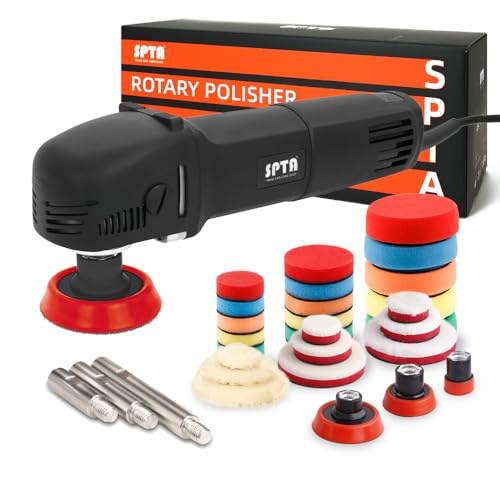
SPTA Mini Rotary Polisher Kit
What We Like
- Comprehensive 27-piece accessory kit for various tasks.
- Three extension shafts for reaching tight, deep areas.
- Six-speed variable control for precise work.
- Heavy, stable feel for a mini polisher.
Trade-offs
- Rotary-only action requires more skill than a dual-action.
- At 6.6 lb, it's heavier than the cordless DEWALT DCM849B.
- Lacks the large pad capacity of full-size units like the DEWALT DWP849X.
A 750W motor packed into a compact body gives you the torque to tackle stubborn oxidation on a door handle without the bulk of a full-size polisher. This SPTA kit is built for the finisher who needs to get into crevices around badges, polish intricate trim, or restore headlights with surgical control. The included assortment of small pads and three threaded extension shafts means you’re equipped to work in deep, narrow spaces where a standard polisher simply won’t fit.
As a pure rotary polisher, the SPTA requires careful technique to avoid paint damage, so it’s not meant for casual waxing. It weighs 6.6 pounds, giving it a substantial feel that aids stability during precise work. This design bridges the gap between bulky full-size buffers and smaller tools, creating a specialized option for targeted paint correction.
Product photos
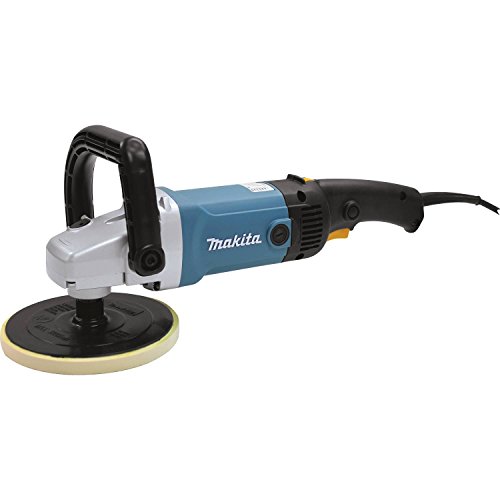
Makita 9227C 7-Inch Polisher
What We Like
- Variable speed dial for precise application matching
- Soft start minimizes polish fling-off at startup
- Constant speed control for consistent performance
Trade-offs
- Corded design limits mobility compared to cordless models
- At 20 inches long, it requires ample workspace
- Tool-only configuration lacks pads and case in base offering
A 10 AMP motor paired with constant speed control means this polisher won’t bog down when you’re working on a tough section of oxidized paint or heavy marine gel coat. That sheer torque makes it a reliable choice for professionals and serious enthusiasts who need consistent power for full paint correction or large surfaces. It’s built for the long haul, a detailer’s workhorse.
You get unwavering power, but you are tethered to an outlet by the cord. This can be a hassle on a boat hull or around a large vehicle compared to a cordless option like the DEWALT 20V MAX XR. It’s also a substantial tool at 20 inches long, so it demands a bit more finesse in tight spaces than a compact rotary. You buy this for its muscle, not its maneuverability.
Product photos
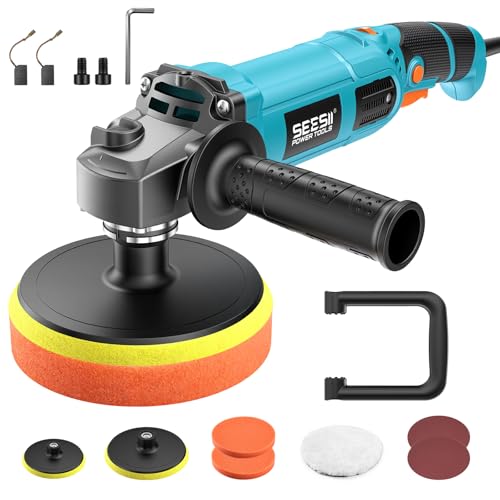
SEESII 1600W Rotary Buffer Polisher
What We Like
- High-torque 1600W motor for tough correction
- Seven-speed dial offers precise paint control
- Complete kit with pads for all stages
- Dual-handle design improves balance and comfort
Trade-offs
- Mandatory 10-minute cool-down interrupts long sessions
A 1600-watt pure copper motor delivers the grunt needed to level deep scratches and heavy oxidation without bogging down. That makes this Seesii polisher a serious contender for anyone tackling neglected paint or large surfaces like trucks and boats on a tight budget. The included wool pad and sandpaper mean you can start cutting immediately, while the seven-speed dial gives you the flexibility to finish down properly. It’s built for the determined DIYer or a hobbyist detailer who needs professional-level power without the pro-level price tag.
Its 1600W motor demands a disciplined workflow, requiring a 10-minute cool-down every 30 minutes to prevent overheating. This mandatory pause makes it less suitable for non-stop, marathon detailing sessions. While the RUPES LH19E kit is listed with smaller dimensions, the Seesii’s larger size may limit maneuverability in confined areas. For the price, it remains a capable tool for large surfaces like car hoods or boat hulls, provided you manage its operational cycle and physical scale.
Product photos
How We Evaluated Rotary Polishers
Our evaluation relied on manufacturer specifications, expert tool round-ups, and consistent patterns in professional and enthusiast owner feedback. We prioritized core performance metrics like motor power and torque, the precision of speed control, and overall ergonomics for reducing fatigue. We also considered the practical implications of corded versus cordless designs for different working environments.
A key part of our research on rotary vs dual action polishers was understanding where a rotary’s aggressive cut is necessary versus where a safer dual-action machine might be better suited. This research-based approach reveals which tools consistently deliver on their specs, but it cannot replicate the hands-on feel of managing a powerful rotary on a curved panel.
We focused on criteria that directly impact results and user comfort. Motor power, measured in amps or watts, determines the tool’s ability to maintain speed under load for consistent correction. A soft-start feature is critical for a rotary to prevent polish from being flung off the pad at startup.
We also evaluated control schemes, favoring tools with both a trigger and a dial for fine-tuning RPMs during different stages of work, from compounding to final polishing. Our search for the best polishers for paint correction confirmed that these features separate capable tools from frustrating ones.
Finally, we assessed build quality and design for professional durability. This includes anti-vibration systems, replaceable components like wool shields, and the tool’s balance in hand. For cordless models, we noted their ecosystem compatibility, as buying into a battery platform is a significant commitment. While we can identify well-regarded professional polishers, a research limit is that we cannot personally verify long-term reliability over hundreds of hours of use, which is a vital concern for full-time detailers.
What To Look For In Rotary Polishers
A rotary polisher is a specialist tool for aggressive paint correction and polishing hard surfaces. Its single-direction spin delivers fast cutting power but requires more skill to use safely than a dual-action machine. Your choice hinges on power delivery, control, and how you’ll move with the tool.
Look for a high-torque motor (1000W/12A+) to maintain speed on tough jobs, variable speed control (via dial and trigger) for precision, and a design that minimizes fatigue. Corded models offer sustained power, while cordless ones provide ultimate mobility at a higher system cost.
Motor Power and Torque
The motor is the heart of a rotary polisher. Power, measured in amps for corded tools or volts for cordless, indicates potential, but torque, the motor’s twisting force, is what keeps the pad spinning when you apply pressure to the paint. For heavy correction on oxidized car paint or hard gelcoat on boats, look for motors rated at 12 amps or 1000 watts and above.
These high-torque motors resist bogging down, allowing you to work efficiently without constantly lifting the tool. A soft-start feature is non-negotiable; it gradually ramps up to your set speed to prevent the pad from violently throwing compound.
Control and Ergonomics
Precise control is your best defense against burning through clear coat. The ideal setup combines a variable speed dial for setting a maximum RPM and a progressive trigger for fine adjustments during application. This lets you start slow to spread product, then increase speed for cutting.
Ergonomics directly affect fatigue and safety. Consider the tool’s weight, balance, and handle configuration. A well-balanced polisher with anti-vibration features in the handles or body is easier to manage during long sessions.
For tight spaces like A-pillars or around door handles, a compact, lightweight body is more maneuverable than a full-sized unit.
Corded vs. Cordless Design
This is a fundamental choice between unlimited runtime and total freedom. Corded rotary polishers, like our top picks from DEWALT and Makita, provide consistent, maximum power without concern for battery life, making them ideal for shop-based work or long sessions. Check the cord length; a longer cord reduces the need for extensions.
Cordless models, such as those from DEWALT and Milwaukee, eliminate trip hazards and cord management, which is a huge advantage for mobile detailers or when working on large vehicles like boats. Remember, you’re buying into a battery ecosystem, and achieving professional runtime requires investing in multiple high-capacity batteries.
Always use the appropriate polishing pad for each stage: cutting, polishing, and finishing. – Practice your technique on a scrap panel or inconspicuous area before starting a major job. – Never let the polisher sit in one spot, and keep it moving in straight, overlapping passes.
The single most important rule: a rotary polisher requires practice and respect. Its cutting speed means it can damage paint much faster than a dual-action machine.
Rotary Polishers Compared
The comparison table below puts the key specifications and features of our top picks side-by-side to help you weigh your options quickly.
| Product | Motor Power | Weight | Power Source |
|---|---|---|---|
| DEWALT DWP849X Variable Speed Rotary Polisher | 12 amp | 6.7 pounds | Corded |
| Makita 9237C 7-Inch Polisher | N/A | 7.5 pounds | Corded |
| RUPES LH19E Rotary Polisher Kit | High torque rotary | 5.0 pounds | Corded |
| DEWALT 20V MAX XR Cordless Rotary Polisher | Brushless motor | 4.8 pounds | 20V MAX XR Cordless |
| Milwaukee M18 Fuel Cordless Rotary Polisher | Brushless | 7.5 pounds | Cordless (M18 battery) |
| AOBEN 1200W Rotary Buffer Polisher Kit | 1200W | N/A | Corded |
| BATOCA P2 High-Torque Rotary Polisher | 1000W | N/A | Corded |
| SPTA Mini Rotary Polisher Kit | 750W | 6.6 pounds | Corded |
| Makita 9227C 7-Inch Polisher | 10 AMP | 6.8 pounds | Corded |
| SEESII 1600W Rotary Buffer Polisher | 1600W | N/A | Corded |
Frequently Asked Questions
What is the best-rated rotary polisher?
Based on our evaluation of specifications and consistent professional feedback, the DEWALT DWP849X stands out as a top-rated, reliable choice. Its combination of a powerful 12-amp motor, precise variable speed control, and safety features like soft start make it a favorite for demanding correction work in both automotive and marine detailing contexts.
Which polisher is better, Rupes or Milwaukee?
This depends entirely on your need. RUPES is renowned for its ergonomic, precision-engineered tools like the compact LH19E, favored by detailers for intricate work. Milwaukee’s M18 Fuel cordless polisher excels in providing corded-level power without a cord, ideal for mobile professionals. For stationary, high-power work, a corded RUPES or Makita often wins; for freedom of movement, Milwaukee’s cordless system is superior.
What polishers do professional detailers use?
Professionals often use a combination of tools. For heavy cutting and compounding, powerful corded rotary polishers from brands like Makita and DEWALT are common for their sustained power. For finishing and safer correction, many pros use long-throw dual-action polishers. In shops focused on perfection, you’ll find precision tools from RUPES. The choice among the best professional-grade polisher machines is driven by the specific task and desired finish.
What is the difference between a rotary and orbital polisher?
A rotary polisher spins the pad in a single, continuous circle, offering aggressive cutting power that is efficient for removing deep defects but requires significant skill to avoid burning the paint. An orbital (or dual-action) polisher simultaneously spins and oscillates the pad in a random pattern, which makes it much safer for beginners and is excellent for applying waxes and removing light swirls. Understanding this rotary polisher comparison is the first step in choosing the right tool.
What should a beginner look for in a polisher?
Beginners should prioritize safety and forgiveness. While this guide focuses on rotary tools, most novices are better served starting with a dual-action random orbital polisher. If you are committed to a rotary, look for features that aid control: a soft start, variable speed with a low minimum RPM, and a manageable weight. Always pair it with less aggressive beginner polishing techniques, using fine polish and a finishing pad on low speed to build skill.
The Bottom Line
For most users needing serious cutting power and professional reliability, the DEWALT DWP849X is the best overall rotary polisher. Its high-torque motor and precise controls make it a dependable workhorse for automotive, marine, and restoration projects where a corded power source is available.
If your budget is tight but you need a complete kit for heavy correction, consider the AOBEN 1200W Rotary Buffer Polisher Kit for its strong value. Mobile detailers invested in a battery platform should look directly at the cordless DEWALT 20V MAX XR or Milwaukee M18 Fuel models for their workshop freedom.
No matter your pick, remember that a rotary polisher’s effectiveness and safety are dictated by your technique. The tool’s power demands respect; always practice control, keep the pad moving, and match your pad and compound to the task at hand.
