
Types of Glue Gun Sticks Explained: How to Choose
This post contains affiliate links. As an Amazon Associate, we earn from qualifying purchases.
Hot glue gun sticks are defined by three essential specs: diameter (7mm or 11mm), operating temperature (high-temp at 175–200°C / 350–400°F or low-temp around 130°C / 250°F), and adhesive formula (all-purpose EVA, polyurethane, or specialty blends). The wrong combination jams your gun or creates a weak bond.
The numbers matter because they’re physical constraints. A Bostik 12mm stick is designed for its specific DIY gun and will not fit a standard 11mm chamber. A low-temp gun cannot generate the high temperature needed to properly melt a high-temp stick. Ignoring the specs can damage the gun or result in a weak bond. The different types of glue gun sticks explained here highlight why these specifications are critical.
What follows is a breakdown of those specs, the common formulas, and the one label on every box you should ignore, which is central to the types of glue gun sticks explained. We’ll cover how to match a stick to your gun, when to reach for a specialty formula, and how to avoid the three most common mistakes that waste sticks and time.
Key Takeaways
- Ignore marketing labels like “jumbo” or “standard” and match the exact diameter in millimeters to your gun’s feed chamber — a 1mm mismatch causes jams.
- Never mix temperature ratings; a low-temp gun cannot melt a high-temp stick (175–200°C), and forcing it damages the heating element.
- For general DIY, all-purpose Ethylene Vinyl Acetate (EVA) sticks are the default, but switch to polyurethane (PUR) or specialty formulas for flexible, waterproof, or high-strength bonds.
- Store sticks in their original sealed packaging in a cool, dry place; heat and humidity cause premature degradation and foamy, weak glue.
- High-temp bonds are often considered stronger but risk burning delicate materials; use low-temp sticks for foam, thin plastic, and fabrics.
The 7mm vs. 11mm Diameter Decision
Look at the back of your glue gun. The hole where you insert the stick is sized for one of two common diameters: about 7mm (0.27 inches) or about 11mm (0.43 inches). This isn’t a suggestion. According to Novus Dahle, using the correct diameter ensures a consistent glue bead, protects the tool, and extends its service life. A full-size stick is significantly thicker than a mini stick and will not enter a 7mm chamber.
Manufacturers are not required to use consistent labels. One brand’s “jumbo” can be another brand’s “standard.” The only reliable information is the diameter printed on the package in millimeters or inches.
| Diameter | Common Label | Typical Gun Types | What Happens If You Force the Wrong Size |
|---|---|---|---|
| ~7mm (0.27″) | Mini, Craft | Compact, cordless, detail guns | A larger stick jams. A smaller stick slips, leaks molten glue from the rear, and fails to feed consistently. |
| ~11mm (0.43″) | Full-Size, Standard | High-output, workshop, heavy-duty guns | A smaller stick causes erratic feed and poor bead control. It can also overheat as it moves too quickly through the chamber. |
Bostik produces a 12mm diameter stick for its specific DIY gun. Their technical sheet states plainly: “Always use only with Bostik DIY Hot Melt Glue Sticks in the Bostik DIY Hot Melt Glue Gun. Using the wrong sticks will damage the gun.”
The rule is simple. Find the diameter specification for your gun (usually on a label near the feed port or in the manual) and buy sticks that match it exactly, a key point in the types of glue gun sticks explained. Guessing based on a picture costs you a pack of useless sticks.
High-Temp vs. Low-Temp: It’s About the Gun, Not the Project
Temperature is the most common point of confusion. A glue stick’s temperature rating tells you what kind of gun it needs, not just how hot the glue gets. The gun’s heating element is designed for a specific operating range.
- High-Temperature Sticks require a gun that operates between 175°C and 200°C (350–400°F). Bostik specifies an operating temperature of +175°C to +200°C for its DIY sticks, while Gluegunsdirect.com notes that Tecbond high-temp guns run at a fixed 195°C.
- Low-Temperature Sticks melt at around 130°C (250°F). They are designed for guns that max out at this lower setting.
Common mistake: Trying to run a high-temperature stick through a low-temperature gun. The glue will not melt properly, which can gum up the nozzle, strain the gun’s heater, and produce a poor bond. The reverse—using a low-temp stick in a high-temp gun—causes the adhesive to become too thin, leading to “melt back” where it flows uncontrollably and drips from the nozzle.
Dual-temperature or adjustable guns are the exception. They can switch between high and low settings, allowing you to use either stick type. If your gun has a single trigger and no temperature dial, it is almost certainly a fixed-temperature tool.
Here’s the practical breakdown:
- Use High-Temp Sticks for: Wood, metal, ceramics, cardboard, and projects that might face heat or humidity. The bond sets harder.
- Use Low-Temp Sticks for: Polystyrene foam, delicate fabrics, thin plastics, glitter, and children’s crafts. The lower heat minimizes scorching, melting, or burn risk.
The gun you own dictates your choice. Don’t buy a low-temp stick for a woodworking project if you only have a high-temp gun. You’ll need to adjust your material or your tool.
Adhesive Formulas: From All-Purpose EVA to Industrial PUR
All hot glue sticks are thermoplastics, but their chemical composition determines what they stick to and how well they hold. The formula is where you match the stick to your material.
Ethylene Vinyl Acetate (EVA) is the all-purpose workhorse. It’s what’s in most craft store blister packs. Bostik’s DIY sticks are an EVA blend. It bonds porous materials like wood, paper, and fabric. EVA is commonly used for household repairs and general crafting.
When EVA isn’t enough, you move to specialty formulas.
| Formula Type | Best For | Key Property | Trade-Off |
|---|---|---|---|
| Polyurethane (PUR) | Plastic, metal, glass; waterproof bonds | Forms a secondary chemical cure for high strength & moisture resistance. | Requires moisture to cure fully. |
| Polyamide | High-heat environments (e.g., electronics) | Excellent heat and chemical resistance. | Polyamide offers excellent heat and chemical resistance. |
| Fugitive (“Booger Glue”) | Temporary holds, packaging | Designed to be strong then peel away cleanly. | Not for permanent bonds. |
| Pressure-Sensitive (PSA) | Labels, tapes, non-structural bonds | Remains slightly tacky after cooling. | Lower ultimate strength and heat resistance. |
Where this goes sideways: Using an all-purpose EVA stick on polypropylene or polyethylene plastic (like many food containers). The glue will peel right off. For plastics, you need a stick specifically formulated for plastic bonding, often a PUR or a specialized EVA blend.
For the home workshop, a multi-temperature formula can be a versatile upgrade from standard EVA. These sticks are designed to work in both high and low-temp guns, offering better adhesion to a wider range of materials like rigid PVC and acrylic.
Decoding Stick Packaging and Labels
A glue stick package is a mini spec sheet, but you have to know what to look for. Ignore the flashy “Extra Strong!” or “Industrial” claims. Focus on these four pieces of hard data:
- Diameter (in mm/inches): The critical fit spec.
- Length: Usually 4 inches (100mm) or 10 inches. Length affects how often you reload, not compatibility.
- Temperature Rating: Will say “High Temp,” “Low Temp,” or “Multi-Temp.”
- Formulation Hint: May say “All-Purpose,” “For Wood/Fabric,” or list chemical names like “EVA” or “PUR.”
Manufacturer part numbers can also be revealing. Bostik’s product code “30813369” tells you it’s a 12mm x 100mm DIY stick blister pack.
Easy to miss: The shelf life. Bostik rates its sticks for up to 24 months from manufacture when stored in original packaging between +5°C to +35°C. Old, improperly stored sticks absorb moisture, which can degrade bond quality.
Troubleshooting Common Glue Stick Problems
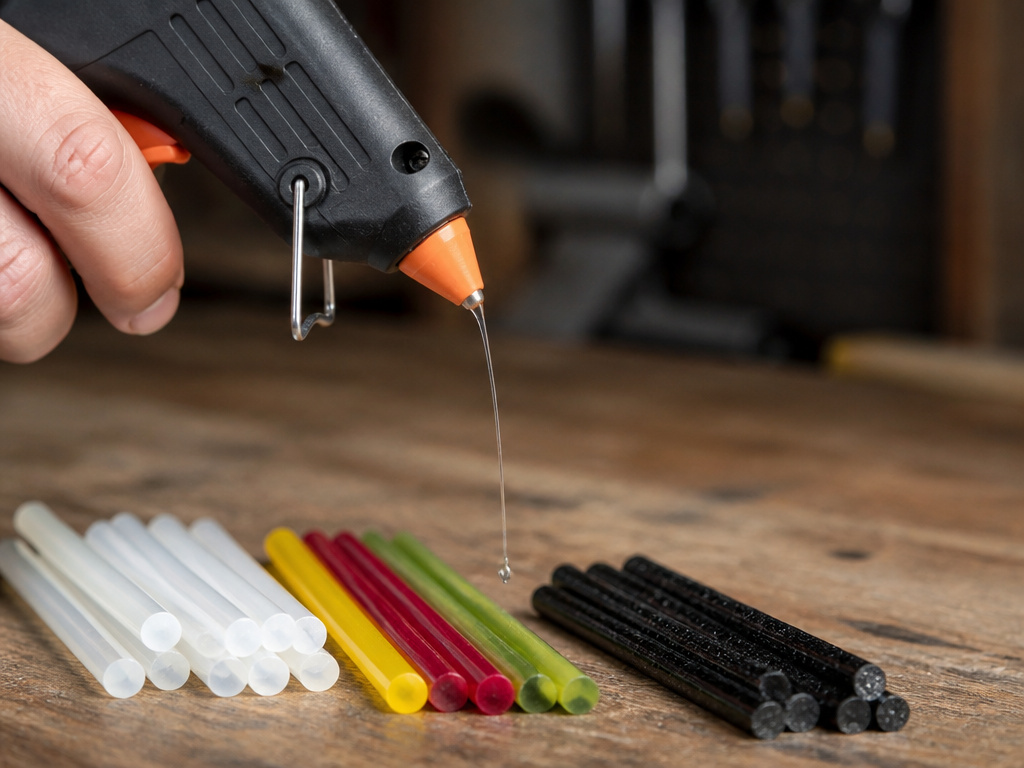
Sometimes the glue doesn’t behave. Here’s how to diagnose the usual suspects.
- Stringing/Hairy Glue:
- Glue Won’t Stick/Peels Off: You’re using the wrong formula for the material. Plastic, metal, and glass often require a specialty or PUR stick. The surface might also be dirty or greasy.
- Glue is Discolored or Foamy: The sticks are old or have absorbed moisture from humid air. Always store them sealed in a cool, dry place.
- Uneven or No Flow: The stick diameter is wrong, causing a jam. The gun may not be fully heated. Bostik recommends allowing the gun to warm up for approximately 5-10 minutes before use. Or, you’re working in a cold draft, which Bostik warns can cool the adhesive too quickly and affect bond strength.
Specialty Sticks: When All-Purpose Isn’t Enough
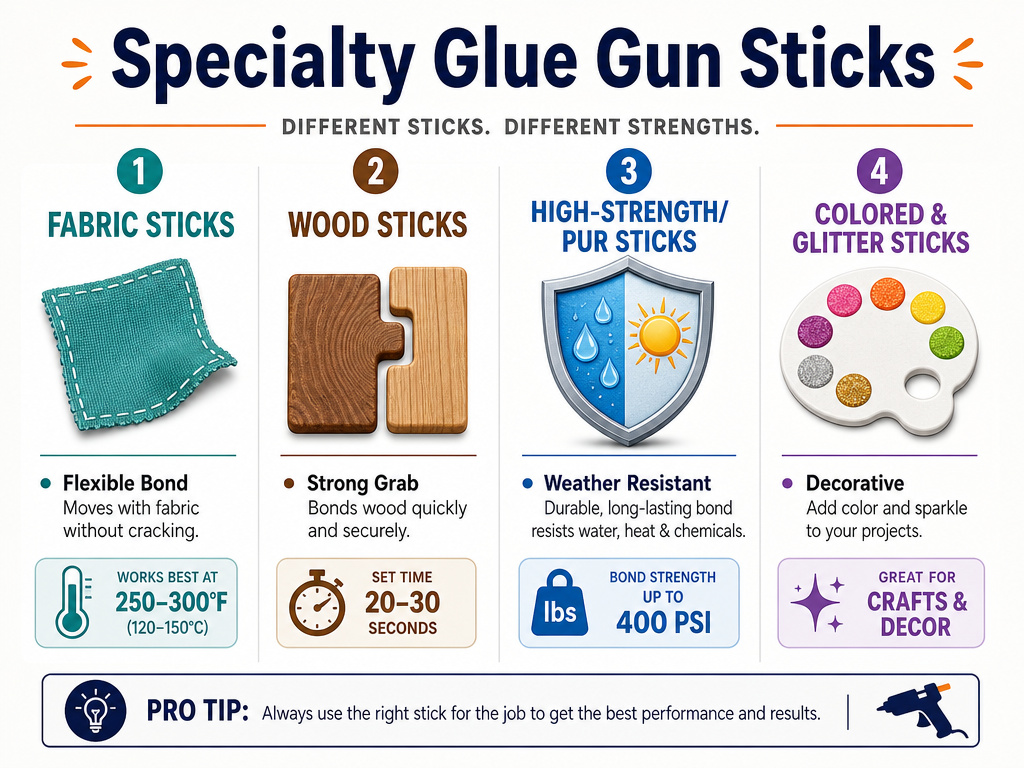
Beyond clear and colored sticks, the market offers formulas for specific jobs. These solve problems that generic glue creates.
- Fabric Glue Sticks: Remain flexible after cooling so seams don’t crack. Essential for any textile project.
- Wood Glue Sticks: Formulated for better penetration into wood grain. They provide a stronger initial grab for workshop jigs and temporary holds than standard EVA.
- High-Strength/PUR Sticks: For when you need a bond that can handle load, moisture, or temperature swings. Think outdoor decorations or repairing a tool handle.
- Colored & Glitter Sticks: Purely aesthetic. Colored & Glitter Sticks are purely aesthetic.
I keep a pack of wood glue sticks in my shop exclusively for tacking stop blocks and temporary assemblies. Wood glue sticks provide a strong initial grab for workshop tasks.
What do brand-specific glue stick codes mean?
Brands often use letter codes on their sticks to denote specific formulas or properties. However, these codes are not standardized between manufacturers. A code from one brand does not mean the same thing as the same code from another. The critical rule is to always use the sticks specified for your glue gun model. Manufacturers like Bostik explicitly state to use only their own DIY sticks in their DIY glue gun, as using the wrong sticks will damage the tool. The safest approach is to ignore the marketing labels and focus on the physical specifications that must match your gun: the diameter and the required temperature range.
What is open time and set time for glue sticks?
Open time is the window you have to position materials after applying the molten glue before it starts to harden. Set time is how long it takes for the bond to become strong. For a typical DIY hot melt stick, the initial bond forms in 15 to 60 seconds at room temperature. Achieving full strength takes 1 to 2 hours at 20°C. Working in a draft-free environment at room temperature is crucial, as drafts can cool the adhesive too quickly and weaken the bond. Plan your project steps accordingly, ensuring parts are held securely during the initial set period.
What’s the difference between industrial and craft glue sticks?
The primary differences are in performance specifications and the tools they’re designed for. Industrial sticks are formulated for performance in professional applications and are used with professional-grade guns. Craft or hobbyist sticks are designed for lower-temperature guns and general-purpose materials. A key practical difference is the operating temperature. You must match the stick’s temperature requirement to your gun’s type; using a high-temperature stick in a low-temperature gun, or vice versa, can cause serious damage to the glue gun and will not work properly.
Frequently Asked Questions
What is the strongest type of glue gun stick?
For DIY purposes, polyurethane (PUR) hot melt sticks typically offer the strongest, most durable bond, especially for non-porous materials like plastic and metal. They undergo a secondary chemical cure that improves strength and water resistance. For porous materials like wood, a high-temp, all-purpose EVA stick is often strong enough.
Do all glue sticks fit all glue guns?
No. Compatibility depends on diameter and temperature. A gun is designed for either ~7mm (mini) or ~11mm (full-size) sticks. It is also built to operate at either high-temp or low-temp ranges. You must match both specs. Using incorrect sticks can damage the gun.
What are multi-temperature glue sticks?
Multi-temperature sticks, like the Tecbond 240 formula, are designed to work effectively in both high-temperature and low-temperature glue guns. They offer a wider range of adhesion than basic low-temp sticks and are a versatile choice if you use multiple guns or have an adjustable-temperature model.
How should I store my glue sticks?
Store glue sticks in their original, sealed packaging in a cool, dry place away from direct sunlight and heat sources. Ideal storage temperature is between +5°C to +35°C. Proper storage prevents moisture absorption, which causes foaming and weak bonds, and maximizes their shelf life (typically up to 24 months).
Can I use a high-temp stick on foam or fabric?
It is not recommended. The high heat (175–200°C) will likely melt polystyrene foam, scorch fabric, or cause burns through thin materials. Always use low-temperature sticks for heat-sensitive materials like foam, fabric, and certain plastics.
Before You Go
The right glue stick is the one that matches your gun’s specs first and your project’s material second. Start with the diameter stamped on your gun. Then, respect its temperature rating. Only after those two boxes are checked should you worry about formula—reaching for a specialty stick when EVA can’t get the job done.
Keep a pack of all-purpose, high-temp EVA sticks for general repairs. Add a pack of low-temp sticks if you work with foam or fabric. For everyone else, a multi-temperature formula in the correct diameter is the most versatile single buy you can make. It cuts the compatibility worry in half and handles 90% of what lands on your workbench.
And one final, critical rule: let the gun heat up for the full five to ten minutes. A cold gun makes for a bad bond every single time.
