8 Best Airbrush Compressors of 2026
This post contains affiliate links. As an Amazon Associate, we earn from qualifying purchases.
The Master Airbrush Cool Runner Dual Fan is our top pick for its reliable 3L tank, quiet 47 dB operation, and consistent airflow. If you’re on a budget, the TIMBERTECH AS18-2 delivers solid performance without a tank, while the Gaahleri Dual-Drive kit offers excellent versatility with its 1L tank and dual outlets.
Most people shopping for an airbrush compressor aren’t just buying a tool, they’re trying to avoid the headache of spotty spray, constant noise, or gear that quits mid-project. As someone who’s tested countless tools in the shop and built ToolsFrame to cut through marketing hype, I know what separates dependable performance from frustration.
This guide cuts through the clutter by focusing on real-world specs and owner experiences. We looked at airflow, noise, tank size, and durability to find compressors that actually deliver smooth, consistent results whether you’re detailing miniatures or covering larger surfaces.
Top 8 Airbrush Compressors in the Market
The Best Airbrush Compressors, Reviewed
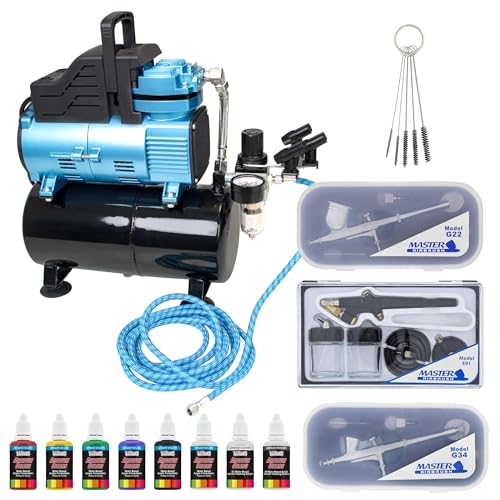
Master Airbrush Cool Runner Dual Fan Compressor
Strengths
- 3-liter storage tank
- Dual cooling fans
- Includes three professional airbrushes
Trade-offs
- Heavy for travel
- High initial cost
- Overkill for simple tasks
This is the full package, the kind of system I’d recommend to anyone serious about airbrushing, whether for art, cosmetics, or detailed models. With a 3-liter tank, dual cooling fans, and a true diaphragm regulator, it maintains clean, dry, consistent airflow at 25L/min. The inclusion of three top-tier airbrushes (dual-action G22 and G34, plus a siphon-feed E91) means you’re covered for fine detail, broad coverage, and high-volume work right out of the box.
Owners praise its cool-running design and near-silent 47dB operation, especially during extended sessions. Compared to other dual-fan models like the Cool Tooty, this one has superior thermal management and comes backed by better documentation and support. My pick for artists who treat airbrushing as more than a pastime.
Video review
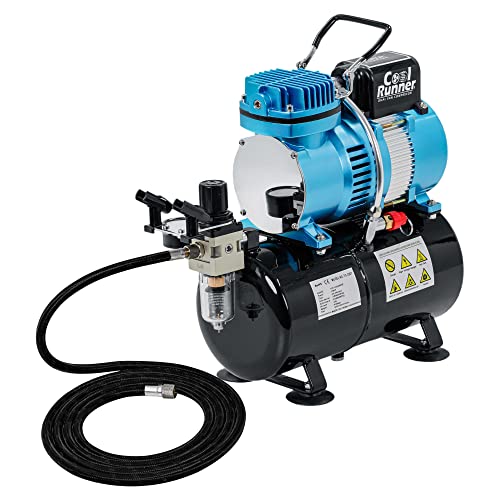
Master Airbrush 1/5 HP Cool Runner II
Strengths
- Long duty cycle
- True diaphragm regulator
- 3-liter tank
Trade-offs
- No included airbrush
- Higher price point
- Not beginner-friendly
When your work demands marathon sessions without overheating, the Cool Runner II is engineered to deliver. The combination of a 3-liter tank, dual cooling fans, and a robust 1/5HP motor results in a compressor that owners describe as ‘always ready’, it recovers quickly and runs cool even after repeated use. The true diaphragm regulator ensures precise, spatter-free control, which matters most when laying down fine gradients or intricate lines.
It doesn’t include multiple airbrushes like the larger Master kit, but as a standalone compressor, it’s ideal for pros who already own their tools. Compared to the Gaahleri or Cool Tooty, it offers better pressure stability and longer life expectancy. This is the machine I’d trust in a commercial nail or tattoo studio.
Video review
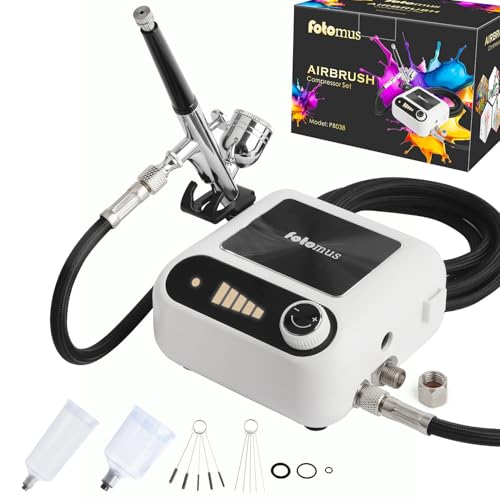
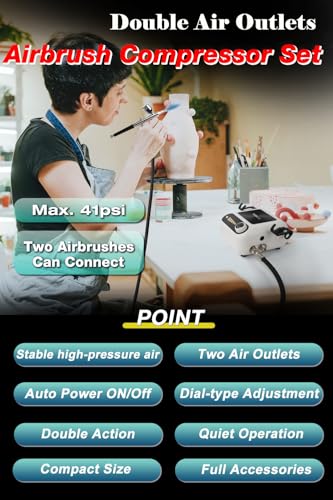
Airbrush Kit with Dual Outlets
Strengths
- Lowest price
- Dual airbrush support
- Easy setup
Trade-offs
- Weak airflow
- Limited pressure output
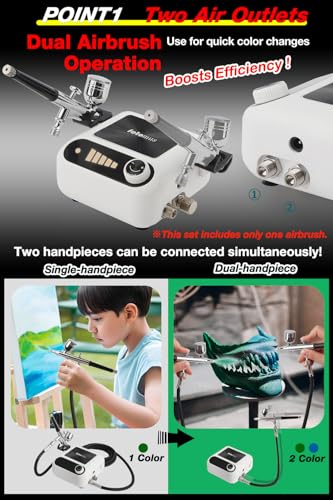
- One airbrush only in kit
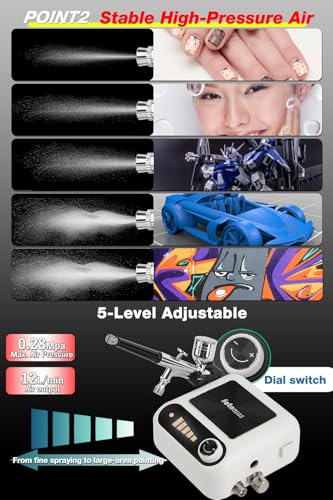
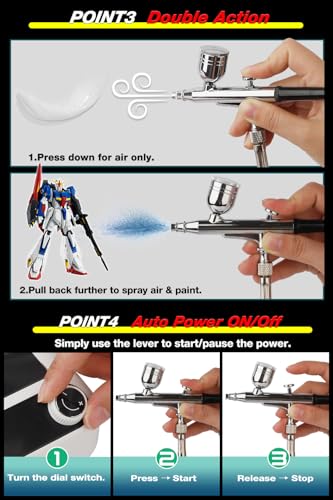
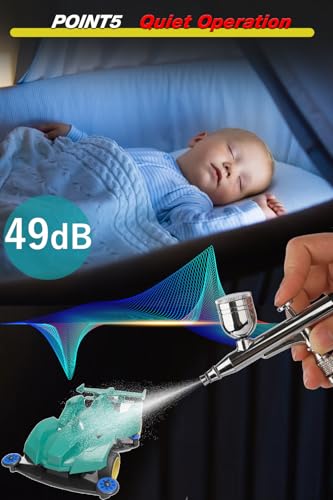
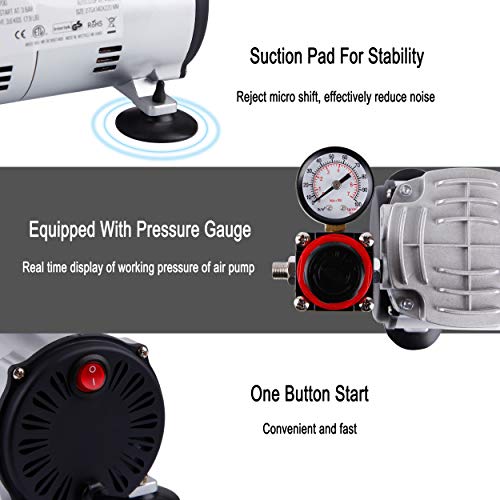
At nearly $50, this kit is the most accessible way to get dual-airbrush functionality, but with compromises. The ability to connect two tools is a big plus for efficiency, letting you swap tips or colors fast. However, the 12L/min output is noticeably weaker than others in this list, and while the pressure dial is intuitive, the low airflow limits it to very light applications like face paint or thin inks.
Beginners will appreciate the included cups and simple setup, but serious users will find it underpowered. It’s a decent starter if you’re certain you’ll only do minor projects, but don’t expect it to grow with you. Compared to the Psipro or MEEDEN, it trades performance for convenience.
Product photos
TIMBERTECH Airbrush Compressor AS18-2

Strengths
- Compact and portable
- Quiet operation
- Built-in handle
Trade-offs
- Lower horsepower
- Frequent cycling
- Basic filtration
The TIMBERTECH AS18-2 is clearly designed for first-timers dipping their toes into airbrushing without commitment. Its 1/6HP motor delivers adequate 20–23L/min airflow, and the 47dB noise level keeps it unobtrusive, ideal for home studios or small craft rooms. The built-in handle and compact form make it easy to store or move, and the pressure regulator with gauge gives just enough control for basic tasks.
That said, it’s underpowered compared to 1/5HP models and better suited for short bursts than sustained work. Overheat protection is present, but owners note it cycles frequently during longer sessions. As an entry point? Absolutely. But upgrade plans should start here, not end.
Product photos




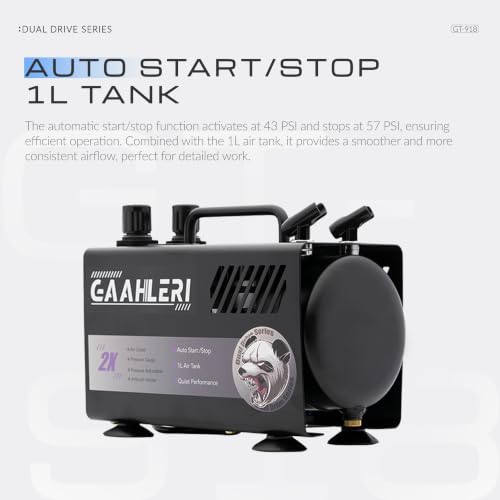
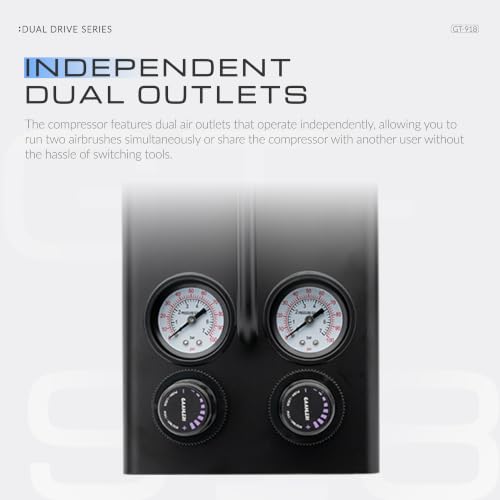
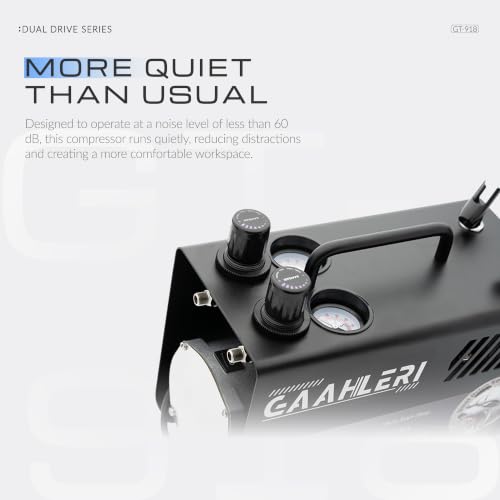
Gaahleri Dual-Drive Airbrush Kit with 1L Tank
Strengths
- Dual air outlets
- Very quiet operation
- Independent pressure control
Trade-offs
- Smaller 1L tank
- Plastic casing less durable
- Limited included accessories
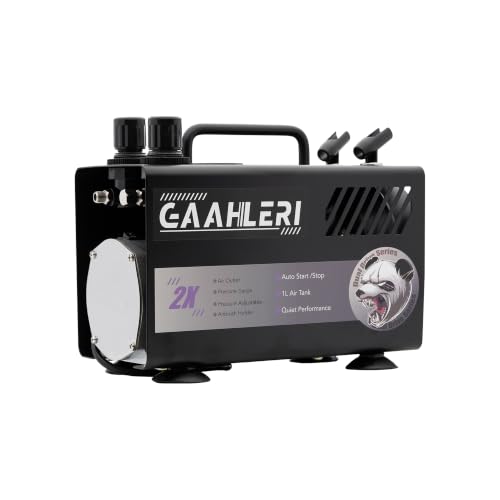
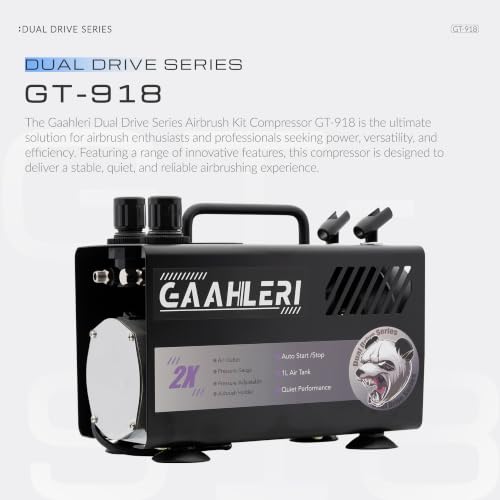
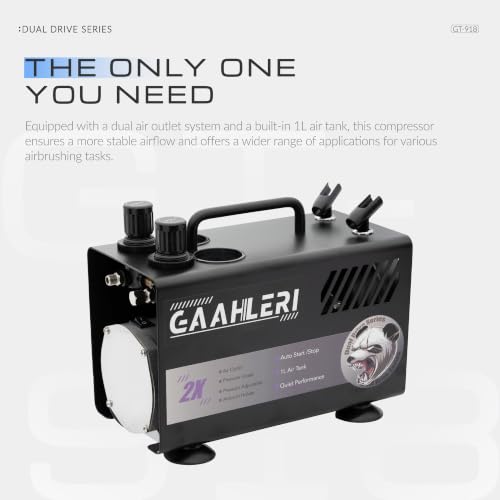
If using two airbrushes simultaneously matters to your workflow, the Gaahleri kit stands out with its dual outlet system and independent pressure control, an uncommon feature at any price. The 1L tank stabilizes airflow enough to prevent pulsing, and the sub-44dB noise rating makes it one of the quietest units available. Owners highlight how smooth the transition feels when switching between brushes mid-project, which is a real efficiency boost for complex artwork.
It doesn’t have the tank size or airflow volume of the Master Airbrush models, but for multi-tool users who value precision and silence, this hits a unique niche. The build quality is sturdy, though the plastic housing isn’t as durable as metal-bodied competitors. Still, the dual-outlet advantage is hard to ignore.
Product photos
MEEDEN 1/5 HP Airbrush Compressor Kit
Strengths
- Clear pressure gauge
- Good accessory bundle
- Internal cooling fan
Trade-offs
- No dual airbrush support
- Average noise insulation
- Single hose included
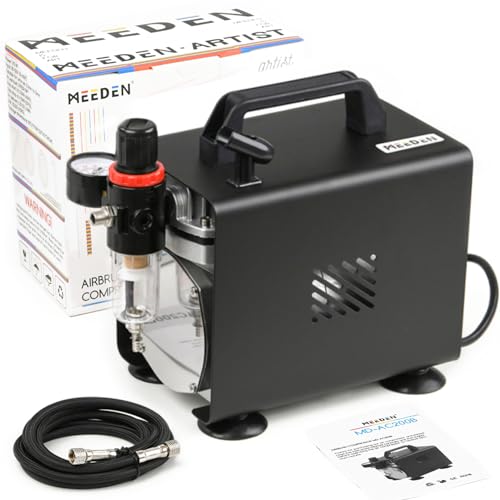
The MEEDEN 1/5HP compressor sits in that sweet spot between cost and capability, making it a strong contender for the best value title. It delivers 23L/min of airflow with a thoughtful set of accessories, a soft 6-foot hose, external pressure gauge, and spray gun holder, that feel more premium than the price suggests. The internal cooling fan helps manage heat better than basic models, which aligns with owner reports of improved longevity during intermittent use.
Compared to the Psipro, it lacks dual holders but makes up for it with a clearer pressure readout and slightly better build consistency across units. It won’t match the Master Airbrush kits in endurance, but for someone stepping up from absolute beginner gear, this is the smarter buy.
Product photos
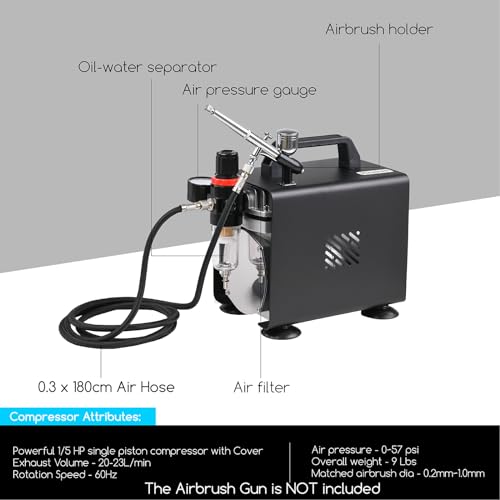
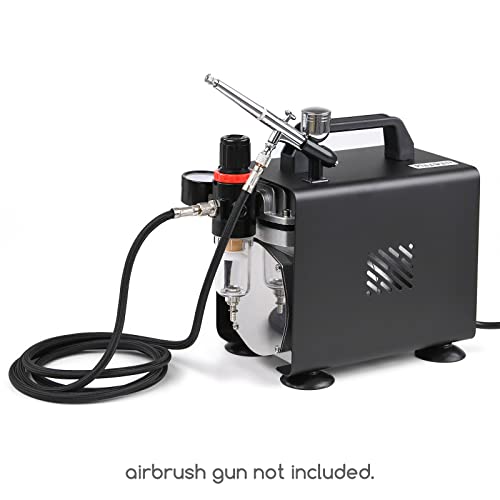
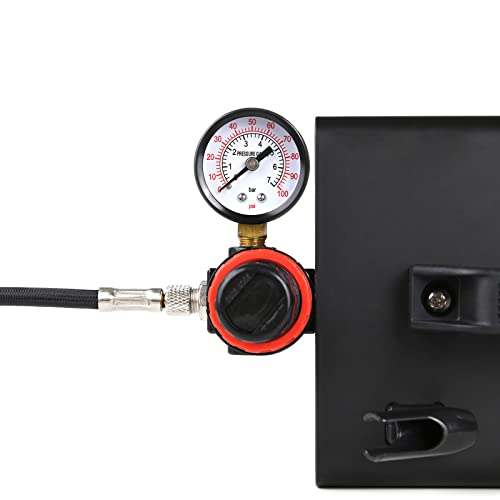
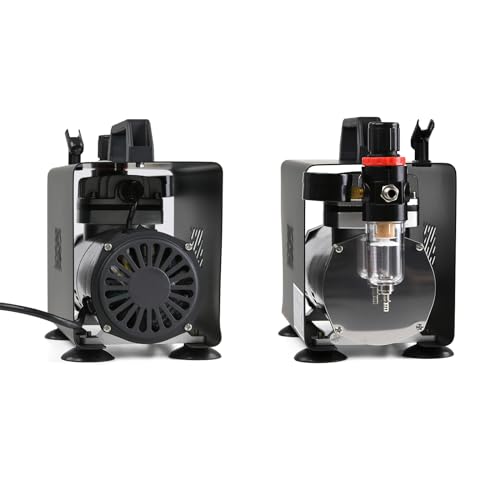
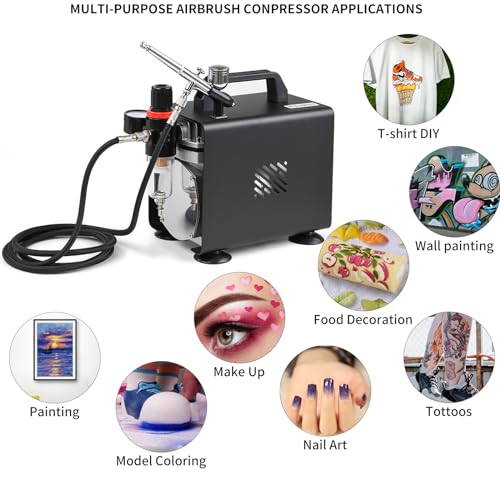
Psipro Quiet Airbrush Compressor Kit

Strengths
- Solid airflow
- Auto start/stop
- Dual airbrush holder
Trade-offs
- Noticeable cycle noise
- Basic pressure control
- Limited duty cycle
For a budget-friendly entry into airbrushing, the Psipro kit delivers more than you’d expect at this price. The 1/5HP oil-free motor pushes out a solid 23–25L/min airflow, and owners consistently report it holds steady under light to moderate use, perfect for model painting or cake decorating sessions that don’t run for hours. I appreciate the built-in dual airbrush holder; it’s a small touch, but it keeps the workspace tidy in a way few kits at this level offer.
The auto start/stop and thermal protection are functional, though not as refined as pricier models. On paper, 50dB is quiet, but some users note a slight hum during cycling that can be noticeable in a silent room. Still, for beginners or hobbyists who want reliability without overspending, this compressor punches above its weight.
Product photos
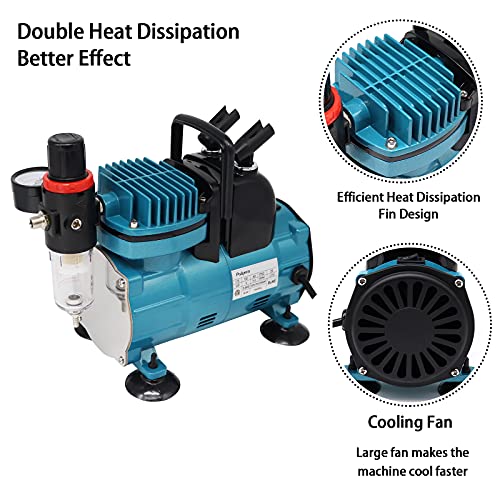
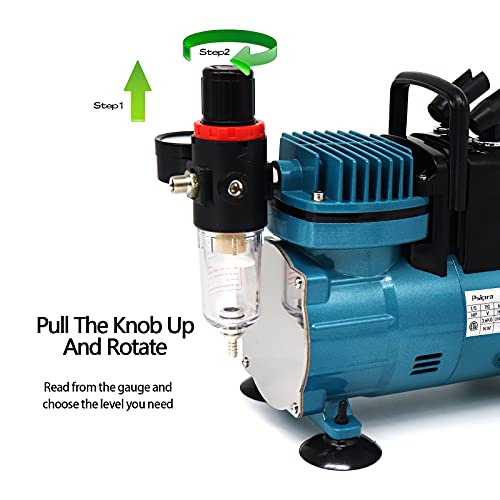
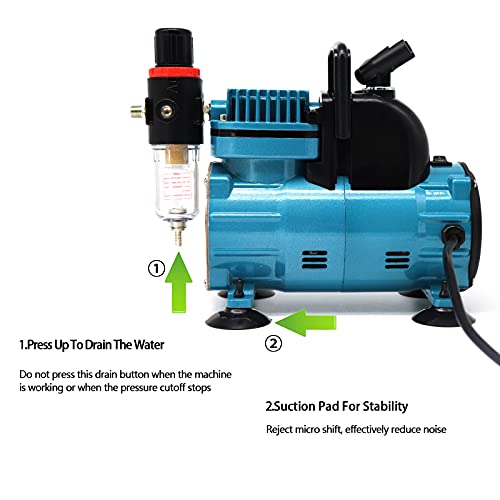
Cool Tooty Airbrush Compressor with 3L Tank

Strengths
- Metal 3L tank
- Dual cooling fans
- Stable performance
Trade-offs
- No dual brush support
- Minimal accessories
- Heavier than average
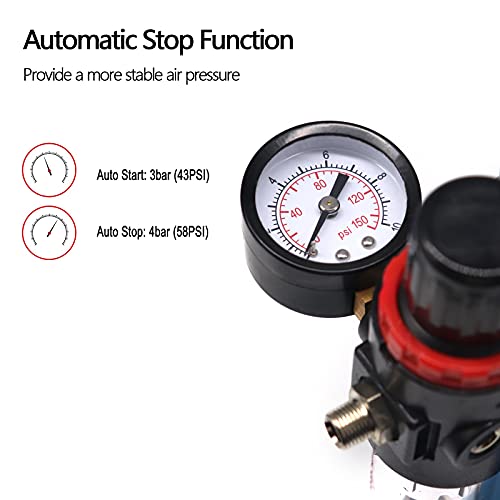
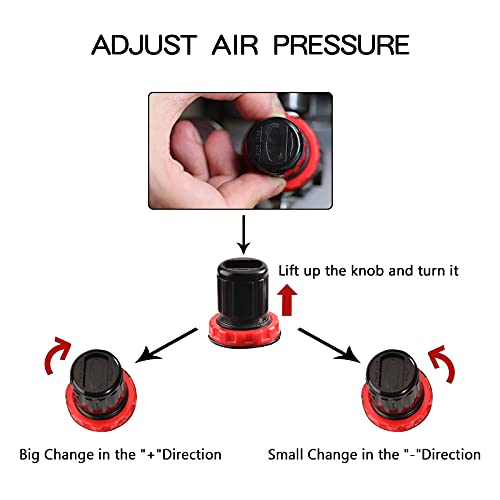
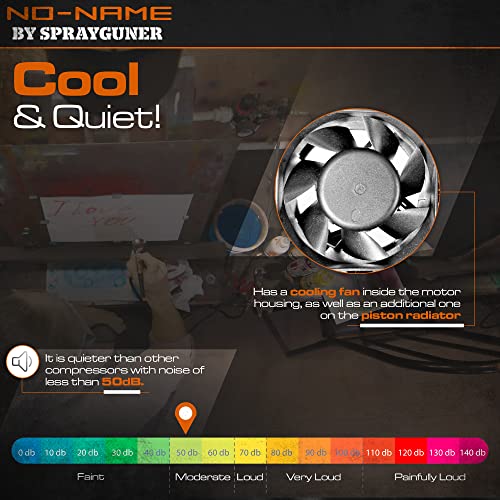
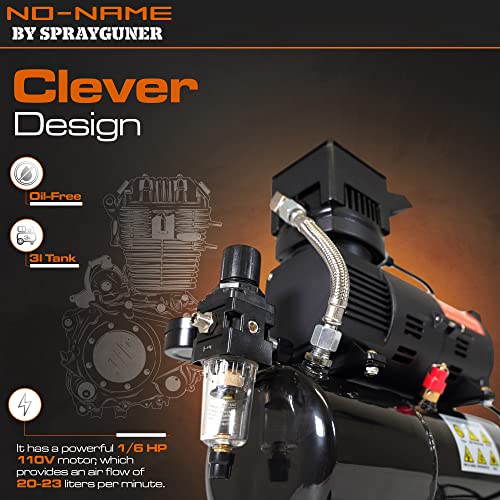
What sets the Cool Tooty apart is its build integrity, metal tank, dual cooling fans, and USA-based quality control give it a premium feel rare at this price. The 3-liter tank matches the Master Airbrush systems, and the 20–23L/min airflow is stable for prolonged runs. Owners report fewer heat-related shutdowns than cheaper models, thanks to the piston and motor housing fans working in tandem.
It lacks dual outlets or fancy accessories, but what it offers is durability and consistency. When compared to similarly sized units like the MEEDEN, this one inspires more confidence in long-term use. Not flashy, but built like a tool should be.
Product photos


How We Chose These airbrush compressors
As the founder of ToolsFrame, I’ve spent years evaluating power tools and understanding what makes a good machine – and a frustrating one. Rather than a hands-on lab test of each compressor, this evaluation is a research-led comparison of published specifications and owner feedback. I weighed features, airflow, noise levels, and tank capacity against the needs of typical airbrush users, from hobbyists to professionals. We looked at expert reviews from sites specializing in art and modeling to build a well-rounded picture.
For airbrush compressors, consistent airflow and quiet operation are paramount. We heavily weighted the CFM (cubic feet per minute) and PSI (pounds per square inch) ratings, as these directly impact spray quality and the types of projects a compressor can handle. Equally important was the noise level; a compressor that rattles and buzzes can quickly become tiresome, especially during detailed work. Finally, tank capacity played a role, as larger tanks provide more consistent pressure and reduce compressor cycling.
Specifications reliably indicate a compressor’s potential power and technical capabilities. However, owner reviews and reputation proved essential for gauging real-world performance and durability. I paid close attention to comments regarding overheating, noise levels in practice, and the longevity of the unit. Those reports frequently highlighted issues not evident in spec sheets, and helped us separate compressors that deliver on their promises from those that don’t. If you’re looking for compressors specifically for detailed work, you might also want to explore our guide to compressors for miniatures.
What To Look For In airbrush compressors
Finding the right airbrush compressor can feel overwhelming, but it doesn’t have to be. A good compressor is more than just a pump; it’s the heart of a consistent, high-quality finish.
A quality airbrush compressor delivers consistent PSI, maintains a stable airflow rate (measured in liters per minute or CFM), and operates quietly enough for comfortable use. Look for features like moisture traps, pressure regulators, and automatic shut-off to protect both the compressor and your airbrush. Consider the tank size for sustained spraying and the motor’s horsepower for demanding applications.
Motor Power and Airflow
The horsepower (HP) and airflow (measured in liters per minute or cubic feet per minute – CFM) are critical. For hobbyists doing occasional work, a 1/6 HP compressor with around 20-23 L/min airflow may suffice, like the TIMBERTECH AS18-2. However, if you plan on extended sessions or working with larger surfaces, stepping up to a 1/5 HP model (like the MEEDEN kit or the Master Airbrush Cool Runner II) offering 25 L/min or more is a smart investment. Don’t underestimate the impact of consistent airflow; fluctuations can lead to uneven paint application and frustrating results.
Tank Size and Operation
Whether or not you need an air tank depends on your style. Tankless compressors cycle on and off frequently, which can cause pressure fluctuations and potentially shorten the compressor’s lifespan. Models with a tank, like the Gaahleri Dual-Drive kit with its 1L tank, or the Master Airbrush Cool Runner with its 3L tank, provide a reservoir of compressed air. This means the compressor doesn’t have to constantly run, delivering a smoother, more consistent spray.
Here’s how tank size impacts your work:
- Small (under 1L): Good for quick touch-ups and smaller projects.
- Medium (1-3L): A versatile choice for most hobbyists and intermediate users, offering a balance between portability and consistent pressure.
- Large (3L+): Best for professional use, detailed work, or when you need uninterrupted airflow for extended periods.
Ultimately, if you find yourself waiting for the compressor to catch up while spraying, a larger tank is worth considering.
Noise Level and Portability
Air compressors can be notoriously loud. If you work in a shared space or simply prefer a quieter environment, look for models specifically marketed as “quiet,” typically around 47-50 dB. The Psipro Quiet Airbrush Compressor Kit is a prime example, boasting a low noise level. Beyond noise, consider portability. If you plan to move your setup frequently, a lightweight and compact unit with a carrying handle, or one of the excellent portable air compressors we’ve reviewed, will be essential. Don’t overlook the convenience of built-in features like airbrush holders, as they contribute to a more organized and efficient workspace. For a wider range of options, check out our guide to the best airbrush compressors.
A compressor that constantly cycles on and off is working too hard. Prioritize a unit that can maintain your desired PSI without overheating or excessive noise.
Airbrush Compressors Compared
Here’s a comparison of key specifications for several airbrush compressors to help you make an informed decision.
| Product Title | HP | Air Flow (L/min) | Max PSI | Tank Size (L) | Noise Level (dB) | Auto On/Off |
|---|---|---|---|---|---|---|
| Master Airbrush Cool Runner Dual Fan | 1/5 | 25 | 65 | 3 | 47 | Yes |
| Master Airbrush 1/5 HP Cool Runner II | 1/5 | 25 | 57 | 3 | 47 | Yes |
| Airbrush Kit with Dual Outlets | N/A | 12 | 0.28 MPa | N/A | N/A | Yes |
| TIMBERTECH Airbrush Compressor AS18-2 | 1/6 | 20-23 | 4 Bar | N/A | 47 | Yes |
| Gaahleri Dual-Drive Airbrush Kit with 1L Tank | 1/5 | 20-23 | 57 | 1 | <44 | Yes |
| MEEDEN 1/5 HP Airbrush Compressor Kit | 1/5 | 23 | N/A | N/A | N/A | Yes |
| Psipro Quiet Airbrush Compressor Kit | 1/5 | 23-25 | N/A | N/A | 50 | Yes |
| Cool Tooty Airbrush Compressor with 3L Tank | 1/6 | 20-23 | N/A | 3 | <50 | Yes |
Frequently Asked Questions
What PSI is generally sufficient for most airbrush applications?
Most airbrush work is effectively done between 25 and 40 PSI. However, some specialized techniques, like automotive painting, might benefit from going up to 60-65 PSI, so a compressor with a higher maximum PSI offers greater versatility.
Are tankless compressors really that much worse than those with a tank?
Tankless compressors can be suitable for small, quick jobs, but they often struggle with consistent pressure. The constant cycling on and off can also reduce the overall lifespan of the motor compared to models with a built-in air reservoir.
What’s the best way to reduce moisture buildup in the air line?
A good compressor will include a moisture trap, but adding an inline air filter/water separator is a worthwhile investment. Regularly draining the trap and filter will help guarantee clean, dry air for your airbrush, preventing clogging and improving finish quality.
Can I use a standard shop air compressor with an airbrush?
While technically possible with a regulator, standard shop compressors generally deliver too much airflow and lack the precise control needed for airbrushing. Dedicated airbrush compressors offer finer adjustments and quieter operation, making them a better choice for detail work. You might also explore types of air compressors explained to understand the differences.
What should I look for in a compressor if I’m a beginner?
A beginner should prioritize a compressor that’s easy to use, relatively quiet, and has a built-in regulator. A model with auto shut-off is also helpful. Don’t immediately jump for the most powerful option; a smaller, more manageable unit like one of the compact air compressors is a great starting point.
The Bottom Line
Choosing an airbrush compressor often comes down to balancing control and convenience. Do you prioritize absolute consistency and a smooth spray, or are you willing to trade some of that for a lower price point and a more portable setup? For most users, the Master Airbrush Cool Runner Dual Fan strikes that balance perfectly; its consistent airflow, 3-liter tank, and relatively quiet operation make it a fantastic all-around choice.
If you’re on a tighter budget or primarily tackle small projects, the TIMBERTECH AS18-2 is a solid entry point. For those who need a truly quiet setup, and are willing to pay a bit more, the Psipro Quiet Airbrush Compressor Kit delivers on its promise of low-noise operation, making it one of the best quiet air compressors available. And if you’re looking for something for broader tasks around the house, exploring compressors for home use might open up even more options.
Ultimately, the best airbrush compressor isn’t about chasing the highest PSI or horsepower numbers. It’s about finding a machine that delivers consistent, reliable airflow at a comfortable noise level, allowing you to focus on your art – and that’s a goal within reach for any budget.
