
Airless vs HVLP Paint Sprayer: Which Is Right for You?
This post contains affiliate links. As an Amazon Associate, we earn from qualifying purchases.
An airless paint sprayer uses a high-pressure pump (1200–3300+ PSI) to atomize paint for fast coverage on large surfaces, while an HVLP (High Volume Low Pressure) sprayer uses a high volume of low-pressure air (<10 PSI at the cap) for a finer, more controlled finish on detailed work. For most DIYers, the choice boils down to project size: airless for walls and fences, HVLP for furniture and cabinets.
That pressure gap, over 300 times higher in an airless sprayer, isn’t just a number. It’s the mechanical reason one tool hurls paint across a fence in minutes and the other lays down a glass-smooth coat on a cabinet door, a fundamental difference in the airless vs HVLP paint sprayer comparison. You feel it in the trigger pull and hear it in the machine’s whine.
What follows is a breakdown of the three specs that decide it: pressure, transfer efficiency, and the real-world prep each one demands. We’ll name the models that get it right and walk through the setup steps most guides gloss over.
Key Takeaways
- Match the tool to the surface area: Use an airless sprayer for large-area projects like walls and fences; grab an HVLP for small to medium-sized surfaces like furniture and trim.
- HVLP has higher transfer efficiency (60–75%), meaning less paint waste and overspray than airless (40–60%), a critical factor for indoor or precision work.
- Latex paint often requires thinning for HVLP, sometimes up to 40%, while airless systems typically spray it straight from the can.
- You must clean the equipment: pause an airless sprayer for more than 15 minutes and you must clean the tip to prevent clogging; HVLP cups and nozzles need immediate cleaning after use.
- For a beginner’s first sprayer, a turbine-based HVLP unit like the Wagner Flexio 5000 offers more forgiveness and control while you learn the technique.
The Core Difference: Pressure and Atomization
The entire airless vs hvlp paint sprayer debate starts with how each machine breaks paint into a mist. An airless sprayer’s pump rams paint through a tiny, precision nozzle, as small as 0.007 inches, at over a thousand pounds of pressure (see our detailed airless sprayer guide for setup tips). The hydraulic force alone shreds the paint into particles. An HVLP gun uses a different mechanic: a high volume of low-pressure air (from a turbine or compressor) shears the paint stream at the nozzle’s tip (learn more in our HVLP spray gun guide).
Airless paint sprayers operate between 1200–3300 PSI, using hydraulic force to atomize paint. HVLP spray guns work below 10 PSI at the cap, relying on a high volume of air for a softer, more controlled atomization. This fundamental difference dictates everything from spray speed to finish smoothness.
That’s why the feel is so different. An airless sprayer has a forceful, driving spray pattern you can feel kick back against your wrist. An HVLP’s output is a softer, wider fan you control with subtle movements. The airless is a fire hose; the HVLP is a garden sprayer with a precision nozzle.
Where this goes sideways: Assuming a higher PSI number means a “better” spray. For fine woodworking, that high pressure is your enemy, it creates excessive overspray and can literally blow thin finishes right off the surface before they level.
Project Match: Which Sprayer for Which Job?
This isn’t about brand loyalty. It’s about the physics of the airless vs hvlp paint sprayer. The paint’s path from the can to your workpiece decides which tool is the right tool.
| Project Type | Best Sprayer Type | Why It Wins | A Real-World Model |
|---|---|---|---|
| Interior/Exterior Walls, Fences, Ceilings | Airless | High speed (3–4x faster than a roller) and handles thick, unthinned paints. | Graco TrueCoat 360 Variable Speed |
| Furniture, Cabinets, Trim, Decorative Items | HVLP | Superior control, minimal overspray, and a finer finish quality. | Wagner Flexio 5000 |
| Automotive Touch-Ups, Fine Crafts | HVLP | Low pressure prevents runs on vertical surfaces and allows for delicate material application. | Wagner Studio Plus HVLP Stationary Sprayer |
| Large DIY Projects (e.g., Shed, Deck) | Airless | Covers vast square footage quickly; pumps stains and sealants without thinning. | Graco TC Pro II Cordless Airless |
| Small, Detailed Interior Work | HVLP | Less masking needed, better for confined spaces, and quieter operation. | Wagner Flexio 890 HVLP Paint Station |
The 50–100 square meter rule from the Andersen Sprayer guide is a useful mental checkpoint. If your project is bigger than that, the speed of an airless sprayer starts to pay off in sheer time savings. If it’s smaller, especially with complex angles, the control of an HVLP saves you from a mess and wasted material.
Be realistic. You can paint a cabinet with an airless sprayer. I’ve done it. You’ll also use more paint, spend significant time masking, and still likely get an imperfect texture on detailed molding. The right tool exists because the wrong one makes more work.
Speed, Waste, and the Real Cost of Paint
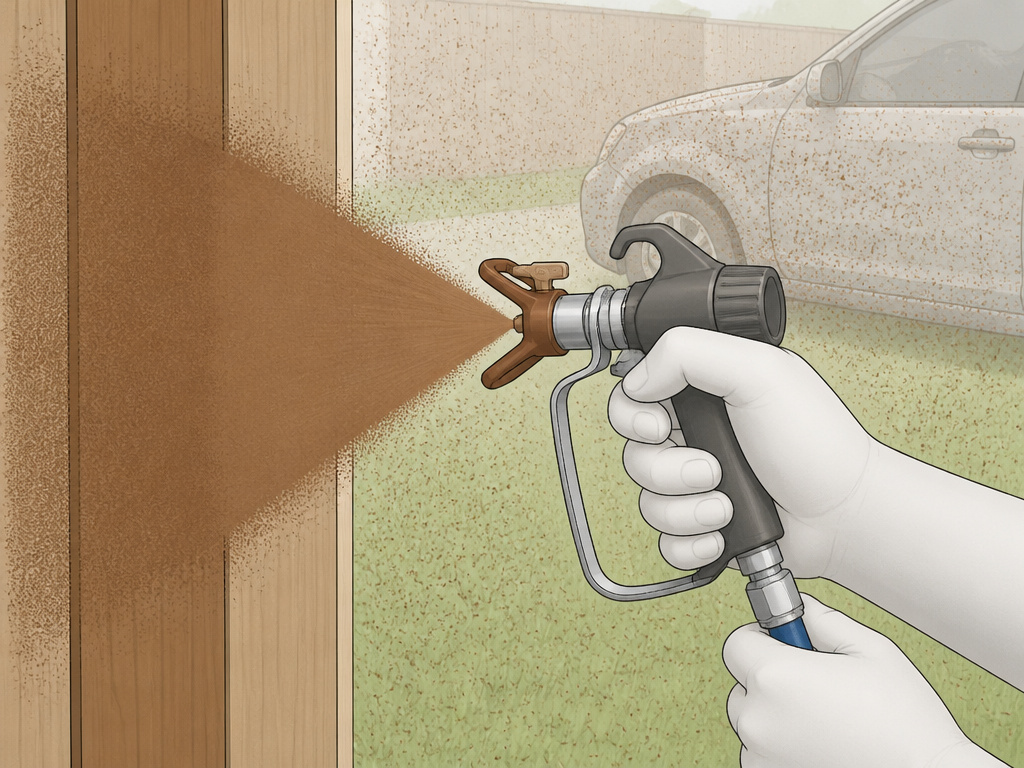
The advertised “time saved” with a sprayer often ignores two huge factors: prep time and material cost. An airless sprayer is undeniably faster in motion. It can lay down paint rapidly on a fence. Where does the rest go? It becomes overspray, a fine mist that settles on your lawn, your car, or the floor you forgot to cover.
- The Prep/Spray Ratio: The airless sprayer would cut the spray time down, but the prep time? It increases, because its overspray travels farther.
- Paint Consumption: An airless sprayer, with its wider fan and higher overspray, can be even more thirsty. You’re trading material cost for labor time.
Common mistake: Not factoring in the cost of the extra paint and masking supplies. The “faster” sprayer job can be more expensive in materials than the “slower” brush job you’re trying to avoid.
So, which is more expensive? It depends on your local labor rate, if that’s you, sitting on a ladder on a Saturday, the equation changes. For a pro billing by the hour, the airless sprayer’s speed saves real money. For a DIYer painting one room, the cost of the extra gallon of paint might negate the time saved.
Setup and Technique: What the Manuals Leave Out
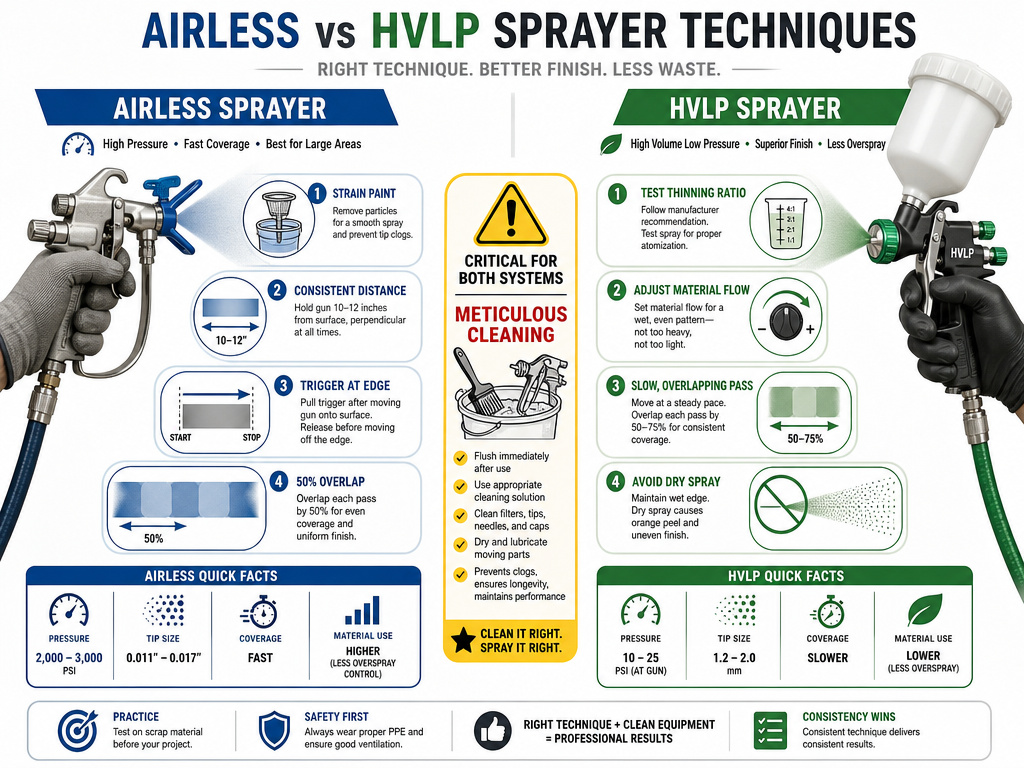
Using a paint sprayer isn’t like using a drill. The tool is just one part of the system; your technique is the other. Here’s what you won’t find in the quick-start guide.
For Airless Sprayers:
- Strain the paint, every time. Any tiny skin or dried bit will clog that expensive spray tip. Use a standard paint strainer bag.
- Maintain a consistent distance and angle. Hold the gun tip at a consistent distance from the surface and keep it perpendicular. Arcing your arm creates an uneven coat, heavy in the middle, light on the edges.
- Trigger at the edge. Start moving your arm, then pull the trigger. Release the trigger before you stop your arm. This prevents a thick blob of paint at the start and end of each pass.
- Overlap your passes by 50%. The spray pattern is heaviest in the center. Overlapping by half ensures even coverage without stripes.
For HVLP Sprayers:
- Nail the thinning ratio first. This is the most critical step. Test on cardboard.
- Adjust for material flow, not pressure. Most consumer HVLP units have a material flow dial, not a PSI gauge. Turn it up until the spray pattern is full and even, without spitting.
- Use a slower, overlapping pass. The slower feed rate means you move the gun more slowly than with an airless. Keep a consistent, close distance.
- Watch for dry spray. Holding the gun too far away causes the paint to dry before it hits the surface, creating a rough, sandy texture. Move closer.
I learned the hard way that stopping for a coffee break with an airless sprayer is a bad idea. I paused for about 20 minutes on a fence project. When I went to restart, the tip was completely plugged with cured latex.
Both systems demand a meticulous cleaning ritual. For an airless sprayer, you must flush the pump, hose, and gun with water or solvent until it runs clean. For HVLP, disassemble the cup, nozzle, and air cap to wash every channel. Budget that time.
Noise, Portability, and the Beginner’s Learning Curve
Is one sprayer easier to use than the other? The consensus says HVLP is more beginner-friendly, but the reality has more texture.
Turbine HVLP units (like the Wagner Flexio series) produce a high-pitched whine from the fan. In a residential garage, both will annoy your neighbors. Wear hearing protection either way.
You can walk an entire fence line without a cord or hose. HVLP systems are often tethered, either by a power cord for the turbine or an air hose to a compressor paint sprayer.
Both have a learning curve, just on different axes. HVLP punishes incorrect thinning and distance. Airless punishes poor trigger control and movement speed. Some sources suggest for a total novice, the lower pressure and reduced overspray of an HVLP sprayer provide more margin for error, while others note an inherent learning curve with HVLP.
Maintenance and Longevity: Keeping Your Sprayer Alive
A sprayer is an investment. Treating it like a disposable tool guarantees a short, frustrating life.
Airless Sprayer Maintenance (More Detailed):
- Clean thoroughly after every use. This step is mandatory. Run pump protector or the appropriate solvent through the system until it discharges clean.
- Lubricate the piston. Use the manufacturer’s throat seal oil regularly to prevent wear on the pump packings.
- Inspect and rotate spray tips. Worn tips cause fan patterns to tail off. Keep spares.
- Winterize for storage. If storing longer than two weeks, use a product like Graco’s Pump Armor.
HVLP sprayer Maintenance: One source states HVLP sprayers are generally easier to maintain.
- Clean the cup, nozzle, and air cap immediately. Paint dries in the small passages quickly.
- Check and clean the turbine filter. A clogged filter reduces airflow and performance.
- Store the air hose loosely coiled. Avoid kinks that can crack the hose interior over time.
Knowing these specific, brand-model issues is what separates a handy owner from someone who throws a “broken” tool in the trash.
Safety considerations (e.g., injection hazard)
Airless sprayers operate at extremely high pressure, which creates a serious injection hazard. The spray tip can force paint deep into skin and tissue if the gun is triggered too close to the body. Always engage the safety lock when not actively spraying and never point the gun at yourself or others, even when you think it’s off. Wear safety glasses to protect your eyes from mist and potential splatter. HVLP sprayers use much lower pressure, so this specific injection risk is far lower, but proper eye protection and a respirator are still essential for both types to guard against fumes and airborne particles.
Frequently Asked Questions
What are the disadvantages of an HVLP spray gun?
The main drawbacks are speed and paint preparation. HVLP is significantly slower than airless for large areas. It also struggles with high-viscosity paints like unthinned latex or heavy primers, which often require thinning, sometimes substantially, to work properly, adding time and complexity to your project setup.
What paint sprayer do professional painters use?
Most professional painting contractors use airless sprayers for the bulk of their work, especially on residential exteriors, interior walls, and large commercial jobs, because raw speed translates directly to profitability. They often own HVLP or LVLP sprayers for cabinet refinishing, fine trim work, or other detail-oriented tasks where finish quality is the priority (see our guide on HVLP vs LVLP spray guns).
Do I need to thin paint for an HVLP sprayer?
Usually, yes, especially with latex paints. Manufacturer guidelines (like Wagner’s suggestion of 10–20% thinning) are a starting point. Real-world testing shows some latex paints may need up to 40% thinning to spray properly through an HVLP gun without clogging. Always test your specific paint on scrap material first.
Is HVLP or airless better for beginners?
For a first-time user, a turbine-based HVLP sprayer is generally the better choice. The lower pressure results in less forceful overspray, making it easier to control and containing the mess. Sources offer differing views on the beginner learning curve: some state HVLP is generally easier for beginners, while an owner of a Wagner HVLP unit noted an ‘inherent learning curve’ with initial spattered results.
The Bottom Line
Stop looking for a single “best” sprayer. You need the right one for the job in front of you. If you’re staring down a fence, a shed, or the exterior of your house, the raw coverage speed of an airless sprayer is worth the extra masking and cleanup. If your project fits on a workbench, a dresser, a set of cabinet doors, a piece of trim, the precision and finer finish of an HVLP gun is the only sane choice.
My default pick for a DIYer tackling mixed projects is a mid-range HVLP system like the Wagner Flexio 5000. It handles the vast majority of what a homeowner actually does, furniture, shelves, interior doors, shutters, with a manageable learning curve. Rent an airless sprayer for the once-a-decade fence job. That approach saves you money, garage space, and the headache of mastering two very different tools.
And remember the one rule that applies to both: your first test run should always be on a piece of cardboard, not your project. Dial in the pattern, the distance, and your speed there. The sprayer just lays down paint. You’re the one who decides where it goes.
