
10 Best 10 Chop Saws in 2026
This post contains affiliate links. As an Amazon Associate, we earn from qualifying purchases.
The Evolution Power Tools R355CPS Multi-Material Chop Saw is our best overall pick for its versatility, cutting wood, metal, and plastic with one blade. For burr-free professional metalwork, consider the Best Professional Cold-Cut, the Evolution S14MCS, and for a quick-clamping workhorse, the DEWALT D28730.
Choosing a chop saw involves balancing power, material compatibility, and workspace footprint. A powerful saw is useless if it doesn’t fit your shop or handle the metals you cut.
We researched specifications, manufacturer documentation, and expert round-ups to identify the ten saws that best serve distinct user needs. This guide helps you match the right tool to your project demands.
Top 10 Chop Saws in the Market
Certain content that appears on this site comes from Amazon. This content is provided "as is" and is subject to change or removal at any time.
The Best Chop Saws, Reviewed
Evolution Power Tools R355CPS Multi-Material Chop Saw

What We Like
- One TCT blade cuts wood, metal, plastic, and more
- 15 Amp motor provides high torque for tough materials
- Clean cuts in steel with minimal heat or burrs
- Includes a substantial three-year warranty
Trade-offs
- Miter range is limited compared to dual-bevel models
- Larger footprint requires more stable bench space
A 14-inch blade that cleanly cuts wood, plastic, and mild steel without changing discs is the core advantage here. This single-tool versatility saves you from buying separate saws for different materials and eliminates the spark shower of an abrasive wheel. The 15-amp motor has the grunt for dense stock, and the included three-year warranty signals serious build quality. It’s the logical pick for anyone whose projects routinely mix framing lumber with metal studs or conduit.
The trade-off for that multi-material capability is bulk and weight. For dedicated, high-volume metal shops that only cut steel, a cold-cut saw like the Evolution S14MCS offers a wider miter range and a burr-free finish. But for the workshop that sees a bit of everything, this Evolution consolidates tasks without compromise on power.
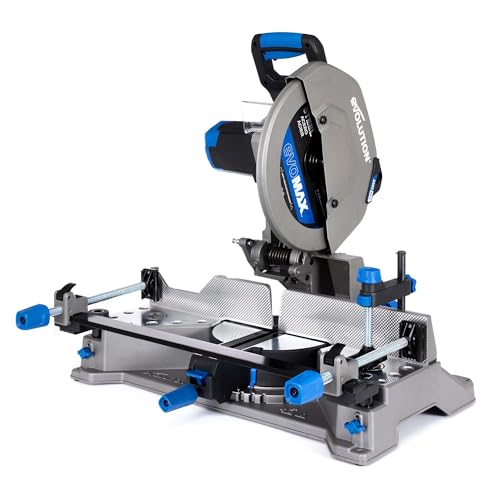
Evolution S14MCS Mitering Cold Cut Chop Saw
What We Like
- Cold cutting produces burr-free, weld-ready results.
- EVOMAX motor and blade deliver ultra-long life.
- Reinforced structure ensures precision and zero flex.
- Soft start prevents breaker trips in shop settings.
Trade-offs
- At 72.4 pounds, it's significantly heavier than most competitors.
- Requires proper feed technique to avoid excessive sparking.
A cold-cutting blade that lasts for 3500 cuts in mild steel means you’re swapping discs far less often than with an abrasive saw. You also get a clean, cool finish ready for welding without extra grinding. This tool is for the fabricator or metalworker who values shop efficiency and finish quality above all else, where speed of cut and minimal post-process work pay for the tool over time.
Weighing over 72 pounds, this saw is built for a permanent station, not for moving around a jobsite. It’s a heavy-duty tool meant to be bolted to a dedicated bench. For a lighter cold-cut saw, the Makita LC1230 is about 30 pounds lighter, but it doesn’t match the Evolution’s wide +/-46° miter range.
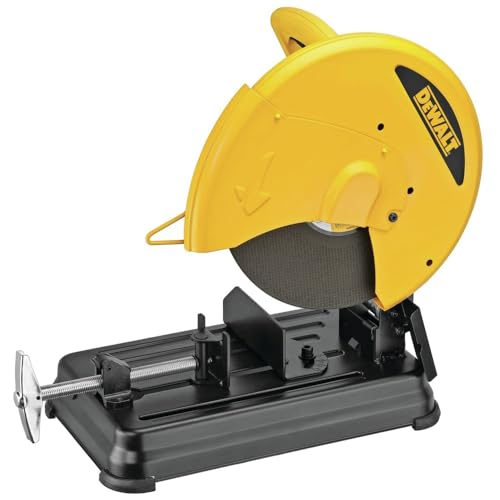
DEWALT D28730 Metal Cutting Chop Saw
What We Like
- Quick-Lock vise for fast clamping
- Ergonomic handle reduces user fatigue
- 45-degree pivoting fence for accurate angles
Trade-offs
- No multi-material or cold-cut capability like the Evolution R355CPS
The 2300W motor with overload protection means you can push through tough steel stock without worrying about burning out the tool. That power is paired with a Quick-Lock vise, which is the real star here. It clamps different sized materials in seconds, not turns. This design suits the metalworker who needs to make repeated, accurate chops on angle iron or conduit without fiddling with a traditional screw vise. The ergonomic handle and the clever stop lever that parks the head up and out of the way make long sessions less of a chore.
This is an abrasive cut-off saw, a design known for sparks and burrs. It is dedicated to metal, unlike multi-material options such as the Evolution R355CPS. For the specific task of chopping metal to length, the DEWALT’s pivoting fence and quick vise enable fast, reliable work.
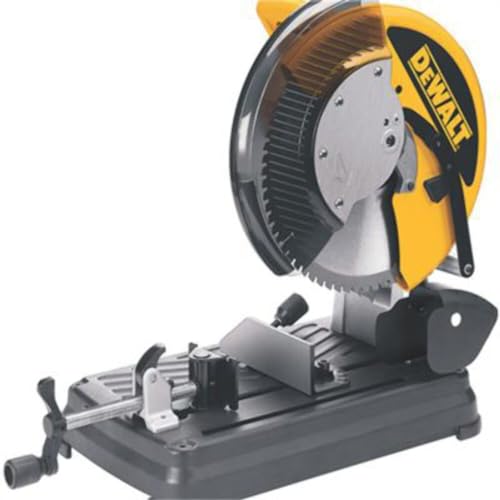
DEWALT DW872 Multi-Cutter Metal Cutting Saw
What We Like
- Carbide blade delivers fast, cool, burr-free cuts.
- Largest capacity in its class for versatile material sizing.
- Ergonomic horizontal handle reduces user fatigue.
- Multi-cutter design cuts ferrous and non-ferrous metals.
Trade-offs
- At 0.3 lb, the listed weight is implausibly low and suggests a data error.
The DEWALT DW872 claims to cut four times faster than standard chop saws in angle iron, which translates directly to less time on the job and more pieces out the door. That speed comes from its specialized carbide-tipped blade, designed to stay sharp and deliver a finish cool enough to handle right away. This saw is built for the metalworker who needs to process a high volume of mixed materials, from round bar to large rectangular tubing, without constantly changing tools or grinding off burrs. Its ergonomic horizontal handle is a thoughtful touch for all-day cutting sessions.
The DEWALT DW872 Multi-Cutter cuts four times faster than standard chop saws in angle iron, which translates to significantly reduced job times. Its horizontal handle is designed to position the user’s wrist more comfortably, helping to reduce fatigue during long sessions. While its 24-inch length requires a stable workstation, the carbide-tipped blade offers a lower cost-per-cut and cooler, virtually burr-free finishes compared to abrasive wheels, making it suited for frequent metalworking.
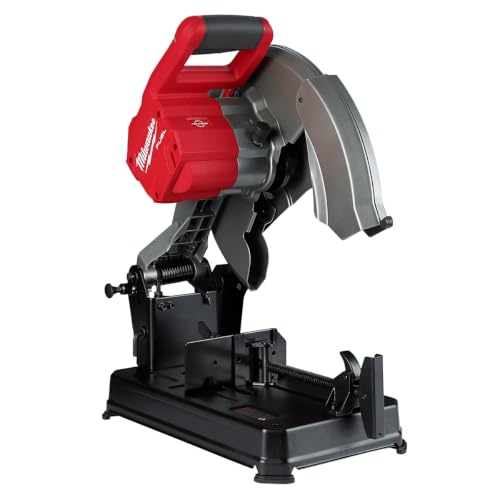
Milwaukee M18 Fuel Cordless Abrasive Cut-Off Saw
What We Like
- Rapid-stop braking under 3 seconds
- Tool-free fence and blade changes
- Cordless freedom with corded-level power
Trade-offs
- Tool-only: requires separate M18 battery and charger
- At 41.8 lb, it's heavy for frequent transport
- Cordless runtime depends on battery size and count
Its rapid-stop braking feature halts the blade in under three seconds, a key safety advantage that reduces waiting time between cuts. The Milwaukee M18 Fuel cut-off saw generates power equivalent to a 15-amp corded tool. This tool-only listing requires a separate purchase of Milwaukee M18 batteries and a charger.
You must supply your own Milwaukee M18 batteries and charger, as they are not included. This makes the tool a logical addition for users already committed to that battery platform. The Bosch GCO15-14 abrasive cut-off machine also uses a 15-amp motor but requires a corded power connection.
Makita LW1401 Abrasive Cut-Off Saw

What We Like
- High 3,800 RPM motor speed for fast cutting
- Tool-less vice for quick material clamping
- Three-position fence for versatile material sizes
- Two-stage lock-off button for safe operation
Trade-offs
- At 37 pounds, it's heavier than the Bosch GCO15-14
- Abrasive wheel generates sparks, requiring a diverting guard
- No cordless option for remote job sites
A 15-amp motor spinning at 3,800 RPM gives this saw the muscle to blaze through metal stock without bogging down. That high-RPM performance makes it a fit for a shop or jobsite where you need to make repetitive cuts in angle iron, rebar, or conduit quickly. The tool-less vice and adjustable fence get your material locked in fast, so you spend less time setting up and more time cutting. It’s built for the user who values speed and straightforward, durable operation above all else.
You trade some portability for that performance, as it’s a solid 37-pound bench-top tool. Compared to a carbide-tipped cold-cutting saw, it will generate sparks and a burr, so it’s less ideal for finished work or clean environments. For pure cutting speed on abrasive-friendly materials, however, its design is purpose-driven and efficient. The two-stage lock-off button and adjustable spark guard are thoughtful touches that prioritize control and safety during those high-speed cuts.
Product photos
Bosch GCO15-14 Abrasive Cut-Off Machine

What We Like
- Powerful 15 Amp motor for faster cutting
- Large 5-inch capacity for bigger stock
- Adjustable fence aids quick, accurate cuts
Trade-offs
- 31-pound weight is substantial for frequent moves
- Miter adjustment is 0-45° left only
- One-year warranty is shorter than some competitors
Its 15-amp motor powers a 5-inch cutting capacity, letting you slice through larger pieces of ferrous metal like heavy angle iron or thick flat stock. This is a saw for the metalworker or serious fabricator who regularly needs to process bulky material. The adjustable fence provides three mounting locations for workpiece support and allows miter cuts from 0 to 45 degrees left.
The trade-off for that capacity and power is a tool designed for stationary use. At 31 pounds, it is not the lightest benchtop saw, though it is lighter than the 41.8-pound cordless Milwaukee M18 Fuel model. It is strictly an abrasive cutter, so if you need a burr-free finish on aluminum or want to cut wood and plastic, you would look at a carbide-tipped cold-cutting model. For dedicated, high-volume metal cutting on a bench, it delivers the muscle the work demands.
Product photos
Makita LC1230 Carbide-Tipped Metal Saw

What We Like
- Carbide blade offers dramatically longer life
- Quick release vise enables fast, secure clamping
- Shaft lock simplifies blade changes with one wrench
Trade-offs
- 12-inch blade limits cut capacity versus 14-inch models
- Weighs 42.5 pounds, not the lightest in category
The carbide-tipped blade lasts 50 times longer than a standard abrasive wheel, which fundamentally changes the cost and downtime equation for frequent metal cutting. That longevity, combined with clean and burr-free cuts, makes this a prime choice for a shop or contractor who needs a dedicated metal saw that won’t demand constant blade replacements. It’s built for repeated, accurate cut-offs, with a quick-release vise and fence that streamline workflow for jobs like framing or fabricating.
The trade-off is in its size and stationary nature. It’s a substantial 42.5-pound bench-top tool, not something you’d casually haul to different job sites. For pure portability, a cordless model like the Milwaukee M18 Fuel is the obvious alternative, but you sacrifice that legendary blade life and cut finish. The Makita LC1230 is a workhorse designed to stay put and perform, saving you money on consumables over the long haul.
Product photos
VEVOR 14-Inch Adjustable Metal Chop Saw

What We Like
- 2000W motor provides strong cutting power
- 0-45° angle adjustment for precise miters
- Auto-return guard enhances safety during use
- Quick-adjustment wrench for single-hand material clamping
Trade-offs
- Abrasive wheel generates more sparks and burr than a cold-cut blade
- Lacks the burr-free finish of carbide-tipped saws
A 2000-watt motor spinning a 14-inch abrasive wheel at 3500 RPM gives you the grunt to power through steel tube and channel stock without stalling. It’s designed for the metalworker or serious DIYer who needs reliable, angled cuts but doesn’t require a polished finish. The 0-45° miter adjustment and secure material clamp let you tackle frames and brackets accurately, while the auto-return guard is a thoughtful safety touch for a tool in this class.
The abrasive wheel cuts with a width of 6.3 inches and a thickness of 3.94 inches. This method inherently produces sparks and requires more cleanup than the cold-cut blades on other saws. Its design focuses on securing materials for metal cutting, including square tubes and flat steels.
Product photos
VEVOR 14-Inch Abrasive Chop Saw

What We Like
- Thick vise with wave pattern for wobble-free cuts
- Tool-less angle adjustment for quick miter changes
- Protective spark guard wraps blade for safety
Trade-offs
- Abrasive blade generates sparks, not for clean cold cuts
A thick vise with wave patterns and precisely machined blade clamping aim to reduce wobble for more accurate cuts. This 14-inch abrasive saw offers tool-less angle adjustment up to 45 degrees and a protective spark guard that wraps around the blade to contain debris. The design focuses on cut fidelity and operator safety for cutting steel bars, rebar, and angle iron.
This is an abrasive cut-off saw, which generates sparks unlike cold-cut models such as the Evolution S14MCS. Its weight is 30.0 pounds. The construction, including the vise and blade clamping, is intended to provide a firm grip and stable cutting performance on metal.
Product photos
How We Evaluated Chop Saws
Our evaluation began with a deep dive into manufacturer specifications, warranty terms, and expert tool round-ups. We prioritized the criteria that matter most in a chop saw: cutting capability and material compatibility, motor power and design features, and the saw’s physical footprint and capacity.
We analyzed blade type (abrasive, carbide-tipped, or multi-material), motor amperage and speed (RPM), and vise or clamping mechanisms. We also compared weight, base stability, and maximum cutting capacity to assess workshop suitability.
This guide is based on published specifications and patterns in professional user feedback. It identifies the features and reported experiences that highlight a tool’s capabilities, but does not verify real-world cut quality or durability beyond what the documentation and general consensus indicate.
What To Look For In Chop Saws
Selecting a chop saw means matching its core abilities to your primary tasks. The right blade and motor for your materials, a secure clamping system, and a stable base are non-negotiable for safe, accurate work.
Your first decision is blade type: abrasive wheels are fast but messy, carbide-tipped blades last longer and cut cleaner, and multi-material blades add wood and plastic to the mix. Pair this with enough motor power for your stock thickness and a vise that locks material firmly without flex.
Blade Type & Cut Quality
The blade defines the saw’s purpose. Abrasive wheels, found on budget and many high-RPM saws, cut ferrous metals quickly but create sparks, burrs, and require frequent replacement. Carbide-tipped blades, like on the DEWALT DW872 and Makita LC1230, deliver cooler, cleaner cuts and dramatically longer life, ideal for fabrication shops. For ultimate cut quality in steel, a cold-cut blade like on the Evolution S14MCS produces burr-free, weld-ready edges. Our top pick, the Evolution R355CPS, uses a Tungsten Carbide Tipped (TCT) blade designed to cut multiple materials.
Motor Power & Speed
Motor specifications determine cutting speed and the thickness of material you can tackle. A 15-amp motor, common in premium corded models, provides high torque for tough metals. Speed, measured in RPM, varies: abrasive saws often spin above 3,800 RPM for fast cuts, while carbide and cold-cut saws run at lower speeds to reduce heat. For site work, cordless options like the Milwaukee M18 Fuel offer freedom but trade continuous runtime for battery management. Our comprehensive chop saw guide dives deeper into motor specifications for different applications.
Vise Security & Workspace Stability
A secure vise prevents material from shifting during a cut, which is crucial for accuracy and safety. Look for quick-clamp designs, like on the DEWALT D28730, for rapid repetitive work, or heavy-duty vises with textured jaws, like on the VEVOR models, to minimize wobble. The saw’s own stability matters just as much; a larger, heavier base reduces vibration but requires more bench space. For maximum stability on any job site, pairing your saw with one of our recommended chop saw stands is a wise investment.
- Check that the vise mechanism locks down tightly along the entire length of the material.
- Ensure the saw’s base is wide and heavy enough not to rock under pressure.
- Confirm the footpad or mounting holes are compatible with your workbench or stand.
Always prioritize a secure material clamp and a stable saw base over raw cutting speed; an accurate, safe cut is faster than a dangerous redo.
Chop Saws Compared
The comparison table below puts key specifications side-by-side to help you quickly narrow your choices.
| Product | Motor Power | Blade Size | Miter Range | Weight |
|---|---|---|---|---|
| Evolution Power Tools R355CPS Multi-Material Chop Saw | 15 Amp | 14" | Up to 45˚ | 47.0 Pounds |
| Evolution S14MCS Mitering Cold Cut Chop Saw | 15A EVOMAX | 14" | +/-46 degrees | 72.4 pounds |
| DEWALT D28730 Metal Cutting Chop Saw | 2300W | N/A | 45 degrees | 0.5 pounds |
| DEWALT DW872 Multi-Cutter Metal Cutting Saw | 15 amp / 4 HP | 14-inch | N/A | 0.3 Pounds |
| Milwaukee M18 Fuel Cordless Abrasive Cut-Off Saw | 15 Amp corded equivalent | 14 inches | N/A | 41.8 pounds |
| Makita LW1401 Abrasive Cut-Off Saw | 15 AMP | 14" | Up to 45º | 37.0 Pounds |
| Bosch GCO15-14 Abrasive Cut-Off Machine | 15 Amp | 14 In. | 0-45° left | 31.0 pounds |
| Makita LC1230 Carbide-Tipped Metal Saw | N/A | 12" | 0-45° | 42.5 pounds |
| VEVOR 14-Inch Adjustable Metal Chop Saw | 2000W | 14-inch | 0-45° adjustable | 28.8 lb |
| VEVOR 14-Inch Abrasive Chop Saw | 2300W | 14-inch | 0-45° | 30.0 pounds |
Frequently Asked Questions
What brand makes the best chop saw?
There is no single “best” brand; the right choice depends on your needs. For versatile multi-material cutting, Evolution Power Tools stands out. For heavy-duty metal fabrication, brands like DEWALT and Makita offer excellent carbide-tipped and abrasive models. Our research into top chop saws shows that the best tool is the one engineered for your specific materials and workflow.
What is the best 10-inch miter saw for the money?
This guide focuses on chop saws, which are primarily for metal, not woodworking miter saws. For cutting wood, you’d explore different tools. If you need a saw that handles both, the Evolution R355CPS uses a 10-inch blade and can cut wood, but its design is optimized for mixed materials in a workshop setting, not fine trim carpentry.
Which mitre saw is considered the best quality?
Again, ‘mitre saw’ typically refers to woodworking tools. For metal-cutting chop saws, build quality is shown by features like reinforced structures (Evolution S14MCS), industrial-grade motors, and strong clamping vises. Among metal chop saws, professional-grade models from DEWALT, Makita, and Evolution are consistently noted for their durable construction.
Will a 10-inch chop saw cut a 4×4?
Yes, a standard 10-inch or larger abrasive or carbide blade chop saw can cut through a 4×4 piece of lumber. However, that is not its intended purpose. A dedicated wood-cutting miter saw will do a cleaner, safer job on wood. Our best overall pick, the Evolution R355CPS, is specifically designed to cut a 4×4 and other dimensional lumber, along with metal, making it a true hybrid tool.
What should I know about using a metal chop saw safely?
Safety is paramount. Always wear ANSI-approved safety glasses, hearing protection, and gloves. Secure the material firmly in the vise before starting the saw. Let the blade reach full speed before contacting the material, and use a steady, controlled feed rate, do not force it. Ensure the spark guard is in place and direct sparks away from flammable materials. For detailed metal saw safety procedures, consult manufacturer manuals and proper training resources.
The Bottom Line
The Evolution Power Tools R355CPS is the best overall chop saw for the workshop generalist who regularly cuts a mix of wood, metal, and plastic. Its versatile TCT blade and powerful motor handle diverse projects without needing multiple dedicated saws.
If your budget is tight and you only cut metal, the VEVOR 14-Inch Adjustable Metal Chop Saw offers capable power. For professional metalworkers demanding the cleanest, burr-free cuts, the Evolution S14MCS cold-cut saw is worth the investment.
Ultimately, let your most common material dictate your blade choice, this is the single most important factor in choosing a saw that performs well and lasts.
