
10 Best Air Cleaners For Dust in 2026
This post contains affiliate links. As an Amazon Associate, we earn from qualifying purchases.
Our best overall air cleaner for dust is the Coway Airmega Mighty2 Air Purifier for its automated smart mode and precise filter tracking. We also highlight the Winix 5520 as a high-value pick for large rooms and the Honeywell Allergen Plus Compact for tight spaces. Dust is a constant battle, especially in active homes or workshops where it can quickly affect air quality. We researched specifications, expert analysis, and owner feedback to identify the ten models that balance powerful dust removal, room coverage, and practical features.
Top 10 Air Cleaners For Dust in the Market
Certain content that appears on this site comes from Amazon. This content is provided "as is" and is subject to change or removal at any time.
The Best Air Cleaners For Dust, Reviewed
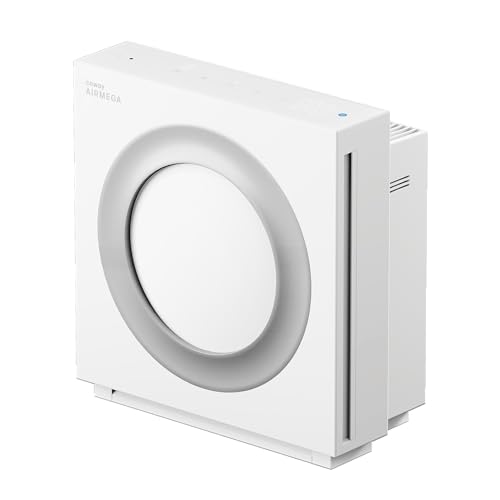
Coway Airmega Mighty2 Air Purifier
What We Like
- Real-time air quality display and laser sensor
- Smart mode auto-adjusts fan for efficiency
- Precise digital filter life indicator
- Washable pre-filter for easy maintenance
Trade-offs
- Weighs 15.2 lb, heavier than some compact models
A 242 dust CADR rating and the ability to clean a 1,800-square-foot room in an hour mean this unit can handle the main living area of most homes without breaking a sweat. It suits anyone who wants a set-and-forget machine with the smarts to adjust itself and the filtration to back it up. The Mighty2 delivers proven performance with a sensor that shows you exactly what it’s removing from your air.
Owners report the interface can be fussy, requiring multiple hold-and-tap commands to adjust settings. At over 15 pounds, it also has some heft. For steady, reliable dust removal in a large space, it’s a workhorse that benefits from a permanent spot on the floor.
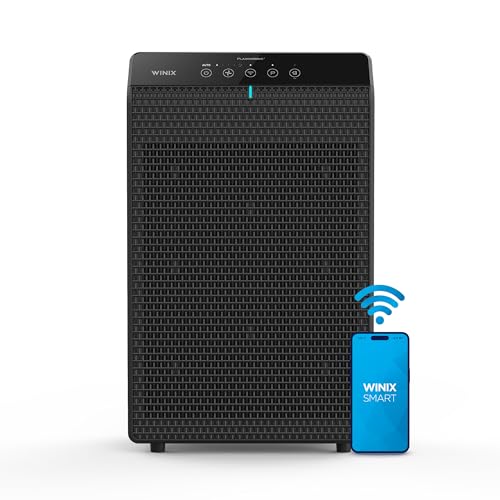
Winix 5520 Air Purifier
What We Like
- True HEPA filter captures 99.99% of dust and allergens
- Auto mode adjusts fan speed based on air quality
- Washable pre-filter extends main filter life
- Effectively cleans very large rooms up to 1882 sq ft
Trade-offs
- Display only darkens on lowest, least effective fan speed
- Ionizer reactivates every time the unit is powered on
A coverage area of 1882 square feet in an hour makes this purifier a serious contender for large workshops or open-plan living spaces where dust is a constant battle. It’s built for someone who needs to move a lot of air without constantly fussing with settings, thanks to its reliable auto mode and real-time air quality indicator. The washable pre-filter is a practical touch that saves on long-term costs, catching the big stuff before it hits the main HEPA filter. For the DIYer or homeowner dealing with pervasive dust, this unit delivers the core performance you need at a mid-range point.
The trade-off comes in its user experience. The display stays lit unless the fan is on its quietest setting, which can be distracting in a bedroom at night. While it’s ultra-quiet on that low setting, that’s also when it’s least effective for cleaning. Compared to a model like the Coway Airmega Mighty2, the Winix is louder when working hard and has a more imposing physical presence. It’s a tool that prioritizes raw cleaning power and smart features over discreet operation, so plan its placement accordingly.
Levoit Vital 200S Smart Air Purifier

What We Like
- High 254 CFM dust removal rating
- AHAM-verified performance and safety
- Dual air inlets for efficient particle capture
Trade-offs
- At 13.2 lb, it's heavier than some large-room purifiers
- 19.7-inch height may not fit under low furniture
AHAM verification means its cleaning power is independently tested, so you can trust its performance claims. With a dust CADR of 254 CFM, it clears the air in large, open-concept rooms up to 1875 square feet quickly. This certified performance makes it suitable for managing airborne dust, pollen, and pet dander in high-traffic spaces.
The unit is a substantial machine, so you’ll need to plan its placement in a room. Research indicates it’s a recommended minimum size for effective dust control for most people, which shows where its performance sweet spot lies. Compared to a model designed for a smaller area, it handles larger spaces but requires more floor space.
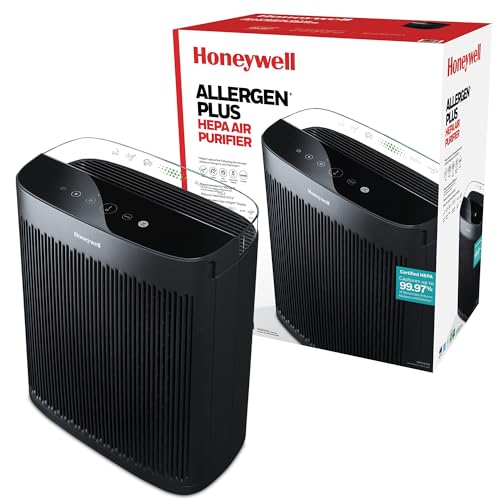
Honeywell HPA5300B HEPA Air Purifier
What We Like
- AHAM Verified for extra-large spaces up to 2423 sq ft
- Auto mode with air quality monitor for hands-off operation
- Exceeds HEPA standard, capturing 99.99% of dust and allergens
- Includes both HEPA and carbon pre-filters for particles and odors
Trade-offs
- No smart app connectivity mentioned for remote control
With its AHAM-verified capacity to refresh the air in a 2400-square-foot space every hour, this purifier is built for large, open areas. The automatic mode monitors air quality and adjusts the fan speed, providing a practical set-and-forget operation for maintaining cleaner air. This makes it a logical choice for great rooms or combined living areas where allergens or odors can travel.
That capacity comes with a physical footprint. If your dust problem is concentrated in a standard-sized room, a more compact model like the Winix 5520 might be a better fit. But for truly large, open areas where dust can travel and settle everywhere, the Honeywell’s certified air-moving power is its defining feature.
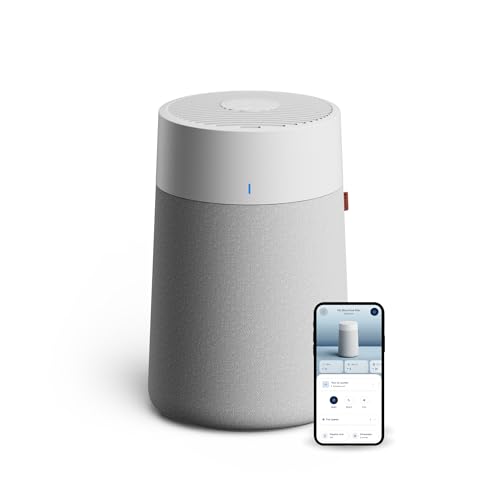
Blueair Blue 511i Max Air Purifier
What We Like
- Compact, 360-degree design fits small rooms easily
- Smart app control with auto-adjusting sensors
- Effective against dust, dander, and smoke
Trade-offs
- Designed for small to medium rooms, not large open spaces
The Blueair 511i Max cleans the air in a 237-square-foot room in about 12.5 minutes, which is plenty of power for a master bedroom or home office. For someone battling dust and pet dander where they sleep, its near-silent 19 dB low setting means it can run all night without becoming a distraction. The built-in sensors and app control handle the job automatically, so you can just set it and forget it.
Its HEPASilent filtration trades some single-pass efficiency for lower airflow resistance and greater energy efficiency. Real-world performance is cumulative as the unit cycles room air multiple times per hour. For larger, open areas, the Coway Airmega Mighty2 is built for spaces up to 1,800 square feet.
Blueair Blue 211i Max Air Purifier
What We Like
- Cleans very large spaces up to 3,235 sq ft
- Smart app controls air quality and filter life
- Quiet operation suitable for bedrooms
- 360-degree intake with minimalist design
Trade-offs
- At 16 pounds, it's a substantial unit to relocate
- Larger footprint than models for smaller rooms
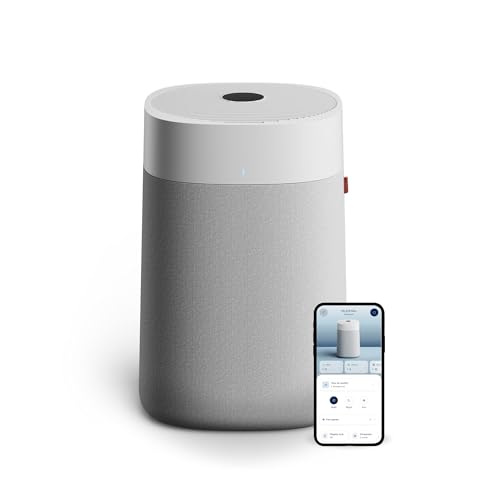
A claimed coverage of 3,235 square feet per hour means this purifier is built for open floor plans and sizable shared spaces, not just a single room. It’s the right call if your main concern is moving enough clean air through a great room, apartment, or workshop to keep dust from settling. The smart sensors and app let you monitor and adjust things from anywhere, which is handy for a unit meant to run constantly in a central area.
Designed to clean the air in large, open spaces up to 3,235 square feet in one hour, the Blueair Blue 211i Max is built for whole-floor coverage. Its HEPASilent dual filtration technology captures dust and other particles, while some manufacturers use this type of filter to achieve greater energy efficiency. For a more compact smart model using similar technology, the Blueair Blue 511i Max is intended for spaces up to 1,138 square feet.
Product photos
Honeywell Allergen Plus Compact Air Purifier
What We Like
- AQSense Auto Mode with color-coded air quality sensor.
- Extremely compact, tabletop design for tight spaces.
- Sleep Mode operates as low as 20.81 dBA.
- AHAM Verified for specific room air changes.
Trade-offs
- Maximum effective room size is 110 sq. ft. for thorough cleaning.
- Lightweight 2.1 lb build may feel less substantial than larger units.
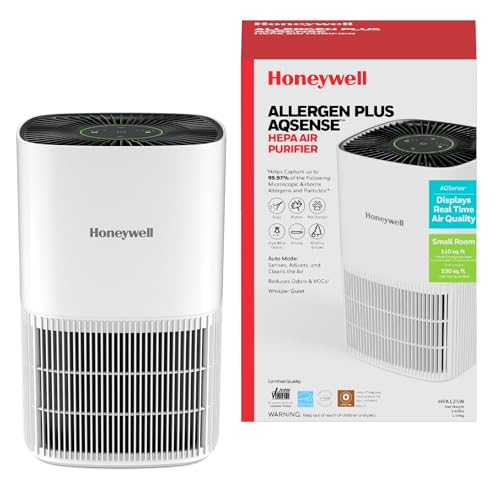
At just 2.1 pounds and a 7-inch square footprint, this Honeywell fits on a nightstand or desk without dominating the space. That makes it a genuine solution for dorm rooms, home offices, or beside a crib, where its 20.81 dBA sleep mode won’t disturb you. The auto mode is a smart touch, it reads the air and adjusts the fan, so you can set it and mostly forget it. This is the purifier you buy when floor space is at a premium and you need quiet, effective cleaning for a defined personal area.
This Honeywell purifier is AHAM Verified to circulate and filter the air up to 4.8 times per hour in a 110 square foot room. It also refreshes the air once per hour in a space up to 530 square feet. Its compact, tabletop design fits easily on a nightstand or desk, which makes it a practical choice for focused air cleaning in dorm rooms, apartments, or small offices. For significantly larger areas like a main living room, other models in the category are rated for greater square footage.
Product photos
Winix AT40 Air Purifier
What We Like
- Includes two years of filters for low maintenance
- Covers very large spaces efficiently
- Smart app and auto mode for easy operation
- Clear real-time air quality display
Trade-offs
- Weighs 7.0 lb, lighter construction than some peers
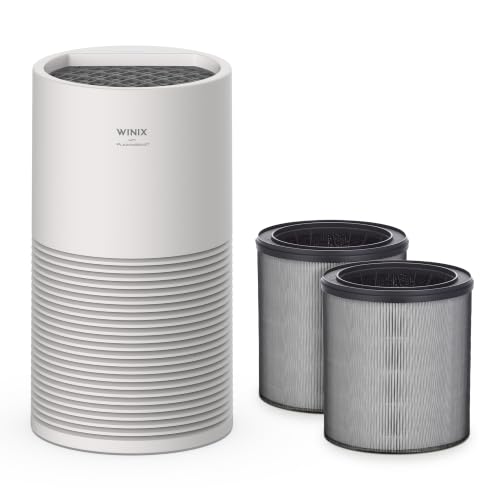
Including two full years of filtration right in the box means you can run this purifier for a long stretch without worrying about sourcing or budgeting for replacements. That’s a major practical advantage for anyone who wants to set it and forget it. For managing dust in a large, open space, its ability to cycle the air in a 1,968-square-foot room every hour gives it serious cleaning muscle. This makes the AT40 a strong fit for a workshop, great room, or open-plan living area where dust is a constant battle.
The trade-off for that extended filter life and large-area performance is a lighter, more plastic build compared to a heavier unit like the Coway Airmega Mighty2. For a dedicated, quiet bedroom purifier, you might look elsewhere, but for a low-maintenance workhorse in a common area, its core specs are compelling.
Product photos
Coway Airmega 100 Air Purifier
What We Like
- Effective HEPA filtration for 0.3-micron particles
- Auto mode adjusts fan based on air quality
- Quiet sleep mode turns off indicator lights
- Compact, lightweight design for easy placement
Trade-offs
- No app connectivity for remote control
- Manual fan control limited to three set speeds
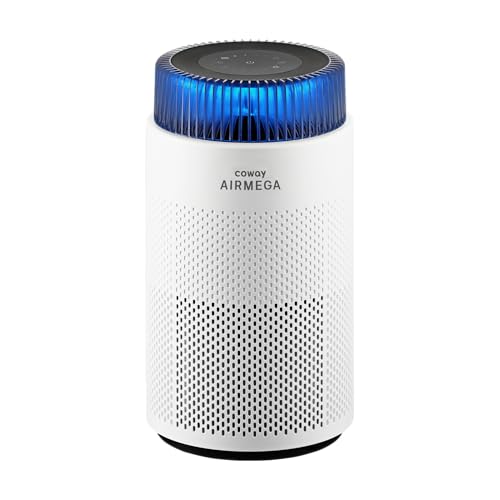
Its three-stage filter tackles dust and odors effectively, and the auto mode handles the thinking for you, ramping up when it detects more particles. That combination of capable filtration and hands-free operation is why it’s a reliable pick for someone who wants clean air without constantly fiddling with settings.
The trade-off for its compact size is that maximum coverage requires time; it needs a full hour to clean up to 810 square feet. The Winix 5520, for comparison, is rated for up to 1882 square feet. You get a lighter, more focused unit that excels within its specified zone rather than a model designed for much larger spaces.
Product photos
ECOSELF HAP602 Air Purifier
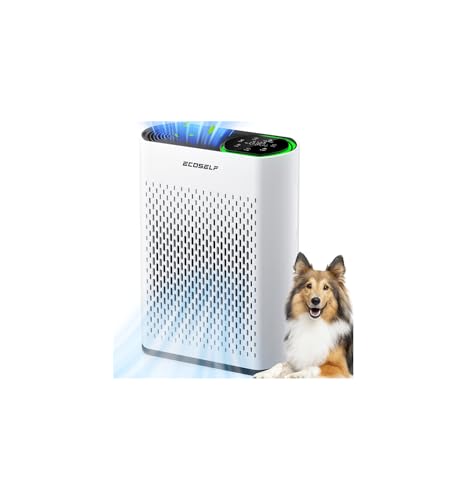
What We Like
- Real-time PM2.5 display with auto mode
- Very quiet 20dB sleep mode operation
- Intuitive touch panel with child lock
Trade-offs
- Filter requires replacement every 3-6 months
- Not designed for pet hair on surfaces
Cleaning 2400 square feet in half an hour is a serious claim for an air purifier, putting it in the top tier for large open spaces like workshops or great rooms. Its 360-degree airflow design pulls air from all sides, which is efficient for catching airborne dust from sanding or sawing without needing perfect placement. This unit is a strong fit for someone who wants a powerful, set-and-forget option with a clear air quality readout and a near-silent sleep mode for a bedroom.
The trade-off is in the maintenance. That high-performance filter needs swapping every three to six months, which is a more frequent schedule than some. For pure dust-catching power in a large area, it goes toe-to-toe with something like the Honeywell HPA5300B, which covers a similar space. The ECOSELF, however, is significantly lighter at 6.6 pounds, making it much easier to move from the garage to the living room as needed.
Product photos
How We Evaluated Air Cleaners For Dust
This guide is based on manufacturer specifications for filtration standards and room coverage, alongside patterns in expert round-ups and owner reviews. Key criteria included the presence of a True HEPA filter for capturing fine particles, the unit’s effective room size, and the availability of automated modes that adjust cleaning power based on dust levels. We also prioritized practical features like filter life indicators and quiet operation for continuous use. The evaluation relies on documented performance claims and user-reported experiences.
What To Look For In Air Cleaners For Dust
Choosing the right unit means matching its power to your space and ensuring it can run quietly and efficiently around the clock. The goal is to clear airborne dust particles before they settle on surfaces, where you’ll need a vacuum cleaner to remove them.
Look for a True HEPA filter, a room size rating that matches or exceeds your space, and an auto mode for hands-off operation. Quiet sleep modes are essential for bedrooms.
Filtration Standard
For dust, a True HEPA filter is the gold standard, certified to capture 99.97% of particles as small as 0.3 microns. This includes fine dust, allergens, and smoke. Some top-rated models, like several in our list, exceed this standard, capturing 99.99%. Avoid “HEPA-type” filters that lack this certification. A washable pre-filter is a valuable bonus, as it catches larger debris and extends the life of the more expensive main HEPA filter.
Room Size & Air Changes
Manufacturers provide a maximum room size in square feet, but this is often based on the unit running at its highest, noisiest speed. For thorough, continuous dust control, it’s better to choose a model rated for a larger area than your room. This allows it to work effectively on a lower, quieter setting while still achieving the recommended four to five air changes per hour. Our picks range from compact units for small bedrooms to powerful air filtration systems capable of cleaning very large spaces.
Automation & Noise
Since dust is an ongoing issue, you’ll want the purifier to run constantly. An auto mode that uses a built-in sensor to adjust fan speed based on real-time air quality makes this effortless. For bedrooms, a dedicated sleep mode that reduces noise to around 20-40 decibels and dims or turns off display lights is crucial. Understanding how to use a workshop air filtration system effectively means setting its modes and forgetting it.
- Check the decibel rating for the lowest fan speed.
- Confirm if the auto mode uses a laser or particle sensor for accuracy.
- Look for a filter replacement indicator to maintain peak performance.
A purifier that’s too loud on its effective settings won’t run when you need it most.
Air Cleaners For Dust Compared
The comparison table below puts key specifications side-by-side to help you see differences in coverage, filtration, and features at a glance.
| Product | Coverage (sq ft) | Filtration Type | Weight (lbs) |
|---|---|---|---|
| Coway Airmega Mighty2 Air Purifier | 1,800 ft² | 3-stage, IEST-certified HEPA | 15.2 |
| Winix 5520 Air Purifier | Up to 1882 sq ft | True HEPA, Carbon, Washable Pre-filter | 13.3 |
| Levoit Vital 200S Smart Air Purifier | Up to 1875 sq ft | N/A | 13.2 |
| Honeywell HPA5300B HEPA Air Purifier | 2423 sq ft | Exceeds HEPA (99.99% capture) | 20.5 |
| Blueair Blue 511i Max Air Purifier | up to 1,138 Ft² | HEPASilent dual filtration | 2.8 |
| Blueair Blue 211i Max Air Purifier | 3,235 sq ft | HEPASilent dual filtration | 16.0 |
| Honeywell Allergen Plus Compact Air Purifier | 110 sq. ft. | 3-in-1 HEPA | 2.1 |
| Winix AT40 Air Purifier | 1968 sq ft | True HEPA | 7.0 |
| Coway Airmega 100 Air Purifier | Up to 810 sq. ft. | 3-stage: Pre, Deodorization, HEPA | 7.5 |
| ECOSELF HAP602 Air Purifier | 2400 sq ft | 3-stage True HEPA | 6.6 |
Frequently Asked Questions
What air purifier removes the most dust?
The purifiers that remove the most dust are those with high Clean Air Delivery Rate (CADR) for dust and True HEPA filtration, matched to a sufficiently large room size. In our list, models like the Honeywell HPA5300B and Blueair Blue 211i Max are rated for the largest spaces, meaning they can move the greatest volume of filtered air per hour.
Do air purifiers actually get rid of dust?
Yes, air purifiers with proper HEPA filters are very effective at removing airborne dust particles. They pull dust-laden air through a dense filter that traps the particles, then recirculate cleaner air. However, they don’t eliminate dust that has already settled on floors or furniture, which requires regular vacuuming and dusting.
What is the best thing to remove dust from the air?
The best tool is an air purifier equipped with a True HEPA filter. It is specifically designed to capture fine particulate matter, including dust, as it circulates room air. For a comprehensive approach, combine a purifier with regular cleaning using a vacuum equipped with a HEPA filter to address settled dust.
How often should I run my air purifier for dust?
For continuous dust control, you should run your air purifier 24 hours a day. Most models have an auto or sleep mode that makes this practical by adjusting the fan to a quiet, energy-efficient speed when air quality is good. This constant operation prevents dust from accumulating in the air.
Can an air purifier help with dust mites?
An air purifier can help reduce dust mite allergens, which are particles of mite waste and bodies that become airborne. A HEPA filter can capture these allergens. However, purifiers do not kill live dust mites, which live in fabrics and bedding. Managing humidity and regularly washing bedding are more direct controls.
The Bottom Line
The Coway Airmega Mighty2 Air Purifier is our best overall pick for its smart automation and excellent dust filtration, ideal for homeowners who want a thorough, set-and-forget solution for a large living area. If your primary need is covering a massive workshop on a budget, the Winix 5520 offers tremendous value, while the Honeywell Allergen Plus Compact is perfect for a quiet bedroom or small office. Ultimately, the single most important factor is choosing a unit with a True HEPA filter and a room size rating that generously exceeds your actual space.
