
10 Best Air Compressors For Blowing Out Sprinklers in 2026
This post contains affiliate links. As an Amazon Associate, we earn from qualifying purchases.
Our best overall air compressor for blowing out sprinklers is the Craftsman 6 Gallon Pancake Air Compressor for its blend of portability and multi-tool versatility. For high-capacity needs, consider the quiet Stealth 20 Gallon or the large-tank Craftsman 20 Gallon Oil-Free models. The wrong compressor can leave water in your lines or damage pipes with excessive pressure.
Choosing the right one requires matching its airflow to your system’s size. This guide is based on research into compressor specifications, expert recommendations, and patterns in owner feedback to help you select a safe, effective unit.
Top 10 Air Compressors For Blowing Out Sprinklers in the Market
Certain content that appears on this site comes from Amazon. This content is provided "as is" and is subject to change or removal at any time.
The Best Air Compressors For Blowing Out Sprinklers, Reviewed
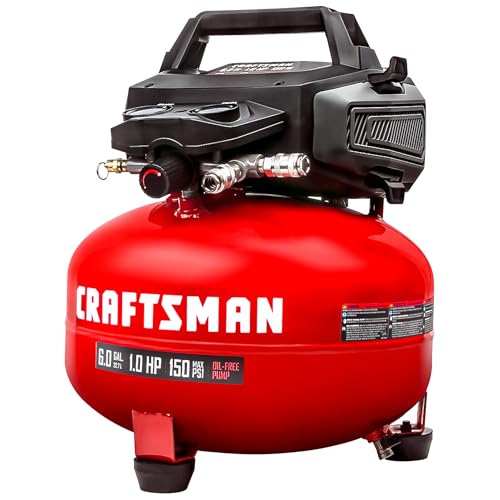
Craftsman 6 Gallon Pancake Air Compressor
What We Like
- Portable 30.8 lb design with a carry handle
- Dual quick couplers for running multiple tools
- Oil-free motor requires minimal maintenance
- Compact pancake footprint saves shop space
Trade-offs
- 6-gallon tank refills frequently during extended blow-out sessions
- Lacks integrated wheels, unlike larger stationary compressors
A 6-gallon tank paired with 150 PSI max pressure hits a sweet spot for residential sprinkler blow-outs, providing enough air volume and force to clear standard zones without overwhelming a homeowner’s garage. Its 30.8-pound weight and compact footprint make it genuinely portable, so you can easily haul it to the spigot. The dual couplers are a thoughtful touch, letting you hook up a hose while running another air tool. This compressor suits the DIYer who needs a capable, multi-purpose machine for seasonal tasks and year-round projects.
Its oil-free, low-voltage start motor offers strong performance for a variety of home, shop, or workshop projects. The 6-gallon capacity means the compressor will cycle more frequently during extended use than a larger model like the 20-gallon Craftsman. This makes it a versatile choice for general home improvement, automotive maintenance, and woodworking, where portability is prioritized over continuous high-volume air delivery.
Product photos
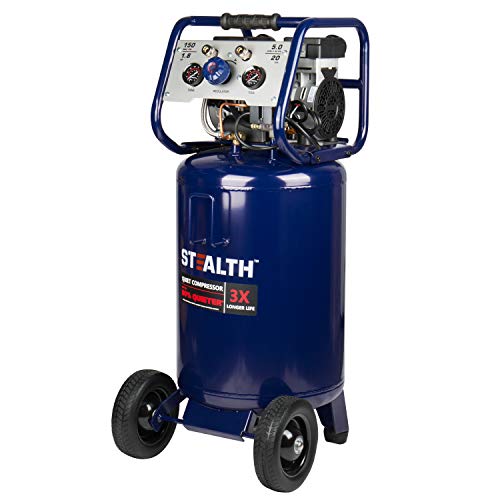
Stealth 20 Gallon Ultra Quiet Air Compressor
What We Like
- Exceptionally quiet 68-decibel operation
- Large 20-gallon tank for extended run time
- Quick recovery with 5.5 CFM air delivery
- Stable, mobile design with 8-inch wheels
Trade-offs
- Large 42-inch height may not fit under some workbenches
Operating at 68 decibels, the Stealth 20 Gallon compressor runs quieter than many rivals, a real benefit for garage workshops in residential areas. Its 20-gallon steel tank provides a substantial air reserve, which supports longer run times for pneumatic tools. This model suits users who need serious capacity but want to reduce noise during DIY projects or professional work.
That high capacity and quiet operation come with a 121.4-pound weight, so the heavy-duty steel frame and eight-inch wheels are essential for moving it around a shop. It demands dedicated floor space, unlike more portable pancake compressors such as the 30.8-pound Craftsman 6-gallon model. This compressor is a shop anchor, not a jobsite nomad.
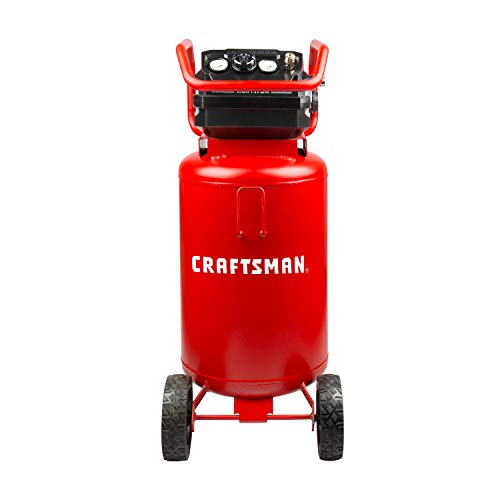
Craftsman 20 Gallon Oil-Free Air Compressor
What We Like
- Large 20-gallon tank for extended run time
- Oil-free pump requires no maintenance
- 175 PSI max pressure provides strong reserve
Trade-offs
- At 41.5 inches tall, it requires significant floor space
- Heavier and less portable than smaller pancake models
The Craftsman’s 20-gallon tank and 175 PSI maximum pressure store a substantial volume of air, which supports longer tool run times between compressor cycles. This large capacity suits extended tasks in a garage, jobsite, or workshop, as listed in its intended uses. Its oil-free pump requires no maintenance, according to the product description.
The trade-off is its substantial footprint; at over three feet tall, this isn’t a unit you’ll easily tuck into a corner. For a typical residential system, a model like the Craftsman 6 Gallon Pancake is far more maneuverable and stores easily. But if your priority is completing the job with fewer interruptions from the compressor cycling, the large tank here justifies the dedicated workshop or garage space it will occupy.
Product photos
DEWALT 27-Gallon Vertical Air Compressor

What We Like
- Large 27-gallon tank for extended runtime
- Oil-free pump for minimal maintenance
- Low-voltage motor for reliable 110V starts
- Quiet 78 dBA operation for neighborhood use
Trade-offs
- Weighs 136 pounds, making it difficult to move
- 54.5-inch height requires significant vertical storage space
With a 27-gallon tank, this DEWALT compressor holds a substantial air reserve, which means longer tool runtimes between motor cycles for garage tasks. Its output is rated at 5.1 SCFM at 90 PSI, providing steady pressure for tools like impact wrenches or nailers. The oil-free pump design eliminates the need for routine oil changes, making it a lower-maintenance option for home workshops.
Its vertical design saves floor space, but the unit weighs 136 pounds and stands over four feet tall, so it’s best treated as a stationary garage fixture rather than a portable tool. Compared to a compact 6-gallon pancake compressor, this DEWALT offers far greater air capacity but requires a dedicated storage area. The motor operates at 78 dBA, a noise level that allows for conversation nearby, which is useful for indoor home improvement projects.
Metabo HPT 6 Gallon Pancake Air Compressor

What We Like
- Highest pressure among pancake models at 200 PSI.
- Delivers 4 CFM for strong, sustained airflow.
- Lightweight and compact for a 6-gallon compressor.
- Can run multiple nailers simultaneously for versatility.
Trade-offs
- At 42 lbs, heavier than the 30.8 lb Craftsman pancake.
- 6-gallon tank refills more often than 20+ gallon units.
- Lower air capacity than dedicated stationary compressors.
With a max pressure of 200 PSI, this Metabo HPT pancake delivers a stronger blast of air than its category standard, making it particularly effective for stubborn sprinkler lines. Its 4 CFM output provides a solid, consistent flow, and the 6-gallon tank offers a useful reserve before the motor kicks on. This model is a smart pick for the contractor or serious DIYer who needs a portable compressor that can handle demanding pneumatic tools and still tackle seasonal chores like blowing out irrigation systems.
The trade-off for its high-pressure capability is portability. While lighter than a twin-stack, at 42 pounds it’s not as easy to haul as some lighter pancakes. For a large, multi-zone sprinkler system, you’ll be waiting on the tank to refill more often than you would with a larger unit like the Stealth 20 Gallon. This compressor excels as a jobsite workhorse that moonlights for yard work, but it’s not a dedicated high-volume machine for massive properties.
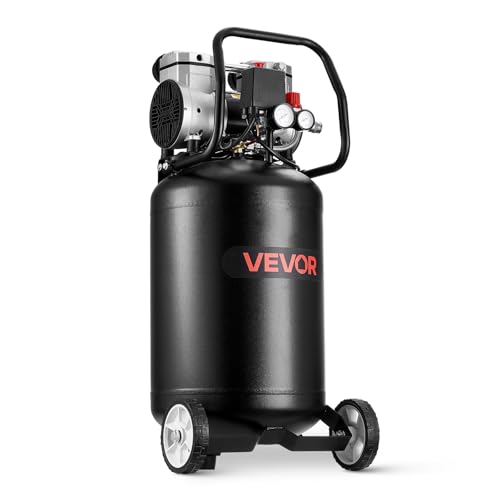
VEVOR 14-Gallon Air Compressor
What We Like
- Fast 2.97-minute tank fill from empty
- Oil-free design for clean air and low maintenance
- Rolling wheel and handle for easy portability
- 4.3 SCFM flow sustains many pneumatic tools
Trade-offs
- 63-pound weight is substantial for a portable unit
- 125 PSI max pressure is lower than some 150+ PSI models
- 14-gallon tank is smaller than dedicated shop compressors
Filling its 14-gallon tank to 125 PSI in under three minutes makes this compressor a practical choice for tasks requiring repeated air bursts. The 4.3 SCFM flow rate at 90 PSI is compatible with common tools like air blow guns and nailers. An oil-free pump reduces maintenance by eliminating the need for lubricant changes, which suits users focused on auto repair, tire inflation, or woodworking.
You get quick recovery time, but this is a 63-pound unit on wheels, not a lightweight carry-anywhere tool. It’s mobile around a garage or yard, though you’ll feel its heft loading it into a vehicle. Compared to a smaller 6-gallon pancake compressor like the Craftsman, this model holds more air and refills faster, which reduces downtime. Its 14-gallon capacity and 125 PSI maximum are more modest than larger stationary tanks, so it sits in a practical middle ground for extended light-duty work.
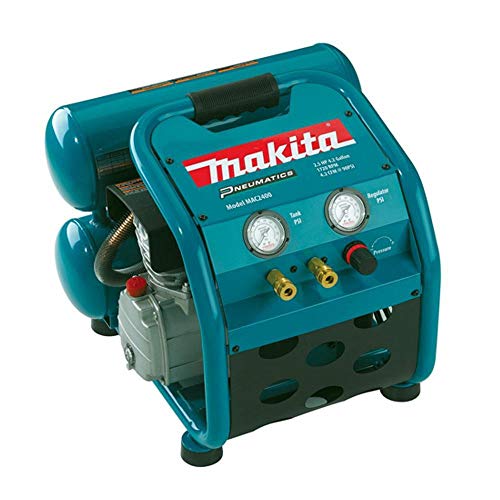
Makita MAC2400 Big Bore Air Compressor
What We Like
- Cast iron Big Bore pump for fast recovery.
- High 4.2 CFM output sustains air tools.
- Roll-cage protects against jobsite damage.
- Oil-lubricated design runs cooler for longevity.
Trade-offs
- Oil-lubricated pump requires periodic maintenance.
- Larger footprint than 6-gallon pancake models.
Its 4.2 CFM delivery at 90 PSI provides a strong, steady airflow for tools that demand continuous operation, supported by a cast iron pump engineered for faster recovery. This output and durable construction suit users who need consistent performance for extended tasks, treating the compressor as a long-term investment. The oil-lubricated Big Bore design contributes to cooler running and reduced wear over time.
The trade-off is in maintenance and portability. The oil-lubricated pump requires periodic checking and changes, unlike oil-free models such as the Craftsman 6-gallon pancake. Its roll-cage construction provides protection for jobsite use, but it lacks integrated wheels for easy rolling like the VEVOR 14-gallon model, meaning it must be carried by its frame.
Stealth 2 Gallon Ultra Quiet Air Compressor

What We Like
- Extremely quiet sub-60 dB operation
- Compact 2-gallon tank for easy storage
- Oil-free design for minimal maintenance
- Sturdy Q235B steel tank construction
Trade-offs
- Small 2-gallon tank requires frequent cycling for long tasks
- Heavier than some 6-gallon models like the 30.8 lb Craftsman pancake
This compressor runs at under 60 decibels, which keeps a home workshop or garage much quieter than typical models. Weighing 41.9 pounds with a built-in handle, it’s designed to be carried from room to room for tasks like nailing or inflating tires. The oil-free motor requires less maintenance over its long life cycle of more than 1000 hours. For a homeowner tackling DIY projects, its combination of quiet operation and portability makes it a practical choice.
This compressor’s quiet, portable design comes with a smaller air supply. Its 2-gallon tank and 1.8 CFM at 90 PSI air delivery mean the pump cycles on more often during continuous use than a larger stationary model would. That makes it better for intermittent jobs like airbrushing or using a stapler, rather than high-demand operations requiring constant, high-volume air flow.
Product photos
Pulsar GYC6100S Air Compressors

What We Like
- Generous 10-gallon tank for extended runtime
- High 4.0 SCFM airflow at 90 PSI for strong blowout
- Wheeled, portable 68-pound design for yard mobility
- No oil changes required for simple maintenance
Trade-offs
- At 68 pounds, it's heavier than smaller 6-gallon units like the Craftsman pancake.
- The 10-gallon tank is less than half the capacity of a 20-gallon model.
The Pulsar GYC6100S delivers 4.0 SCFM at 90 PSI from its 10-gallon tank, providing a useful balance of portable air volume and flow for tasks like inflating tires and running light-duty air tools. Its engineering for reliable startup in cold-weather conditions means it can be used straight from an unheated storage area when needed. An oil-free pump design eliminates the routine maintenance of checking or changing oil.
You gain a capable tank and cold-weather reliability, but you lose some portability. At 68 pounds, it’s manageable on its wheels but significantly heavier than a pancake compressor you could carry with one hand. For a larger property, the Stealth 20 Gallon model offers more than double the air reserve, which means less motor runtime and longer continuous air delivery. If your priority is a dependable, mid-capacity compressor that starts reliably in cooler temperatures, this unit hits a practical sweet spot.
Product photos
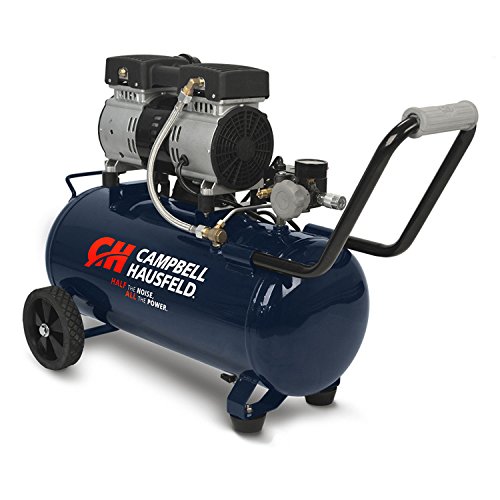
Campbell Hausfeld DC080500 Quiet Air Compressor
What We Like
- Exceptionally quiet 65 dB operation
- Oil-free pump for minimal maintenance
- Standard 120V household outlet plug
- Large wheels and handle for portability
Trade-offs
- 2.4 CFM air delivery is modest for high-demand tools.
- 8-gallon tank requires more frequent pump cycles than larger units.
A 65 dB noise level is the standout feature here, making it possible to run this compressor in a garage without disturbing the whole household. That makes it a prime candidate for anyone with close neighbors or who simply values a quieter workspace. The oil-free pump adds to its low-maintenance appeal for seasonal tasks like blowing out sprinkler lines, where you don’t want extra fuss. It delivers enough air for that specific job and plugs into any standard outlet, so setup is straightforward.
You get quiet operation, but from a substantial 67-pound frame. While it has wheels, moving it up or down steps is a two-person job. Its 2.4 CFM air delivery is adequate for blowing out sprinklers but would be a bottleneck for continuously running an air ratchet or large die grinder. For a similar quiet profile with more air on tap, the Stealth 20 Gallon model offers a higher CFM rating, though it’s significantly larger and heavier.
Product photos
How We Evaluated Air Compressors For Blowing Out Sprinklers
This guide assesses air compressors using manufacturer specifications and documented performance metrics, including air delivery and tank capacity. It references expert recommendations and professional landscaping guides to outline requirements for sprinkler blowouts, such as the importance of pressure regulation. Common themes in user reviews provide insight into reliability and ease of use. The focus is on identifying sprinkler blowout compressors that supply consistent airflow while avoiding excessive pressure on irrigation systems.
What To Look For In Air Compressors For Blowing Out Sprinklers
Selecting the right compressor protects your irrigation system from costly freeze damage. The goal is to find a unit that can move water effectively without stressing your pipes.
Focus on airflow (CFM) over maximum pressure. A regulator to control output pressure is essential. Tank size dictates how long you can blow air before waiting for the pump to refill. Portability matters for moving the unit around your property.
Airflow (CFM)
Cubic feet per minute (CFM) measures the volume of air a compressor can deliver. For blowing out sprinklers, you need enough airflow to keep sprinkler heads open and push water through the pipes. Expert sources suggest a range of 20 to 50 CFM for professional work, but many homeowner systems can be managed with less. A simple rule of thumb is to divide your largest zone’s water flow in gallons per minute (GPM) by 7.5 to estimate your minimum CFM requirement.
Pressure Regulation
The compressor’s maximum pressure (PSI) is less important than your ability to limit it. PVC irrigation pipes should not see more than 80 PSI, while polyethylene lines are often rated for only 50 PSI. Using an unregulated compressor at its tank pressure can crack pipes and break sprinkler heads. Look for a unit with a built-in pressure regulator on its outlet, which is a non-negotiable safety feature for sprinkler blowout work.
Tank Size & Duty Cycle
A larger tank provides a bigger reserve of air, allowing you to blow a zone longer before the pump must kick in to refill it. For extended runtimes, a 20-gallon or larger tank is common. However, a large tank is useless if the pump’s recovery rate is slow; you need a pump that can sustain the required CFM. This is known as duty cycle. Most reciprocating piston compressors need periodic rest, so understanding your unit’s limits is key for a proper setup.
- Verify the pump’s CFM rating at the pressure you’ll be using (e.g., 40-50 PSI).
- Consider a wheeled model if you need to move the compressor across a yard.
- Ensure the unit has a standard quick-connect fitting for your air hose.
- Check if the compressor requires oil changes or is maintenance-free.
- Always connect a pressure regulator between the compressor and your irrigation system.
The single most important step is using a pressure regulator set below your pipe’s rating.
Air Compressors For Blowing Out Sprinklers Compared
The comparison table below summarizes the key specifications to help you weigh portability against capacity at a glance.
| Product | Tank Capacity | Max Pressure | Air Delivery @ 90 PSI | Weight |
|---|---|---|---|---|
| Craftsman 6 Gallon Pancake Air Compressor | 6 Gallon | 150 PSI | 2.6 SCFM | 30.8 Pounds |
| Stealth 20 Gallon Ultra Quiet Air Compressor | 20 gallons | 150 PSI | 5 CFM @ 90 PSI | 121.4 pounds |
| Craftsman 20 Gallon Oil-Free Air Compressor | 20 gallon | 175 PSI | 4 SCFM at 90 PSI | N/A |
| DEWALT 27-Gallon Vertical Air Compressor | 27 gallons | N/A | 5.1 SCFM | 136 pounds |
| Metabo HPT 6 Gallon Pancake Air Compressor | 6 Gallons | 200 PSI | 4 CFM at 90 PSI | 42 lbs |
| VEVOR 14-Gallon Air Compressor | 14 gallons | 125 PSI | 4.3 SCFM at 90 PSI | 63.0 pounds |
| Makita MAC2400 Big Bore Air Compressor | N/A | N/A | 4.2 CFM at 90 PSI | 0.0 Pounds |
| Stealth 2 Gallon Ultra Quiet Air Compressor | 2 Gallon | 125 PSI | 1.8 CFM | 41.9 lb |
| Pulsar GYC6100S Air Compressors | 10 gallon | 150 PSI | 4.0 SCFM | 68.0 pounds |
| Campbell Hausfeld DC080500 Quiet Air Compressor | 8 gallons | 125 PSI | 2.4 CFM at 90 PSI | 67 pounds |
Frequently Asked Questions
What is the best air compressor for blowing out sprinklers?
For most homeowners, a portable, oil-free compressor with a 6 to 10-gallon tank offers a good balance of power and mobility. Our top pick, the Craftsman 6 Gallon Pancake Air Compressor, fits this role well, but the best model for you depends on the size of your irrigation zones and your storage space.
What type of air compressor is best for blowing out water lines?
A portable electric air compressor with a piston pump is the most common choice for residential use. Key features should include a pressure regulator to control output and sufficient airflow (CFM) to clear your lines. For larger properties, contractors often use gas-powered wheeled units or truck-mounted systems with higher CFM ratings.
What psi do you pump a sprinkler system?
You must never use the compressor’s maximum tank pressure. For safe air compressor safety, use a regulator to limit the air entering your irrigation pipes. Most sources recommend not exceeding 50 PSI for flexible polyethylene pipes and 80 PSI for rigid PVC pipes to prevent damage.
Do I need a large tank for sprinkler blowout?
A larger tank provides a longer continuous blast of air, which can be helpful for bigger zones. However, a smaller tank paired with a pump that has a good recovery rate can also work effectively, as you can cycle the compressor on and off between zones. Your choice should be guided by your system’s total volume and your patience for waiting.
Can I use any air hose for sprinkler blowout?
You can use any standard air hose rated for the pressure you’ll be using. Since you’ll be working outdoors, a longer hose provides more flexibility. For advice on selecting durable and kink-resistant options, see our resource on the best air hoses.
The Bottom Line
The Craftsman 6 Gallon Pancake Air Compressor is our best overall pick for its portability and versatility, ideal for homeowners with typical-sized yards and other DIY tasks. If your primary concern is a quiet, high-capacity stationary unit, the Stealth 20 Gallon Ultra Quiet Air Compressor is a strong alternative.
For those on a tighter budget or with very small systems, the compact Stealth 2 Gallon model may suffice. Regardless of your final choice, always remember that using a pressure regulator set to a safe level is the most critical factor for protecting your irrigation investment.
