
10 Best Automotive Sanders in 2026
This post contains affiliate links. As an Amazon Associate, we earn from qualifying purchases.
The 3M 20317 Random Orbital Sander is our best overall automotive sander for its balanced motor and durable design that stands up to daily shop work. For focused cutting and weld removal, we named the 3M 33575 File Belt Sander best for body repair, while the Milwaukee 2482-20 Automotive Sander is our top cordless belt sander for spot repairs. Choosing the right tool depends heavily on your shop’s air supply and the specific task at hand.
Automotive sanding demands tools built for aggression, control, and endurance on metal and filler. The wrong sander can leave swirl marks, fail to level a panel, or simply burn out under constant use. You need a tool matched to your power source, the size of the work, and the required finish.
This guide is based on a review of specifications, manufacturer data, and patterns in professional feedback. We ranked ten sanders across several key criteria to help you find the right one for your garage or shop.
Top 10 Automotive Sanders in the Market
Certain content that appears on this site comes from Amazon. This content is provided "as is" and is subject to change or removal at any time.
The Best Automotive Sanders, Reviewed
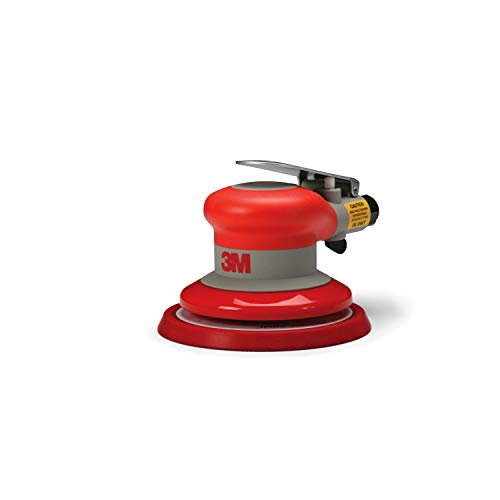
3M 20317 Random Orbital Sander
What We Like
- Precision balanced motor for smooth control.
- Compact, low-profile ergonomic design.
- Includes 3M Stikit disc pad for easy attachment.
- Durable aluminum body reduces housing cracks.
Trade-offs
- Non-vacuum design creates more airborne dust.
- Pneumatic power requires a dedicated air supply.
- Marked for industrial use only, not consumer sale.
Designed for industrial use only, this pneumatic sander pairs a 3/16-inch orbit with a motor that provides continual power for sanding and finishing. The 2.2-pound tool has a compact, balanced aluminum body, which reduces fatigue during long sessions. Its Stikit disc pad allows for easy adhesive-backed disc changes, supporting efficient workflow in a professional shop setting.
Operation requires a compressed air supply, confining its use to a workshop or garage. The product’s specification for industrial and occupational use only indicates it is not intended for consumer projects. Its non-vacuum design also means the work area must accommodate the generated dust.
Product photos
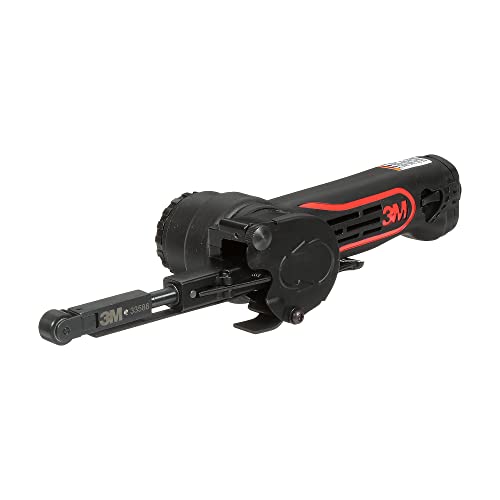
3M 33575 File Belt Sander
What We Like
- Exceptionally lightweight at just 2.0 pounds
- Rotatable housing for work in tight spaces
- Compatible with Cubitron II and Scotch-Brite belts
Trade-offs
- Not approved for consumer sale or use
- Belt length is fixed, limiting sanding surface options
- Lacks integrated dust extraction common on other sanders
A 2-pound weight makes this sander a precision instrument for demanding metalwork, reducing operator fatigue during hours of contouring panels or removing spot welds. Its 495W (.65 horsepower) motor provides the power needed for collision repair applications. The rotatable housing allows for use in a variety of tight spaces, letting you find the right angle in cramped quarters.
That industrial designation is a serious limitation, placing it firmly in a professional shop, not a home garage. Compared to a versatile random orbital sander like the 3M 20317, the 3M 33575 is a specialist. It excels at aggressive material removal and filing in a straight line, but it won’t handle the fine finishing work or broad surface prep that a dual-action sander manages. You’re buying a surgical tool, not a Swiss Army knife.
Product photos
Rupes Skorpio III Orbital Sander

What We Like
- Engineered motor maximizes torque with low airflow
- Lightweight ergonomic design for effortless operation
- 6mm orbit balances comfort, control, and efficiency
- High-quality components for long life in high stress
Trade-offs
- Pneumatic tool requires a separate air compressor
An engineered motor that maximizes torque even with inconsistent airflow means this sander won’t bog down when your compressor cycles, delivering consistent material removal through body filler or clear coat. It’s a tool for the professional or serious enthusiast who needs reliable performance in a shop environment where air pressure can vary. The 6mm orbit and 1.8-pound frame strike a deliberate balance, providing enough bite for fast work without sacrificing the control needed for final sanding.
As a pneumatic tool, the Rupes Skorpio III requires a dedicated air compressor, so its use is confined to workshops or garages with that setup. Its 6mm orbital stroke provides a balance of material removal and finish quality, which the manufacturer states handles tasks from body filler preparation to final clear coat sanding. The design prioritizes consistent torque even with low airflow, making it reliable for extended use in professional environments.
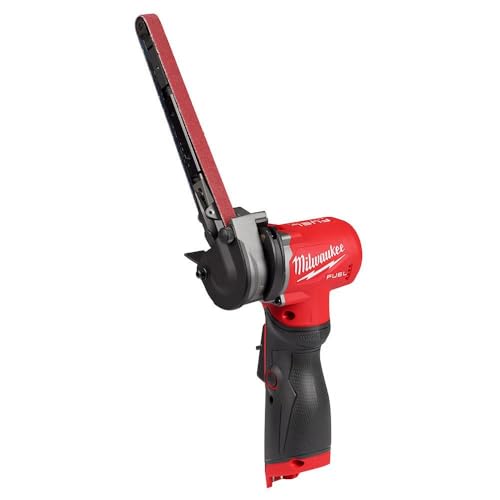
Milwaukee 2482-20 Automotive Sander
What We Like
- Two-speed settings plus variable trigger for precise control.
- 360-degree rotating arm reaches difficult angles.
- Forward and reverse rotation increases versatility.
- Toolless belt change saves time on projects.
Trade-offs
- Tool-only listing means you need a compatible Milwaukee 12V battery.
- The half-inch belt width is narrow for large, flat surfaces.
With a variable speed trigger and two preset speeds, this Milwaukee sander provides exceptional control over abrasive action, which is critical for automotive work where you need to feather edges without burning through thin metal. The tool is designed for precise spot solder removal, expediting metal work on tough surfaces. Its 360-degree rotating arm and reverse rotation function allow access to difficult angles and contours, making it a highly adaptable tool for complex repair jobs.
The trade-off for that precision is the narrow half-inch belt, which isn’t the right tool for quickly leveling large panels. For that kind of work, a wider belt sander like the 3M 33575 would be more efficient. This Milwaukee excels as a surgical instrument in your toolkit, perfect for the fine, controlled metalwork that comes after the bulk material is removed. It’s a specialist, not a generalist.
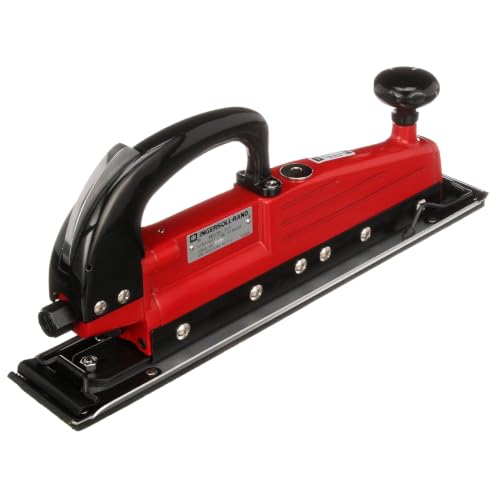
Ingersoll Rand 315 Straight-Line Sander
What We Like
- Twin-piston design provides power and prevents stalling.
- Low vibration and two-handle design offer precise control.
- Quick-action clamps enable fast, tool-free paper changes.
- Durable composite body built for long-term reliability.
Trade-offs
- Requires a separate air compressor, which is not included.
- Large 16.6-inch length can be cumbersome in tight spaces.
A stroke rate of 3,000 SPM and a large 15-inch pad mean you can level panels and feather edges quickly without leaving cross-grain scratches, which is critical for automotive metalwork. This tool suits a professional or serious restorer who needs a dedicated, air-powered straight-line sander for daily panel shaping and surface preparation. Its twin-piston design delivers consistent power to avoid stalling under load, while the low vibration output makes long sessions manageable.
The trade-off is significant heft and bulk. At over 6 pounds, it demands more arm strength than a compact sander like the 3M 33575 File Belt Sander, which weighs just 2 pounds. That makes the Ingersoll Rand less ideal for overhead work or detailed spot repairs. It’s a strong performer for its specific job, flattening large, flat surfaces, but you’ll want a lighter tool for fine finish work or confined areas.
KUIMIT 3-Inch Mini Air Sander

What We Like
- Compact size fits in the palm of your hand
- Built-in regulator for adjustable speed control
- Lightweight design with low vibration operation
- Suitable for sanding, grinding, and polishing
Trade-offs
- Requires a dedicated air compressor to operate
- Small 3-inch pad limits work area on large panels
A free speed of 11,000 RPM in a palm-sized tool means you can tackle spot repairs and tight contours with aggressive cutting power where larger tools can’t reach. This makes the KUIMIT a specialist for detail work on auto body panels, furniture edges, and small metal projects. Its lightweight, low-vibration design and one-handed operation provide the control needed for precise material removal without fatiguing your hand during extended sessions on a fender or door jam.
The obvious trade-off is the pneumatic power source; you’ll need a capable air compressor and hose, which anchors it to the shop. For sanding broad, flat surfaces, the 3-inch pad will feel inefficient compared to a standard 5 or 6-inch DA sander like the RYCUBRE 6-Inch DA Air Sander. Keep this mini sander on your bench for the final feathering of a repair or polishing intricate components, not as your primary surfacing tool.
Product photos
TOOGOND Mini Random Orbital Sander
What We Like
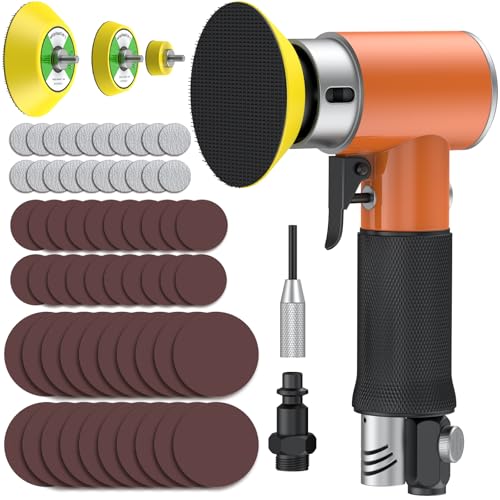
- Comprehensive kit with three backing plates
- Includes 60 sandpaper pieces for immediate use
- Compact and lightweight ergonomic design
- Quick-change functionality for 1-3 inch discs
Trade-offs
- Requires a 90 PSI air compressor to operate
- 3-5 CFM air consumption may strain small compressors
A 15,000 RPM motor paired with a 4mm orbit delivers the smooth, swirl-free finish essential for automotive paint correction. This sander is built for the detailer or restorer tackling tight spaces on motorcycles or classic cars. Its compact size and included array of pads and abrasives let you start work right away. The dual-action pneumatic system intelligently adapts to pressure changes, which helps maintain a consistent finish even on complex curves without bogging down.
This tool relies on shop air, requiring a compressor that can deliver a steady 90 PSI. The 3-5 CFM draw means smaller portable units might struggle to keep up during prolonged sanding sessions. For pure spot repair in confined areas, it’s more versatile than the dedicated file belt action of something like the 3M 33575, but it lacks the integrated dust collection of larger electric orbital sanders. It’s a focused tool that excels within its intended scope.
Product photos
DeWalt DWE6401DS Rotary Sander
What We Like
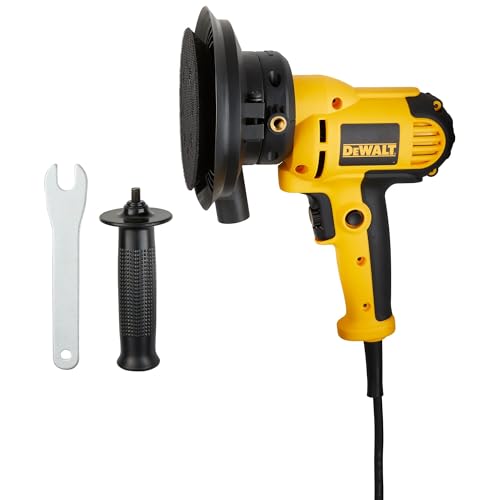
- 6 amp motor provides high torque for aggressive material removal
- Variable speed trigger dial offers control from 0 to 3,700 OPM
- Mid-handle design with soft grip reduces user fatigue
- Accepts common 5-inch 8-hole sandpaper for easy sourcing
Trade-offs
- Weighs 4.8 pounds, which is heavy for extended overhead work
- Fixed 5-inch pad size limits access in tight contours
- No battery option; requires a constant power cord connection
A 6 amp motor delivers high torque to speed up the sanding process, which helps power through demanding applications without stalling. The mid-handle design with a soft grip and side handle provides increased balance to relieve user fatigue during extended use. This electric sander accepts readily available 5-inch hook and loop paper, allowing for quick changes to keep work moving.
The trade-off for that power is bulk. At 4.8 pounds, it’s a workout on vertical panels compared to a featherweight like the 2.2-pound 3M 20317 random orbital. You also sacrifice some finesse in tight spaces, as the 5-inch pad can’t get into sharp curves or small repair spots. This is a workhorse for the heavy phases of a job, not the final touch-ups. It excels at the rough work, letting a lighter tool handle the finish.
Makita VP01Z Compact Polisher Sander

What We Like
- Compact size for precise detail work
- Brushless motor for longer battery runtime
- Variable 2-speed design for two modes
- Anti-restart protection for safety
Trade-offs
- Tool only: battery and charger sold separately
- At 3.1 lb, it's heavier than some air-powered detail sanders
Designed as a 3-inch polisher and sander, this compact Makita fits into tight spaces like automotive trim or around headlight edges where bulkier tools cannot reach. Its brushless motor optimizes 12V battery energy for longer run time, a key advantage for cordless work. With a variable-speed trigger offering up to 9,500 RPM for sanding and 2,800 RPM for polishing, it handles both aggressive material removal and fine finishing in one tool.
Its compact design is a key feature. That 3-inch orbit is perfect for details but means you’ll be spending more time on larger areas. Compared to a dedicated 5-inch random orbital sander like the 3M 20317, this tool won’t cover ground as quickly on flat body panels. It’s also a system commitment; you’re buying into a specific 12V battery platform. If you already have those batteries, this polisher-sander becomes a very convenient two-in-one tool. If you don’t, factor in the cost of that ecosystem.
Product photos
RYCUBRE 6-Inch DA Air Sander
What We Like
- Exclusive noise-reduction technology for quieter operation.
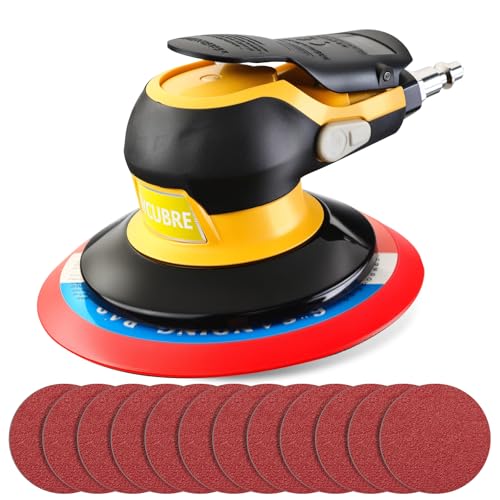
- Lightweight 2.4-pound design reduces user fatigue.
- Adjustable speed switch for material-specific control.
- Ergonomic shape ensures comfortable handling.
Trade-offs
- Requires a 15-gallon-plus air compressor to operate.
A noise-reduction design makes this a standout choice for shops where quiet operation is a priority, transforming a typically noisy task into a more manageable one. At 2.4 pounds with an ergonomic shape, it’s built for the long sanding sessions common in auto body work without causing excessive fatigue. The 12,000-13,000 RPM speed provides brisk material removal, while the adjustable switch lets you dial it back for finer finishing on contours or delicate surfaces.
This sander depends on a substantial air supply, needing a 15-gallon-plus compressor to run properly, which limits its portability. For general panel sanding and primer work, its 6-inch pad and 5mm orbit strike a solid balance between speed and finish quality.
Product photos
How We Evaluated Automotive Sanders
This guide is based on a review of manufacturer specifications for orbit size, speed, and air consumption, along with an analysis of professional reviews and user feedback. This process identified common patterns regarding durability, control, and performance in automotive applications.
For automotive work, we prioritized power source compatibility, as many top tools require a capable air compressor. We also weighed design for user fatigue, with lightweight tools scoring higher for extended use, and looked at features that enhance control, like variable speed or ergonomic grips. The intended application, from large panel leveling to tight spot repair, was a final deciding factor.
A limitation of this method is that we cannot measure real-world factors like balance in the hand or the exact feel of vibration dampening over an eight-hour shift. Our conclusions are drawn from documented specs and the consensus found in expert and user reviews.
What To Look For In Automotive Sanders
Your choice hinges on your shop’s setup and the specific tasks you perform daily. A well-equipped shop will have several types for different stages of repair.
Match the tool to the job: orbital sanders for finishing, straight-line for leveling, and belt sanders for aggressive cutting. Your air compressor’s capacity is a critical, non-negotiable check before buying any pneumatic tool.
Power Source: Air vs. Electric vs. Cordless
Pneumatic (air) sanders dominate professional shops because they offer high power with less weight and no risk of overheating. However, they require a significant investment in a capable air compressor, with tools often needing 4-5 CFM at 90 PSI. Electric sanders, like our best high-torque electric pick, provide consistent power without an air supply but are typically heavier and generate more heat. Cordless models offer ultimate portability for spot repairs but trade runtime and raw power, making them better suited for detail work than stripping large panels.
Type of Motion and Pad Size
The sander’s motion dictates its finish and application. Random orbital sanders, like our best overall, provide a swirl-free finish ideal for final paint prep. Straight-line sanders move in a linear pattern and are unmatched for leveling body filler on large, flat panels. Belt sanders offer the most aggressive material removal for cutting down welds or old paint. Mini or detail sanders, with their small, often teardrop-shaped pads, are essential for navigating tight contours and corners that larger tools can’t reach.
Ergonomics and Control
Extended sanding sessions demand a tool designed for comfort. Lightweight construction, under three pounds for many air tools, drastically reduces arm fatigue. Features like a rotating head or a 360-degree rotating arm, found on our best cordless belt sander, provide access to difficult angles without straining your wrist. Variable speed controls and a soft-grip handle are critical for maintaining precision, allowing you to adjust aggression for different materials, from delicate primer to stubborn clear coat.
- Check the tool’s weight, especially if you’ll be using it overhead.
- Look for a low-vibration design to minimize hand fatigue.
- Ensure the grip shape feels natural in your hand for control.
A tool that feels good in your hand after an hour is more valuable than one with a slight power advantage you’ll dread using.
Automotive Sanders Compared
The table below provides a quick side-by-side comparison of our top picks based on their key specifications and intended use cases.
| Product | Type | Power Source | Weight | Pad/Size |
|---|---|---|---|---|
| 3M 20317 Random Orbital Sander | Random Orbital Sander | Pneumatic | 2.2 pounds | 5 inch |
| 3M 33575 File Belt Sander | File Belt Sander | Pneumatic | 2.0 pounds | 457 mm (18 in) |
| Rupes Skorpio III Orbital Sander | Pneumatic dual-action palm sander | Pneumatic | 1.8 Pounds | N/A |
| Milwaukee 2482-20 Automotive Sander | Sander with Abrasive Belt | 12V Fuel | 0.0 pounds | Half inch x 18 inch |
| Ingersoll Rand 315 Straight-Line Sander | Straight-Line Air Sander | Pneumatic (air) | 6.6 pounds | 2.75" x 15" |
| KUIMIT 3-Inch Mini Air Sander | Pneumatic orbital sander | Pneumatic | 2.4 pounds | 3-inch |
| TOOGOND Mini Random Orbital Sander | Random Orbital Air Sander | Pneumatic | N/A | 1, 2, 3 inch |
| DeWalt DWE6401DS Rotary Sander | Rotary Sander | Electric | 4.8 pounds | 5-inch hook & loop |
| Makita VP01Z Compact Polisher Sander | Polisher / Sander | 12V max CXT Lithium-Ion | 3.1 Pounds | 3" Polisher / 2" Sander |
| RYCUBRE 6-Inch DA Air Sander | DA Sander | Pneumatic | 2.4 pounds | 5/6 inch |
Frequently Asked Questions
What is the best sander for automotive?
For most professional shops, a high-quality random orbital sander like our best overall, the 3M 20317, is the best starting point for finishing work. However, the “best” tool changes with the task; aggressive paint stripping often requires a belt sander, while leveling body filler is best done with a straight-line sander. Your shop should ideally have access to multiple types of automotive sanders.
What company makes the best sanders?
Brands like 3M, Rupes, and Ingersoll Rand are consistently highlighted in professional automotive contexts for their durable, performance-oriented tools. For electric or cordless options, Milwaukee and DeWalt are prominent. The best company for you depends on whether you prioritize industrial-grade pneumatic tools or the convenience of a battery-powered ecosystem.
What is the best sanding machine for car body?
For the major panel work of leveling large areas of body filler, a straight-line sander, such as the Ingersoll Rand 315, is considered the best machine. Its linear sanding action prevents the swirl patterns an orbital sander can leave in soft filler, providing a perfectly flat substrate for primer and paint.
Are sheet sanders or orbital Sanders better?
For automotive work, orbital sanders are almost universally better. Sheet sanders (or palm sanders) use a simple back-and-forth motion that can leave visible scratch patterns in paint and are less effective on curved surfaces. Random orbital sanders combine a spinning and orbiting action that creates a much finer, swirl-free finish suitable for paint correction and final prep.
What’s the difference between a DA sander and a polisher?
A dual-action (DA) sander and a polisher often refer to the same type of tool, a random orbital machine. The terms are frequently used interchangeably in automotive detailing. The key difference is in application: when used with coarse grits for sanding, it’s a sander; with fine polishing pads and compounds, it becomes a polisher. Understanding the difference between DA and rotary tools is important for paintwork.
The Bottom Line
The 3M 20317 Random Orbital Sander earns our best overall recommendation for the professional or serious hobbyist with a reliable air compressor. It delivers the smooth, controlled finish needed for daily paint prep in a durable package.
If you’re on a budget or need a complete starter kit, look to the TOOGOND Mini Random Orbital Sander. For those without a shop air supply, the DeWalt DWE6401DS provides high-torque electric power with dust extraction.
Ultimately, the single most important factor is matching the tool’s capabilities, its power source, sanding motion, and size, to the specific automotive repair tasks you perform most often.
