
10 Best Sanders For Cars in 2026
This post contains affiliate links. As an Amazon Associate, we earn from qualifying purchases.
Our top recommendation for the best sander for cars is the Rupes Skorpio III Dual-Action Palm Sander, which balances smooth material removal with a feather-light feel for professional results. The Porter-Cable 7424XP is our choice for the best electric polisher/sander, and the GlimHirVox kit wins for the best cordless solution.
Choosing the wrong tool can leave you with arm fatigue, swirl marks, or a finish that just isn’t ready for paint. This guide sorts through the options to match you with the right sander for your garage and goals. Our research is based on specifications, manufacturer data, expert round-ups, and patterns in owner feedback, giving you a clear path to a confident purchase.
Top 10 Sanders For Cars in the Market
Certain content that appears on this site comes from Amazon. This content is provided "as is" and is subject to change or removal at any time.
The Best Sanders For Cars, Reviewed
Rupes Skorpio III Dual-Action Palm Sander

What We Like
- Engineered motor maximizes torque with low airflow
- Extremely smooth and quiet in operation
- Lightweight ergonomic design for effortless use
- 6mm orbit balances control and material removal
Trade-offs
- Requires a dedicated air compressor setup
- Pneumatic power limits portability versus cordless models
A 6mm dual-action orbit provides the perfect balance for automotive work, delivering enough bite for cutting filler without sacrificing the control needed for final clear coat sanding. This makes the Rupes Skorpio III a standout for the detailer or body shop technician who needs one sander to handle the full range of tasks. Its engineered motor maintains consistent torque even with inconsistent shop air, so you won’t get chatter or stall in the middle of a panel. The lightweight build and quiet operation mean you can work longer without fatigue, which is critical when sanding an entire vehicle.
The trade-off is its pneumatic nature. You’re tethered to an air hose and compressor, which limits where you can work compared to a cordless unit like the GlimHirVox. It’s a premium tool built for high-stress environments, so for the hobbyist who sands a car once a year, a simpler electric sander like the Skil might be more practical. But if your shop air is already plumbed in and you demand professional-grade consistency, the Skorpio III’s blend of power, comfort, and precision is hard to beat.
Porter-Cable 7424XP Orbital Polisher

What We Like
- Variable-speed dial for precise control
- Random orbit prevents swirl marks
- Includes proprietary counter balance for smooth operation
- Solid 4.5-amp AC motor
Trade-offs
- Corded AC-only design limits mobility
- At 5.8 lb, it's heavier than most palm sanders
A 4.5-amp AC motor and a variable speed range from 2,500 to 6,800 orbits per minute give this polisher the steady, controllable power needed for a flawless finish on large panels. Its random orbital action is designed specifically to avoid the swirl marks that can ruin a paint job. This makes it a reliable, plug-in workhorse for the detailer who values consistent, swirl-free results over cordless convenience.
This polisher weighs 5.8 pounds, which is more than some air-powered sanders like the 2.4-pound RYCUBRE model. Because it is an AC-only tool, operation is confined to areas with electrical outlets.
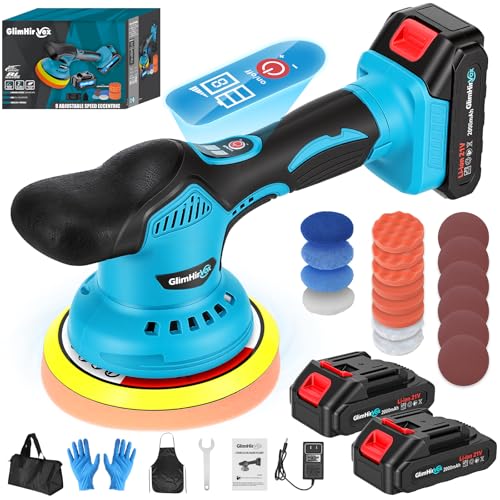
GlimHirVox Cordless Dual Action Polisher Kit
What We Like
- Ultra-lightweight at 3.3 lbs for one-handed vertical use
- Dual-battery system eliminates downtime, compatible with Makita 18V
- Comprehensive 28-piece kit includes pads for cutting, waxing, and finishing
Trade-offs
- At 5.7 lbs total kit weight, it's heavier than some dedicated palm sanders like the Rupes Skorpio III
- Battery runtime depends on capacity; the 2.0Ah units may require swaps for large jobs
Cordless operation paired with a weight of just 3.3 pounds makes this polisher exceptionally easy to maneuver, especially on vertical panels where you can work one-handed. Its balanced counterweight design helps reduce user fatigue over long sessions. The brushless motor provides up to 6,000 RPM and is stated to maintain set speeds without slowdown, even when pressed into curves, for consistent performance. This kit suits the detailer or dedicated DIYer who prioritizes cord-free mobility and a complete package over maximum runtime.
The trade-off for that cordless freedom and comprehensive kit is bulk. While the tool itself is light, the full carrying case adds heft, and the 150mm pad size can feel cumbersome next to a dedicated 5-inch sander like the Porter-Cable 7424XP for intricate work. It’s a system designed for general paint correction and finishing, not for sanding primer in confined quarters. For someone already invested in the Makita 18V ecosystem, however, the battery compatibility is a smart, cost-effective touch that turns this from a standalone tool into a versatile part of a larger workshop family.
Product photos
KUIMIT 5-Inch Air DA Sander Kit

What We Like
- Wide adjustable speed range for varied tasks
- Comes with a complete kit for multiple applications
- Cushioned grip for reduced vibration
Trade-offs
- Requires a separate air compressor to operate
- Maximum 5-inch pad limits surface coverage per pass
Weighing just under three pounds, this sander is built for long sessions on vertical panels and tight curves where fatigue is a real concern. The built-in regulator lets you dial the speed from a gentle 2,500 RPM for final finishing up to a brisk 12,000 for cutting, all without stopping. That combination of light heft and one-handed control makes it a natural fit for anyone tackling automotive paint correction or detailed woodworking who needs a tool that disappears in the hand.
This air-powered sander requires a compressor hose, which limits mobility away from an air supply. Its 5-inch pad is smaller than the 6-inch pad on the bulkier Porter-Cable 7424XP polisher, so it covers less surface area per pass. For a garage with a capable compressor, the tool delivers professional-grade speed adjustability in a compact, easy-to-manage package.
Product photos
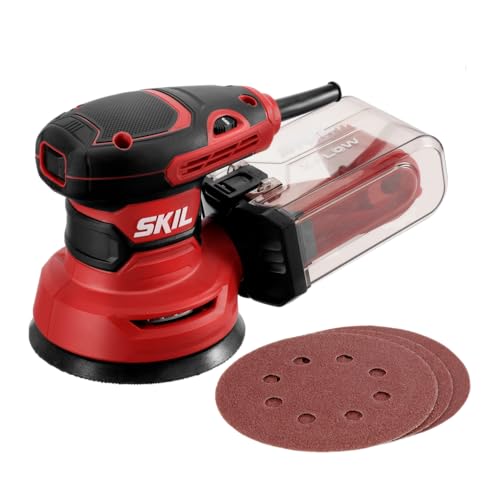
Skil 5-Inch Random Orbital Sander
What We Like
- Effective cyclonic dust collection system
- Compact size for working in tight spaces
- Variable speed control for material versatility
- Low-vibration, ergonomic rubber grip design
Trade-offs
- Weighs 3.4 pounds
- Corded, not cordless
With a 2.8 amp motor and 13,000 orbits per minute, this sander provides enough power for a variety of sanding applications without bogging down. Its built-in cyclonic dust collector uses a transparent, easy-to-empty container to help keep the workspace cleaner. Variable speed control provides the right amount of power across different materials, while an ergonomic design and counterweight balance aim to reduce hand fatigue from vibration.
At 3.4 pounds, this corded sander is heavier than some other orbital sanders, including the 2.2-pound HYCHIKA model. Its compact size and ergonomic design allow it to get into tight spaces, but it is not the lightest tool available. The sealed on/off switch is designed for a hassle-free flip during application.
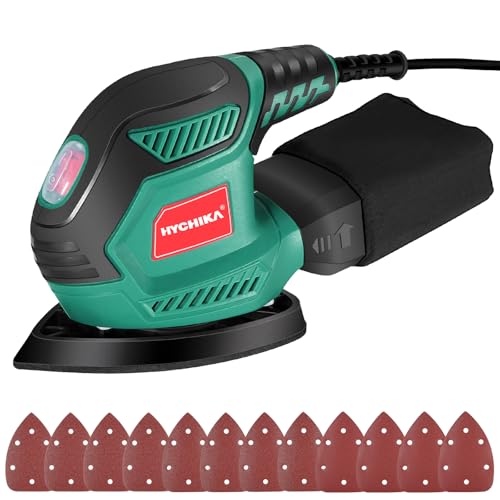
HYCHIKA BETTER TOOLS FOR BETTER LIFE MS200W Sanders
What We Like
- Includes 12 sandpaper sheets for coarse to fine work.
- Six-hole dust collection system with bag keeps area clean.
- Ergonomic rubber head design for comfortable, detailed control.
Trade-offs
- Corded design limits mobility compared to battery models.
- Not suitable for drywall or cement plaster per manufacturer.
Running at up to 14,000 orbits per minute, this compact sander can handle paint stripping and rust removal in the small corners of metalwork. Its 4.8-inch length and soft rubber head are designed to reach tight spaces, edges, and other hard-to-reach areas for interior detail work. The kit includes twelve sandpaper sheets in three grits and a dust bag with a six-hole collection system, so you can start a project while keeping the work area relatively dust-free.
A 1.6-amp motor and corded design mean this tool is intended for detail sanding and polishing, not for quickly covering large surface areas. The included manual advises against using it on drywall or cement plaster, which helps define its application limits. For the final touch-ups in confined spaces that larger sanders cannot access, the HYCHIKA MS200W occupies a specific niche on the workbench.
Product photos
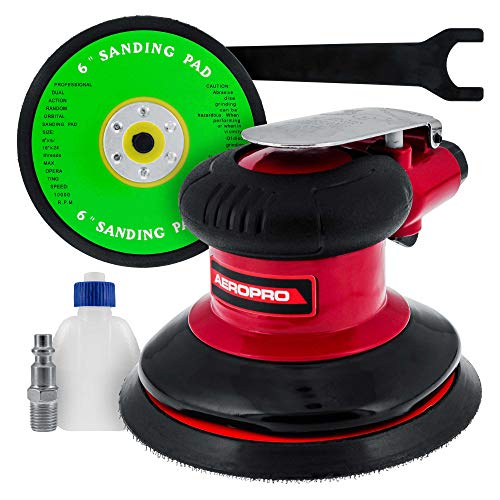
TCP Global Dual-Action Air Palm Sander
What We Like
- Lightweight design reduces user fatigue
- Thumb-controlled lever for speed adjustment
- Heavy-duty ball bearing construction for vibration
- Includes two styles of 6-inch backing plate
Trade-offs
- Requires a substantial 2 HP air compressor
- Higher air consumption at 4.5 CFM
- Pneumatic hose limits mobility versus cordless
Weighing less than two pounds, this sander is built for long sessions of swirl-free finish work without tiring out your arm. Its dual-action orbit and thumb-controlled speed lever give you precise control over surface prep on metal, wood, or fiberglass. The heat-treated steel construction promises a long service life, and it arrives ready to work with both PSA and hook-and-loop backing pads. It is ideal for automotive body shops for sanding prep before car refinishing.
The trade-off for that lightweight power is its appetite for air. At 4.5 CFM and 90 PSI, you’ll need a capable 2-horsepower compressor to keep it running, which anchors you to the shop. For a pro setting up a dedicated paint booth, that’s a minor detail. A cordless model like the GlimHirVox kit offers a different kind of convenience, albeit with more weight to manage.
Product photos
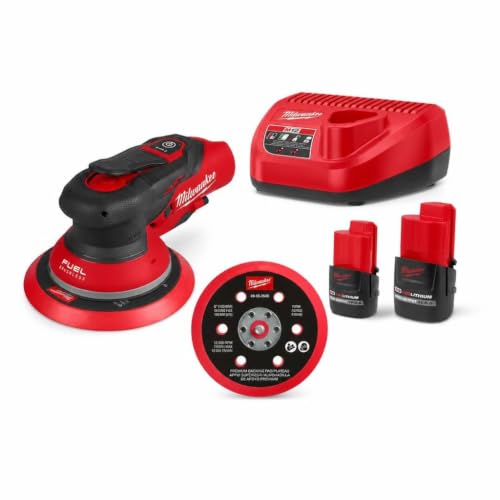
Milwaukee M12 Random Orbital Sander
What We Like
- Aggressive 3/16-inch orbit for fast material removal.
- Cordless design for complete shop mobility.
- Tool-free backing pad changes save time.
Trade-offs
- Requires investment in the M12 battery platform.
- Cordless design adds weight versus pneumatic options.
- Aggressive orbit may be less ideal for final paint polishing.
With an aggressive 3/16-inch random orbit throw built for cutting through body filler, the Milwaukee M12 sander is a clear choice for regular bodywork repairs. It runs on the cordless M12 platform, which means no air hose to drag and no compressor noise for the technician or serious DIYer smoothing out patch panels. According to the product description, it is able to sand three doors of body filler with a single M12 REDLITHIUM HIGH OUTPUT CP 2.5 battery pack.
The trade-off is that this tool is purpose-driven. Its orbit is optimized for material removal, not for the fine finish work you’d want before applying paint. For that final polishing step, you’d likely reach for a dedicated polisher like the Porter-Cable 7424XP. But when the job calls for stripping old filler or leveling a repair, the Milwaukee M12 gets the rough work done fast and without a cord.
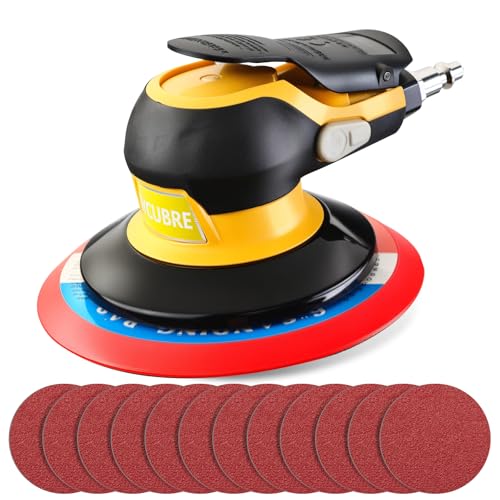
RYCUBRE Low Noise DA Air Sander
What We Like
- Lightweight 2.4-pound design reduces arm fatigue
- Exclusive noise-reduction tech for a quieter shop
- Adjustable speed switch for material-specific control
- High 13000 RPM speed for fast material removal
Trade-offs
- Requires a 15-gallon-plus air compressor to operate
- Pneumatic design needs an air hose, limiting mobility
Weighing 2.4 pounds, this air sander is easy to handle for long periods, and its built-in noise-reduction technology aims to make the work environment quieter. It runs at up to 13000 RPM for fast material removal, with an adjustable switch to lower the speed for more control on different surfaces. The manufacturer recommends it for auto body work and general DIY projects.
Operation requires a 15-gallon-plus air compressor, so you need the shop space and setup for that system. While the RYCUBRE is lighter than some electric sanders like the 3.4-pound Skil model, its pneumatic design means you are connected to an air hose. For a workspace with an existing air supply, the lightweight and ergonomic shape is designed to reduce operator fatigue during use.
Product photos
Makita BO5041 Random Orbit Sander

What We Like
- Variable speed dial matches speed to task
- Ergonomic rubberized palm grip for comfort
- Lock-on button for continuous operation
- Lightweight design reduces arm fatigue
Trade-offs
- Requires a corded outlet, limiting mobility
- Heavier than several pneumatic sanders in guide
A 3.0 AMP motor provides steady power for extended sanding tasks without bogging down. The variable speed control dial ranges from 4,000 to 12,000 orbits per minute, allowing users to match the sanding speed to different applications. An adjustable front handle facilitates work in corners and confined spaces, while the ergonomic rubberized grip and lock-on button are designed to improve operator comfort and control.
The tool requires a power cord, so operation is limited to areas near an electrical outlet. For cordless operation, a model like the GlimHirVox kit offers battery-powered mobility. The Makita’s design, with its rubberized grip and variable speed, focuses on user comfort for extended operation.
How We Evaluated Sanders For Cars
Our evaluation started with manufacturer specifications and expert round-ups to understand the core capabilities of different sander types. We then analyzed patterns in owner feedback across multiple platforms to see how these tools performed in real-world auto shops and garages. The goal was to identify which features reliably translated to better results on automotive surfaces.
For this category, the power source, ergonomics for extended use, and orbit size for task-specific control are key considerations. Power source defines shop requirements, as pneumatic sanders need a capable air compressor while cordless models offer full mobility with limited runtime. Ergonomic design and low vibration are important for the long sanding sessions typical in paint preparation and correction.
Finally, a tool’s orbit size determines its aggressiveness, indicating whether it is better for fast material removal or fine finish work. This research-based approach highlights the tools that consistently meet the demands of automotive work.
What To Look For In Sanders For Cars
Selecting the right sander for automotive work means matching the tool’s capabilities to your specific tasks, from aggressive body filler removal to delicate final polishing. The wrong choice can lead to inefficient work, a poor finish, or user fatigue.
Key criteria include power source (air, corded electric, or cordless), orbit size for control versus speed, ergonomics for comfort during long sessions, and pad size for surface coverage. Your shop setup and primary jobs should guide your decision.
Power Source: Air, Electric, or Cordless?
Your shop’s infrastructure dictates this fundamental choice. Pneumatic air sanders, like many top-rated DA sanders, deliver smooth, high-torque power but require a substantial air compressor and hose, limiting mobility. Corded electric sanders offer consistent, plug-in power and are a solid choice for automotive sanders in a fixed garage. Cordless models provide complete freedom of movement, ideal for mobile detailers, but add battery weight and require managing charge cycles. For those without air, a powerful electric DA sander is often the best route.
Orbit Size & Pad Design
Orbit size, measured in millimeters, determines how aggressively the sander removes material. A larger orbit (like 8mm or more) cuts faster and is better for leveling body filler or stripping paint. A smaller orbit (3mm or 5mm) provides more control and is superior for fine sanding and paint correction, helping you avoid swirl marks. Pad size also matters; a 5-inch pad is standard for balance and control, while a 6-inch pad covers more area per pass. For intricate work, you’ll need dedicated detail sanders with smaller, shaped pads.
Ergonomics & Vibration Control
Automotive sanding is often a marathon, not a sprint. A tool’s weight, grip design, and vibration damping directly impact user fatigue and the quality of your work. Lightweight designs, like many compact sanders, are easier to manage on vertical panels and overhead. Rubberized grips and balanced motors reduce hand strain. Pneumatic sanders typically have an advantage in vibration control, but modern electric and cordless models incorporate counter-balance systems and cushioned handles. This is especially crucial for tasks like sanding auto body panels where precision is paramount.
- Test the grip comfort and trigger placement before you buy, if possible.
- Consider a model with a variable-speed dial for matching power to the task.
- For cordless tools, check if the battery platform is one you already own or are willing to invest in.
A good rule of thumb: if your primary work is aggressive material removal, prioritize power and orbit size; if it’s finish work, prioritize low vibration and control.
Sanders For Cars Compared
The table below provides a quick side-by-side comparison of our top picks across key categories to help you weigh your options.
| Product | Power Source | Weight | Orbit Size/Speed |
|---|---|---|---|
| Rupes Skorpio III Dual-Action Palm Sander | Pneumatic | 1.8 Pounds | 6mm |
| Porter-Cable 7424XP Orbital Polisher | AC only | 5.8 Pounds | 2,500-6,800 OPM |
| GlimHirVox Cordless Dual Action Polisher Kit | 2x 21V 2.0Ah | 3.3 lbs (tool only) | 9mm orbit |
| KUIMIT 5-Inch Air DA Sander Kit | Pneumatic | 2.9 Pounds | 12,000 RPM |
| Skil 5-Inch Random Orbital Sander | Electric | 3.4 Pounds | 13,000 orbits per minute |
| HYCHIKA BETTER TOOLS FOR BETTER LIFE MS200W Sanders | Electric | 2.2 pounds | 14,000 OPM |
| TCP Global Dual-Action Air Palm Sander | Pneumatic | 1.9 pounds | 10,000 rpm |
| Milwaukee M12 Random Orbital Sander | M12 cordless battery | N/A | 3/16 inch |
| RYCUBRE Low Noise DA Air Sander | Pneumatic | 2.4 pounds | 12000-13000 RPM |
| Makita BO5041 Random Orbit Sander | Electric | 3.1 Pounds | 4,000-12,000 OPM |
Frequently Asked Questions
What kind of sander is best for cars?
For most automotive paint and body work, a dual-action (DA) or random orbital sander is the best choice. Its combined spinning and orbiting motion minimizes the risk of creating swirl marks in the finish, which is critical for paint correction and final sanding. These tools are versatile enough for both material removal and fine finishing, making them a cornerstone tool for car bodywork sanders.
What is the best sander for car bodywork?
The best sander for car bodywork depends on the stage of work. For aggressively leveling body filler, a sander with a larger orbit (like 3/16-inch) is most effective, such as our “Best For Body Filler” pick. For the finer sanding stages that follow, leading up to primer and paint, a smoother dual-action sander with variable speed control is essential for a flawless base.
What’s the best sandpaper to use on a car?
Start with a grit coarse enough to efficiently level the surface, often in a low to medium range for stripping old paint or shaping filler. Then progressively move to finer grits to remove the scratches from the previous stage. Always use a dedicated sanding block or pad for hand-sanding edges and tight spots. For machine sanding, hook-and-loop abrasive discs matched to your sander’s pad size are standard.
What company makes the best sanders?
Several manufacturers excel in different niches. Brands like Rupes and 3M are renowned in professional detailing circles for their smooth, high-performance pneumatic and electric sanders. For cordless automotive tools, Milwaukee and Makita have strong ecosystems. Ultimately, the “best” brand is the one that makes a tool matching your specific needs for power, ergonomics, and compatibility with your existing shop setup.
Can I use a woodworking sander on a car?
While you can physically use a woodworking random orbital sander on a car, it’s not ideal. Automotive-specific sanders are often designed with lower vibration, better ergonomics for contoured panels, and orbits optimized for paint systems. They also frequently use standard 5-inch or 6-inch backing plates compatible with a wide range of automotive abrasive discs and polishing pads.
The Bottom Line
For professional detailers and body shop technicians seeking one versatile, high-performance tool, the Rupes Skorpio III Dual-Action Palm Sander is our best overall pick. Its exceptional smoothness and lightweight design make it a standout for both material removal and finish work, provided you have the necessary air compressor setup.
If you’re working on a budget or need a straightforward corded electric sander, the Skil 5-Inch Random Orbital Sander offers reliable performance. For mobile professionals who value cordless freedom above all, the comprehensive GlimHirVox Cordless Dual Action Polisher Kit is the clear solution. Ultimately, aligning the sander’s power source and orbit size with your most common tasks is the single most important factor for a satisfying and effective purchase.
