
8 Best Bandsaw Blades For Resawing in 2026
This post contains affiliate links. As an Amazon Associate, we earn from qualifying purchases.
Our best overall resaw blade is the POWERTEC 80 Inch Bandsaw Blade, which pairs a heat-resistant hook-tooth design with versatile material compatibility. For large-capacity saws, the Dark Stone 1-inch carbide-tipped blade offers superior rigidity, while the Timber Wolf low-tension blades excel on thick hardwoods. Choosing the wrong blade leads to frustrating drift, burning, and wasted expensive wood. This guide is the result of extensive research into specifications, manufacturer data, and patterns in user feedback. We’ll help you match a blade to your saw’s capacity and your resawing goals.
Top 8 Bandsaw Blades For Resawing in the Market
Certain content that appears on this site comes from Amazon. This content is provided "as is" and is subject to change or removal at any time.
The Best Bandsaw Blades For Resawing, Reviewed
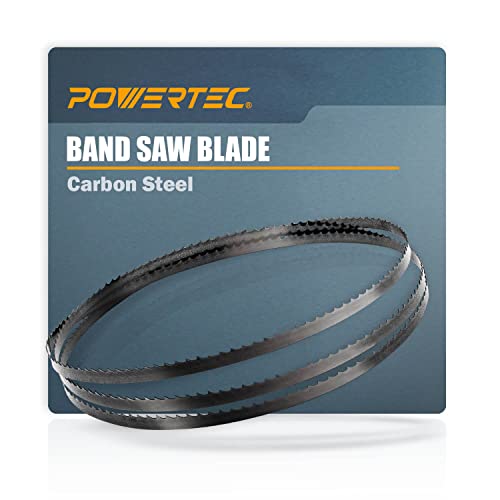
POWERTEC 80 Inch Bandsaw Blade
What We Like
- Hook tooth profile aids in aggressive stock removal.
- Heat-resistant carbon steel construction for durability.
- Versatile for wood, plastic, and non-ferrous metals.
Trade-offs
- At 1/2 inch wide, it lacks the stiffness of wider resaw blades.
- The 80-inch length fits a specific saw size, limiting compatibility.
A 3 TPI hook tooth blade is built for fast, aggressive cuts, making it a solid foundation for resawing on a 12″ bandsaw. This Powertec blade delivers that essential profile in a versatile carbon steel format, suited for the user who needs to process a mix of softwoods, hardwoods, and even non-ferrous materials. It’s a reliable, all-purpose workhorse that hits the core requirements for resawing without overcomplicating the choice.
This blade is made from high-grade carbon steel with heat resistance, which contributes to durability during extended cutting sessions. Its 3 TPI hook tooth geometry is designed for cutting a mix of materials, including hard and soft woods, plastic, and non-ferrous metals. The 1/2 inch width is suitable for most 80-inch long bandsaws, like the Sears Craftsman 12-inch model it’s listed for.
Product photos
Timber Wolf 111" x 3/4" Bandsaw Blade

What We Like
- High silicon steel runs cooler and lasts longer
- Operates effectively under low tension
- Ideal for resawing thick stock
Trade-offs
- At 111 inches, it requires a large bandsaw
- 3 TPI tooth count produces a rougher cut surface
Designed for resawing thick stock, this Timber Wolf blade uses high silicon steel to run cooler and last longer. Its thin kerf and low tension requirement mean it needs less horsepower from your saw. At 111 inches long and 3/4 inch wide with a 3-tooth-per-inch pattern, it is specifically sized for larger band saws handling substantial lumber.
The 3-tooth-per-inch pattern enables fast cuts in thick material, though it will leave a rougher surface than a finer blade. This makes it ideal for the initial breakdown of stock, where speed is prioritized over finish. For final surface smoothness, a subsequent planing operation would be necessary.
Product photos
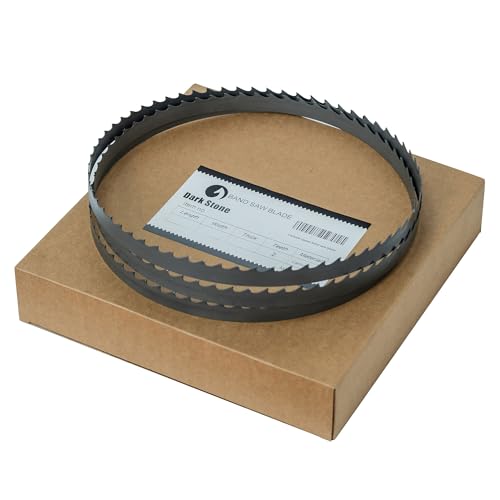
Dark Stone 105" Carbide-Tipped Resaw Blade
What We Like
- Carbide teeth offer long edge life for hardwoods
- Wide 3/4-inch body resists drift for straight cuts
- Aggressive 2 TPI hook design clears chips efficiently
- Precision-welded joint promotes smooth tracking
Trade-offs
- 105-inch length fits only specific bandsaws
- 3/4-inch width requires a saw with sufficient tensioning capacity
Carbide-tipped teeth provide significantly longer edge life than standard carbon steel blades, maintaining sharpness under heavy-duty hardwood resawing. This reduces blade change frequency in professional shop use. The rigid 3/4-inch wide blade body helps minimize blade drift and wandering, supporting cleaner, straighter resaw cuts when slicing thick or tall hardwood stock. It is engineered specifically for vertical bandsaws used in resawing thick hardwood lumber, ideal for cabinet shops, furniture makers, and serious woodworkers.
The blade is designed for bandsaws requiring a 105-inch blade length and capable of properly tensioning a 3/4-inch resaw blade, so verifying machine specifications before purchase is necessary. For saws requiring a different length, the Dark Stone brand also offers a 150-inch x 1-inch carbide-tipped resaw blade model DS23453.
Product photos
Timber Wolf 93.5" Low Tension Resaw Blade

What We Like
- Induction hardening ensures uniform tooth durability
- Extra-hard tooth edge extends time between sharpenings
- Ductile silicone steel reduces heat and flex fatigue
Trade-offs
- Specific 93.5-inch length fits only compatible saws
- At 3/4-inch width, it requires a bandsaw with adequate power and resaw capacity
Timber Wolf’s blade uses silicone steel that is more ductile than high-carbon steel, so it flexes more easily and runs cooler under the stress of resawing thick lumber. Its milled teeth are 50 percent sharper than stamped or crush-ground competitors, and the entire blade receives precision induction hardening instead of flame hardening. The tooth edge itself is 20 percent harder than high-carbon steel, which should contribute to a longer period of effective sharpness for demanding cuts.
The trade-off is specificity. This blade is a specialist. Its low-tension design and precise length are meant for saws set up to take advantage of it, and the 3/4-inch width demands a well-tuned, powerful bandsaw to drive it without strain. If your resawing projects are occasional or your saw is smaller, a more general-purpose blade like the POWERTEC 80 Inch might be a more practical fit. But for the right saw and the right job, this blade’s material science translates directly to less heat, less wear, and a straighter cut through the heart of a log.
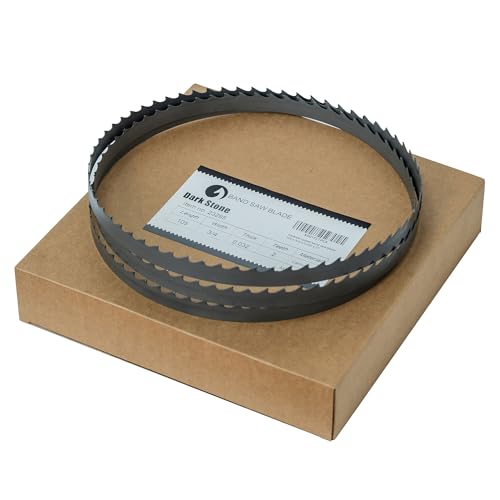
Dark Stone 150" x 1" Carbide-Tipped Resaw Blade
What We Like
- Carbide teeth for long-lasting sharpness in hardwoods
- 1-inch width provides superior rigidity and minimizes drift
- 2 TPI hook design clears chips efficiently for fast cuts
- Precision-welded backer ensures smooth tracking and accuracy
Trade-offs
- 150-inch length fits only large-capacity band saws
- 1-inch width requires adequate saw power and precise setup
A 150-inch length and full 1-inch width deliver the beam strength and stability needed for serious resawing. This blade is built for professional shops with large-capacity saws, where straight, consistent cuts through thick, dense hardwoods are a daily demand. The carbide-tipped teeth shrug off wear, making it a durable choice for heavy, continuous use where changing blades frequently is a frustration you can’t afford.
The trade-off is its sheer size. It demands a saw designed for such a large blade, and its aggressive 2 TPI hook tooth geometry prioritizes fast material removal over a fine finish. For a smaller saw or a user who needs a smoother cut off the saw, a narrower blade like the Timber Wolf 93.5″ Low Tension Resaw Blade is a more appropriate tool for the job.
Product photos
POWERTEC 105 Inch Bandsaw Blades Assortment

What We Like
- Three blade widths for varied tasks
- Includes a 4 TPI blade for faster cuts
- Carbon steel construction for durability
- 105-inch length fits common 14" saws
Trade-offs
- Maximum 1/2-inch width limits resaw capacity
Three different blades in one set let a woodworker handle most common tasks without buying singles. The 105-inch length fits a typical 14-inch saw with a riser block, while the quarter-inch, three-eighths, and half-inch widths cover everything from tight curves to straight cuts. This assortment is a practical starting kit for figuring out which blade type gets used most before spending on specialty steel.
Resawing thick hardwood is not this set’s strength. The widest blade is only a half-inch, and its thin 0.025-inch build can deflect under heavy load compared to a dedicated three-quarter-inch resaw blade. For the occasional slice in softer material, the four-teeth-per-inch blade will manage, but it lacks the aggressive tooth geometry found on blades designed specifically for that demanding job.
Product photos
AYAO Hardened Teeth Bandsaw Blades 2-Pack

What We Like
- Hardened teeth for cutting hard and soft woods
- Raker set teeth arrangement for better cutting performance
- Two blades in the pack provide immediate backup
- Unique welding technique for a strong, smooth joint
Trade-offs
- At 1/2 inch wide, it lacks the width for deep, heavy resawing tasks
This two-pack delivers hardened teeth blades that can handle both hard and soft woods, making it a practical starting point for a shop that needs to get cutting. The 93.5-inch length fits a common 14-inch bandsaw footprint, so you can set it up on many popular machines without modification. It’s a solid choice for the woodworker who wants to try resawing without a major investment, or for someone who values having a spare blade ready to go when the first one dulls. You get functional capability for general cutting and light resaw duties right out of the box.
Its 1/2-inch width and 4 TPI tooth geometry are designed for resawing, making it suitable for both hard and soft woods. This combination, however, means the blade has less inherent stiffness than a wider one, such as the 3/4-inch Timber Wolf model. For consistently straight cuts in very thick or dense material, careful feed pressure and machine tuning become more critical.
Product photos
ElaraBerry 93.5" Bandsaw Blade 2-Pack

What We Like
- Coarse 4 TPI design for efficient chip removal
- Two-pack provides immediate backup blade
- Milled teeth maintain sharp edges for smooth cuts
- Suitable for resawing, ripping, and cross cutting
Trade-offs
- 3/8-inch width limits resaw capacity on larger saws
- 93.5-inch length fits only specific machines
A two-pack of 4 TPI blades is a practical starting point for resawing. The coarse tooth geometry clears sawdust aggressively, which helps prevent bogging down in thick, wet, or softer woods. The 3/8-inch width offers a good balance of maneuverability and stability for many 14-inch-class saws, and having a second blade on hand means you can swap it in the moment the first one dulls. This setup is a solid, affordable choice for the woodworker who needs to break down planks into thinner stock without pushing their machine to its absolute limit.
This two-pack offers a versatile 3/8-inch width and a coarse 4-tooth-per-inch design, which means it can handle a range of cuts from resawing to crosscuts in both softwoods and hardwoods. While a wider blade like the Timber Wolf 93.5″ Low Tension Resaw Blade provides more inherent rigidity for the straightest possible cuts, the narrower profile here allows for tighter curves and general-purpose work. Made from high-silicon low-carbon steel, the blades are built for toughness and wear resistance over many woodworking sessions.
Product photos
How We Evaluated Bandsaw Blades For Resawing
Our research focused on comparing manufacturer specifications and expert insights on blade performance. We prioritized key criteria for resawing: blade width for stiffness and drift resistance, tooth design for efficient chip clearance, and material construction for durability and heat resistance. We also considered the best blades for resawing and how they match different saw models, as detailed in our guide to bandsaw blades for resawing.
This guide is based on documented specifications and consistent patterns in user feedback. While it cannot replicate the conditions of extended use in an individual workshop, it highlights the blades that are consistently recognized for their performance in resawing.
What To Look For In Bandsaw Blades For Resawing
Resawing demands a blade built for straight, deep cuts. While general-purpose blades can struggle, a dedicated resaw blade prioritizes rigidity and efficient waste removal. Understanding a few key specs will ensure you get clean, consistent results from your stock.
For resawing, prioritize a wider blade (3/4-inch or more) for stiffness, a low tooth count (2-3 TPI) for chip clearance, and a durable steel or carbide construction. Always confirm the exact length your bandsaw requires.
Blade Width
Width is the primary factor in preventing blade drift. A wider blade, like the 1-inch model from Dark Stone, acts like a stiffer beam, tracking straighter through thick stock. For most 14-inch bandsaws, a 1/2-inch blade is common, but stepping up to a 3/4-inch blade if your saw’s guides and tension allow it provides a significant upgrade in cut accuracy. The trade-off is that wider blades cannot cut tight curves.
Tooth Profile & Count
Resawing generates a lot of sawdust quickly. A low tooth count, typically 2 to 4 teeth per inch (TPI), with an aggressive hook or raker set, is designed to scoop out large chips. This keeps the cut cool and prevents burning. A coarse blade like the ElaraBerry 4 TPI model clears material fast, though it leaves a rougher surface than a finer blade would. For learning how to resaw, a blade with this efficient chip-clearing design is crucial.
Blade Material & Construction
Blade longevity depends on its material. Carbon steel blades offer a good balance of performance and value. Low-tension blades, such as those from Timber Wolf, use high-silicon steel to run cooler and reduce fatigue. For the longest edge life in hardwoods, carbide-tipped blades are the premium choice, though they require a powerful saw. The quality of the welded joint also matters; a smooth, precision weld promotes better tracking and reduces the chance of breakage, a key detail covered in our guide on bandsaw blade replacement.
- Check your saw’s manual for the exact blade length and maximum recommended width.
- Ensure your saw can generate sufficient tension for a wider, stiffer blade.
- Inspect the blade’s set (tooth bend) to ensure it’s even for a straight kerf.
The most important rule: a blade that is too narrow or has too many teeth will fight you through the cut.
Bandsaw Blades For Resawing Compared
The table below summarizes the key features of our top picks to help you compare them at a glance.
| Product | Blade Length | Blade Width | Teeth Per Inch (TPI) | Tooth Type/Material |
|---|---|---|---|---|
| POWERTEC 80 Inch Bandsaw Blade | 80 inches | 1/2 inch | 3 | High grade carbon steel |
| Timber Wolf 111" x 3/4" Bandsaw Blade | 111 inches | 3/4 inch | 3 | High silicon, low carbide steel |
| Dark Stone 105" Carbide-Tipped Resaw Blade | 105 inches | 3/4 inch | 2 TPI | Carbide-tipped hook |
| Timber Wolf 93.5" Low Tension Resaw Blade | 93.5 inches | 3/4 inch | N/A | Silicone Steel |
| Dark Stone 150" x 1" Carbide-Tipped Resaw Blade | 150 inches | 1 inch | 2 TPI | Carbide-tipped |
| POWERTEC 105 Inch Bandsaw Blades Assortment | 105 inches | 1/4", 3/8", 1/2" | 4 TPI & 6 TPI | Carbon steel |
| AYAO Hardened Teeth Bandsaw Blades 2-Pack | 93.5 inches | 1/2 inch | 4 TPI | Hardened |
| ElaraBerry 93.5" Bandsaw Blade 2-Pack | 93.5 inches | 3/8 inch | 4 | High-silicon low-carbon steel |
Frequently Asked Questions
What is the best bandsaw blade for resawing wood?
The best blade depends on your saw and needs. For a versatile, durable option fitting common 80-inch saws, the POWERTEC carbon steel blade is an excellent overall choice. For maximum performance on hardwoods with a compatible saw, a carbide-tipped blade like the Dark Stone models offers superior longevity and stiffness.
What tpi is best for resawing wood?
A low TPI (teeth per inch) is best, typically in the 2 to 4 TPI range. Fewer, larger teeth create deeper gullets that efficiently clear the large volume of sawdust generated when ripping thick stock. This prevents overheating and burning, leading to a smoother, faster cut.
Who makes the best quality bandsaw blades?
Several manufacturers produce high-quality blades for specific applications. Brands like Timber Wolf are noted for their specialized low-tension steel blades, while others like Dark Stone offer premium carbide-tipped options. The “best” is the blade that matches your saw’s capacity and your resawing frequency, as detailed in our guide to selecting the best bandsaw blades.
What size bandsaw do you need for resawing?
You need a bandsaw with enough power and a tall enough resaw capacity (the distance from the table to the upper guide) to handle your stock. While a standard 14-inch saw can resaw thinner boards, serious work on thick hardwoods benefits from a larger, more powerful saw. Researching best wood bandsaws or specific 14-inch bandsaw models will show you the resaw capacity and motor power suitable for your projects.
Can I use a regular bandsaw blade for resawing?
You can, but it’s not ideal. General-purpose blades are often narrower and have a higher tooth count, making them prone to drift, burning, and slow cutting in thick material. A dedicated resaw blade is a worthwhile investment for cleaner cuts, less waste, and less strain on your saw’s motor.
The Bottom Line
For most woodworkers needing a reliable, versatile blade for resawing on a common 80-inch bandsaw, the POWERTEC 80 Inch Bandsaw Blade is our best overall pick. Its hook-tooth design and durable construction handle a mix of materials effectively.
If budget is your main concern, consider the AYAO 2-Pack for light-duty work, or the POWERTEC Starter Set to learn different blade applications. For dedicated, high-volume resawing of hardwoods, investing in a carbide-tipped or specialized low-tension blade is worth the upgrade.
Ultimately, the single most important factor is matching the blade’s width, length, and tooth design precisely to your bandsaw’s capabilities and the thickness of your stock.
