
10 Best Bench Sanders in 2026
This post contains affiliate links. As an Amazon Associate, we earn from qualifying purchases.
We chose the JET Benchtop 6×48 Belt & 9 Disc Sander as the best overall for its cast iron tilting table, powerful build, and versatile sanding capacity. For those needing speed control, the RIKON 50-161VS is our best variable speed pick, while the WEN 6502T offers reliable function as the best budget option.
Choosing the right benchtop sander depends on matching its belt size, disc diameter, and motor features to the materials you work with most. We built this guide by comparing specifications and examining patterns in expert round-ups and owner reports to find the models that deliver on their promises.
Top 10 Bench Sanders in the Market
Certain content that appears on this site comes from Amazon. This content is provided "as is" and is subject to change or removal at any time.
The Best Bench Sanders, Reviewed
JET Benchtop 6×48 Belt & 9 Disc Sander
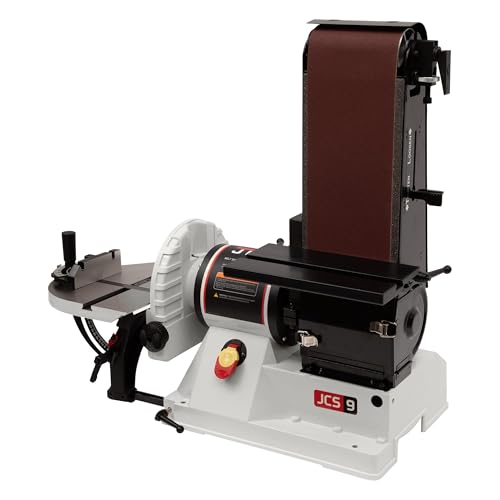
What We Like
- Cast iron table tilts for vertical or horizontal sanding
- Graphite-coated platen runs cooler for longer belt life
- Rubber-coated drive drum reduces belt slippage
Trade-offs
- At 91 pounds, it's a substantial, heavy benchtop machine
- Large size limits portability despite built-in handles
A 6-inch by 48-inch belt paired with a 9-inch disc provides the capacity to shape long edges and finish broad surfaces on one machine. This Jet sander suits serious hobbyists or small shops because its heavy cast iron construction and features like a cool-running graphite platen lead to consistent results and longer belt life. It is built for volume and precision rather than occasional light work.
That capability requires a solid bench to support its 91-pound weight, which separates it from lighter models like the 30-pound RIKON 50-161VS. Research indicates its dust collection performed better than the more expensive Powermatic model in comparisons. For a permanent workshop where sanding is frequent, its size and reported dust collection make it a durable choice.
RIKON Power Tools 50-161VS Bench Sander
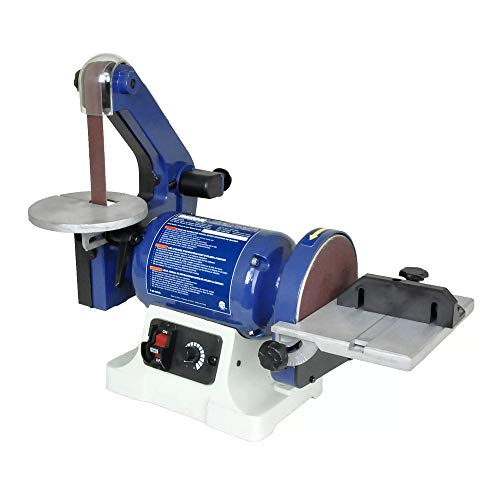
What We Like
- Wide variable speed range for many materials
- Two tilting tables for angled sanding
- Separate dust ports for belt and disc
- Includes miter gauge for disc work
Trade-offs
- A 1-inch belt is narrow for large surfaces
- 6-inch disc is smaller than many 8- or 9-inch models
The variable speed motor, adjustable from 2,000 to 3,400 RPM, gives you precise control over the 1,909 to 3,248 SFPM belt speed. This lets you dial in the right aggression for everything from shaping metal to finishing fine wood. It’s a perfect fit for detailed workshop tasks where finesse matters more than brute force. The dual tilting tables and included miter gauge support accurate angled work on small parts and jigs.
You trade belt width for that speed control and a compact footprint. Compared to models like the JET Benchtop 6×48 Belt & 9 Disc Sander, the 1-inch belt provides a narrower sanding surface. Separate dust ports for the belt and disc support connection to a shop dust collection system, and base mounting holes let you secure the unit to a bench.
Product photos
WEN 6502T Belt and Disc Sander

What We Like
- Combines a 4×36 belt and 6-inch disc
- Belt tilts from 0 to 90 degrees for versatility
- Cast iron base minimizes heavy vibrations
- Tension lever simplifies belt changes
Trade-offs
- The 4.3 Amp motor is less powerful than some 5A models
- A 4×36 belt is narrower than a 6×48 belt for large surfaces
A 4.3 Amp motor driving both a 4×36 belt and a 6-inch disc provides a lot of capability for the footprint. This two-in-one machine handles edge sanding, shaping, and finishing tasks without taking up half your bench. The sturdy cast iron base prevents heavy vibrations, which keeps the sander steady during operation. It’s a straightforward, no-frills tool that delivers core functionality for a shop that needs to cover the basics without breaking the bank.
You do trade some raw power and belt width for that affordability. The 4.3 Amp motor spins at a fixed 3600 RPM, which is plenty for wood, but you lack the variable speed control found on models like the RIKON 50-161VS for working metals or delicate materials. The 4-inch wide belt is perfectly serviceable, but if your projects routinely involve flattening wide boards, you’ll feel the limitation compared to a wider belt sander. This machine excels at being a reliable, dedicated station for common sanding jobs, not a high-production workhorse.
Bucktool BD4603A Bench Sander

What We Like
- Direct-drive eliminates belt tension adjustments
- Belt tilts 0-90 degrees for versatile sanding
- Sturdy cast aluminum base reduces vibration
- Combined belt and disc saves shop space
Trade-offs
- At 35.5 lb, it's lighter than industrial models like the 91 lb JET
- 6-inch disc is smaller than some 8 or 9-inch competitors
A direct-drive motor shaft powers both the belt and disc, so you never need to adjust or replace a separate drive belt. This 3/4 HP motor delivers its full power without transmission losses, making it a quiet and efficient centerpiece for a busy home workshop. It suits a woodworker who values uptime over tweaking, offering a straightforward two-in-one sanding station that just works. The tilting belt and dual tables handle everything from edge sanding to curved pieces.
You trade some heft for that efficiency. At 35.5 pounds, it lacks the monolithic stability of a cast-iron beast like the JET JSG-96, so you’ll want it bolted to a solid bench. The 6-inch disc is perfectly serviceable, but if your projects demand constant large-surface disc work, a model with an 8 or 9-inch disc would be a better fit. This Bucktool excels as a reliable, maintenance-conscious workhorse for general fabrication.
Product photos
RIKON Power Tools 50-1428 Bench Sander
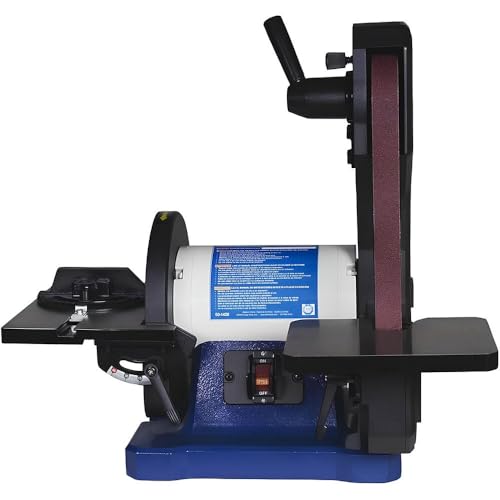
What We Like
- Cast iron and steel construction for solid stability
- Full 45-degree belt tilt for bevel sanding
- Large 8-inch disc for broad surface work
- Heavy-duty cast iron tables resist vibration
Trade-offs
- At 22.5 inches cubed, it demands significant bench space
- The 1-inch belt width is narrower than the 6-inch Jet
- Its substantial weight suggests a permanent workshop location
Cast iron and steel construction defines the RIKON 50-1428, a material choice that typically provides a solid, heavy foundation for benchtop tools. This sander’s dual cast iron tables and a belt that tilts up to 45 degrees offer setup flexibility for different sanding angles. Its one-inch by forty-two inch belt and eight-inch disc provide two distinct sanding surfaces in a single unit.
With each side measuring twenty-two and a half inches, the sander forms a cube that requires a dedicated spot on the workbench. Its one-inch belt width is narrower than the six-inch belt on the JET JSG-96 model. For tasks where both a disc and a belt sander are regularly needed, this combination tool saves space compared to owning two separate machines.
Product photos
Woodskil Bench Grinder Belt Sander Combo
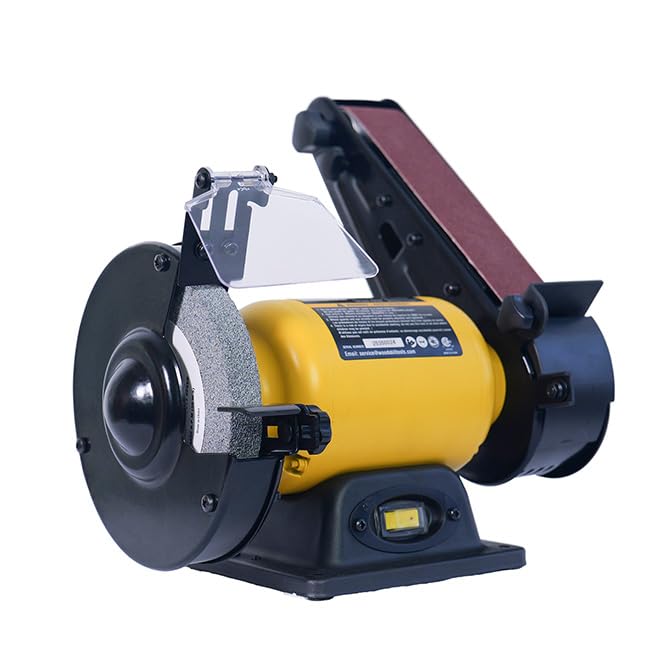
What We Like
- Combines grinder and sander in one unit
- Quick-release mechanism for belt changes
- Includes adjustable eyeshield and spark deflector
- Backed by a 2-year manufacturer warranty
Trade-offs
- Fixed speeds limit material-specific fine-tuning
- No disc sander is included
The 2-in-1 design is the core appeal here, merging a 6-inch grinder and a 2-inch belt sander onto a single base. That makes it a genuine space-saver for a cramped home workshop or garage, letting you handle metal grinding and wood shaping without buying two separate machines. The 2.5-amp motor provides enough grunt for general deburring and sharpening, and the quick-change belt system gets you from grinding wheel to sanding belt in under a minute. This combo is a solid fit for the DIYer who needs occasional access to both functions but can’t justify dedicating permanent bench space to two specialized tools.
The trade-off is in specialization. The 2-inch wide sanding belt is quite narrow compared to the 4-inch or 6-inch belts on dedicated sanders like the WEN 6502T, making it less efficient for smoothing large surfaces. You also miss out on a disc sander, which is invaluable for achieving perfectly square edges. While the quick-change system is handy, you’re still effectively switching between two tools on one stand, not using a truly integrated machine. For focused, high-volume sanding work, a dedicated unit will outperform it, but as a compact dual-purpose station, the Woodskil combo delivers practical utility.
Product photos
KFMK 2×42 Belt & Disc Sander

What We Like
- Direct-drive 1/2HP motor for metalworking efficiency
- Belt pivots between vertical and horizontal positions
- Includes dedicated tool rest and miter gauge
- Large 6-3/4 x 9 inch belt work table
Trade-offs
- 34.3 lb weight demands a sturdy, permanent bench.
- Fixed-speed motor lacks the fine control of a variable-speed unit.
The KFMK sander uses a direct-drive 1/2HP induction motor, delivering consistent torque for metalworking tasks like shaping hardened steel. Its 2″x42″ belt size and large work table suit knife making and sharpening projects, providing a stable surface for controlled passes. A versatile design allows the belt sander to be positioned vertically or horizontally to match different project requirements, such as working inside confined spaces.
You trade a larger sanding surface for that focused utility; the JET JSG-96, for instance, has a 6×48 belt for bigger woodworking projects. The KFMK’s fixed speed and heft mean it’s not a casual, stow-it-away tool. It’s a bench anchor for a maker who needs a reliable, no-fuss grinder for repeated, demanding material removal, not a versatile sander for occasional light tasks.
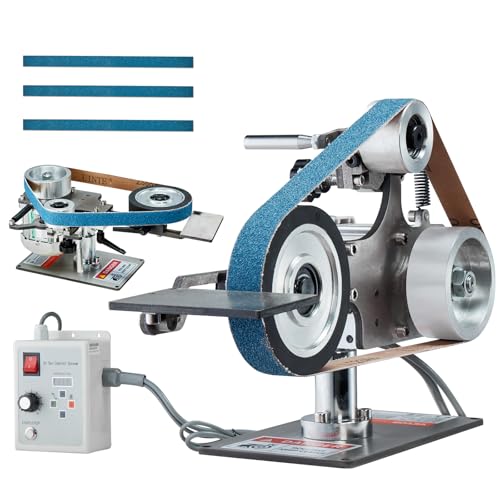
VEVOR Variable Speed Belt Grinder
What We Like
- VFD allows precise speed control for different tasks
- Compact 17.4 lb steel body fits tight workshops
- Includes three grit belts and two grinding moulds
- Works in both vertical and horizontal orientations
Trade-offs
- 550W motor provides less power than many 3/4 HP models
- 1-inch belt width is narrower than common 4-inch or 6-inch sanders
- Lacks an integrated disc sander found on many combo units
Variable speed control via a VFD allows stepless adjustment of the belt’s 26m/min line speed, giving users tailored control for different tasks. This focus on adjustability suits detailed work like knife sharpening or polishing where speed management matters. A reinforced steel body weighing 17.4 pounds supports both vertical and horizontal use, fitting into tight workshop spaces. The kit includes three sanding belts and two grinding moulds, providing immediate setup for various materials.
The 550W motor drives a 1-inch wide belt, prioritizing controlled application over heavy material removal. For rapidly dimensioning large wood pieces, a model like the JET JSG-96 with a 6-inch wide belt and separate disc offers greater capacity at a larger size. This grinder’s combination of variable speed and a compact, dual-orientation design serves fine metal shaping and detailed sanding where precision is the primary requirement.
Product photos
BUCKTOOL Dual Speed 1×42 Sander

What We Like
- Direct-drive motor offers 25% more efficiency than belt-driven
- Maintenance-free design with no belts to replace
- All-metal construction built for heavy metalworking
- Quick-change belt and hook-and-loop disc systems
Trade-offs
- 1-inch belt width is narrow for large wood surfaces
- Fixed two-speed control lacks fine variable adjustment
The direct-drive brushless motor delivering two distinct speeds is what sets this sander apart for metal. At 1750 RPM, you get controlled grinding for shaping and beveling, while the 3450 RPM setting powers through heavy stock removal and polishing. This dual-speed capability, combined with an all-metal frame and tables, makes it a dedicated workshop fixture for knife makers and metal fabricators who need a machine that won’t flex under pressure. It’s built to handle the grit and heat of metalwork day in and day out.
The BUCKTOOL sander’s 1-inch belt prioritizes precision over wide-area work, a design choice that defines its role in the shop. This narrow width suits detailed metal tasks like knife sharpening, while a tool like the JET Benchtop 6×48 model offers a six-inch belt for broader surfaces. The trade-off makes this a specialist for focused projects rather than a generalist for large panels.
Einhell TC-US 350 Belt/Disc Sander

What We Like
- Four rubber pads for vibration dampening
- Tool-free adjustable spark protection
- Large, adjustable work holders
- Includes both belt and disc abrasives
Trade-offs
- 185-350 watt motor is less powerful than many bench models
Four rubber pads underneath the base give the TC-US 350 a distinct advantage in smooth operation. They soak up the shakes, letting the sander stay put on your bench without walking. That stability, combined with its modest 18-pound weight, makes this a solid choice for the home workshop where you need a tool that won’t rattle off the table during detail work. It’s a straightforward combination sander that arrives ready to go with both a belt and a coarse disc.
Its maximum 350-watt motor and compact 18-pound frame mean it’s built for smaller projects and lighter stock. For heavy material removal on large furniture pieces, you’ll feel the limit. This contrasts with larger benchtop models like the 91-pound JET JSG-96, which occupies significantly more workspace.
How We Evaluated Bench Sanders
This guide is based on an analysis of manufacturer specifications, expert reviews, and common themes in user feedback. This method enables a comparison of important performance factors. Key specifications like motor power, belt and disc dimensions, and tilt capacity were prioritized, as these directly affect a sander’s usefulness for various materials and jobs. Construction quality, indicated by materials such as cast iron tables, and unique features that improve efficiency, like tool-free belt changes or built-in dust ports, were also considered.
Our evaluation honestly has its limits. We could not personally measure noise levels, dust collection effectiveness under a shop vacuum, or the exact feel of vibration damping during operation. While we carefully aggregated feedback on durability and performance, a research-led guide like this cannot replicate years of workshop use. It serves best as a well-informed starting point for your own comparison based on your specific project needs.
What To Look For In Bench Sanders
Bench sanders excel at flattening and finishing materials quickly, but their designs are optimized for different tasks. Your choice should hinge on the materials you sand most and the size of your typical workpiece.
Look for a combination of belt and disc sanders for general workshop versatility. Prioritize belt width and disc diameter for large surfaces, and variable speed if you work with multiple materials. Sturdy cast iron construction dampens vibration for cleaner results.
Belt & Disc Size
Belt dimensions determine how much material you can remove efficiently. A wider belt, like a 6×48-inch model, covers large panels faster, while a narrower 1-inch belt is suited for detail work and metal shaping. Disc diameter matters for sanding edges and flat surfaces; a 9-inch disc offers more usable area than a 6-inch disc. Remember, a larger sander like a 6×48-inch machine often demands permanent bench space due to its size and weight, so consider your available footprint.
Motor Power & Speed
Motor power, measured in amps or horsepower, indicates a sander’s ability to handle tough materials without bogging down. A higher-amp motor is better for aggressive stock removal on hardwoods or metal. For ultimate control, a variable-speed motor lets you dial down the RPM for delicate work on softwoods or plastics and crank it up for metal. Fixed-speed models are simpler and more budget-friendly but limit material-specific fine-tuning.
Build Quality & Adjustability
A stable sander produces smoother finishes. Look for cast iron or heavy-gauge steel in the base and tables to minimize vibration. A belt that tilts to 90 degrees allows for vertical sanding of inside corners, while a tilting disc table helps with bevel sanding. Features like a graphite-coated platen reduce heat buildup for longer belt life, and tool-free tension levers simplify belt changes.
- Check for a miter gauge slot in the disc table for precise angled sanding.
- Consider the dust collection setup; dedicated ports for the belt and disc are more effective than a single shared port.
- Evaluate the warranty length as an indicator of the manufacturer’s confidence in durability.
The most versatile sander for a general workshop combines a wide belt, a large disc, and a tilting table.
Bench Sanders Compared
For a quick side-by-side view of key specifications, see the table below comparing our top picks.
| Product | Motor Power | Belt Size | Disc Size |
|---|---|---|---|
| JET Benchtop 6×48 Belt & 9 Disc Sander | 3/4 HP, 115V 1Ph | 6" x 48" | 9" |
| RIKON Power Tools 50-161VS Bench Sander | 3/4 HP, 120V | 1 x 30 in. | 6 in. |
| WEN 6502T Belt and Disc Sander | 4.3 Amp | 4 x 36 inches | 6 inch |
| Bucktool BD4603A Bench Sander | 3/4 HP fully enclosed induction | 4 x 36 inches | 6 inches |
| RIKON Power Tools 50-1428 Bench Sander | N/A | 1" x 42" | 8" |
| Woodskil Bench Grinder Belt Sander Combo | 2.5 A induction | 2 x 27 inch | N/A |
| KFMK 2×42 Belt & Disc Sander | 1/2HP induction | 2"x42" | 6" disc |
| VEVOR Variable Speed Belt Grinder | 550W pure copper motor | 1 x 30 inch | N/A |
| BUCKTOOL Dual Speed 1×42 Sander | 4.8A 3/4 HP | 1×42 inches | 8 inches |
| Einhell TC-US 350 Belt/Disc Sander | 350 watts max | N/A | N/A |
Frequently Asked Questions
Which Benchtop sander is the best?
The best overall benchtop sander for most workshops is the JET Benchtop 6×48 Belt & 9 Disc Sander. It offers a large sanding capacity, a cast iron tilting table, and durable construction suitable for both wood and metal. An examination of similar bench-mounted belt sander options shows that these features are highly valued for demanding, frequent use.
Which brand of sander is considered the best?
No single brand is universally “best,” as different manufacturers excel in specific areas. JET and RIKON are often noted for their heavy-duty, shop-grade construction, while brands like WEN and Bucktool provide excellent value for home workshops. The right brand depends on whether you prioritize industrial durability, variable speed control, or budget-friendly performance.
What are some good benchtop sanders for woodworking?
Good benchtop sanders for woodworking combine a belt for flattening and a disc for edges. Our picks like the JET (for large projects), the cast-iron RIKON 50-1428 (for stability), and the budget WEN 6502T are all strong options. For smoothing curved surfaces, you might also explore dedicated spindle sanders which are designed for that specific task.
What is a bench sander good for?
A bench sander is excellent for quickly flattening and smoothing wood, shaping metal, deburring edges, and sharpening tools. It’s a stationary power tool that provides a stable, flat sanding surface for consistent results, making it far more efficient for these tasks than handheld sanders. It’s a foundational tool for any serious workshop tackling varied woodworking projects.
What’s the difference between a bench sander and a bench grinder?
A bench sander is designed to abrade and smooth surfaces using abrasive paper belts or discs, primarily for finishing wood, plastic, or softer metals. A bench grinder uses hard, coarse stone or wire wheels for aggressive material removal, sharpening, and shaping on harder metals. While some combo units exist, their intended abrasives and typical motor speeds differ to suit these distinct purposes.
The Bottom Line
For a workshop ready to handle frequent and varied sanding tasks on both wood and metal, the JET Benchtop 6×48 Belt & 9 Disc Sander is our top recommendation. Its industrial build and large capacity justify its premium placement. If your budget is tight, the WEN 6502T delivers reliable dual-function performance, while metalworkers should look closely at the specialized KFMK 2×42 or VEVOR Variable Speed Belt Grinder.
Ultimately, matching the sander’s belt size and motor power to your most common materials is the single most important step in choosing the right tool for your bench.
