
10 Best Circular Saws For Home Use in 2026
This post contains affiliate links. As an Amazon Associate, we earn from qualifying purchases.
For most homeowners, the Skil 5080-01 7-1/4-Inch Circular Saw is the best overall, offering a 13-amp motor and full cutting capacity for demanding projects. We also highlight top picks for specific needs, like the Skil PWR CORE 20 for a complete cordless kit and the DeWalt DWE575SB as the best lightweight corded option.
Choosing the right circular saw means balancing power, portability, and the specific cuts you make most often.
Top 10 Circular Saws For Home Use in the Market

Certain content that appears on this site comes from Amazon. This content is provided "as is" and is subject to change or removal at any time.
The Best Circular Saws For Home Use, Reviewed
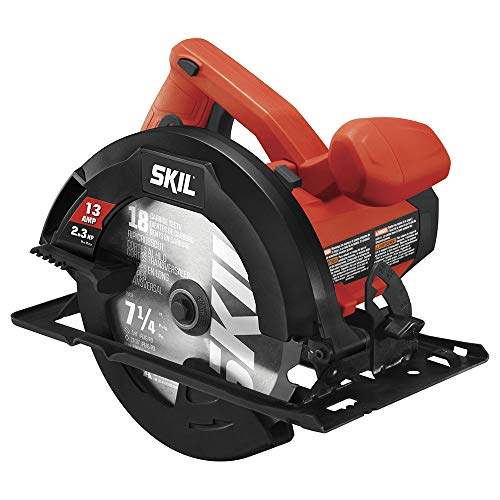
Skil 5080-01 7-1/4-Inch Circular Saw
What We Like
- Solid 13-amp motor for demanding cuts
- Lightweight design reduces user fatigue
- Wide 51-degree bevel with positive stops
- Spindle lock simplifies blade changes
Trade-offs
- Corded design limits portability versus battery models
- At 7.0 lb, it's heavier than sub-compact cordless options
A 13-amp motor provides more power than the SKIL 5380, giving this corded saw the capacity to handle dense framing lumber and sheet goods. The design has a 15% weight reduction compared to that previous model, which is intended to reduce user fatigue. This classic sidewinder is suited for projects like deck building or shed construction, where its corded power and 51-degree bevel capacity are key features from the brand that created the first portable circular saw.
The trade-off is the power cord. For quick cuts around the yard or up on a roof, a cordless model like the DeWalt DCS590B offers more freedom. But for steady work at a stationary cutting station, the Skil’s consistent power and lighter build shine. The improved dust blower is a small but meaningful feature, keeping your cut line visible. It’s a straightforward, affordable workhorse that won’t complicate the job.
Skil PWR CORE 20 Brushless 7-1/4-Inch Circular Saw Kit

What We Like
- Electric brake stops blade quickly for safety
- Cast aluminum shoe compatible with track system
- Battery has 100W USB-C port for device charging
Trade-offs
- Weighs 7.0 pounds, heavier than many sub-compact cordless saws
- 2-5/8-inch cut depth less than corded 7-1/4-inch models
- Track guide is a separate purchase for precise long cuts
The digital brushless motor spins the blade at 5,300 RPM and is claimed to make up to 250 cuts in 2×4 pine on a single charge. That’s serious stamina for framing a shed or building a deck without hunting for an outlet. The cast aluminum construction and electric brake add durability and a crucial safety margin for the home workshop.
The trade-off for that all-in-one convenience is some heft; at seven pounds, it’s not as nimble as a sub-compact model like the Makita XSH04ZB for overhead work. Its 2-5/8-inch depth of cut will handle standard dimensional lumber, but falls short of the deeper capacity you get from a full-size corded saw like the DeWalt DWE575SB for thick stock. For the DIYer who values a cord-free jobsite and doesn’t want to piece together a system, this Skil kit delivers a capable, well-rounded package.
Product photos
DeWalt DWE575SB 7-1/4-Inch Circular Saw

What We Like
- Lightest in its class for a 7-1/4-inch saw
- Powerful 15-amp motor for tough cuts
Trade-offs
- Requires a nearby outlet, unlike cordless models
- No battery or charger included, as it's corded
At 8.8 pounds, this is one of the lightest saws in its class, making it a dream to handle overhead or on long rips without wearing out your arm. That 15-amp motor has the guts for framing lumber or sheet goods, while the 57-degree bevel capacity with positive stops handles complex trim work. It’s the ideal corded saw for DIYers looking for full power in a tool that won’t cause fatigue during a full day of building a deck or shed.
The cord provides consistent power but requires managing an extension cord on the jobsite. For frequent, demanding projects where battery runtime is a concern, this corded model stands out. Compared to a cordless option like the DeWalt DCS590B, you trade cord-free movement for uninterrupted power without charging delays.
Ryobi One P505 5-1/2-Inch Cordless Circular Saw

What We Like
- Rubber GripZone overmold improves handling.
- Clear lower guard provides excellent cut visibility.
- Left-side auxiliary handle offers superior control.
Trade-offs
- 5-1/2-inch blade limits cutting depth versus 7-1/4-inch saws.
- Tool only: requires a separate Ryobi 18V battery purchase.
At just 5.3 pounds and with a 5-1/2-inch blade, this saw is built for maneuverability and comfort, not raw power. That makes it a fantastic choice for the DIYer tackling light framing, plywood sheets, or a weekend shed project where you’ll be making a lot of overhead or one-handed cuts. The transparent guard and extra side handle give you a clear, controlled view of your line, while the rubber overmold keeps the tool planted in your grip even when you’re working up a sweat.
This Ryobi saw uses a 5-1/2-inch blade, which is smaller than the blades on models like the DeWalt DWE575SB. That smaller size means it’s built for lighter jobs like trimming and cutting sheet goods, not for heavy-duty lumber work. For users already owning Ryobi 18V batteries, it adds cordless convenience to these common tasks.
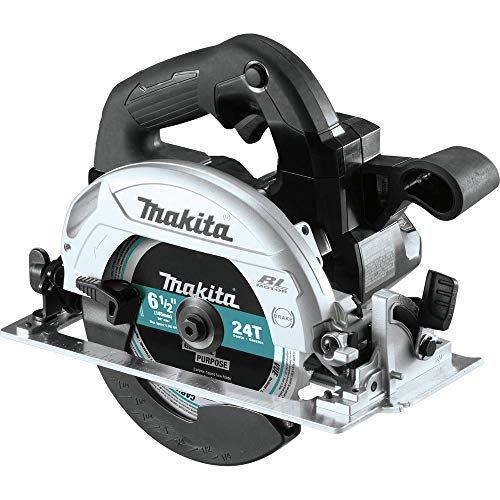
Makita XSH04ZB Sub-Compact 6-1/2-Inch Circular Saw
What We Like
- Compact 10-5/8-inch length for tight spaces
- Brushless motor runs cooler for longer life
- Large 50-degree bevel capacity for angled cuts
- Includes dust extraction attachment for cleaner work
Trade-offs
- Tool only: requires separate Makita 18V LXT battery and charger
- Smaller 6-1/2-inch blade limits depth versus 7-1/4-inch saws
Weighing just 6.4 pounds with a battery, this saw is built for comfort and control during overhead cuts or long sessions of trim work. Its sub-compact, blade-right design is only 10-5/8 inches long, letting you maneuver easily in cramped corners where a full-size saw would bind. This is the saw you grab for detailed projects where a heavy tool becomes a burden.
Its compact size does affect cutting capacity. The 6-1/2-inch blade maxes out at 2-1/4 inches deep, so it won’t cleanly cut through a standard 2×6 in a single pass at 90 degrees. For users who regularly need that full-depth capacity, a larger model like the corded DeWalt DWE575SB is the more practical choice. If your work involves plywood, deck boards, or framing where you can flip the material, however, the Makita’s lightweight agility is a significant advantage.
Makita 5007MG Magnesium 7-1/4-Inch Circular Saw

What We Like
- Two built-in LED lights illuminate cut line
- Magnesium construction for lightweight durability
- Powerful 15-amp motor for demanding cuts
- Large bevel capacity with positive stops
Trade-offs
- At 10.6 lb, it's heavier than cordless options like the Makita XSH04ZB
- Corded design limits mobility compared to battery-powered saws
A magnesium body keeps the weight at 10.6 pounds, so this corded saw remains well-balanced and easier to handle through long cuts than many heavier models. Two built-in LED lights illuminate the line of cut, which prevents your shadow from obscuring the mark in dim light. Research indicates this specific model is seen on more construction sites than any other, often scarred and battered but still working, a sign of its jobsite durability.
That jobsite toughness does mean it’s a full-size, corded saw. You’re trading the cord-free convenience of a model like the Skil PWR CORE 20 for the consistent, unlimited runtime and raw power of the 15-amp motor. For repetitive cuts through dimensional lumber or sheet goods, that’s a fair trade. Just know you’ll be managing a power cord, and its weight, while not excessive, is noticeable compared to modern sub-compact and cordless designs.
DeWalt DCS590B Brushless 7-1/4-Inch Circular Saw
What We Like
- Most powerful 20V MAX motor for tough cuts
- Electric brake stops blade quickly after release
- High capacity for deep cuts in thick lumber
Trade-offs
- Tool only: requires separate DeWalt 20V battery and charger
- At 9.9 lb, it's a heavy cordless saw
With a brushless motor that spins up to 5,500 RPM and a maximum cutting depth of 2-9/16 inches, this saw has the muscle to handle framing lumber and sheet goods with cordless freedom. It’s built for the DIYer who regularly tackles demanding projects like deck building or shed construction, where cord management is a hassle but you can’t afford to sacrifice cutting power. The electric brake adds a layer of control, stopping the blade fast when you release the trigger.
That power comes with some heft, as the saw weighs nearly ten pounds and feels substantial in the hand. This can lead to fatigue on all-day jobs. You’re also committing to DeWalt’s 20V battery system, so factor that in if you’re not already invested. For lighter-duty tasks around the house, a more compact option like the Makita XSH04ZB might be easier to maneuver. When you need to rip through a stack of 2x12s, however, this DeWalt has the guts to get it done.
Product photos
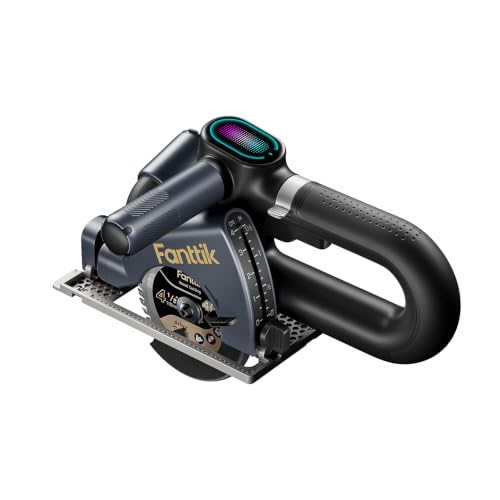
Fanttik O11 Apex 4-1/2-Inch Mini Circular Saw
What We Like
- Extremely compact and lightweight for easy handling.
- Smart display provides real-time load and battery feedback.
- Includes two blades, dust port, and rip guide for versatility.
- USB-C fast charging eliminates proprietary battery docks.
Trade-offs
- Max cut depth of 1-1/2 inches limits material thickness.
- Built-in battery cannot be swapped for a fresh one mid-job.
- Smaller blade diameter reduces cutting speed on larger projects.
A 4-1/2 inch blade on a saw that’s nearly 4 inches shorter than traditional models makes this tool a dream for tight spaces and overhead work. The brushless motor spins at 4700 RPM, which is plenty for slicing through 2×8 lumber in seconds, while the whole package weighs just over four pounds. For a DIYer tackling trim, plywood, or light framing in confined areas, this saw’s compact build and complete accessory kit mean you can start a project without hunting for extra parts. It’s the definition of a grab-and-go tool.
Its maximum cut depth of 1-1/2 inches means this mini saw is designed for thinner materials, not for deep cuts like a full 2×10. This defines its role: a highly portable tool for precision work, not a high-capacity framing saw. The Fanttik O11 Apex is built for smaller tasks where its compact, self-contained system reduces setup time and clutter.
Product photos
Black+Decker BDCCS20B Cordless Circular Saw

What We Like
- Tool-free depth and blade adjustments
- Lightweight at just six pounds
- Pivoting shoe for added control
- Shares battery with POWERCONNECT tools
Trade-offs
- Smaller 5-1/2-inch blade limits cut depth
- Battery and charger sold separately
- Lacks the raw power of a corded 7-1/4-inch saw
A 5-1/2-inch blade and tool-free adjustments make this saw a natural fit for quick, light-duty cuts around the house. The pivoting shoe and preset bevel detents let you focus on the cut line instead of fumbling for a hex key. At six pounds, it’s easy to manage for overhead work or long sessions. This saw is built for simplicity and is perfect for trimming deck boards or breaking down plywood, provided you already own a compatible battery.
This convenience does limit the saw’s capacity. You won’t be cutting through a 2×4 in a single pass at 90 degrees, and it’s outmatched by full-size corded models like the DeWalt DWE575SB for framing. Think of it as a dedicated trim and sheet goods saw. Its real strength is staying ready in your kit, eliminating the cord-tangling hassle for small jobs where speed and ease matter more than brute force.
Product photos
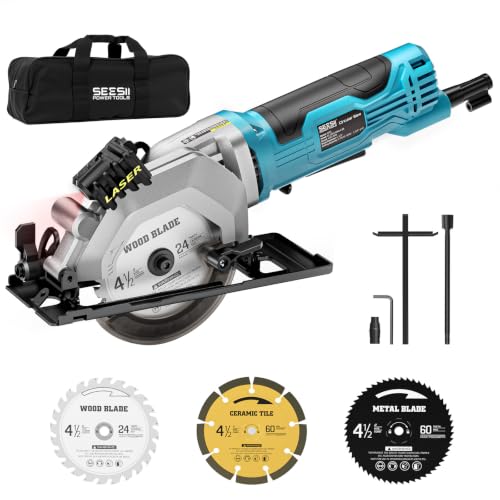
SEESII 4-1/2-Inch Corded Mini Circular Saw
What We Like
- Laser guide and dust port for precise, clean cuts
- Lightweight, compact design for easy one-hand use
- Double safety switch prevents accidental starts
Trade-offs
- Maximum cut depth limits it to thinner stock
- Corded design requires outlet access, limiting mobility
- Smaller blade and motor not suited for prolonged heavy framing
That multi-material versatility, paired with a laser guide and a dust port, makes it a logical choice for detailed DIY projects and home renovations where space is tight and materials vary. Its 4.7-pound weight and compact size mean you can manage it comfortably overhead or in a cramped corner, a real advantage over full-size saws for finish work or craft builds.
That portability and material range do come with a limit on capacity. Its maximum cut depth is 1-11/16 inches at 90 degrees, which restricts it to thinner stock. Consider this saw a superb detail and multi-purpose cutter, not a lumber yard workhorse. It excels at the smaller, more precise tasks that make up most weekend projects, keeping your workspace cleaner and your cuts straighter than a jigsaw could.
Product photos
How We Evaluated Circular Saws For Home Use
Our evaluation focused on specifications from manufacturers and patterns in expert round-ups and owner feedback. We prioritized motor power (amps for corded, voltage and brushless design for cordless), cut depth and bevel capacity for project versatility, and weight plus ergonomics to reduce user fatigue. We also considered safety features like electric brakes and spindle locks.
We looked for tools that provide good value across these criteria, whether in an affordable corded workhorse or a capable cordless kit. Our research into circular saws for beginners informed what makes a model user-friendly. A research-led approach cannot replicate years of job-site durability, so we relied on documented build quality and material choices like magnesium or cast aluminum construction to gauge longevity.
What To Look For In Circular Saws For Home Use
Selecting a saw involves matching its core capabilities to your typical projects. A 7-1/4-inch blade is the standard for full-depth cuts in dimensional lumber, while smaller, lighter saws excel at trim and sheet goods.
Key factors include power source (corded for unlimited runtime, cordless for portability), blade size (which dictates maximum cut depth), and overall weight and balance for control and comfort during extended use.
Power Source & Motor
Corded saws, like our best overall Skil model, offer consistent, unlimited power from a standard 15-amp outlet and are often more affordable. They are ideal for shop work or projects near an outlet. Cordless saws provide complete portability for jobs away from power. Look for brushless motors in cordless models for better efficiency and longer tool life; the DeWalt DCS590B is a prime example of high cordless power. Your choice may also depend on existing batteries for your cordless tools.
Cutting Capacity & Blade Size
The blade diameter determines the maximum depth of cut. A standard 7-1/4-inch blade can cut through a 2×4 at a 45-degree angle, essential for framing and decking. Smaller blades, like the 5-1/2-inch on the Ryobi P505, limit you to thinner materials but offer a lighter, more compact tool. Also check the bevel capacity, which allows for angled cuts; many saws offer stops at common angles like 45 degrees. The right circular saw blades are also crucial for clean cuts in different materials.
Ergonomics & Features
Weight and balance significantly affect control and fatigue, especially for overhead cuts. The DeWalt DWE575SB is notable as the lightest full-size corded saw we found. Features like an electric brake (on the Skil PWR CORE 20) enhance safety by stopping the blade quickly. A spindle lock makes blade changes easier, and a clear lower guard improves cut line visibility. For precision, learning how to use a circular saw with a guide is key.
- Check if the blade is on the left (better cut line visibility for right-handed users) or right (often more stable).
- Feel the grip and handle placement; an auxiliary handle, like on the Ryobi P505, offers superior two-handed control.
- Look for integrated work lights or dust blowers to maintain a clear view of your cut line.
For general home use, a 7-1/4-inch saw, whether corded or cordless, provides the most versatility for common lumber and sheet goods.
Circular Saws For Home Use Compared
The table below provides a quick side-by-side comparison of key specifications and features for all ten circular saws in our lineup.
| Product | Blade Size | Weight | Power Source / Motor |
|---|---|---|---|
| Skil 5080-01 7-1/4-Inch Circular Saw | 7-1/4 Inch | 7.0 Pounds | 13 Amp |
| Skil PWR CORE 20 Brushless 7-1/4-Inch Circular Saw Kit | 7-1/4 inches | 7.0 Pounds | Digital brushless |
| DeWalt DWE575SB 7-1/4-Inch Circular Saw | 7-1/4 inch | 8.8 lbs | 15 amp |
| Ryobi One P505 5-1/2-Inch Cordless Circular Saw | 5-1/2 inches | 5.3 pounds | 18V Cordless |
| Makita XSH04ZB Sub-Compact 6-1/2-Inch Circular Saw | 6-1/2” | 4.0 Pounds | N/A |
| Makita 5007MG Magnesium 7-1/4-Inch Circular Saw | 7-1/4-Inch | 10.6 pounds | 15.0 AMP |
| DeWalt DCS590B Brushless 7-1/4-Inch Circular Saw | 7-1/4 in. | 9.9 pounds | Brushless |
| Fanttik O11 Apex 4-1/2-Inch Mini Circular Saw | 4-1/2 inches | 4.08 lb | Brushless |
| Black+Decker BDCCS20B Cordless Circular Saw | 5-1/2 inches | 6.0 pounds | 20V Cordless |
| SEESII 4-1/2-Inch Corded Mini Circular Saw | 4-1/2 inches | 4.7 pounds | 4.8 Amp corded |
Frequently Asked Questions
What is the best circular saw for a homeowner?
For most homeowners, a 7-1/4-inch circular saw offers the best balance of power and versatility. Our best overall, the corded Skil 5080-01, provides ample power for framing and deck projects at a budget-friendly price. If you prefer cordless convenience and are building a tool ecosystem, the Skil PWR CORE 20 kit is an excellent complete package.
What size circular saw is best for home use?
A 7-1/4-inch circular saw is the standard for home use because it can make full-depth cuts through a 2×4 at both 90 and 45-degree angles. Smaller saws with 5-1/2 or 6-1/2-inch blades, like the Makita XSH04ZB, are lighter and more maneuverable but sacrifice cutting depth, making them better for trim, plywood, and overhead work.
What is the best circular saw for DIY?
The best DIY circular saw depends on your project mix. For varied, demanding work, the powerful and lightweight DeWalt DWE575SB is a superb corded choice. For lighter, frequent tasks where control is key, the compact and ergonomic Ryobi P505 is a great cordless option, especially if you already own Ryobi batteries.
Is a DeWalt or Milwaukee circular saw better?
Both brands offer excellent tools, and the “better” choice often comes down to your existing battery ecosystem or specific model features. For home use, DeWalt’s DWE575SB is a standout for its lightweight corded design, while Milwaukee’s strength often lies in professional-grade cordless systems. It’s more productive to compare individual models based on power, weight, and features for your needs.
Should I get a corded or cordless circular saw?
Choose a corded saw for maximum, sustained power at a lower cost, ideal for shop use or projects near an outlet. Choose cordless for complete portability and convenience, especially for quick cuts, overhead work, or job sites without power. Many homeowners start with a capable corded model like our best overall and add a cordless saw later for specific tasks.
The Bottom Line
The Skil 5080-01 7-1/4-Inch Circular Saw is our best overall pick for homeowners tackling frequent, demanding projects like deck building, offering corded power and full capacity at a great value. If you prioritize portability and are building a cordless tool collection, the Skil PWR CORE 20 Kit is the ready-to-go choice, while those needing a lightweight saw for reduced fatigue should consider the DeWalt DWE575SB.
For specialized needs, our other award winners cover compact designs, mini saws for tight spaces, and models with helpful features like work lights. Before deciding, honestly assess your most common projects to match the saw’s cutting capacity and power source to your work. The most important factor is choosing a saw with enough power and the right blade size to handle your typical materials comfortably.
