
10 Best Concrete Cutting Saws in 2026
This post contains affiliate links. As an Amazon Associate, we earn from qualifying purchases.
The Husqvarna K770 Gas Power Cutter is the best overall concrete saw for its combination of strong power, job-site durability, and features that reduce operator fatigue. For contractors who need indoor power, the Evolution R14DCT is a leading heavy-duty electric option, while the DEWALT 60V Cordless Cut Off Saw offers cordless convenience. Choosing the wrong saw can lead to issues with inadequate depth, poor dust control, or insufficient power for the material.
Concrete cutting demands the right tool for the job’s scale, location, and material. We built this list through research, analyzing specifications, manufacturer documentation, expert round-ups, and patterns in owner feedback. You’ll find clear picks for every need, from large-scale slab work to precise control joints.
Top 10 Concrete Cutting Saws in the Market
Certain content that appears on this site comes from Amazon. This content is provided "as is" and is subject to change or removal at any time.
The Best Concrete Cutting Saws, Reviewed
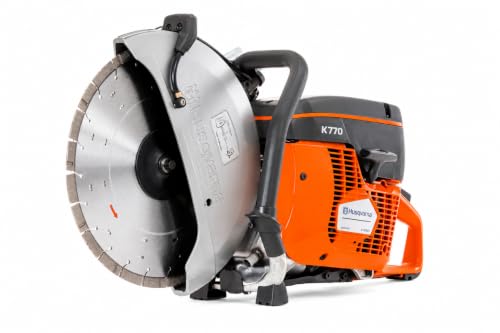
Husqvarna K770 Gas Power Cutter
What We Like
- 5 HP gas engine for demanding cuts
- SmartTension system reduces belt wear
- LowVib design minimizes operator fatigue
- Active Air Filtration for tough job sites
Trade-offs
- Gas engine requires fuel and regular maintenance
- Heavier than compact electric or cordless options
- Produces exhaust fumes, unsuitable for enclosed spaces
Powered by a 5 HP gasoline engine, the Husqvarna K770 cuts up to 5 inches deep, providing the force needed for demanding concrete and masonry work. Its SmartTension belt system helps maintain optimal power transfer and reduces belt wear, while Active Air Filtration is part of a design built for tough job sites. The lightweight, well-balanced design with LowVib technology helps reduce operator fatigue during extended use.
As a gas-powered tool, it requires managing fuel and oil, unlike electric or cordless models. Weighing 22 pounds, it is balanced for its class with vibration-reducing handles. For sustained deep-cutting power in a cord-free format, this Husqvarna is positioned for output, while other products in the market offer different power sources like electric, battery, or walk-behind configurations.
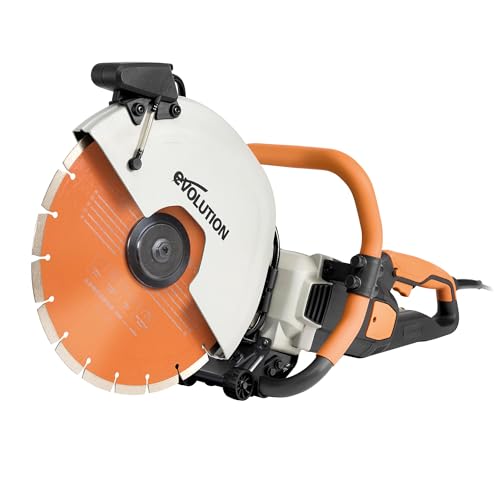
Evolution R14DCT Electric Concrete Saw
What We Like
- Auto ON/OFF dust suppression for OSHA compliance
- Steel skid plate and cast aluminum casing for durability
- 5-position rotating guard for versatile cutting angles
- No gas, oil, or fuel-related maintenance required
Trade-offs
- Requires a dedicated 20A outlet, incompatible with standard 15A
- At 30.6 lb, it's less portable than compact handheld saws
- Water-fed system adds setup complexity for quick, dry cuts
The 20-amp motor delivers gas-like cutting power without the fumes or fuel mixing, making it a serious contender for indoor renovation and enclosed job sites. Its auto dust suppression system is a major advantage, letting you focus on the cut instead of managing a hose. This saw suits contractors and advanced DIYers who need deep, clean cuts in concrete and masonry but want to ditch the maintenance headaches of a gas engine. The integrated water control and sealed switches are built for all-day use.
The Evolution R14DCT requires a dedicated 20-amp outlet, which means it won’t work on standard 15-amp household circuits and demands careful planning for extension cords and site power. This electric design, however, avoids the fuel, oil, and maintenance needed by a gas model like the Husqvarna K770, providing a heavy-duty tool without the associated fumes and engine upkeep.
Product photos
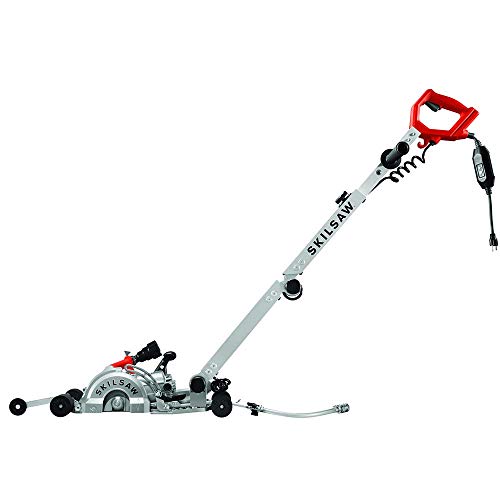
SKIL SPT79A Worm Drive Walk-Behind Saw
What We Like
- Worm drive delivers power and durability
- Adjustable, folding handle for transport
- Two-finger trigger reduces fatigue
- Die-cast aluminum housings resist corrosion
Trade-offs
- Weighs 31.7 pounds
- Requires a separate dust management system
The worm drive system is the core of this saw, delivering the gear-driven torque and durability that professionals rely on for demanding concrete work. That power, combined with a two-finger trigger and an adjustable handle, makes it a tool built for control over long cuts. It’s a complete system with die-cast aluminum construction and a wet/dry dust setup, which means it’s designed for the jobsite where longevity and cleaner operation matter.
This walk-behind concrete saw uses a worm drive system, which delivers durable torque for controlled cutting in slab work. Its design includes die-cast aluminum housings and rust-resistant hardware for long-term corrosion resistance on job sites. At 31.7 pounds, it is heavier than some handheld cut-off saws, so it requires more effort to transport than a tool you can carry. The folding handle does adjust and collapse, however, which aids in moving and storing the unit.
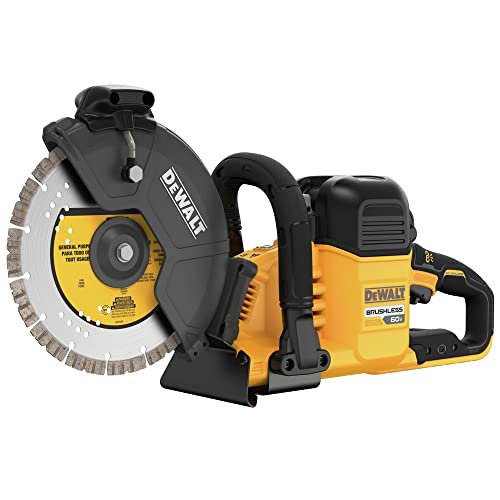
DEWALT 60V Cordless Cut Off Saw
What We Like
- High-voltage 60V cordless platform for serious cuts.
- Cordless design eliminates extension cords and generators.
- Compact 12-inch height for easier transport and storage.
Trade-offs
- Bare-tool listing: requires separate 60V battery and charger purchase.
- 9-inch blade limits cut depth compared to 14-inch models like the Husqvarna K770.
Operating on a 60V cordless platform, this saw provides untethered cutting power without a gas engine or power cord. Its design fits the DEWALT 60V battery system, so users of that platform can avoid outlets. The 9-inch blade size defines its cutting capacity relative to other tools.
The 9-inch blade offers a different cut capacity than the 14-inch models listed, such as the Evolution R14DCT. This places it between smaller dry masonry saws and larger walk-behind or gas cut-off saws in scale. Its cordless nature prioritizes mobility over the maximum depth of bigger, corded or gas-powered saws.
Echo CSG-7410 Gas Cut-Off Saw
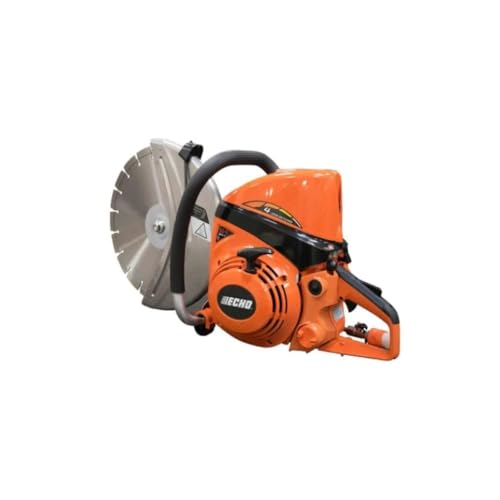
What We Like
- Large 73.5 cc 2-stroke engine for demanding cuts
- Includes water valve for dust suppression
- Features a decompression valve for easier starting
- Comes with an abrasive blade ready for work
Trade-offs
- Amazon listing shows a weight of 0 pounds
- Large 29-inch length requires significant storage
With a 73.5 cc engine, the Echo CSG-7410 is built for the toughest masonry and concrete jobs where pure cutting power is non-negotiable. The included water valve helps manage the dust cloud, and the decompression valve takes the strain out of starting a high-displacement motor. This is a saw for contractors and serious builders who need reliable, untethered performance on a job site without power outlets, and who prioritize raw engine output above all else.
The trade-off is in its portability and operational requirements. The unspecified weight and substantial footprint mean you’ll need a sturdy vehicle and a dedicated storage spot. Compared to a cordless option like the DEWALT 60V Cut Off Saw, you’re committing to gas, oil mix, and more regular engine maintenance. For deep, continuous cuts in hard materials, however, that big 2-stroke engine is exactly what gets the job done.
MechMaxx Honda Walk-Behind Concrete Saw
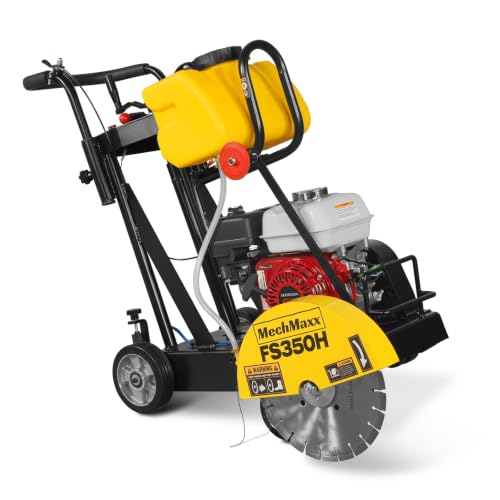
What We Like
- Honda GX160 engine for reliable power
- Built-in 3.2-gallon water tank for dust control
- Adjustable handle with rubber grips for comfort
- Mechanical wheel lock aids setup and transport
Trade-offs
- 4-inch cut depth is less than some 14-inch rivals
- Large 34-inch width requires ample maneuvering space
Powered by a Honda GX160 engine, this saw provides reliable power for cutting concrete and asphalt. That reliability is paired with a built-in 3.2-gallon water tank, which supplies water to the blade area to help reduce dust during operation. The combination offers a setup for wet cutting applications where dust control is required.
Its cutting depth reaches up to 4 inches, while other models in its blade class can cut up to 5 inches deep. The saw’s dimensions and mechanical wheel lock contribute to stability during setup and transport on open surfaces. The adjustable handle with rubber grips and integrated control console are designed to support operator comfort and controlled cutting.
Product photos
Makita 4100KB Dry Masonry Saw
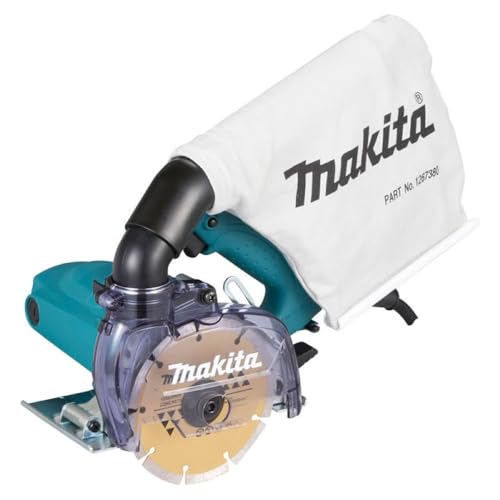
What We Like
- Extremely lightweight at just 6.6 pounds
- High-visibility transparent upper guard
- Powerful 13 AMP motor for a compact saw
- Integrated 360-degree dust extraction port
Trade-offs
- Maximum cut depth of 1-9/16" limits thicker materials
- Guide rail for straight cuts is a separate, optional purchase
- Lacks the deep-cut capacity of larger walk-behind saws
At only 6.6 pounds, the Makita 4100KB is a saw you can manage with one hand, making it the obvious choice for overhead work, tight spaces, or long days of repetitive cutting. Its 13 AMP motor spins a blade at 12,200 RPM, delivering plenty of power for block, brick, and tile. The transparent guard and swiveling dust port show a design focused on control and cleaner operation. This is the saw for the mason or remodeler who needs to move fast and lift less, trading brute force for exceptional maneuverability.
The saw’s maximum depth of cut is 1-9/16 inches at 90 degrees, which accommodates standard bricks and pavers. It is designed as a dry masonry saw, a purpose reflected in its name. For straight cuts, it can attach to an optional guide rail using a specific adapter.
Tomahawk Power TFS6H Concrete Cutting Saw
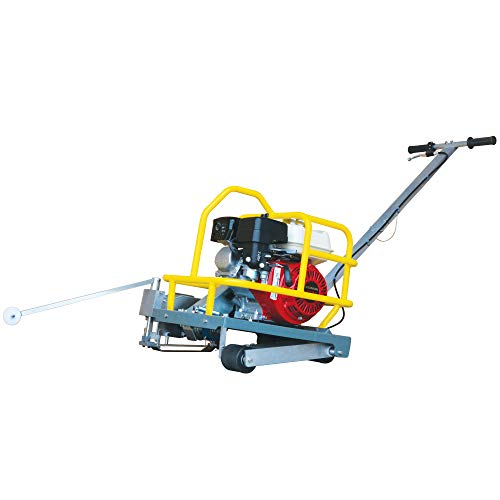
What We Like
- Compact walk-behind design for maneuverability
- Includes dust control system
- Reliable Honda GX120 gas engine
- Specifically designed for control joints
Trade-offs
- Maximum 1-3/16 inch depth limits slab work
- Only accepts blades up to 6 inches in diameter
A maximum cut depth of just over an inch makes this saw a specialist for a single, critical job: creating early-entry control joints in fresh concrete. It’s built for the contractor who needs to walk onto a slab within a few hours of the pour to cut precise joints that prevent random cracking. The compact, walk-behind design and integrated dust control let you work quickly without damaging the surface, and the Honda engine provides dependable startup for time-sensitive tasks. This tool is for the pro who values getting the joint right over cutting deep into cured material.
Designed specifically for creating control joints in concrete slabs, the Tomahawk TFS6H is an early-entry saw that works on green concrete. This specialization means it cannot match the deep cutting capacity of a full-size cutter like the Husqvarna K770, which reaches five inches for plumbing or demolition. Its maximum cut depth of just over one inch confines it to surface scoring, so it will not sink into a foundation wall.
Product photos
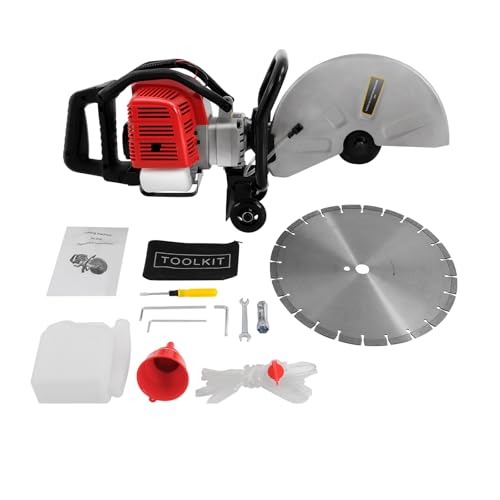
HAOREBAIYU 52cc Gas Concrete Saw
What We Like
- Wet cutting attachment suppresses dust and cools blade
- Ergonomic, vibration-dampening handle reduces fatigue
- Comes ready-to-use with blade and accessories
Trade-offs
- 4-inch depth is shallower than pro models like the Husqvarna K770
- 2-stroke engine requires fuel mixing and produces emissions
A 52cc engine that spins a 13-inch blade at 1800rpm gives you the muscle to slice through reinforced concrete and asphalt without bogging down, which is serious performance for the money. This saw is built for the budget-conscious user who needs gas-powered portability for demolition, patio removal, or trenching jobs, but doesn’t require the deepest cut. The included wet-cutting hookup is a major plus, letting you control silica dust on indoor renovations and extend blade life, which is a feature often missing at this price point.
The trade-off is in its 4-inch maximum cutting depth, which is a full inch less than a model like the Husqvarna K770. That limits you on thicker slabs and some curb work. It’s also a 2-stroke gas engine, so you’re dealing with fuel mix, fumes, and more maintenance than a plug-in electric. For a contractor needing to cut five inches deep all day, you’ll need to step up. But for a homeowner tackling a driveway project or a handyman doing occasional concrete work, this package delivers capable, no-frills cutting power right out of the box.
Product photos
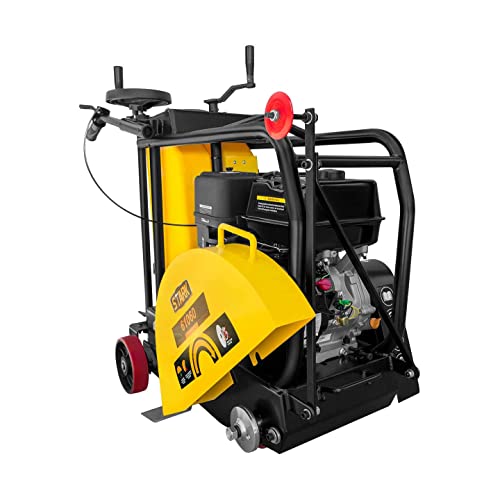
Stark USA 13HP Walk-Behind Saw
What We Like
- High 13HP engine for demanding cuts
- Built-in water system for blade cooling
- Saw guide and rotating handle aid precision
- Integrated wheel aids jobsite mobility
Trade-offs
- At 308.6 lb, it requires a dedicated trailer for transport
- Its size and power are overkill for small patching jobs
A 13-horsepower engine paired with an 18-inch blade puts this walk-behind saw in a different class for production work. It’s built for contractors who need to cut deep expansion joints in city streets or trench through thick concrete slabs all day, where its weight provides stability for straight lines. The integrated water tank means you’re not constantly dragging a hose, and the guide system helps maintain accuracy over long runs. This is a saw for the crew tackling large commercial or municipal jobs where time on the cut is the primary concern.
Weighing 308.6 pounds, the Stark USA walk-behind saw is built for stability on large, flat surfaces rather than easy portability. Its built-in wheel aids in moving it around a jobsite, but the substantial mass means it’s suited for dedicated flatwork like city streets and driveways, not quick residential trips. This design prioritizes weight distribution and power for continuous cutting over maneuverability.
Product photos
How We Evaluated Concrete Cutting Saws
Our research focused on specifications from manufacturers and detailed patterns from professional round-ups and owner reports. We prioritized cutting capacity and power source first, as a saw that can’t reach the necessary depth or run where you need it is useless. We then weighed durability features like drive systems and housing materials, followed by practical job-site factors like dust suppression, vibration control, and overall portability.
We cannot verify real-world long-term reliability or personal ergonomic fit. Our goal is to give you a researched shortlist. This helps you match a tool’s documented capabilities to your specific project demands, from selecting the right concrete saw blades to understanding the full range of professional concrete cutters.
What To Look For In Concrete Cutting Saws
Your project’s demands dictate the saw. The core choice comes down to power source, cutting capacity, and the saw’s form factor, whether you need a handheld cutter for tight spaces or a walk-behind unit for long, deep slabs.
Focus on the maximum cut depth first, it’s the most limiting factor. Then, choose a power source (gas, electric, or cordless) that matches your job site’s constraints for fumes, noise, and available outlets. Finally, consider dust control; wet systems are best for compliance and blade life.
Power Source & Mobility
Gas-powered saws like our best overall pick offer maximum power and cordless freedom for remote outdoor sites, but they require fuel mixing, produce exhaust, and need regular engine maintenance. Electric models, including our best heavy-duty electric pick, deliver consistent power without fumes, ideal for indoor use or sites with reliable 20-amp outlets, but they tether you to a cord. High-voltage cordless platforms provide a middle ground for shorter, mobile cuts without the noise and fumes of gas, though they require a significant investment in a compatible battery system.
Cutting Capacity & Saw Type
The saw’s maximum cut depth, determined by its blade diameter, is your primary constraint. Handheld cutoff saws typically cut up to 4 or 5 inches deep and are highly maneuverable for corners and tight spaces. Walk-behind saws are for deep, straight-line work on slabs and driveways, with depths often exceeding 6 inches. For the deepest cuts, you’ll need a walk-behind model equipped with large 14-inch diamond blades or bigger. Specialty saws, like early-entry saws, are designed for a single, precise task like cutting control joints in fresh concrete.
Job-Site Features & Durability
Dust control is critical for safety and compliance. Integrated water systems suppress hazardous silica dust but add setup complexity. Look for durable construction like cast aluminum or steel skid plates that can withstand job-site abuse. Features that reduce operator fatigue, such as low-vibration designs, ergonomic handles, and easy-start systems, are valuable for long days of cutting. For many projects, a simpler DIY approach with a rented concrete saw might be more cost-effective.
- Confirm the saw’s arbor size matches the blades you plan to use.
- Check if a water attachment or dust port is included or sold separately.
- Ensure the weight and dimensions are manageable for your transport and storage.
- Verify the power requirements; some heavy-duty electric saws need a dedicated 20-amp circuit.
- Consider renting for one-off projects, especially for expensive, large walk-behind saws.
Always match the saw’s deepest possible cut to your project’s thickest material, with a margin for error.
Concrete Cutting Saws Compared
For a quick side-by-side view of our top picks, the table below highlights key specifications like power type, maximum cut depth, and primary use case.
| Product | Blade Size | Weight | Power Source / Engine |
|---|---|---|---|
| Husqvarna K770 Gas Power Cutter | 14-Inch | 22.0 pounds | 5 HP gasoline |
| Evolution R14DCT Electric Concrete Saw | 14-inch | 30.6 pounds | 20A high-torque electric |
| SKIL SPT79A Worm Drive Walk-Behind Saw | 7 inches | 31.7 pounds | Dual-Field motor |
| DEWALT 60V Cordless Cut Off Saw | 9 inches | N/A | 60V Cordless |
| Echo CSG-7410 Gas Cut-Off Saw | 14 in. | 0.0 pounds | 73.5 cc 2-Stroke Gas |
| MechMaxx Honda Walk-Behind Concrete Saw | 14 in | N/A | Honda GX160 4.8 HP |
| Makita 4100KB Dry Masonry Saw | 5" | 6.6 Pounds | 13 AMP |
| Tomahawk Power TFS6H Concrete Cutting Saw | 6 inches | 0.3 Pounds | 3.5HP Honda GX120 gas |
| HAOREBAIYU 52cc Gas Concrete Saw | 13-inch | 26.0 pounds | 52cc 2-stroke |
| Stark USA 13HP Walk-Behind Saw | 18 inch | 308.6 pounds | 13.0HP Gas 4-Stroke |
Frequently Asked Questions
What is the best saw for cutting concrete?
The best saw depends entirely on the job. For most professionals needing powerful, cordless outdoor cutting, a gas-powered cutter like the Husqvarna K770 is ideal. For deep, clean cuts indoors where gas is prohibited, a heavy-duty electric walk-behind saw is the best choice. Always let your required cut depth and job site constraints guide your selection.
Which concrete saw is better, Husqvarna or Stihl?
Both are top-tier brands for professional gas-powered cut-off saws. Husqvarna is often praised for its durability and advanced features like vibration reduction systems in its power cutters. Stihl is renowned for its powerful, reliable engines and is a favorite among many contractors. The “better” choice often comes down to specific model features, dealer support, and personal preference for ergonomics.
Who makes the best concrete chainsaw?
Concrete chainsaws are highly specialized tools for plunge cuts and openings where a circular blade can’t reach. Brands like ICS (ICS-Viper) have built strong reputations in this niche for power and reliability. These are typically professional-grade tools found more commonly in rental fleets than in DIY garages due to their cost and specialized application.
What is the most effective way to cut thick concrete?
For thick, reinforced concrete slabs, the most effective method is using a large, gas-powered walk-behind saw with a diamond blade and a continuous water feed for dust suppression and blade cooling. This setup provides the necessary power, depth, and stability for long, straight cuts while controlling hazardous silica dust, which is a critical safety and regulatory concern.
Can I use a circular saw to cut concrete?
Yes, with the right blade and precautions. A standard circular saw can cut concrete pavers or thin slabs using a diamond masonry blade, but depth is limited to the saw’s capacity. For deeper or more frequent work, a dedicated guide to cutting concrete is essential, and a purpose-built concrete saw is a safer, more effective tool.
The Bottom Line
For professionals tackling demanding outdoor concrete cutting, the Husqvarna K770 Gas Power Cutter is our best overall pick, combining serious power with features that enhance durability and operator comfort. If you’re on a tight budget but need gas-powered portability, look to the HAOREBAIYU, while those needing precise control joints in fresh concrete should consider the Tomahawk Power TFS6H.
Ultimately, let your project’s required cut depth and your job site’s power or ventilation limitations make the final decision. A saw with insufficient depth or the wrong power source will turn a straightforward job into a struggle.
