
10 Best Concrete Cutters in 2026
This post contains affiliate links. As an Amazon Associate, we earn from qualifying purchases.
Our best overall concrete cutter is the Husqvarna FS 524 Walk-Behind Saw, built for commercial crews needing consistent power and depth control on large slabs. For deep handheld cuts, we like the Husqvarna K970 Power Cutter, and the Makita XEC01Z Cordless Power Cutter is a top choice for fume-free indoor work.
Choosing the wrong tool can turn a simple job into a frustrating battle with inadequate depth, poor dust control, or a machine too cumbersome for your workspace. This guide helps you match the cutter’s capabilities, like cut depth, power source, and portability, to your specific project demands.
We based our selections on manufacturer specifications, expert round-ups, and patterns in owner feedback to highlight the tools that perform reliably for their intended tasks.
Top 10 Concrete Cutters in the Market
Certain content that appears on this site comes from Amazon. This content is provided "as is" and is subject to change or removal at any time.
The Best Concrete Cutters, Reviewed
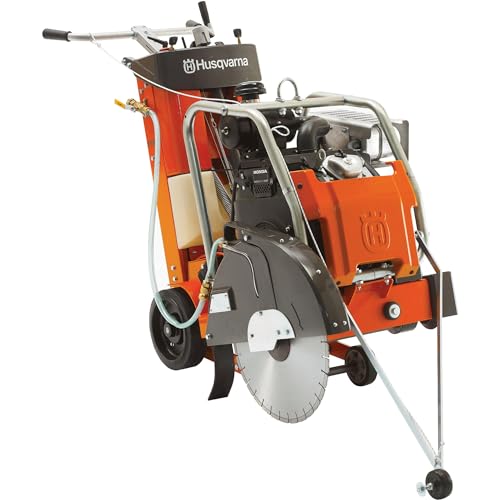
Husqvarna FS 524 Walk-Behind Concrete Saw
What We Like
- Belt-drive system built for daily commercial use
- Blade guard designed for deep cuts in reinforced slabs
- Consistent depth control over long cuts
- Trusted brand name for contractors
Trade-offs
- Walk-behind design is not portable for overhead work
- Commercial-grade build implies significant weight and size
Husqvarna is the name contractors default to for walk-behind concrete saws, which indicates a reputation for commercial-grade equipment. Their saws are built for daily commercial use, with strong belt-drive systems and blade guards designed for deep cuts in reinforced slabs. This makes a Husqvarna walk-behind a solid rental choice for driveway removal, trenching, or expansion joint work where consistent depth control over a long cut is needed.
You pay for that capability with a machine that demands proper upkeep and isn’t something you simply toss in a truck. For deep, controlled cuts on horizontal surfaces, it’s the benchmark. For more portable, overhead, or occasional cutting tasks, a handheld power cutter like the Husqvarna K970 would be a more practical choice, trading sheer slab-cutting capacity for maneuverability.
Husqvarna K970 Power Cutter

What We Like
- Deep 6-inch handheld cutting capacity
- Husqvarna's trusted professional-grade build
- Designed for abrasive masonry and concrete
Trade-offs
- Blade not included with purchase
- Gas-powered, requiring fuel and maintenance
- 26.2 pounds demands physical strength for all-day use
A handheld tool that can cut up to six inches deep is the Husqvarna K970’s defining feature, allowing it to handle medium-hard cured concrete, blocks, and bricks where a larger walk-behind saw won’t fit. This makes it a practical choice for masonry and hardscaping worksites requiring deep cuts in tight spaces. As part of Husqvarna’s Red EHS series, it is specifically designed for cutting through abrasive building materials.
Achieving that depth requires a gas-powered design, which involves managing fuel and engine maintenance compared to electric alternatives. Weighing 26.2 pounds, the cutter is portable for a tool of its capability, though its heft becomes noticeable during prolonged use. This configuration prioritizes raw cutting performance over the plug-and-play convenience of some other systems.
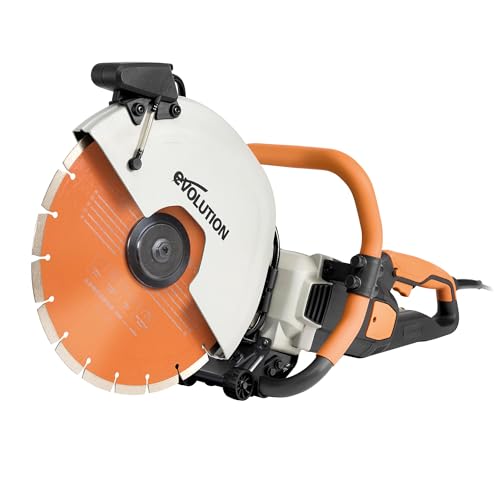
Evolution R14DCT Electric Concrete Saw
What We Like
- Auto ON/OFF dust suppression for OSHA compliance.
- Steel skid plate and cast aluminum casing for durability.
- Five-position rotating blade guard enhances versatility.
- No fuel, oil, or gas engine maintenance required.
Trade-offs
- Requires a dedicated 20A outlet, incompatible with 15A.
- 30.6-pound weight demands physical handling for transport.
A 20-amp electric motor delivers gas-like cutting power without the mess and maintenance of a combustion engine. That makes the Evolution R14DCT a serious contender for contractors or serious DIYers who need heavy-duty performance indoors or in areas where fumes are a problem. The automatic dust suppression system is a standout, letting you set the water feed once for cleaner, compliant cuts. It’s built tough with a steel skid plate and sealed switches, ready for job-site abuse.
The trade-off is in its plug. You need a 20-amp circuit, which isn’t always available on older residential job sites. While its 5-1/8-inch cut is deep enough for most slabs, it won’t match the deeper capacity of a larger walk-behind like the Husqvarna FS 524. For sustained, all-day outdoor cutting where power outlets are scarce, a gas model remains the default. But for controlled, lower-maintenance cutting where you have the right power, this electric saw is a sturdy and effective tool.
Product photos
Makita XEC01Z Cordless Power Cutter

What We Like
- Zero emissions allow safe indoor use
- Brushless motor runs cooler for longer life
- Electric brake and AFT enhance user safety
- Water system aids OSHA compliance for dust
Trade-offs
- Tool only: requires two separate 18V LXT batteries and charger
- Cordless runtime depends on external battery investment
Operating on a 36-volt cordless system, this cutter eliminates gas fumes and pull-starts, allowing for use in indoor spaces like a basement or garage. Its brushless motor delivers 6,600 RPM and reduces maintenance compared to a gas engine, while the integrated water feed helps control dust for OSHA compliance. Research suggests this cordless design appeals to homeowners and remodelers who prioritize avoiding fumes over the raw power of professional gas models.
The tool is sold without batteries, so using it requires an existing investment in Makita’s 18V LXT platform. Its cordless nature provides clear convenience for tasks like doorway cuts where mobility matters. For extensive outdoor projects, research indicates that professional crews often rely on gas-powered models from brands like Stihl, which dominate that category.
Product photos
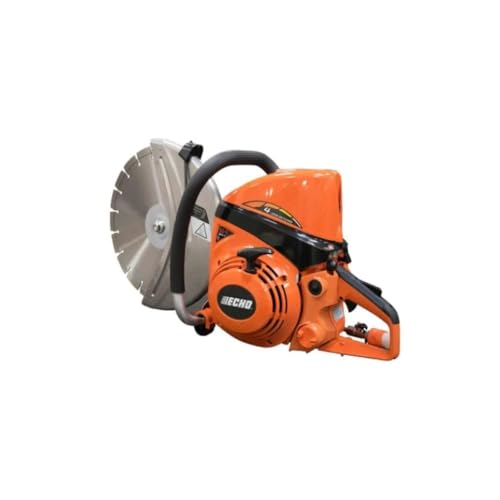
Echo CSG-7410 Gas Cut-Off Saw
What We Like
- 73.5 cc engine provides substantial cutting power
- Includes abrasive blade for masonry work
- Decompression valve aids in starting
- Integrated water valve for dust control
Trade-offs
- Gas engine requires fuel mixing and regular maintenance
- Large 29-inch length demands significant storage space
With a 73.5 cc two-stroke engine, this cut-off saw provides substantial power for concrete and masonry work. Its design includes a decompression valve, which can make starting the engine easier. A water valve is also part of the package to help control dust during cutting operations.
The trade-off is the inherent nature of a gas-powered cutter: you’re dealing with fuel, exhaust, and more maintenance than an electric model. For comparison, the Evolution R14DCT Electric Concrete Saw offers a dust suppression system and no gas requirements, making it a contender for enclosed or indoor sites where fumes are a concern. The Echo CSG-7410 is about raw, portable power for the outdoor job site.
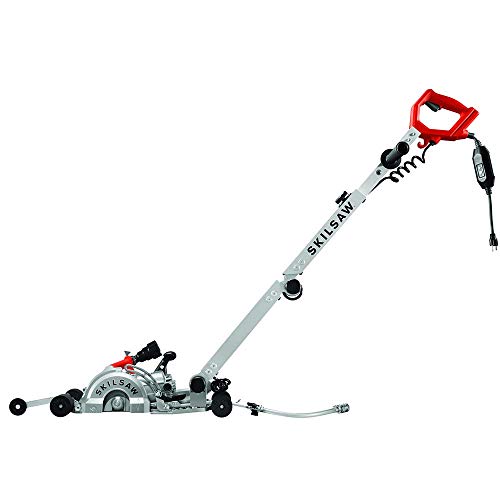
SKIL SPT79A Worm Drive Concrete Saw
What We Like
- Worm drive for power and durability
- Folding handle for easy transport
- Wet/dry dust control for OSHA compliance
- Die-cast aluminum housings resist corrosion
Trade-offs
- 7-inch blade limits cut depth versus 14-inch models
- 31.7 lb weight demands some strength for transport
As a complete concrete cutting system with worm drive power, the SKIL SPT79A delivers the durability expected from that design in a 31.7-pound frame. That weight means it can be lifted into a van or carried down stairs for work in basements or tight job sites. Its wet/dry dust management system controls dust for cleaner cuts and longer tool life, which helps maintain air quality and OSHA compliance on indoor projects.
The trade-off for that compact form is reach. You won’t match the cut depth of a model like the Evolution R14DCT, which is listed with a 5-1/8-inch depth. For a contractor needing to slice through thick masonry all day, a larger walk-behind is the smarter call. But if your work involves frequent moves and standard concrete cuts, the SKIL’s balanced design gets the fundamentals right.
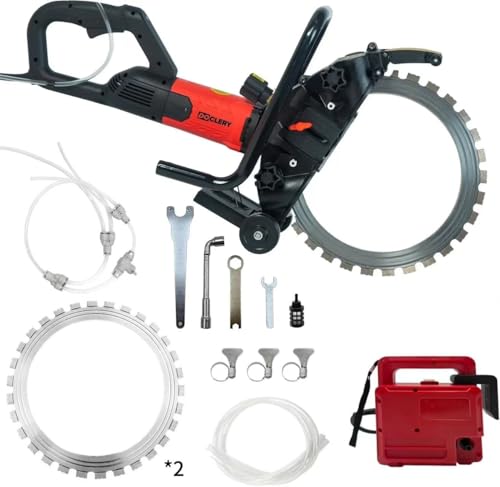
DOCLERY 8980W Electric Ring Saw
What We Like
- 13.8-inch depth for single-pass deep cuts
- Complete kit with two specialized blades
- Integrated water pump for dust suppression
- Ergonomic handle reduces vibration transfer
Trade-offs
- Large footprint at 29.8L x 12.0W x 24.0H inches
- Requires a 110V outlet and water source on-site
A 13.8-inch cutting depth lets you slice through thick foundations and walls in one clean pass, which is why this saw stands out for heavy structural work. The DOCLERY 8980W is built for the contractor who needs to make deep, precise cuts in concrete or masonry day in and day out. Its integrated water system tackles silica dust at the source, a non-negotiable for indoor or enclosed sites where safety is paramount. You get a tool engineered for demanding professional use right out of the box, complete with dual blades for different materials.
With a 13.8-inch cutting depth, this saw handles thick slabs and walls in a single pass, providing dedicated power for deep concrete work. Its integrated water system suppresses hazardous silica dust, creating a safer and cleaner work environment. The complete kit includes two specialized blades for reinforced concrete, asphalt, or masonry, so you can switch materials without an extra purchase. Designed for demanding professional use, its construction is built to withstand rigorous daily use on construction sites.
Product photos
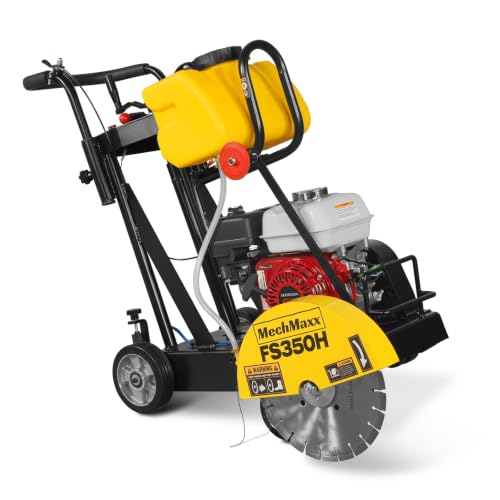
MechMaxx FS350H Walk-Behind Saw
What We Like
- Reliable Honda engine for consistent power
- Built-in water tank supports wet cutting
- Adjustable handle improves operator comfort
- Mechanical wheel lock aids stability during setup
Trade-offs
- 4-inch depth limits thicker slab work
- Walk-behind size requires storage space
A 4-inch cutting depth and a dependable Honda engine make this saw a solid choice for standard concrete floors, pavement repairs, and expansion joints. It’s built for the contractor or serious DIYer who needs a straightforward, gas-powered workhorse for common slab work without complexity. The integrated water tank handles dust control on-site, and the rugged frame is designed for jobsite handling.
The MechMaxx FS350H is powered by a Honda GX160 engine, providing reliable power for concrete, asphalt, and pavement cutting. Its walk-behind design is built for making long, straight lines on grade-level surfaces. The unit supports a 14-inch blade and delivers up to a 4-inch cutting depth, suitable for floor, repair, and expansion joint work.
Product photos
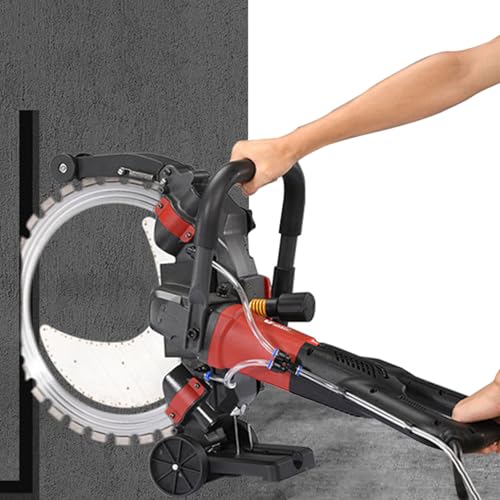
UYCVT 8800W Electric Concrete Saw
What We Like
- Brushless motor for long, spark-free operation
- Heat-resistant design supports 72h continuous use
- Integrated water pump enables dust-free cutting
- Ergonomic handle reduces fatigue during long jobs
Trade-offs
- Requires a 110V outlet with substantial amperage
- Water tank must be filled and managed on-site
- Lacks cordless portability of battery-powered models
An 8800W pure copper motor provides the power for a 16-inch blade, which is intended for cutting wall openings and doorways. Its brushless design means no carbon brush replacement is needed, and the motor’s heat-resistant construction supports up to 72 hours of continuous use under ideal conditions. The integrated water pump with dual outlets is designed for dust-reduced operation.
Being a corded electric saw, it requires both a power outlet and a water supply to function. This limits its use compared to cordless tools like the Makita XEC01Z. The design includes a smooth start function and a comfort-grip handle intended to reduce hand fatigue during prolonged use.
Product photos
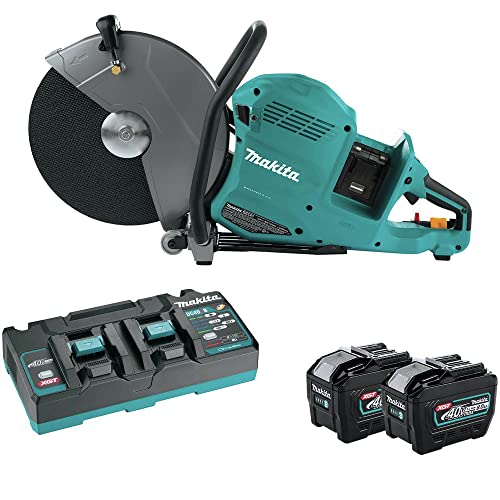
Makita XGT GEC01PL Cordless Cutter
What We Like
- 80V XGT cordless system provides high-voltage power.
- Brushless motor design for efficiency.
- Compact 18.4-inch length for maneuverability.
Trade-offs
- 1.0 lb weight seems unrealistic for a 14-inch cutter; verify actual weight.
- Listed 1.0 lb weight is unrealistic; expect a much heavier tool.
This cordless cutter runs on an 80V MAX battery system, so it offers cordless and gas-free operation for users who want to avoid fumes and engine maintenance. Expert research notes Makita competes in the cordless handheld space, appealing to homeowners and remodelers for occasional use. Its 18.4-inch length suggests a relatively compact frame for a power cutter.
The listed 1.0-pound weight is almost certainly an error, as other cutters like the 30.6-pound Evolution R14DCT show these tools are typically much heavier. For sustained power on a jobsite, research indicates dedicated gas models like those from Stihl dominate for professional use. This Makita model is positioned for cordless convenience rather than continuous heavy-duty runtime.
How We Evaluated Concrete Cutters
We compiled our list by studying manufacturer specifications and documentation to verify core capabilities like maximum cut depth, power source, and weight. We also consulted professional round-ups and rental market analyses to understand which models are trusted for daily commercial use versus occasional DIY projects. Our final criterion was identifying consistent patterns in owner feedback regarding reliability, ease of use, and any recurring operational quirks.
The most critical factors were the tool’s maximum cutting depth, which dictates the thickness of slab or wall it can handle. We also considered its power source, as gas offers raw power on remote sites, electric provides low-maintenance operation, and cordless delivers ultimate portability and indoor safety. Finally, we prioritized features that enhance jobsite practicality, such as integrated water systems for dust suppression and ergonomic designs that manage vibration and weight.
An evaluation like this has inherent limits; it cannot replicate years of jobsite wear or measure the exact strain of handling a heavy saw all day. The goal is to provide a reliable starting point by comparing documented specifications and verified user experiences, helping you narrow down the options before a rental or purchase.
What To Look For In Concrete Cutters
The right concrete cutter makes the difference between a clean, controlled job and a difficult, dusty mess. Your choice hinges on the material you’re cutting, the environment you’re working in, and your own physical capacity.
Focus on the maximum cutting depth first, it must exceed your slab or wall thickness. Next, decide on power source: gas for remote power, electric for workshop control, or cordless for indoor safety. Finally, consider dust control; a built-in water system is essential for compliance and a cleaner worksite.
Cutting Depth & Capacity
The cutter’s maximum cutting depth is the non-negotiable starting point. A standard 4-inch walk-behind saw handles most patio slabs and sidewalks, while deep-cut models with 6-inch or greater capacity are needed for thick foundations or reinforced walls. Handheld cut-off saws typically offer shallower cuts ideal for control joints or masonry blocks, whereas dedicated ring saws are designed for single-pass deep cuts in concrete and asphalt. Always verify the tool’s rated depth against your project’s thickest material.
Power Source & Jobsite Fit
Your jobsite’s constraints dictate the best power source. Gas-powered saws deliver the highest power and complete portability, making them the default for outdoor demolition, roadwork, and sites without electrical access. However, they require fuel mixing, produce fumes, and need regular engine maintenance.
Electric models, both corded and cordless, offer cleaner, quieter operation with less upkeep; a corded saw needs a dedicated high-amperage outlet, while a cordless tool trades unlimited runtime for unmatched maneuverability and safe indoor use. For many indoor renovations, a corded concrete saw provides the best balance of power and control.
Dust Control & Operational Features
Concrete cutting generates hazardous silica dust, making effective dust control a critical safety and regulatory feature. Many professional saws integrate a water pump or valve system to suppress dust at the blade, which is essential for OSHA compliance on commercial sites. For dry cutting scenarios, you’ll need a robust concrete dust vacuum system attached to the tool.
Other features that improve the experience include ergonomic handles to reduce vibration fatigue, folding handles for easier transport, and quick-adjust depth controls for efficiency on long cuts. The right concrete saw blades are also crucial; a diamond blade is needed for cured concrete, while an abrasive blade may suffice for softer masonry.
- Check the tool’s weight and dimensions to ensure you can transport and maneuver it in your workspace.
- Confirm whether a blade is included with purchase or if it’s a separate, necessary investment.
- For electric models, verify the voltage and amperage requirements against your available power supply.
- Look for safety features like an electric brake or a blade guard that rotates for different cutting angles.
- Consider the long-term upkeep: gas engines need more maintenance than electric motors.
Always choose a cutter with a cutting depth at least a half-inch greater than your thickest material to account for uneven surfaces and ensure a complete cut.
Concrete Cutters Compared
The following table lets you quickly compare the key specifications and best-use cases for our top picks side-by-side.
| Product | Blade Size | Power Source / Engine | Weight |
|---|---|---|---|
| Husqvarna FS 524 Walk-Behind Concrete Saw | 24 inches | Belt-drive | N/A |
| Husqvarna K970 Power Cutter | 16 inches | N/A | 26.2 pounds |
| Evolution R14DCT Electric Concrete Saw | 14-inch diamond | 20A high-torque electric | 30.6 pounds |
| Makita XEC01Z Cordless Power Cutter | 9 inches | Cordless (36V) | 0.0 pounds |
| Echo CSG-7410 Gas Cut-Off Saw | 14 inch | 73.5 cc 2-stroke | 0.0 pounds |
| SKIL SPT79A Worm Drive Concrete Saw | 7 inches | Worm drive | 31.7 pounds |
| DOCLERY 8980W Electric Ring Saw | 16 inch | 8980W 110V motor | N/A |
| MechMaxx FS350H Walk-Behind Saw | 14 inches | Honda GX160 4.8 HP | N/A |
| UYCVT 8800W Electric Concrete Saw | 16 inch | 8800W pure copper | N/A |
| Makita XGT GEC01PL Cordless Cutter | 14 inches | Cordless (80V MAX) | 1.0 pounds |
Frequently Asked Questions
What is the most effective tool for cutting concrete?
The most effective tool depends on the job. For long, deep, straight cuts in driveways or slabs, a self-propelled walk-behind concrete saw is the professional standard. For detailed work, tight corners, or overhead cutting, a handheld cut-off saw offers the necessary control and maneuverability. Our guide to saws for cutting concrete explores these options in more detail.
What is the best concrete cutting machine?
The best machine balances power, depth capacity, and jobsite suitability. For most contractors, a commercial-grade walk-behind saw like the Husqvarna FS 524 offers the durability and consistent performance needed for daily slab work. For homeowners or indoor projects, a powerful electric or cordless model provides sufficient cutting ability without the fumes and maintenance of a gas engine.
What are the best-rated concrete saws?
Highly-rated concrete saws consistently come from brands known for professional durability, such as Husqvarna, Stihl, and Makita. These brands earn strong owner feedback for reliability, cutting performance, and ergonomic design. Ratings often highlight models that match their intended use case well, whether it’s a heavy-duty gas cutter for remote sites or a compact electric saw for workshop use.
What is the most effective way to cut thick concrete?
The most effective way to cut thick concrete is with a tool designed for deep capacity, such as a large walk-behind saw or a deep-cut ring saw. These tools use a larger-diameter blade to achieve the necessary depth in a single pass, which is faster and creates a cleaner cut line than attempting multiple passes with a smaller blade. Always use a water feed system to control dust and cool the blade during deep cutting.
Should I use a concrete saw or an angle grinder?
Use a concrete saw for dedicated, deep cutting tasks where straight lines, consistent depth, and efficiency are priorities. An angle grinder fitted with a diamond blade is better suited for scoring, notching, or making very shallow cuts, or for work in extremely tight spaces where a saw won’t fit. For a full breakdown of the trade-offs, see our comparison of a concrete saw vs angle grinder.
The Bottom Line
For contractors and commercial crews tackling slab work, driveway removal, or trenching, the Husqvarna FS 524 Walk-Behind Concrete Saw is the best overall choice. It offers commercial-grade durability and precise depth control on long cuts. If your budget is tighter or you only need to cut standard-thickness slabs, consider the budget-friendly MechMaxx FS350H Walk-Behind Saw. For indoor work where fumes are a concern, the Makita XEC01Z Cordless Power Cutter is the clear winner for its zero-emissions operation.
Ultimately, the single most important factor is matching the cutter’s maximum cutting depth to your project’s thickest material. A tool that can’t cut deep enough will leave you stranded, while one with excessive capacity may be unnecessarily heavy and complex for a simple job. Let your project’s specific demands, depth, power access, and portability, guide your final decision.
