
10 Best Corded Angle Grinders in 2026
This post contains affiliate links. As an Amazon Associate, we earn from qualifying purchases.
Our top pick, the Makita 9564CV Variable Speed Angle Grinder, wins for its precise variable speed control and motor protection. The Bosch GWS14-50 is our best compact, high-performance model, and the DeWalt DWE402N excels in dusty conditions. Choose a corded grinder when you need sustained power without battery limits. The right tool balances weight, disc size, and safety features for your specific tasks.
We researched to find grinders that deliver reliable power for metalwork, masonry, and fabrication. This is a research-based guide using specifications, manufacturer data, and patterns in owner feedback. You’ll find picks for pros, budget-minded DIYers, and those needing specialized features like dust protection.
Top 10 Corded Angle Grinders in the Market
Certain content that appears on this site comes from Amazon. This content is provided "as is" and is subject to change or removal at any time.
The Best Corded Angle Grinders, Reviewed
Makita 9564CV Variable Speed Angle Grinder

What We Like
- Variable speed dial matches RPM to the task
- Constant speed control maintains power under load
- Soft start reduces initial torque jerk
- SJS clutch protects motor from sudden stops
Trade-offs
- At 6 pounds, it's heavier than many 4-1/2-inch models
- 16-inch length demands more storage space than compact units
The 13 amp motor and variable speed control dial enable a user to match the speed to the application, providing flexibility for different tasks. Constant speed control automatically applies additional power to the motor to maintain speed under load. SJS technology is a mechanical clutch system that helps prevent motor and gear damage by allowing the drive shaft to slip if the wheel is forced to stop.
That capability comes with some bulk. The Makita 9564CV is a full-sized tool, both in length and its 6-pound heft, which can lead to fatigue during extended overhead work. For all-day grinding on a ladder, a lighter model like the Bosch GWS12-450PBD might be easier to manage. But if your priority is a single grinder that can adapt to any material and last for years, the Makita’s sturdy design and intelligent features justify its place as the primary tool on the bench.
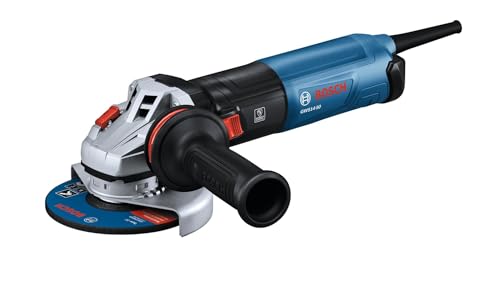
Bosch GWS14-50 Angle Grinder
What We Like
- 13-amp motor delivers strong power for its size
- Compact, 5.1 lb design improves control and comfort
- Enhanced cooling system aids in dust protection
- Includes multiple safety features like KickBack Control
Trade-offs
- Slide switch lacks a lock-on for continuous operation
A 13-amp motor in a 5.1-pound package delivers serious cutting and grinding power without the arm fatigue of a heavier tool. The Bosch GWS14-50 suits users who need consistent power for extended work on metal or masonry but also value easy maneuverability in tight spaces. Its narrow, lightweight design provides an outstanding power-to-weight ratio for better control during both detailed work and demanding jobsite tasks.
This grinder uses a slide switch, not a lock-on paddle. For long, continuous cutting sessions, some users might prefer a different switch style. If runtime comfort for extended straight cuts is a priority, a model like the DeWalt DWE402N has a paddle switch, but the Bosch’s compact form is advantageous for overhead work or use in confined corners.
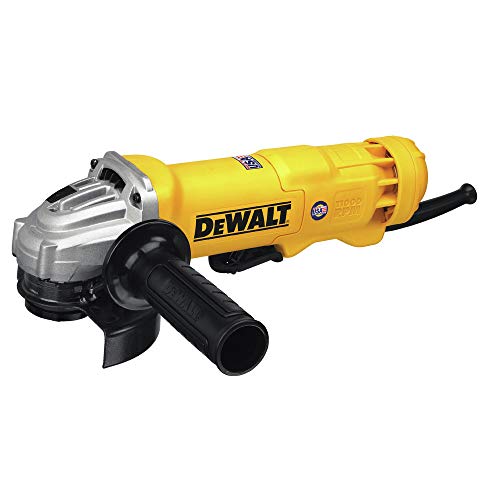
DeWalt DWE402N Angle Grinder
What We Like
- Dust Ejection System protects motor internals
- Tool-free wheel release for fast changes
- One-Touch Guard allows 360-degree rotation
- 11-amp motor provides high power for material removal
Trade-offs
- At 6.2 lb, it's heavier than some 4-1/2-inch competitors
- Lacks a variable speed control for different materials
- No lock-on switch for extended continuous use
With an 11 Amp motor turning at 11,000 RPM, the DeWalt DWE402N delivers the power required for heavy-duty projects like production welding and cutting. Its Dust Ejection System works to clear damaging particles from the motor vents, a feature designed to provide durability. The low-profile gear case helps the tool fit into tight spaces for work on metal and masonry.
That power and protection come with a tool weighing 6.2 pounds, which is heavier than some models like the 4.0-pound Metabo HPT G12SR4. The paddle switch has no lock-on position, a safety choice that requires continuous pressure to operate. Research mentions this grinder can handle heavy-duty jobs, a capability that stems from its 11-amp motor and dust management.
Makita GA7021 7-Inch Angle Grinder

What We Like
- Powerful 15-amp motor for demanding work
- Tool-less wheel guard for quick adjustments
- Rubberized soft grip handle for comfort
- Large rubber tool rest protects workpiece
Trade-offs
- Weighs 15.4 pounds
- Length is 21.2 inches
Its 15-amp motor spins a 7-inch disc at 6,600 RPM for demanding applications. The rear trigger switch includes a lock-on feature for operator convenience during extended use. Tool-less wheel guard adjustments allow for quick changes without needing a wrench.
You trade agility for that power, as its size and weight make it a handful for detailed work or cutting in tight spaces. For those jobs, a compact model like the Bosch GWS14-50 is far more maneuverable. The Makita GA7021 is built for the bench or the floor, where its heft and large tool rest provide stability for grinding down welds or slicing through rebar.
Bosch GWS12-450PBD Angle Grinder

What We Like
- Kickback Control shuts tool off if wheel binds
- Soft Start reduces initial startup impact
- Anti-vibration handle increases comfort for long sessions
- Brake system stops wheel quickly when released
Trade-offs
- At 5.3 lb, it's heavier than the 4.0 lb Metabo HPT G12SR4
- No variable speed control like the Makita 9564CV offers
- Paddle switch lacks a lock-on option for continuous operation
The Bosch GWS12-450PBD is built around a 12-amp motor that spins at 11,500 rpm, which provides high speed for grinding and cutting applications. This power is delivered in a compact design that weighs 5.3 pounds, making it easier to handle during extended use. A suite of safety systems includes Kickback Control to shut off the tool if the wheel binds, Restart Protection to prevent accidental startup, and Drop Control for if the tool is accidentally dropped.
This angle grinder uses a no lock-on paddle switch, which requires continuous pressure to operate as a safety measure. Unlike the Makita 9564CV, it does not offer variable speed control for adapting to different materials. Its protective features, such as the brake system and overload protection, are designed to reduce risks associated with motor overload or a suddenly stopping wheel.
Metabo HPT G12SR4 Angle Grinder Kit

What We Like
- Compact and lightweight design reduces user fatigue
- Includes five grinding wheels and a protective carrying case
- Forward-canted side handle improves control for all users
- Spindle lock allows for quick accessory changes
Trade-offs
- 6.2-amp motor is less powerful than many 11-13 amp competitors
- One-year warranty is shorter than some pro-grade tool offerings
At just 4 pounds with a complete kit of wheels, the G12SR4 is built for extended use without wearing you out. The 6.2-amp motor delivers enough power for most grinding and cutting tasks a DIYer or occasional user will face, and getting five wheels right in the box means you can start working immediately. This combination of a lightweight body, thoughtful handle design, and a ready-to-go package makes it a standout for anyone who needs a capable grinder without the heft or complexity of industrial models.
At just four pounds, this angle grinder reduces user fatigue during extended overhead or detail work, a clear advantage over bulkier six-pound competitors. Its 6.2-amp motor delivers enough power for standard grinding and cutting tasks, though it falls short of the higher-amperage output found in tools like the 13-amp Bosch GWS14-50 for continuous heavy-duty use. Experts note that Metabo HPT’s corded grinders frequently carry a lower price than comparable DeWalt models, positioning this kit as a cost-effective entry from a known brand.
Product photos
Porter-Cable PC750AG Angle Grinder

What We Like
- Cast metal gear housing for durability
- Soft grip handle improves control and comfort
- Spindle lock simplifies accessory changes
- Affordable price point for DIYers
Trade-offs
- At 5.9 lb, it's heavier than some 4.5-inch models
- 7.5-amp motor is less powerful than premium 11-13 amp units
- No variable speed control for finer material work
At its core, this is the most affordable option from the research, making it a straightforward pick for DIY and occasional use. Its 7.5-amp motor provides dependable power for general jobsite tasks, and it spins a 4.5-inch disc at up to 10,000 RPM for workshop projects. The cast metal gear housing and three-position side handle contribute to tool longevity and allow for greater control in different positions.
The motor offers less amperage than models like the 11-amp DeWalt DWE402N, positioning it for lighter-duty work. Users get a soft grip for comfort, a spindle lock for single-wrench accessory changes, and a durable build. Research indicates it is best for dependable power in workshop settings rather than continuous professional use.
Product photos
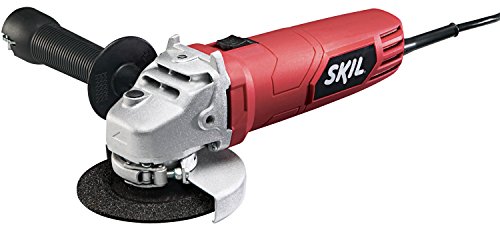
Skil 9295-01 Angle Grinder
What We Like
- Compact grip design for control
- Vibration-reducing handle with wrench storage
- Heavy-duty metal gear housing
Trade-offs
- 6.0 Amp motor is less powerful than many 11-13 Amp rivals
- No variable speed control listed
- Guard is tool-less, not a one-touch system like some DeWalt models
At 4.0 pounds, this grinder is the lightest in the guide. That weight, combined with its compact grip, makes it exceptionally easy to maneuver for overhead work or detailed shaping. The 6.0 Amp motor spins at 11,000 RPM, which is plenty for cutting rebar or grinding welds, but it won’t bog down your arm during a long session. If your priority is reducing fatigue on extended projects, this Skil model makes a compelling case.
The 6.0 Amp motor provides less power than higher-ampere tools like the 11 Amp DeWalt or 13 Amp Bosch. For continuous, demanding work on thick materials, a more powerful motor may be preferable. This Skil grinder’s design prioritizes user comfort with features like a vibration-reducing handle and tool-less guard for quick adjustments.
Product photos
DeWalt DWE4011 Angle Grinder

What We Like
- One-Touch guard adjusts without a tool
- Quick-Change wheel release is tool-free
- Slim, ergonomic body for extended comfort
- Hex wrench is a common, convenient accessory
Trade-offs
- 7-amp motor is less powerful than 11-amp models
- No variable speed control for fine material work
DeWalt’s One-Touch guard lets you reposition the safety shield with a simple push and twist, eliminating the need for a tool. This feature streamlines adjustments between tasks like grinding and cutting. A 7-amp motor is designed for faster material removal, and the slim, ergonomic body provides increased comfort during extended use.
You’ll feel the trade-off when tackling heavy-duty steel or masonry. The 7-amp motor, while capable, doesn’t have the same sustained grunt as DeWalt’s own 11-amp DWE402N. That model will power through thick material with less bogging, but it’s also over two pounds heavier. So, the choice is clear: pick the DWE4011 for its clever guard and comfortable handling on common tasks. Step up to a more powerful grinder if your projects regularly involve deep cuts or aggressive stock removal on tough materials.
Product photos
DongCheng 4-1/2" Angle Grinder

What We Like
- Ultra-light 4.2 lb weight reduces fatigue
- Tool-free 360° adjustable safety guard
- Safety no-lock paddle switch for instant stop
- Comes with a complete set of discs and handle
Trade-offs
- No variable speed control.
- Weighs 4.2 lbs, heavier than some 4.0 lb competitors.
At just 4.2 pounds, this grinder feels noticeably lighter in your hand than most, which makes a real difference when you’re holding it overhead or working through a long afternoon. The slim body and shockproof grip are designed to minimize vibration, letting you focus on the cut instead of fighting the tool. For anyone tackling extended metal cleanup, weld grinding, or general DIY tasks, this combination of a solid 9.2-amp motor and an ultra-light frame is a serious ergonomic win. It’s a straightforward, comfortable grinder built for reducing user fatigue.
You trade some raw power for that lightweight comfort. It doesn’t have the variable speed or brute force of a tool like the 13-amp Bosch GWS14-50, so it’s less suited for the most aggressive, continuous cutting on thick stock. However, with its standard spindle thread, it accepts all common 4-1/2-inch discs right out of the box. For general workshop and home renovation jobs where comfort and control are priorities over maximum material removal rate, this DongCheng’s design is thoughtfully executed.
Product photos
How We Evaluated Corded Angle Grinders
Our evaluation began with manufacturer specifications for amperage, disc size, weight, and key features. We then analyzed expert round-ups and professional tool reviews to identify which performance claims held up in real-world applications. Finally, we sifted through extensive owner feedback to spot consistent patterns in durability, comfort, and any common issues.
The most important criteria were power for material removal, ergonomic design for control and reduced fatigue, and built-in safety features like adjustable guards and anti-kickback systems. Models compatible with the widest array of common 4-1/2-inch grinding wheels and cutting discs were also prioritized.
What To Look For In Corded Angle Grinders
Choosing the right grinder means matching its capabilities to your most common tasks. A model perfect for heavy-duty steel cutting may be overkill for light polishing, while a compact grinder might lack the muscle for demolition work. Our comprehensive angle grinder guide breaks down all the key considerations.
Focus on amperage for power, disc size for task scope, and weight for comfort. A tool-free adjustable guard and a secure side handle are essential for safety and control. For detailed advice, consult our full safety guide.
Power and Speed
Amperage indicates a corded grinder‘s potential power, with models ranging from about 6 amps for light duty to 15 amps for demanding work. Higher amperage allows the motor to maintain speed under load, which is critical for efficient cutting and grinding. Variable speed control, while not universal, is a valuable feature for matching the wheel’s RPM to different materials like metal, tile, or wood, preventing damage and improving finish quality.
Ergonomics and Design
Weight and balance directly impact user fatigue, especially during overhead or prolonged use. Compact designs improve maneuverability in tight spaces. Look for features like a soft-start motor to reduce initial torque jerk and anti-vibration handles to dampen chatter. A forward-canted or ergonomic side handle provides better leverage and control, making the tool feel like a natural extension of your arm. For beginners, understanding how to use an angle grinder properly starts with a tool you can control comfortably.
Safety and Compatibility
A tool-free, adjustable safety guard is non-negotiable; it must be easy to reposition as the wheel wears down. Features like a spindle lock simplify and secure wheel changes. Some advanced models include electronic kickback control, which can stop the tool if the wheel binds. Always ensure the grinder’s spindle thread matches the common 5/8″-11 UNC size for 4-1/2-inch and 5-inch tools to guarantee compatibility with a wide selection of grinding wheels and cut-off wheels.
- Confirm the guard can rotate without tools to maintain proper coverage.
- Check for a secure, comfortable side handle mounting point.
- Verify the included wrench fits the spindle nut securely to avoid stripped threads.
- Ensure the power cord is long enough for your workspace or plan for a heavy-duty extension.
- Read the manual to understand all safety warnings and switch functions.
Your primary safety device is a properly adjusted guard and your full attention.
Corded Angle Grinders Compared
The table below compares key specifications like amperage, weight, and special features to help you contrast our picks at a glance.
| Product | Motor Power | No-Load Speed | Weight | Wheel Size |
|---|---|---|---|---|
| Makita 9564CV Variable Speed Angle Grinder | 13 amp | N/A | 6.0 Pounds | 4-1/2-Inch |
| Bosch GWS14-50 Angle Grinder | 13-amp | 11,500 rpm | 5.1 pounds | 5 In. |
| DeWalt DWE402N Angle Grinder | 11 Amp | 11,000 RPM | 6.2 Pounds | 4-1/2 in. |
| Makita GA7021 7-Inch Angle Grinder | 15 AMP | 6,600 RPM | 15.4 lb | 7 inch |
| Bosch GWS12-450PBD Angle Grinder | 12 amp | 11,500 rpm | 5.3 pounds | 4 ½ inches |
| Metabo HPT G12SR4 Angle Grinder Kit | 6.2 Amp | N/A | 4.0 lbs | 4-1/2 inch |
| Porter-Cable PC750AG Angle Grinder | 7.5-amp | 10,000 RPM | 5.9 pounds | 4-1/2 inches |
| Skil 9295-01 Angle Grinder | 6.0 Amp | 11,000 RPM | 4.0 pounds | 4-1/2-Inch |
| DeWalt DWE4011 Angle Grinder | 7 amp | 12,000 rpm | 3.9 pounds | 4-1/2 inches |
| DongCheng 4-1/2" Angle Grinder | 9.2 Amp | 11800 RPM | 4.2 lbs | 4-1/2 inch |
Frequently Asked Questions
Who makes the best corded angle grinders?
Top manufacturers like Makita, Bosch, DeWalt, and Metabo HPT consistently produce reliable, powerful corded grinders. The “best” brand depends on your specific need, whether it’s variable speed control, compact design, or maximum dust protection. Our list includes top performers from these and other trusted brands.
Which brand of angle grinder is best?
There is no single “best” brand for every user. Makita is known for its variable speed and motor durability, Bosch excels with advanced safety features, and DeWalt offers durable models built for tough job sites. The best brand for you aligns with your priority: precision, safety, power, or value.
Are corded angle grinders better?
Corded grinders provide unlimited runtime and typically deliver higher, more consistent power than cordless models, making them ideal for prolonged, demanding tasks like cutting rebar or grinding welds. They are a better choice when you have reliable outlet access and don’t require the absolute mobility of a battery-powered tool.
What is the best angle grinder for home use?
For home use, look for a balanced grinder that is powerful enough for occasional projects but not overly heavy or specialized. Our Best Value Kit, the Metabo HPT G12SR4, is an excellent choice as it includes necessary wheels and a case. The Porter-Cable PC750AG is also a strong, affordable budget pick for DIY metalwork.
What size angle grinder do I need?
A 4-1/2-inch grinder is the most versatile and popular size for home workshops and professional use, with the widest accessory compatibility. Choose a 5-inch or 6-inch model for more aggressive material removal, and reserve 7-inch or larger grinders for heavy-duty demolition, concrete work, or large-scale fabrication.
The Bottom Line
The Makita 9564CV Variable Speed Angle Grinder is our best overall pick for its exceptional versatility, speed control, and motor protection, making it ideal for advanced DIYers and professionals tackling mixed materials. If your budget is tight, start with the ready-to-use Metabo HPT G12SR4 kit or the dependable Porter-Cable PC750AG.
For specialized needs, remember our award winners: the Bosch GWS14-50 for a compact, high-performance tool, the DeWalt DWE402N for dusty environments, and the Makita GA7021 when you need the power of a 7-inch disc. No matter your choice, never compromise on a secure, adjustable safety guard, it’s the most critical feature for safe operation.
