
10 Best Corded Reciprocating Saws in 2026
This post contains affiliate links. As an Amazon Associate, we earn from qualifying purchases.
For consistent power and endurance, a corded reciprocating saw remains a strong choice for demolition. The Skil 13 Amp Reciprocating Saw with Buzzkill Technology is a leading option, balancing power with effective vibration dampening. Other notable models include a heavy-duty Makita saw and a versatile DeWalt model known for value.
Choosing the right cord means matching its raw power to your specific tasks. A massive 15-amp beast is overkill for a homeowner, just as a compact 10-amp saw will struggle on a jobsite.
We built this guide by analyzing manufacturer specifications and comparing expert test results. Our goal is to help you find the right tool based on the motor power, control features, and durability that matter most for your projects.
Top 10 Corded Reciprocating Saws in the Market
Certain content that appears on this site comes from Amazon. This content is provided "as is" and is subject to change or removal at any time.
The Best Corded Reciprocating Saws, Reviewed
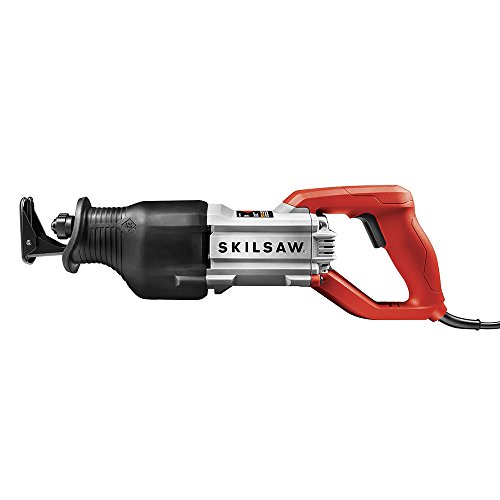
Skil 13 Amp Reciprocating Saw
What We Like
- 13-amp motor delivers power for all applications
- Buzzkill Technology suppresses vibration significantly
- Tool-less blade clamp withstands jobsite demands
- Oversize trigger allows flexible cutting positions
Trade-offs
- No specific cutting speed or stroke length provided
A 13-amp motor provides the power needed for demanding demolition and cutting applications. Patented Buzzkill Technology suppresses vibration up to 35% better than competing models, which can reduce user fatigue during extended use. The variable speed trigger and oversize design offer flexibility for cutting different materials and in various positions.
You do pay for that performance with some extra heft. At nine pounds, it’s a substantial tool, especially when compared to lighter options like the DeWalt DWE305. If you’re planning overhead cuts or marathon sessions, your shoulder will feel it. For the majority of demolition and rough-in work, however, the trade-off is worth it for the smooth, consistent power.
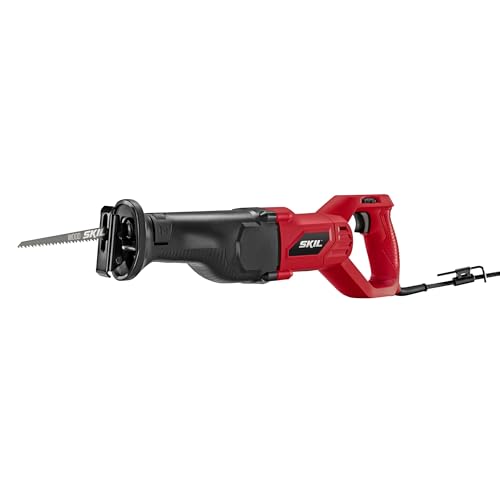
Skil 7.5-Amp Reciprocating Saw
What We Like
- Powerful 7.5-amp motor for demanding cuts
- Tool-less blade change simplifies swaps
- Counter balance reduces user fatigue
- Heavy-duty metal gear housing enhances durability
Trade-offs
- Weighs 7.0 pounds.
- Lacks the Buzzkill vibration technology found on higher-end models.
This Skil saw is built for the homeowner who needs a reliable, no-frills workhorse for occasional projects. Its tool-less blade change and pivoting foot for stability mean you can jump between cutting metal pipe and tree limbs without fuss. The metal gear housing and counter balance mechanism show this tool is designed to last, even if it doesn’t have all the bells and whistles.
Research mentions that in a comparison for the best corded reciprocating saw, a different 15-amp Skilsaw model edged out competitors due to superior cutting speed and a higher value score. That model is described as a heavier tool, a trade-off for its performance. For weekend warriors, this Skil 9206-02 packs essential features like tool-less changes and a pivoting foot into a sensible package.
Makita 15 Amp AVT Recipro Saw

What We Like
- AVT system drastically cuts user vibration
- Powerful 15-amp motor maintains speed under load
- Long stroke length enables faster cutting
- Lock-on button adds convenience for extended use
Trade-offs
- At 10.1 lb, it's heavier than many corded rivals
- Its size and weight demand more arm strength
A 15-amp motor paired with Makita’s AVT technology makes this saw a serious contender for demanding demolition and construction work. The internal counterbalance system redirects vibration away from your hands and arms, which means you can cut through thick materials for longer periods without the usual fatigue. This combination of raw power and user comfort is exactly what you need when you’re tearing out a wall or cutting large-diameter pipe. It’s built for pros and serious DIYers who prioritize control and stamina over the absolute lightest tool.
Makita’s 15 Amp AVT Recipro Saw carries over ten pounds, which demands a strong grip for overhead work. Research mentions that in a tight three-way battle, a 15-amp Skilsaw model edged out Makita on cutting speed and value. However, the Makita’s internal counterbalance system greatly reduces vibration, directing more impact energy to the work surface for increased user comfort during long demolition tasks.
DeWalt 12 Amp Reciprocating Saw

What We Like
- Keyless lever-action clamp for quick blade changes.
- Four-position blade clamp enables flush cutting.
- Variable speed trigger offers precise control.
- Solid DeWalt build quality noted by owners.
Trade-offs
- 18-second 2×4 cut time trails more powerful 15-amp saws.
- 12-amp motor is not for the heaviest professional demolition.
A 4-position blade clamp is the key here, letting you pivot the shoe and blade to cut flush against walls or floors, a real problem-solver in tight spaces. That, combined with a variable speed trigger and keyless blade changes, makes this DeWalt exceptionally adaptable for the homeowner or remodeler tackling a mix of plumbing, demolition, and pruning. It’s built to handle most jobs around the house without fuss.
Research confirms it won’t win a speed race; its 12-amp motor cut a 2×4 in about 18 seconds, which is competent but noticeably slower than a beast like the Makita 15 Amp AVT. You’re trading peak brute force for greater maneuverability and that clever clamping system. For all-around utility at a reasonable cost, it’s a hardworking, versatile tool. When you need raw cutting speed for all-day demo, you step up to the heavier, more powerful class.
Makita 12 Amp Recipro Saw

What We Like
- Compact 7.3 lb weight for easy maneuvering
- Tool-less blade change for quick swaps
- Variable speed trigger for precise control
- Tool hook for convenient storage
Trade-offs
- Lower power than 15-amp demolition-focused models
A 7.3-pound weight and an 8-inch body make this Makita the easiest saw here to handle in tight quarters or overhead. This is the right pick for anyone who needs a saw they can control with one hand or fit into a cramped joist bay without sacrificing core performance.
According to expert round-ups comparing top models, the Skilsaw Buzzkill edged out this Makita in cutting speed. That model trades its higher performance for a heavier build, while the Milwaukee also placed high in the same three-way comparison. The research notes that all three tools in that group are considered effective for demanding demolition tasks.
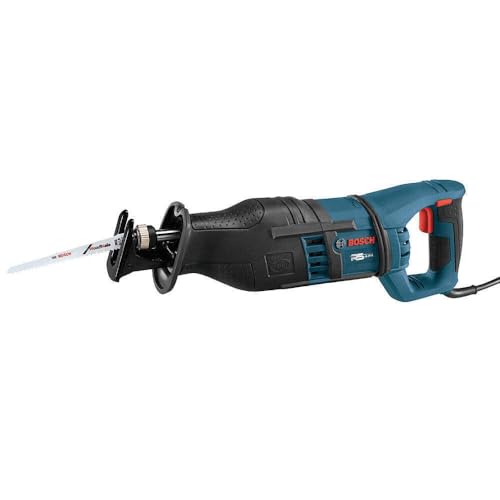
Bosch 14 Amp Reciprocating Saw
What We Like
- Effective vibration control system
- Excellent power-to-weight ratio
- Fast cutting performance
- Reduces initial jerkiness
Trade-offs
- No blade storage on tool
- No variable speed trigger specified
- Heavier than some 7-8 lb models
With 14 amps of power in an 8.7-pound tool, the Bosch RS428 cut through a test 2×4 in just 10 seconds, the fastest time among the corded models in that evaluation. This best power-to-weight ratio means it can handle demanding cuts without the arm fatigue that comes from heavier saws. Its vibration control system uses a counterbalance and anti-vibration handle to minimize shaking, and testers noted the slow blade start eliminates the sudden jerkiness common in other models.
The trade-off for that solid, powerful feel is a bit of bulk. At 8.7 pounds, it’s not the lightest corded saw available, so it might feel cumbersome for prolonged overhead work compared to lighter models like the 7.3-pound Makita JR3051T. This is a tool built for power and user comfort over ultimate portability. If your priority is taming vibration during long cutting sessions without sacrificing cutting speed, the Bosch’s design and performance are hard to beat.
Product photos
WEN 10-Amp Reciprocating Saw

What We Like
- Eight-position pivoting head for versatile cuts
- Tool-free, quick-release blade holder
- Variable speed trigger for stroke control
- Includes both wood and metal blades
Trade-offs
- 10-amp motor is less powerful than 12-15 amp rivals
An eight-position pivoting head locks the blade every 45 degrees, making flush cuts against a wall or floor possible where a fixed head would bind. This 10-amp motor handles cuts up to four and a half inches in wood and three-fifths of an inch in metal. A pressure-sensitive trigger varies speed from zero to 2800 strokes per minute, while the twist-lock blade holder allows tool-free changes.
Where this saw gives up ground is in pure cutting aggression. Compared to the 12-amp DeWalt DWE305, for example, it has less power on tap for thick, dense materials. The 7.7-pound weight is manageable for overhead work, but you’ll feel it after a full day more than you would with a lighter model such as the Makita JR3051T. It’s a capable, thoughtful design that trades some brute force for exceptional positioning flexibility.
Product photos
CRAFTSMAN CMES300 Reciprocating Saw

What We Like
- High 3,200 RPM speed for fast cutting.
- Variable speed trigger for control in different materials.
- Comfortable contoured over-molded handle.
- Quick, tool-free blade release system.
Trade-offs
- Lower amperage than models like the 15 Amp Makita JR3070CT.
- 7.5-amp motor is lower amperage than 15-amp models
A top speed of 3,200 RPM and a 1-1/8-inch stroke length provide a high rate of cutting action, which can mean faster completion of applications. The 7.5-amp motor delivers this speed, prioritizing pace in materials like wood. A variable speed trigger offers control from zero to that maximum, while the contoured over-molded handle is designed for added comfort during use.
The tool’s 24.5-inch length gives it a larger footprint than models like the 19.2-inch DeWalt DWE305. This size suits open demolition work more than operating in tight spaces between joists or in a crowded attic. Its design prioritizes the stroke and speed for repetitive cutting where time is a factor.
Product photos
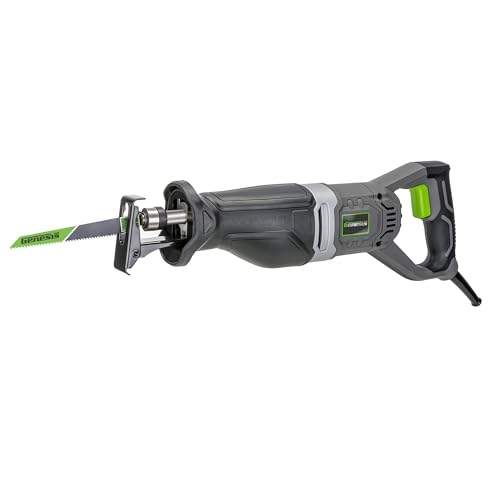
Genesis GRS101B Reciprocating Saw
What We Like
- Tool-less blade clamp for quick changes
- Variable-speed trigger matches speed to material
- Adjustable pivoting shoe extends blade life
- Includes both wood and metal cutting blades
Trade-offs
- At 21 inches long, it requires more clearance than compact models
- 7.4 pounds may tire arms during overhead demolition
A 10 Amp motor handles tough demolition and metal-cutting jobs, providing substantial power for demanding tasks. The tool-less blade clamp makes changes quick and easy, and the saw comes with both wood and metal blades so you can start on different materials immediately. An adjustable, pivoting shoe helps extend blade life by providing stable contact with the work surface.
The Genesis is longer and heavier than some competitors, which can matter in tight spaces or during long sessions. You trade some compact maneuverability for a full-sized grip and the convenience of included blades. For jobs where you’re cutting both wood and metal in a single session, the tool-less clamp and ready-to-go kit save time and frustration.
Product photos
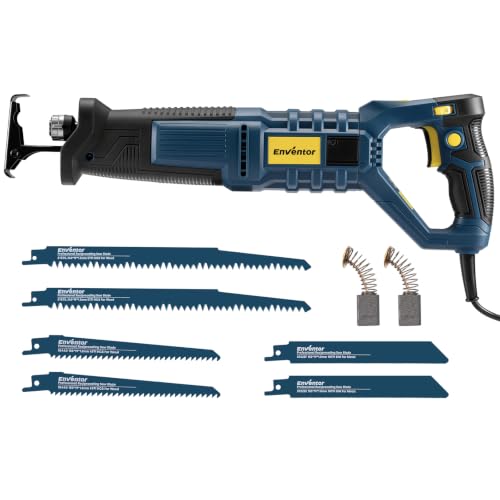
Enventor Multi-Angle Reciprocating Saw
What We Like
- 180° rotating handle for multi-angle cutting
- Tool-less blade change for quick swaps
- Integrated LED light for dark workspaces
- Includes six blades for wood and metal
Trade-offs
- 7A motor is less powerful than many 10A+ competitors
- 5.91-inch wood cutting capacity limits thicker material
The 180° rotating handle is the defining feature, letting you lock the grip into positions that would otherwise strain your wrist when cutting in tight corners or overhead. Paired with a variable speed trigger and 45° shoe adjustment, this saw is built for control in awkward spaces, not just raw demolition power. It suits a DIYer or remodeler who frequently needs to make precise cuts in cabinetry, pipes, or existing walls where a standard saw handle just won’t fit.
That focus on maneuverability comes with trade-offs. For straightforward, high-power demolition, a tool like the Makita 15 Amp AVT Recipro Saw is a more capable choice. The Enventor excels where finesse and adaptability in confined spaces are more important than brute force.
Product photos
How We Evaluated Corded Reciprocating Saws
This guide is based on an analysis of manufacturer specifications for motor amperage, weight, and features. It also considers findings from expert tool reviews that evaluate cutting speed and vibration control, alongside patterns in user feedback regarding durability and usability.
Three criteria were paramount for this category. First, motor amperage directly determines cutting speed and the saw’s ability to power through dense materials without stalling. Second, effective vibration control is critical for reducing user fatigue during extended use. Third, the overall design, including weight, balance, and blade-change mechanisms, affects maneuverability and job-site efficiency.
The primary limitation of this research-based approach is that we cannot provide direct, comparative performance data from our own tests. Our recommendations rely on published expert findings and owner experiences.
What To Look For In Corded Reciprocating Saws
Corded reciprocating saws offer sustained power, but their performance varies significantly. Understanding a few key specifications will help you match the tool’s capability to your workload.
Focus on motor amperage for power, stroke length for cutting speed, and vibration control to reduce fatigue. The tool’s weight and balance also directly impact maneuverability in tight spaces.
Motor Amperage
Motor amperage is the primary indicator of a corded reciprocating saw’s power. Saws with 10 to 12-amp motors are lighter and suitable for light-duty demolition and overhead work where weight is a concern. Models in the 13-amp range offer a good compromise of power and manageable size.
For heavy-duty construction and demolition, 14 and 15-amp saws deliver the fastest cutting speeds and typically feature advanced vibration-dampening technology, though they are the heaviest. Our research shows that for serious reciprocating saw reviews, the top-rated models often fall into this highest power class.
Stroke Length & Speed
Stroke length is the distance the blade travels forward and back; a longer stroke (often 1-1/8 inches or more) enables faster cutting by moving more material with each cycle. Stroke speed, measured in strokes per minute (SPM), indicates how fast the blade oscillates. A variable-speed trigger lets you match the speed to the material, which is essential for control when cutting metal or making precise plunge cuts. Understanding these specs helps predict a saw’s performance before you make a cut.
Vibration Control & Ergonomics
Minimizing vibration is crucial for comfort and control. Look for technologies like Skil’s Buzzkill or Makita’s AVT system, which are engineered to absorb shock before it reaches your hands and arms. Weight distribution is equally important; a well-balanced 10-pound saw can feel more manageable than a top-heavy 8-pound model. Our round-up of the best Makita reciprocating saws highlights models that excel in this area. For tasks in confined areas, the lighter weight and compact size of one-handed reciprocating saws can drastically reduce fatigue.
A comfortable, oversized trigger and a secure grip help you maintain control during aggressive cuts.
- Check the blade clamp mechanism. A tool-less, lever-action design allows for fast blade swaps, which is a major convenience on any jobsite.
- Consider the shoe (the metal plate that rests against the work surface). An adjustable or pivoting shoe can help extend blade life and enable flush cuts.
- Look for integrated features like a blade storage compartment or a hanging hook, which add practical value for storage and transport.
The right blade is as important as the saw itself; always match the types of saw blades to your specific material.
Corded Reciprocating Saws Compared
The following comparison table provides a quick, side-by-side view of the key specifications for our top picks.
| Product | Motor | Weight | Blade Change |
|---|---|---|---|
| Skil 13 Amp Reciprocating Saw with Buzzkill Technology – SPT44A-00 | 13 amp | 9.0 pounds | Tool-less |
| Skil 9206-02 7.5-Amp Variable Speed Reciprocating Saw | 7.5 Amp | 7.0 Pounds | Tool-Less |
| Makita JR3070CT AVT® Recipro Saw – 15 AMP | 15 Amp | 10.1 pounds | N/A |
| DEWALT Reciprocating Saw, 12 Amp, 2,900 RPM, 4-Position Blade Clamp, Variable Speed Trigger, Corded (DWE305) | 12 Amp | 8.0 Pounds | Keyless |
| Makita JR3051T Recipro Saw – 12 AMP | 12.0 AMP | 7.3 pounds | Tool-less |
| BOSCH RS428 14 Amp Reciprocating Saw | 14 Amp | 8.7 pounds | N/A |
| WEN 3630 10-Amp 8-Position Variable Speed Reciprocating Saw | 10-amp | 7.7 pounds | Tool-free |
| CRAFTSMAN Reciprocating Saw, 7.5 Amp, 3,200 RPM, Corded (CMES300) | 7.5 Amp | 7.0 pounds | Tool-free |
| Genesis 10Amp Variable-Speed Reciprocating Saw with Wood and Metal Cutting Blades, Tool-less Blade Change, 2 Year Warranty (GRS101B) | 10 Amp | 7.4 pounds | Tool-less |
| Enventor Reciprocating Saw with 6 Speeds, 0-2800 SPM, 7A/850 W, Corded | 7A / 850 W | N/A | Tool-less |
Frequently Asked Questions
Which corded Sawzall is the best?
Our research points to the Skil 13 Amp Reciprocating Saw with Buzzkill Technology as the best overall corded Sawzall for most users. It combines a powerful 13-amp motor with effective vibration-dampening technology, making it a strong performer for a wide range of demolition and cutting tasks without the extreme weight of top-tier 15-amp models.
What’s the best reciprocating saw to buy?
The best reciprocating saw depends entirely on your intended use. For heavy, daily demolition, a 15-amp model like the Makita we feature is ideal. For general home use and versatility, the DeWalt 12 Amp saw is an excellent choice. Budget-focused DIYers will find capable performance in the Skil 7.5-Amp saw. Always prioritize motor amperage and vibration control based on your project scale.
Are corded Sawzalls more powerful than cordless?
Generally, yes. Corded models draw power directly from an outlet, providing sustained, high-amperage output that most cordless battery packs cannot match, especially for extended runtime. While high-end cordless saws are closing the performance gap, our research indicates that the most powerful vibration-control technologies are still often found in corded tools.
Is there a difference between a reciprocating saw and a Sawzall?
A Sawzall is simply a brand name for a reciprocating saw, popularized by Milwaukee. The term is often used generically, much like “Kleenex” for tissues. All Sawzalls are reciprocating saws, but not all reciprocating saws are Milwaukee Sawzalls. The functional tool is the same.
What should I consider when buying a reciprocating saw?
First, consider the materials and frequency of your work to determine the necessary motor power (amperage). Second, evaluate vibration control features if you plan on long sessions to minimize fatigue. Third, assess the saw’s weight and balance, especially if you’ll be working in tight spaces or overhead. Finally, read a comprehensive guide on how to use a reciprocating saw to ensure safe and effective operation.
The Bottom Line
For a powerful, well-rounded corded reciprocating saw that handles a broad spectrum of tasks, the Skil 13 Amp Reciprocating Saw is our top recommendation. Its combination of a strong motor and effective Buzzkill vibration control makes it a versatile choice for serious DIYers and professionals alike.
If your budget is tight, start with the Skil 7.5-Amp Reciprocating Saw. For daily, heavy-duty demolition where maximum power and minimal fatigue are non-negotiable, invest in the Makita 15 Amp AVT Recipro Saw. Its advanced vibration system is worth the extra weight for pros.
Ultimately, matching the saw’s amperage and vibration control to your specific workload is the most critical factor for a confident purchase and a tool you’ll rely on for years.
