
10 Best Cross Cut Saws For Cabinet Shop Use in 2026
This post contains affiliate links. As an Amazon Associate, we earn from qualifying purchases.
Our best overall pick for cabinetmakers is the Rob Cosman Professional Crosscut Joinery Saw, which leaves a surface ready for joinery straight from the cut. We also recommend the Taytools Lynx Thomas Flinn 14 Inch Tenon Saw for premium Sheffield tradition and the SUIZAN Dozuki for an ultra-fine Japanese pull saw.
A cabinet shop needs a saw that delivers precision without secondary cleanup. The right crosscut saw turns dimensioned stock into perfect joinery components. We researched specifications, manufacturer data, and patterns in user feedback to evaluate ten top saws.
This guide helps you match a saw’s capabilities to your specific tasks, from tenon cheeks to panel breakdown.
Top 10 Cross Cut Saws For Cabinet Shop Use in the Market
Certain content that appears on this site comes from Amazon. This content is provided "as is" and is subject to change or removal at any time.
The Best Cross Cut Saws For Cabinet Shop Use, Reviewed
Rob Cosman Professional Crosscut Joinery Saw

What We Like
- Minimal .002-inch set leaves a ready-to-join surface
- Composite handle has carved finger recesses for control
- Extra heavy brass back provides balance and pressure
- Includes a hand-crafted walnut and ash storage case
Trade-offs
- The 15 TPI blade is focused for fine joinery, not fast bulk cutting
- Presentation case adds bulk compared to simple blade guards
A .002-inch set per side is the key here. That microscopic amount of blade offset means each tooth barely kisses the wood fibers, slicing them cleanly instead of tearing. The result is a cut surface so smooth it’s ready for glue straight from the saw, which is exactly what you need for cabinet joinery. The extra heavy brass back adds just the right heft, letting the saw’s own weight do the work for controlled, accurate cuts. This is a tool built for the craftsman who values finish-ready precision over raw speed.
Rob Cosman’s saw is built for fine joinery, with its 15-tooth-per-inch crosscut pattern leaving a ready-to-join surface. The .002 inches of set per side helps it slice cleanly through wood for precise work like tenons and dovetails. An extra heavy brass back provides balance and the downward pressure needed for fast, controlled cuts, while composite handles with carved finger recesses offer comfort and control. Each saw is personally tested by Rob Cosman and comes in a hand-crafted walnut and ash storage case.
Taytools Lynx Thomas Flinn 14 Inch Tenon Saw

What We Like
- Made by the last traditional saw maker in Sheffield, UK.
- Taper-ground Sheffield steel balances durability and sharpening.
- Brass back provides tension for rigidity and balance.
- Solid beech handle with brass screws offers a classic feel.
Trade-offs
- Brass-backed tenon saw design is heavier than a Japanese pullsaw.
- Maximum depth of cut is 3-1/8 inches.
A 14-inch saw plate filed for crosscutting makes this a precise, controlled tool for tenon shoulders and fine joinery. It suits a cabinet maker who values traditional, heirloom-quality tools and appreciates the heritage of Sheffield craftsmanship. The taper-ground steel and brass-backed construction deliver a specific kind of feedback and rigidity that many woodworkers find irreplaceable for accurate work.
The trade-off is capacity. For the ultimate in lightweight precision on smaller joints, the Japanese pullsaws like the SUIZAN Dozuki offer a completely different, pull-cut action. This Lynx saw is for those who want a Western saw that feels solid and planted in the hand.
Product photos
Lynx 10-Inch Tenon Saw for Cross Cutting
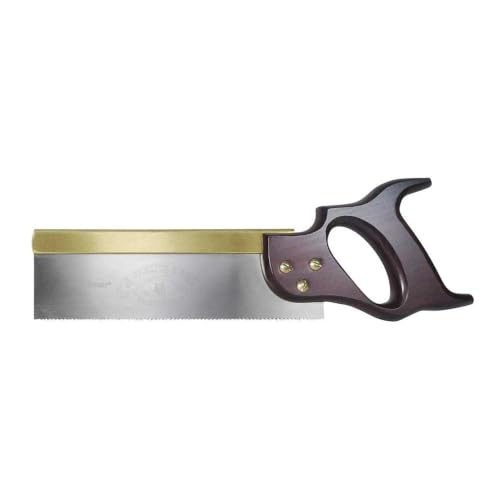
What We Like
- Compact 10-inch blade for precise joinery work.
- Sheffield steel offers durability and easy sharpening.
- Brass spine provides excellent rigidity and balance.
- Stained beech handle ensures a secure, comfortable grip.
Trade-offs
- 10-inch blade limits depth of cut on larger stock.
- 15 TPI crosscut filing is specialized for fine joinery, not rough dimensioning.
Filed for cross cutting with 15 teeth per inch, this Lynx saw is designed specifically for tenon cheeks and joinery. Its 10-inch blade provides a balance of length and control, making it suitable for detailed woodworking tasks. Sheffield alloy spring steel offers edge durability, and the heavy-duty brass spine enhances rigidity during cuts.
A 10-inch blade length limits the depth of cut possible in a single pass. For deeper tenons, a longer saw like the 14-inch Taytools Lynx Thomas Flinn model would be required. This tool’s design prioritizes precision in crosscutting over capacity for thick material.
Product photos
SUIZAN Dozuki Dovetail Cross Cut Saw
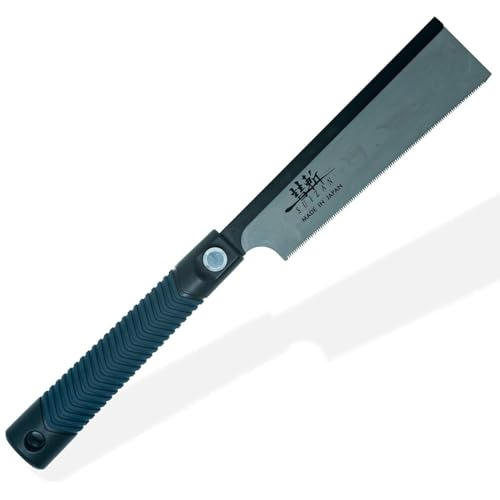
What We Like
- Extremely lightweight pull-saw design
- Exceptionally thin 0.3mm blade for fine cuts
- High 17 TPI for a clean crosscut edge
- Made with quality Japanese steel in Japan
Trade-offs
- 7-inch blade limits depth of cut on wider stock
- Ultra-thin blade is delicate for heavy-duty work
- Pull-saw action requires a different technique than Western saws
The SUIZAN Dozuki uses a pull-cut action, which the manufacturer states is lighter and requires less power than a push saw. Its blade is 0.012 inches thick, resulting in a kerf width of 0.02 inches. At 0.4 pounds, the overall tool is lighter than many Western tenon saws, such as the 2.0-pound Rob Cosman model.
The saw’s 7-inch blade length is shorter than many joinery saws, like the 14-inch Taytools Lynx Thomas Flinn Tenon Saw. For larger crosscuts, other products in the category, such as the Taytools 467832, have a 22-inch blade.
Product photos
Spear & Jackson Predator Tenon Saw

What We Like
- Suregrip ergonomic handle reduces hand fatigue
- Integrated 45/90° angle guide for accuracy
- Solid steel back provides excellent blade rigidity
- Fine 15-point teeth deliver a smooth, clean cut
Trade-offs
- At 0.9 pounds, it lacks the heft for effortless momentum in deep cuts
- The 10-inch blade limits depth of cut on larger cabinet components
Its Suregrip soft feel ergonomic grip and finger guide provide a comfortable handle, which helps maintain accuracy during extended cutting tasks. The solid steel back offers maximum rigidity for a smooth, clean cutting action. This fine-cutting saw is intended for use along and across the grain on projects like tenon joints, mouldings, and architraves.
With a 10-inch blade length, this saw is shorter than some other tenon saws, such as the 12-inch Crown 195 or the Taytools Lynx Thomas Flinn model with its 14-inch plate. A shorter blade limits the depth of cut possible in a single stroke on thicker material. For deeper crosscuts on larger components, a saw with a longer blade would be necessary.
Product photos
KAKURI Dozuki Crosscut Hand Saw
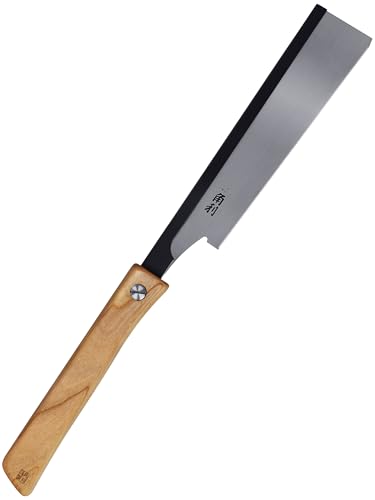
What We Like
- Ultra-fine 33.5 TPI blade for exceptionally smooth cuts.
- Pull-cut design provides greater control with less effort.
- Easy, secure blade and spine replacement system.
- Polished Sakura wood handle develops a unique patina.
Trade-offs
- The 8.2-inch blade length limits cut depth on wider stock.
- Thin 0.008-inch blade is specialized for fine work, not heavy cuts.
- At 10.5 ounces, it lacks the heft of a Western-style tenon saw.
With 33.5 teeth per inch and a kerf of only 0.011 inches, this saw is engineered for precision. Its ultra-fine 0.2 mm blade is intended for delicate tasks like kumiko woodworking and fine joinery, producing narrow, smooth cuts. The Japanese pull-cut design and 10.5-ounce total weight provide control with minimal effort, allowing for gentle, guided strokes.
The saw’s specialization for fine work is reflected in its physical construction. Its 8.2-inch blade and pull-stroke action are suited to controlled, precise cutting on thin materials. For heavier crosscutting tasks, other tools like the 14-inch Lynx Thomas Flinn tenon saw offer a longer blade and lower tooth count.
Taytools 467832 Cross Cut Saw
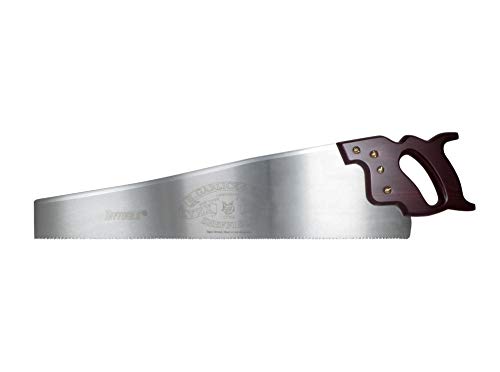
What We Like
- 22-inch blade offers deep crosscutting capacity.
- Taper ground blade reduces binding in thick stock.
- Stained beech handle provides a solid, traditional grip.
- 10 TPI tooth pattern balances speed and finish.
Trade-offs
- 28-inch length is cumbersome for fine joinery cuts.
- 10 TPI is too coarse for delicate cabinet trim.
With its 22-inch taper ground blade, this saw is designed for long, straight cuts. The length provides a full stroke for efficient cutting, while the taper reduces binding in deep material. A 10 TPI crosscut filing is specified, which is a tooth pattern intended for cutting across wood grain.
The trade-off is specialization. It’s overkill for cutting tenons or dovetails, where its size becomes a hindrance. For those finer tasks, you’d naturally reach for a dedicated joinery saw like the Rob Cosman Professional Crosscut Joinery Saw, which is over a foot shorter and built for precision. This Lynx saw excels at one job: turning large rough stock into manageable cabinet parts with authority and clean edges.
Product photos
SUIZAN 8-Inch Dozuki Pull Saw

What We Like
- Extremely thin 0.008-inch blade for minimal waste
- 30 TPI provides a very fine, clean crosscut
- Japanese pull-saw design requires less force
Trade-offs
- Ultra-thin 0.2mm blade is delicate for coarse work
- Specialized pull-stroke technique differs from Western saws
The blade is only 0.008 inches thick, which creates an extremely narrow 0.012-inch kerf for cleaner cuts with less material waste. This Japanese pull saw cuts on the pull stroke, a design that requires less power than a push saw and results in a lighter 0.4-pound tool. Its construction from Japanese steel and manufacturing in a historic Japanese craft town contribute to its sharpness and traditional quality.
With an 8-inch blade and a 30-tooth crosscut pattern, the saw is designed for precise, shorter cuts. The overall length is 20.5 inches, providing a long handle for control in detailed work. Compared to other saws like the 2.0-pound Rob Cosman model, its very light weight and thin blade focus its use on precision rather than heavy stock removal.
Product photos
Crown 195 Brass-Back Tenon Saw
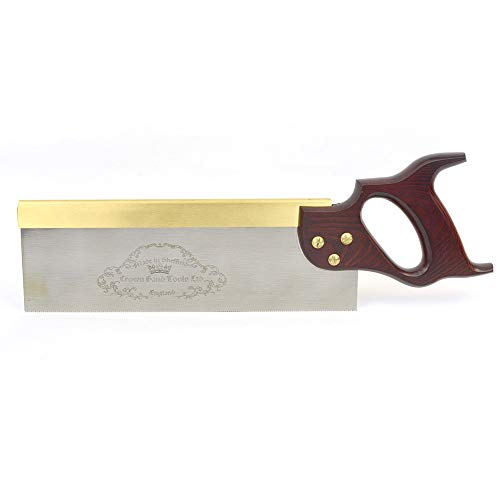
What We Like
- Resharpenable high carbon steel blade for long life.
- Brass back provides excellent stiffness for straight cuts.
- Traditional beech handle secured with screws for durability.
Trade-offs
- At 1.6 pounds, it is heavier than modern pull-saw designs.
- Western push-cut style requires more clearance than Japanese saws.
A resharpenable high carbon steel blade stiffened with a brass back gives this tenon saw the rigidity for controlled joinery cuts. This design from Crown Hand Tools Ltd in Sheffield, England, uses a Fagus sylvatica handle secured with screws, supporting long-term maintenance. With 13 teeth per inch, it is a tool built for the woodworker who values traditional construction.
Its heft and push-stroke action demand a different technique than the lightweight Japanese pull saws in the guide, like the SUIZAN Dozuki. You’ll need proper bench holding and a full arm stroke, which can be less ideal for intricate detail work in tight spaces. Compared to a longer saw like the Taytools Lynx Thomas Flinn 14 Inch model, the Crown’s 12-inch blade limits its maximum depth of cut on wider tenon cheeks. This makes it better suited for standard cabinet-scale joinery.
Temple Tool 7 Ryoba Pull Saw

What We Like
- Dual-purpose blade for rip and crosscut tasks.
- Compact 180mm size for enhanced control in joinery.
- Thin, narrow-kerf blade for smooth, effortless cutting.
- Handcrafted from high-grade, long-lasting Japanese steel.
Trade-offs
- Smaller 180mm blade limits depth of cut on thick stock.
- No rigid back, unlike a dozuki, for absolute tenon precision.
- Lightweight design offers less heft than a western tenon saw.
Its 180mm dual-edge blade combines rip and crosscut teeth in one tool, delivering versatile capability for a cabinet shop. A woodworker can break down board width with the rip side, then trim components to length with the crosscut side without switching saws. The thin-kerf blade and pull-stroke design are engineered for smooth, easy cutting, providing clean and precise cuts in both softwoods and hardwoods.
The trade-off for that compact versatility is capacity. Its blade is shorter than the 22-inch Lynx crosscut saw, so it won’t handle deep cuts in large panels. For dedicated, heavy-duty joinery like cutting tenon cheeks, a saw with a rigid back, like the SUIZAN Dozuki, provides more inherent stability. The Temple Tool excels as a master of many small to medium tasks, not a specialist for one massive job.
Product photos
How We Evaluated Cross Cut Saws
Our research focused on manufacturer specifications and expert round-ups to understand each saw’s intended use and construction. We examined blade length, teeth per inch (TPI), and handle design to assess suitability for cabinet shop tasks like tenon cutting and fine joinery. A key part of our evaluation was analyzing patterns in owner feedback regarding cut quality, durability, and ease of use.
Our research is desk-based; we did not handle or cut with these tools ourselves. This means our assessment of balance and feel relies on documented specifications and consistent user reports.
What To Look For In Cross Cut Saws
Choosing the right crosscut saw means matching its physical design to your most common tasks. Cabinet shops balance dimensioning rough stock with executing precise joinery, and no single saw excels at both.
Key criteria include blade length for cut capacity, teeth per inch for finish quality, and saw type (Western push or Japanese pull) for technique and kerf control. Heft and handle ergonomics affect comfort during repetitive cuts.
Blade Length & Cut Capacity
Blade length dictates the maximum depth of a single crosscut. A 22-inch saw like the Taytools 467832 can handle wide panels and thick stock at the bench, while a compact 10-inch tenon saw is ideal for joinery on smaller components. Consider the typical width of your cabinet parts; a 7 or 8-inch Japanese dozuki is perfect for delicate work but will struggle with wider stock. For breaking down full sheets, many cabinetmakers rely on a crosscut technique for the table saw or a dedicated sled.
Teeth Per Inch (TPI) & Kerf
Teeth per inch determines the cut’s speed and smoothness. A coarse 10 TPI blade cuts quickly but leaves a rougher surface, suitable for rough dimensioning. For joinery, a fine 15 to 17 TPI blade delivers a cleaner edge, with ultra-fine 30+ TPI saws like the KAKURI Dozuki creating a polished finish ideal for visible trim.
The kerf, or width of the cut, is also critical. Japanese pull saws often have blades as thin as 0.008 inches, removing minimal material for precision work but requiring a delicate technique different from Western push saws.
Saw Type & Handle Design
Western back saws, like our top picks from Rob Cosman and Taytools, use a push stroke and have a rigid brass or steel back for guidance. They offer heft for momentum in deep cuts. Japanese pull saws cut on the pull stroke, which many find offers greater control with less effort, but they lack a rigid back for absolute tenon precision. Handle ergonomics are vital for reducing fatigue. Look for features like the Spear & Jackson Predator‘s ergonomic grip or the carved finger recesses on the Rob Cosman handle.
–
- Check the handle material: traditional beech offers a classic feel, while composite or ergonomic shapes may improve grip.
- Consider the saw’s weight: a heavier brass-back saw provides momentum but can tire the arm during repetitive small cuts.
- Evaluate your technique preference: a pull saw requires a different, often gentler, motion than a Western push saw.
- For versatile breakdown work, a dual-purpose blade like the Temple Tool 7 Ryoba handles both rip and crosscut tasks.
The best saw feels like an extension of your hand for the specific cuts you make most often.
Cross Cut Saws For Cabinet Shop Use Compared
The following table compares key specifications across our ten picks to help you see the differences at a glance.
| Product | Blade Length | Teeth Per Inch (TPI) | Handle Material |
|---|---|---|---|
| Rob Cosman Professional Crosscut Joinery Saw | 16.1 inches | 15 TPI | Composite |
| Taytools Lynx Thomas Flinn 14 Inch Tenon Saw | 14 inch | 13 TPI | Stained European Beech |
| Lynx 10-Inch Tenon Saw for Cross Cutting | 10 inches | 15 TPI | Stained European Beech |
| SUIZAN Dozuki Dovetail Cross Cut Saw | 7 inches (180mm) | 17 | N/A |
| Spear & Jackson Predator Tenon Saw | 10 inches (255mm) | 15 points | Suregrip soft feel ergonomic |
| KAKURI Dozuki Crosscut Hand Saw | 8.2 inches | 33.5 | Sakura wood |
| Taytools 467832 Cross Cut Saw | 22 inches | 10 TPI | Stained Beech |
| SUIZAN 8-Inch Dozuki Pull Saw | 8 inches (210mm) | 30 | N/A |
| Crown 195 Brass-Back Tenon Saw | N/A | 13 TPI | Fagus Sylvatica (Beech) |
| Temple Tool 7 Ryoba Pull Saw | 180mm | N/A | Wingnut wood with brass |
Frequently Asked Questions
What is the best saw to use for cutting cabinets?
For cutting cabinet joinery, a fine-toothed crosscut saw is essential. Our best overall, the Rob Cosman Professional Crosscut Joinery Saw, is designed specifically for this, leaving a glue-ready surface. For breaking down sheet goods and panels, cabinet shops typically rely on power tools like a table saw with a crosscut sled or a high-quality miter saw.
What is the best cross cut saw?
The best crosscut saw depends on your primary task. For fine joinery in a cabinet shop, we selected the Rob Cosman Professional Crosscut Joinery Saw for its minimal set and ready-to-join finish. For deep crosscuts in thick stock, the Taytools 467832 with its 22-inch blade is a better fit. There is no single best saw for all crosscutting work.
What is the best miter saw for a cabinet shop?
While this guide focuses on hand saws, a cabinet shop often uses a powered miter saw for efficient dimensioning. When selecting one, look for accuracy, a good fence system, and compatibility with high-quality miter saw blades. A sliding compound miter saw increases crosscut capacity for wider boards.
What is the best cabinet table saw for a small shop?
A cabinet table saw is a centerpiece tool for ripping and panel processing. For a small shop, space efficiency and power are key. You’ll want to look for a cabinet saw that balances a compact footprint with a strong motor and precise fence system to handle sheet goods accurately in a small shop.
What is the best method for cross-cutting wide sheet goods?
For cross-cutting sheet goods wider than a miter saw can handle, the most common method in a cabinet shop is using a table saw with a crosscut sled or a track saw system. A well-built table saw sled provides excellent accuracy and repeatability for panels. Some shops also use a radial arm saw for this purpose, though they require more floor space.
The Bottom Line
For the cabinetmaker focused on precise joinery, the Rob Cosman Professional Crosscut Joinery Saw is our top recommendation. Its design prioritizes a finish that needs no planing or sanding before glue-up, saving a critical step in the workflow. If your budget is tighter or you need a saw for heavier rough cutting, consider the large-capacity Taytools 467832 or the classic value of the Crown 195 Brass-Back Tenon Saw.
Ultimately, the most important factor is matching the saw’s blade length, tooth count, and heft to the specific crosscutting tasks that fill your shop day.
