
4 Best Decking Sanders in 2026
This post contains affiliate links. As an Amazon Associate, we earn from qualifying purchases.
For the best decking sander overall, we recommend the Onfloor 16 Inch Wood Floor Sander for its superior speed and built-in dust collection. The Makita 9903 is our pick for best for flush edges, while the Makita 9403 excels at fast removal. Choosing the right tool transforms a grueling weekend project into a manageable one.
A deck sander must remove old finish fast, control the ubiquitous dust, and be comfortable enough for hours of work. This guide is based on thorough research of specifications, expert insights, and patterns in owner feedback to help you match a machine to your deck’s specific needs.
Top 4 Decking Sanders in the Market
Certain content that appears on this site comes from Amazon. This content is provided "as is" and is subject to change or removal at any time.
The Best Decking Sanders, Reviewed
Onfloor 16 Inch Wood Floor Sander

What We Like
- Integrated 1 HP vacuum for dust control
- Quick-change tooling speeds maintenance
- Forgiving dual-axis pivot mounting system
- Large 16-inch diameter covers area fast
Trade-offs
- Sixteen-inch cube size requires significant vehicle space
A 16-inch sanding diameter paired with a 1 HP on-board vacuum means you can tackle a large deck surface rapidly while containing the mess, a critical combo for any serious restoration job. The dual-motor design delivers the power for aggressive material removal without bogging down. This is the machine you want when efficiency and dust control are non-negotiable on a big, flat project.
That capability comes with a substantial footprint; the cubic 16-inch dimensions make it cumbersome for tight spaces or intricate deck features. For the sheer scale of work it’s built for, the Onfloor stands alone. If your project involves railings, tight corners, or multiple levels, a more compact belt sander like the Makita 9403 becomes a necessary companion for the finishing touches.
Makita 9903 Belt Sander

What We Like
- Variable speed control dial for application matching
- Innovative design sands flush to wall
- Auto-tracking belt requires no manual adjustment
- Front grip design for comfortable operation
Trade-offs
- 3-inch belt width is narrower than the Makita 9403's 4-inch
Its design allows sanding flush to a wall with the nose and side of the tool, a feature for tasks like fitting trim or smoothing surfaces right up to an obstacle. An 8.8 AMP motor delivers power for material removal, and a variable speed dial adjusts from 690 to 1,440 feet per minute for different stages of work. The front grip and 9.5-pound weight contribute to control during these detailed applications.
The trade-off is in scale. That same narrow, maneuverable belt is less efficient for resurfacing a large deck surface compared to a wider model like the Makita 9403. It’s a focused tool. You’ll appreciate the auto-tracking belt and comfortable front grip during long sessions of edge work, but for the main field sanding, you’ll want a bigger machine or a lot more patience.
Makita 9403 Belt Sander

What We Like
- High 1,640 ft./min. speed for rapid stock removal
- Low 84dB noise rating for operator comfort
- Labyrinth construction seals motor from dust
- Large front grip positioned for control
Trade-offs
- At 13.0 lb, it's hefty for prolonged overhead work
- Corded design limits range compared to battery models
A belt speed of 1,640 feet per minute allows for fast material removal. The 4-inch wide belt covers more surface area per pass than a narrower model like the 3-inch Makita 9903. Labyrinth construction seals and protects the motor and bearings from dust and debris, which supports longer tool life during extended sanding sessions.
Weighing 13 pounds, this sander is heavier than the 9.5-pound Makita 9903. Its large front grip is positioned for operator comfort during use. The design allows for sanding flush to a wall with the nose and side of the sander.
Product photos
VEVOR 16 Inch Drum Sander
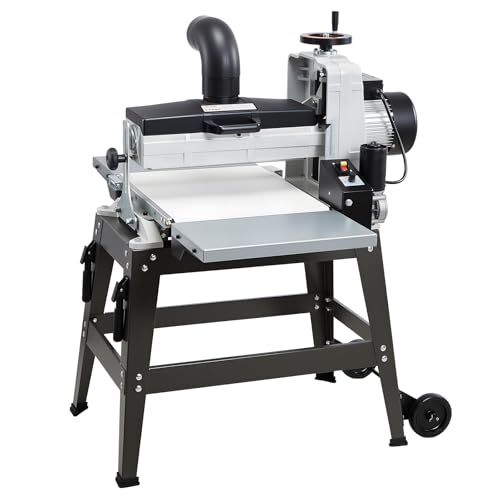
What We Like
- 16-inch width handles wide decking boards
- Dual-motor system for independent sanding and feed
- Extension tables support long, oversized workpieces
- Variable-speed conveyor belt for different wood types
Trade-offs
- Requires a dedicated 4-inch dust collection hose
- Large footprint demands significant floor space
A 16-inch wide drum means you can sand a standard deck board in a single, consistent pass, eliminating the unevenness that comes from multiple runs with a narrower tool. This machine is built for the woodworker who regularly processes wide planks for furniture, cabinetry, or decking. The 1.5HP motor and stable conveyor system are designed for production work, delivering a uniform finish across large surfaces without chatter or snipe. It turns a tedious, multi-step sanding job into a straightforward milling operation.
The trade-off is its sheer size and weight. At 193.3 pounds on a stand, this isn’t a tool you’ll roll out for a quick touch-up; it’s a workshop anchor. Compared to a portable belt sander like the 13-pound Makita 9403, the VEVOR offers vastly greater width and stationary power but completely lacks portability. You buy this for its capacity, accepting that it will command a permanent corner of your shop.
Product photos
How We Evaluated Decking Sanders
Our evaluation started with manufacturer specifications to understand core capabilities like motor power, sanding width, and dust collection design. We then studied professional round-ups and technical guides to identify which features truly matter for deck restoration. Finally, we analyzed patterns in owner feedback regarding durability, ease of use, and real-world performance on wood surfaces.
Key criteria included material removal rate for efficiency, effective dust control for a cleaner job, ergonomics for user comfort over long sessions, and overall value for the investment. Since this is a research-based guide, we cannot verify long-term durability claims or performance on every wood species, but we focused on consistent reports from experienced users.
What To Look For In Decking Sanders
Selecting a decking sander means balancing raw power with control. You need a tool that can strip old stain quickly without being so aggressive it damages the wood. Comfort and dust management are equally critical for finishing the job.
Prioritize a sander with strong dust collection, a comfortable grip for extended use, and a sanding width that matches your deck’s board size. A variable speed control is invaluable for matching the tool’s aggression to the task, from coarse stripping to fine finishing.
Removal Rate and Sanding Width
The speed at which a sander removes material dictates your project’s timeline. Belt sanders like the Makita 9403 operate at high belt speeds for rapid stock removal on large, flat areas. For covering big surfaces even faster, a large-diameter orbital sander or a wide drum sander is key. Models like the Onfloor and VEVOR, with their 16-inch width, can sand an entire deck board in one pass.
A narrower sander, like a 3-inch belt model, is better for detailed work but will slow you down on open deck areas.
Dust Control
Sanding a deck creates a massive amount of fine dust. A sander with a good dust port that connects securely to a shop vacuum is essential. Some premium models, like our best overall pick, integrate a vacuum system directly, which greatly simplifies setup and containment. Effective dust collection isn’t just about cleanliness; it also improves visibility for a more even finish and protects your lungs. When researching sanders for deck boards, pay close attention to the dust port size and user reports on how well the system works in practice.
Ergonomics and Control
You’ll be guiding this tool for hours, so weight and grip design matter. A heavier sander can be more stable but leads to fatigue, especially on overhead railings. Look for models with large, well-positioned front grips and features that reduce vibration. For sanding flush against a house or railing post, a specialized design like that on the Makita 9903 is necessary. Variable speed control is another ergonomic feature, allowing you to slow the sander for more precision on edges or delicate wood.
- Check the power cord length to ensure it reaches your outlets without constant extension cord hassles.
- Consider the tool’s balance; a sander that feels front-heavy will be tiring to use.
- If dust collection is a priority, ensure the vacuum hose doesn’t severely limit the tool’s maneuverability.
Always wear a respirator and safety glasses, even with the best dust collection system.
Decking Sanders Compared
The table below compares our top picks across key specifications to help you see the differences at a glance.
| Product | Motor Power | Weight | Sanding Width/Diameter |
|---|---|---|---|
| Onfloor 16 Inch Wood Floor Sander | 1.5 HP | N/A | 16 inches |
| Makita 9903 Belt Sander | 8.8 AMP | 9.5 pounds | 3" x 21" |
| Makita 9403 Belt Sander | N/A | 13.0 pounds | 4" x 24" |
| VEVOR 16 Inch Drum Sander | 1.5HP | 193.3 pounds | 16 inches |
Frequently Asked Questions
What is the best type of sander for decking?
For resurfacing large, open deck areas, a large random orbital sander or a belt sander is typically best. Orbital sanders are versatile for finishing, while belt sanders offer faster stock removal. For detailed work like railings or flush edges, a smaller belt sander or a detail sander is more appropriate.
What is the best floor sander for sanding a deck?
A stand-up floor sander, like a drum or orbital floor model, is extremely efficient for large, flat decks. These tools, such as the Onfloor 16 Inch, cover vast areas quickly and often have excellent integrated dust collection. They are less maneuverable for stairs, railings, or decks with many obstructions.
What is the best way to sand decking?
Start with a coarse grit sandpaper to remove old finish and level the wood, then progress to a medium grit to smooth scratches, and finish with a fine grit for a smooth surface. Always sand along the length of the wood grain to avoid cross-grain scratches that can trap stain. Our comprehensive deck sanding guide walks through the full process.
What is a good stand-up orbital sander for decks?
A good stand-up orbital sander for decks will have a large sanding pad (often 16 inches or more), a powerful motor, and an effective dust collection system. These features allow you to work quickly and cleanly. The Onfloor 16 Inch Wood Floor Sander is a prime example of this effective design for serious deck restoration.
Can I use a regular orbital sander on a deck?
Yes, you can use a standard handheld random orbital sander on a deck, and it’s excellent for final smoothing and finishing. However, using only a small orbital sander to strip and level an entire deck is very time-consuming. It’s better suited as a companion tool after using a more aggressive sander for the bulk of the material removal.
The Bottom Line
The Onfloor 16 Inch Wood Floor Sander is a suitable choice for professionals or dedicated DIYers working on large deck surfaces, due to its coverage and built-in dust control. For those on a tighter budget or with more specific needs, the Makita 9903 is effective for flush edges, and the Makita 9403 is capable of fast material removal. For any model, effective dust collection contributes to a cleaner, safer, and more successful job.
