
10 Best Sanders For Deck Boards in 2026
This post contains affiliate links. As an Amazon Associate, we earn from qualifying purchases.
The best overall sander for deck boards is the Bosch GET75-6N Electric Orbital Sander for its powerful motor and excellent control on large surfaces. For rapid stripping, the SKIL 7510-01 Belt Sander is our pick for Best For Fast Material Removal. The VEVOR Random Orbital Sander offers the best value with a complete kit.
Choosing the wrong sander can turn a weekend project into a frustrating chore. A deck’s size, board condition, and your goal, whether aggressive stripping or a fine finish, dictate the right tool. Our research compared specifications and owner feedback to present these ten picks.
You’ll find options for every budget and job scope, from cordless convenience to professional-grade performance.
Top 10 Sanders For Deck Boards in the Market
Certain content that appears on this site comes from Amazon. This content is provided "as is" and is subject to change or removal at any time.
The Best Sanders For Deck Boards, Reviewed
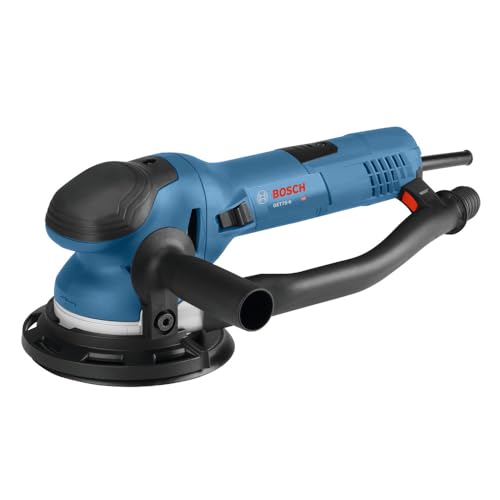
Bosch GET75-6N Electric Orbital Sander
What We Like
- Powerful 7.5 amp motor for tough jobs
- Variable speed for finish control
- Accepts wide variety of 6-inch abrasives
Trade-offs
- Weighs 5.7 pounds, heavier than many palm sanders
- Requires a separate vacuum for dust collection
- Larger footprint than compact 5-inch models
This dual-purpose muscle makes it a standout for deck work, where you often face both heavy material removal and final smoothing. It’s built for the contractor or serious DIYer who needs to tackle large, demanding surfaces without constantly switching between a belt sander and a finisher.
The trade-off for that power is a heftier 5.7-pound frame and a larger 6-inch pad, which can be tiring for overhead railings or detailed furniture work. For pure finishing on a new deck, a lighter sander like the Makita BO5041K might be easier to maneuver all day. But if your project involves resurrecting old, grayed wood, the Bosch’s turbo-driven aggression is the feature that justifies its place in your tool belt.
SKIL 7510-01 Belt Sander

What We Like
- Large 3×18-inch belt for aggressive stock removal.
- Pressure control warns against excessive hand pressure.
- Auto-track system keeps the sanding belt centered.
- Flush front edge allows sanding right up to obstacles.
Trade-offs
- Its belt-driven design is more aggressive and less forgiving than orbital sanders.
- The long belt size is optimal for flat decks, not for intricate railings.
A 6.0 Amp motor paired with a 3×18-inch sanding belt is designed for rapid material removal, which is suited for stripping large surfaces like old deck boards. Pressure control technology warns the user when excessive pressure is applied, which can help prevent slowdowns from overloading the belt. This combination is built for heavy stock removal rather than fine finishing work.
That raw speed comes with clear trade-offs. The belt sander’s weight and aggressive action demand more physical control and focus than a random orbital model like the DEWALT DWE6423. It’s not a finishing tool; you’ll leave behind deep scratches that require a follow-up pass with a finer-grit orbital sander for a smooth surface. Think of it as your demolition crew, incredibly effective at the heavy lifting, but you still need a finishing crew to clean up afterward.
VEVOR Random Orbital Sander

What We Like
- Includes both 5-inch and 6-inch sanding pads
- Instant-stop safety function when released
- Dust connector and hose for vacuum hookup
- Low-vibration, symmetrical ergonomic grip
Trade-offs
- At 4.4 lb, it's heavier than many 5-inch palm sanders
- Large 10-inch length reduces maneuverability in tight spots
Its 350W brushless motor and complete kit with two sanding pads and 20 papers mean you can begin a job without buying extra parts. The dust connector and hose allow direct vacuum hookup for cleaner work, while six speed settings from 4000 to 10,000 RPM let you match the task.
Weighing 4.4 pounds, this sander is heavier than some corded models like the 3.1-pound Makita. Its symmetrical design and low vibration are noted for an ergonomic grip, but the mass could be felt during extended use compared to lighter tools.
Makita BO5041K Random Orbit Sander

What We Like
- Variable speed dial for precise control
- Lightweight and compact for overhead work
- Comfortable, ergonomic rubberized grip
- High 12,000 OPM top speed for fast stock removal
Trade-offs
- 3.0 AMP motor is less powerful than some 7.5A models
- Smaller 5-inch pad covers less area per pass
- Corded design requires an outlet and extension cord
With a variable speed dial from 4,000 to 12,000 orbits per minute, the Makita BO5041K lets you match the sanding action to different materials and stages of a project. This control, combined with a 3.1-pound weight, makes the tool easy to guide for extended periods across large surfaces like a deck. An ergonomic rubberized grip further improves comfort during long sanding sessions.
The sander’s 3.0 AMP motor provides less power than larger models such as the 7.5 AMP Bosch GET75-6N. This difference suggests it is designed for finish sanding rather than for rapid material removal on heavily damaged surfaces. For a severely weathered deck, initial leveling with a more aggressive tool would let the Makita excel at its intended role of final smoothing.
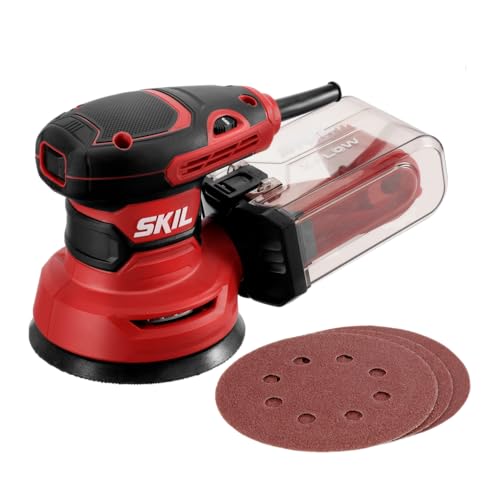
SKIL SR211601 Random Orbital Sander
What We Like
- Compact size for sanding in tight spaces
- Integrated cyclonic dust container for easy cleanup
- Ergonomic rubber grip and low-vibration design
- Variable speed control for material versatility
Trade-offs
- Corded design lacks the mobility of a cordless tool
A 3.4-pound weight and compact profile make the SKIL SR211601 exceptionally easy to maneuver across a deck’s surface and into corners where rail posts meet the boards. The variable speed control and 13,000-orbits-per-minute motor provide enough finesse for final smoothing and enough bite for light stock removal. This sander suits the DIYer tackling a single deck who needs capable performance without a hefty investment. Its ergonomic grip and counterweight balance genuinely reduce fatigue, letting you work longer before your arm complains.
A 2.8 amp motor drives this sander at 13,000 orbits per minute, which is sufficient for general smoothing and finishing tasks on various materials. Its variable speed control allows you to adjust the power for different surfaces. The tool’s compact size, at 3.4 pounds, makes it easy to maneuver into tight spaces and reduces arm fatigue during extended use.
DEWALT DWE6423 Random Orbit Sander

What We Like
- Separate counterweight design reduces vibration.
- Rubber overmold improves grip in critical areas.
- Improved dust-sealed switch for longer life.
- One-handed locking dust bag for convenience.
Trade-offs
- Corded design limits mobility compared to battery models.
- Dust port requires an adapter for generic 1-1/4 in. hoses.
The separate counterweight design in the DWE6423 directly targets hand fatigue, making it a standout for long deck sanding sessions where vibration is the enemy. Its 3.4-pound weight and shorter profile let you maneuver easily between deck boards without fighting the tool. This sander suits anyone prioritizing comfort and control over raw material removal speed, especially for finishing work after initial coarse sanding.
Designed for finish work, this sander’s 3-amp motor spins the pad between eight thousand and twelve thousand orbits per minute. That speed range is suited to smoothing surfaces rather than heavy material removal, so it works best after initial leveling with a more aggressive tool. On a project like a weathered deck, achieving a clean surface will require more passes compared to using a dedicated belt sander.
Product photos
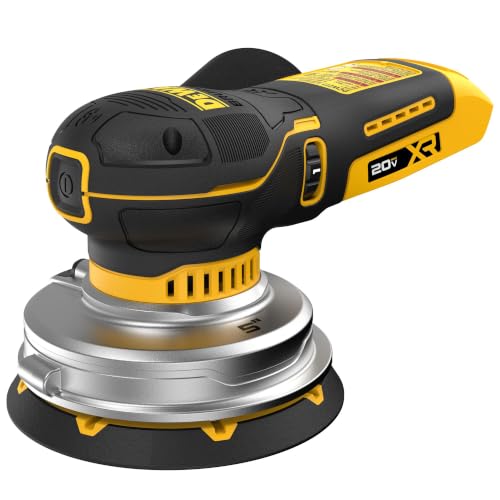
DEWALT DCW211B Cordless Orbital Sander
What We Like
- Exceptionally low vibration for comfort
- Compact design for tight spaces
- Variable speed control for application matching
Trade-offs
- Battery and charger not included in listing
- Dust extractor is a separate purchase
With a runtime that can handle up to 50 square feet per charge, this cordless sander allows for extended work sessions away from an outlet. The DEWALT DCW211B prioritizes mobility and a clean workflow, offering low vibration to minimize fatigue during long jobs. Its low profile design helps in confined spaces, and the integrated dust control collects up to 95% of dust when used with a compatible vacuum.
The trade-off is in planning your power supply, as the listing does not specify if a battery is included. Compared to the corded DEWALT DWE6423, this model provides cordless operation. Its cordless convenience involves battery management, while the sanding area per charge is specified as up to 50 square feet.
Product photos
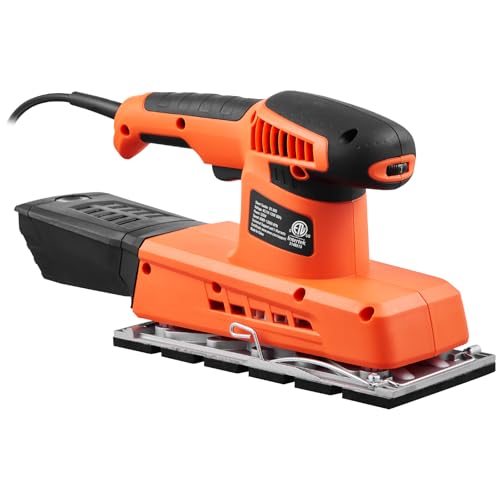
VEVOR Sheet Sander
What We Like
- High-speed 12,000 OPM adjustable sanding
- Clamp-type, tool-free sandpaper replacement
- Precision-machined aluminum sanding plate
- Efficient dust collection with multi-hole base
Trade-offs
- At 4.8 pounds, it's heavier than most orbital sanders
- Larger 13.4-inch length reduces maneuverability in tight corners
With a top speed of up to 12,000 OPM and a 1/2 sheet sanding pad, the VEVOR Sheet Sander is built for covering large, flat surfaces quickly. Variable speed control from 6,000 to 12,000 OPM allows users to adjust for different tasks, and its precision-machined aluminum sanding base is designed for uniform sanding pressure.
The tool weighs 4.8 pounds and measures 13.4 inches long, giving it more mass and a larger footprint than smaller sanders like the 3.1-pound Makita BO5041K. Its rectangular, half-sheet design provides wide coverage but is less suited for tight corners compared to compact orbital sanders.
Product photos
Metabo HPT SV13YST Random Orbit Sander

What We Like
- Compact and lightweight at 3.1 pounds.
- Soft comfort grip reduces vibration.
- Includes dust collection hose connector.
- Hook and loop pad for quick changes.
Trade-offs
- Dust collection requires an external vacuum.
Weighing just over 3 pounds, this sander is built for overhead work and long sessions without wearing out your arm. Its compact 8-inch length and comfortable grip let you maneuver into tight corners and along deck railings with precision, while the variable speed dial helps you avoid burning softer woods. It’s a clear choice for anyone who values control and comfort over raw stripping power, especially for finish work and smaller refinishing tasks.
With a 230W, 2.8-amp motor, this sander prioritizes control over raw power, which suits fine finishing more than heavy stock removal. It’s engineered for tasks like smoothing between coats or refining a single board, where its finesse and easy handling excel. For leveling multiple cupped boards, a more powerful tool like the Bosch GET75-6N would be better suited.
Product photos
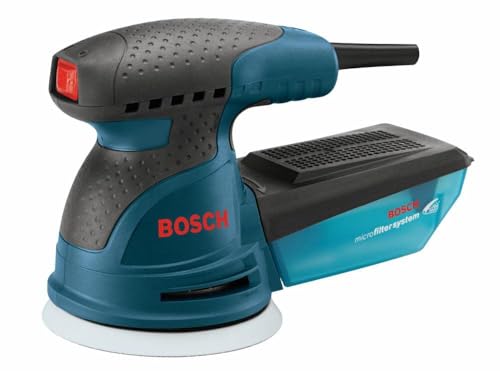
Bosch ROS10 Palm Random Orbit Sander
What We Like
- Integral pad dampening braking system prevents swirl marks.
- Light 3.5-pound weight reduces arm fatigue.
- Hook-and-loop disc attachment provides firm grip.
- Microcellular pad aids smooth, fine finishes.
Trade-offs
- Single-speed operation limits versatility for different materials.
- Smaller 5-inch pad covers less area per pass.
Bosch includes an integral pad dampening braking system designed to prevent swirl marks, a feature aimed at achieving a well-blended, ultra-smooth finish. The tool weighs 3.5 pounds, and its dimensions are similar to other palm-sized sanders like the VEVOR Random Orbital Sander, which is also 10.0 inches long. This combination of a braking system and compact form factor is common in the category for finish work.
A 2.5 Amp motor provides a fixed sanding speed of twelve thousand orbits per minute. Unlike models such as the VEVOR or DEWALT DWE6423, the ROS10 does not offer variable speed control for adapting to different materials. The single-speed operation is paired with a hook-and-loop disc attachment and a microcellular backing pad for the sanding sheet.
Product photos
How We Evaluated Sanders For Deck Boards
This evaluation is based on manufacturer specifications, expert round-ups, and patterns in owner feedback. The focus is on criteria that directly impact deck work: motor power for material removal, pad size for coverage and control, and dust management for a cleaner workspace. Ergonomics, including weight and vibration control, are also considered for user comfort during extended use. This research-based approach provides a foundation for comparison.
What To Look For In Sanders For Deck Boards
Choosing the right sander means matching the tool’s strengths to your deck’s specific needs. A large, weathered surface demands a different machine than detailed railing work. Understanding the core types and features will guide you to a confident purchase.
Your main choices are a belt sander for fast stripping, an orbital sander for versatile finishing, or a detail sander for tight spots. Prioritize motor power for tough jobs, a dust port for cleanup, and ergonomics for comfort.
Sander Type & Purpose
Belt sanders, like our pick for fast removal, use a continuous loop of abrasive to strip old finish and level boards rapidly. They are powerful but require a steady hand to avoid gouging. Random orbital sanders are the most common choice for deck work. They use a spinning and orbiting pad to remove material efficiently without leaving swirl marks, which makes them ideal for both intermediate sanding and final finishing. For corners, railings, and other tight spaces, a compact detail or ‘mouse’ sander is an essential supplementary tool.
Power & Performance
A sander’s amperage indicates its potential power, with motors around seven and a half amps being suitable for demanding deck work. For orbital sanders, orbits per minute indicates speed; a higher top OPM allows for faster stock removal. Variable speed control is a useful feature, letting you reduce the speed for delicate final passes or when working on softer woods. This control is important for following a proper sanding grit sequence from coarse to fine.
Ergonomics & Dust Management
Deck sanding is physically demanding, so a tool’s weight and vibration matter. Lightweight models under 4 pounds reduce fatigue, especially for overhead work on railings. Effective dust collection isn’t just about cleanliness; it keeps your work surface visible and improves air quality. Look for a model with a standard dust port that connects to a shop vacuum. For a comprehensive look at your options, our deck sander selection guide breaks down these factors in detail.
- Check the tool’s weight if you’ll be sanding vertical surfaces or railings.
- Ensure the dust port is compatible with your vacuum hose or includes an adapter.
- Prefer models with rubberized grips for better control and comfort.
A sander that feels good in your hand and connects to a vacuum will make the job faster and more enjoyable.
Sanders For Deck Boards Compared
The table below provides a quick, side-by-side comparison of our top picks across key specifications.
| Product | Motor Power | Pad Size | Weight | Orbit/Speed |
|---|---|---|---|---|
| Bosch GET75-6N Electric Orbital Sander | 7.5 amp | 6-inch disc | 5.7 pounds | 290-640 RPM |
| SKIL 7510-01 Belt Sander | 6.0 Amp | 3"x18" Belt | 5.5 Pounds | N/A |
| VEVOR Random Orbital Sander | 350W brushless | 5 & 6-Inch | 4.4 Pounds | 10,000 RPM |
| Makita BO5041K Random Orbit Sander | 3.0 AMP | 5 inches | 3.1 Pounds | 4,000-12,000 OPM |
| SKIL SR211601 Random Orbital Sander | 2.8 amp | 5” | 3.4 Pounds | 13,000 OPM |
| DEWALT DWE6423 Random Orbit Sander | 3-Amp | 5-Inch | 3.4 pounds | 8,000 – 12,000 OPM |
| DEWALT DCW211B Cordless Orbital Sander | 20V MAX XR | 5 in | 3.8 pounds | 8,000 – 12,000 OPM |
| VEVOR Sheet Sander | 2.5A | 1/2 Sheet | 4.8 pounds | 6,000-12,000 OPM |
| Metabo HPT SV13YST Random Orbit Sander | 230W 2.8 Amp | 5-inch | 3.1 Pounds | Variable speed dial |
| Bosch ROS10 Palm Random Orbit Sander | 2.5 Amp | 5 inches | 3.5 pounds | 12,000 OPM |
Frequently Asked Questions
What type of sander is best for sanding deck boards?
A random orbital sander is the best all-around type for most deck sanding projects. It effectively removes material, leaves a smooth finish without swirls, and is easier to control than a belt sander. For a large, heavily damaged deck that needs stripping, a belt sander is the fastest tool for the initial rough work.
Can you use a floor sander on deck boards?
While possible, using a large, heavy floor sander on a raised deck is generally not recommended. These machines are designed for flat, interior floors and can be difficult to control on deck boards, risking serious damage to the wood surface or the deck’s structure. Hand-held belt or orbital sanders are the safer, more appropriate choice.
What is the best way to sand decking?
The best method involves clearing the deck, securing any loose boards, and sanding along the wood grain. Start with a coarse grit (like 40-grit) to remove old finish and level boards, then progress to a medium (80-grit) and finally a fine grit (120-grit) for a smooth surface. A detailed deck sanding guide walks you through each step.
Should I use a belt sander or orbital sander for deck?
Use a belt sander if your primary goal is to quickly strip thick layers of old paint or level severely cupped boards. Use an orbital sander for most other tasks, including general refinishing, smoothing between coats, and achieving the final finish. Many projects benefit from using both: a belt sander for the initial heavy work and an orbital for the rest.
What grit sandpaper should I start with on a deck?
Begin with a coarse grit in the 36- to 40-grit range to effectively strip old finishes and level uneven boards. For decks in better condition or made of softer wood, you can start with a 60-grit paper. Always follow a progression to finer grits; jumping from very coarse directly to very fine will leave deep scratches visible in the final finish.
The Bottom Line
For most people tackling a deck refinishing project, the Bosch GET75-6N Electric Orbital Sander is the best overall choice. Its powerful motor handles tough jobs while its variable speed provides the control needed for a quality finish on large surfaces. If your budget is tight, the SKIL SR211601 offers capable performance, and for rapid stripping of a large, weathered deck, the SKIL 7510-01 Belt Sander is unmatched.
Ultimately, matching the sander’s purpose, be it aggressive removal, fine finishing, or detailed work, to your deck’s specific condition is the single most important factor for a successful outcome.
