
10 Best Drills For Brick in 2026
This post contains affiliate links. As an Amazon Associate, we earn from qualifying purchases.
Our best overall drill for brick is the Makita XPH14Z, a cordless hammer drill that wins for its high-torque brushless motor and compact 7-inch length. For dedicated masonry work, the DeWalt DCH273B is the best cordless rotary hammer, while the Craftsman V20 Kit offers the best value for DIYers.
Drilling into brick demands more power than standard drilling. You need a tool with a proper hammering action to pulverize the masonry, not just spin a bit. This guide, built from manufacturer specs and patterns in expert and owner feedback, will help you choose the right tool for your project, whether it’s a few anchors or a major renovation.
Top 10 Drills For Brick in the Market
Certain content that appears on this site comes from Amazon. This content is provided "as is" and is subject to change or removal at any time.
The Best Drills For Brick, Reviewed
Makita XPH14Z Brushless Cordless Hammer Drill

What We Like
- Brushless motor delivers high torque for tough materials
- Compact 7-inch length improves handling in tight spaces
- Two-speed transmission covers a wide range of applications
- High BPM rate accelerates masonry drilling
Trade-offs
- Tool only: requires separate purchase of battery and charger
- Not a dedicated SDS system like the DeWalt DCH273B for heavy masonry
With 1,250 inch-pounds of torque, this drill drives large fasteners and bores into brick without bogging down. Its brushless motor efficiently converts battery power into work, making it a reliable choice for contractors and serious DIYers who need a versatile tool. The compact 7-inch design is a real advantage when working between studs or in other confined areas, while the two-speed gearbox and high hammering rate let you switch from wood to masonry quickly.
The trade-off is that it’s a hammer driver-drill, not a dedicated rotary hammer. For drilling dozens of large holes in concrete block, an SDS model like the DeWalt DCH273B will be faster and cause less user fatigue. This Makita excels as a primary drill that can handle occasional brickwork. Just remember it’s sold as a bare tool, so you’ll need to factor in the cost of Makita’s 18V LXT battery and charger to get it running.
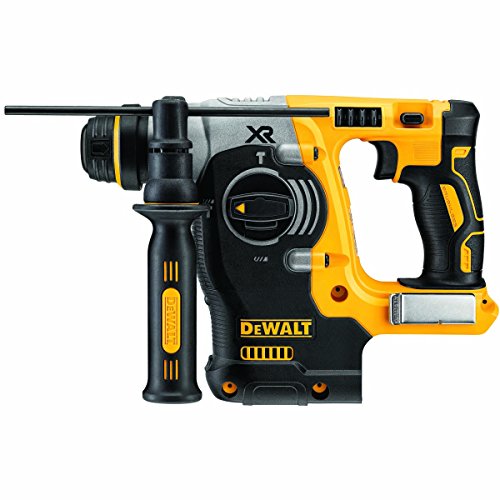
DeWalt DCH273B Cordless SDS Rotary Hammer
What We Like
- Cordless design offers excellent job site mobility.
- 2.1 Joules of impact energy drills concrete quickly.
- Active vibration control reduces user fatigue significantly.
- Lightweight build at 6.4 pounds eases overhead work.
Trade-offs
- Tool only: requires separate purchase of battery and charger.
- Tool only: battery and charger sold separately
Delivering 2.1 Joules of impact energy, this cordless rotary hammer can drill into concrete quickly. Its SHOCKS ACTIVE VIBRATION CONTROL system reduces vibration at the handles compared to tools without it, which means less user fatigue. A brushless motor and durable German-engineered mechanism contribute to efficient performance and runtime.
You are committing to the DeWalt 20V MAX battery platform. The tool arrives bare, so you’ll need to factor in the cost of a battery and charger if you don’t already own them. For dedicated, high-volume masonry work, a corded model like the Bosch Bulldog Xtreme might deliver more relentless power. For the vast majority of installation and repair tasks, however, this DeWalt’s combination of cordless convenience and capable performance is hard to beat.
DeWalt D25263K Corded SDS Rotary Hammer

What We Like
- High 3.0-joule impact energy for fast brick work
- Active Vibration Control reduces user fatigue
- Integral clutch prevents harsh torque reactions
- Compatible with dust extraction for cleaner jobs
Trade-offs
- Corded operation limits mobility on large sites
- At 19.2 inches long, it's less compact for tight spaces
- Requires a separate purchase for dust extraction accessory
With 3.0 joules of impact energy, the DeWalt D25263K punches through brick and masonry without hesitation. That power, driven by an 8.5-amp motor, provides fast drilling and chipping speed. The Active Vibration Control is a Perform and Protect feature that reduces vibration felt by the user at the handles, so your hands and arms don’t take the full beating during use.
The trade-off for that steady power is the cord, as you’re tethered to a 115-volt outlet. Its dimensions make it a larger tool than many cordless models, so maneuvering in tight spaces can be tougher. For a fixed workstation or a job with readily available power, this corded model delivers unwavering performance.
Bosch 11255VSR Bulldog Xtreme Rotary Hammer

What We Like
- D-handle design for overhead control
- Tool-free SDS-plus bit changes
- Variable speed trigger with reverse
- Vibration control for all-day comfort
Trade-offs
- Corded operation limits mobility on a jobsite
With 2.0 ft-lbs of impact energy, this rotary hammer can drive through solid brick and concrete without stalling. The 7.5-amp motor and three-mode selector make it a serious tool for repetitive anchoring, core drilling, or light demolition. The D-handle and integrated vibration control are key for anyone facing hours of vertical or overhead work, providing the stability and comfort needed to finish the job without excessive fatigue.
A 7.5 amp motor generating 2.0 ft/lbs of impact energy positions this as a tool for demanding masonry. That power comes with a substantial 10.4-pound footprint, making it less suitable for quick overhead tasks where a lighter, cordless model might be preferred. Compared to the cordless DeWalt DCH273B, this Bosch model provides corded power but trades away the freedom of battery operation.
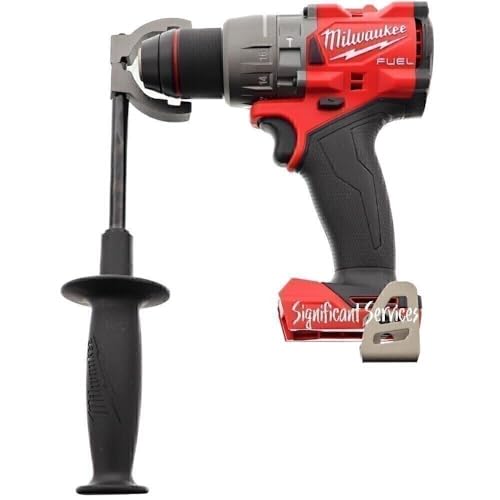
Milwaukee M18 Fuel Hammer Drill/Driver
What We Like
- All-metal chuck ensures superior bit retention.
- Hammer drill mode handles brick and concrete effectively.
- Mechanical clutch provides consistent fastener driving.
- Long runtime with high-capacity battery system.
Trade-offs
- Tool only: battery and charger sold separately.
- Weighs 4.2 lb, heavier than compact 12V models.
The Milwaukee M18 Fuel Hammer Drill/Driver is built for the pro or serious DIYer who needs a single cordless drill for tasks from deck building to mounting shelves on a brick wall. Its all-metal chuck and mechanical clutch provide durability and consistency for driving fasteners, so you won’t be fighting the tool on a critical job. The M18 battery platform offers compatibility with a wide range of other tools, and with a 5.0Ah battery, it provides extended runtime.
That capability does come with a bit of heft and a torque figure that, while substantial, is less than some other 18V models. If your primary task is drilling into dense masonry all day, a dedicated rotary hammer like the DeWalt DCH273B will be faster and less fatiguing. But for the user tackling a mix of materials, this Milwaukee delivers the well-rounded, no-compromise performance that justifies its place in a premium kit.
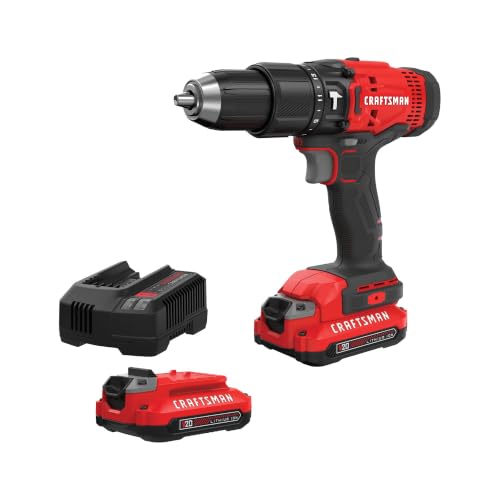
Craftsman V20 Cordless Hammer Drill Kit
What We Like
- Includes two batteries and a charger
- High 25,500 BPM for brick and concrete
- Two-speed gearbox for versatile drilling
- Ratcheting chuck for secure bit grip
Trade-offs
- Not a dedicated SDS model for dense concrete
- Weighs 5.4 lb, heavier than some compact drills
The Craftsman V20 hammer drill produces 25,500 blows per minute for faster drilling in materials like brick and concrete. This kit includes two batteries and a charger, so you can start working immediately without purchasing additional components. Its two-speed gearbox and 280 unit watts out motor provide power for light- to medium-duty projects, and research notes it is sufficient for most applications of that type.
You’re getting a capable all-around hammer drill here, not a specialist. For drilling mainly in dense, reinforced concrete, a dedicated rotary hammer like the DeWalt DCH273B is the better tool. The Craftsman’s strength is its value as a complete system. It handles the ceramic tile, cinder block, and occasional concrete patch that many homeowners face, without the investment of a pro-grade setup.
Product photos
Makita XPH16Z Compact Brushless Hammer Drill

What We Like
- Compact 6.9-inch length for tight spaces
- Brushless motor for cooler, longer life
- Two-speed gearing covers drilling and hammering
Trade-offs
- Tool only listing: requires separate battery purchase
At just under seven inches long, this Makita hammer drill fits into tight spaces and reduces arm strain during overhead work. Its brushless motor provides up to 970 in.lbs. of max torque, and the two-speed gearbox shifts from high-speed drilling to high-torque driving. This tool suits installers or advanced DIYers who need a full-featured hammer drill that saves room in a tool bag.
The tool uses a standard chuck rather than a dedicated SDS system. It is a driver-drill first, with a hammer function added, covering a wide range of drilling, driving and hammer applications. You get a versatile workhorse, not a single-purpose demolition tool.
Product photos
DongCheng SDS-Plus Rotary Hammer

What We Like
- Mechanical safety clutch prevents wrist injury
- Complete kit with bits, chisels, and storage case
- Anti-vibration handle for all-day comfort
- Dual-mode operation for drilling and demolition
Trade-offs
- Corded operation limits mobility on site
- Requires a 120V outlet, not for remote locations
The 3.6 joules of impact energy from its 9.2-amp motor means this rotary hammer won’t hesitate when you’re boring into solid brick or reinforced concrete. It’s built for the contractor or serious DIYer who needs a tool that arrives ready to work, with a full set of SDS-Plus bits and chisels already in the box. The integrated safety clutch is a thoughtful touch, protecting your joints from the sudden kick of a bound bit during heavy drilling.
Choosing this corded rotary hammer means trading cordless convenience for consistent, unlimited power from a 120V outlet and a lower upfront cost. At 11 pounds with a power cord, it functions best as a stationary workhorse for shop floors or renovation sites, not for frequent overhead use. While some compact cordless models exist, the DongCheng kit’s value lies in its complete package, which includes bits, chisels, and a case.
Product photos
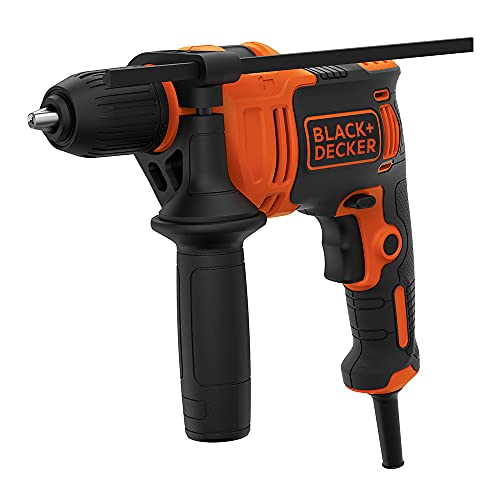
Black+Decker BEHD201 Corded Hammer Drill
What We Like
- Powerful 6.5 Amp motor for masonry drilling.
- Two-position switch for wood or masonry.
- Three-position side handle reduces fatigue.
- Corded design provides unlimited runtime.
Trade-offs
- Cord limits mobility compared to battery-powered tools.
- Hammer drill action less aggressive than SDS rotary hammers.
A 6.5 Amp motor delivering 48,000 blows per minute gives you the sustained power to bore into brick without the downtime of recharging a battery. This is a straightforward, capable drill for the homeowner or DIYer tackling occasional masonry projects like installing anchors or mounting shelves. The two-mode switch and adjustable side handle make it versatile and manageable for a range of tasks, offering serious value without the complexity of pro-grade gear.
A corded design means unlimited runtime for big jobs, but it requires managing a power cord. At just one pound, it is lighter than many cordless options like the 4.2-pound Milwaukee M18 Fuel. Its standard hammer drill mechanism is less suited for drilling dozens of large holes compared to a dedicated SDS rotary hammer like the Bosch Bulldog. Still, it reliably handles a handful of holes in brick or concrete.
Product photos
Milwaukee M18 SDS Plus Rotary Hammer
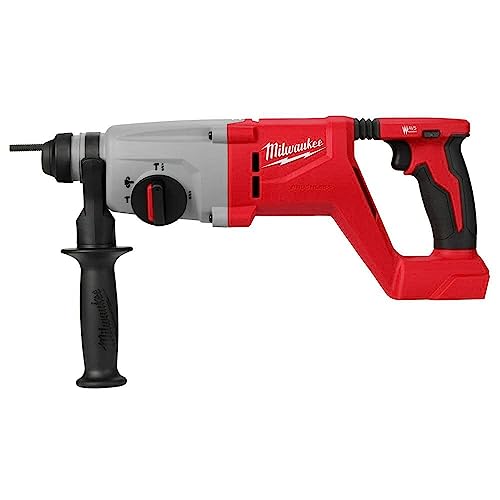
What We Like
- Lightweight design reduces user fatigue
- AVS system minimizes vibration for comfort
- Drills faster than corded 1-inch D-handle models
- Brushless motor provides over 50% longer runtime
Trade-offs
- Tool-only listing requires separate battery purchase
- 5.3 lb weight may trade some power for portability
At just 5.3 pounds, this rotary hammer feels noticeably lighter than most SDS-Plus models, which makes a real difference when drilling overhead or working through a long task list. The AVS Anti-Vibration System isn’t just a marketing bullet point; it genuinely tames the jarring feedback that comes from hitting masonry, so your hands and forearms don’t feel battered after a dozen holes. This combination of low weight and managed vibration is why it’s a standout for anyone who needs to move around a jobsite or tackle brickwork without the arm strain of a heavier tool. The brushless motor efficiently delivers power, and owners report it can punch through a surprising number of holes on a single charge.
This tool drills 3/8-inch by 2-inch holes faster than some corded 1-inch D-handle rotary hammers, positioning it for tasks like installing curtain rods or mounting outdoor lights. For larger core drilling or heavy demolition, a heavier corded model like the Bosch Bulldog would be necessary. The Milwaukee’s design prioritizes cordless convenience and reduced user fatigue for repetitive small-diameter anchor work.
Product photos
How We Evaluated Drills For Brick
Our evaluation is research-based, focusing on specifications from manufacturers and patterns in expert round-ups and owner feedback. We prioritized impact energy (measured in joules), blows per minute (BPM), and overall power to assess each tool’s ability to bore into masonry efficiently. We also considered design factors like weight, length, and vibration control, which directly affect user fatigue during extended use.
The key criteria were the tool’s core mechanism, distinguishing between a standard hammer drill and a more powerful SDS rotary hammer, and its suitability for the user’s likely project scale. For instance, while a hammer drill can handle occasional brickwork, a dedicated SDS system is necessary for frequent, high-volume drilling. We also looked at whether a product was a bare tool or a complete kit, as this affects the final cost and readiness for use.
A limitation of this research-led approach is that we cannot verify real-world performance nuances. For example, we cannot confirm exactly how a tool feels in the hand during an overhead project or its precise battery life under heavy load. Our goal is to provide a clear, specification-driven comparison to inform your purchase. We always recommend checking the latest brick drilling guide for practical application tips.
What To Look For In Drills For Brick
Choosing the right tool starts with understanding the two main types: hammer drills and rotary hammers. Your project scope and material density will dictate which you need.
For brick, prioritize impact energy (joules) or blows per minute (BPM). A standard hammer drill works for occasional holes, but frequent or dense work requires an SDS rotary hammer. Consider corded power for unlimited runtime or cordless for mobility.
Power & Mechanism
The most critical factor is the tool’s hammering mechanism. A standard hammer drill uses a cam-based action to deliver rapid, shallow impacts, suitable for brick, block, and light concrete. Look for a high blows-per-minute (BPM) rating, often between 25,000 and 40,000 for effective work.
For tougher materials like dense brick or frequent use, an SDS (Slotted Drive System) rotary hammer is far superior. It uses a piston mechanism to deliver more forceful impacts, measured in joules (e.g., 2.1J to 3.0J). This makes a dramatic difference in speed and reduces user strain, which is why our list of the best drills for concrete is dominated by rotary hammers.
Design & Usability
Ergonomics are crucial because drilling masonry is physically demanding. Weight and balance matter, especially for overhead work; our picks range from under 5 pounds for compact drills to around 6.5 pounds for full-size rotary hammers. Vibration control is a key feature in better tools, often called Active Vibration Control (AVC), which significantly reduces hand and arm fatigue.
Also, consider the tool’s length. A compact body is much easier to manage in tight spaces between studs or in corners than a longer model. A side handle provides stability and control when the bit encounters hard spots.
Power Source & Value
Your choice between corded and cordless depends on job site mobility and runtime needs. Corded models provide consistent, unlimited power and are often more affordable, ideal for projects near an outlet. Cordless tools offer excellent freedom but require investment in a battery ecosystem. If you’re new to a brand, a “kit” that includes batteries and a charger represents the best upfront value. For those already invested in a platform like DeWalt’s 20V or Milwaukee’s M18, a “tool-only” purchase is more economical.
- Check if the tool uses a standard keyless chuck for versatility or an SDS-plus system for dedicated masonry bits.
- Look for a variable-speed trigger to start holes slowly and prevent bit walking.
- Confirm whether a side handle and depth gauge are included for better control.
Match the tool’s power to your most common task; overbuying can lead to a bulky, expensive tool you’ll avoid using.
Drills For Brick Compared
To make comparing these top drills for brick easier, the table below outlines their key specifications and intended uses at a glance.
| Product | Motor Power / Type | Weight | Chuck Type / Drill Capacity |
|---|---|---|---|
| Makita XPH14Z Brushless Cordless Hammer Drill | Brushless motor | 4 lbs | 1/2" self-ratcheting |
| DeWalt DCH273B Cordless SDS Rotary Hammer | Brushless motor | 6.4 Pounds | SDS |
| DeWalt D25263K Corded SDS Rotary Hammer | 8.5 amp | N/A | SDS |
| Bosch 11255VSR Bulldog Xtreme Rotary Hammer | 7.5 amp | 10.4 Pounds | SDS-plus |
| Milwaukee M18 Fuel Hammer Drill/Driver | Brushless motor | 4.2 Pounds | 1/2" all-metal carbide |
| Craftsman V20 Cordless Hammer Drill Kit | 280 unit watts out | 5.4 pounds | 1/2-inch ratcheting |
| Makita XPH16Z Compact Brushless Hammer Drill | Brushless motor | N/A | 1/2" |
| DongCheng SDS-Plus Rotary Hammer | 9.2A (1100W) | 11.0 pounds | SDS-Plus |
| Black+Decker BEHD201 Corded Hammer Drill | 6.5 Amp | 1.0 pounds | 1/2-inch single-sleeve |
| Milwaukee M18 SDS Plus Rotary Hammer | Brushless motor | 5.3 lbs | 3/8 in. x 2 in. |
Frequently Asked Questions
What drill is best for drilling through brick?
For most users drilling into brick for anchors or fixtures, a hammer drill is sufficient. Our best overall, the Makita XPH14Z, is an excellent cordless choice. For drilling many holes or working with very dense brick, a corded or cordless SDS rotary hammer like the DeWalt DCH273B will be faster. Its more powerful impact mechanism also causes less user fatigue.
What kind of drill do I use for brick?
You should use a hammer drill or, for better performance, an SDS rotary hammer. A standard drill driver lacks the hammering action needed to break up the masonry material and will struggle, overheat, and wear out bits quickly. The hammering action, measured in BPM for hammer drills or joules for rotary hammers, is what allows the bit to pulverize the brick as it rotates.
What kind of drill bit is best for brick?
You need a masonry drill bit, specifically a carbide-tipped bit designed for hammer drilling. For use in an SDS rotary hammer, you require SDS-plus shank bits, which lock securely into the chuck and transfer the hammer blows more efficiently. Using the correct drill bits for brick is as important as the tool itself for clean, fast holes.
Is there a trick to drilling into brick?
The key technique is to start slowly with the hammer function engaged. This allows the bit’s tip to establish a dimple and prevent “walking.” Use firm, steady pressure but let the tool do the work; forcing it can overheat the bit. For cleaner holes and less dust, consider a vacuum attachment if your drill supports it. A full step-by-step guide for drilling brick covers marking, drilling depth, and setting anchors.
Can I use a regular drill for brick if I have a masonry bit?
You can attempt it, but we do not recommend it. A regular drill lacks the percussive hammer action. It will rely solely on rotational force, which is ineffective against brick. This will take much longer, strain the drill’s motor, and likely ruin the masonry bit. Investing in a proper hammer drill or one of the many capable masonry drills is the right approach.
The Bottom Line
The Makita XPH14Z is our best overall drill for brick, ideal for the user who needs a capable, compact cordless hammer drill for a mix of materials, including occasional masonry work. Its brushless motor provides the necessary torque, and its size makes it highly manageable.
If your budget is a primary concern and you need a complete kit ready to go, the Craftsman V20 Cordless Hammer Drill Kit is the clear value pick. For serious, frequent brick and concrete drilling, step up to a dedicated rotary hammer like the cordless DeWalt DCH273B or the high-impact corded DeWalt D25263K.
Ultimately, the single most important factor is matching the tool’s mechanism to your project. Don’t buy a standard drill for brick, and don’t buy a heavy-duty demolition hammer for a few picture hooks. Choose a tool with a true hammering action that fits the scale of your work.
