
10 Best Dust Collection For Miter Saw in 2026
This post contains affiliate links. As an Amazon Associate, we earn from qualifying purchases.
The DEWALT DWV010 HEPA Dust Extractor is our best overall pick for miter saws, thanks to its automatic filter cleaning for consistent suction and HEPA-level filtration. For a premium compact option, the Festool CT MIDI I excels, while the Bosch VAC140AH offers high-capacity HEPA containment.
Miter saws are notorious for throwing fine dust everywhere. A good collection system keeps your air clean and your workspace tidy, not just for comfort but for health. We researched specifications, expert recommendations, and patterns in user feedback to identify the ten systems that best balance suction, capacity, and convenience for different workshop needs.
Top 10 Dust Collection Systems For Miter Saws in the Market
Certain content that appears on this site comes from Amazon. This content is provided "as is" and is subject to change or removal at any time.
The Best Dust Collection Systems For Miter Saws, Reviewed
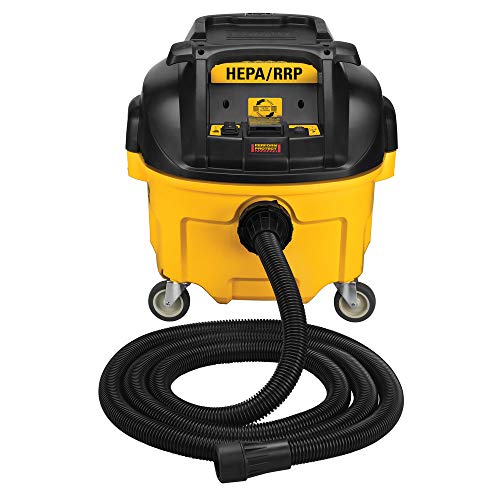
DEWALT DWV010 HEPA Dust Extractor
What We Like
- Automatic filter cleaning for continuous operation.
- Power tool actuation for coordinated on/off control.
- Heavy-duty wheels and casters for jobsite mobility.
- Meets EPA RRP rule with correct HEPA filter.
Trade-offs
- 8-gallon capacity requires more frequent emptying than larger extractors.
- 1.25-inch hose may need an adapter for some miter saw ports.
This dust extractor’s 150 CFM airflow and automatic filter cleaning every 30 seconds allow for continuous operation at a miter saw station. The automatic cleaning means the vacuum can run without manual filter intervention, while the airflow helps capture fine dust. It meets the EPA Lead RRP Rule for HEPA vacuums only when DWV9330 filters are used, which is relevant for certain renovation work. Power tool actuation lets a connected saw control the vacuum’s on and off functions.
The trade-off for its sturdy performance is its size and weight. At 22 pounds and with a 20-inch footprint, it’s more substantial than a compact shop vac, so it demands dedicated floor space in your shop or truck. Compared to a dedicated dust collector like the WEN DC3474, it has far less capacity, so you’ll be emptying the 8-gallon bin regularly during heavy milling work. For general cleanup or wet jobs, a simpler vacuum like the Stanley SL18116P might be more versatile, but for dedicated, high-performance dust collection at your miter saw station, the DEWALT’s features are hard to beat.
Festool CT MIDI I HEPA Dust Extractor

What We Like
- Automatic start via Bluetooth for hands-free operation.
- Compact design with integrated hose holder for clean transport.
- Touch controls and Sys-dock system for intuitive, quick setup.
- HEPA filtration and smooth hose design for high-efficiency collection.
Trade-offs
- 3.9-gallon capacity requires frequent emptying on large jobs.
Integrated Bluetooth technology means the Festool CT MIDI I starts automatically with compatible tools, so you can focus on the work instead of walking to the extractor. It delivers 130 CFM of suction through a smooth hose designed to avoid catching, which helps maintain a clean workspace. The unit’s Sys-dock provides instant connection for tool sustainers, supporting an organized mobile setup.
Its 3.9-gallon container will need more frequent emptying compared to a model like the 10-gallon DEWALT DWV015 during extended use. The design prioritizes features like touch operation and an internal hose holder over maximum dust storage. You get a mobile extractor that saves steps with automation, not one built for the largest debris capacity.
Bosch VAC140AH Dust Extractor
What We Like
- Auto-cleaning maintains suction during long cuts
- HEPA filter captures fine silica and sawdust
- Power tool activation for convenient on/off
- High capacity reduces bag change frequency
Trade-offs
- At 38 pounds, it's heavier than many portable vacs
- Weighs 38 pounds
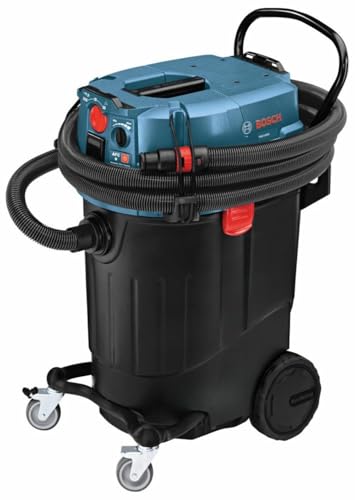
A 14-gallon capacity and automatic filter cleaning every 15 seconds mean you can run your miter saw all day without losing suction or stopping to empty the bin constantly. This extractor is built for serious, high-volume work where containing fine dust is non-negotiable. The HEPA filtration and OSHA compliance features make it a solid choice for pros or dedicated hobbyists working indoors who need to manage silica dust effectively and keep their shop air clean.
Weighing 38 pounds, the Bosch VAC140AH is a substantial machine that is less nimble than smaller units like the DEWALT DWV010. While its Power Broker dial lets you match suction to your tool, you’ll need to factor in the space it occupies. For marathon trim or flooring sessions where dust control is critical, it delivers sustained performance that smaller shop vacuums simply can’t match.
Product photos
DEWALT DWV015 Dust Extractor
What We Like
- Automatic filter clean maintains suction during use
- Storage rack integrates with DeWalt's modular systems
- AirLock system minimizes dust exposure during emptying
- Durable latches secure boxes over rough terrain
Trade-offs
- At 28.2 inches tall, it requires significant vertical space
- 10-gallon capacity may need frequent emptying on large jobs
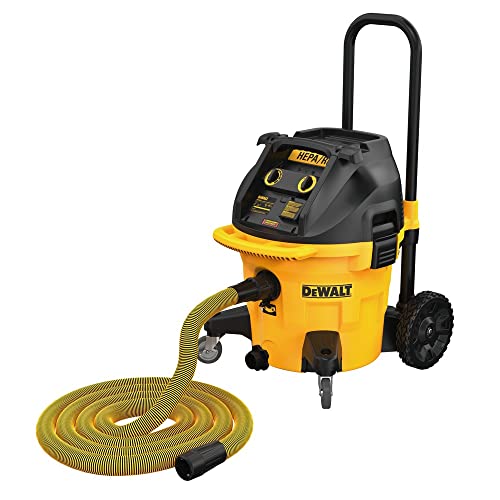
This dust extractor delivers 155 CFM of airflow for maximum suction performance across a variety of jobsite applications. Its storage accessory rack interlocks with DeWalt’s TSTAK and TOUGHSYSTEM solutions, providing additional storage and mobility in real jobsite conditions. Durable latches maintain a secure connection between the vacuum and a storage box, even when moving over rugged terrain.
An automatic filter clean system pulses every 30 seconds for continuous operation without stopping to clean the filter. The DEWALT AirLock system is included to minimize dust exposure and cleanup on the jobsite. Research mentions list accessory dust chutes compatible with several DeWalt miter saw models.
Festool CLEANTEC CT 36 EI HEPA
What We Like
- Automatically starts with corded tools
- Five levels of adjustable suction
- Integrated Bluetooth for remote operation
- Convenient T-LOC systainer attachment
Trade-offs
- Requires a corded tool for automatic triggered operation
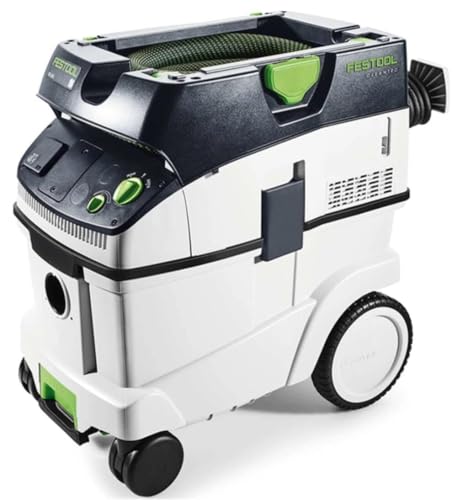
Automatic tool-triggered operation starts your corded power tool and the dust extractor together with a single switch, which saves time during repetitive tasks. You can choose from five suction levels to match the pull needed for fine sanding dust or heavier debris. Integrated Bluetooth allows the extractor to start automatically with compatible battery packs or an optional remote, adding flexibility for different workshop setups.
This extractor weighs 39.3 pounds, making it a substantial piece of equipment to reposition in a workshop. It is heavier than several other models, like the 22-pound DEWALT DWV010. For a stationary shop station connected to tools like a table saw or planer, its features justify the footprint, but the weight is a consideration for mobility.
WEN DC3474 Dust Collector

What We Like
- High 600 CFM airflow for strong suction.
- Large 15-gallon capacity reduces bag changes.
- Mobile base with swivel casters for easy moving.
- Optional wall-mount design saves floor space.
Trade-offs
- At 43.3 inches tall, it requires significant vertical clearance.
- Lacks a HEPA filter specification for fine dust.
The WEN DC3474 moves up to 600 cubic feet of air per minute, a high air volume suitable for creating a strong draft in a workshop. This capacity makes it a fit for connecting to tools with its 4-inch port. A 15-gallon collection bag handles substantial debris, and swivel casters allow you to wheel the unit between stationary tools.
Its 43.3-inch height and 41.1-pound weight give it a substantial footprint for a workshop floor. Compared to portable extractors like the Festool CT MIDI I, this collector functions as a stationary shop appliance. The included swivel casters provide mobility around a dedicated workspace, not for transport to a jobsite.
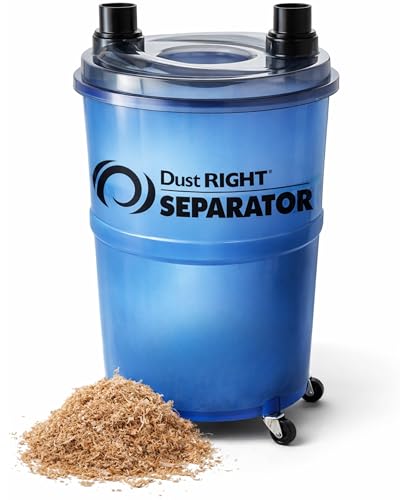
Rockler Dust Right Separator Kit
What We Like
- Cyclone separator prevents filter clogs
- Stable five-caster base for easy maneuvering
- Translucent bucket shows fill level clearly
Trade-offs
- Requires a separate shop vacuum to function
- 17.1-inch width needs more floor space than wall-mount units
- No integrated power or automatic filter cleaning
This kit turns any shop vacuum with a 2-1/4 inch outlet into a two-stage dust extractor, a smart upgrade to protect your existing vac’s motor and filter. Its cyclonic separator captures sawdust and wood chips before they reach the vacuum, which prevents the loss of suction power caused by a clogged filter during long tasks. The included 10-gallon translucent bucket is easy to empty and makes it simple to see when it’s full.
The trade-off is that this is purely an accessory. You need to provide your own vacuum, and it lacks the self-contained convenience and features like HEPA filtration or automatic filter cleaning found in dedicated units like the DEWALT DWV010. It’s also a floor-standing unit, so it requires more permanent shop space than a compact wall-mount vacuum. For the right user, however, it turns an existing tool into a much more effective dust collection partner.
Product photos
Stanley SL18116P Wet/Dry Vacuum

What We Like
- 4 HP motor provides strong suction for wet and dry debris
- Includes blower function and full set of nozzles
- Compact, lightweight design with four swivel casters
Trade-offs
- No automatic filter cleaning system for fine dust
- Reusable dry filter, not a HEPA filter
A 6-gallon capacity paired with a 4 HP motor makes this wet/dry vac a practical workhorse for general cleanup. It handles both sawdust and liquid spills, and the included hose, extension wands, and nozzles give you the reach to tackle a miter saw station without constant unplugging. This is a straightforward choice for the DIYer who needs a capable, multi-purpose vacuum without a complex setup.
The included filter is a reusable dry type, not a HEPA-rated filter. Some other dust extractors in its category, like the DEWALT DWV010, feature an automatic filter cleaning system.
Product photos
CRAFTSMAN CMXEVBE17250 Shop Vacuum

What We Like
- Extremely compact and lightweight for easy transport
- Includes carry handle and integrated cord wrap
- Comes with essential nozzles for tight spaces
- Offers blower function for added versatility
Trade-offs
- 2.5-gallon capacity requires frequent emptying on larger jobs
The 2.5-gallon capacity and compact 14.7-inch height make this shop vac a tool you can easily lift with one hand and tuck onto a shelf. For the DIYer with a small garage or who moves their miter saw around frequently, this Craftsman is a practical partner. Its included hose and nozzles are ready to go for cleanup, and the blower function adds a nice bit of utility for clearing off a workbench. This is the definition of a simple, grab-and-go solution.
Its compact size comes with a limited dust bin. You’ll be emptying it often if you’re doing a lot of repetitive cuts. Compared to a dedicated dust extractor like the DEWALT DWV010, it doesn’t have the same fine dust sealing or automatic filter maintenance. This is a basic wet/dry vac first, repurposed for sawdust. For occasional use and general cleanup, it’s capable, but for all-day trim work, you’ll feel the capacity constraint.
Product photos
Vacmaster VOM205P Wall-Mount Vacuum

What We Like
- Wall-mountable design saves floor space
- Lightweight 6-lb build for easy transport
- Includes 6 accessories and on-board storage
- Converts from wet/dry vacuum to blower
Trade-offs
- Requires wall space and mounting for its intended use
- 2.5-gallon capacity
The wall-mountable design is the defining feature, allowing you to get the entire unit off the cluttered shop floor and onto an unused vertical surface. At just 6 pounds and with a balanced top handle, it’s easy to unmount for quick portability to a different work area. This combination makes the Vacmaster a clever fit for a small garage or workshop where every square foot is precious, and your miter saw work is occasional rather than all-day production.
You’ll be emptying the canister more often than with a larger unit like the DEWALT DWV010. Its suction is geared more towards general cleanup than the fine dust control of a true HEPA dust extractor. Think of it as a capable, organized shop vacuum for your saw, not a heavy-duty dust management system for a high-volume operation.
Product photos
How We Evaluated Dust Collection Systems For Miter Saws
Our evaluation is based on manufacturer specifications, expert round-ups, and consistent patterns in owner feedback. We prioritized systems with strong, consistent suction, which is measured in CFM or air watts. We also looked for adequate dust capacity to reduce how often you stop to empty it, plus features that enhance workflow like automatic tool start and filter cleaning.
We also considered filtration levels, especially HEPA certification for fine dust, and physical design elements like mobility and footprint. This approach highlights which models are consistently noted for performance and which may involve trade-offs such as frequent bag changes or a larger size.
What To Look For In Dust Collection Systems For Miter Saws
Choosing the right system depends on your shop setup and how you use your saw. Whether you need a dedicated extractor or a way to upgrade your current vacuum, focus on these key factors.
Look for strong, consistent suction (CFM), a dust bin or bag capacity that matches your project size, and features like automatic start or HEPA filtration that match your health and convenience priorities.
Suction Power and Airflow
Suction power, often measured in cubic feet per minute (CFM), determines how effectively a system captures dust at the source. For a miter saw, you need enough airflow to overcome the saw’s own dust port design and pull particles away from the blade. Systems like the WEN DC3474 prioritize high CFM for maximum capture, while others focus on maintaining that suction over time with automatic filter cleaning, a key feature for long cutting sessions.
Remember, a powerful motor can be undermined by a clogged filter, so look at the whole system’s design for sustained performance.
Filtration and Dust Capacity
Filtration determines what size of particles are trapped inside the unit instead of being blown back into your shop air. A true HEPA filter is essential for capturing fine, hazardous silica dust from materials like MDF or pressure-treated lumber. Capacity, measured in gallons, dictates how long you can work before emptying.
A high-capacity unit like the Bosch VAC140AH is great for marathon sessions, but a compact 2.5-gallon vac is perfectly viable for quick cuts if you don’t mind emptying it more often. Your choice here balances workshop cleanliness against the frequency of maintenance stops.
Form, Features, and Integration
The physical design of your dust collection setup should fit your space and workflow. Contractors need mobility with sturdy wheels and cord management, while a fixed workshop station might prioritize a wall-mount unit or a system that integrates with tool storage. Features like Bluetooth auto-start or power-tool-actuated outlets add significant convenience, turning the vacuum on and off with your saw. Understanding the differences between dust collectors and shop vacs can also help you decide between a dedicated extractor and a more general-purpose vacuum.
- Check hose and port compatibility: Ensure the system’s hose diameter matches or can be adapted to your miter saw’s dust port. Common sizes include one and a quarter inches or two and a half inches.
- Consider noise levels: User feedback often mentions this factor, which is important for shops near living spaces.
- Evaluate mobility: Look for quality casters and a handle if you will move it often; a wall-mounted design like the Vacmaster VOM205P is ideal for saving floor space.
- Plan for accessory storage: Some models have built-in holders for wands and nozzles, keeping your setup organized.
For most miter saw stations, a system with automatic start and at least a 6-gallon capacity offers a solid balance of hands-free operation and reduced emptying frequency.
Dust Collection Systems For Miter Saws Compared
The table below compares the key specifications and features of all ten picks to help you see the differences at a glance.
| Product | Capacity | Airflow (CFM) | Weight |
|---|---|---|---|
| DEWALT DWV010 HEPA Dust Extractor with Automatic Filter Cleaning, 8-Gallon | 8-gallon | 150 CFM | 22.0 Pounds |
| Festool CT MIDI I HEPA Dust Extractor | 3.9 gallons | 130 CFM | 24.9 Pounds |
| Bosch VAC140AH Portable 14 Gallon Dust Extractor with Auto Filter Clean and HEPA Filter | 14 gallons | 150 CFM | 38.0 Pounds |
| DEWALT 10 Gal. Dust Extractor with Automatic Filter Clean, Corded (DWV015) | 10 gallon | 155 CFM | N/A |
| Festool 577872 Dust Extractor CLEANTEC CT 36 EI HEPA | N/A | N/A | 39.3 Pounds |
| WEN Woodworking Dust Collector, 7.4-Amp Induction Motor with 15-Gallon Bag, Mobile Base, and Optional Wall Mount (DC3474) | 15-gallon | 600 cubic feet per minute | 41.1 pounds |
| Rockler Dust Right Dust Separator w/ 36” Hose & 10Ga Bucket for Shop Vac | 10-gallon | N/A | N/A |
| Stanley – SL18116P Wet/Dry Vacuum, 6 Gallon, 4 Horsepower Black | 6 Gallon | N/A | 13.4 Pounds |
| CRAFTSMAN CMXEVBE17250 2.5 Gallon 2.5 Peak HP Wet Dry Shop Vacuum | 2.5 gallons | N/A | N/A |
| Vacmaster VOM205P 1101 2.5-Gal 2 Peak HP Wall Mount Wet/Dry Vacuum Red | 2.5-gallon | N/A | 6 lbs |
Frequently Asked Questions
What is the best dust collector for miter saws?
Our top pick is the DEWALT DWV010 HEPA Dust Extractor for its combination of automatic filter cleaning, HEPA filtration, and jobsite-ready design. The “best” system ultimately depends on your specific needs, such as whether you prioritize maximum suction, compact portability, or integration with your existing tool storage.
How to improve dust collection on miter saw?
Start by ensuring a tight seal between your saw’s dust port and the vacuum hose, using an adapter if necessary. Adding a zero-clearance fence or a custom dust hood around the saw blade can dramatically improve capture. For those using a standard shop vacuum, adding a cyclone separator can prevent filter clogs and maintain suction.
How effective is miter saw dust collection?
Even the best miter saw dust collection system won’t capture 100% of dust, especially the finest particles that become airborne. However, a dedicated extractor with strong suction and proper port sealing can capture the vast majority of debris at the source. This significantly improves air quality and reduces cleanup time compared to using no system at all.
Which mitre saw is best for dust collection?
While this guide focuses on aftermarket collection systems, some saw models have better-designed built-in dust ports and shrouds than others. Look for saws with large, standard-sized ports (like 2.5-inch) located close to the blade path, as they are easier to connect to powerful dust collection systems for optimal performance.
What’s better for a miter saw, a shop vac or a dust collector?
A dedicated dust extractor is generally better for fine dust, as it often features HEPA filtration and automatic filter cleaning. A standard shop vac is a versatile, budget-friendly option, especially when paired with a fine dust bag and a separator. For serious woodworking, a dedicated system is a worthwhile investment in health and tool longevity.
The Bottom Line
For most workshop pros and serious DIYers, the DEWALT DWV010 HEPA Dust Extractor is the best overall choice, providing reliable, hands-off operation with health-protecting HEPA filtration. If you’re on a tight budget, the Stanley SL18116P offers strong suction for general cleanup, while those with severe space constraints should look at the wall-mount Vacmaster VOM205P. No matter your pick, ensuring a tight seal between the hose and your saw’s port is the single most important step to making any dust collection system work effectively.
