
9 Best Dust Vacuums in 2026
This post contains affiliate links. As an Amazon Associate, we earn from qualifying purchases.
The best overall dust vacuum is the Vacmaster Professional Beast Series Wet/Dry Vac, which combines a high-efficiency cartridge filter with a powerful 320 Air Watt motor. For those needing OSHA compliance, the Bosch VAC090AH Dust Extractor is the best choice. The DeWALT 20V MAX Cordless Shop Vacuum provides the most flexibility by offering both corded and cordless operation.
A basic shop vac just scatters fine particles back into your workspace and lungs. You need proper filtration and airflow designed for the dust you’re creating. We built this guide by researching specifications, manufacturer data, and patterns in owner feedback to help you choose a model that actually contains the mess.
Top 9 Dust Vacuums in the Market
Certain content that appears on this site comes from Amazon. This content is provided "as is" and is subject to change or removal at any time.
The Best Dust Vacuums, Reviewed
Vacmaster Professional Beast Series Wet/Dry Vac

What We Like
- High-efficiency cartridge filter captures fine dust
- Kink-resistant 25-foot hose provides ample reach
- Comprehensive on-board storage for all accessories
- Powerful 320 Air Watt motor for strong suction
Trade-offs
- 5-gallon capacity requires frequent emptying on big jobs
- Weighs 15.4 lb, heavier than some 2-gallon cordless models
With 320 Air Watts of suction, the Vacmaster Professional Beast Series can capture fine dust particles down to 1 micron in size. Its 5-gallon tank and 25-foot cleaning reach provide a specific working range, and it includes nine accessories for tasks like car cleaning and reaching crevices. The design provides on-board hose, cord, and accessory storage.
The trade-off is in capacity and portability. For a major drywall sanding project, you’ll be stopping to empty the 5-gallon tank more often than you would with the 14-gallon RIDGID WD1450. While it’s lighter than many industrial vacs, it’s not as easy to haul up a ladder as a compact cordless model like the Milwaukee 495-0880-20. This Vacmaster excels as a stationary shop strong performer or a jobsite workhorse where you have a central cleanup station and need thorough filtration.
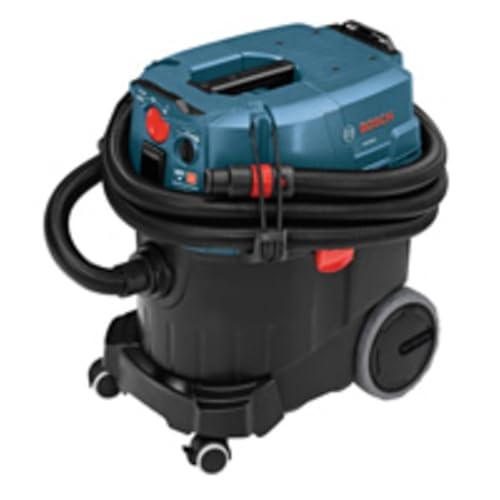
Bosch VAC090AH Dust Extractor
What We Like
- Automatic filter cleaning maintains suction.
- HEPA filter meets OSHA silica dust standards.
- High airflow for demanding dust collection.
Trade-offs
- At 28 pounds, it's heavier than many 5-gallon vacs.
- The 9-gallon size occupies more floor space.
- Requires fleece filter bags for optimal containment.
The Bosch VAC090AH delivers a serious 150 CFM of airflow and a HEPA filter that captures 99.97% of fine particles, making it a foundational piece for meeting stringent OSHA silica dust regulations on a jobsite. Its automatic filter cleaning every 15 seconds is the key feature for anyone running grinders or concrete saws all day, as it prevents the clogging that kills suction and compliance. This extractor is built for the pro who needs documented dust control without constantly stopping to shake out a filter.
With a 9-gallon tank and a weight of 28 pounds, this extractor is a substantial unit compared to compact cordless options like the DeWALT 20V MAX. Its ‘Power Broker’ dial matches suction force to the application. For heavy, continuous drywall or concrete work where dust control is critical, this Bosch is a system, not just a vacuum, while quick clean-ups or fully cordless operation require a different tool.
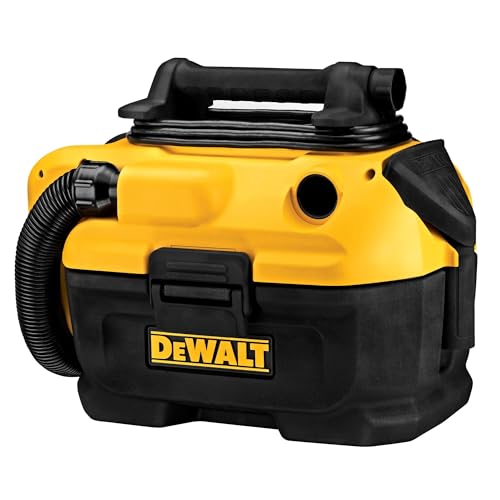
DeWALT 20V MAX Cordless Shop Vacuum
What We Like
- Dual corded and cordless power flexibility
- Washable, reusable HEPA filter for easy maintenance
- Integrated storage for hose and accessories
- Includes wide gulper and crevice tools
Trade-offs
- Tool only: requires separate 20V MAX battery purchase
- 2-gallon capacity is smaller than many shop vacs
The DeWALT DCV581H runs on a 20V MAX battery or a wall outlet, offering flexibility for both cordless convenience and extended corded use. Its compact 2-gallon tank is designed for jobs like emptying a toilet or clogged pipe. Integrated storage for the hose and accessories aids transport on jobsites.
With a 2-gallon capacity, it holds less than larger shop vacuums like the 5-gallon Vacmaster or 8-gallon DeWALT dust extractor. The design includes a 5-foot hose and a wide gulper nozzle for tackling various debris. A battery and charger are sold separately.
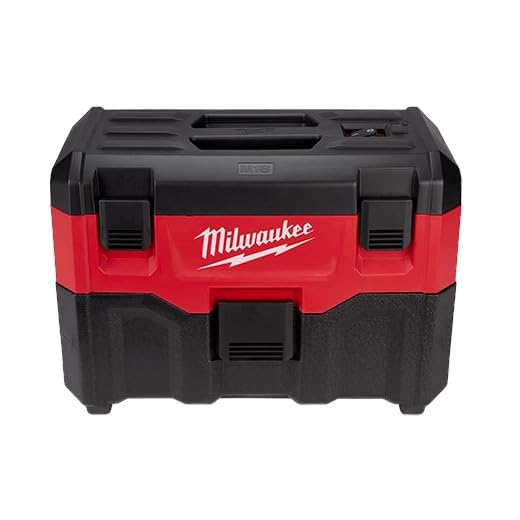
Milwaukee 495-0880-20 Dust Vacuum
What We Like
- Compact, stackable design with onboard accessory storage
- Cordless convenience with strong wet/dry suction
- Includes flexible hose, crevice tool, and utility nozzle
- HEPA filter captures fine particles for cleaner exhaust
Trade-offs
- Tool only: requires separate Milwaukee M18 battery and charger
- 2-gallon capacity means frequent stops to empty on big jobs
Its 10-pound weight and 2-gallon capacity make this vac a true grab-and-go unit, perfect for quick cleanups or moving around a jobsite without hunting for an outlet. The cordless freedom from the 18V platform and the organized storage for its attachments mean you can snag it from the truck and be cleaning in seconds. This setup is tailor-made for tradespeople who need a dedicated, compact dust and debris vac for their M18 tools, especially for final touch-ups or contained messes.
The trade-off for that portability is capacity and runtime. You’ll be emptying it often on larger demolition or sanding jobs, and you need to factor in the cost of a battery if you’re not already on the Milwaukee platform. For all-day, high-volume dust extraction, a plug-in model like the DeWalt DWV010 with its automatic filter cleaning is the more practical choice. But if your priority is a lightweight, cordless companion that stays out of the way until you need it, this Milwaukee hits the mark.
Product photos
RIDGID WD1450 Wet/Dry Vacuum

What We Like
- 6 peak HP motor provides powerful suction
- Large 14-gallon capacity for big jobs
- Pull handle and casters for easy maneuverability
- Quick-release accessory bag for convenient storage
Trade-offs
- Large 22.5" x 26" footprint demands significant storage space
- At 26 pounds, it's heavier than the 15.4-pound Vacmaster
A 14-gallon capacity paired with a 6 peak HP motor means this vacuum can handle the debris from a major workshop cleanup or renovation project without constant emptying. It’s built for the user who needs to move serious volume, whether wet or dry, and the noise-reduction technology means you can run it without excessive racket. The combination of a rugged two-piece drum, a long 20-foot cord, and a blowing feature makes it a complete cleanup station for a demanding job site or a busy home shop.
This capacity and power come with noticeable size and weight. You wouldn’t want to carry it up a ladder or fit it into a packed truck bed. For focused fine dust collection, a model like the DeWALT DWV010 with its HEPA filtration is a more specialized option. However, if your main goal is reliably moving large volumes of material, the RIDGID WD1450 offers substantial utility for the floor space it requires.
WEN VC4710 HEPA Wet/Dry Shop Vacuum

What We Like
- Compact, lightweight body with carrying handle
- HEPA filter captures fine 0.3-micron dust
- Doubles as a blower for versatile cleanup
- Onboard storage for hose and accessories
Trade-offs
- 5-gallon capacity is smaller than many shop vacs
- 5-foot hose limits reach for larger jobs
A 10-amp motor in a compact 5-gallon package makes the WEN VC4710 a genuinely portable shop companion. Its HEPA-grade filter tackles fine dust down to 0.3 microns, which is critical for anyone sensitive to airborne particles from sanding or cleaning. This design suits the DIYer who needs to move the vac frequently between a garage, workshop, and vehicle. The dual blower function adds utility for clearing sawdust off a bench or debris from a driveway, all without swapping tools.
The WEN VC4710 pairs its HEPA filter with a 5-gallon tank, which means it captures fine dust but fills faster on large debris jobs than bigger units like the 14-gallon Ridgid. Its compact, lightweight body and carrying handle make transportation between tasks simple. This vacuum operates as a straightforward machine, offering both vacuum and blower functions for versatile clean-up in tight spaces.
Product photos
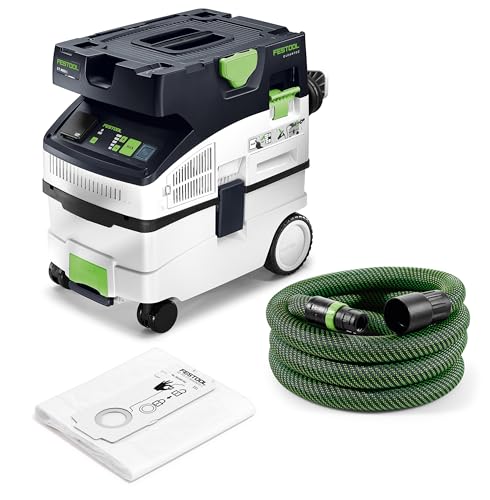
Festool CT MIDI I Dust Extractor
What We Like
- Compact size and low weight for easy moving
- Touch controls for intuitive operation
- Remote start and stop via Bluetooth
- Tool-free, quick-change dust filters
Trade-offs
- Manual filter cleaning, not automatic.
- No dimensions or weight provided.
You can start and stop the vacuum from across the room using the integrated Bluetooth, a real help when you’re busy and your hands are dirty. This remote operation, plus automatic tool start, means the Festool CT MIDI I is built for a connected workflow. It’s a premium choice for tradespeople or serious hobbyists who use tools that benefit from automatic, dust-free activation. The compact chassis and intuitive touch controls further define its role as a dedicated extractor for detailed work.
This streamlined operation limits flexibility with the tools you can connect. As a result, it functions less as a universal shop vac and more as a specialized dust extractor. The Festool excels within its intended role, prioritizing clean, automatic dust collection for its compatible tools.
Product photos
Stanley SL18116P Wet/Dry Vacuum

What We Like
- Compact 13.4-pound weight for easy portability
- Versatile 3-in-1 vacuum, wet pickup, and blower function
- Includes both foam and reusable dry filters
- Four swivel casters for easy maneuverability
Trade-offs
- 6-gallon capacity is smaller than many stationary shop vacs
- No automatic filter cleaning mentioned in specifications
With a 6-gallon capacity and a 4 peak HP motor, the Stanley SL18116P handles small to medium cleanups like sawdust or liquid spills without frequent emptying. Its 13.4-pound weight and four swivel casters make it portable for moving between a vehicle, workshop, or garage. This vacuum offers three functions: it can suction wet or dry debris and also act as a blower.
This compact size means a smaller tank capacity. On large projects, you’ll empty it more frequently than you would a 14-gallon model like the RIDGID WD1450. It’s built for frequent, manageable cleanups rather than marathon demolition sessions. The included accessory kit is thoughtfully complete for floors, crevices, and wet spills, so reviewers report it arrives ready to work.
Product photos
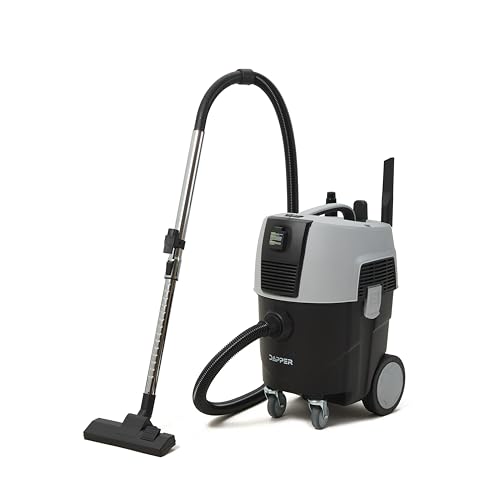
Dapper Supply HEPA Dust Extractor
What We Like
- Automatic HEPA filter cleaning maintains suction.
- Tool-activated auto-start for convenient source capture.
- High 140 CFM airflow for demanding dust control.
- Includes long 19.7 ft power cord and hose.
Trade-offs
- The 1-1/4" hose diameter is narrow for large debris.
- Large 24.8" length requires more storage space.
The automatic filter cleaning cycle every 25 seconds is the key feature here, ensuring the HEPA filter doesn’t clog during extended drywall sanding or concrete grinding. That 140 CFM airflow and 20 kPa suction provide the steady, strong pull needed to capture fine dust at the source. This makes it a logical fit for tradespeople who run dust-producing tools for hours and can’t afford to stop and manually clean a filter to restore performance. The tool-activated start adds to that hands-off efficiency, letting you focus on the cut or sand without fumbling for a switch.
You pay for that continuous operation with bulk and weight. It’s notably heavier than the similarly sized DeWALT DWV010, and its longer body can be a tight fit in a packed truck bed. That trade-off is clear: choose this for its relentless, automated dust control on a busy site, not for easy portability between multiple quick jobs. The included accessories are generous, but the hose diameter is best suited for powdery dust from sanders, not for cleaning up chunks of construction debris after the fact.
Product photos
How We Evaluated Dust Vacuums
Our research focused on manufacturer specifications, expert round-ups, and consistent patterns in owner feedback across forums and retail reviews. We prioritized three key criteria for this category: filtration level (especially HEPA for fine particles), suction power and airflow for effective dust collection, and practical design elements like capacity, hose length, and portability. The main limit of this research-led approach is that we cannot verify long-term durability claims or compare real-world suction decay over years of use, which relies on long-term owner reports.
What To Look For In Dust Vacuums
Choosing the right dust vacuum means matching its capabilities to the type and volume of debris you create. A model perfect for sawdust might struggle with drywall or concrete fines.
Prioritize HEPA filtration for fine dust, sufficient airflow (CFM) for your tools, and a practical balance of tank capacity versus portability for your workspace.
Filtration Is Non-Negotiable
Standard shop vac filters let the most harmful, fine particles pass through. For woodworking, drywall, or concrete, you need a vacuum with a true HEPA filter, which captures 99.97% of particles down to 0.3 microns. Some models, like our pick for handling drywall dust, include automatic filter cleaning to maintain suction. For the most demanding fine or sticky chemical dust, sealed systems are essential.
Suction and Airflow
Suction power (often in Air Watts) determines lift strength, while airflow (CFM) determines how much volume it moves. Both matter. A high-CFM unit is better for capturing dust at the source from sanders or saws, while strong suction helps with wet pickup or embedded debris. Dedicated dust extractors are engineered for sustained high airflow, unlike general-purpose shop vacs.
Capacity and Portability
Tank capacity dictates how long you can work before emptying. A 2-gallon cordless vac is highly portable for quick cleanups, while a 14-gallon stationary unit handles big demolition jobs. Consider the unit’s footprint, weight, and whether it has wheels or a handle. For a permanent shop setup, a larger dust collection system might be a better long-term investment than a portable vacuum.
- Check the hose length and diameter. A longer, kink-resistant hose (25 feet is great) improves reach.
- Look for onboard storage for accessories like nozzles and wands to keep everything together.
- Consider power source: corded for all-day power, cordless for ultimate convenience in tight spaces.
Match the vacuum’s capacity to your largest common job to minimize frustrating mid-task stops.
Dust Vacuums Compared
The table below compares key specs for all nine picks to help you see the differences at a glance.
| Product | Tank Capacity | Filtration Type | Weight |
|---|---|---|---|
| Vacmaster Professional Beast Series Wet/Dry Vac | 5 gallons | Down to 1 micron | 15.4 pounds |
| Bosch VAC090AH Dust Extractor | 9 Gallon | HEPA (99.97% at 0.3 microns) | 28.0 Pounds |
| DeWALT 20V MAX Cordless Shop Vacuum | 2 gallons | Washable HEPA filter | 1.0 Pounds |
| Milwaukee 495-0880-20 Dust Vacuum | 2 gallon | Certified HEPA filter | 10.1 pounds |
| RIDGID WD1450 Wet/Dry Vacuum | 14 gallons | Fine-dust filter | 26.0 Pounds |
| WEN VC4710 HEPA Wet/Dry Shop Vacuum | 5-gallon | HEPA filter (0.3 micron) | N/A |
| Festool CT MIDI I Dust Extractor | N/A | HEPA filter | N/A |
| Stanley SL18116P Wet/Dry Vacuum | 6 Gallon | N/A | 13.4 pounds |
| Dapper Supply HEPA Dust Extractor | 8 Gallon | HEPA Filter | 31.0 Pounds |
Frequently Asked Questions
What is the best vacuum for getting rid of dust?
For fine particulate dust from woodworking or drywall, a vacuum with a certified HEPA filter is essential. Our best overall, the Vacmaster Professional Beast Series, uses a high-efficiency cartridge filter for this, while specialized models like the Dapper Supply HEPA Dust Extractor are built for automatic operation with sanders.
What is the highest rated Dustbuster?
Our research focuses on workshop-grade dust vacuums, not compact handheld Dustbusters for household use. For shop and job site dust, cordless models like the Milwaukee 495-0880-20 offer similar cord-free convenience but with wet/dry capability and HEPA filtration suitable for construction debris.
Do dust mite vacuums actually work?
Dust mite vacuums for home use typically employ HEPA filtration and sometimes UV light to target allergens. In a workshop context, a HEPA-filtered dust vacuum is extremely effective at capturing fine particles that would otherwise remain airborne, protecting your lungs and keeping your workspace cleaner.
Which vacuum is best for dust extraction?
True dust extraction emphasizes high, consistent airflow (CFM) to capture dust at the tool source. The Festool CT MIDI I is a top-tier compact extractor with Bluetooth control, while the Bosch VAC090AH offers automatic filter cleaning and OSHA compliance for professional concrete dust applications.
Can a regular shop vac handle drywall dust?
A regular shop vac will clog its standard filter almost immediately with fine drywall dust, drastically reducing suction and sending particles back into the air. You need a vacuum designed for fine dust, either with a HEPA filter bag or a built-in pre-filter like those found in dedicated drywall dust vacuums.
The Bottom Line
The Vacmaster Professional Beast Series Wet/Dry Vac is the best dust vacuum overall for most workshops, combining strong suction, excellent filtration, and thoughtful storage in a 5-gallon package. For contractors needing documented silica compliance, choose the Bosch VAC090AH Dust Extractor, and for large-volume cleanup on a budget, the RIDGID WD1450 delivers exceptional value.
Ultimately, the single most important factor is filtration. Investing in a proper HEPA-filtered vacuum or dust collection system is an investment in your health and a cleaner shop.
