
10 Best Electric Nailers in 2026
This post contains affiliate links. As an Amazon Associate, we earn from qualifying purchases.
Our best overall electric nailer is the WORX Cordless Brad Nailer WX838L.1 for its cross-platform battery and reliable power for trim work. For fine detail, the DEWALT ATOMIC 23-Gauge Pin Nailer is the best compact pin nailer, and the Arrow Fastener ET200BN is our best corded budget pick for the workshop. Choosing the right tool means matching its gauge and power source to your tasks. We researched specifications, expert comparisons, and owner feedback to present these ten picks, giving you a clear path to a confident purchase.
Top 10 Electric Nailers in the Market
Certain content that appears on this site comes from Amazon. This content is provided "as is" and is subject to change or removal at any time.
The Best Electric Nailers, Reviewed
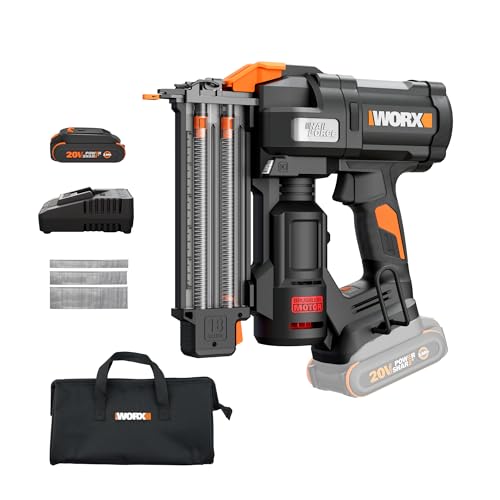
WORX Cordless Brad Nailer WX838L.1
What We Like
- PowerShare battery works across Worx 20V, 40V, and 80V tools
- Drives 2-⅛" nails into hardwood with Air Impact Technology
- Lightweight design reduces user fatigue
- Built-in triple LED light for dark workspaces
Trade-offs
- 18-gauge nails limit holding power for heavy structural work
Driving nails up to 2-⅛ inches into hardwood cordlessly with Air Impact Technology allows for compressor-free trim and finish work. Its PowerShare system accepts the same 20V batteries used across the Worx platform, which can be combined to power other tools. A brushless motor contributes to extended runtime, while the lightweight design aims to reduce user fatigue during extended use.
As an 18-gauge tool, it drives brads that leave smaller holes but lack the holding power of a 16-gauge finish nailer for heavier applications. The cordless design eliminates compressors and hoses, and dual firing modes provide both contact actuation for speed and a single mode for precision. A tool-less jam release with anti-ejection design is included for clearing nail jams.
DEWALT ATOMIC 23-Gauge Pin Nailer

What We Like
- Compact, cordless design eliminates hoses and compressors
- Tool-free jam release and depth adjustment
- Low nail lockout with LED reload indicator
- High-capacity brushless motor for long runtime
Trade-offs
- Tool only: requires separate battery and charger purchase
- Head design is bulkier than some pneumatic models
Driving around 2,000 pins on a single charge means you can tackle a full day of delicate trim and cabinet work without scrambling for an outlet. The DeWalt ATOMIC is a purpose-built cordless solution for finish carpenters and serious remodelers who need the freedom to move around a job site. Its compact 4.5-pound frame and tool-free adjustments make it a natural fit for overhead work and detailed finish tasks where a hose would just get in the way.
This cordless pin nailer drives up to 2,000 nails per charge, letting you work a full shift without hoses or a compressor. It handles 23-gauge pins from 5/8 inch to 1-1/2 inches for delicate trim and finish tasks. A tool-free depth adjustment and jam release keep the focus on your work, while a lockout system with an LED tells you when to reload.
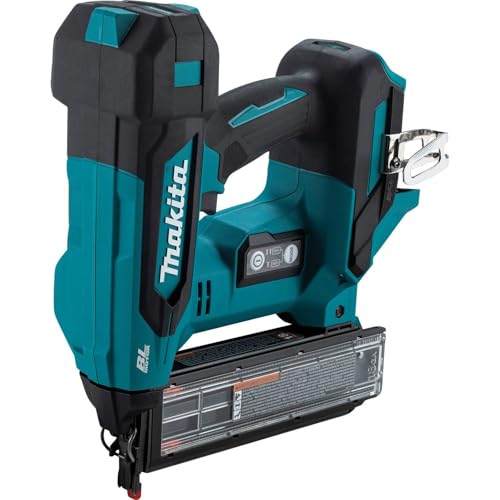
Makita 18V LXT Brushless Brad Nailer
What We Like
- Class-leading cordless speed for faster work.
- Drives nails sub-flush in hardwood and softwood.
- Ultra-compact, ergonomic design for tight spaces.
- Tool-less depth adjustment and jam clearing.
Trade-offs
- Tool only: requires separate Makita 18V LXT battery and charger.
- Weighs 6.1 lbs with battery, heavier than some cordless competitors.
Weighing just over six pounds with a battery, this brad nailer is a serious contender for anyone who spends hours on trim or cabinet work. Its slim nose and tiny translucent tip make lining up nails in corners a breeze, and the tool-less adjustments mean you can switch tasks without hunting for a hex key. It delivers solid power, sinking brads flush in tough material, and the runtime is outstanding, you can drive thousands of nails on a single charge. This is a workhorse built for pros and dedicated DIYers who already own Makita batteries and need a reliable, go-anywhere tool.
Makita’s 18V LXT Brad Nailer delivers up to 2X faster nailing speeds than others in its class, which means you can finish trim work and cabinetry more quickly. Its slim nose makes it easy to get into tight corners for accurate placement. The tool-less depth adjustment dial allows for precise flush or countersink nailing without needing a separate tool.
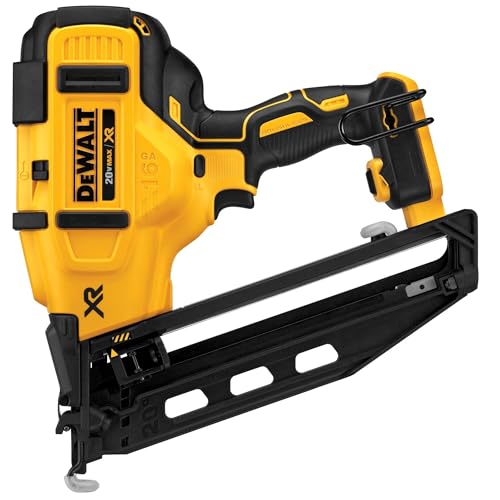
DEWALT 20V MAX Angled Finish Nailer
What We Like
- Tool-free depth and jam release
- Multi-function LED for light and diagnostics
- Brushless motor for runtime and durability
- Adjustable belt hook for left or right side
Trade-offs
- Tool only: battery and charger sold separately
- Flywheel system has a slight firing delay
This cordless angled finish nailer eliminates compressors, hoses, and gas cartridges, making it a simpler setup for job sites without air hookups. Its tool-free adjustments for depth and jams let you quickly fine-tune nail sinking or clear a stall without hunting for a tool. A multi-functional LED provides workspace illumination and tool diagnostics, which helps with troubleshooting on the fly.
DeWalt’s cordless nailers are among the lightest in their class but tend to have a bulkier head. They use a flywheel drive system, which research notes can result in a slight firing delay compared to the instantaneous action of pneumatic or some pressurized-air cordless models.
Metabo HPT Brushless Brad Nailer Kit

What We Like
- Tool-less depth adjustment for precision
- Compact and 31% lighter than previous model
- Selective actuation switch for fire modes
- Brushless motor for longer runtime and durability
Trade-offs
- At 4.4 lb, heavier than the compact DEWALT pin nailer
- Maximum nail length is 2 inches
Driving up to two nails per second with no ramp-up time means you can fly through trim work without waiting for the tool to cycle. This Metabo HPT brad nailer suits a pro or serious DIYer who needs pneumatic-like performance without the hose. Its brushless motor and efficient air spring system deliver up to 1,300 nails per charge, which translates to a full day of baseboard or crown molding on a single battery. The tool is also 30% smaller than its predecessor, letting you maneuver into cabinet toe-kicks and other tight corners.
This cordless brad nailer drives up to 2 nails per second with no ramp-up time, delivering pneumatic-like speed without a hose. Its brushless motor provides longer runtime and requires less maintenance than brushed alternatives. While weighing 4.4 pounds, the tool is 31% lighter than its predecessor, making it easier to handle in tight spaces compared to bulkier models.
Metabo HPT MultiVolt Roofing Nailer

What We Like
- Air spring delivers pneumatic-like performance without a hose
- Side-loading magazine allows quick nail replenishment
- Includes vinyl siding adapter to prevent over-driving
Trade-offs
- At 8.6 lb, it's heavier than most finish nailers like the 4.5 lb DEWALT pin nailer
- Limited to 16-degree coil nails, not strip collation
As the first air spring coil roofing nailer, this cordless model delivers similar performance to a pneumatic tool, so you can leave the compressor and hose behind. It drives nails up to 1-3/4 inches long, providing high output energy for roofing applications. The included vinyl siding adapter also allows for installing vinyl siding without overdriving nails, adding versatility for exterior projects.
The trade-off for that power is weight. At 8.6 pounds, it’s a substantial tool, noticeably heftier than trim-focused nailers like the 4.4-pound Metabo HPT Brushless Brad Nailer. You’ll feel the difference after hours of overhead work. If your priority is a cordless workhorse that can replace a pneumatic roofing nailer, this model stands out. For lighter-duty trim and finish work, a dedicated brad or finish nailer would be a more appropriate choice.
Product photos
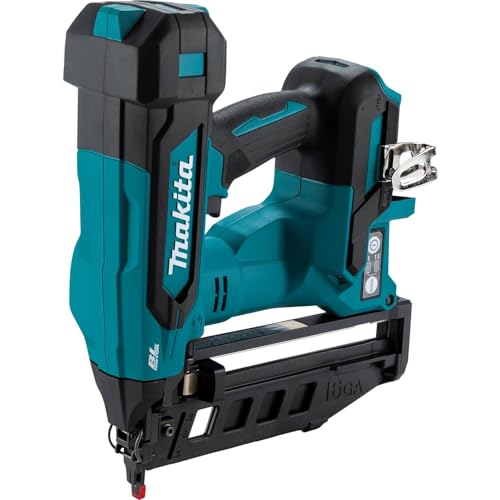
Makita 18V LXT Brushless Finish Nailer
What We Like
- Tool-less depth dial for precise flush nailing
- Slim nose for accurate placement in tight spots
- Class-leading cordless speed for faster work
- Drives nails sub-flush in hardwood and softwood
Trade-offs
- Battery and charger sold separately
- Weighs 6.6 lbs, which is noticeable for overhead work
With the ability to sink 2-1/2″ nails sub-flush into hardwood, this nailer is built for the heavier side of finish work. It’s the tool you grab for installing thick crown molding, building up door jambs, or securing stubborn exterior trim. The slim nose and tool-less depth dial make it easy to get professional results, even in corners. If your projects regularly call for the holding power of longer fasteners, this Makita delivers the muscle without needing a compressor hose.
Weighing 6.6 pounds with a battery, this nailer is not the lightest you’ll find, so your arm may tire during extended overhead work. Its slim nose design allows for easy access in tight spaces and accurate nail placement. For general trim, a 23-gauge pin nailer is an option, though it lacks the holding power of this tool’s 16-gauge nails.
Product photos
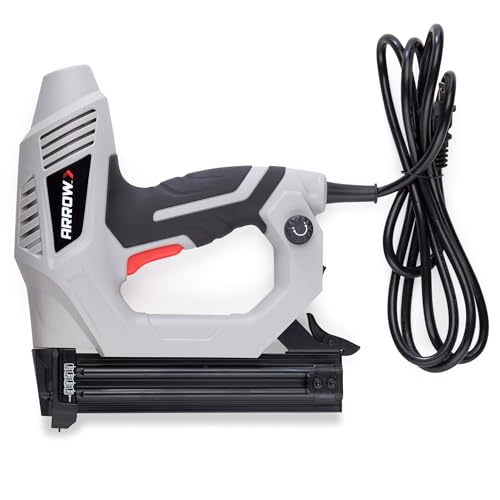
Arrow Fastener ET200BN Electric Nailer
What We Like
- Includes a carrying case for storage and portability
- Quick-release magazine for efficient reloading
- Soft comfort grip for ease of use
- Adjustable depth control for varied materials
Trade-offs
- Corded design limits mobility beyond the 6-foot cord
- Requires two-handed operation for best performance and control
- Power drops with extension cords longer than 15 feet
This electric nailer includes a 6-foot power cord, which keeps it within reach of a workshop outlet. It is a plug-in tool for driving brads in trim, picture frames, crafts, and fencing without a compressor. The adjustable depth-control knob and quick-release magazine let users match power to the material and reload efficiently.
The 6-foot cord requires proximity to an outlet, limiting its range. Cordless models from the other-products list, such as the WORX WX838L.1, operate without a tether. The Arrow ET200BN provides immediate power without battery charging, making it a tool for stationary projects.
Product photos
RYOBI ONE+ 18V Finish Nailer

What We Like
- Eliminates need for compressor and hoses
- Compact nose excels in tight spaces
- Adjustable drive for hardwoods and softwoods
- Part of expansive RYOBI ONE+ tool ecosystem
Trade-offs
- Tool only: battery and charger sold separately
- At 14.4" long, it's not the most compact overall
A 78% smaller nose compared to the previous model gives this tool superior access to tight spots, which is critical for detailed finish work in corners or cabinets. Its AirStrike technology removes the need for a separate air compressor and hose. An adjustment dial lets you regulate the driver’s force, a feature noted in research to work well when switching between hardwoods and softwoods. The tool uses the RYOBI ONE+ 18V battery platform, an advantage if you already own other compatible tools, though the battery is sold separately.
The tool is designed for 16-gauge finish nails, which provide more holding strength than the finer pins used by 23-gauge nailers. It is a cordless tool, so it operates without a hose or compressor. At 14.4 inches long, it is longer than some other cordless nailers, which may affect balance in very confined spaces.
Product photos
RYOBI ONE+ HP Brushless Brad Nailer

What We Like
- Brushless motor for Pro-level driving power
- Compatible with extensive Ryobi ONE+ battery platform
- Depth-of-drive adjustment for hardwoods and softwoods
- Optimized to shoot fasteners in various wood stock
Trade-offs
- Tool-only listing requires separate battery purchase
- Weighs 6.3 lb, heavier than some 18-gauge competitors
With its brushless motor delivering pro-level driving power, this nailer handles the transition from hardwood to softwood without missing a beat. That performance, combined with Ryobi’s vast ONE+ battery ecosystem, makes it a high-value anchor for anyone already invested in that line or a DIYer looking for capable, cordless versatility. The depth-of-drive adjustment adds fine control, letting you set nails flush every time.
At 6.3 pounds, the Ryobi nailer has a solid, substantial feel in the hand, which can help manage recoil during extended use. Its power system draws in outside air, a method that research mentions can create a brief delay before firing in similar tools. For tasks demanding split-second trigger response, this rhythm differs from pneumatic or gas-spring models.
How We Evaluated Electric Nailers
Our evaluation relies on manufacturer specifications, professional tool round-ups, and patterns in owner feedback. We focused on key criteria that separate a good nailer from a great one: driving power for different wood types, ergonomics and weight for all-day use, and the practical benefits of being cordless. For example, we compared the maximum nail length each tool can drive and noted the weight with battery to assess user fatigue.
This guide compares features like brushless motors, tool-free jam clearing, and depth adjustment mechanisms across different brands. It also considers the trade-offs between different drive systems, such as potential firing delays in some designs versus the immediate response of others. The goal is to provide information to help with a purchasing decision, based on available product specifications and professional insights.
What To Look For In Electric Nailers
Selecting an electric nailer involves more than just picking a brand. You need to consider the nail gauge for your projects, the power source that fits your workflow, and the tool’s design for comfort and control.
The right electric nailer balances power, weight, and convenience. Choose an 18-gauge brad nailer for general trim, a 23-gauge pin nailer for delicate work, and a 16-gauge or larger for heavier molding. Cordless models offer freedom but require battery investment, while corded tools provide unlimited runtime at the cost of mobility.
Nail Gauge and Length
The gauge, or thickness, of the nails a tool drives determines its holding power and the size of the hole left behind. An 18-gauge brad nailer, like our overall pick from WORX, is versatile for baseboards and casing, driving nails up to 2-⅛ inches. A finer 23-gauge pin nailer, such as the DEWALT ATOMIC, is ideal for attaching delicate trim or securing veneer where you want nearly invisible holes.
For heavier crown molding or assembling small furniture, a 16-gauge finish nailer like the Makita model offers more holding strength. Always check the maximum nail length a tool accepts to ensure it meets your project needs.
Power Source: Cordless vs. Corded
The choice between cordless and corded defines your mobility and workflow. Cordless nailers eliminate hoses and compressors, perfect for job sites or working far from an outlet. However, they require an investment in a compatible battery platform. Corded electric brad nailers, like our budget Arrow Fastener pick, offer consistent, unlimited power but tether you to an extension cord. When comparing cordless and pneumatic nail guns, battery-powered tools trade some of the instant, snappy response of pneumatics for unparalleled portability and setup speed.
Ergonomics and Features
A nailer’s weight, balance, and features impact comfort during long projects. Lighter tools, like many of the cordless finish nailers we considered, reduce arm fatigue, especially for overhead work. Look for a comfortable grip, a slim nose for visibility in tight corners, and a belt hook. Practical features include tool-free depth adjustment for setting nails flush, an easy jam-clearing mechanism, and LED lights to illuminate your work area. Some top cordless nailer models also offer a selective actuation switch for different firing modes (sequential or bump fire) for better control.
.###
.###
- Check the tool’s weight with the battery installed if you plan on using it overhead or for extended periods.
- Ensure the depth adjustment dial is easy to reach and adjust without needing another tool.
- Look for a dry-fire lockout or low-nail indicator to prevent damaging the driver blade.
- Consider the magazine capacity to see how many nails you can load before a reload.
- Verify the availability of the nail size and collation type (strip or coil) the tool requires.
A good rule of thumb: prioritize a nailer that drives the longest nail you commonly use comfortably and fits naturally in your hand.
Electric Nailers Compared
The following table compares key specifications across our top picks to help you see the differences at a glance.
| Product | Nail Gauge & Type | Max Nail Length | Power System |
|---|---|---|---|
| WORX Cordless Brad Nailer WX838L.1 | 18GA brad nails | 2-⅛ inches | 20V PowerShare battery |
| DEWALT ATOMIC 23-Gauge Pin Nailer | 23-Ga, pin nails | 1-1/2" | 20V MAX Brushless Cordless |
| Makita 18V LXT Brushless Brad Nailer | 18 Ga., brad | 2" | 18V LXT Lithium‑Ion |
| DEWALT 20V MAX Angled Finish Nailer | 16GA Angled | N/A | 20V MAX Battery |
| Metabo HPT Brushless Brad Nailer Kit | 18 gauge, brad | 2" | 18V Lithium-Ion |
| Metabo HPT MultiVolt Roofing Nailer | 16º Wire Coil Roofing Nails | 1-3/4" | 18V MultiVolt |
| Makita 18V LXT Brushless Finish Nailer | 16 gauge, finish | 2-1/2" | 18V LXT Lithium-Ion |
| Arrow Fastener ET200BN Electric Nailer | brad nails | 1" | Corded |
| RYOBI ONE+ 18V Finish Nailer | 16-Gauge, finish | N/A | RYOBI ONE+ 18V |
| RYOBI ONE+ HP Brushless Brad Nailer | 18-Gauge, brad | N/A | 18V ONE+ HP Brushless |
Frequently Asked Questions
Which electric nailer is considered the best?
For most users, the best electric nailer is a versatile, cordless 18-gauge brad nailer like our overall pick, the WORX WX838L.1. It offers a good balance of power for trim work, the convenience of a shared battery system, and features like a built-in LED light. The “best” tool ultimately depends on your specific projects, whether you need the fine pins of a cordless pin nailer or the holding power of a finish nailer.
Which electric nail gun is the best value for money?
Value depends on your existing tools. If you already own batteries from a brand like Ryobi or Makita, their tool-only nailers offer excellent value by expanding your cordless system. For those without a battery platform, a kit that includes a battery and charger provides the best start. For workshop-bound DIYers, the corded Arrow Fastener ET200BN is a tremendous budget value, offering capable performance without any battery cost.
Which is better, Paslode or DeWalt?
This comparison often refers to older, fuel-powered Paslode nailers versus modern battery-electric DeWalt tools. Today’s best battery-powered nail gun models from DeWalt and other brands use advanced brushless motors or gas-spring systems, eliminating the need for fuel cells. They offer consistent power with less maintenance. For finish work, a DeWalt cordless nailer provides clean, reliable performance without the operational cost of fuel.
Are electric nailers any good?
Yes, modern electric nailers are very capable. Top-performing cordless finish nailer models can drive nails sub-flush into hardwoods, matching the performance of many pneumatic tools for finish carpentry. They eliminate the compressor and hose, saving setup time and reducing tripping hazards on a job site. While they may have a slight firing delay compared to pneumatics, their convenience and improving power make them excellent for both DIYers and professionals.
What is the difference between a brad nailer and a finish nailer?
The primary difference is the nail gauge and resulting holding power. An 18-gauge brad nailer uses thinner nails with smaller heads, ideal for lightweight trim and projects where you want a less noticeable hole. A 15 or 16-gauge finish nailer uses thicker nails with more holding strength, better suited for heavier moldings, door jambs, and small furniture assembly. Choose a brad nailer for delicate work and a finish nailer when you need extra strength.
The Bottom Line
The WORX Cordless Brad Nailer WX838L.1 is our best overall pick for its powerful performance across a wide range of trim tasks and its unique compatibility with multiple Worx battery voltages. It’s an ideal choice for DIYers and tradespeople who want a single, reliable cordless tool for finish work.
If you’re on a strict budget and work primarily in a garage or workshop, the corded Arrow Fastener ET200BN delivers capable nailing without any battery investment. For specialized needs, turn to our award winners: the DEWALT ATOMIC for pin-nail detail, the Metabo HPT for roofing, or the Makita for long nails.
Ultimately, the most important factor is matching the nailer’s gauge and power source to the projects you do most often. A well-chosen electric nailer becomes an indispensable part of your toolkit, saving you time and effort on every job.
