
10 Best Industrial Dust Collectors in 2026
This post contains affiliate links. As an Amazon Associate, we earn from qualifying purchases.
Our top pick for the best industrial dust collector is the VEVOR 3HP Vortex Cone Dust Collector, thanks to its strong 1550 CFM airflow and large dual dust bags. We also highlight the JET Cyclone for high-power needs and the WEN DC1300 for a budget-friendly start.
For many woodworkers, controlling fine dust is as crucial as the tools themselves, it protects both your health and the longevity of your equipment. This guide is built from a detailed review of product specifications, manufacturer data, expert round-ups, and patterns in owner feedback to help you find the right system.
Top 10 Industrial Dust Collectors in the Market
Certain content that appears on this site comes from Amazon. This content is provided "as is" and is subject to change or removal at any time.
The Best Industrial Dust Collectors, Reviewed
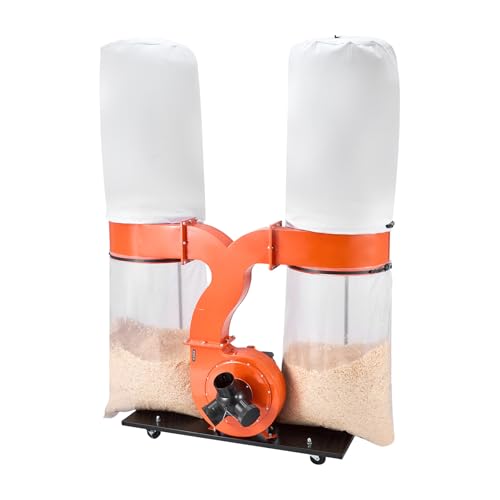
VEVOR 3HP Vortex Cone Dust Collector
What We Like
- Strong 1550 CFM airflow for rapid dust removal
- Large dual 42-gallon bags enable longer operation
- Effective 2.5-micron filtration captures fine dust
- Clip-on bag fixtures allow for fast disposal
Trade-offs
- Its 78.7-inch height needs significant vertical clearance
- The 220V plug limits placement to dedicated workshop circuits
With a 1550 CFM airflow, this collector provides strong suction for rapid dust removal, which helps keep a workshop clean during woodworking tasks. Its dual 42-gallon filter bags allow for longer continuous operation with fewer stops, handling the debris from medium and small projects. The 2.5-micron filtration captures fine wood dust and particles, lowering airborne contaminants to support a more comfortable working environment.
The trade-off is in its footprint and power needs. Standing nearly seven feet tall, you’ll need to check your ceiling height before rolling it into place. It also requires a 220V outlet, so it’s not a simple plug-in for a garage with standard household circuits.
JET Cyclone Dust Collector

What We Like
- Captures 99% of 2-micron particles
- Two-stage cyclone provides 1240 CFM airflow
- RF remote with timer settings for 2-8 hours
- Double paddle system for quick filter cleaning
Trade-offs
- Weighs 268 pounds, requiring significant floor space and sturdy support
- Large 54.7-inch length may not fit in compact workshops
This cyclone collector moves 1240 cubic feet of air per minute, which is enough airflow to serve multiple woodworking machines simultaneously. Its two-stage separation and direct-mounted filter are designed to maintain that high flow by eliminating the inefficiencies of ridged flex hosing. The pleated filter captures 99% of particles as small as 2 microns, and a 66-gallon drum on casters collects heavy debris for convenient disposal. An RF remote works from up to 50 feet away, and a timer can be set for automatic shutoff after two to eight hours.
The unit’s size and weight require a dedicated shop space. It measures over four and a half feet long and weighs 268 pounds, so it’s not a tool you’ll relocate often. It also requires a 230-volt electrical circuit. When compared to a similarly powered cyclone like the Powermatic TurboCone, the JET model has a significantly larger collection drum.
Powermatic Cyclone Dust Collector
What We Like
- HEPA filter captures 99.97% of 0.3-micron particles
- Auto-cleaning filter extends its useful life
- One-handed drum release simplifies maintenance
- Vacuum gauge provides clear operational feedback
Trade-offs
- At 370 pounds, moving it requires significant effort
- Requires a dedicated 230-volt single-phase power circuit
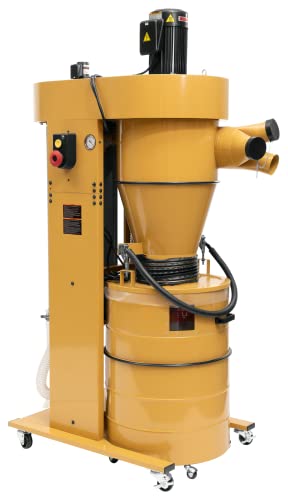
With a HEPA filter that collects 99.97% of particles as small as 0.3 micron, this dust collector is designed for shops where minimizing airborne dust is critical. Its proprietary auto-cleaning technology helps maintain that high filtration level over time, which can extend filter life during long work sessions. The 3-HP motor moves 1,543 cubic feet of air per minute, providing substantial suction power. Features like integrated vacuum lines to retain the drum bag and a one-handed drum release are focused on simplifying the process of emptying collected dust.
The trade-off for this performance is a substantial physical footprint and heft. Standing over seven feet tall and weighing 370 pounds, you’ll need a permanent spot with good headroom and a sturdy floor. For shops where space is at a premium or mobility is key, the more compact JET Cyclone Dust Collector offers a similar 3 HP motor in a lower-profile package, though with a 2-micron filter. The Powermatic’s design is about stationary, high-volume filtration, not about being wheeled from one corner to another.
Product photos
WEN DC1300 Dust Collector
What We Like
- High 1,300 CFM airflow for effective capture
- Dual 4-inch inlets allow two-tool hookup
- Large 50-gallon dust collection capacity
- Mobile base with casters for easy repositioning
Trade-offs
- 5-micron filtration misses fine dust particles
- Bag-based system requires manual emptying
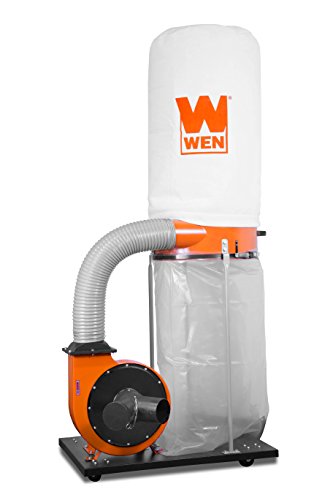
With a 1,300 CFM airflow, the WEN DC1300 pulls enough volume to handle the main hose runs and larger chips from a couple of stationary tools in a small shop. Its dual 4-inch inlets let you connect a table saw and a planer simultaneously, which streamlines workflow without constant hose swapping. The included mobile base is a practical touch, letting you wheel the unit between machines. For the woodworker setting up their first dedicated dust collection on a tight budget, this unit moves a serious amount of air and captures bulk waste efficiently, forming a solid foundation for a cleaner workspace.
This collector’s 5-micron bag captures the bulk of sawdust, which is sufficient for many common woodworking tasks. For operations like sanding that create finer dust, an aftermarket filter upgrade is a consideration. Its design uses a bag rather than a cyclonic separator like those found on the JET or Powermatic models, which separate dust before filtration.
DEWALT Air Filtration System

What We Like
- Ceiling-mount design saves floor space
- HEPA filter captures over 95% of 0.3μm particles
- Convenient remote control and timer
- Washable pre-filter reduces upkeep cost
Trade-offs
- An air filtration unit, not a direct-source dust collector
- At 20.9 pounds, requires secure ceiling mounting
- No onboard dust storage or collection bag
Hanging easily from a shop ceiling with included hooks and chains, this 20.9-pound filtration system saves all your floor space for tools and projects. The DEWALT Air Filtration System is designed to clean ambient workshop air. Its automatic mode senses air quality and adjusts the fan, while a timer lets it run for up to eight hours after you leave, so you can return to cleaner air. The two-stage filtration with a washable pre-filter helps keep long-term maintenance costs down.
This is an air filtration system for cleaning ambient air, not a replacement for a dust collector hooked directly to tools. It captures fine particles that escape other collection methods, addressing the lingering haze in a workshop. While a floor-standing unit like the 3 HP JET Cyclone Dust Collector is designed for heavy-duty source collection, the DEWALT DWXAF101 offers a space-efficient way to finish the air cleaning job.
Powermatic TurboCone Dust Collector
What We Like
- Remote timer programmable up to 99 minutes
- TurboCone design improves chip separation
- All-metal duct construction for rigidity
- Steel impeller for sustained peak performance
Trade-offs
- At 268 pounds, moving it requires significant effort
- Occupies a 46 by 23 inch floor footprint
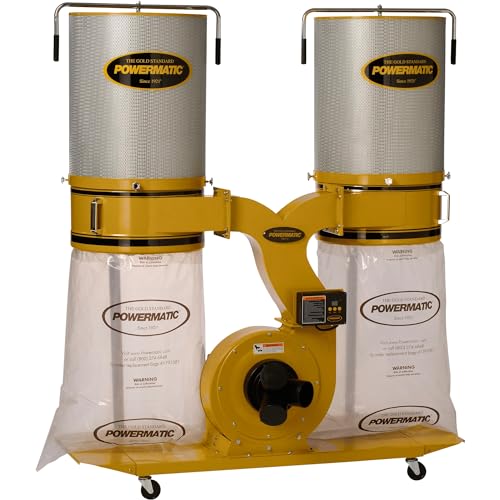
A remote-controlled timer you can set for up to 99 minutes turns this collector into a true set-and-forget tool. For a busy shop running multiple machines, that automation is a serious quality-of-life upgrade. The 3 HP motor and all-metal ductwork deliver the steady airflow you need, while the TurboCone design keeps the 2-micron filter from clogging prematurely. This unit is built for the woodworker who wants to focus on the cut, not on walking over to flip a switch or worrying about filter maintenance.
Weighing 268 pounds, the Powermatic TurboCone is a permanent shop fixture rather than a portable tool. Its steel impeller and all-metal duct construction provide rigidity for consistent airflow, while the TurboCone design aims to improve chip separation and reduce filter clogging. According to expert round-ups, this model performed well at trapping dust particles alongside several other leading cyclones.
Product photos
Oasis Machinery 5HP Dust Collector
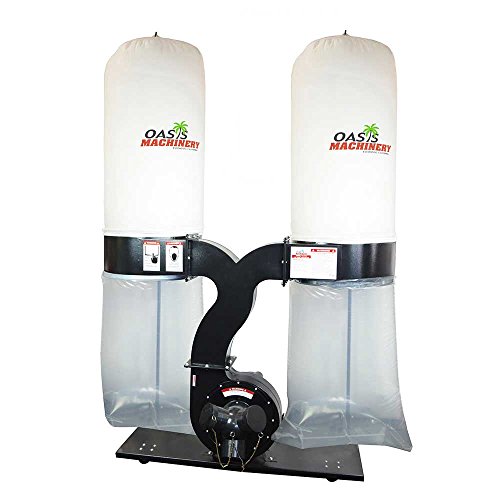
What We Like
- A 5 HP motor provides substantial suction power.
- 2760 CFM airflow can handle multiple tools simultaneously.
- Three 4-inch inlets offer flexible tool connections.
Trade-offs
- 30-micron filtration is coarse compared to 1-micron systems.
- Total height of 88 inches requires significant ceiling clearance.
With a 2760 CFM air suction capacity, this collector is designed to move a high volume of air for shops handling chips, dust, and debris. Its 5 HP motor and three 4″ inlets allow multiple tools to be connected at once, which supports continuous collection from several workstations. The system’s focus is on bulk material evacuation for general workshop cleanup.
Filtration uses standard 30-micron bags, a specification that captures larger particles. For comparison, other units like the Powermatic Cyclone list a 1-micron HEPA filter. The Oasis collector’s design prioritizes high airflow and volume capacity over fine filtration.
Product photos
DEWALT HEPA Dust Extractor
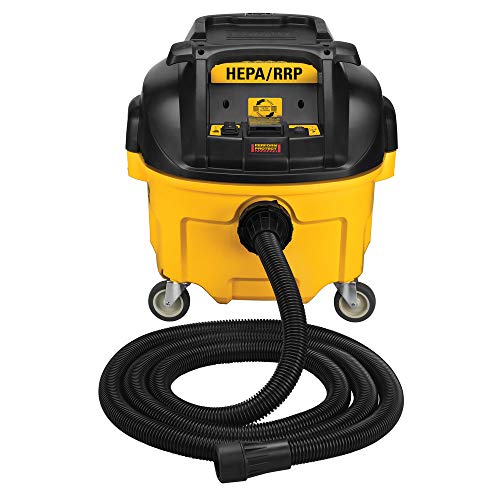
What We Like
- Automatic filter cleaning every 30 seconds
- Power tool actuation controls vacuum on/off
- Meets EPA RRP rule with correct filter
- Heavy-duty wheels for jobsite durability
Trade-offs
- 8-gallon capacity requires frequent emptying on big jobs
- 150 CFM is modest compared to larger stationary collectors
- EPA RRP compliance requires purchasing specific DWV9330 filters
The automatic filter clean pulses every 30 seconds, allowing for continuous operation without manual filter stops. Power Tool Actuation lets the vacuum turn on and off automatically with a connected tool. Heavy-duty wheels and casters provide mobility for jobsite use, and the 15-amp motor delivers 150 CFM of airflow. It meets the EPA Lead RRP Rule for HEPA vacuums when used with the specified DWV9330 filters.
With 150 CFM of airflow, this extractor is designed for point-of-source capture rather than the high-volume collection of systems like the 3HP VEVOR Vortex Cone. The 8-gallon capacity requires regular emptying during extended material removal tasks. For renovation work where meeting the EPA Lead RRP rule is necessary, its focused design and automated filter maintenance provide specific utility.
POWERTEC 1HP Dust Collector
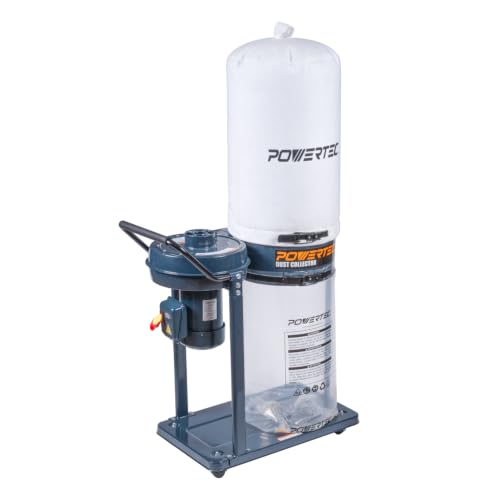
What We Like
- Compact 55-pound weight with mobile base
- Versatile 120V/240V single-phase motor
- 800 CFM suction for effective chip collection
- Quick-release clamps for easy bag emptying
Trade-offs
- 1-micron bag may require frequent cleaning for fine dust
- 800 CFM is less than larger 3HP stationary units
An 800 CFM airflow from a 1 HP motor is the core of this unit. This gives you enough suction to handle chips and sawdust from a single woodworking machine effectively. Its 55-pound weight and included casters mean you can wheel it right up to your table saw or planer. This makes it a solid fit for anyone with a smaller shop who needs to move their collection point frequently. The quick-release bag clamps and standard 1-micron filter simplify maintenance, keeping your workspace cleaner without a permanent ducting system.
The POWERTEC collector is easy to roll to different tools or store when not in use. Its compact 31-inch length and 55-pound weight make it a practical choice for smaller shops where floor space is limited. This portability comes from the included mobile base with casters. That allows you to move it as needed rather than dedicating a permanent installation spot.
Product photos
JET 1HP Dust Collector

What We Like
- Quiet 65-70 dB operation
- Four casters for easy mobility
- Permanently lubricated continuous-duty motor
- Quick-install bag for easy emptying
Trade-offs
- 30-micron filter captures larger particles only
- Single 4-inch port limits simultaneous tool hookups
Its 65 to 70 dB noise level lets you run it in a home shop without needing hearing protection for every quick cut. The 1 HP motor and 4-inch port are built for hooking up one machine at a time, making it a straightforward choice for a single-tool setup like a table saw or planer. The four casters and quick-install bag mean you can roll it over, empty it, and get back to work without fuss. This collector suits a smaller workshop where low noise and simple, portable dust control are the priorities.
This collector captures 96% of 30-micron particles, which makes it effective for handling the visible sawdust and chips from woodworking tools. Its 4-inch dust port is designed to hook up one machine at a time for focused cleaning. The trade-off for that simple operation is filtration, as the bag will let finer particles pass into the air. Think of it as a first-line defense for chips and shavings, not a complete air-scrubbing system.
Product photos
How We Evaluated Industrial Dust Collectors
Our assessment began with a thorough review of published specifications and manufacturer engineering data for each unit. We then studied expert round-ups and analyses of collector performance in shop conditions, focusing on measurable criteria like airflow (CFM), filtration rating (in microns), and motor power.
Three factors were most critical. Airflow capacity determines how well the system pulls chips and dust from your tools. Filtration fineness protects lung health by capturing invisible particles. The system’s physical footprint must also fit within your workshop. We also prioritized features that impact real-world use, such as dust bag capacity, portability, and maintenance accessibility.
This evaluation is based on a synthesis of available technical data and informed consensus to guide your purchase decision, similar to reading a detailed comparison of the best dust collector systems. You can explore specific technologies like cyclone dust collectors or learn about the differences between single-stage and two-stage systems for a better understanding of your options.
What To Look For In Industrial Dust Collectors
Choosing the right dust collector means matching its core capabilities to your shop’s specific demands, from the volume of material you generate to the space you have available.
Focus on three key specs: Airflow (CFM) determines suction power, the filtration rating (in microns) tells you how fine a particle it can trap, and the motor horsepower indicates its overall capacity and electrical demands.
Airflow (CFM)
Airflow, measured in cubic feet per minute (CFM), is the engine of any dust collection system. It’s the volume of air a collector can move, and it directly determines if it has enough suction to capture chips and dust at the tool’s source before they become airborne.
For a single tool like a table saw, you might need a certain airflow; for larger planers or sanders, look for units starting at eight hundred CFM. Reviews of top-rated dust collectors consistently show that higher CFM ratings correlate with the ability to handle more demanding machines or longer duct runs effectively.
Filtration Rating
The filtration rating tells you the smallest particle size the system can reliably capture, measured in microns. A human hair is about 40-60 microns wide. For health protection, you want a collector that traps the finer, more dangerous dust. Many systems filter down to 5 or 2 microns, which is good for general chip collection. For the cleanest air, look for HEPA filtration, which captures 99.97% of particles as small as 0.3 microns. This is especially important for materials like MDF or for those with sensitivities.
Motor Power & Electrical Requirements
Motor horsepower gives a general sense of a collector’s power class, but the real-world requirement is its voltage. Many industrial collectors over a certain horsepower require a 220-volt circuit. A 3HP, 220V unit like the best overall pick delivers strong performance but requires a dedicated workshop circuit. Smaller 1HP units often run on standard 120V outlets, offering more placement flexibility. Always check your shop’s electrical capacity before choosing a high-horsepower model.
- Confirm your shop has the correct voltage outlet (120V or 220V) for the collector you choose.
- Measure your ceiling height and floor footprint to ensure the unit will physically fit.
- Check the inlet port size (usually 4″ or 6″) to ensure compatibility with your existing or planned ductwork.
Prioritize CFM for chip removal and fine filtration for air quality, finding the right balance for your shop is key.
Industrial Dust Collectors Compared
For a side-by-side look at the ten industrial dust collectors we evaluated, the comparison table below details their key specifications.
| Product | Motor Power | Filtration | Weight |
|---|---|---|---|
| VEVOR 3HP Vortex Cone Dust Collector | 3.0 HP | 2.5 micron | 106.0 Pounds |
| JET Cyclone Dust Collector | 3 HP | 2-micron | 268.0 pounds |
| Powermatic Cyclone Dust Collector | 3 HP | 1-Micron HEPA | 370.0 pounds |
| WEN DC1300 Dust Collector | 14-amp | 5-Micron | N/A |
| DEWALT Air Filtration System | N/A | H11 HEPA filter | 20.9 pounds |
| Powermatic TurboCone Dust Collector | 3 HP | 2-Micron Canister | 268.0 pounds |
| Oasis Machinery 5HP Dust Collector | 5 HP | 30-micron bag | 135.0 pounds |
| DEWALT HEPA Dust Extractor | 15-amp | HEPA | 22.0 Pounds |
| POWERTEC 1HP Dust Collector | 1 HP | 1 micron bag | 55.0 Pounds |
| JET 1HP Dust Collector | 1 HP | 30-Micron Bag | 0.0 pounds |
Frequently Asked Questions
What is the best industrial dust collector?
The best industrial dust collector depends heavily on your specific needs. For a balance of strong suction, good capacity, and effective filtration for most medium-duty woodshops, the VEVOR 3HP Vortex Cone is our best overall pick. It offers 1550 CFM and 2.5-micron filtration in a system designed for longer operation between bag changes.
Which is the best dust collector?
The best dust collector matches your shop’s power, space, and filtration requirements. A system like the JET Cyclone suits a high-power, permanent setup with its two-stage cyclone design. The WEN DC1300 is a better fit for a budget-focused shop that prioritizes volume collection over the finest filtration.
What is the most powerful dust extractor?
In terms of raw airflow, the Oasis Machinery 5HP Dust Collector offers a substantial 2760 CFM, making it suitable for high-volume shops running multiple tools. For powerful, fine-dust extraction with automated features, the DEWALT HEPA Dust Extractor with tool-actuated control is designed for point-of-source capture.
Which dust extractor is better, Festool or Milwaukee?
This guide focuses on larger stationary industrial dust collectors for central shop systems, not portable job-site extractors like those from Festool or Milwaukee. Those brands excel in compact, tool-triggered vacuum systems for on-site carpentry, a different category from the high-CFM shop collectors covered here.
How does a cyclone dust collector work?
A cyclone dust separator uses centrifugal force. Dust-laden air enters a conical chamber at high speed, spinning around the walls. Heavier chips and particles are thrown outward and fall into a collection drum below, while the partially cleaned air exits the top to a secondary filter. This two-stage process protects the main filter from clogging with larger debris.
The Bottom Line
For most woodworking shops looking to upgrade to a serious, central dust collection system, the VEVOR 3HP Vortex Cone Dust Collector is the best overall choice. It provides the 1550 CFM airflow needed for effective chip and dust removal from multiple tools, paired with a practical 2.5-micron filtration level and ample bag capacity.
If your budget is tight and fine dust isn’t your primary concern, the high-volume WEN DC1300 offers excellent value. For shops demanding the cleanest possible air, the HEPA-filtered Powermatic Cyclone is worth the investment. Ultimately, your shop’s electrical capacity and available space are the most critical factors, always measure your ceiling height and verify your voltage before deciding on a powerful industrial collector.
