
10 Best Marble Polishers in 2026
This post contains affiliate links. As an Amazon Associate, we earn from qualifying purchases.
Based on specifications, expert guidance, and user reviews, the VEVOR Wet Polisher 800W Kit stands out overall for its variable speed control and comprehensive accessory kit. The Makita 9237C is most suitable for delicate surfaces, and the Hardin VS5 performs well in tight spaces. Selecting the correct tool depends on the task, such as polishing large floors, detailed countertops, or working on a backsplash. This guide compares ten leading options across power type, weight, and included accessories to help find the right marble polisher.
Top 10 Marble Polishers in the Market
Certain content that appears on this site comes from Amazon. This content is provided "as is" and is subject to change or removal at any time.
The Best Marble Polishers, Reviewed
VEVOR Wet Polisher 800W Kit

What We Like
- 6 variable speeds for precise material control
- Complete 7-pad kit covers coarse to fine polishing
- Bottom-mounted water injection cools and lubricates
- GFCI switch and splash guard enhance electrical safety
Trade-offs
- Requires a waterproof rubber sleeve for safe operation
- Lower top speed than the 4500 RPM Hardin VS5
An 800-watt motor paired with six speeds from 700 to 3000 RPM gives you the torque and control to handle everything from aggressive grinding to final polishing. This VEVOR kit is a workhorse for a reason. It includes a full range of pads right out of the box, so you can tackle a granite countertop or a marble tile backsplash without hunting for accessories. The integrated GFCI is a non-negotiable safety feature for any wet tool, and the bottom water feed keeps things cool with minimal splash. For a serious DIYer or a small shop looking for a single, versatile polisher that can do it all, this package delivers exceptional capability.
You pay for that versatility with some heft. At over nine pounds, it demands more arm stamina than a lighter unit like the Makita 9237C, especially on overhead or vertical surfaces. The top speed is also more conservative than some dedicated polishers. That 3000 RPM ceiling is perfect for a brilliant finish on stone, but if your work frequently involves high-speed buffing on harder materials, you might feel limited. Still, for the vast majority of projects, its balanced power, comprehensive kit, and thoughtful safety features make it the most complete and reliable choice in the category.
Product photos
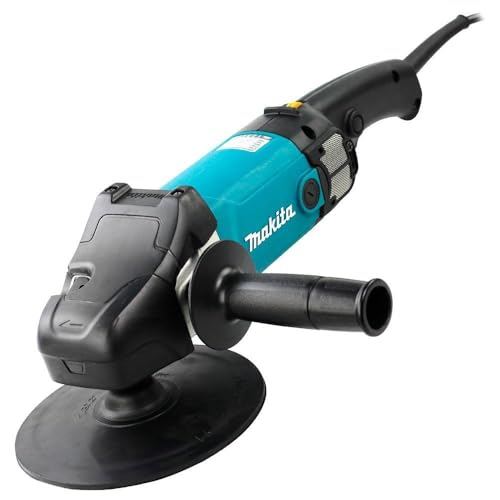
Makita 9237C Polisher
What We Like
- Soft start reduces polish fling-off
- Rubberized housing protects delicate surfaces
- Variable speed matches the application
- Maintains speed under load for consistent results
Trade-offs
- Weighs 7.5 pounds, which is heavier than several wet polishers.
- Length of 20 inches requires ample storage space.
Weighing 7.5 pounds with a fully rubberized housing, this polisher prioritizes control and surface protection over raw power. Its soft start feature provides smooth start-ups to reduce fling-off of polish or wax. A constant speed control maintains the set RPM under load, which helps prevent bogging down and potential swirl marks when pressure is applied.
The trade-off is that it’s a dry polisher, so you miss out on the dust-free, cooler cutting of a dedicated wet machine like the Makita PW5001C. Its heft also makes it less ideal for all-day vertical work on a large facade. For a dedicated shop or countertop installer focusing on final finishing and honing, however, its protective design and controlled operation make it a reliable choice for preserving the surface you’re working to perfect.
Makita PW5001C Stone Polisher

What We Like
- Electronic speed control maintains RPM under load
- Soft start prevents jerky, damaging beginnings
- Common water fitting for easy hose hookup
- Powerful 7.9 AMP motor in a 5.1 lb tool body
Trade-offs
- At 8.4 lb total, it's heavier than the 4.4 lb SDRTOP pneumatic model
- Tool only, requires separate purchase of polishing pads
- Heavier than dedicated polishers like the 3.5 lb FLEX model
Makita’s PW5001C polisher uses a 7.9 AMP motor and electronic speed control, which keeps the tool spinning at a consistent rate even when you apply pressure to stone. The feature list highlights a motor with less weight at 5.1 pounds, which can help reduce arm fatigue. This setup is geared toward demanding tasks like polishing marble and granite.
This is a dedicated wet polisher for stone, not a general-purpose tool for tasks like automotive buffing. While the FLEX Compact Wet Polisher has a listed total weight of 3.5 pounds, the Makita’s design prioritizes a powerful motor. For users whose core need is reliable power on stone surfaces, the PW5001C focuses on that capability.
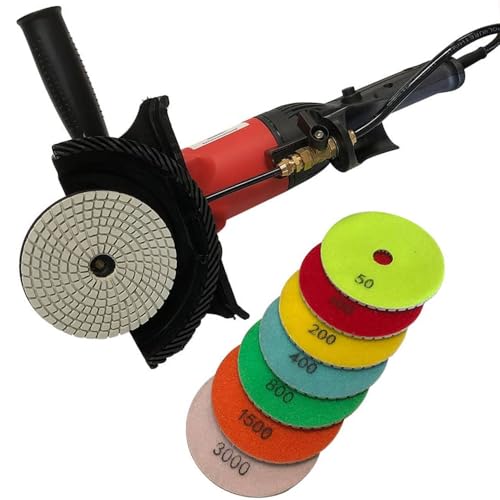
EDiamondTools Wet Polisher Kit
What We Like
- Includes seven polishing pads from coarse to fine grit
- Variable speed from 700 to 3000 rpm for control
- Comes with a rubber backing pad
- Designed for wet polishing of stone surfaces
Trade-offs
- At 10.9 pounds, it's heavier than the Makita 9237C or FLEX polisher
- Kit lacks a GFCI cord unlike the VEVOR or Hardin models
The 700 to 3000 rpm variable speed range provides control for tasks from material removal to achieving a fine finish on granite or marble. It includes seven diamond polishing pads ranging from 50 to 3000 grit, covering a full polishing sequence. This combination means the necessary components for a multi-stage job are provided together.
The trade-off for that completeness is heft; at nearly 11 pounds, it demands more arm stamina over long sessions compared to lighter options like the Makita 9237C. It also forgoes some pro-oriented safety features, notably the GFCI cord found on the VEVOR kit. For budget-conscious users who value a ready-to-run package over ultimate portability, this polisher delivers a capable and comprehensive start.
Product photos
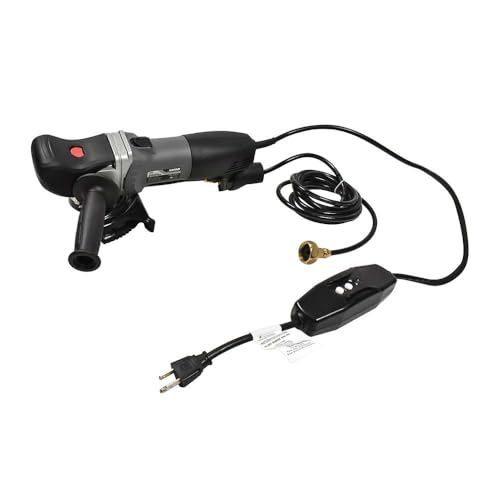
Hardin VS5 Variable Speed Wet Polisher
What We Like
- Extremely flat design for tight spaces
- Electronic soft start for smooth operation
- Constant speed control maintains performance
- GFCI cord for added job-site safety
Trade-offs
- Tool only, lacks a kit with pads or accessories
- Brass water valve requires separate plumbing setup
An extremely flat design defines the Hardin VS5, letting it maneuver into tight corners and against backsplashes where a bulkier polisher would not fit. This makes it a specialist’s choice for detailed countertop work and processing hard-to-access welding seams. Its 4-pound weight and variable speed control from 1000 to 4500 RPM add to its finesse, while constant speed control helps maintain consistent performance under load.
That focus on finesse comes with a trade-off. While its 800W motor is respectable, you are getting just the polisher itself. You will need to source your own polishing pads and connect its brass water feed valve to a supply, which adds setup time before your first pass.
Product photos
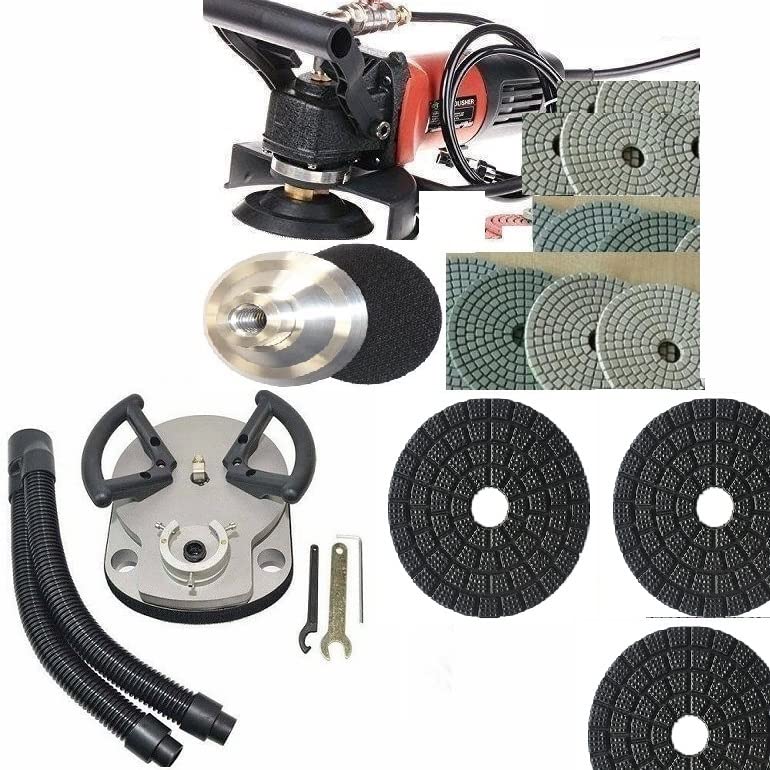
Asia Pacific Construction Planetary Kit
What We Like
- High-power 1000W motor for demanding jobs
- Complete planetary system in one kit
- Extensive 42-piece diamond pad set
- Includes both glaze buffing and polishing pads
Trade-offs
- No weight specified, likely heavy for a portable system
- Planetary system adds complexity for simple edge work
A 1000-watt motor paired with a Triad planetary plate makes this kit uniquely suited for large, flat surfaces like floors and countertops. The planetary action distributes pressure evenly across three spinning heads, which is critical for achieving a consistent, mirror-like finish on marble or granite without leaving swirl marks. This is the core reason it stands out for floor systems. The sheer volume of included pads, 42 diamond resin discs plus three glaze buffing pads, means you can tackle a full polishing sequence from coarse grinding to final shine without stopping to source more consumables.
That comprehensive approach comes with a trade-off in portability and simplicity. The planetary base and powerful motor make this a dedicated station for big jobs, not a tool you’d casually carry up a ladder for a small backsplash. For focused, smaller-scale polishing tasks, a more straightforward tool like the Makita PW5001C Stone Polisher might be easier to maneuver. The Asia Pacific Construction kit delivers serious capacity, but you need the workspace to match its ambition.
Product photos
SDRTOP Air Wet Stone Polisher

What We Like
- Pneumatic design eliminates electric shock risk
- Includes hoses, wrench, and basic accessories
- Lightweight at 4.4 pounds for reduced fatigue
Trade-offs
- Requires a 16 CFM air compressor to operate
- Single speed limits control for different materials
Weighing just over four pounds, this polisher is built for all-day use without wearing out your arms. Its pneumatic motor is the key feature, making it completely safe for wet environments and eliminating any worry about dust or electrical hazards. That combination of featherweight handling and inherent safety makes it a standout choice for professional fabricators who spend hours at the polishing station, where comfort and reliability are non-negotiable.
Because it’s pneumatic, this polisher requires a compressor capable of 16 CFM, which means smaller shop compressors won’t keep up. It also runs at a fixed 5500 RPM, so you don’t have the adjustable speed control found on electric models like the Hardin VS5 for adapting to different materials. Its design focuses on the core tasks of wet polishing stone, granite, and marble.
Product photos
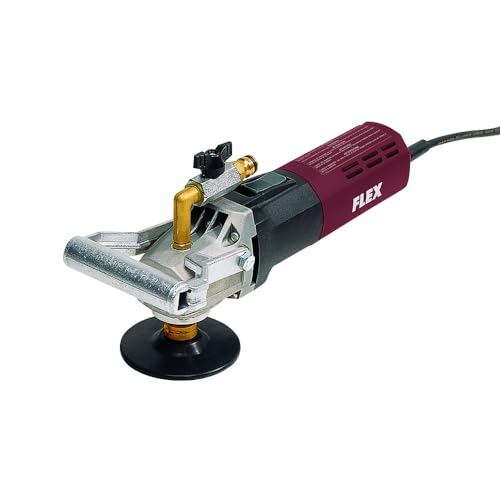
FLEX Compact Wet Polisher
What We Like
- Central water feed for wet grinding
- Integrated GFCI protector in the cord
- Extremely lightweight at 3.5 pounds
- Quality shut-off carbon brushes for motor protection
Trade-offs
- Single speed offers no RPM adjustment for different tasks
- Requires separate purchase of Velcro diamond polishing pads
- Lacks variable speed control found in many competitors
The FLEX Compact Wet Polisher weighs 3.5 pounds, making it lighter than the 4.0-pound Hardin VS5 and much lighter than the 10.9-pound EDiamondTools kit, so it’s easier to handle on vertical surfaces or overhead edges. Its cord has an integrated GFCI circuit breaker for safety in wet conditions, and the central water feed is designed for cooling during the grinding of granite and marble. The single-speed operation and motor-protecting carbon brushes point toward a design focused on core wet polishing tasks.
The trade-off for that featherweight design is a single-speed motor. You won’t have the fine control over RPMs that a variable-speed model like the VEVOR offers, which can be crucial for different stages of polishing or working with sensitive materials. It’s a focused tool: if your workflow demands one set speed and maximum agility, this FLEX excels. If you need to dial in the rotation for everything from aggressive grinding to final buffing, you’ll find its operation limiting.
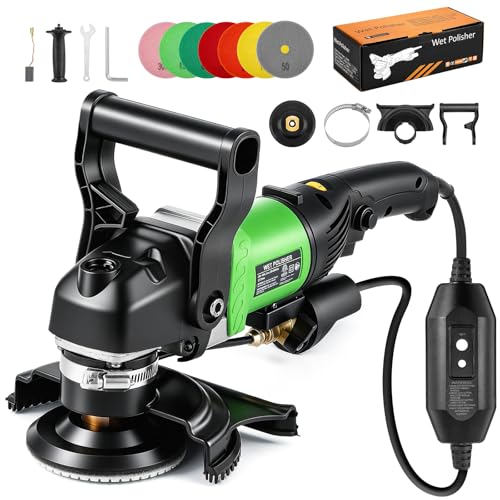
Bonvoisin Wet Polisher Kit
What We Like
- 6 adjustable speeds via one-touch control
- Ergonomic grip and lock trigger for fatigue reduction
- Complete kit with pads, wrenches, and GFCI plug
- Dust-free wet polishing with 3-hole water system
Trade-offs
- No weight specified for fatigue assessment during overhead work
- 4-inch pad size covers less area per pass than 5 or 7-inch models
With a speed range that starts at a true 700 RPM, the Bonvoisin polisher gives you the precise, gentle control needed for delicate tasks like honing marble or smoothing a concrete edge without chattering. That low-end authority, combined with its lock trigger and two ergonomic handles, makes it a natural fit for anyone tackling detailed fabrication or restoration work where finesse trumps raw speed. It’s built for the long haul on a countertop project, not a quick driveway gloss.
Its maximum speed of 3000 RPM is adequate for a high shine, though it falls short of the peak RPMs some other polishers offer for aggressively polishing very hard granite. You trade some top-end force for exceptional low-speed stability. For most marble and tile work, where controlled progression through the grits is key, that’s a smart compromise. The included 7-pad set also means you can start working right away, which is a practical touch.
Product photos
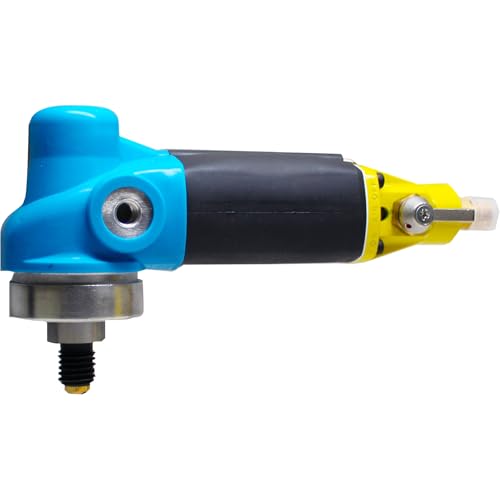
Alpha Professional Tools AIR-850M Marble Polisher
What We Like
- Extremely lightweight at 2.8 pounds
- Central water-feed works in any position
- Ergonomic design for better maneuverability
Trade-offs
- Tool only, requires separate air compressor
- Pneumatic power limits portability away from shop air
Weighing 2.8 pounds, the Alpha AIR-850M is significantly lighter than most electric polishers, so it reduces arm fatigue during long sessions or work on vertical surfaces. Its central water-feed system delivers ample water regardless of the tool’s position, maintaining consistent lubrication on flat countertops or angled backsplashes. This pneumatic polisher is built for stone fabricators and installers who prioritize a lightweight tool for intricate, all-day jobs.
You are tethered to an air compressor, so this polisher won’t work on a job site without a reliable air supply. Compared to a corded electric option, you gain lightness but lose the flexibility of plugging into a standard outlet and having adjustable speed control. For a dedicated workshop where air is plentiful and ergonomics are the priority, it is a specialized, purpose-built tool.
Product photos
How We Evaluated Marble Polishers
We analyzed manufacturer specifications and technical data to understand the core capabilities of each machine, such as motor power, speed ranges, and included accessories. We then reviewed professional round-ups and fabrication guides to identify the key criteria that impact real-world results on stone surfaces, especially for polishing granite surfaces. A key focus was cross-referencing the advertised strengths against patterns in owner feedback regarding durability, control, and safety features like integrated GFCI plugs.
The most important factors for this category are power type (electric vs. Pneumatic), speed control, and weight. Electric tools offer portability but require water management to prevent electrical hazards, while pneumatic polishers are inherently safe for wet work but tether you to a large air compressor. Variable speed control is non-negotiable for moving through different grits and handling various materials. Finally, tool weight directly impacts operator fatigue, especially for overhead or detail work like polishing with a rotary tool on edges.
This evaluation is based on product specifications and aggregated user feedback. Individual results on specific marble types can vary. For example, the performance of a mini polisher for detail work depends on the operator’s technique and the stone’s condition.
What To Look For In Marble Polishers
Choosing the right polisher requires matching the tool’s capabilities to your specific project scale and material. A heavy-duty planetary system is overkill for a kitchen backsplash, just as a lightweight detail polisher will struggle with a large concrete floor.
Key buying criteria include speed control for moving through polishing stages, weight for fatigue management, and whether it includes a full kit of pads. The power source, electric or pneumatic, determines setup and safety considerations.
Power Type & Safety
The decision between electric and pneumatic polishers shapes your workflow. Electric models provide good portability for sites without compressed air, but they require effective water-management systems. Features to look for include bottom- or central-water feeds to cool the pad and control dust, along with integrated GFCI protection in the cord to prevent electrical shock.
Pneumatic (air-powered) polishers eliminate all shock risk in wet environments and are typically lighter, making them ideal for marathon shop sessions. Their major limitation is requiring a high-capacity air compressor, often 16 CFM or more, which can be a significant additional investment.
Speed Control & Motor Power
Consistent, adjustable speed is critical for a professional finish on marble. Look for variable speed dials, often ranging from under 1000 RPM for delicate work up to 3000 RPM or higher for aggressive material removal. Electronic speed control that maintains the set RPM under load is a premium feature that ensures uniform results across the entire surface. Motor power, measured in watts or amps, generally indicates the tool’s ability to handle demanding material removal without bogging down, but it must be paired with good ergonomics to be usable.
Weight & Ergonomics
Polishing is a hands-on, often prolonged task where tool weight translates directly to arm and shoulder fatigue. Lightweight models under 5 pounds are a blessing for vertical surfaces, overhead work on backsplashes, or detailed edge polishing. Heavier tools, often 8 pounds or more, provide stability for large, flat floor areas but become cumbersome quickly. Ergonomic considerations include a comfortable grip, a lock-on trigger for continuous operation, and a balanced design that doesn’t strain your wrist during long sessions.
Kit Completeness & Pad Size
A “tool only” purchase means you must source compatible backing pads, polishing pads, and wrenches separately, adding cost and research time. Complete kits bundle everything needed to start polishing, typically including a rubber backing pad and a sequence of diamond-impregnated pads from coarse to fine grits. Pad diameter affects your work speed; a 5-inch pad covers more area per pass than a 4-inch pad but is less maneuverable in tight corners.
- Ensure the included pads cover the full grit range you need, from material removal to final polish.
- Check that the kit includes a compatible wrench for changing pads and any necessary hose fittings.
- Verify the backing pad system (typically Velcro or threaded) matches your chosen polishing pads.
For most DIYers, a complete kit offers the best value and immediate readiness.
Marble Polishers Compared
The table below summarizes the key specifications and ideal use cases for each of our top picks.
| Product | Power (Watts/Type) | Speed Range (RPM) | Weight (pounds) |
|---|---|---|---|
| VEVOR Wet Polisher 800W Kit | 800W | 700-3000 RPM | 9.2 |
| Makita 9237C Polisher | N/A | N/A | 7.5 |
| Makita PW5001C Stone Polisher | 7.9 AMP | N/A | 8.4 |
| EDiamondTools Wet Polisher Kit | N/A | 700-3,000 rpm | 10.9 |
| Hardin VS5 Variable Speed Wet Polisher | 800W | 1000-4500 RPM | 4.0 |
| Asia Pacific Construction Planetary Kit | 1000 Watt | 1000-4500 RPM | N/A |
| SDRTOP Air Wet Stone Polisher | Pneumatic | 5500 RPM | 4.4 |
| FLEX Compact Wet Polisher | N/A | Single speed | 3.5 |
| Bonvoisin Wet Polisher Kit | 800W | 700 to 3000 RPM | N/A |
| Alpha Professional Tools AIR-850M Marble Polisher | Pneumatic | N/A | 2.8 |
Frequently Asked Questions
What is the best marble polisher?
The best overall marble polisher in our evaluation is the VEVOR Wet Polisher 800W Kit. It wins for its strong 800W motor, six variable speeds for precise control, and the inclusion of a complete 7-pad kit. It’s a versatile, well-equipped choice suitable for most stone, concrete, and tile polishing tasks for DIYers and small shops.
What is the best marble polishing machine for home use?
For home use, we recommend prioritizing safety and a complete, ready-to-use kit. The EDiamondTools Wet Polisher Kit is a strong value pick that includes all necessary pads and offers variable speed control. Its design for wet polishing minimizes dust, making it safer and cleaner for a home garage or workshop environment.
What is the best way to polish marble?
The best way to polish marble involves a multi-stage process using progressively finer abrasives, always with water for cooling and lubrication to prevent damage. Start with a coarse diamond pad to remove deep etches or scratches, then move through medium and fine grits, finishing with a high-gloss polishing pad. Using a variable-speed wet polisher gives you the control needed for each stage.
Is a polisher the same as a buffer?
No, they are different tools for different purposes. A marble polisher is designed for material removal and surface refinement using diamond-impregnated pads, typically with a water feed. A buffer is generally used to apply and spread waxes or creams to an already-finished surface to enhance shine, not to correct etches or scratches in the stone itself.
Can you polish marble by hand?
Yes, you can polish small spots or etches on marble by hand using a specialized polishing powder or cream and a soft cloth. This method is practical for treating a cup ring on a countertop. For larger areas like an entire vanity top or floor, a mechanical polisher is necessary to achieve a uniform, professional-grade finish without excessive labor.
The Bottom Line
For most users tackling stone polishing, the VEVOR Wet Polisher 800W Kit is the best overall choice due to its balanced power, excellent speed control, and the convenience of a complete accessory kit. It’s ready to handle a wide range of materials right out of the box.
If your primary concern is protecting sensitive, pre-polished marble from surface damage, the Makita 9237C Polisher with its soft start and rubberized housing is the tool to choose. For those on a tight budget who still want a full kit, the EDiamondTools Wet Polisher Kit provides exceptional value.
Ultimately, the most important factor is matching the tool’s power source, weight, and control to your specific project. A lightweight pneumatic polisher is perfect for a professional shop, while a variable-speed electric model offers the versatility needed for a DIYer’s varied tasks.
