
10 Best Miter Saws For Homeowner in 2026
This post contains affiliate links. As an Amazon Associate, we earn from qualifying purchases.
For homeowners tackling projects from deck framing to interior trim, the Skil 10-Inch Dual Bevel Sliding Compound Miter Saw is our best overall pick for its powerful motor, dual-bevel versatility, and precise LED cut-line guide. Our best cordless pick goes to the Ryobi ONE+ 18V, while the DOVAMAN 8-1/4-Inch model offers excellent budget-friendly value.
Choosing the right saw means matching its cutting capacity and features to your most common tasks, not just buying the biggest model available. We researched specifications, manufacturer data, expert round-ups, and patterns in owner feedback to identify ten saws that balance power, portability, and precision for typical home projects.
Top 10 Miter Saws For Homeowner in the Market
Certain content that appears on this site comes from Amazon. This content is provided "as is" and is subject to change or removal at any time.
The Best Miter Saws For Homeowner, Reviewed
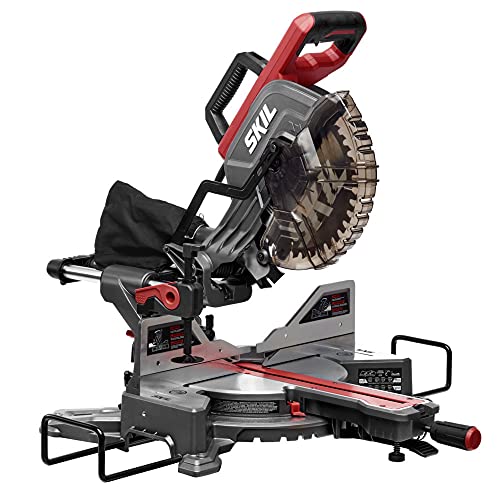
Skil 10-Inch Dual Bevel Sliding Compound Miter Saw
What We Like
- Powerful 15-amp motor for fast cuts
- Dual bevel with four positive stop positions
- LED shadow line for high precision alignment
- Large 2×12 crosscut capacity at 90 degrees
Trade-offs
- At 39.4 lb, it's heavy for frequent job site moves
- 35.4-inch length requires a sizable workbench
A 2×12 cutting capacity at 90 degrees means this saw can handle the thick dimensional lumber common in deck and framing projects without flipping the board. That 15-amp motor spins the blade at 4800 RPM, giving you clean, quick cuts through pressure-treated pine or hardwoods. This combination of power and size makes it a serious contender for a homeowner tackling major renovations or building outdoor structures. The dual bevel feature and positive stops at common angles streamline complex crown molding work, saving you setup time on every cut.
This saw’s capability requires a significant workspace commitment, with a length of 35.4 inches and a weight of 39.4 pounds. You’ll want a dedicated stand for it in a shop or garage rather than planning to move it frequently. While the cordless Ryobi ONE+ model is far easier to transport, the Skil is built for stationary setups where cutting larger material accurately is the goal.
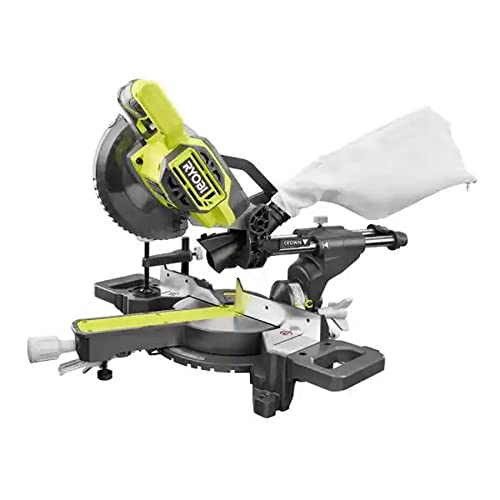
Ryobi ONE+ 18V Cordless 7-1/4-Inch Sliding Compound Miter Saw
What We Like
- Cordless for complete portability
- Excellent battery life per charge
- Works with all ONE+ 18V batteries
- Good dust collection for indoor use
Trade-offs
- Smaller 7-1/4-inch blade limits capacity
- Single bevel design restricts complex cuts
- Less capable than larger corded models
Up to 800 cuts per charge means you can leave the extension cord in the garage and work anywhere, from a backyard deck to a finished room. That cordless freedom, combined with its good dust collection, makes this Ryobi a natural fit for the homeowner tackling indoor trim work or quick outdoor projects. It’s a smaller, more affordable battery-powered saw that delivers solid performance for the majority of common DIY tasks.
The trade-off is in its capability. The 7-1/4-inch blade and single bevel design mean it can’t match the crosscut capacity or the complex compound angles of a full-sized sliding saw like the Skil 10-Inch Dual Bevel. You’re buying ultimate convenience, not maximum power. For a homeowner whose projects are more about fitting crown molding than framing a shed, that’s often a worthwhile compromise.
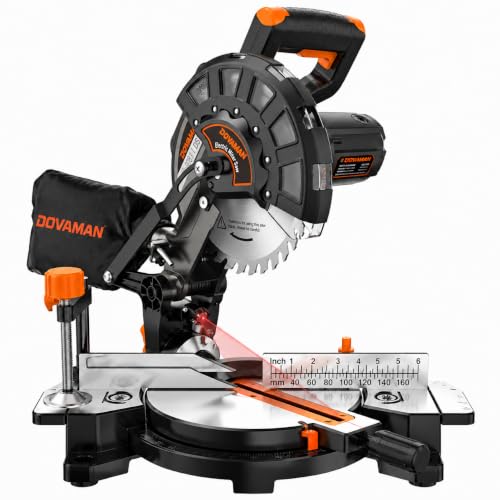
DOVAMAN 8-1/4-Inch Compound Miter Saw
What We Like
- Integrated laser guide and LED light for cut-line visibility.
- Compact 19-pound weight and small footprint for easy transport.
- Dual safety switches and an ambidextrous design.
- Comes ready-to-use with blade, clamp, and dust bag.
Trade-offs
- Single-bevel design lacks left-side tilting for complex crown molding.
- Fixed, non-sliding cutting action reduces width capacity versus sliders.
That compactness, paired with its 1700-watt motor and laser guide, makes it a logical fit for a homeowner tackling basic trim, small framing projects, or DIY furniture builds where a full-size saw is overkill. It’s designed for straightforward cuts in common lumber without demanding a permanent workshop footprint.
The trade-off for that portability is in the cut capacity. For users who regularly need to cut wider dimensional lumber, a larger 10-inch model like the WEN sliding compound miter saw offers significantly greater capacity, though it sacrifices this unit’s easy portability.
Product photos
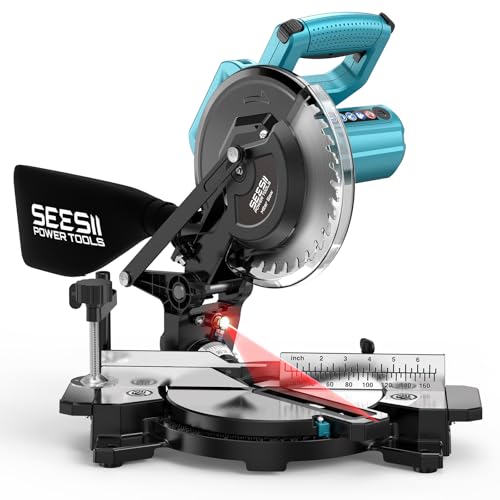
SEESII 8-1/4-Inch Compound Miter Saw
What We Like
- Integrated laser guide for precise cutlines
- Compact footprint fits in tight workshops
- Includes dust bag and clamping blocks
- Tilt protection enhances stability
Trade-offs
- 8-1/4 inch blade limits cut depth on thick stock
- Single bevel design requires flipping wide boards
- No sliding mechanism reduces crosscut capacity
With its 20.9-inch length, this saw is notably more compact than many 10-inch models like the larger Skil or WEN, which helps it fit into tight home workshops or onto a portable bench. The integrated laser guide projects a clear cutline onto the workpiece, which helps eliminate guesswork for tasks like trim or picture frames. Its 4900 RPM motor is described as cutting through hardwoods, lumber, and decking, and the kit includes clamps and a dust bag so you have the essentials to begin a project.
An 8-1/4-inch blade and a single-bevel design provide specific cutting capacities, such as 115mm at 90 degrees. This is less than the cutting width offered by sliding models like the Ryobi ONE+ cordless saw, which can move its blade forward. For projects involving very wide boards, a sliding saw would have a clear advantage. Within its designed range for trim, framing, and decorative work, however, the scaled fence and versatile angle settings aim to deliver precision.
Product photos
MarvTool 10-Inch Compound Miter Saw
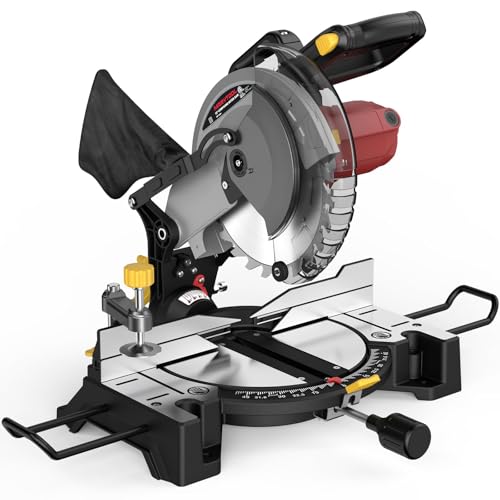
What We Like
- Powerful 15-amp motor for efficient cutting
- Very lightweight and portable at 20.5 pounds
- Compact design with secure head lock for storage
Trade-offs
- Single bevel design limits compound cuts to one side
- Non-sliding design restricts crosscut capacity
At just 20.5 pounds, the MarvTool is one of the easiest 10-inch saws to lift onto a workbench or carry to a job site. This makes it a fantastic choice for the homeowner who needs solid cutting power for trim, decking, or DIY projects but doesn’t want a heavy, stationary tool. It’s a straightforward, capable saw built for frequent moving and simple storage.
That portability comes with a capacity limitation. As a single-bevel, non-sliding saw, it can’t handle wide boards or complex crown molding cuts from both sides like a sliding dual-bevel model. For bigger projects, you’d step up to something like the heavier Skil MS6305-00. But for the vast majority of basic crosscuts and miters, this MarvTool delivers reliable performance without the bulk, which is exactly why it stands out in its class.
Product photos
WEN 10-Inch Dual-Bevel Sliding Compound Miter Saw
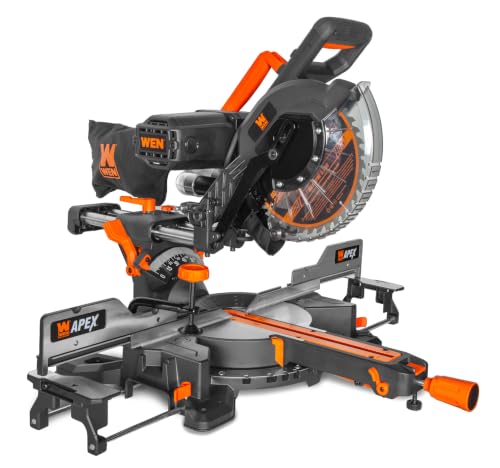
What We Like
- Dual-bevel design for compound angles either way
- LED cutline illuminates the blade path
- Fan-assisted dust collection keeps area cleaner
- Sliding system handles wide boards
Trade-offs
- Large footprint at 37.8 inches wide needs substantial bench space
- Corded operation limits placement versus battery-powered options
A 12.2-inch crosscut capacity is the headline here, letting you slice through wide shelving boards or crown molding flat against the fence in a single pass. That sliding action, paired with a dual-bevel design that tilts 45 degrees in both directions, makes this a serious tool for a homeowner tackling complex trim projects or building larger outdoor structures. The integrated LED cutline and a dust collection system that actually pulls in debris are thoughtful additions that address common workshop frustrations.
You pay for that capacity with a substantial footprint. This saw demands a dedicated, sturdy work surface, and its corded nature means you’ll need an outlet nearby. For general-purpose crosscuts on smaller stock, a more compact single-bevel model like the VEVOR 10-Inch would save considerable space. But if your project list regularly includes wide boards, the WEN’s sliding design and bevel flexibility justify its bench-hogging presence.
Product photos
VEVOR 10-Inch Compound Miter Saw
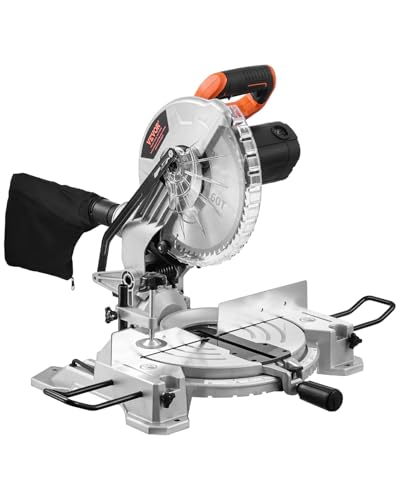
What We Like
- Lightweight aluminum base for easier transport
- Powerful 15-amp, 5000 RPM motor
- LED guide system for accurate cut lines
- Dual-button activation for safety
Trade-offs
- Single-bevel design limits right-side angled cuts
- Non-sliding head restricts cut width capacity
Weighing 24.2 pounds, this saw uses a lightweight cast aluminum base, which makes it easier to carry from a workbench to a project site than heavier models. The 15 amp motor provides the power for demanding tasks like cutting hardwood or composite decking, while the LED guide system projects a clear line to help with accurate alignment. These features combine for a tool suited to home renovation projects or detailed wood crafts.
As a non-sliding compound miter saw, its crosscut capacity is defined by its 10-inch blade’s reach. This design keeps the tool’s footprint more compact, at 22.4 inches long, which can be an advantage in a crowded workshop. For wider cuts, a sliding model like the 35.4-inch-long Skil would be required, which also increases the tool’s weight to 39.4 pounds.
Product photos
Ryobi 18V ONE+ Cordless 7-1/4-Inch Compound Miter Saw Kit
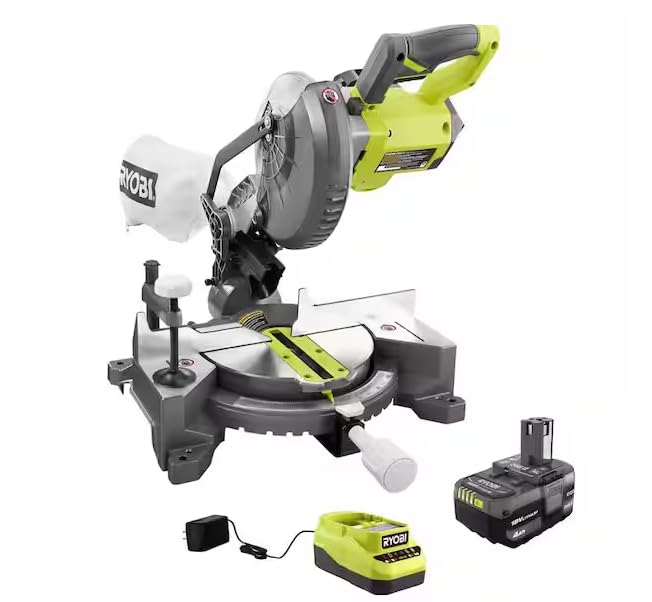
What We Like
- Cordless design for ultimate portability
- Compact 24-inch length fits in tight spaces
- Part of the versatile ONE+ battery ecosystem
Trade-offs
- 7-1/4-inch blade limits cut capacity versus 10-inch saws
- Compound-only design lacks sliding or dual-bevel features
A cordless 7-1/4-inch compound miter saw means you can make precise cuts anywhere on your property without hunting for an outlet. That freedom is invaluable for deck builders, fence installers, or anyone working far from their workshop. This Ryobi kit suits the homeowner who already owns ONE+ batteries and values moving quickly between jobs over maximum cutting capacity. Its compact 24-inch footprint is easy to store and transport, making it a practical choice for garages and trucks where space is tight.
A cordless miter saw with a 7-1/4-inch blade cannot handle the wider boards a 10-inch sliding saw tackles, limiting this tool to trim, framing lumber, and lighter duty work. For projects involving wide crown molding or thick dimensional lumber, a corded sliding compound miter saw will provide more versatility and power without battery runtime concerns.
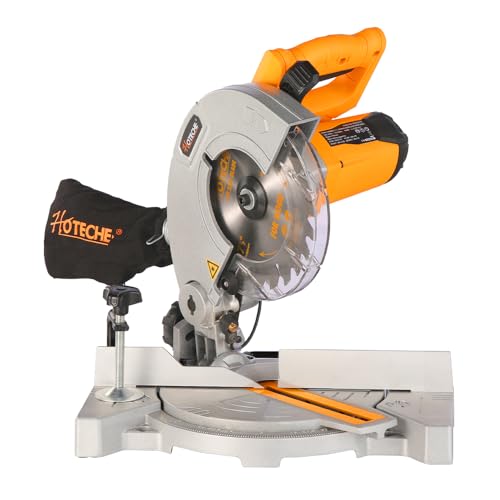
Hoteche 7-1/4-Inch Compound Miter Saw
What We Like
- Built-in laser guide for cut alignment
- Includes extension bars for wider workpieces
- Lightweight aluminum base with rubber feet
- Complete kit with dust bag and maintenance brushes
Trade-offs
- Single bevel design limits compound cuts from one side
- 7-1/4-inch blade limits depth versus 10-inch models
This saw uses a 7-1/4-inch blade and has a compact, lightweight build, so it’s easy to move from the garage to the deck. The integrated laser and preset miter stops at common angles like 15 and 22.5 degrees let you tackle trim and picture frames quickly without constant measuring. It’s a solid fit for a homeowner who needs clean, accurate cuts for indoor projects but doesn’t want a heavy, stationary tool.
This miter saw is built for North American workshops, running on standard 110-120V power for plug-and-play use at home or on a job site. Its 7.5A copper motor spins the blade at 5000 RPM, which provides enough torque to cut through hardwoods, PVC, and soft metals like aluminum trim without bogging down. The sliding arm mechanism is integral to the design, enabling wider crosscuts than a fixed-blade saw could manage.
Product photos
Makita 18V LXT Cordless Miter Saw

What We Like
- Ultra-lightweight for easy portability
- Direct-drive brushless motor for longevity
- Automatic speed change for optimal cutting
Trade-offs
- Tool only: battery and charger sold separately
- 6-1/2" blade limits stock width capacity
- Compact size not suited for large crown molding
This cordless miter saw weighs only 14.6 pounds with a battery installed, making it exceptionally easy to carry and set up on a jobsite. It runs on Makita’s 18V LXT battery platform, delivering power comparable to a corded model and capable of up to 270 cuts per charge on common baseboard. The brushless motor is designed to run cooler and more efficiently for longer tool life, and its automatic speed change technology adjusts to the material for smoother cuts.
The trade-off is its compact 6-1/2-inch blade, which simply can’t handle the wider boards a 10-inch sliding saw like the Skil MS6305-00 can. You’re also buying into a system, as it’s a bare-tool. For a homeowner already invested in Makita’s 18V lineup, this saw is a brilliant, purpose-built extension. For someone needing to cut wide casing or crown, a larger corded model will be a more versatile first saw.
How We Evaluated Miter Saws For Homeowner
This guide is based on an analysis of manufacturer specifications, product documentation, and expert reviews from professional tool sites. Patterns in verified owner feedback were also examined to understand real-world performance and common trade-offs.
Key criteria included cutting capacity, specifically crosscut width and depth for common lumber sizes, along with portability factors like weight and footprint for home workshops. We prioritized features that enhance accuracy and ease of use for DIYers, such as laser guides, positive miter stops, and intuitive controls.
The main limit of a research-based evaluation is that we cannot verify the feel of a cut or the long-term durability of components like sliders and belts. Our findings highlight the features and specifications that owners and experts consistently report as important.
What To Look For In Miter Saws For Homeowner
Selecting the right miter saw involves more than just blade size. You need to consider the types of projects you’ll tackle most often, the space you have available, and how you’ll power the tool. AĠgreatĠguideĠtoĠbuyingĠaĠmiterĠsawĠcanĠwalkĠyouĠthroughĠtheseĠfundamentals.
Focus on the crosscut capacity for your typical lumber, the saw’s weight and footprint for your workspace, and whether cordless convenience is worth a trade-off in raw cutting power.
Blade Size & Cutting Capacity
Blade diameter directly determines a saw’s maximum cut depth and width. A 10-inch blade can typically cut a 2×6 vertically or a 2×12 lying flat in a single pass, which covers most framing and decking tasks. Smaller 7-1/4-inch blades are excellent for lightweight trim and finish work but will struggle with wider boards.
The sliding mechanism on a compound miter saw extends the crosscut capacity dramatically, allowing you to cut wider material by moving the blade forward. For cutting thick crown molding, check the saw’s vertical and nested crown molding capacity specs.
Power Source & Portability
Corded saws offer consistent, unlimited power and are generally more affordable, making them ideal for a stationary workshop setup. OurĠresearchĠonĠtheĠbestĠcordedĠmiterĠsawsĠhighlightsĠmanyĠpowerful,ĠreliableĠplug-inĠmodels. Cordless models provide ultimate portability for jobs without easy power access, but their runtime is limited by battery capacity.
Weight is a crucial portability factor; a saw under 25 pounds is much easier to move from a garage shelf to a work site than a 40-pound model. A compact footprint is equally important for a miter saw in a small workshop.
Accuracy & Ease-of-Use Features
Precision hinges on the saw’s ability to lock squarely at common angles. Look for positive miter detents at 0, 22.5, 31.6, and 45 degrees for trim work. A dual-bevel design lets you tilt the blade left and right without flipping the workpiece, a major time-saver for complex crown molding.
Laser guides or LED shadow lines project a cut line onto your material, vastly improving alignment over basic notch-and-blade sighting. Well-placed, easy-to-reach locks for miter and bevel adjustments make setup faster and more accurate. Learning the basics of using a miter saw for safe and accurate operation is essential no matter which saw you choose.
- Check the saw’s maximum crosscut width at 90 degrees against the widest boards you plan to cut.
- Measure your available bench space against the saw’s length and width specifications.
- Ensure the miter and bevel locks are easy to operate from your normal working position.
A good rule of thumb: if you mostly cut 2x4s and trim, a compact 10-inch compound saw is sufficient; if you regularly handle 2x12s for decking, you’ll need a sliding model.
Miter Saws For Homeowner Compared
The following comparison table puts the key specifications of our ten picks side-by-side, making it easier to see the trade-offs between blade size, power, weight, and special features.
| Product | Motor Power | Blade Size | Bevel Type |
|---|---|---|---|
| Skil 10-Inch Dual Bevel Sliding Compound Miter Saw | 15 Amp, 4800 RPM | 10 inches | Dual |
| Ryobi ONE+ 18V Cordless 7-1/4-Inch Sliding Compound Miter Saw | N/A | 7-1/4 inches | N/A |
| DOVAMAN 8-1/4-Inch Compound Miter Saw | 1700W, 4900 RPM | 8-1/4 inches | 0-45° |
| SEESII 8-1/4-Inch Compound Miter Saw | 4900 RPM | 8-1/4 inch | Single bevel 0-45° |
| MarvTool 10-Inch Compound Miter Saw | 15 amp, 5000 RPM | 10-inch | Single bevel 0-45° |
| WEN 10-Inch Dual-Bevel Sliding Compound Miter Saw | 15-amp | 10-Inch | 45° left and right |
| VEVOR 10-Inch Compound Miter Saw | 15 Amp | 10-inch | Single bevel, 0-45° |
| Ryobi 18V ONE+ Cordless 7-1/4-Inch Compound Miter Saw Kit | N/A | 7-1/4 inches | N/A |
| Hoteche 7-1/4-Inch Compound Miter Saw | 7.5A, 5000 RPM | 7-1/4-Inch | Single bevel 0-45° |
| Makita 18V LXT Cordless Miter Saw | N/A | 6-1/2" | Dual-Bevel |
Frequently Asked Questions
What is the best mitre saw for homeowners?
The best miter saw for most homeowners is a 10-inch dual-bevel sliding compound model, like our top pick, the Skil 10-Inch. This type offers the best balance of power for cutting dimensional lumber, versatility for trim work, and a crosscut capacity wide enough for common deck boards and shelving, all at a mid-range price point.
What is the best mitre saw for home DIY?
For general home DIY, prioritize a saw with a clear cut-line guide (laser or LED), positive miter stops at common angles, and enough power to handle both rough framing and finer trim cuts. A sliding mechanism is highly recommended if your projects involve wider boards, as it dramatically increases the saw’s usefulness without requiring a massive 12-inch blade.
What is the best brand of mitre saw?
There is no single “best” brand, as different manufacturers excel in different areas. For homeowners, brands like Skil and Ryobi often offer the best value with strong feature sets. More professional-grade brands like DeWalt, Bosch, and Makita are known for exceptional durability and precision but often come at a premium cost.
Which is better, compound or sliding miter saw?
A sliding miter saw is almost always a better choice for homeowners than a basic compound miter saw. The sliding action allows the blade to move forward, greatly increasing the width of material you can cut in a single pass. This makes a sliding saw far more versatile for projects like building a deck, where you’ll frequently cut wide boards.
How do I choose between a corded and cordless miter saw?
Choose a corded miter saw for a dedicated workshop with power access. This option gives you maximum, uninterrupted cutting power at the lowest cost. Choose a cordless model if you value portability for projects around the yard, shed, or house where running an extension cord is inconvenient. Just be prepared to manage battery life and accept a slight reduction in raw cutting capacity.
The Bottom Line
For homeowners who need a powerful, accurate saw for building decks, framing sheds, or installing interior trim, the Skil 10-Inch Dual Bevel Sliding Compound Miter Saw is our best overall recommendation. It handles wide lumber with ease and offers the dual-bevel convenience that simplifies complex angle cuts.
If your primary need is cordless convenience for lighter work, the Ryobi ONE+ 18V is the clear choice. For those with very tight spaces or a strict budget, the DOVAMAN 8-1/4-Inch model provides capable performance in a compact package.
Ultimately, the single most important factor is matching the saw’s crosscut capacity and features to the specific types of projects you undertake most often in your home workshop.
