
10 Best Corded Miter Saws in 2026
This post contains affiliate links. As an Amazon Associate, we earn from qualifying purchases.
Our best overall corded miter saw is the DEWALT DWS780-QS, thanks to its powerful 15-amp motor and precise XPS LED shadow line alignment. For those needing to cut large crown molding, the DEWALT DWS779 is our high-capacity pick, while the Metabo HPT C10FCG2 wins for lightweight portability.
Choosing the right miter saw means balancing power, precision, and the physical space you have available. Heavy-duty saws excel in stationary shops, but their size and weight can be a burden on the go. We researched specifications, manufacturer details, and patterns in expert round-ups and owner feedback to bring you this focused list of 10 top-performing saws.
Top 10 Corded Miter Saws in the Market
Certain content that appears on this site comes from Amazon. This content is provided "as is" and is subject to change or removal at any time.
The Best Corded Miter Saws, Reviewed
DEWALT DWS780-QS Corded Miter Saw

What We Like
- XPS LED shadow line for precise alignment
- Powerful 15 amp motor for heavy-duty work
- Efficient dust collection system
Trade-offs
- At 54.7 pounds, it's a heavy saw to move around frequently.
- Its 48-inch length requires significant workshop space.
With a 15-amp motor turning at 3,800 rpm, this saw is designed for heavy-duty applications where extended power is needed. Its double-bevel design and XPS LED shadow line technology provide adjustment-free cut line indication for better accuracy. The integrated dust collection system captures over 75% of generated dust, which helps maintain visibility and a cleaner workspace during operation.
The trade-off for that capability is bulk and weight. At nearly 55 pounds, you’ll want a dedicated stand or workstation, not a spot in the truck for daily hauling. For a contractor needing a true stationary tool, this is a clear choice. If portability is the higher priority, a model like the 27-pound Makita LS1040 sacrifices some capacity for much easier transport.
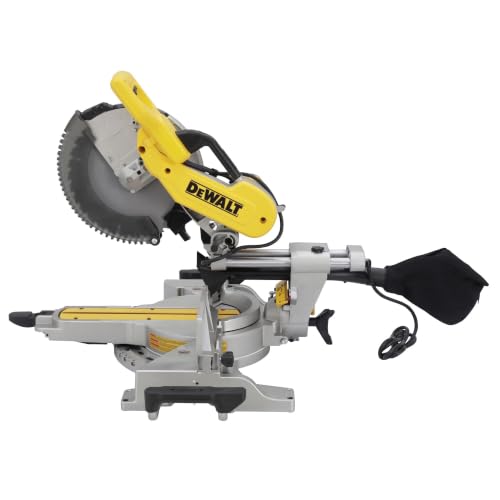
DEWALT DWS779 Sliding Compound Miter Saw
What We Like
- Tall sliding fence supports large crown molding
- Adjustable stainless miter detent plate with 10 stops
- Super-efficient dust collection captures over 75% of dust
- Oversized bevel scale for accurate adjustments
Trade-offs
- Weighs 67.7 pounds, limiting portability
- Large footprint requires dedicated shop space
That capacity, combined with a tall fence for large crown molding, means it handles the big, dimensional lumber that stops other saws cold. It’s built for the contractor or serious DIYer who needs to power through heavy stock without a second pass. The 15-amp motor has the guts for it, and the dust collection system actually works, which is a rare and welcome feature that keeps your workspace cleaner.
That capability comes with considerable mass, as the saw weighs 67.7 pounds, a load best suited for a stationary stand rather than frequent transport. Compared to models like the 24.2-pound Metabo HPT C10FCG2, its footprint and heft demand dedicated shop space. This design prioritizes cutting power and capacity over the portability offered by lighter alternatives.
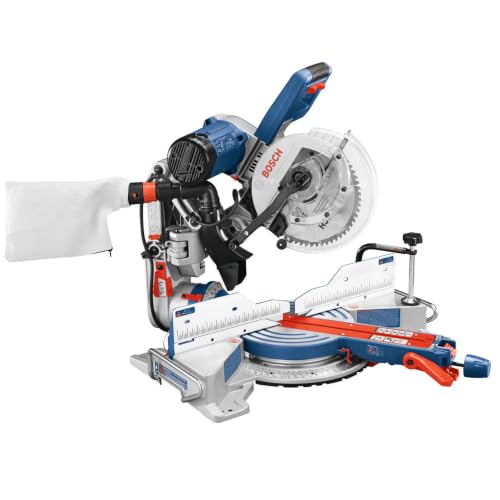
BOSCH CM10GD Dual-Bevel Glide Miter Saw
What We Like
- Axial-Glide System for durable, precise sliding action
- Compact footprint due to articulated hinge arms
- Front-mounted bevel lock and range selector for easy adjustments
- Tall sliding fences for increased crown molding capacity
Trade-offs
- At 64 pounds, it's a significant load to move around the shop
- Its 10-inch blade limits maximum cut depth versus 12-inch saws
The Bosch CM10GD’s articulated hinge arms reduce its front-to-back footprint by up to 10 inches, letting you tuck it into a tight corner of a crowded garage or workshop without sacrificing a 12-inch crosscut capacity. This makes it a prime choice for anyone who needs professional cutting power but can’t dedicate a permanent station to a bulky slide saw. The upfront bevel controls and wide 47-degree range are thoughtful touches for users who frequently switch between compound angles.
That compact, forward-rail design results in a substantial 64-pound weight, so you’ll want a solid stand or bench. While it lacks the premium price tag of a tool like the Festool Kapex, the Bosch delivers a sturdy, space-saving solution. For users who need the ultimate in portability, the lighter Metabo HPT C10FCG2 might be a better fit, but the Bosch wins on capacity and stability in a confined space.
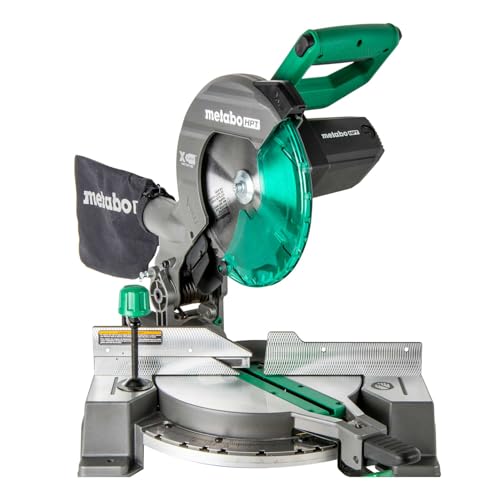
Metabo HPT C10FCG2 Compound Miter Saw
What We Like
- Exceptionally lightweight at just over 24 pounds
- Powerful 15-amp motor for a compact saw
- Improved miter scale and controls for accuracy
- Large table and vise clamp for workpiece support
Trade-offs
- Single-bevel design limits compound cutting flexibility
- No sliding mechanism reduces crosscut capacity
At just over 24 pounds, this miter saw is the easiest to carry up a ladder or haul between job sites. Its 15-amp motor spins the blade at up to 5,000 RPM for fast, clean cuts in wood, and a large table supports wider workpieces securely. The single bevel design and wide miter range handle typical trim and project angles without the complexity of a heavier dual-bevel model.
You trade some capability for that featherweight feel. The single-bevel design means you’ll have to flip the workpiece for complex crown molding, unlike a dual-bevel model like the DEWALT DWS780. It also lacks a sliding rail, so its crosscut capacity is limited to the blade diameter. For stationary shop work or heavy-duty trim jobs, a heavier, more feature-rich saw will feel more substantial. But for sheer ease of carrying and setting up, few corded miter saws can match this one.
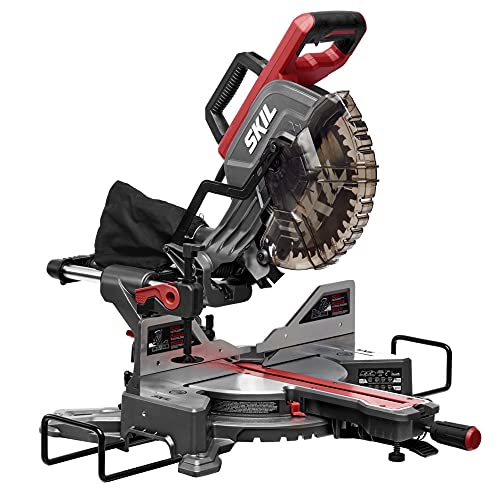
SKIL MS6305 Dual Bevel Sliding Miter Saw
What We Like
- Powerful 15-amp motor for fast cuts
- LED shadow line for precise alignment
- Cuts common angles with 11 positive stops
- Dual-bevel design increases versatility
Trade-offs
- At 39.4 lb, it's heavier than some 10-inch competitors
- Large 35.4-inch length demands considerable workspace
A 2×12 crosscut capacity at 90 degrees means this saw handles the dimensional lumber most DIYers use without a second thought. The dual-bevel slider design and LED shadow line deliver the core functionality of much pricier models, making it a solid choice for the budget-conscious builder who needs capability over frills. It’s built for someone tackling trim, decking, or basic framing who wants bevel cuts without constantly flipping the workpiece.
You do make some concessions for that value. Its footprint is substantial, so it needs a dedicated stand or a very sturdy workbench. Compared to a more compact option like the Makita LS1040, it’s less portable. However, the trade-off is clear: you get sliding and dual-bevel features that cheaper single-bevel saws simply can’t match, all powered by a motor that won’t bog down.
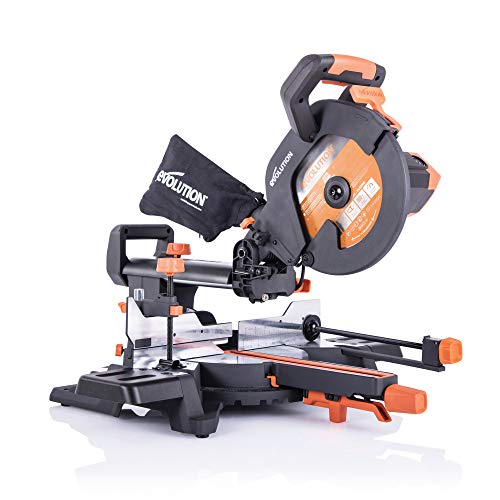
Evolution R255SMS+ Sliding Miter Saw
What We Like
- Cuts wood, metal, plastic with one TCT blade
- Includes dual quick-release clamps and taller fences
- Virtually no sparks when cutting mild steel
- Three-year warranty for reliability
Trade-offs
- Sliding mechanism adds length, requiring a 23-inch footprint
- Weighs 41.8 pounds
The ability to cleanly slice through wood, plastic, and even mild steel with a single blade makes this saw a workshop chameleon. It eliminates the need for separate metal-cutting setups, which is perfect for fabricators, remodelers dealing with old nails, or anyone tackling mixed-material projects. The included blade runs cool and sparks little, adding a tangible safety benefit for metalwork. This versatility defines its core purpose.
The Evolution R255SMS+ can cut wood, plastic, and mild steel with one blade, so you don’t need to swap tools for different materials on a mixed project. Its multi-purpose design does result in a weight of 41.8 pounds, making it a substantial tool to move around. While it includes features like integrated carry handles, a strictly wood-focused shop might prefer a saw dedicated to that single material.
Product photos
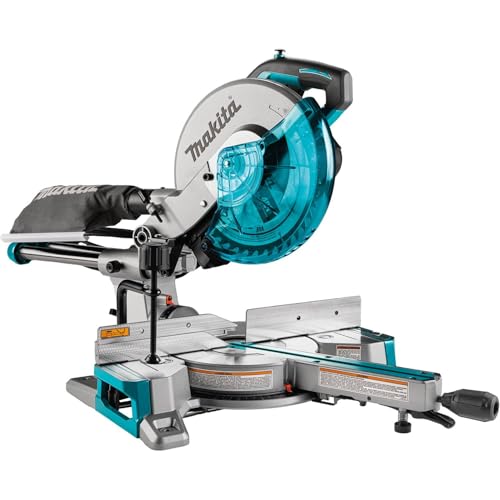
Makita LS1110F Slide Compound Miter Saw
What We Like
- Direct-drive motor for reduced maintenance
- Compact, 36.2-pound design for easy transport
- Linear ball bearing system for accurate cuts
- Built-in LED light illuminates cut line
Trade-offs
- Single-bevel design limits left-tilt cuts to 47°
- Right bevel stops at only 2°, restricting compound cuts
- Shallower 45° crosscut than some 12-inch sliders
A 13.0 AMP direct drive motor delivers 4,500 RPM, providing power for demanding cuts with a soft start for smooth operation. At 36.2 pounds, the saw is designed for job site portability and can be set up on most work surfaces. Its linear ball bearing system is engineered for “dead-on” accurate cuts, which helps keep trim work precise.
This simplicity does limit flexibility. The single-bevel design and limited right tilt mean complex crown molding setups will require more workpiece flipping compared to a dual-bevel saw such as the DEWALT DWS780. Its crosscut capacity is solid for a 10-inch saw, but it won’t handle the wider boards a 12-inch slider can. You’re choosing a saw optimized for power, portability, and dead-on accuracy in common cuts, not for the widest range of compound angles.
Product photos
Metabo HPT C12RSH3 Dual Bevel Sliding Miter Saw

What We Like
- Wide miter range for complex crown molding
- Dual-bevel design for efficient compound cuts
- Xact Cut Shadow Line for precise blade alignment
- One-touch bevel and miter lock for quick adjustments
Trade-offs
- At 53.6 lb, it is a substantial bench tool, not easily portable.
A miter range that extends to 57 degrees on the right side opens up a lot of possibilities for complex crown molding and trim work without flipping the workpiece. That’s the kind of spec that makes this saw a natural fit for finish carpenters and dedicated DIYers who regularly tackle detailed interior projects. The dual-bevel capability and the clear shadow line system further support that precision-focused workflow, letting you set up compound cuts efficiently and see exactly where the blade will land.
This saw’s wide range and 12-inch blade come with a substantial footprint and weight. If you primarily need maximum crosscut capacity on wide boards, a sliding saw such as the DEWALT DWS780-QS would be a more logical choice. This Metabo HPT model instead relies on its bevel and miter flexibility rather than a sliding rail for width.
Product photos
Makita LS1040 Compound Miter Saw

What We Like
- Direct-drive motor provides strong, bog-free cutting
- Compact 27-pound design is easy to move and store
- Dual-post pivoting arm and machined aluminum base ensure durability
Trade-offs
- Bevel cuts are only to the left, not dual-bevel
- 10-inch blade limits maximum cut width compared to sliding models
- No sliding mechanism for wider crosscuts
Weighing just 27 pounds, the Makita LS1040 is a saw you can easily carry from the truck to the job site without a second thought. Its 15-amp direct-drive motor is a key feature, delivering the muscle to power through tough lumber without a belt that can wear out. This makes it a perfect fit for finish carpenters, remodelers, or dedicated DIYers who need a reliable, portable saw for trim, framing, and general crosscutting. The dual-post design and machined aluminum base give it a solid feel on a bench, while the positive miter stops at common angles speed up repetitive work.
All that portability does mean a trade-off in capacity. As a standard 10-inch compound miter saw, it cannot handle the wider cuts possible on a sliding saw such as the DEWALT DWS780-QS. The bevel only tilts to the left, which can complicate some compound cuts. For straight crosscuts and basic bevels, its straightforward design focuses on core functionality.
Product photos
Evolution R8MTS Convertible Miter/Table Saw

What We Like
- Unique 2-in-1 miter and table saw convertible design.
- Multi-material TCT blade cuts wood, plastic, and metal.
- Compact footprint at 15.7" L x 16.5" W.
- Advanced safety with blade guard and riving knife.
Trade-offs
- Rip capacity limited to 1-1/2 inches for table saw use.
- Smaller 8-1/4" blade limits depth of cut.
Its ability to switch between a compound miter saw and a table saw in one 28.6-pound package is the defining feature. For a DIYer with a cramped garage or apartment workshop, this eliminates the need for two separate, space-hogging tools. The included multi-material blade handles everything from hardwood to aluminum without a change, adding tremendous versatility for mixed projects. This saw is built for the space-conscious user who needs maximum function from a minimal footprint.
Evolution’s convertible design fits a miter and table saw into one unit measuring just over a foot tall, so it can be stored on a shelf and set up in cramped workshops. This space-saving ingenuity comes with a trade-off in cutting capacity, as the 1-1/2 inch rip limit cannot handle full-width sheet goods and the crosscut capacity is modest. For users whose projects are smaller-scale, however, this clever dual-purpose design is a pragmatic solution that few other tools offer.
Product photos
How We Evaluated Corded Miter Saws
Our evaluation is research-based, drawing from manufacturer specifications, professional tool reviews, and consistent patterns in user feedback. We focused on criteria that matter most for a stationary power tool: cutting capacity for common materials, the accuracy and convenience of adjustment systems, and the saw’s physical footprint in a workshop.
This process also revealed the inherent trade-offs, like the portability limitations of a powerful 12-inch sliding saw. A research-led evaluation cannot replicate years of daily jobsite use, but it effectively highlights the design strengths that lead to long-term owner satisfaction. For a broader look at different styles, our comprehensive miter saw guide covers various types and applications.
What To Look For In Corded Miter Saws
Your workshop needs and typical projects should guide your choice. A saw that’s perfect for a framing contractor might overwhelm a weekend DIYer’s garage.
Prioritize a 15-amp motor for heavy lumber, a sliding mechanism for wide boards, and a compact footprint if space is tight. Dual-bevel capability is key for complex trim, while a good dust collection system keeps your shop cleaner.
Cutting Capacity & Power
The blade diameter determines your maximum cut depth and width. A 10-inch blade is common for trim and general DIY, while a 12-inch blade handles deeper cuts in thicker stock. Sliding mechanisms dramatically increase crosscut capacity, allowing you to cut wider boards like a 2×12.
Motor power, measured in amps, dictates how easily the saw powers through hardwoods without bogging down; a 15-amp motor is the standard for demanding, continuous use. For detailed comparisons between these common sizes, our 10 vs 12 inch miter saw guide breaks down the pros and cons.
Accuracy & Adjustability
Precise angle settings are non-negotiable. Look for a clear, easy-to-read miter scale and positive detents at common angles like 0, 22.5, and 45 degrees. A dual-bevel design lets you tilt the blade both left and right without flipping the workpiece, a major time-saver for compound cuts on crown molding. Alignment aids like an LED shadow line or laser guide provide a clear cut line, reducing guesswork and material waste. The best sliding miter saws often feature refined adjustment systems for both miter and bevel angles.
Size, Weight & Workspace
A miter saw’s footprint is a critical, often overlooked, factor. Traditional sliding saws with rear rails need significant clearance behind the saw, while articulated-arm designs can sit flush against a wall. Weight impacts portability; a very heavy saw is a permanent station, while a lighter one under thirty pounds can be carried to a job site.
Consider not just the saw’s dimensions, but also the space needed for its sliding action and material supports. For maximum support on the go, pairing your saw with one of the best miter saw stands is a wise investment.
- Measure the available depth on your workbench to ensure rear-sliding rails will fit.
- Check the saw’s weight against your need to move it regularly.
- Confirm the maximum crosscut width matches your typical project materials.
The most powerful saw is only the best tool if it fits in your space and you can manage its weight.
Corded Miter Saws Compared
To see how these key features compare across our top picks, the table below outlines each saw’s motor, blade size, weight, and special capabilities.
| Product | Motor Power | No-Load Speed | Bevel Capability | Weight |
|---|---|---|---|---|
| DEWALT DWS780-QS Corded Miter Saw | 15 amp | 3800 rpm | Double bevel | 54.7 pounds |
| DEWALT DWS779 Sliding Compound Miter Saw | 15 Amp | 3800 RPM | Double bevel | 67.7 pounds |
| BOSCH CM10GD Dual-Bevel Glide Miter Saw | 15 Amp | 4,800 RPM | Dual-Bevel | 64.0 pounds |
| Metabo HPT C10FCG2 Compound Miter Saw | 15 Amp | 5,000 RPM | Single Bevel | 24.2 lbs |
| SKIL MS6305 Dual Bevel Sliding Miter Saw | 15 Amp | 4,800 RPM | Dual Bevel | 39.4 pounds |
| Evolution R255SMS+ Sliding Miter Saw | N/A | N/A | 0° – 45° | 41.8 Pounds |
| Makita LS1110F Slide Compound Miter Saw | 13.0 AMP | 4,500 RPM | 0°- 47° left, 0°- 2° right | 36.2 pounds |
| Metabo HPT C12RSH3 Dual Bevel Sliding Miter Saw | N/A | 4,000 RPM | 45° left and right | 53.6 pounds |
| Makita LS1040 Compound Miter Saw | 15 amp | 4,600 RPM | 45° to the left | 27.0 pounds |
| Evolution R8MTS Convertible Miter/Table Saw | 12 Amp | N/A | 0-45° Bevel | 28.6 pounds |
Frequently Asked Questions
Who makes the best corded mitre saw?
Several brands produce excellent corded miter saws, with DEWALT, Bosch, and Makita consistently praised in expert reviews for their power, accuracy, and durability. The “best” model depends entirely on your specific needs for capacity, workspace, and budget, which is why our list includes picks for high-capacity cutting, compact shops, and lightweight portability.
Which mitre saw is considered the best quality?
Quality in a miter saw is reflected in precise, repeatable cuts, durable construction, and thoughtful features that enhance accuracy and ease of use. Models with direct-drive motors, precise detent plates, and innovative sliding systems like axial glides are often noted for build quality and long-term performance in both DIY and professional settings.
Which brand of mitre saw is best?
There is no single “best” brand, as different manufacturers excel in different areas. DEWALT is renowned for powerful job-site saws, Bosch innovates with space-saving designs, and Makita is noted for efficient direct-drive motors. The right brand for you aligns with the features you value most, whether that’s cutting capacity, footprint, or a specific blade alignment system.
Is a corded or cordless miter saw better?
Corded miter saws typically offer more consistent, unlimited power for heavy-duty, continuous cutting and are generally more affordable. Cordless models provide ultimate portability and jobsite convenience but often at a higher cost and with the need to manage batteries. For a stationary workshop or frequent use with thick hardwoods, a corded model is usually the more powerful and economical choice. You can explore this trade-off further in our guide to corded vs cordless tools.
What should I look for in a miter saw blade?
The right blade is crucial for clean cuts. For general woodworking, a blade with 40 to 60 teeth provides a good balance of speed and finish. Higher tooth counts (80-100) deliver smoother cuts in trim and finish work, while lower counts are for faster, rougher cuts. Always ensure the blade’s arbor hole size matches your saw. For specific recommendations, our miter saw blade guide can help you select the perfect blade for your material.
The Bottom Line
The DEWALT DWS780-QS is our best overall corded miter saw, ideal for serious DIYers and contractors who need a powerful, accurate stationary saw for frequent, heavy-duty cutting in a dedicated workshop. If your budget is tight, the SKIL MS6305 offers impressive sliding and dual-bevel features at an affordable price, while those tackling mixed materials should consider the Evolution R255SMS+.
Ultimately, the most important factor is matching the saw’s physical footprint and weight to your available space and portability needs, a powerful saw that doesn’t fit in your shop is no help at all.
