
10 Best Oil Lubricated Air Compressors in 2026
This post contains affiliate links. As an Amazon Associate, we earn from qualifying purchases.
For serious DIY and professional work, the Campbell Hausfeld XC802100 80-Gallon Air Compressor stands out as the best overall. Its high-pressure output and large tank support demanding tools for extended sessions. Our list also includes top picks for quiet operation with the Ingersoll Rand P1.5IU-A9 and portable power from the Makita MAC2400 Big Bore.
Choosing the right oil-lubricated compressor means matching its capabilities to your specific tasks and shop space. The compressor’s output, tank size, and noise level must align with your most-used air tools. We built this guide by researching specifications and patterns in owner feedback to highlight the models that deliver reliable performance for various needs.
Top 10 Oil Lubricated Air Compressors in the Market
Certain content that appears on this site comes from Amazon. This content is provided "as is" and is subject to change or removal at any time.
The Best Oil Lubricated Air Compressors, Reviewed
Campbell Hausfeld XC802100 80-Gallon Air Compressor

What We Like
- High-pressure 175 PSI output for demanding tools
- Large 80-gallon tank provides substantial air storage
- Vertical design conserves valuable shop floor space
Trade-offs
- Stationary 326 lb weight requires permanent installation
- Needs a dedicated 230V, 22A electrical circuit
- Substantial 66-inch height needs adequate ceiling clearance
An 80-gallon tank paired with a two-stage pump delivering 175 PSI means you can run a sandblaster or multiple framing nailers all day without waiting for the compressor to catch up. This unit is built for the serious home workshop or small professional garage where continuous, high-pressure air is non-negotiable. Its cast-iron construction and oil-lubricated design are engineered for longevity, making it a cornerstone tool for anyone whose projects demand reliable, industrial-grade air.
Its 326-pound weight and requirement for a dedicated 230-volt electrical circuit make this a permanent shop installation. This demands more space and electrical preparation than a portable model like the DEWALT DXCM251 25-Gallon. For a user who needs the air power and has the space and wiring, it is designed for stationary use.
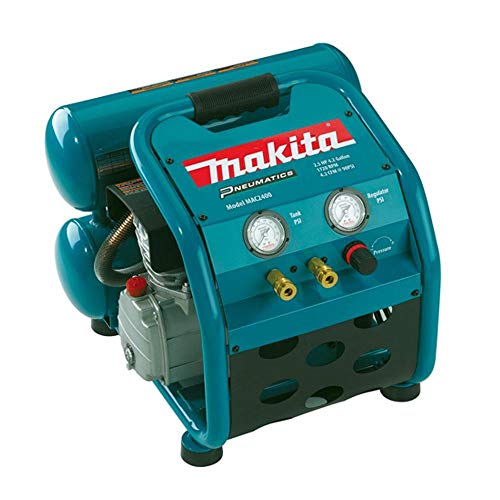
Makita MAC2400 Big Bore Air Compressor
What We Like
- Big Bore cast iron pump for faster recovery
- Roll-cage protects pump in jobsite conditions
- Low AMP draw reduces breaker trips
- Oil lubrication minimizes wear and heat
Trade-offs
- Lower CFM than large stationary units like the Campbell Hausfeld 80-gallon
- No tank size specified for recovery
A 2.5 HP motor pushing 4.2 CFM at 90 PSI gives you the consistent air supply needed to run a framing nailer or finish nailer without constant waiting. That Big Bore cast iron pump is the key, moving more air per stroke so it recovers quickly. This is the compressor you grab for a day of trim work or building a deck, where reliability and portability matter more than a huge tank. The roll-cage isn’t just for show, it means you can toss it in the truck bed without worrying about a bent pulley or a cracked housing.
Its 4.2 CFM at 90 PSI output suits nail guns, impact wrenches, and other common pneumatic tools, but high-demand equipment will require more air. Compared to a larger 25-gallon portable compressor, the Makita’s recovery time dictates work pace for continuous-use tools. The unit’s roll-cage construction and oil-lubricated cast iron pump are built for jobsite durability and cooler running to support long-term reliability.
DEWALT DXCM602 60-Gallon Air Compressor

What We Like
- Oil-lubricated pump for smooth, long-lasting operation
- High 11.5 CFM output runs demanding tools steadily
- Versatile 208-230V motor simplifies workshop installation
- ASME-certified tank for assured safety and durability
Trade-offs
- Stationary 200 lb weight requires a permanent floor space
- 65-inch height needs ample vertical clearance in a shop
With an 11.5 CFM output at 90 PSI, this compressor can reliably feed a framing nailer or impact wrench without constant cycling. The 60-gallon tank provides a substantial reservoir, making it a solid fit for a serious home garage or small professional shop where you need to run a single tool for extended periods. Its oil-lubed pump is built for longevity, and the dual-voltage motor offers practical installation flexibility.
The unit is a stationary design, standing 65 inches tall and weighing 200 pounds, so it requires a dedicated floor space. For greater air delivery, the Campbell Hausfeld XC802100 lists an 80-gallon capacity and larger physical dimensions.
Ingersoll Rand P1.5IU-A9 Air Compressor

What We Like
- Exceptionally quiet 80 dBA operation
- Long 2000-hour oil change interval
- Heavy-duty cast iron construction
- Portable design with handle and wheels
Trade-offs
- Heavy 200 lb weight limits true portability
- 20-gallon tank is smaller than many stationary units
- Large 45-inch length requires significant floor space
With a low 80 dBA noise level, this compressor is designed for shops where reducing sound is important. Its 2 HP motor and 20-gallon tank are matched with a synthetic lubricant that lasts for 2,000 hours between changes, which means less frequent maintenance. The cast iron cylinder and frame contribute to a durable build intended for long-term use.
The trade-off for that quiet, durable build is a substantial footprint and weight. At 200 pounds on semi-pneumatic tires, its portable design is intended for easier handling within a workspace rather than frequent transport. Compared to the lighter, more compact Makita MAC700, the Ingersoll Rand P1.5IU-A9 has a larger physical presence, requiring more floor space for a permanent station.
Makita MAC700 Big Bore Air Compressor

What We Like
- Cast iron pump for durability and cooler running
- Substantially lower noise levels at 1,720 RPM
- Low amp draw reduces breaker trip risk
- Oil lubrication minimizes pump wear
Trade-offs
- 61-pound weight limits one-person portability on stairs
- No wheels included for a 61-pound unit
- One-year warranty is shorter than some competitors
A large 1,720 RPM pump keeps noise levels substantially lower, a key benefit for home garages or shared spaces where loud tools are disruptive. Its cast iron Big Bore pump is oil-lubricated for cooler running and minimized wear, a design one owner reports has provided reliable starts for nine years. The low amp draw reduces the chance of tripping breakers, which helps prevent premature motor failure from voltage drop.
At 61 pounds and without wheels, this compressor requires lifting onto a workbench or truck bed for transport. A user who needs to move a compressor around a rough jobsite frequently would find a wheeled model like the Ingersoll Rand Twin-Stack Portable Compressor more mobile. This unit excels as a semi-stationary source of air for a primary workshop.
DEWALT DXCM251 25-Gallon Air Compressor

What We Like
- High-flow regulator for maximum air tool efficiency
- 10-inch pneumatic wheels for easy job site portability
- Oil-lubed design for enhanced longevity and durability
- Aluminum flywheel and head for better cooling and lower startup amps
Trade-offs
- At 49 inches tall, requires significant vertical storage space
- Lacks the continuous air volume of larger 60 or 80-gallon stationary units
- Portability is for rolling, not lifting, due to its size and tank capacity
With a 25-gallon tank and a 200 max psi capacity, this compressor stores enough air to handle extended tasks before the motor needs to cycle on. Its vertical design and 10-inch pneumatic wheels make it movable around a shop, though its 49-inch height requires clear overhead space. An oil-lubed pump and aluminum components for heat dissipation are engineered for durability during repeated use.
The unit’s 49-inch height and 24-inch width mean it needs dedicated floor space, unlike more compact horizontal tanks. Compared to an 80-gallon stationary compressor, its smaller tank capacity will require more frequent refills during sustained air tool operation. For general automotive work or driving fasteners, however, its combination of tank size and wheeled portability offers a practical middle ground.
Product photos
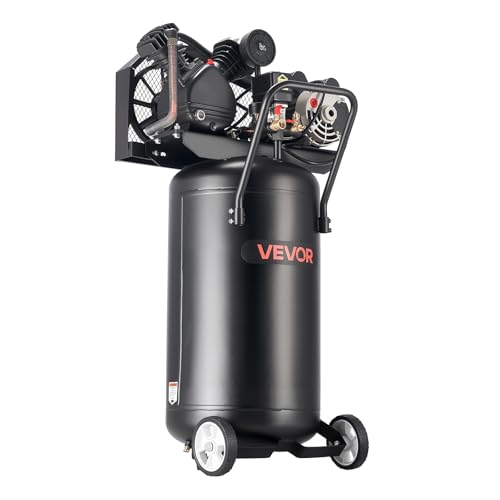
VEVOR 25-Gallon Oil-Lubricated Air Compressor
What We Like
- High 200 PSI maximum working pressure
- Belt-driven pump for smooth operation
- Durable 2.75 mm carbon steel tank
- Portable on wheels with pull handle
Trade-offs
- Belt-drive system needs periodic oil checks and maintenance
With a maximum working pressure of 200 PSI, this VEVOR compressor provides reserve power for stubborn bolts and demanding inflation. Its 25-gallon tank and 5.5 SCFM flow at 90 PSI suit serious DIYers or small shops using tools like nail guns in bursts, not a full production line. Two smooth-rolling wheels and a pull handle let you move it easily, while dual air outlets allow two pneumatic tools to run simultaneously.
This unit’s 5.5 SCFM flow rate is designed for intermittent tool use, as stated for tasks like spray painting and woodwork nailing. It is more portable than large stationary compressors like the 60-gallon DEWALT model, but its air delivery is less than models built for continuous high-demand applications. For burst-use jobs where high pressure is critical, it packs considerable capability into a mobile, wheeled design.
Product photos
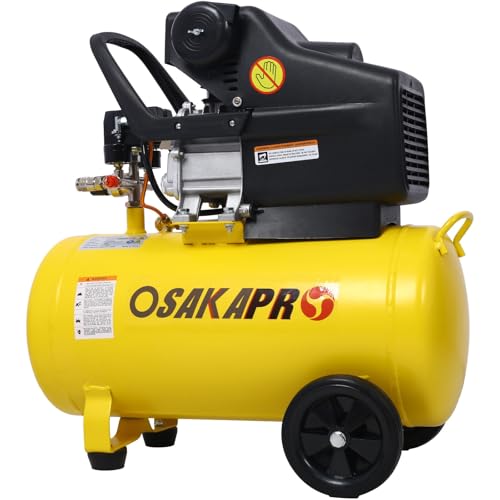
Luxebough Ultra Quiet Oil-Lubricated Air Compressor
What We Like
- Cast iron cylinder for professional-grade durability.
- Ultra-quiet design suitable for indoor workshop use.
- Built-in wheels and handle for easy portability.
- Automatic shutoff for safety at full pressure.
Trade-offs
- A 10-gallon tank refills more often than larger stationary units.
- At 58 pounds, it's heavier than some portable twin-stack models.
- 115 PSI max pressure limits it for some high-demand continuous tools.
Operating with 50% less noise than standard models, this compressor is suitable for indoor and workshop use. Its 3.5HP motor and 115 PSI maximum pressure deliver reliable power for the listed tasks like nailing, stapling, and hobby painting. The 10-gallon horizontal tank on built-in wheels offers a portable air supply for jobs that don’t require a stationary unit.
The quiet operation and manageable size come with a trade-off in air volume. You won’t be running a high-CFM sandblaster or spray gun for long sessions. Compared to a larger unit like the DEWALT DXCM251 with its 25-gallon vertical tank, this model will cycle on more frequently during sustained tool use. It’s a specialist in low-noise versatility, not a high-production workhorse. Choose it for its thoughtful design that prioritizes your ears and your neighbors, but know its limits for bigger projects.
Product photos
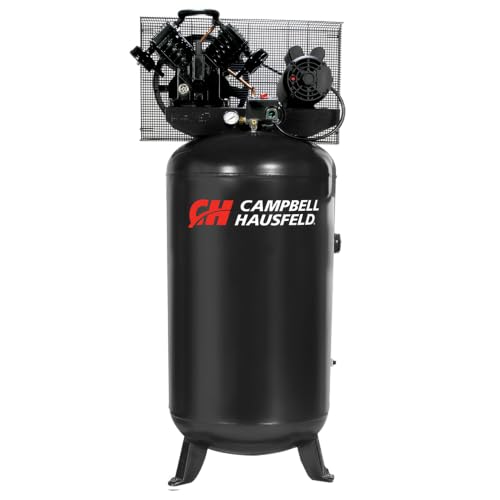
Campbell Hausfeld 80-Gallon Stationary Compressor
What We Like
- High 16.0 CFM output for demanding tools
- Large 80-gallon tank extends work periods
- Durable cast-iron pump for long service life
- 950 RPM pump speed for quieter operation
Trade-offs
- Massive 460 lb weight requires permanent placement
- Substantial 84-inch height needs high ceilings
- Requires 208-230V single-phase professional shop power
A 16.0 CFM air delivery at 90 PSI means this compressor can run multiple high-demand tools like sanders and paint guns without lag. The 80-gallon tank provides a deep air reserve, making it suited for a busy professional shop where continuous, high-volume work is the norm. It’s built around a reliable, oil-lubricated cast-iron pump designed for the long haul, not the occasional weekend project.
That capability comes with significant physical demands. At 460 pounds and over seven feet tall, this is a permanent shop fixture that needs a dedicated electrical hookup and ample floor space. For users who need serious air but have less room, the more compact DEWALT DXCM602 60-Gallon Air Compressor offers a smaller footprint, though with a correspondingly smaller air reserve.
Product photos
Ingersoll Rand Twin-Stack Portable Compressor

What We Like
- Exceptionally quiet operation at 79 dBA.
- 100% continuous duty for non-stop work.
- Long 2,000-hour oil change interval with synthetic oil.
- Two couplers for running multiple tools.
Trade-offs
- 3.2 CFM is insufficient for high-demand tools like sanders.
A noise level of 79 dBA means you can hold a conversation next to it, making this compressor a considerate neighbor in a home shop or on a residential job site. It’s built for the user who values a peaceful workspace but still needs reliable, continuous air for tasks like finish nailing, inflation, or light impact wrench work. The twin-stack design keeps the footprint manageable, and the synthetic lubricant means you’re thinking about maintenance once a year, not every season.
Operating at a low 79 dBA, the Ingersoll Rand Twin-Stack is quiet enough for use in shared spaces without causing a disturbance. Its 3.2 CFM at 90 PSI output is suited for running one or two low-consumption tools, such as finish nailers or staplers, but cannot sustain high-demand tools like sanders or grinders. For users needing more air volume, a model with a larger tank, such as the DEWALT DXCM251, would be required. The compressor provides professional-grade reliability in a portable, user-friendly package.
Product photos
How We Evaluated Oil Lubricated Air Compressors
Our evaluation relied on manufacturer specifications and documented expert analysis to compare key performance metrics like CFM and PSI. We also studied patterns in long-term owner feedback, focusing on reported durability, noise levels, and maintenance experiences. The most critical criteria were airflow delivery for common tools, tank capacity dictating work periods, and the physical footprint for installation.
These options are balanced against the practical constraints of workshop power requirements and portability needs. This guide provides a detailed comparison of specifications and typical use cases.
What To Look For In Oil Lubricated Air Compressors
Selecting the right oil-lubricated air compressor involves more than just horsepower. You need to match its output to your tools and its physical presence to your workspace.
Prioritize airflow (CFM) over tank size for continuous tool use, and confirm your electrical supply can handle the motor’s requirements. Consider noise levels if the compressor lives in a shared space, and don’t overlook the long-term maintenance needs of an oil-lubed system.
Airflow and Pressure
The compressor’s CFM (cubic feet per minute) rating at 90 PSI determines which tools it can run effectively. A finish nailer may need only 2 CFM, while a die grinder can require 5 CFM or more. Our top picks range from about 3 CFM for quieter portable units to over 16 CFM for large stationary models. Maximum tank pressure (PSI) is also important, as higher PSI lets you store more air in the tank, extending tool run time between pump cycles.
Physical and Electrical Demands
Oil-lubricated compressors are heavier and often larger than oil-free models. A 60 or 80-gallon stationary unit requires a permanent footprint and sufficient ceiling height, which can be over 65 inches tall. Equally important is the electrical circuit; many powerful models need a dedicated 230V outlet, while smaller portables run on standard 120V. Always verify your shop’s power capacity before choosing a compressor.
Noise and Longevity
One key advantage of oil-lubed pumps is quieter operation, often below 80 decibels, making them suitable for home shops. These compressors also offer greater longevity, with cast-iron construction designed for thousands of hours of use. However, this durability comes with a maintenance schedule that includes regular oil changes. Understanding the difference between oil-free and oil-lubricated systems is crucial for making an informed choice based on your expected use frequency and environment.
- Check the CFM requirements of your most air-hungry tool.
- Measure your available floor space and ceiling clearance.
- Verify your workshop’s electrical panel can supply the required voltage and amperage.
Investing in a compressor with excess CFM capacity is better than buying one that strains to keep up.
Oil Lubricated Air Compressors Compared
The following table compares the key specifications of our picks at a glance, helping you quickly weigh factors like tank size against portability.
| Product | Tank Capacity | Maximum Pressure | Motor Power |
|---|---|---|---|
| Campbell Hausfeld XC802100 80-Gallon Air Compressor | 80-gallon vertical | 175 PSI | 5 HP |
| Makita MAC2400 Big Bore Air Compressor | N/A | N/A | 2.5 HP |
| DEWALT DXCM602 60-Gallon Air Compressor | 60 gallons | 175 PSI | 3.7 HP |
| Ingersoll Rand P1.5IU-A9 Air Compressor | 20-gallon receiver tank | N/A | 2 HP |
| Makita MAC700 Big Bore Air Compressor | N/A | N/A | 2.0 HP |
| DEWALT DXCM251 25-Gallon Air Compressor | 25 gallons | 200 PSI | 2 HP |
| VEVOR 25-Gallon Oil-Lubricated Air Compressor | 25 gallons | 200 PSI | 2 HP |
| Luxebough Ultra Quiet Oil-Lubricated Air Compressor | 10 gallons | 115 PSI | 3.5 HP |
| Campbell Hausfeld 80-Gallon Stationary Compressor | 80-gallon vertical | 140 PSI | 5 HP |
| Ingersoll Rand Twin-Stack Portable Compressor | N/A | N/A | 2 HP |
Frequently Asked Questions
Which oiled air compressor is the best?
Our top overall pick is the Campbell Hausfeld XC802100 80-Gallon Air Compressor. It delivers up to 175 PSI and has a large tank, making it ideal for running demanding tools like sanders and impact wrenches for extended periods in a dedicated shop.
Are oil-lubricated air compressors better?
Oil-lubricated compressors are generally more durable and quieter than oil-free models, with cast-iron pumps designed for longer service life. They are better for frequent, serious use but require regular maintenance like oil changes, which is a key point in the oil-free vs oil-lubricated debate.
Who makes the highest quality air compressors?
Brands like Campbell Hausfeld, Makita, DEWALT, and Ingersoll Rand are consistently noted for building high-quality, durable oil-lubricated compressors. These manufacturers use heavy-duty components like cast-iron pumps and ASME-certified tanks, which contribute to their reputation for reliability in both DIY and professional settings.
What type of lubricant is best for an air compressor?
Always use a non-detergent oil specifically formulated for air compressors, such as an ISO 100 or SAE 30W grade. Synthetic oils offer higher heat resistance and longer intervals between changes. For detailed guidance, consult our resource on air compressor oil.
Do I need a two-stage air compressor?
Two-stage compressors, like some high-end stationary models, provide higher pressure and are more efficient for continuous industrial use. For most home shop and serious DIY applications involving pneumatic tools, a quality single-stage air compressor with sufficient CFM is often adequate and more budget-friendly.
The Bottom Line
For the serious DIYer or small shop owner ready to power high-demand pneumatic tools, the Campbell Hausfeld XC802100 80-Gallon Air Compressor is the best overall choice. Its substantial air storage and high pressure support extended work sessions. If you need jobsite mobility, look to the Makita MAC2400 Big Bore as our Portable Workhorse, or for a quieter home shop, consider the Ingersoll Rand P1.5IU-A9. Ultimately, matching your compressor’s CFM output to your most air-hungry tool is the single most important factor for a satisfying purchase.
