
10 Best Orbital Buffers in 2026
This post contains affiliate links. As an Amazon Associate, we earn from qualifying purchases.
The Griot’s Garage G8 Orbital Polisher is our best overall orbital buffer because it handles tight contours and small panels exceptionally well. For beginners, the Chemical Guys TORQX Polisher Kit is the Best Beginner Kit as it arrives ready to use. The Griot’s Garage G15 Long Throw Polisher is the choice for covering large surfaces quickly.
The right polisher turns a daunting chore into a satisfying weekend project. Yet, the choice between corded power, cordless freedom, stroke length, and weight can stall you before you start. This guide cuts through the noise.
We analyzed specifications, manufacturer details, and patterns in owner feedback to present ten focused options, from compact detailers to long-throw workhorses.
Top 10 Orbital Buffers in the Market
Certain content that appears on this site comes from Amazon. This content is provided "as is" and is subject to change or removal at any time.
The Best Orbital Buffers, Reviewed
Griot's Garage G8 Orbital Polisher

What We Like
- Engineered for agility on small areas and tight contours.
- Ergonomic, small-frame design with double-shot rubber dampening.
- Fan-cooled counterbalance maintains smooth operation under pressure.
- Quick-access brush ports and wrench simplify maintenance.
Trade-offs
- 8mm orbit is shorter than dedicated long-throw polishers.
- Tool only: requires separate purchase of pads and compounds.
- Primarily a spot and detail tool, not for large panels.
A 700-watt motor paired with a compact, ergonomic design makes this orbital polisher a standout for focused paint correction. The 8mm orbit and included 2-inch and 3-inch backing plates give you the precision to tackle scratches and swirls on complex curves and tight spots where larger tools can’t reach. For the detailer or enthusiast who values control and comfort during extended sessions, its fan-cooled counterbalance and six speed settings provide the smooth, consistent performance needed for flawless results.
The G8’s specialization in smaller areas is its main trade-off. For compounding and polishing entire hoods or doors, a model with a longer orbit, like the Griot’s Garage G15 Long Throw Polisher, will cover more ground faster. This tool excels as a dedicated finisher and problem-solver in your kit. Its 45% stronger gearset and straightforward maintenance design signal it’s built to handle the long haul of meticulous work, not just occasional weekend projects.
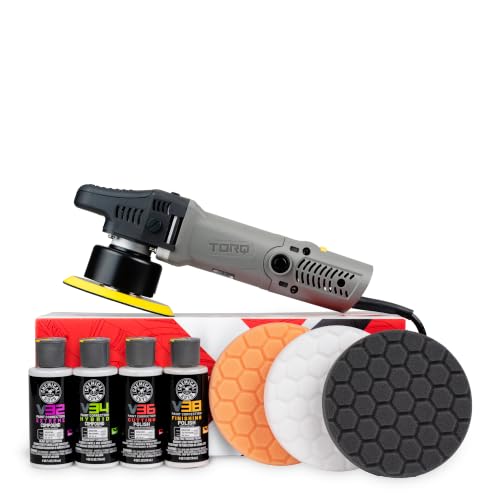
Chemical Guys TORQX Polisher Kit
What We Like
- Complete 9-piece kit includes all essential pads and compounds
- Ergonomic design and balanced weight for comfortable extended use
- Simple controls are easy for beginners to operate
Trade-offs
- Weighs 8.6 pounds, heavier than many cordless options like the BATOCA S3
- Corded design limits mobility compared to cordless polishers
The 9-piece all-in-one kit is the decisive factor here, delivering everything you need to start compounding, polishing, and finishing in one box. That makes it a perfect first polisher. The 700W motor and 8mm random orbital action are tuned for safety, virtually eliminating the risk of burning through clear coat, which is exactly what a novice needs to build confidence. You get a machine that’s powerful enough to remove light scratches and oxidation but forgiving enough to learn on without disaster.
The trade-off for that beginner-friendly safety is speed on larger or more heavily damaged panels; the 8mm throw won’t correct defects as quickly as a 15mm long-throw polisher like the Griot’s G15. It’s also a corded tool, so you’re tethered to an outlet. For a dedicated DIYer tackling their own vehicles, this kit removes the guesswork and provides a solid, reliable foundation. It’s the tool that lets you master the basics before you might crave more aggressive correction power.
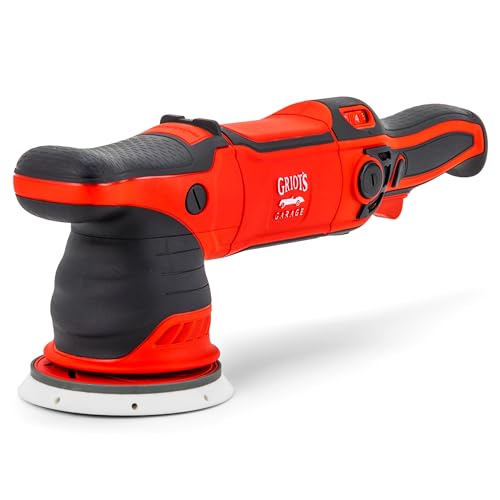
Griot's Garage G15 Long Throw Polisher
What We Like
- Powerful 1100W motor for effective paint correction.
- 15mm long throw covers large areas efficiently.
- Ergonomic rubber grips and optimized weight reduce fatigue.
- Precise speed control with a trigger and six settings.
Trade-offs
- At 7.9 pounds, it's heavier than many cordless models.
- 10-foot cord requires proximity to an outlet.
- Larger 15mm throw has a learning curve for new users.
A 15mm orbit and a 1,100-watt motor deliver substantial paint correction power, which allows the polisher to cover more area with each pass. Its speed can be fine-tuned from 3,000 to 5,300 orbits per minute across six settings for different detailing tasks. Double-shot rubber grips and a design that minimizes vibration help reduce user fatigue during extended use.
The tool weighs 7.9 pounds and operates with a 10-foot power cord, so you must manage its weight and stay near an outlet. Research mentions often compare it to brushless models like the Griot’s Garage BOSS G15 and G21. When a job involves broad panels, the G15’s large pad surface and orbit size can enhance polishing effectiveness.
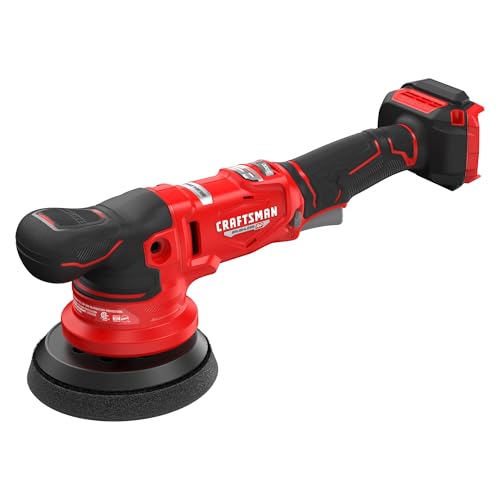
CRAFTSMAN V20 Cordless Polisher
What We Like
- Compact 4.5-pound cordless design
- Brushless motor for long runtime
- Constant speed under load
- Lock-on switch for continuous use
Trade-offs
- Tool only: requires separate V20 battery and charger
- 15mm orbit throw is shorter than long-throw models
This cordless polisher weighs 4.5 pounds, making it easier to maneuver overhead or on vertical panels without a cord getting in the way. A brushless motor and constant speed under load help maintain consistent performance, while nine speed settings provide adjustment range for different polishing steps. The tool-only design fits into an existing Craftsman V20 battery system, avoiding the cost of a new battery platform.
Its 15mm dual-action orbit is designed to minimize heat buildup for a swirl-free finish. The in-line battery position is intended to help minimize scratching and marring to the work surface. At 16.1 inches in length, the tool is longer than the 9.5-inch BATOCA S3 cordless polisher, which affects its overall hand-held profile.
Product photos
PORTER-CABLE 7424XP Polisher

What We Like
- Wide variable speed range up to 6,800 OPM
- Swirl-free random orbital action
- Relatively lightweight for a corded tool
Trade-offs
- AC-only power limits cordless mobility
- Free-spinning design can stall on curved panels
With a variable speed dial from 2,500 to 6,800 orbits per minute, this polisher offers a wide range for different polishing stages. Its random orbit action is designed for swirl-free sanding and polishing, which is crucial for a clean finish on automotive clear coats. Research mentions call it a knock-off of a once very popular model, and one expert round-up recommends a different polisher for beginners due to the extra power that model provides for maintaining pad rotation.
One expert round-up states a competitor’s polisher has a lot more power, making it easier for a newbie to maintain pad oscillation. The PORTER-CABLE 7424XP operates on AC only, so it requires a shop or garage with a power outlet. At 5.8 pounds, it is lighter than the 8.6-pound Chemical Guys TORQX polisher kit, which may reduce arm fatigue during extended use.
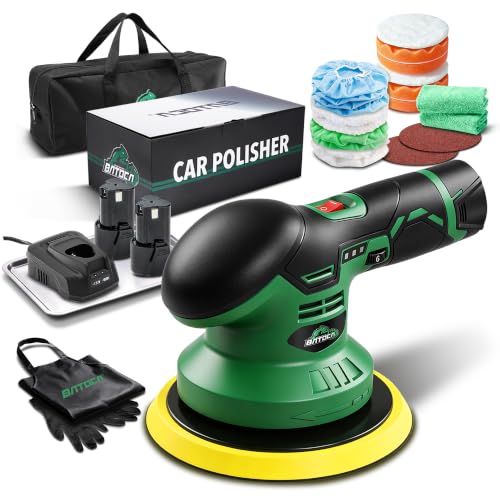
BATOCA S3 Cordless Polisher
What We Like
- Includes two batteries for continuous workflow
- Battery status lights prevent unexpected shutdowns
- 6-speed adjustment for varied polishing tasks
Trade-offs
- 5mm orbit stroke is minimal for aggressive correction
A weight of 2.4 pounds makes the BATOCA S3 exceptionally easy to maneuver overhead or on vertical panels without fatigue. The cordless design and included pair of batteries allow you to charge one while using the other, which helps prevent a complete loss of power during a task. This setup suits detailers and DIYers focused on applying waxes and sealants, or beginners who need a forgiving, portable machine that’s simple to control. The 5mm random orbit is gentle on paint, minimizing the risk of swirls for those still learning the process.
The trade-off for that lightweight portability is found in its specification sheet. The tool’s 5mm random orbit and adjustable speed range up to 5000 RPM position it for finishes like waxes and sealants. For more aggressive paint correction, a dedicated corded polisher like the Griot’s Garage G15 offers a longer orbit stroke. If your primary goal is a fuss-free, cord-free application of finishes on a well-maintained vehicle, the BATOCA S3’s portability and simple operation are its key advantages.
CRAFTSMAN V20 10-Inch Polisher

What We Like
- 10-inch pad for large surface coverage
- Cordless V20 platform for untethered use
- Variable speed dial for precise control
- Versatrack compatible for organized storage
Trade-offs
- Bare tool only requires separate battery purchase
- Large pad size is less nimble for tight spaces
The 10-inch orbital pad covers large surfaces like hoods and doors quickly. Its cordless V20 design allows movement around a vehicle without an outlet, and the variable speed dial provides control for different tasks. A contoured overmold grip is included for comfort during use.
The large pad is not designed for mirrors or tight body lines. A smaller tool, such as the 5-inch Craftsman V20 polisher on the list, may be better suited for those areas. This is a bare tool, requiring a separate V20 battery and charger to operate.
Product photos
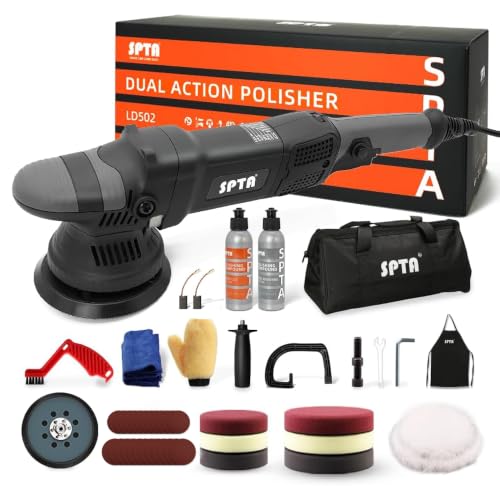
SPTA Dual Action Polisher Kit
What We Like
- Includes a detachable side handle and D-handle for grip versatility.
- Six-speed control dial for precise adjustment across tasks.
- Comes with a comprehensive kit of compounds, pads, and sandpaper.
- Constant power electronics for stable speed under load.
Trade-offs
- Requires a 110V outlet, limiting cordless portability.
- Kit includes numerous small accessories that require careful organization.
- The 5- and 6-inch pad sizes may be less ideal for very large, flat panels.
The 750W motor and six-speed dial give you the range to tackle everything from gentle wax application to aggressive defect removal. This polisher suits a detailer or serious DIYer who values having the right tool for every stage of the job, from sanding to final polish, all in one box. The included array of pads and sanding discs means you can start working immediately without a separate shopping trip.
A dual handle system provides its real advantage, allowing a switch between a side grip and a D-handle to fit different contours, which reduces fatigue on larger projects. The corded design means you don’t have to manage battery life during long sessions, unlike a dedicated cordless model like the CRAFTSMAN V20. Just be prepared to manage the cord and the extensive kit of accessories that comes with it.
Product photos
WORKPRO Dual Action Polisher Kit

What We Like
- Powerful 1080W motor for demanding polishing
- Comprehensive kit with multiple pads and accessories
- Ergonomic grip and auxiliary handle for control
Trade-offs
- Corded design limits mobility compared to battery models
A 1080W motor gives this polisher the grunt to tackle everything from automotive waxing to metal polishing without bogging down. For the detailer or DIYer who needs consistent power for long sessions, the corded design and variable speed control make it a reliable workhorse. It’s built for someone who values raw performance and a complete accessory set over the latest cordless convenience, delivering professional-grade capability at an accessible point.
Weighing 7.4 pounds, the tool requires more user effort than lighter models like the 4.5-pound CRAFTSMAN V20 Cordless Polisher. The corded design provides continuous power but limits mobility compared to battery-operated units. Its 15mm dual-action orbit is designed for smooth performance across polishing, waxing, and detailing applications.
Product photos
Milwaukee M18 Fuel Orbital Polisher

What We Like
- Premium motor maintains speed under load
- Lock-on switch reduces fatigue during long sessions
- Eight-speed dial offers precise RPM selection
- Variable trigger provides fine control during use
Trade-offs
- Battery and charger sold separately
- At 6.0 lb, it's heavier than some cordless competitors like the 2.4 lb BATOCA
- 18.5-inch length can feel bulky in tight spaces
With an eight-speed dial ranging from 2,650 to 5,100 RPM and a variable-speed trigger, this polisher provides precise control for different polishing stages. Premium electronic motor feedback maintains speed and power under load, which helps deliver consistent results when pressure is applied. A lock-on switch is included to reduce user fatigue during extended use, and the tool operates with the Milwaukee M18 battery system.
Weighing six pounds, the tool has a solid feel that can aid control on large panels. As a bare tool sold without a battery or charger, it requires a separate purchase to use. Among the other products listed, the PORTER-CABLE 7424XP polisher is a variable-speed corded model weighing 5.8 pounds.
Product photos
How We Evaluated Orbital Buffers
Our evaluation started with a deep dive into manufacturer specifications for each model, focusing on motor power, orbit stroke, weight, and included accessories. We then studied expert round-ups and cross-referenced them with consistent patterns in owner feedback to understand real-world performance, especially regarding ease of use, vibration control, and finish quality.
The key criteria were power and stroke for effective paint correction, ergonomics and weight for user comfort, and whether the tool came as a complete kit or a bare tool. You can explore a wider range of models in our best orbital polishers guide. For beginners, a complete kit with pads and polish is a major advantage, which is why we have a dedicated resource on buffers for beginners.
A research-led approach like this cannot replicate the feel of a tool in your hand over a multi-hour session. We rely on the aggregated experience of owners and experts to highlight strengths and trade-offs, so you can match a polisher to your specific projects and skill level.
What To Look For In Orbital Buffers
Selecting an orbital buffer involves balancing power, control, and convenience for the job. For a full paint correction or simply applying wax, the appropriate tool is important.
Focus on orbit stroke (8mm for detail work, 15mm+ for large panels), power source (corded for unlimited runtime, cordless for mobility), and weight. A complete kit saves initial guesswork, while a bare tool offers flexibility for existing battery platform owners.
Orbit Stroke and Power
The orbit stroke, measured in millimeters, is the diameter of the pad’s circular motion. A shorter stroke, like 5mm or 8mm, offers more control and is ideal for precise work on curves and tight spaces. A long-throw stroke of 15mm or more covers large, flat panels much faster but can be trickier to control on complex contours. For aggressive paint correction, a more powerful motor, often measured in watts, helps maintain pad rotation under pressure. Our research on automotive buffers delves deeper into motor specifications for different tasks.
Ergonomics and Design
Comfort is important for a tool used for extended periods. Look for rubberized grips, balanced weight distribution, and a design that fits your hand well. Some models offer multiple grip options, like a D-handle or a detachable side handle, for better control on vertical surfaces. Weight varies significantly; a lightweight cordless model reduces fatigue for wax application, while a heavier corded polisher provides stability for heavy correction. The tool’s shape also affects maneuverability around mirrors and door handles.
Kit vs. Bare Tool & Power Source
A complete kit provides immediate value with a selection of polishing pads and compounds, which is perfect for first-time users. A bare tool is a better value if you already own compatible batteries or have a preferred brand of pads. Your power source choice is a major trade-off.
Corded models offer consistent, unlimited power but limit your range. Cordless polishers provide complete freedom of movement, a major plus for mobile detailers or working on boats and RVs. For a full comparison of tool types, see our guide on dual-action vs rotary polishers.
- Check the included backing plate size; 5-inch or 6-inch plates are versatile for most cars.
- For cordless models, verify battery platform compatibility and runtime.
- Ensure speed controls are intuitive and offer enough range for your tasks (e.g., low speed for wax, high speed for compounding).
- Consider storage; some models include a case or are compatible with tool storage systems.
Match the tool’s primary strength, be it detail agility, large-area speed, or cordless convenience, to the majority of your planned work.
Orbital Buffers Compared
To see how these polishers stack up side-by-side on key specs, review the comparison table below.
| Product | Orbit Throw | Motor Power | Weight |
|---|---|---|---|
| Griot's Garage G8 Orbital Polisher | 8mm | 700-watt motor | N/A |
| Chemical Guys TORQX Polisher Kit | 8mm | N/A | 8.6 Pounds |
| Griot's Garage G15 Long Throw Polisher | 15 mm | 1100 watts | 7.9 Pounds |
| CRAFTSMAN V20 Cordless Polisher | 15mm | N/A | 4.5 Pounds |
| PORTER-CABLE 7424XP Polisher | N/A | 4.5 Amp | 5.8 pounds |
| BATOCA S3 Cordless Polisher | 5mm random orbit DA | N/A | 2.4 pounds |
| CRAFTSMAN V20 10-Inch Polisher | N/A | N/A | 6.2 Pounds |
| SPTA Dual Action Polisher Kit | N/A | 750W motor | N/A |
| WORKPRO Dual Action Polisher Kit | 15mm dual-action | 9 Amp, 1080W | 7.4 pounds |
| Milwaukee M18 Fuel Orbital Polisher | 15 mm | N/A | 6.0 pounds |
Frequently Asked Questions
Who makes the best orbital buffer?
There is no single “best” brand, as the ideal tool depends on your needs. For precision detail work on contours, Griot’s Garage is highly regarded. For a beginner-friendly, all-in-one kit, Chemical Guys offers great value. Professionals often favor brands like Rupes for their powerful, smooth operation, but these are premium investments.
Is an orbital polisher worth it?
Yes, for anyone serious about maintaining their vehicle’s finish. A dual-action orbital polisher safely removes light scratches and swirls while applying compounds and waxes far more evenly and quickly than by hand. It transforms DIY detailing from a chore into a process that yields professional-grade results, protecting your paint’s value and appearance.
What is the best orbital sander and polisher?
While some tools are marketed as dual-purpose, we recommend dedicated tools. A random orbital sander is engineered for material removal with abrasives, while a polisher is designed for the finer, controlled motion needed for a flawless finish. Using a sander to polish risks damaging your clearcoat. For polishing-specific tools, start with our best random orbital polishers guide.
Which polisher is better, Rupes or Milwaukee?
This compares a premium corded specialist to a top-tier cordless platform. Rupes polishers are often the choice for dedicated detail shops seeking the ultimate in smooth, powerful operation for paint correction. Milwaukee’s M18 Fuel polisher brings exceptional cordless convenience and granular speed control, ideal for professionals already invested in the M18 battery system who value mobility.
What should a beginner look for in a polisher?
Beginners should prioritize a complete kit, a forgiving orbit stroke (around 15mm is a good middle ground), and ergonomic design. A tool with simple speed controls and a reputation for being difficult to stall on curved panels will build confidence. For specific model advice, our article on orbital polishers for cars highlights user-friendly options.
The Bottom Line
For detailers and enthusiasts who demand precision on complex curves and small panels, the Griot’s Garage G8 Orbital Polisher is our best overall choice due to its agile, ergonomic design and smooth operation. If you’re just starting out and want to minimize guesswork, buy the ready-to-use Chemical Guys TORQX Polisher Kit. For those who need to cover large, flat surfaces like hoods and roofs efficiently, the Griot’s Garage G15 Long Throw Polisher is the tool for the job.
Before you choose, honestly assess your most common task: applying wax on maintained paint, correcting scratches on a daily driver, or doing professional-level paint restoration. That single factor will point you to the right orbit stroke, power source, and whether you need a kit or a bare tool.
