
10 Best Orbital Palm Sanders in 2026
This post contains affiliate links. As an Amazon Associate, we earn from qualifying purchases.
Our top pick for a reliable orbital palm sander is the DEWALT DWE6421, thanks to its powerful motor and comfortable, low-vibration design. For smoother surfaces, consider the Bosch ROS20VSC, and for a tool that comes ready for shop storage, the Makita BO5030K includes a hard case.
Finding the right sander can mean the difference between a fatiguing chore and an efficient, satisfying finish. The wrong tool leaves you with swirl marks, poor dust collection, and an aching hand. We built this guide by researching specifications, manufacturer data, expert round-ups, and patterns in owner feedback to help you choose confidently.
Top 10 Orbital Palm Sanders in the Market
Certain content that appears on this site comes from Amazon. This content is provided "as is" and is subject to change or removal at any time.
The Best Orbital Palm Sanders, Reviewed
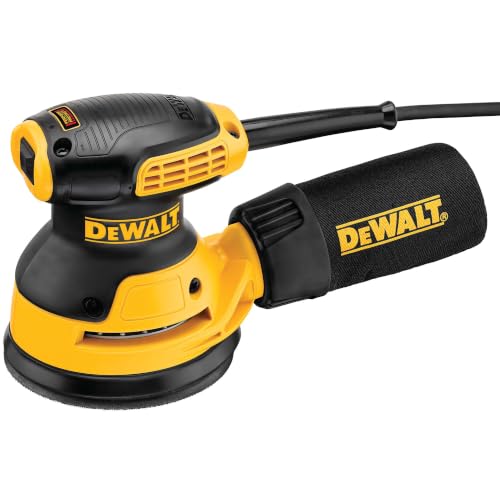
DEWALT DWE6421 Orbital Palm Sander
What We Like
- Powerful 3.0-amp motor for consistent stock removal
- Low-profile design gets closer to the workpiece
- Counterweight and rubber grip significantly reduce vibration
- Dust-sealed switch promotes long-term reliability
Trade-offs
- Single speed at 12,000 OPM lacks versatility for fine finishing
- Corded design requires an outlet and limits mobility
With a 3.0-amp motor spinning at 12,000 orbits per minute, the DEWALT DWE6421 has the power for most sanding tasks without bogging down. A research mention from Bob Vila highlights it as a top budget-friendly sander for most people. Its separate counterweight and rubber over-mold in critical areas reduce vibration, which reviewers note makes it quite comfortable in hand during long sessions.
The trade-off is its single-speed operation. If you need to dial down the speed for delicate surfaces or polishing, you’ll want to look at a variable-speed model like the Bosch ROS20VSC. For general woodworking, furniture building, and prep work, however, the fixed 12,000 OPM is a sweet spot. It’s a straightforward tool that prioritizes ergonomics and durability over bells and whistles, which is exactly why it remains a benchmark in its category.
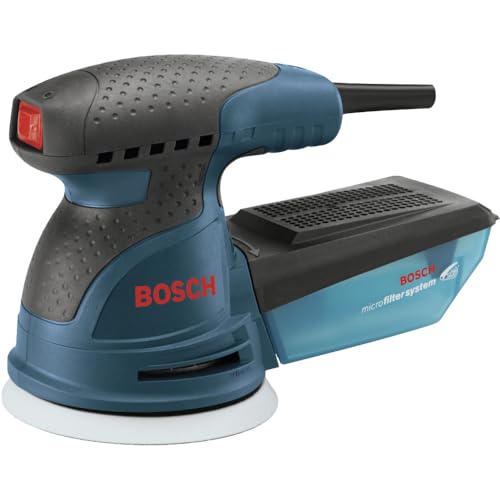
Bosch ROS20VSC Variable Speed Palm Sander
What We Like
- Hard plastic dust canister is easy to clean
- Pad dampening system minimizes swirl marks
- Includes vacuum adapter for shop vac connection
Trade-offs
- 3.5 lb weight is heavier than some cordless models
- Corded design limits mobility compared to battery units
- Dust canister requires periodic emptying during long tasks
Its pad dampening system and micro-filter dust collection deliver a finish with remarkably few swirl marks, which is why this sander stands out for anyone prepping surfaces for a clear coat or stain. The 2.5 AMP motor offers plenty of power for stock removal, but the real benefit is how smooth and quiet it runs, making long sessions far less fatiguing. This is the tool you reach for when the quality of the surface matters as much as getting the job done.
The trade-off for that refined performance is a corded, 3.5-pound tool, so it’s not the most nimble option for overhead work or quick touch-ups across a large room. For a dedicated shop sander where finish quality is paramount, the Bosch ROS20VSC is hard to beat. If you need ultimate portability for a deck project, a cordless model like the DEWALT DCW211B would be a more logical comparison, but you’d sacrifice some of this sander’s finesse and dust containment.
Makita BO5030K Random Orbit Sander

What We Like
- Comes with a hard plastic case
- Rubberized grip for comfort and control
- Pad control system for smooth startup
- Quieter operation than many sanders
Trade-offs
- No variable speed control for delicate work
- Dust bag is hard to clean per owner reports
- Small dust port requires an adapter for a vacuum
At 86 decibels, this is one of the quieter sanders you’ll find, making long sessions far less grating on the ears. That smooth, 12,000 OPM operation and the included hard case make the Makita BO5030K a solid, no-fuss choice for the woodworker who values a pleasant user experience and a tool that’s protected between jobs. It’s a straightforward sander that gets the work done comfortably, with the case being a genuine practical advantage over flimsy bags.
The trade-off is its single-speed operation. If you need to dial down the aggression for fine finishes or veneers, you’ll find that limitation frustrating. For variable speed in a similar form, you’d look at something like the Bosch ROS20VSC. The dust collection is merely okay, the soft bag does the job but can be a hassle to empty cleanly, and connecting to a shop vac isn’t plug-and-play.
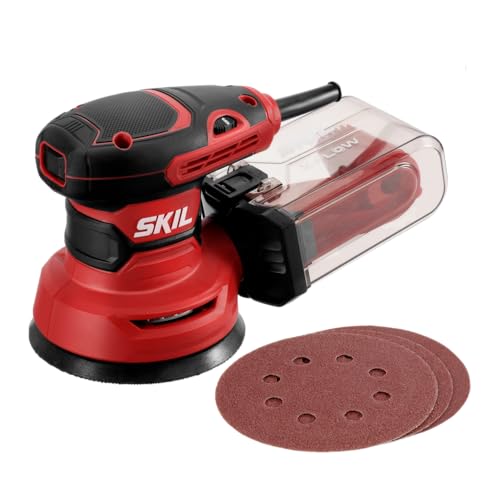
SKIL SR211601 Random Orbital Sander
What We Like
- Cyclonic dust box collects debris effectively.
- Variable speed control for different materials.
- Compact size fits into tight spaces.
- Low-vibration design reduces hand fatigue.
Trade-offs
- Corded design limits mobility in large workspaces.
- Dust box requires manual emptying.
The standout feature here is the cyclonic dust box, which uses centrifugal force to trap particles in a transparent container. This design keeps your work area cleaner and reduces how often you need to stop and empty it, a genuine advantage for indoor projects where dust management is critical. Paired with a compact, 3.4-pound body and a soft rubber grip, this sander is built for the DIYer or woodworker who needs solid performance and comfort during extended sessions on furniture, cabinets, or trim work.
Its 13,000 orbits per minute provides ample power for a variety of sanding tasks, though it’s not the fastest orbital sander available. This balance makes it well-suited for fine finishing and medium stock removal rather than for the most aggressive material stripping. While the corded power source delivers consistent performance, it requires proximity to an electrical outlet.
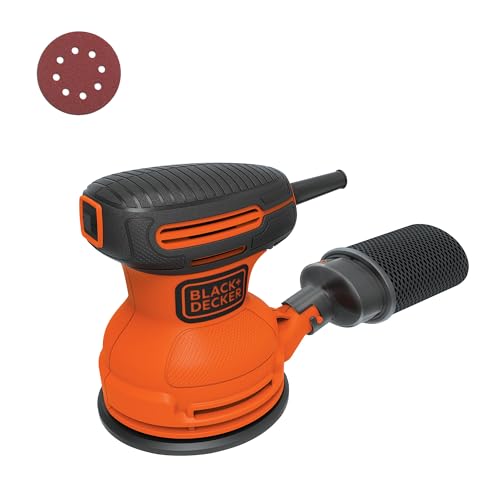
BLACK+DECKER BDERO100 Orbital Sander
What We Like
- Compact and lightweight for tight spaces.
- Comfort grip handle reduces user fatigue.
- Hook and loop system for quick paper changes.
- Dust-sealed switch improves component longevity.
Trade-offs
- Dust bag system is less effective than a shop vac port.
A 2.0 Amp motor spinning at 12000 OPM delivers enough power for most common sanding tasks, from smoothing drywall patches to prepping furniture. Its 3.2-pound weight and compact frame make it easy to maneuver, and the comfort grip helps on longer jobs. This sander is built for the DIYer who needs reliable, straightforward performance for weekend projects without a complex setup.
This sander runs at a single, fixed speed of 12,000 orbits per minute, simplifying operation for basic tasks but not allowing adjustment for different materials. That consistent pace efficiently removes material for general work. A built-in dust bag captures some debris, which helps keep your immediate area cleaner.
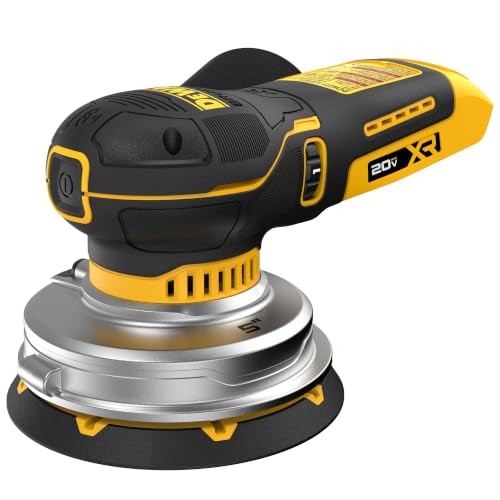
DEWALT DCW211B Cordless Orbital Sander
What We Like
- Up to 40% less vibration for reduced fatigue
- Low-profile design for working in tight spaces
- Variable speed control with five settings
- Wireless vacuum activation for less cleanup
Trade-offs
- 3.8 pounds is heavier than several corded competitors
- Battery and charger not included in base listing
- Dust extractor and vacuum must be purchased separately
With up to 40% less vibration than leading competitors, the DEWALT DCW211B is designed to minimize fatigue, so you can power through long sanding sessions more comfortably. Its low-profile, 5-inch design allows it to work in tight spaces where bulkier sanders can’t reach. On a single charge, it can sand up to 50 square feet, providing substantial cordless runtime for many common tasks.
Weighing 3.8 pounds, this sander feels more substantial in hand than some corded models, such as the 2.9-pound Makita BO5030K. The listing does not specify if a battery or charger is included, so users must verify what comes with their purchase. For those already using DEWALT’s 20V MAX system and prioritizing cordless convenience with reduced vibration, this model is a strong option.
Product photos
Bosch ROS10 Palm Random Orbit Sander
What We Like
- Integral pad dampening system prevents swirl marks
- Microcellular backing pad for smooth, fine finishes
- Hook-and-loop disc attachment provides a firm grip
Trade-offs
- Single-speed operation at 12,000 OPM offers no adjustment
- 3.5 lb weight is heavier than some cordless competitors
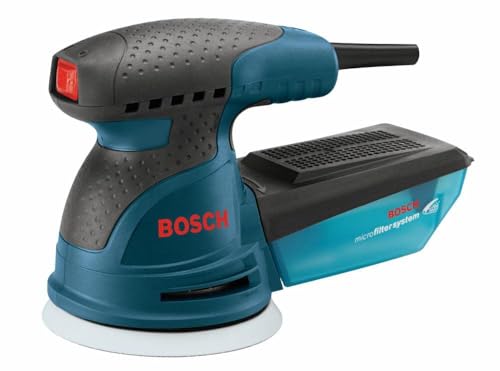
Powered by a 2.5 Amp motor, this sander runs at a steady 12,000 orbits per minute for a solid and predictable removal rate on general tasks. That consistency, combined with Bosch’s integral pad dampening braking system, is key for achieving ultra-smooth, swirl-free finishes. It’s a straightforward choice for woodworkers who prioritize reliable performance over adjustability. You get a tool that starts working immediately, with no speed dials to manage.
The Bosch ROS10 is a single-speed sander, so its pace cannot be adjusted for different tasks. Its straightforward operation is well-suited for long sessions of general sanding where its constant 12,000-orbit speed is effective. Users who need variable speed should consider Bosch’s ROS20VSC model, which is similarly sized.
Product photos
Milwaukee M18 Random Orbit Sander

What We Like
- Exceptionally lightweight at just 2.0 pounds
- Compact, cordless M18 platform design
- Owners report it is easy to use
Trade-offs
- Tool only; requires separate M18 battery and charger
- No variable speed control mentioned in specifications
At two pounds, this cordless sander is one of the lightest in its class, which makes a huge difference when you’re sanding overhead or tackling a big project like a deck rail. That low weight, combined with its compact footprint, is why it stands out for users who need to reduce fatigue and work in tight spaces. It’s a natural fit for Milwaukee M18 battery system owners who want to add a sander without the hassle of a cord.
For a dedicated corded option with speed control, the Bosch ROS20VSC is a frequent point of comparison in round-ups.
TurboVolt 5" Orbital Sander
What We Like
- 1-second brake prevents swirl marks
- Six-speed dial for material-specific tasks
- Ergonomic, rubberized grip reduces fatigue
- Dual dust collection with high-efficiency system
Trade-offs
- Lacks a specified weight for ergonomic comparison
- Corded design limits mobility versus cordless models
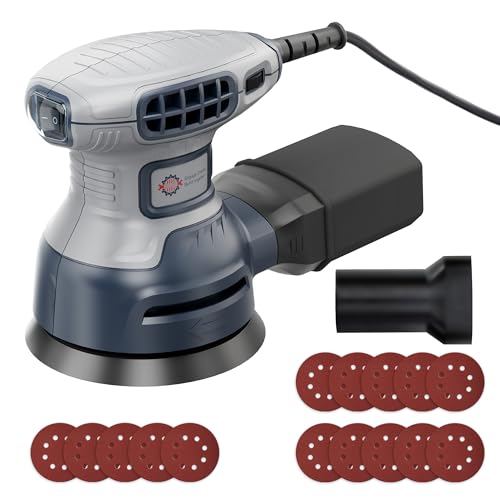
A one-second electronic brake is the standout feature here, stopping the pad almost instantly to eliminate accidental gouges and swirl marks on your final finish. That makes the TurboVolt a smart pick for detail-oriented work where surface quality is paramount, like refinishing furniture or prepping for a clear coat. Its six-speed dial gives you the control to match the 6000 to 13000 RPM range to the task, from aggressive stock removal to fine polishing.
A 1-second electronic brake stops the pad quickly to help prevent swirl marks on your finished surface. This corded sander provides a variable speed range from 6,000 to 13,000 RPM, giving you control for tasks from heavy material removal down to fine polishing. Its ergonomic, rubberized grip is designed to absorb shock and reduce vibration, which can lessen hand fatigue during longer projects.
Product photos
Astro Pneumatic Tool 325 Orbital Palm Sander

What We Like
- Compact, ergonomic design for long sessions
- Built-in speed regulator for finish control
- 3/32-inch stroke for a swirl-free finish
Trade-offs
- 6-inch pad uses less common paper size versus standard 5-inch
- Lacks a dust collection bag or port in its design
Weighing just 1.9 pounds, this sander is built to disappear in your hand during a long day of finish work. That super-lightweight design, combined with a compact shape, is the core reason it stands out for detail sanding, overhead work, or any project where arm fatigue is a real concern. The built-in speed regulator and 3/32-inch orbital stroke give you the control needed for a fine final surface. It’s a straightforward tool for the craftsperson who values comfort and a clean finish above all else.
The trade-off for that minimal weight is a slightly smaller 6-inch sanding pad, which covers area a bit slower than some full-size models. It also forgoes integrated dust collection, so you’ll be working in a cloud unless you rig an external vacuum. For heavy stock removal or sanding large tabletops, the more substantial DEWALT DWE6421 provides a wider base and more heft to keep the pad flat. The Astro 325 excels precisely where those heavier tools become a burden.
Product photos
How We Evaluated Orbital Palm Sanders
Our research focused on comparing manufacturer specifications, expert round-up findings, and consistent patterns in user feedback. We prioritized criteria that directly impact sanding efficiency and user comfort: motor power for consistent stock removal, vibration control to reduce hand fatigue, and effective dust collection to keep your workspace clean. A research-based evaluation like this cannot replicate the feel of a tool in your hand over hundreds of hours, but it effectively identifies the models that deliver on their promised performance and reliability.
What To Look For In Orbital Palm Sanders
Choosing the right orbital palm sander means balancing power, comfort, and control for your specific projects.
The key factors are motor power (measured in amps), vibration control features like counterweights, dust collection effectiveness, and whether a variable speed dial is necessary for your finishing work.
Motor Power
A sander’s motor determines its ability to remove material consistently without bogging down. Power is typically measured in amps for corded models; our top pick delivers 3.0 amps, providing strong performance for general tasks. Higher amperage doesn’t always mean faster sanding, as the tool’s orbital stroke and pad design also play a role, but it contributes to maintaining speed under pressure.
Vibration Control
Extended sanding sessions can fatigue your hands and arms. Look for sanders with design features aimed at dampening vibration, such as internal counterweights or rubberized grips. Owners report that models emphasizing low vibration, like our Best For Low Vibration pick, significantly improve comfort during long projects, making them worth seeking out.
Dust Collection & Portability
Effective dust collection is crucial for a clean shop and your health. Systems range from simple fabric bags to hard plastic canisters and dedicated ports for shop vacuum hookups. A tool with a compact, low-profile design, like our Best Compact Design pick, offers better access to tight spaces. Your choice between corded and cordless models hinges on your need for unlimited runtime versus complete mobility.
.###
- Check if the dust port is compatible with your shop vac hose or if an adapter is needed.
- Consider the weight difference between corded and cordless models, as a battery adds heft.
- For overhead or vertical work, an ultra-lightweight tool can prevent fatigue.
For most general workshop tasks, a corded sander with a good vacuum port offers the best balance of power and clean operation.
Orbital Palm Sanders Compared
The table below lets you compare key specifications across all ten models at a glance.
| Product | Motor (Amp) | Pad Speed (OPM) | Weight (lbs) |
|---|---|---|---|
| DEWALT DWE6421 Orbital Palm Sander | 3.0-amp | 12,000 OPM | 3.4 |
| Bosch ROS20VSC Variable Speed Palm Sander | 2.5 AMP | 7,500-12,000 OPM | 3.5 |
| Makita BO5030K Random Orbit Sander | 3.0 AMP | 12,000 OPM | 2.9 |
| SKIL SR211601 Random Orbital Sander | 2.8 amp | 13,000 OPM | 3.4 |
| BLACK+DECKER BDERO100 Orbital Sander | 2.0 Amp | 12000 OPM | 3.2 |
| DEWALT DCW211B Cordless Orbital Sander | N/A | 8,000 – 12,000 OPM | 3.8 |
| Bosch ROS10 Palm Random Orbit Sander | 2.5 Amp | 12,000 OPM | 3.5 |
| Milwaukee M18 Random Orbit Sander | N/A | N/A | 2.0 |
| TurboVolt 5" Orbital Sander | 3 Amp | 6000-13000 RPM | N/A |
| Astro Pneumatic Tool 325 Orbital Palm Sander | N/A | N/A | 1.9 |
Frequently Asked Questions
What is the best orbital palm sander?
The DEWALT DWE6421 is our best overall choice for its powerful 3.0-amp motor, effective vibration reduction, and low-profile design that works well for everyday sanding tasks in a workshop or DIY setting.
What is the best orbital sander for smooth finishing?
The Bosch ROS20VSC is specifically designed for smooth finishing, featuring a pad dampening system to minimize swirl marks and excellent dust collection, making it a top choice for woodworkers focused on flawless surfaces.
What is the best kind of palm sander for a beginner?
A budget-friendly, single-speed model like the BLACK+DECKER BDERO100 is a great starting point. It’s lightweight, easy to handle, and allows you to learn sanding techniques without a significant initial investment.
Do I need a variable speed orbital sander?
Variable speed is useful for delicate work on different materials or when you need more control, but many professional finishers find a high single-speed setting sufficient for most woodworking tasks. Our research shows it’s a valuable feature for some, but not a necessity for all.
Is a cordless orbital sander worth it?
A cordless sander, like the DEWALT DCW211B, is worth it if you prioritize complete mobility and don’t want to manage a power cord. Be prepared for the added cost and weight of the battery system, and for runtime to be limited by the battery charge.
The Bottom Line
The DEWALT DWE6421 remains a top recommendation for its capable performance and comfortable design, suitable for DIYers or professionals handling frequent sanding tasks. For those on a tight budget, the BLACK+DECKER BDERO100 offers reliable performance, while the Bosch ROS20VSC is a strong choice for users seeking a very smooth finish. Ultimately, matching the sander’s power, dust collection, and ergonomics to your typical projects is the most important step for a good result.
